Tag: Strategies

  • World TB Day 2020: It’s Time for solidarity

    World TB Day 2020: It’s Time for solidarity

    At this unique time in history when the world is grappling with the COVID-19 pandemic, the WHO Department of Global HIV, Hepatitis and STI Programmes stands in solidarity with governments and communities as they seek to maintain health services
    and continue to address the needs of patients suffering from HIV and tuberculosis (TB). 

    Despite being preventable and treatable, tuberculosis remains the world’s biggest infectious killer and the leading cause of death among people living with HIV (PLHIV), responsible for 32% of the 770 000 lives lost to HIV in 2018. People
    living with HIV are far more vulnerable (nearly 20 times more) to TB infection than people without HIV and are three times more likely to die during TB treatment.  

    While there are proven interventions that reduce TB deaths – such as provision of TB preventive treatment, adoption of novel diagnostics for earlier TB diagnosis and linkage to treatment, and antiretroviral therapy (ART) – we are far behind
    in scaling these up, and diagnostic and treatment gaps remain, with only half of estimated TB cases among PLHIV reaching care in 2018, only half of estimated PLHIV with TB receiving ART, and less than half of PLHIV new on ART initiating TB preventive
    treatment in a subset of countries which reported globally.

    On this World TB Day, WHO highlights two key interventions to reduce unnecessary TB deaths among PLHIV: 

    • (1) provision of TB preventive treatment for all eligible PLHIV; and 
    • (2) increased uptake of newer diagnostic tests such as the lateral flow urine lipoarabinomannan assay (TB-LAM.) 

    As the new Director for the Department of Global HIV, Hepatitis and STI Programmes, I support current efforts to continue and to take to scale TB activities. It’s Time for solidarity!

    -Meg Doherty, Director Global HIV, hepatitis and STI Programmes, WHO

    HIV programmes are encouraged to ensure that TB preventive treatment, including shorter WHO-recommended regimens, with updated guidance launched today, are provided to all eligible PLHIV as part of a routine package of care, including provision of ART, and that treatment completion is ensured.   

    In recent months, WHO has also released guidelines for use of a bedside urine TB-LAM test to accelerate earlier TB diagnosis, with significantly expanded eligibility criteria. As this test is “point of care” with the potential for earlier
    TB diagnosis and treatment initiation, HIV programmes should consider these recommendations as they enhance strategies for TB diagnosis among PLHIV, including as part of a routine package of advanced HIV care. 

    It’s Time to urgently scale up TB preventive treatment and TB diagnosis and strengthen referral and linkages to TB treatment at HIV service delivery points in all countries and continue to scale-up ART among PLHIV with TB. This applies to all populations
    at risk, including children, pregnant women and marginalized groups, to ensure no one is left behind.

    WHO calls for continued collaboration in countries across health programmes for harmonized and integrated policies and service delivery, and engagement with communities and other sectors. Unless HIV programmes scale up interventions to close these
    gaps in prevention, diagnosis and treatment both for TB and HIV, countries and their development partners will not meet our common target: a 75% reduction in TB deaths among PLHIV between 2010 and 2020. HIV mortality cannot be reduced without addressing
    the leading cause: tuberculosis.


    World TB Day 2020: It’s Time for solidarity
    Read More
    https://www.who.int/news-room/detail/24-03-2020-world-tb-day-2020-it-s-time-for-solidarity

    Views: 0

  • UK’s scientific advice on coronavirus is a cause for concern

    UK’s scientific advice on coronavirus is a cause for concern

    The UK government has published details of the scientific advice behind its strategies to tackle the covid-19 outbreak, but outside experts say it is missing key points and hasn’t been implemented properly
    UK's scientific advice on coronavirus is a cause for concern
    Read More
    https://www.newscientist.com/article/2238186-uks-scientific-advice-on-coronavirus-is-a-cause-for-concern/?utm_campaign=RSS%7CNSNS&utm_source=NSNS&utm_medium=RSS&utm_content=home

    Views: 0

  • Practical strategies for adding TIPS to a portfolio

    Practical strategies for adding TIPS to a portfolio

    Podcast: Vanguard Investment Analyst Kimberly Stockton explains how TIPS can play a strategic long-term role as ballast and a diversifier in a portfolio.
    Practical strategies for adding TIPS to a portfolio
    Read More
    https://investornews.vanguard/practical-strategies-for-adding-tips-to-a-portfolio/

    Views: 0

  • How to be a Rock Star on 8 Social Media Platforms

    Many companies seem to be fairly well-versed in basic social media tactics, but they’re refusing to go further. They are not adopting more advanced strategies, tactics, tools, and techniques.

    Read More
    http://www.associationofmarketing.org/articles/view.php?article_id=6716

    Views: 0

  • COVID-19: IFRC, UNICEF and WHO issue guidance to protect children and support safe school operations

    GENEVA/NEW YORK – The International Federation of the Red Cross (IFRC), UNICEF and the World Health Organization (WHO) today issued new guidance to help protect children and schools from transmission of the COVID-19 virus. The guidance provides critical considerations and practical checklists to keep schools safe. It also advises national and local authorities on how to adapt and implement emergency plans for educational facilities. 

    In the event of school closures, the guidance includes recommendations to mitigate against the possible negative impacts on children’s learning and wellbeing. This means having solid plans in place to ensure the continuity of learning, including remote learning options such as online education strategies and radio broadcasts of academic content, and access to essential services for all children. These plans should also include necessary steps for the eventual safe reopening of schools.

    Where schools remain open, and to make sure that children and their families remain protected and informed, the guidance calls for:

    • Providing children with information about how to protect themselves;
    • Promoting best handwashing and hygiene practices and providing hygiene supplies;
    • Cleaning and disinfecting school buildings, especially water and sanitation facilities; and
    • Increasing airflow and ventilation.

    The guidance, while specific to countries that have already confirmed the transmission of COVID-19, is still relevant in all other contexts. Education can encourage students to become advocates for disease prevention and control at home, in school, and in their community by talking to others about how to prevent the spread of viruses. Maintaining safe school operations or reopening schools after a closure, requires many considerations, but if done well, can promote public health.

    For example, safe school guidelines implemented in Guinea, Liberia and Sierra Leone during the outbreak of Ebola virus disease from 2014 to 2016 helped prevent school-based transmissions of the virus.

    UNICEF is urging schools – whether open or helping students through remote learning – to provide students with holistic support. Schools should provide children with vital information on handwashing and other measures to protect themselves and their families; facilitate mental health support; and help to prevent stigma and discrimination by encouraging students to be kind to each other and avoid stereotypes when talking about the virus.

    The new guidance also offers helpful tips and checklists for parents and caregivers, as well as children and students themselves. These actions include:

    • Monitoring children’s health and keeping them home from school if they are ill;
    • Encouraging children to ask questions and express their concerns; and
    • Coughing or sneezing into a tissue or your elbow and avoid touching your face, eyes, mouth and nose.

    Read More
    https://www.who.int/news-room/detail/10-03-2020-covid-19-ifrc-unicef-and-who-issue-guidance-to-protect-children-and-support-safe-school-operations

    Views: 0

  • Global gathering of ministers determines road safety agenda to 2030

    The 3rd Global Ministerial Conference on Road Safety convened 1700 delegates from around 140 countries, including more than 70 ministers and vice-ministers and heads of international agencies, civil society organizations, foundations and private companies. Hosted at the request of the UN General Assembly by the Government of Sweden in collaboration with WHO, the theme was “Achieving Global Goals 2030”, highlighting the connections between road safety and achievement of other Sustainable Development Goal targets.

    Through its 6 high-level panels and 18 parallel sessions, the Ministerial Conference addressed a range of topics, from building effective leadership for road safety to promoting sustainable cities and communities, mitigating climate change through road safety, and ensuring the safety of pedestrians and cyclists. The gathering was instrumental in reviewing progress in the Decade of Action for Road Safety 2011-2020 and defining ways to accelerate action on proven strategies to save lives. Among many pre-events, the 2nd World Youth Assembly for Road Safety hosted by YOURS: Youth for Road Safety and co-hosted by WHO, brought 200 young leaders together proclaiming “Enough is enough!” and claiming their space at the decision-making table for sustainable mobility.

    The Ministerial Conference culminated in the forward-looking “Stockholm Declaration”, which calls for a new global target to reduce road traffic deaths and injuries by 50% by 2030. In addition, it invites strengthened efforts on activities in all five pillars of the Global Plan for the Decade of Action: better road safety management; safer roads, vehicles and people; and enhanced post-crash care. It also calls for speeding up the shift to safe, affordable, accessible and sustainable modes of transport like walking, cycling and public transport. WHO is asked to continue to produce the series of global status reports, as a means of monitoring progress towards achievement of the 12 Global Road Safety Performance Targets.

    Today, around 1.35 million people lose their lives on the world’s roads every year, and as many as 50 million are injured. More than one quarter of those killed and injured are pedestrians and cyclists. Road traffic injuries are now the leading cause of death for children and young adults aged 5-29 years. Given the enormous human suffering and major economic losses for families and societies, road traffic deaths remain an unacceptable price to pay for mobility.

    Read More
    https://www.who.int/news-room/detail/20-02-2020-global-gathering-of-ministers-determines-road-safety-agenda-to-2030

    Views: 0

  • Researchers identify novel cybersecurity approach to protect Army systems

    Researchers identify novel cybersecurity approach to protect Army systems

    Researchers at the Army’s corporate laboratory in collaboration with the University of California, Riverside have identified an approach to network security that will enhance the effectiveness and timeliness of protection against adversarial intrusion and evasion strategies.

    Read More

    Views: 0

  • New tools show a way forward for large-scale storage of renewable energy

    New tools show a way forward for large-scale storage of renewable energy

    A technique based on the principles of MRI has allowed researchers to observe not only how next-generation batteries for large-scale energy storage work, but also how they fail, which will assist in the development of strategies to extend battery lifetimes in support of the transition to a zero-carbon future.

    Read More

    Views: 0

  • Immunization is the best protection against tick-borne encephalitis

    Immunization is the best protection against tick-borne encephalitis

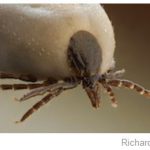
    immunization-is-the-best-protection-against-tick-borneIn a new position paper, published in the Weekly
    Epidemiological Record today, WHO recommends vaccination against
    tick-borne encephalitis in people of all ages where the disease is
    highly endemic. Where the prevaccination incidence of the disease is
    moderate or low or is limited to particular geographical locations or
    certain outdoor activities, immunization should target individuals in
    the most severely affected groups. People travelling from non-endemic
    areas to endemic areas should be offered vaccination if their visits
    will include extensive outdoor activities.

    Since the incidence of tick-borne encephalitis may vary
    considerably between and even within geographical regions, public
    immunization strategies should be based on risk assessments conducted at
    country, regional or district level, and should be appropriate to the
    local endemic situation.

    Immunization offers the most effective protection against
    tick-borne encephalitis. Currently, there are four widely used vaccines
    of assured quality: FSME-Immun and Encepur, manufactured in Austria and
    Germany respectively, and TBE-Moscow and EnceVir, manufactured in the
    Russian Federation. The four vaccines are considered to be safe and
    efficacious.

    Tick-borne encephalitis virus is an important cause of viral
    infections of the central nervous system in eastern, central and
    northern European countries, and in northern China, Mongolia, and the
    Russian Federation.

    Approximately 10 000–12 000 clinical cases of tick-borne
    encephalitis are reported each year, but this figure is believed to be
    significantly lower than the actual total. Most infections with the
    virus result from tick bites acquired during outdoor activities in
    forested areas.

    Immunization is the best protection against tick-borne encephalitis
    Read More
    https://www.who.int/news-room/detail/19-02-2020-immunization-is-the-best-protection-against-tick-borne-encephalitis

    Views: 0

  • Statement on the meeting of the International Health Regulations (2005) Emergency Committee for Ebola virus disease in the Democratic Republic of the Congo on 12 February 2020

    Statement on the meeting of the International Health Regulations (2005) Emergency Committee for Ebola virus disease in the Democratic Republic of the Congo on 12 February 2020

    The meeting of the Emergency Committee convened by the WHO Director-General under the International Health Regulations (IHR) (2005) to review the current Ebola virus disease (EVD) outbreak in the Democratic Republic of the Congo (DRC) took place on Wednesday, 12 February 2020, from 14:00 to 16:45 Geneva time (CEST).

    Proceedings of the meeting

    Members and advisors of the Emergency Committee were convened by teleconference.

    The Secretariat welcomed the Committee and thanked them for their support. The meeting was turned over to the Chair, Dr Robert Steffen.

    Dr Steffen also welcomed the Committee and gave the floor back to the Secretariat.

    Representatives of WHO’s legal department and the department of compliance, risk management, and ethics briefed the Committee members on their roles and responsibilities.

    Committee members were reminded of their duty of confidentiality and their responsibility to disclose personal, financial, or professional connections that might be seen to constitute a conflict of interest. Each member who was present was surveyed and no conflicts of interest were judged to be relevant to the meeting.

    The Chair then reviewed the agenda for the meeting and introduced the presenters.

    Presentations were made by representatives of the Ministry of Health of the Democratic Republic of the Congo (DRC), the WHO Secretariat, and the UN Ebola Emergency Response Coordinator.

    The current situation in the DRC was reviewed. As of 10 February 2020, there were a total of 3431 cases, of which 3308 were confirmed and 123 were probable. 2253 persons have died (66%). Between 3 and 9 February 2020, three new confirmed cases were reported in Beni Health Zone, North Kivu. These three cases were already registered as contacts and two were under surveillance at the time of detection. More than 2000 contacts are being followed. There has been an increase in the number of security incidents in recent months.

    Challenges that remain include: strengthening of community acceptance for full commitment to response measures; protection of personnel at strategic health checkpoints; improvement of infection prevention and control practices in health facilities; strengthening of the local health system; and comprehensive treatment and support for patients in recovery.

    The WHO Secretariat gave an overview of the epidemiological situation, which shows an overall encouraging trend in case incidence and geographic spread. It was noted that sustaining this progress depends on the security situation and control of the well-known drivers of transmission, particularly in traditional health facilities, and on continued trust and communication with the community.

    A risk communication and community engagement programme has been developed, as has an EVD survivors programme. It is critical to ensure the long-term sustainability of these two initiatives.   

    The situation in countries neighbouring DRC was reviewed, as was preparedness in nonaffected areas of DRC. An EVD operational readiness standardized approach has been implemented in 9 priority countries. More than 2400 alerts have been investigated, and more than 14,600 health workers have been vaccinated.

    The UN Ebola Emergency Response Coordinator gave a brief report on operational support, focused on security challenges and preparations for any resurgence of disease.

    Context and Discussion

    The Committee noted a great deal of progress in the situation since its last meeting and commended the response, under the leadership of the DRC Ministry of Health and the multisectoral coordination commission established in July 2019. Support provided by WHO, UN agencies, nongovernmental organizations and other partners has also contributed to limiting the spread and impact of this virus in a difficult context. An increase in the number of alerts was attributed to strong and proactive community surveillance.

    Conclusions and Advice

    It was the unanimous view of the Committee that this event still constitutes a public health emergency of international concern (PHEIC) under the IHR (2005).

    The Committee acknowledged the revised risk assessment, which puts the risk now as high at national and regional levels, and low at the global level.

    The Committee was concerned that withdrawing the PHEIC now might have adverse consequences for the response efforts through diminishing focus. Additionally, although the primary concern of the Committee is EVD, there are serious ongoing outbreaks of other diseases, including measles and cholera, in DRC. The country continues to need support to combat infectious diseases as well as to strengthen its health system. Further, there remains an urgent need to maintain international solidarity for the response.

    The Committee noted the ongoing discussions about the interpretation in the text of the IHR (2005) of the terms international and regional spread, and about creating an intermediate level of response between the binary possibilities of PHEIC or no PHEIC, in a way that does not require reopening negotiations on the Regulations. The Committee supports these discussions, as an intermediate level would be as useful for gradually ending a PHEIC and for signaling the potential for one to be declared.

    The Committee provided the following advice to the Director-General for his issuance as revised Temporary Recommendations under the IHR (2005).

    For DRC:

    • Sustain the political commitment and multisectoral coordination approach to the response.
    • Continue to engage and build trust with associations of survivors to facilitate rapid detection of any cases arising from exposure to infected bodily fluids of survivors.
    • Continue to strengthen capacity, implementation, and coordination for community awareness and engagement, including a focus on hotspots, preventing resurgence where cases have declined, and to support survivors in their communities.
    • Further enhance the acceptance of response measures and address access and security issues by engaging influencers and decision makers for all interventions.
    • Strengthen measures to prevent and manage nosocomial infections, including systematic mapping of health facilities, targeting of IPC interventions and sustain support to those facilities through monitoring and supervision, including in private-sector and traditional health facilities.
    • Continue cross-border screening and step up monitoring at checkpoints around hotspots and at main roads.
    • Continue to implement and share real-time full-genome genetic sequencing of all new confirmed cases.
    • Strengthen measures to prevent and manage nosocomial infections, including systematic mapping of health facilities, targeting of IPC interventions and sustain support to those facilities through monitoring and supervision.
    • Strengthen preparedness in non-affected provinces of DRC, and more generally strengthen the health system across the country to respond to concurrent health emergencies.
    • Continue to implement optimal vaccine strategies that have proven maximum impact on curtailing the outbreak, as recommended by WHO’s Strategic Advisory Group of Experts (SAGE).

    For countries at risk:

    • At-risk countries should maintain their work with partners to improve their preparedness for detecting and managing imported or locally acquired cases, including the transparent sharing of detailed information on suspect cases, as required by the International Health Regulations (2005), and sharing laboratory samples of suspect cases for confirmatory testing in accordance with WHO norms and guidance.
    • Countries should continue to map population movements and sociological patterns that can predict risk of disease spread.
    • Risk communications and community engagement, especially at points of entry, should be maintained.

    For all countries:

    • As recommended previously, no country should close its borders or place any restrictions on travel and trade.
    • The Committee does not consider entry screening at airports or other ports of entry outside the region to be necessary.

    The Committee emphasized the importance of continued support by WHO and other national and international partners towards the effective implementation and monitoring of these recommendations.

    Based on this advice, the reports made by the affected State Party, and the currently available information, the Director-General accepted the Committee’s assessment and on 12 February 2020 maintained the Ebola outbreak in the Democratic Republic of the Congo as a Public Health Emergency of International Concern (PHEIC).

    The Director-General endorsed the Committee’s advice and issued them as Temporary Recommendations under IHR (2005) to reduce the international spread of Ebola, effective 12 February 2020. The Director-General thanked the Committee Members and Advisors for their advice and requested their reassessment of this situation within two months or earlier if the situation requires.

    Statement on the meeting of the International Health Regulations (2005) Emergency Committee for Ebola virus disease in the Democratic Republic of the Congo on 12 February 2020
    Read More
    https://www.who.int/news-room/detail/12-02-2020-statement-on-the-meeting-of-the-international-health-regulations-(2005)-emergency-committee-for-ebola-virus-disease-in-the-democratic-republic-of-the-congo-on-12-february-2020

    Views: 0