Tag: Organization

  • Pass the message: Five steps to kicking out coronavirus

    Pass the message: Five steps to kicking out coronavirus


    Geneva, 23 March 2020: FIFA, the international governing body of football, and the World Health Organization (WHO) have teamed up to combat the coronavirus (COVID-19) by launching a new awareness campaign led by world-renowned footballers, who are calling on all people around the world to follow five key steps to stop the spread of the disease. 

    The “Pass the message to kick out coronavirus” campaign promotes five key steps for people to follow to protect their health in line with WHO guidance, focused on hand washing, coughing etiquette, not touching your face, physical distance and staying home if feeling unwell. 

    “FIFA and its President Gianni Infantino have been actively involved in passing the message against this pandemic since the very beginning,” said WHO Director-General Dr Tedros Adhanom Ghebreyesus at the virtual launch of the campaign at WHO headquarters in Geneva, Switzerland. “Be it through campaigns or funding, FIFA has stood up to the coronavirus, and I am delighted that world football is supporting WHO to kick out the coronavirus. I have no doubt with this type of support that together we will win.” 

    “We need teamwork to combat the coronavirus,” said FIFA President Gianni Infantino. “FIFA has teamed up with WHO because health comes first. I call upon the football community worldwide to join us in supporting this campaign to pass the message even further. Some of the greatest players to have played the beautiful game have put their names to the campaign and are united in their desire to pass the message to kick out COVID-19.”

    Twenty-eight players are involved in the video campaign, which is being published in 13 languages.

    Sami Al Jaber (KSA), Alisson Becker (BRA), Emre Belözoğlu (TUR), Jared Borgetti (MEX), Gianluigi Buffon (ITA), Iker Casillas (ESP), Sunil Chhetri (IND), Youri Djorkaeff (FRA), Han Duan (CHN), Samuel Eto’o (CMR), Radamel Falcao (COL), Laura Georges (FRA), Valeri Karpin (RUS), Miroslav Klose (GER), Philipp Lahm (GER), Gary Lineker (ENG), Carli Lloyd (USA), Lionel Messi (ARG), Mido (EGY), Michael Owen (ENG), Park Ji-sung (KOR) , Carles Puyol (ESP), Célia Šašić (GER), Asako Takakura (JPN), Yaya Touré (CIV), Juan Sebastián Verón (ARG), Sun Wen (CHN) and Xavi Hernández (ESP).

    A video campaign, which will be published on player and FIFA digital channels, is also being provided as individual localized files to the 211 FIFA member associations and media agencies, together with a graphics toolkit for implementation on social media to further pass the message. 


    Pass the message: Five steps to kicking out coronavirus 1

    Hands:

    “It starts with your hands,” says Alisson Becker, WHO Goodwill ambassador for health promotion, Liverpool FC and Brazil goalkeeper, and The Best FIFA Men’s Goalkeeper, 2019. “Please wash your hands frequently with soap and water or an alcohol-based solution.”

    Such frequent washing with soap and water, or preferably with an alcohol-based hand solution, kills viruses that may be on your hands. It is simple, but it is very important.

    Pass the message: Five steps to kicking out coronavirus 2

    Elbows:

    “Cover your nose and mouth with a bent elbow or tissue when you sneeze or cough,” says Carli Lloyd two-time FIFA Women’s World Cup winner from the United States. “Dispose of tissue immediately and wash your hands.”

    Droplets spread the coronavirus. By following respiratory hygiene, you protect the people around you from contracting viruses, such as cold, flu and coronavirus.

    Pass the message: Five steps to kicking out coronavirus 3

    Face:

    “Avoid touching your face, particularly your eyes, nose or mouth to prevent the virus from entering your body,” adds FC Barcelona and Argentina forward Lionel Messi, The Best FIFA Men’s Player in 2019, and a multiple FIFA Ballon d’Or winner.

    Hands touch too many surfaces and can quickly pick up viruses. Once contaminated, hands can transfer the virus to your face, from where the virus can move inside your body, making you feel unwell.

    Pass the message: Five steps to kicking out coronavirus 4

    Distance:

    “In terms of social interaction, take a step back,” says Han Duan, who represented China PR 188 times in an international career that spanned 11 years. “Stay at least one metre distance from others.”

    By maintaining such social distancing, you are helping to avoid breathing in any droplets from someone who sneezes or coughs in close proximity.

    Pass the message: Five steps to kicking out coronavirus 5

    Feel – know your symptoms:

    “If you feel unwell, stay home,” concludes Samuel Eto’o, former FC Barcelona and Cameroon striker, who represented his country 114 times. “Please follow all instructions provided by your local health authorities.”

    If you have a fever, cough and difficulty breathing, seek medical attention and call in advance.

    Keep informed as local health authorities provide the latest information on the situation in your area. Please follow their specific instructions, and call in advance to allow them to direct you to the appropriate local health facility. This serves to protect you and to help prevent the spread of virus and other infections.

    FIFA have also pledged $10 million to support the COVID-19 Solidarity Response Fund for WHO.

    For more information, please consult @WHO and follow the latest information online. 


    Pass the message: Five steps to kicking out coronavirus
    Read More
    https://www.who.int/news-room/detail/23-03-2020-pass-the-message-five-steps-to-kicking-out-coronavirus

    Views: 0
  • The WHO is now calling the coronavirus outbreak a pandemic

    The WHO is now calling the coronavirus outbreak a pandemic

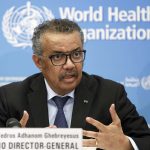
    As cases outside China have risen thirteenfold in the past two weeks, the World Health Organization says covid-19 outbreak can now be characterised as pandemic
    The WHO is now calling the coronavirus outbreak a pandemic
    Read More
    https://www.newscientist.com/article/2237190-the-who-is-now-calling-the-coronavirus-outbreak-a-pandemic/?utm_campaign=RSS%7CNSNS&utm_source=NSNS&utm_medium=RSS&utm_content=home

    Views: 0

  • Facebook Comes Up With a Noble Gesture

    In a move that would surprise many, Facebook has come up with a very noble gesture by introducing a ‘Donate Now’ button that directs you to pages of non-profit organization which are in need of finances. It is indirectly encouraging people who use Facebook on a regular basis and have enough money to spare to donate to these non-profit organizations. Facebook is especially targeting those people who spend money on the upgrades of the number of games that they play on Facebook…

    Read More
    http://www.associationofmarketing.org/articles/view.php?article_id=14248

    Views: 0

  • Dracunculiasis eradication: intensifying surveillance amid continued zero human cases in Ethiopia and Mali

    Dracunculiasis eradication: intensifying surveillance amid continued zero human cases in Ethiopia and Mali

    A total of 54 human cases of dracunculiasis (guinea-worm disease) were reported to the World Health Organization (WHO) in 2019, with Chad reporting 48 out of the 54 cases.

    In Chad, Ethiopia, Mali and South Sudan, trained volunteers are supporting surveillance and detection of infections in domestic dogs and cats. Surveillance has been heightened, as evidenced by the increase in reports of rumoured human cases which in 2019 peaked at 108 207 out of which 106 678 were investigated within 24 hours.

    “We are working with the broader scientific community to understand the epidemiology of animal infections, mainly in dogs in Chad, where the highest number of human cases were reported in 2019,” said Dr Dieudonné Sankara, who leads WHO’s eradication and elimination team in the Department of Control of Neglected Tropical Diseases. “Interestingly, there have been no human cases in Ethiopia and Mali, and 4 human cases in South Sudan in 2019, compared with 10 in 2018.”

    In Mali, the number of animals infected with Dracunculus medinensis (the guinea-worm) has decreased from 20 animals in 2018 to 8 dogs and 1 cat in 2019. However, insecurity remains a challenge to freely accessing some endemic areas in Mali.

    Conversely, Chad reported 1935 infections in dogs and 46 in cats in 2019, an increase of 85% from 2018, and a 176% increase among humans.

    Angola reported only 1 human case in 2019. Community-based surveillance is being reinforced mainly in Cunene Province where a case was reported in 2018.

    In South Sudan, integrated surveillance activities have been carried out with the trachoma and onchocerciasis control programmes, in accordance with WHO’s recommendation that programmes collaborate, integrate and co-implement activities, whenever possible, to strengthen surveillance.

    In order to strengthen cross-border surveillance, WHO led a mission to Cameroon in November 2019 to investigate circumstances around an “imported” case in the country’s Far North Region. Discussions were held with the health authorities to establish active surveillance in all villages in the area, including training for application of temephos.[1]  

    Also, in 2019, and with the support of trained field workers, vector control was intensified to larvicide ponds and water sources in more than 400 villages, compared with 72 villages in 2018.

    In late 2019, WHO supported cross-border meetings with officials of national dracunculiasis eradication programmes from Mali, Burkina Faso and Côte d’Ivoire in West Africa; between Ethiopia and South Sudan in East Africa, and between Angola and Namibia in Southern Africa, to share experiences and plan joint surveillance activities across the borders to prevent transmission of the disease.

    The disease

    Dracunculiasis is a crippling parasitic disease caused by infection with D. medinensis, a long, thread-like worm. It is usually transmitted when people drink stagnant water contaminated with parasite-infected water fleas.

    WHO works with Member States and in partnership with The Carter Center and the United Nations Children’s Fund to support efforts to eradicate the disease. WHO provides technical guidance, works with national programmes to coordinate surveillance in dracunculiasis-free areas, and monitors and reports on the progress achieved.

    WHO is the only Organization mandated to certify countries as free of transmission of the disease following the recommendations of the International Commission for the Certification of Dracunculiasis Eradication.

    Since 1995, WHO has certified a total of 199 countries, territories and areas, including 187 Member States, as free of dracunculiasis transmission.

    [1] Temephos is a cyclopicide used to kill water fleas (cyclops) that carry the infective guinea-worm larvae.


    Dracunculiasis eradication: intensifying surveillance amid continued zero human cases in Ethiopia and Mali
    Read More
    https://www.who.int/news-room/detail/19-03-2020-dracunculiasis-eradication-intensifying-surveillance-amid-continued-zero-human-cases-in-ethiopia-and-mali

    Views: 0

  • WHO teams with partners to mitigate the potential impact of the COVID-19 pandemic in malaria-affected areas

    The rapid spread of COVID-19 is testing the resilience of robust health systems around the world. WHO and its partners are taking measures to mitigate the potential impact of sustained transmission of the coronavirus in malaria-endemic settings –
    particularly in sub-Saharan Africa, which shoulders more than 90% of the global malaria burden.

    To date, a small proportion of the global COVID-19 cases have been identified in malaria-affected countries. However, as of 17 March, 25 countries in the African Region had reported cases of COVID-19, and local transmission of the disease had been detected
    in 6 countries (Algeria, Cameroon, Kenya, Rwanda, Senegal, South Africa).

    “At this point, we still don’t know what the COVID-19 pandemic will look like in sub-Saharan Africa,” said Dr Pedro Alonso, Director of the WHO Global Malaria Programme. “But we do know that when public health emergencies have
    hit parts of Africa with weak health systems and high malaria transmission, the impact on malaria disease and death has been very severe.”

    The 2014-2016 Ebola outbreak in Guinea, Liberia and Sierra Leone, for example, undermined malaria control efforts and led to a massive increase in malaria-related illness and death in the 3 countries.

    Joint action 

    To support malaria-affected countries, WHO has identified the need for a set of inter-related actions among global partners: 

    • generating, using and disseminating accurate information; 
    • mitigating against health system disruptions; and 
    • ensuring the continuity of routine malaria-specific interventions while also providing, where needed, additional emergency measures, such as mass drug administration, in health systems significantly impacted by COVID-19. 

    The Organization convened partners on 17 March to discuss areas of collaboration, coordination and next steps.

    WHO has begun monitoring the evolving geographic location of COVID-19 cases to understand the extent to which the coronavirus and malaria affect the same target groups. This information will reveal who is likely to be at greatest risk, where and when,
    and thus inform the need for malaria-specific interventions to save lives.

    In parallel, WHO is working across the 3 levels of the organization to ensure that any advice intended to curb coronavirus transmission and to guide COVID-19 disease management is appropriate in malaria-affected settings.  

    In recent days, there have been reports of disruptions, as a result of COVID-19, in the production and global supply chains of essential malaria commodities, such as the long-lasting insecticidal nets, diagnostic testing and antimalarial medicines. Coordinated
    efforts are required to ensure the availability of key malaria control tools – particularly in countries with a high burden of the disease – and that efforts to limit transmission of COVID-19 do not compromise access to malaria prevention,
    diagnosis and treatment services. 

    Malaria-affected countries may also experience disruptions in health systems in the coming months. A marked increase in febrile patients seeking treatment for COVID-19 at health facilities, for example, would present a significant challenge for a health
    workforce that may itself be depleted by the disease.

    Policy guidance

    WHO is developing guidance for national malaria control programmes and implementing partners to prepare them for the challenges they may face as result of COVID-19.  Among other areas, the guidance will address the mitigation of stockouts of
    malaria medicines and commodities; the use of preventive malaria therapy for health workers; the deployment of emergency measures in some settings; and the generation of information relating to the geographic distribution and populations affected
    by COVID-19 in malaria-endemic settings.  

    Restrictions around grouping people together – for training, social and behavior change communication activities, fixed-site distribution and clinical care – as well as the restrictions around movement of people in the country, will require
    significant adaptations in order to deliver quality interventions and care.

    All people living in malaria-affected areas are advised to follow same precautions as the general population, including: frequent hand-washing, respiratory hygiene, social distancing, seeking prompt medical care if symptoms arise (cough, fever,
    difficulty breathing), and other WHO-recommended actions. 

    WHO stands ready to work with countries and other stakeholders to mitigate the negative impact of the coronavirus on malaria responses worldwide and, where possible, contribute towards a successful COVID-19 response.  

    About COVID-19

    COVID-19 is the infectious disease caused by the most recently discovered coronavirus. This new virus and disease were unknown before the outbreak began in Wuhan, China, in December 2019. Essential information on the COVID-19 pandemic can be found in
    a dedicated WHO site.

    About malaria

    Malaria is a preventable and treatable disease caused by parasites that are transmitted to people through the bites of infected female Anopheles mosquitoes. In 2018, there were an estimated 228 million cases of malaria worldwide and
    405 000 malaria-related deaths. For more on malaria, visit: www.who.int/malaria

    Read More
    https://www.who.int/news-room/detail/18-03-2020-who-teams-with-partners-to-mitigate-the-potential-impact-of-the-covid-19-pandemic-in-malaria-affected-areas

    Views: 0

  • NIST updates and expands its flagship catalog of information system safeguards

    NIST updates and expands its flagship catalog of information system safeguards

    After your organization forms a general plan for tackling its cybersecurity and privacy risk management issues, it needs particular state-of-the-art tools to make that plan a reality. Computer security and privacy experts at the National Institute of Standards and Technology (NIST) have the answer with an updated toolbox of safeguards for protecting an organization’s operations and assets, as well as the personal privacy of individuals.

    Read More
    https://techxplore.com/news/2020-03-nist-flagship-safeguards.html

    Views: 0

  • ICC-WHO Joint Statement: An unprecedented private sector call to action to tackle COVID-19

    ICC-WHO Joint Statement: An unprecedented private sector call to action to tackle COVID-19

    In a coordinated effort to combat the coronavirus COVID-19 pandemic, the International Chamber of Commerce (ICC) and the World Health Organization (WHO) have agreed to work closely to ensure the latest and most reliable information and tailored guidance reaches the global business community.

    The COVID-19 pandemic is a global health and societal emergency that requires effective immediate action by governments, individuals and businesses. All businesses have a key role to play in minimising the likelihood of transmission and impact on society. Early, bold and effective action will reduce short- term risks to employees and long-term costs to businesses and the  economy.

    To aid this collective effort, ICC will regularly send updated advice to its network of over 45 million businesses so that businesses everywhere can take informed and effective action to protect their workers, customers and local communities and contribute to the production and distribution of essential supplies.

    ICC will also contribute to enhancing information flows on the coronavirus outbreak by surveying its global private sector network to map the global business response. This will both encourage businesses to adopt appropriate precautionary approaches and generate new data and insights to support national and international government efforts.

    As an immediate priority, businesses should be developing or updating, readying or implementing business continuity plans. Business continuity plans should aim to reduce transmission, including by: promoting understanding of the disease, its symptoms and appropriate behavior among employees; setting up a reporting system for any cases and contacts; preparing essentials; limiting travel and physical connectivity; and planning for measures such as teleworking when necessary.

    Calls to Action

    • ICC strongly endorses WHO’s call on national governments everywhere to adopt a whole-of- government and whole-of-society approach in responding to the COVID-19 pandemic. Reducing the further spread of COVID-19 and mitigating its impact should be a top priority for Heads of State and Government. Political action should be coordinated with actors in the private sector and civil society to maximize reach of messaging and effectiveness.
    • Governments should commit to making available all necessary resources to combat COVID-19 with the minimum of delay and to ensure that cross-border medical and other essential goods supply chains are able to function effectively and efficiently
    • ICC and the WHO encourage national chambers of commerce to work closely with UN country teams, including WHO country offices where they exist, and to designate mutual focal points to coordinate this collaboration.
    • ICC encourages its members to support their country’s national response efforts and to contribute to the global response efforts coordinated by the WHO through www.covid19responsefund.org.

    As the pandemic evolves, ICC Secretary General John W.H Denton AO and WHO Director General Dr Tedros Adhanom Ghebreyesus will continue to coordinate their efforts.

    Essential information on the COVID-19 pandemic can be found on the WHO’s dedicated site.


    ICC-WHO Joint Statement: An unprecedented private sector call to action to tackle COVID-19
    Read More
    https://www.who.int/news-room/detail/16-03-2020-icc-who-joint-statement-an-unprecedented-private-sector-call-to-action-to-tackle-covid-19

    Views: 0

  • Why is the UK approach to coronavirus so different to other countries?

    Why is the UK approach to coronavirus so different to other countries?

    The UK’s stance, to try to manage the spread of immunity among people while protecting those most at risk, appears at odds with the World Health Organization’s call for urgent action
    Why is the UK approach to coronavirus so different to other countries?
    Read More
    https://www.newscientist.com/article/2237385-why-is-the-uk-approach-to-coronavirus-so-different-to-other-countries/?utm_campaign=RSS%7CNSNS&utm_source=NSNS&utm_medium=RSS&utm_content=home

    Views: 0

  • Covid-19: MACC enhances preventive measures

    Covid-19: MACC enhances preventive measures

    Covid-19: MACC enhances preventive measures 6

    KUALA LUMPUR: The Malaysian Anti-Corruption Commission (MACC) has enhanced measures for Covid-19 prevention implemented at all its offices across the country.

    MACC deputy chief commissioner (management and professionalism) Datuk Junipah Wandi said among others, the commission had provided disinfectant liquid at the entrances of all its offices and premises.

    Any officers or staff who have a temperature above 37.5°C would be asked to go the hospital, she said.

    “We also issued a directive that those who have just returned from overseas are required to go for a health check at the Ministry of Health-designated hospitals.

    “If they have a fever, flu and cough, even though it is not confirmed as Covid-19, they will be asked to undergo self-quarantine,” she told Bernama here today.

    The World Health Organization had, on March 11, declared Covid-19 as a pandemic.

    Malaysia, as at noon today reported 428 positive cases. — Bernama

    Covid-19: MACC enhances preventive measures
    Read More
    https://www.thesundaily.my/local/covid-19-macc-enhances-preventive-measures-HJ2128898

    Views: 0

  • WHO, UN Foundation and partners launch first-of-its-kind COVID-19 Solidarity Response Fund

    WHO, UN Foundation and partners launch first-of-its-kind COVID-19 Solidarity Response Fund

    GENEVA and Washington, D.C. – A new coronavirus disease (COVID-19) Solidarity Response Fund will raise money from a wide range of donors to support the work of the World Health Organization (WHO) and partners to help countries respond to the COVID-19 pandemic. The fund, the first-of-its-kind, enables private individuals, corporations and institutions anywhere in the world to come together to directly contribute to global response efforts, and has been created by the United Nations Foundation and the Swiss Philanthropy Foundation, together with WHO. 

    “We are at a critical point in the global response to COVID-19 – we need everyone to get involved in this massive effort to keep the world safe,” said Dr. Tedros Adhanom Ghebreyesus, WHO Director-General. “We are immensely grateful to the UN Foundation and the Swiss Philanthropy Foundation for coming forward to help us set up this fund. A lot of people and institutions have been saying they want to contribute to the fight against the novel coronavirus. Now they can.”

    The fund launches with major support already lined up, including from Facebook and Google who have instituted a matching scheme for funds raised through their platforms, while individual donors are also supporting the fund through www.COVID19ResponseFund.org.

    “We can’t ignore the fact that this is a truly global problem – one that requires truly global solutions,” said Elizabeth Cousens, UN Foundation President and CEO. “The case for global cooperation could not be clearer – communities everywhere are affected, and people want to contribute. This new fund will create space for people everywhere, together, to fight this virus.”

    Funds will go towards actions outlined in the COVID-19 Strategic Preparedness and Response Plan to enable all countries – particularly those most vulnerable and at-risk, and with the weakest health systems – to prepare for and respond to the COVID-19 crisis including rapidly detecting cases, stopping transmission of the virus, and caring for those affected.

    WHO and its partners are seeking financing for protective equipment for frontline health workers; to equip diagnostic laboratories; improve surveillance and data collection; establish and maintain intensive care units; strengthen supply chains; accelerate research and development of vaccines and therapeutics;  and take other critical steps to scale up the public health response to the pandemic.

    The COVID-19 Solidarity Response Fund is hosted by two foundations, the UN Foundation (registered in the United States) and the Swiss Philanthropy Foundation (registered in Switzerland). Both foundations have established relationships with the World Health Organization, allowing for efficient transfer of financial resources to enable COVID-19 response efforts.

    Apart from giving online at www.COVID19ResponseFund.org, the UN Foundation can also receive donations via check or wire from around the world by contacting COVID19Fund@unfoundation.org.  

    All donations made to the United Nations Foundation and Swiss Philanthropy Foundation are tax-deductible to the extent allowable by the law, where applicable (U.S. and Switzerland). Additionally, Swiss Philanthropy Foundation has partnered with Transnational Giving Europe to extend tax benefit to certain additional European countries where applicable.

     ###

    More:

    COVID-19 Strategic Preparedness and Response Plan

    Coronavirus disease (COVID-19) outbreak information

    About the United Nations Foundation

    The UN Foundation brings together the ideas, people, and resources the United Nations needs to drive global progress and tackle urgent problems. Our hallmark is to collaborate for lasting change and innovate to address humanity’s greatest challenges. With an insider’s knowledge and outsider’s flexibility, we stay agile to get things done. Learn more at: www.unfoundation.org.


    WHO, UN Foundation and partners launch first-of-its-kind COVID-19 Solidarity Response Fund
    Read More
    https://www.who.int/news-room/detail/13-03-2020-who-un-foundation-and-partners-launch-first-of-its-kind-covid-19-solidarity-response-fund

    Views: 0