Tag: Organization

  • WHO launch eEML

    WHO launch eEML

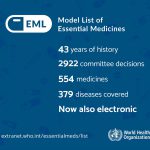
    The World Health Organization has launched a new easy-to-access, digital version of its Model list of Essential Medicines (EML). The move will revolutionize the way this core WHO reference tool is used.

    More than 150 countries currently use the WHO list to work out which medicines best meet their national health contexts and priorities, so they can compile their own national essential medicines lists.

    Essential medicines are those that satisfy the priority health care needs of a population. They are the medicines that need to be available in a functioning health system at all times, in appropriate dosage forms, of assured quality, and at prices individuals and the community can afford.

    Keeping up-to-date lists of the most important medicines a country needs is key to achieving health for all in a sustainable way.

    Since 1977, the WHO list has been revised every 2 years (most recently in 2019) by a group of experts and published in print or PDF formats. It includes information about available dose forms and strengths; specifications as to who should take a medicine; what conditions a medicine can treat and how it should be taken, as well as details about the clinical evidence supporting recommendations being made.

    The new electronic version brings the traditional EML to smartphones and computer screens in a comprehensive, freely accessible, online database. Instead of flicking through pages of information, users can search by simply clicking on the name of a medicine, for example, or a health issue. They can also make their own customized lists by exporting the list – in full or in part – into an Excel or Word version.  

    The electronic EML is the latest step in WHO’s effort to harness digital technologies to drive improvements in global public health, and advance progress towards universal health coverage. 


    WHO launch eEML
    Read More
    https://www.who.int/news-room/detail/27-02-2020-who-launch-e-eml

    Views: 0

  • WHO outlines steps to save 7 million lives from cancer

    WHO outlines steps to save 7 million lives from cancer

    The World Health Organization (WHO) today spells out the need to step up cancer services in low and middle-income countries. WHO warns that, if current trends continue, the world will see a 60% increase in cancer cases over the next two decades. The greatest increase (an estimated 81%) in new cases will occur in low- and middle-income countries, where survival rates are currently lowest.

    This is largely because these countries have had to focus limited health resources on combating infectious diseases and improving maternal and child health, while health services are not equipped to prevent, diagnose and treat cancers. In 2019, more than 90% of high-income countries reported that comprehensive treatment services for cancer were available in the public health system compared to less than 15% of low-income countries.

    “This is a wake-up call to all of us to tackle the unacceptable inequalities between cancer services in rich and poor countries,” says Dr Ren Minghui, Assistant Director-General, Universal Health Coverage/ Communicable and Noncommunicable Diseases, World Health Organization. “If people have access to primary care and referral systems then cancer can be detected early, treated effectively and cured. Cancer should not be a death sentence for anyone, anywhere.”

    Yet, progress in poorer countries is achievable. WHO and the International Agency for Research on Cancer (IARC) are releasing two coordinated reports on World Cancer Day (4 February), in response to government calls for more research into the scope and potential policies and programmes to improve cancer control.

    “At least 7 million lives could be saved over the next decade, by identifying the most appropriate science for each country situation, by basing strong cancer responses on universal health coverage, and by mobilizing different stakeholders to work together”, said Dr Tedros Adhanom Ghebreyesus, Director-General, WHO.

    WHO highlights a wide range of proven interventions to prevent new cancer cases. These include controlling tobacco use (responsible for 25% of cancer deaths), vaccinating against hepatitis B to prevent liver cancer, eliminating cervical cancer by vaccinating against HPV, screening and treatment, implementing high-impact cancer management interventions that bring value for money and ensuring access to palliative care including pain relief.

    “The past 50 years have seen tremendous advances in research on cancer prevention and treatment,” says Dr Elisabete Weiderpass, Director of IARC. “Deaths from cancer have been reduced. High-income countries have adopted prevention, early diagnosis and screening programmes, which together with better treatment, have contributed to an estimated 20% reduction in the probability of premature mortality between 2000 and 2015, but low-income countries only saw a reduction of 5%. We need to see everyone benefitting equally.” The challenge will be for countries to select treatments balancing considerations including cost, feasibility and effectiveness. Each government is tasked with choosing the appropriate innovative cancer therapies, while recognizing that established treatments, many of which are very effective and affordable, can provide benefits for cancer without causing financial hardship.

    Note to editors

    World Health Organization

    Report on Cancer: Setting priorities, investing wisely and providing care for all

    The report aims to set the global agenda on cancer, mobilize stakeholders and help countries set priorities for investing in cancer control and universal health coverage. It introduces the principles, tools and current priority cancer control interventions in the context of the current and future cancer burden and opportunities.

    International Agency for Research on Cancer

    World Cancer Report “Cancer research for cancer prevention”

    The report focuses on prevention and offers the most comprehensive overview of relevant research available to date, ranging from descriptive etiology, cellular and molecular biology, toxicology and pathology through to behavioural and social science. Key chapters include discussions on the impact of inequalities in cancer, vaccination and screening, genomic individual susceptibility to cancer and the finer identification of those at risk, which may allow ‘precision cancer prevention’.

    WHO outlines steps to save 7 million lives from cancer
    Read More
    https://www.who.int/news-room/detail/04-02-2020-who-outlines-steps-to-save-7-million-lives-from-cancer

    Views: 0

  • Four countries in the African region license vaccine in milestone for Ebola prevention

    The Democratic Republic of the Congo (DRC), Burundi, Ghana and Zambia have licensed an Ebola vaccine, just 90 days after World Health Organization (WHO) prequalification. Registration of the vaccine is expected in additional countries in the coming weeks.

    The licensing of the vaccine means that the manufacturer can stockpile and widely distribute this vaccine to African countries at risk of Ebola virus disease outbreaks. Once licensed doses are available, use of the vaccine will not require clinical trial or other research protocols.

    “The approval of the Ebola vaccine by these countries is another milestone in the fight against this unforgiving disease,” said WHO Director-General Dr Tedros Adhanom Ghebreyesus. “Africa has rallied to cement hard-fought progress to keep its people safe from Ebola.”

    WHO accelerated the licensing and roll-out of the Ebola vaccine by certifying that it met the organization’s standards for quality, safety and efficacy in its fastest vaccine prequalification process ever, announced in November 2019.

    The speed with which this has been achieved has been made possible by a different approach, where national licensing procedures were done in parallel based on one single scientific review process. Usually, these process are done one by one, which can take years. The process was led by WHO with the participation of the African Vaccine Regulatory Forum (an African network of national regulatory authorities and ethics committees), the European Medicines Agency, and Merck.

    “The rapid approval of the Ebola vaccine by countries in the Africa Region helps ensure this critical prevention tool will be available when and where it is needed most,” said Dr Matshidiso Moeti, WHO Regional Director for Africa. “This kind of collaboration and innovation is a model for other health priorities.”

    The injectable Ebola vaccine, Ervebo, is manufactured by Merck (known as MSD outside the US and Canada). Preliminary study results have shown a 97.5% vaccine efficacy. Data also suggests that vaccinating people who are already infected reduces their chances of dying.

    In response to the ongoing Ebola outbreak in the DRC, over 290 000 people have been vaccinated under compassionate use protocols. Once licensed doses are available, use of the vaccine in DRC will no longer require these protocols

    Read More
    https://www.who.int/news-room/detail/14-02-2020-four-countries-in-the-african-region-license-vaccine-in-milestone-for-ebola-prevention

    Views: 0

  • World experts and funders set priorities for COVID-19 research

    World experts and funders set priorities for COVID-19 research

    Leading health experts from around the world have been meeting at the World Health Organization’s Geneva headquarters to assess the current level of knowledge about the new COVID-19 disease, identify gaps and work together to accelerate and fund priority research needed to help stop this outbreak and prepare for any future outbreaks.

    The 2-day forum was convened in line with the WHO R&D Blueprint – a strategy for developing drugs and vaccines before epidemics, and accelerating research and development while they are occurring.

    “This outbreak is a test of solidarity — political, financial and scientific. We need to come together to fight a common enemy that does not respect borders, ensure that we have the resources necessary to bring this outbreak to an end and bring our best science to the forefront to find shared answers to shared problems. Research is an integral part of the outbreak response,” said WHO Director-General Dr Tedros Adhanom Ghebreyesus. “I appreciate the positive response of the research community to join us at short notice and come up with concrete plans and commitment to work together.”

    The meeting, hosted in collaboration with GloPID-R (the Global Research Collaboration for Infectious Disease Preparedness) brought together major research funders and over 300 scientists and researchers from a large variety of disciplines. They discussed all aspects of the outbreak and ways to control it including:

    • the natural history of the virus, its transmission and diagnosis;
    • animal and environmental research on the origin of the virus, including management measures at the human-animal interface;
    • epidemiological studies;
    • clinical characterization and management of disease caused by the virus;
    • infection prevention and control, including best ways to protect health care workers;
    • research and development for candidate therapeutics and vaccines;
    • ethical considerations for research;
    • and integration of social sciences into the outbreak response.

    “This meeting allowed us to identify the urgent priorities for research. As a group of funders we will continue to mobilize, coordinate and align our funding to enable the research needed to tackle this crisis and stop the outbreak, in partnership with WHO,” said Professor Yazdan Yazdanpanah, chair of GloPID-R. “Equitable access – making sure we share data and reach those most in need,  in particular those in lower and middle-income countries, is fundamental to this work which must be guided by ethical considerations at all times.”  

    During the meeting, the more than 300 scientists and researchers participating both in person and virtually agreed on a set of global research priorities. They also outlined mechanisms for continuing scientific interactions and collaborations beyond the meeting which will be coordinated and facilitated by WHO. They worked with research funders to determine how necessary resources can be mobilized so that critical research can start immediately.

    The deliberations will form the basis of a research and innovation roadmap charting all the research needed and this will be used by researchers and funders to accelerate the research response.

    Note to editors

    GloPID-R is a global alliance of international research funding organizations investing in preparedness and response to epidemics.

    World experts and funders set priorities for COVID-19 research
    Read More
    https://www.who.int/news-room/detail/12-02-2020-world-experts-and-funders-set-priorities-for-covid-19-research

    Views: 0

  • Ministers to agree new global road safety agenda to 2030

    Ministers to agree new global road safety agenda to 2030

    Government ministers and senior officials from over 100 countries will meet in Stockholm, Sweden from 19-20 February to discuss new steps to halve road traffic deaths and injuries by 2030, in line with global targets agreed in the United Nations Sustainable Development Goals (SDGs).

    “The fact that an estimated 1.35 million lives are lost every year due to road traffic collisions is an outrage. It is an unacceptable price to pay for mobility,” said Dr Tedros Adhanom Ghebreyesus, Director-General at the World Health Organization (WHO).

    Road traffic injuries are now the leading cause of death for children and young adults aged 5 to 29 years, according to WHO’s most recent Global status report on road safety.

    More than half of all road traffic deaths occur among pedestrians, cyclists and motorcyclists. The risk of a road traffic death remains three times higher in low-income countries than in high-income countries. Moreover, as many as 50 million people experience non-fatal road injuries, which impose human suffering and major economic losses.

    “Most road traffic deaths and injuries can be prevented, using tried and tested strategies,” added Dr Tedros. “This conference is an opportunity for the world to embrace a new agenda to radically reduce the number of lives lost on our roads and re-think how we can provide access to safe, affordable, accessible and sustainable transport systems for all.”

    Progress in road safety

    Many countries have already made progress through effective road safety management and focusing on better legislation and enforcement around key risks such as speeding; drinking and driving, and failing to use seatbelts. They have also improved infrastructure through measures such as safer sidewalks and dedicated lanes for cyclists; implemented vehicle standards such as those that mandate advanced braking and electronic stability control; and enhanced post-crash care.

    Improvements have occurred when a number of sectors have been involved – including transport, health, urban planning and law enforcement, among others. Success has also depended mainly on strong leadership and political will at the highest level of government and in close collaboration with civil society and the private sector.

    The Stockholm Declaration

    Hosted by the Government of Sweden in collaboration with WHO, the 3rd Global Ministerial Conference on Road Safety offers delegates an opportunity to share successes and lessons learned, chart future strategic directions for global road safety, and define ways to fast-track progress around proven strategies to save lives.

    The Stockholm Declaration will be presented as the final outcome document of the Ministerial Conference calling for strong political will and international cooperation as well as partnerships across many sectors of society. The Declaration will lay out key recommendations for accelerated action to drive progress towards halving global road traffic deaths and injuries by 2030.

    Beyond preventing human suffering and major economic losses, addressing road traffic deaths and injuries has positive impact across all aspects of society and development ─ including those linked to environment, climate change, education, employment, energy, poverty, human rights and equality ─ as outlined in the SDG targets.

    Note to editors:

    Road safety is reflected in the SDGs agreed in 2015, with two dedicated targets: (a) 3.6 aimed at preventing road traffic deaths and injuries and (b) 11.2 providing access to safe, affordable, accessible and sustainable transport systems for all.

    Achieving these targets would lead to increases in walking, cycling and using public transport, in other words, those modes of transport which impact most favorably on noncommunicable diseases like heart and lung diseases, cancer and diabetes. It would also contribute to reducing environmental risks, such as air and noise pollution, and steering sustainable urbanization, with less congestion and universal access to safe, inclusive and green public spaces. 

    Ministers to agree new global road safety agenda to 2030
    Read More
    https://www.who.int/news-room/detail/07-02-2020-ministers-to-agree-new-global-road-safety-agenda-to-2030

    Views: 0

  • WHO and FIND formalize strategic collaboration to drive universal access to essential diagnostics

    Geneva, Switzerland – 10 February 2020 – The World Health Organization (WHO) and the Foundation for Innovative New Diagnostics (FIND) announced today that a memorandum of understanding has been signed by the two organizations to formalize a strategic collaboration that will strengthen diagnosis in resource-poor countries by closing major diagnostic gaps at country level and bolstering disease surveillance that will inform public health initiatives and enhance outbreak preparedness and response.

    “This collaboration is an inspiring development that will take us a long way towards ensuring access to diagnostics to all who need them,” said Dr Tedros Adhanom Ghebreyesus, Director-General of the World Health Organization. “Global health challenges such as the ongoing novel coronavirus (2019-nCoV) outbreak demonstrates that without these essential elements of health systems, we cannot hope to promote health, keep the world safe, and serve the vulnerable. I look forward to working closely with FIND to determine what countries need and to forge a path to deliver these innovations so that no one is left behind.”

    Diagnosis is a driver of patient, financial and health systems impact, and a critical enabler of universal health coverage, but it is also the weakest link in the care cascade. This is especially true in primary healthcare settings in low- and middle-income countries. A unique and unprecedented opportunity exists to expand the role and impact of diagnostics to fully realize their potential to address major health security threats and evolving disease burdens through technological and digital advances.

    FIND has been an active partner with WHO since 2008 and a WHO Collaborating Centre since 2014, acting in the areas of laboratory strengthening and diagnostic technology evaluation. This expanded collaboration will put in place the building blocks necessary to enable transformative change in a move toward a country-led diagnostics alliance. Initial workstreams will focus on demand-driven access to essential diagnostics and the development of national Essential Diagnostics Lists, alongside collection of data that assist the scale up of diagnostics to support low- and middle-income countries on their paths to universal health coverage.

    “Each and every person has the right to a quality, timely diagnosis,” said Catharina Boehme, CEO of FIND. “Comprehensive diagnostic services underpin functional and efficient health systems not only to manage day-to-day healthcare needs, but also to ensure new disease outbreaks can be spotted and contained quickly. Working closely with WHO as part of a country-led alliance, we will strive to ensure that low- and middle-income countries have what they need to develop their own comprehensive, data-driven diagnostic strategies that enable universal health coverage and empower disease surveillance. Our ambition is that all patients, providers and decision-makers have access to the diagnostic solutions needed for optimal health outcomes.”

    The strategic collaboration agreement will initially run for a period of 5 years, until 2025.

    #  #  #

    About FIND

    FIND is a global non-profit organization that drives innovation in the development and delivery of diagnostics to combat major diseases affecting the world’s poorest populations. Our work bridges R&D to access, overcoming scientific barriers to technology development; generating evidence for regulators and policy-makers; addressing market failures; and enabling accelerated uptake and access to diagnostics in low- and middle-income countries (LMICs). Since 2003, we have been instrumental in the development of 24 new diagnostic tools used in 150 LMICs. Over 50 million FIND-supported products have been provided to our target markets since the start of 2015. A WHO Collaborating Centre, we work with more than 200 academic, industry, governmental, and civil society partners worldwide, on over 70 active projects that cross six priority disease areas. FIND is committed to a future in which diagnostics underpin treatment decisions and provide the foundation for disease surveillance, control and prevention. For more information, please visit www.finddx.org


    About WHO

    The World Health Organization is the directing and coordinating authority for health within the United Nations system. It is responsible for providing leadership on global health matters, shaping the health research agenda, setting norms and standards, articulating evidence-based policy options, providing technical support to countries and monitoring and assessing health trends. WHO is committed to the enjoyment of the highest attainable standard of health as one of the fundamental rights of every human being without distinction of race, religion, political belief, economic or social condition. WHO’s current global programme of work sets out three interconnected strategic priorities: ensuring healthy lives and well-being for all at all ages; achieving universal health coverage; and addressing health emergencies and promoting healthier populations. These priorities are linked to three ambitious targets, the “triple billion”: one billion more people to benefit from universal health coverage; one billion more people better protected from health emergencies; and one billion more people enjoying better health and well-being.


    Read More
    https://www.who.int/news-room/detail/10-02-2020-who-and-find-formalize-strategic-collaboration-to-drive-universal-access-to-essential-diagnostics

    Views: 0

  • Female Genital Mutilation Hurts Women and Economies

    Female Genital Mutilation Hurts Women and Economies

    Female genital mutilation (FGM) exacts a crippling economic as well as human cost, according to World Health Organization (WHO).

    “FGM is not only a catastrophic abuse of human rights that significantly harms the physical and mental health of millions of girls and women; it is also a drain on a country’s vital economic resources,” said Dr Ian Askew, Director of WHO’s Department of Sexual and Reproductive Health and Research. “More investment is urgently needed to stop FGM and end the suffering it inflicts.”

    New modelling reveals that the total costs of treating the health impacts of FGM would amount to USD 1.4 billion globally per year, if all resulting medical needs were addressed. For individual countries, these costs would near 10% of their entire yearly expenditure on health on average; in some countries, this figure rises to as much as 30%.

    The interactive modelling tool that generated these data was launched on the International Day of Zero Tolerance for Female Genital Mutilation.

    Severe physical and mental health impacts for women and girls

    Women and girls living with FGM face serious risks to their health and well-being. These include immediate consequences after being cut, such as infections, bleeding or psychological trauma, as well as chronic health conditions that can occur throughout life.

    Women who have undergone the procedure are more likely to experience life-threatening complications during childbirth. They may face mental health disorders or suffer chronic infections. They may also have pain or problems when they menstruate, urinate or have sexual intercourse. 

    All of these conditions warrant much-needed medical attention and care.

    “High healthcare costs for countries mount because of the tragic personal impacts on women and girls. Governments have a moral responsibility to help end this harmful practice,” says Dr Prosper Tumusiime, Acting Director for Universal Health Coverage and the Life Course in the African Regional Office of WHO. “FGM hurts girls, imposes lifelong health risks on the women they become, and strains the healthcare systems that need to treat them.”

    Preventing FGM brings major benefits for women, girls, communities and economies

    Using data from 27 high-prevalence countries, the Cost Calculator demonstrates clear economic benefits from ending FGM. If it were abandoned now, it shows that the associated savings in health costs would be more than 60% by 2050.

    In contrast, if no action is taken, it is estimated that these costs will soar by 50% over the same time period, as populations grow and as more girls undergo the procedure.

    Since 1997, great efforts have been made to end FGM, through work within communities, research, and changes in legislation and policy. 26 countries in Africa and the Middle East now explicitly legislate against FGM, as well as 33 other countries with migrant populations from FGM-practicing countries.

    WHO is also working with countries to raise awareness of the harmful impacts of the practice among their health workers, and to engage them in prevention efforts.

    “Many countries and communities are showing that abandoning female genital mutilation is possible,” states Dr Christina Pallitto, scientist at WHO. “If countries invest to end female genital mutilation, they can prevent their girls from undergoing this harmful practice and promote the health, rights and well-being of women and girls.”

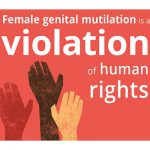
    Female genital mutilation is internationally recognized as a human rights violation. It has no medical benefits and causes only harm. WHO’s position is that FGM must never be carried out.

    Further information

    The FGM Cost Calculator will be available here, as of 00:30 CET 6 February 2020:
    www.who.int/news-room/detail/06-02-2020-economic-cost-of-female-genital-mutilation

    More on FGM

    Notes for Editors

    About FGM

    FGM includes procedures that intentionally alter or cause injury to the female genital organs for non-medical reasons. More than 200 million girls and women alive today are estimated to have undergone the practice across 30 countries in Africa, the Middle East and Asia where FGM is concentrated.

    FGM is mostly carried out on young girls between infancy and 15 years of age.

    About the FGM Cost Calculator

    The WHO FGM Cost Calculator shows the economic cost of treating the health complications caused by FGM across 27 high-prevalence countries. These costs were calculated using the WHO One Health tool and other available scientific evidence.

    Users of the tool can calculate costs by country in a ‘business as usual’ scenario; a scenario of partial abandonment of FGM, and full abandonment of FGM over a 30-year period. In addition, the distribution of costs by different types of health complications is presented by country.

    The tool does not consider other indirect costs that hit families and communities, or the socio-economic impacts of the practice, which would be significantly higher still.

    The 27 countries modelled include Benin, Burkina Faso, Central African Republic, Còte d’Ivoire, Cameroon, Chad, Djibouti, Egypt, Eritrea, Ethiopia, Ghana, Guinea, Gambia, Guinea-Bissau, Iraq, Kenya, Mali, Mauritania, Niger, Nigeria, Soudan, Senegal, Sierra Leone, Somalia, Togo, United Republic of Tanzania, Yemen.

    Female Genital Mutilation Hurts Women and Economies
    Read More
    https://www.who.int/news-room/detail/06-02-2020-female-genital-mutilation-hurts-women-and-economies

    Views: 0

  • Businesses Pursuing New Product Development

    [ad_1]

    With the aftermath of globalization, companies are carefully thinking about the best ways to extend their product and service offering. Thus, product development strategy is critical for their success. Yet, many companies are in defensive mode and merely want to maintain the position in the market place.

    However, staying in a holding position is a definite way for companies to be left behind. Innovative thinking that allows for product/service growth is a too sure way for sustainable success. In today’s discussion, we will explore the importance of product development for the growth of businesses, especially in a competitive market.

    Launching into new product offerings is not easy. According to one market research, approximately 75% of consumer-packaged goods and retail products fail to earn even $7.5 million during their first year. Harvard Business School Professor, Clayton Christensen, who is the world’s foremost authority on disruptive innovation, suggests that the failure rate of new products may actually be as high as 95%. Product failure rates relate to the number of products that are launched commercially but fail.

    Geoffrey A. Moore, the author of Crossing the Chasm, maintains the challenges of product deployment: “… the less successful product is often arguably superior. No content to slink off the stage without some revenge, this sullen and resentful crew casts about among themselves to find a scapegoat, and whom do they light upon? With unfailing consistency and unerring accuracy, all fingers point to-the vice president of marketing. It is marketing’s fault!” Thus, new product development is a risky proposition to senior executives making these critical positions as well as the organization as a whole.

    Businesses that want sustainable growth must develop new product and services often and consistently. Philip Kotler and Kevin Keller, authors of Marketing Management, “In an economy of rapid change, continuous innovation is a necessity. Highly innovative firms are able to identify and quickly seize new market opportunities.”

    In taking any actions on new product development, businesses should think strategically about their product development. Alexander Chernev, the author of Strategic Marketing Management, further argues that managing growth is the most preferred route to profitability compared to just cutting cost.

    He outlines four key issues in managing growth, which include: (a) gaining and defending a market position, (b) managing sales growth, (c) new product development, and (d) product-line management. Chernev maintains, “New products and services are the keys to sustainable growth; they enable companies to gain and sustain their market position by taking advantage of the changes in the market to create superior customer value.”

    With that said, new product development meaning having the ability to take a product or service idea and convert it into a tangible offering that customers want. The following are the steps that more products undergo for market consumption: (a) idea generation, (b) concept development, (c) business analysis, (d) product development, (e) market testing, and (f) business deployment.

    The Ansoff Matrix is a strategic tool for product development, consisting of market penetration, market development, product development, and diversification. In market penetration strategy, organizations seek to grow using its existing product offerings in existing markets. With this strategy in mind, organizations try to increase market share. In a market development strategy, companies try to expand into new markets like new buyers using their existing offerings. In product development strategy, businesses seek to create new products and services targeted at its existing buyers.

    In a diversification strategy, an organization tries to grow its market share by introducing new product offerings while at the same time entering a new market. Diversification is the most-risky approach due to simultaneous making new changes (new product, new market). Kotler and Keller further maintain the difficulty of sustainable product success: “It is increasingly difficult to identify blockbuster products that will transform a market, but continuous innovation can force competitors to play catch-up.” The concept sounds easy. However, it is riddled with problems.

    Without a doubt, many companies know that product development is a risky business. Although many consumers will proudly proclaim the success of many innovative products like Apple and Google, these same buyers are not aware of the numerous product launch failures in this country. In our discussion, I demonstrated the importance of product development for the growth of businesses, especially in a competitive market. Failures often lead to innovation.

    American great inventor, Thomas Edison, had his own share of failures, but learned how to innovate because of them: “I have not failed. I’ve just found 10,000 ways that won’t work.” Likewise, today’s businesses can also achieve success if they understand how to deploy their products and services to the marketplace strategically. Although there is enormous danger in failure, there is also the opportunity of unforeseen growth. Don’t wait until it’s too late.

    © 2017 by DD Green

    [ad_2]

    Source by Dr. Daryl D. Green

    Views: 0