Tag: Wanted

  • Amidst Coronavirus, Ogun Health Workers Underpaid By Tao Bakare

    Amidst Coronavirus, Ogun Health Workers Underpaid By Tao Bakare

    Tao Bakare
    Tao Bakare

    Amidst Coronavirus, Ogun Health Workers Underpaid By Tao Bakare 1

    Tao Bakare

    As the global pandemic continue to hold the world to ransom, nations all over the world continue to search for the ‘messiah vaccine’. Despite the fact that Covid-19 has successfully exposed even the supposed perfect and big countries in terms of inadequate health facilities, Cuba have come to the rescue.

    However, Nigeria remains wanted in the battle for cure as the President have never for once failed to disappoint Nigerians. 

    Meanwhile, Ogun State, in the South-West region, which is one of the hotspot of the virus, has failed woefully in responding to the deadly situation.

    Since the outbreak of the pandemic in Nigeria, Ogun State has recorded over three cases, while the state government has done almost nothing, but, mere cheap talk on radio, television and print. The governor has announced several millions of naira, while in reality, nothing is there to show for it.

    Recently, Governor Dapo Abiodun announced that the state is working on an isolation centre in Ikenne Local Government. Good news, I am writing this piece from Ikenne right now, there is nothing in Ikenne. I call on Governor Dapo Abiodun to prove me wrong.

    Also, with the state housing one of the major (but poorly funded) teaching hospitals in Nigeria, Olabisi Onabanjo University Teaching Hospital, Sagamu, one would think that the state will be more active in response to the pandemic. But the fact is that Olabisi Onabanjo University Teaching Hospital cannot even boast of a broken ventilator, let alone a functional one. Shame on the state government.

    It is also sacrosanct to note that the welfare of health workers in Ogun State especially at Olabisi Onabanjo University Teaching Hospital is nothing to write home about. Apart from the fact that these ‘warriors’ have to work restless shifts of about 10 hours everyday, they do not even have enough items to discharge their duties properly. The sad news is, it is in OOUTH that nurses run out of face masks, gloves and sanitiders amidst a deadly virus.

    Another major point of call is the remuneration of these health workers. The administration of former governor, Ibikunle Amosun, paid just four months out of the nine months arrears owed workers by the Gbenga Daniel regime still the present regime of Dapo Abiodun continue to hover around the same trend.

    Of course, it is reasonable enough that amidst this pandemic, the welfare of our health workers should be held paramount by any reasonable government. But in Dapo Abiodun’s Ogun State, the shadow is the reality.

    On arrival of Dapo Abiodun’s administration, thousands of promises were made to the people but a lot has remained unfulfilled. 

    The situation in Ogun State is no different from scenes in horror movies as both doctors and nurses are lamenting underpayment and little or no remuneration at all.
     

    Opinion

    AddThis

    : 

    Original Author

    : 

    Tao Bakare

    Disable advertisements

    : 
    Amidst Coronavirus, Ogun Health Workers Underpaid By Tao Bakare
    Read More
    http://saharareporters.com/2020/04/01/amidst-coronavirus-ogun-health-workers-underpaid-tao-bakare

    Views: 0

  • WHO satisfied with Malaysia’s preparedness in dealing with Covid-19

    WHO satisfied with Malaysia’s preparedness in dealing with Covid-19

    WHO satisfied with Malaysia’s preparedness in dealing with Covid-19 2

    PUTRAJAYA: The World Health Organisation (WHO) is pleased with Malaysia’s level of preparedness in handling the Covid-19 pandemic.

    Health director-general Datuk Dr Noor Hisham Abdullah (pix) said the matter was learned at a recent meeting between the WHO and the Ministry of Health (MOH).

    “What Malaysia is doing is the first method, the MCO (Movement Control Order),“ he told reporters at a media conference at MOH, here today.

    Dr Noor Hisham said Malaysia’s second method of controlling Covid-19 transmission was by conducting active case detection or identifying positive case patients – searching, testing, isolating and treating.

    In addition, Malaysia also identified the Covid-19 target groups – those who attended the tabligh gathering at the Sri Petaling Mosque, illegal immigrants and the Rohingya community, he said.

    He said the MoH had also consulted with the local authorities to carry out cleanup exercises of public areas which is expected to be implemented within the next two days.

    Asked about the number of doctors in Malaysia at the moment, he said so far there were enough doctors, and the ministry is in the process of recalling 3,000 retired nurses and health workers.

    “However, the MoH did not wait for all 3,000 retired medical personnel to come forward to register for employment. For example those who have skills in the Intensive Care Unit (ICU) and ward have been employed. More than 1,000 retired personnel are already placed in Sungai Buloh Hospital,” he said.

    Asked about the teleconference between MOH officials and doctors from China in the afternoon, Dr Noor Hisham said Malaysia wanted to know about the new method used by China in treating Covid-19.

    “For example the use of Avigan (medicine). The side effects need to be studied first. Even though it is not registered in Malaysia it can get the approval of the director-general of health,” he said.

    He added among the new methods shared by China is to use the blood of patients who have healed, as plasma to thicken the antibody.

    “But MoH is unsure whether this approach is effective or not,“ he added. – Bernama

    WHO satisfied with Malaysia’s preparedness in dealing with Covid-19
    Read More
    https://www.thesundaily.my/local/who-satisfied-with-malaysia-s-preparedness-in-dealing-with-covid-19-GL2184967

    Views: 0

  • Gov’t cancels ‘Visit Malaysia 2020’ campaign over Covid-19

    Gov’t cancels ‘Visit Malaysia 2020’ campaign over Covid-19

    Gov’t cancels ‘Visit Malaysia 2020’ campaign over Covid-19 3

    KUALA LUMPUR: The government has cancelled the Visit Malaysia 2020 campaign due to the Covid-19 situation, Tourism, Arts and Culture Minister Datuk Seri Nancy Shukri announced tonight.

    She said Covid-19 has had a detrimental effect on the tourism sector in Malaysia in particular and the world in general.

    Due to the movement control order from March 18 to 31 to check the spread of Covid-19, the ministry had to freeze many tourism-related services, she said in a statement.

    The services include all counter and online services at the Tourism Licensing Division and ministry offices in the states, such as licensing of tour companies, tour guides, tourism accommodation, spas and foot reflexology centres, she added.

    Nancy said in line with the Movement Control Order, all tourist accommodations are allowed to operate at a minimum level.

    “All guests at the accommodation premises must remain in their respective rooms during the quarantine period and order their meals through room service.

    “Check-ins at tourist accommodation will also be permitted, but on a small and limited scale,” she said.

    However, new domestic tourists wanted to check-in at the premises would not be allowed, she added.

    VM2020 was launched on Dec 31, targeting 30 million visitor arrivals and RM100 billion tourist receipts. – Bernama

    Gov’t cancels ‘Visit Malaysia 2020’ campaign over Covid-19
    Read More
    https://www.thesundaily.my/local/gov-t-cancels-visit-malaysia-2020-campaign-over-covid-19-LA2147278

    Views: 0

  • M’sians in Thailand rush home to beat movement control order deadline

    M’sians in Thailand rush home to beat movement control order deadline

    M’sians in Thailand rush home to beat movement control order deadline 4

    BANGKOK: Many Malaysians working or on holiday in Thailand scrambled to book the next flight to Malaysia after a two-week nationwide movement control order from March 18 was announced in the country due to the Covid-19 outbreak.

    Many Malaysians rushed to airports early morning to make sure they got back home by today to avoid being slapped with the 14 day self-quarantine under the order.

    An employee based in Pattaya, Low Ban Ching, travelled about 150km to Bangkok today just to catch the next flight back to Malaysia.

    “I read messages from friends and family members back home about the movement control order.

    “I realised I need to be back in Malaysia by today, if not, I have to undergo health checks and self-quarantine for 14 days.

    “Luckily, I managed to book a ticket from Bangkok to Kuala Lumpur,” he told Bernama when met at the Suvarnabhumi Airport today.

    Meanwhile, a project-based employee who only wanted to be known as Kah Yee, said she decided to fly home as the movement control order created uncertainty for travellers.

    “I’m not sure whether there will be another extension after March 31. I made a quick decision to fly home today to beat the deadline,” she said.

    Yesterday, Prime Minister Tan Sri Muhyiddin Yassin had declared that Malaysia would be placed under nationwide movement control order from March 18-31 March due to the Covid-19 outbreak.

    Muhyiddin said it also involves a comprehensive restriction on all Malaysians travelling abroad with those returning from overseas required to undergo a health check and to self-quarantine for 14 days.

    The restriction also covers the entry of all foreign tourists and visitors into the country and also bars Malaysians from leaving the country.

    A businessman, who goes by the name of Thomas, 56, said he decided to bring forward his return ticket to get home before the deadline.

    “I want to be home before the order goes into effect … I prefer to go back to Malaysia,” he said.

    For Australian couple, Rosemary and David, who will transit in Kuala Lumpur before flying to Sydney said they decided to fly before March 18.

    “We read about Malaysia’s movement control orders. We are not sure whether it will affect our flight.

    “We do not want to take any risks so we are flying home early,” he said. – Bernama

    M’sians in Thailand rush home to beat movement control order deadline
    Read More
    https://www.thesundaily.my/local/m-sians-in-thailand-rush-home-to-beat-movement-control-order-deadline-DC2141261

    Views: 0

  • No ‘fairytale’ ending for 60 nightclub GROs in midnight raid

    No ‘fairytale’ ending for 60 nightclub GROs in midnight raid

    No ‘fairytale’ ending for 60 nightclub GROs in midnight raid 5

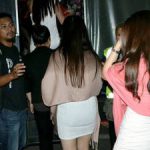
    KUALA LUMPUR: Police detained 60 female foreign guest relations officers (GROs) donning white ‘fairy’ dresses in a raid at a nightclub here early this morning.

    Kuala Lumpur Criminal Investigation Department chief SAC Nik Ros Azhan Nik Ab Hamid said 52 Thais, seven Vietnamese and one Laos national aged 19 to 33 were arrested in the 12.30am raid.

    “The GROs entertained the customers with a white fairy theme set for the night,” he told reporters at the scene.

    He said the customers then gave a sash, which they paid between RM100 and RM5,000, to the woman they wanted for special treatment.

    Nik Ros Azhan said they also detained a 49-year-old local man in charge of the premises, as well as three foreign male workers, comprising two Vietnamese and a Bangladeshi.

    He said investigations revealed that the night club had a valid operating license until the end of the year but illegally hired foreign women to work as GROs.

    He said all those arrested were taken to the Dang Wangi district police headquarters for further investigation under Section 55B of the Immigration Act 1959/63, Regulation 39B under the Immigration Regulations 1963 and Section 4 (1) of the Entertainment (Federal Territory) Act 1992.

    The raid by a team 18 enforcers of the Anti-Vice, Gambling and Secret Societies Division (D7) from the Kuala Lumpur police contingent headquarters ended at about 2am. — Bernama

    No ‘fairytale’ ending for 60 nightclub GROs in midnight raid
    Read More
    https://www.thesundaily.my/local/no-fairytale-ending-for-60-nightclub-gros-in-midnight-raid-MC2127358

    Views: 0

  • Star power: Togo bets on solar energy for its rural poor

    Star power: Togo bets on solar energy for its rural poor

    Not so long ago, whenever he wanted to watch a football match or recharge his phone, Ousmane Kantcho had to go “into town”—a 15-kilometre ride by bicycle on poor roads in the savannah.

    Views: 0

  • How a road sign trick sent a self-driving car into high-speed mode

    How a road sign trick sent a self-driving car into high-speed mode

    Can a little strip of tape on a 35-mile-per-hour speed limit sign cause a self-driving car to accelerate? Yes—and press attention, too. Researchers from security company McAfee wanted to see if they could dupe a Tesla car into thinking the speed limit was different than posted, and they succeeded.

    Views: 0

  • Spinoza’s Ethics of Strength of the Emotions in W Somerset Maughm’s Of Human Bondage

    [ad_1]

    The writer probes on the complex world of W. Somerset Maughm’s protagonist in the novel Of Human Bondage, using the propositions the Jewish Portuguese philosopher Baruch Spinoza postulated in his book Ethics in 1674. Some of Spinoza’s propositions are as follows( Morgan, 2006, pp 108-120):

    The following propositions of Spinoza enlighten the changing character of Philip in his own bildungsromans of his life. The force and increase of any passive emotion and its persistence in existing is defined not by the power whereby we ourselves endeavour to persist in existing, but by the power of external causes compared with our own power;

    The force of any passive emotion can surpass the rest of man’s activities or power so that the emotion stays firmly fixed in him;

    An emotion cannot be checked or destroyed except by a contrary emotion which is stronger than the emotion which is to be checked;

    Knowledge of good and evil is nothing other than the emotion of pleasure or pain insofar as we are conscious of it;

    An emotion whose cause we think to be with us in the present is stronger than it would be if we did not think the said cause to be with us;

    We are affected toward a future thing which we imagine to be imminent mo intensely than if we were to imagine its time of existence tofarther away from the present. We are also affected by a remembrance of a thing we imagine to belong to the near past more intensely if we were to imagine it to belong to the distant past;

    An emotion toward a thing which we think of as inevitable [necessarius] is more intense, other things being equal, than emotion toward a thing possible or contingent, that is, not inevitable;

    Emotion toward a thing which we know not exist in the present, and which we imagine to be possible, is, other things being equal, more intense than emotion toward a contingent thing;

    Emotion toward a contingent thing which we know not to exist in the present, is, other things being equal, feebler than emotion toward a thing past;

    No emotion can be checked by the true knowledge of good and evil, insofar as it is true, but only insofar as it is;

    Desire that arises from the true knowledge of good and evil can be extinguished or checked by many other desires that arise from the emotions by which we are assailed;

    The desires that arises from a knowledge of good and evil insofar as this knowledge has regard to to the future can be the more easily checked or extinguished by desire of things that are attractive in the present;

    Desire that arises from the true knowledge of good and evil insofar as this knowledge is concerned with contingent things can be even more easily checked by desire for things which are present;

    Desire arising from pleasure is, other things being equal, stronger than desire arising from pain;

    Every man, from the laws of his nature, necessarily seeks or avoids what he judges to be good or evil.

    The more every man endeavours and is able to seek advantage, that is, to preserve his own being, the more he is endowed with virtue. On the other hand insofar as he neglects to preserve what is to his advantage, that is, his own being to that extent he is weak.

    Philip is highly affected by nature. There is in Nature no individual thing that is surpassed in strength and power by some other thing. Whatsoever thing there is, there is another more powerful by which the said thing can be destroyed. And he was able to surpass all his problems because of the incoming different emotions, problems which proved to make him stronger if not released from “Human Bondage”.

    The force whereby a man persist in existing is limited, and infinitely surpassed by the power of external causes.

    Philip’s deformity limits his own persistence to live. But his meeting with Hayward, Clutton and Lawson, his former classmates in France, who taught him that life is all about passion and the pursuit of it, he became engross in his art. France did not also care about his clubfoot. Cronshaw taught him more philosophy in life about living in let live. Cronshaw even on his death bed, defied doctors’ prohibition. His life is anyway to end just like any other’s lives.

    Set in Kent, England, a sub-urban near London, the novel presents the multifaceted personal, social, political and religious experiences of Philip carey from his childhood to his middle age of thirty. A bildungsroman (1991, Smiley) in style, which highlights the formation of a youngman’s character through education, travels and early life experiences. Philip at the age of nine, as a young boy, is set apart from his peers by some misfortune and undergoes a humiliating experience that later proves strengthening. his first experience of love is unsuccessful or problematic one that nevertheless paves the way to a happy marriage with a suitable mate. The novel has ample observation, if not criticism, with the character’s institutions such as schools, churches and class structures.

    Philip’s personal life is truly an amalgam of life’s tragedies. But how he surpassed the seemingly insurmountable heap of oppressing weight, if not the meaninglessness or nothingness of life, is the focus of this attempt anchored on Spinoza’s propositions. To enumerate, at an early age, his mother died of tuberculosis and his father, a medical doctor, died of lung cancer. His innocence never understood the situation. He has only the temporary joy of travelling to Blackstable to live with his uncle William and childless Auntie Louisa. Forcibly liking his second family as an orphan, he is left reading his books without noise for his uncle, a Vicar in the community, is irated with children’s unruly behaviour. Aunt Louisa is incapable of understanding Philip. he is left with the care of the governess. His personal disability or deformity, being born with a club-foot, proves to be the stigma of his life forever. His early education in Kingston School, caused his early childhood bitter as his peers laughed at him, mocked and physically abused him because of his physical abnormality. Then, his adolescence which brings him to Heidelberg, Germany to study foreign languages, is never sweet. Girls chided him for his deformity. the consolation is meeting friends like Hayward and Miss Wilkinson, who flirted with him, to his disgust. His sojourn to France, albeit, his uncle’s disappointment, proves to be annihilating. His lack of talent in painting plus his deformity, made him a mediocre student. His classmate Fanny Price, who fell in love with him, on the pretext of sharing the same abnormality (hers is lack of beauty), committed suicide out of hunger and wretchedness.

    Then everything escalated to its height, when realizing that painting is not his passion, he goes back to England. He decides to change again to pursue what his uncle William tells him to do: to follow the footsteps of his father. To be a doctor. feeling he has nothing to do, he embraces the new idea. Sauntering along the Parliamentary Street of London, he is driven to dine in a cafe where he meets the slatternly waitress Mildred Rogers who awakens his sexual desire. But his languid mien, caused by his club-foot proves to be a disadvantage. the waitress prefers rugged and rich men. But his desire to pursue the pale, anaemic, aloof Mildred, beomes a challenge to him. Gradually, the two becomeclose. But the ambitious and materialistic waitress always insults him because of his deformity. to slander him cripple, would totally “cripple” his mood and emotion. Even when Philip is generous to the moody Mildred, she hurt him by marrying a German businessman Miller. His desperation is tantamount to his yearning for Mildred. He is left believing that one day, he would see Mildred again. His concentration with his medical study is forlorned. And Mildred came back,looking sickly, with a child. His generosity and forgiveness for his first love, who hurts him the most, is even greater than life. The ingrate waitress after a little recovery from poverty, elopes with Griffith, Philip’s handsome and robust classmate. That is the height of Mildred’s shamelessness. So her expected return is welcomed with derision by the newly awakened Philip. Even when Mildred turns into a prostitute, Philip is only capable of compassion, without passion or sexual desire. She is freed at last. And Philip is extricated from the pains excruciatingly caused by the destitute Mildred.

    His obsession to Mildred costs Philip his fortune and gradually his savings is left with seven pounds. He is forced to stop from his medical studies that brings him to experience unbelievable poverty. He meets the generous Athelneys who fed and sheltered him in his misery. His uncle’s death, leaving an average fortune, helps him to finish his medical studies. His fateful shelter with the Athelneys brings him to his final, harmonious and peaceful resolution to marry Sally Athelney and go on with his life beautifully. Shakespeare is affirmed by saying that “all is well that ends well.

    At this juncture, it is noteworthy to enumerate Spinoza’s propositions to elucidate Philip’s “bondage” and his strength of his emotion. Spinoza in his preface to his philosophical treatise wrote:

    I assign the term “bondage” to man’s lack of power to control and check the emotions. For a man at the mercy of his emotions is not his own master but is subject to fortune, in whose power he so lies that he is often compelled, although he sees the better course, to pursue the worse. In this Part I have set myself the task of demonstrating why is so, and also what is good and what is bad in emotions. But before I begin, I should like to make a few preliminary observations on perfection and imperfection, and on good and bad ( Morgan, 2006).

    In the beginning, Philip is a slave if not a victim of his emotion. His physical deformity, his club-foot, caused him too much pain. He learned to hate his classmates and,worst, abandoned his belief in God. He could not appreciate the God of his uncle vicar when God cannot give him the miracle he wanted to have normal feet. His painful childhood in school changed him to be rough character. He never wanted to become a vicar anymore. His obsession to Mildred indeed showed his real weakness as a man, and even wretchedness as a human being because of his deformity. he would always think that women cannot love him as he is because of his deformity.

    He who has undertaken something and has brought it to completion will say that the thing is completed; and not only he but everyone who rightly knew, or thought he knew, the intention and aim of the author of that work. For example, if anyone sees a work (which I assumed is not yet finished) and knows that the aim of author is to build a house, he will say the house is imperfect. On the other hand, as soon as he sees that the work has been brought to the conclusion that its author had intended to give it, he will say that the house is perfect. But if anyone sees a work whose like he had never seen before, and he does not know the artifecer’s intention, he cannot possibly know whether the work is perfect or imperfect.

    This appears to have been the original meaning of these terms. But when men began to form general ideas and to devise ideal type of houses, buildings, towers, and so on, and to prefer some models to others, it came about that each called “perfect” that which he saw at variance with his own preconceived ideal, although in the artifecer’s opinion it had been fully completed. There seems to be no other reason why even natural phenomena (those not made by human hand) should commonly be called perfect or imperfect. For men there are wont to form general ideas both natural phenomena and artifacts, and these ideas they regard as models, and they believed that Nature (which they consider does nothing without an end in view) looks to this ideas and holds them before herself as models. So when they see something occurring in Nature at variance with their preconceived ideal of the thing in question, they believed that Nature has then failed or blundered and has left that thing imperfect from their own preconceptions rather than from true knowledge.

    So perfection and imperfection are in reality only models of thinking, notions which we are wont to invent from comparing individuals of the same species or kind; and it is for this reason that I previously said (Def. 6, II) that by reality and perfection I mean the same thing. For we are wont to classify all the individuals in Nature under one genus which is called the highest genus, namely, the notion of Entity, which pertains to all the individuals in Nature without exception. Therefore insofar as we classify individuals in Nature under this genus and compare them with one another and find that some have more being or reality than others, to that extent we say that some are more perfect than the others. And insofar as we attribute to them something involving negotiation, such as limit, end, impotence and so on, to that extent we call them imperfect because they do not affect our minds as much as those we call perfect, and not because they lack something of anything except that which follows from the necessity of nature of its efficient cause; and whatever follows from the necessity of the nature of its efficient cause must be necessarily be so.

    To be a master of his emotion is to attain perfection. It may not be physical but spiritual, mental and emotional. His challenges may have hardened him but enlightened him to loosen up and later, embrace the beauty of life. The unattainable perfection, was answered, through his friend Cronshaw, a poet whom he met in France, that the meaning of life cannot be answered unless one lives it. he realized that men are born, study, work, marry, have children and die is the most beautiful pattern that the Persian rug edifies.

    As for the terms “good” and “bad,” they likewise indicate nothing positive in things considered in themselves, and nothing but models of thinking, or notions which we form from comparing things with one another. For one and the same thing can at the same time be good and bad, and also indifferent. For example, music is good for one who is melancholy, bad for one in mourning, and neither good or bad for the deaf. However, although this is so, these terms ought to be retained. For since we desire to form the idea of man which we may look to as model of human nature, we shall find it useful to keep these terms in the sense I have indicated. So in what follows I shall mean by “good” that which we certainly know to be the means for our approaching nearer to the model of human nature that we set before ourselves, and by “bad” that which we certainly know prevents us from reproducing the said model. For it is important to note that when I say somebody passes from a state of less perfection, to a state of greater perfection, and vice versa, I do not mean that he changes from one essence or to form to another (for example, a horse is as completely destroyed if it changes into a man as it would be if it were to change into an insect), but that we conceive his power of activity, insofar as this is understood through his nature, to be increased or diminished.

    Philip may have been both good and bad due to circumstances. he was good in the Blackstable with his Auntie Louisa and Uncle William. he became bad in school because his classmates taunted him because of his clubfoot. In Heidelberg, he is good to all the people even if he did not understand their silence and even their insolence. In France, was forced to become bad, to protect himself from the looming abuses of other foreigners. The death of an anti-social fanny Price, showed him to be the only compassionate painting student.

    Hence, after a series of Philip’s tragedy, his experiences, his meeting with different people, his education, his travel to Heidelberg, to Paris and to London, his affluence and reversal of his fortune to poverty taught him greatest lessons in life. That life can be beautiful if man knows to master his emotion, moderate his desire and be reasonable in every decision. A man is finally freed from the chains and cufflinks ” Of Human Bondage”.

    References:

    Maughm, Somerset W. (1991). Of Human Bondage.

    Canada: Bantam Book Doubleday.

    Morgan, Michael (ed.). (2006). The Essential Spinoza: Ethics And Related Writings.

    Cambridge: Hackett Publishing, Inc.

    [ad_2]

    Source by Wilfredo M. Valois

    Views: 0

  • Three Reasons Why Money Was The Worst Invention Of All Time

    [ad_1]

    Who invented money? Ask any number of people and they couldn’t tell you who it was that actually invented money or where the idea came from. History has given us some bad ideas, but money has to be the worst and here are my top three reasons why.

    1. Something Invented By Man Should Not Have Power Over Him.

      If I think really hard and try to imagine a time without money, before it was invented and used on a daily basis, I tend to imagine that the world was a completely different place. People most likely had a barter type society where goods and services were exchanged and that is how one survived. If I had a particular skill, say hunting, and you were hungry you could come to me for food. The idea would be that if you could make fire, and I could provide the food, then we could exchange our skills or abilities and everyone got what was good for them. I assume, for the sake of argument, that if someone possessed absolutely no skills whatsoever, that person was still allowed to eat. I can’t imagine that I would loan the helpless soul some meat, only if it could be paid back somehow. Before helpless soul could blink, he might owe me for five dinners and then I have to send out the collection agents to call in his debts. Money provides control, in both a positive and negative control. Although it is man made, and essentially just a piece of paper or a mixture of cheap metals, money has power, and is power. I can just imagine Mr. Helpless Soul explaining to his wife that he can’t repay the hunter and doesn’t know what to do. So Mr. Hunter decides to enslave the Helpless Soul family until the debt is repaid. It is unfathomable to me that so many people in my country, and the world go hungry every day. Those who possess the money have the power to deny the needs of those that don’t have means. Where have the humanitarians gone? I’ve seen a business owner kick out a person who was homeless and starving, and then half an hour later deal with a complaining customer as he shouted that his food was not hot enough. Money only has the power that we give it. If we choose to see it as just a means to an end, or just some silly paper we have been told to obey our whole lives, then one can focus on what really matters. I am not advocating not paying debts, or shucking responsibilities. This is the world we live in, and norms must be followed…until the laws change again to suit what the politicians want on any particular whim of a day.

    2. Money Shifts Focus From Helping One Another To Arbitrary “Worth” Of Mere Things.

      Why should I do anything to help anyone else, unless they can pay for it? If my entire focus in life is to obtain material things, then I should only be motivated by money, or obtaining it, to do anything. What is anything really worth? Marketing companies have defined worth for me since I was a child, and it was beaten into me during commercial breaks of GI Joe. What is the value of all of the things you want in comparison to something that really matters? Imagine what the worth is of spending one more hour with a loved one before they pass away and are gone forever. The worth of teaching your children that there is more to life than money and obtaining things. The worth of feeding a homeless man, and helping him have at least one night’s sleep where his stomach doesn’t keep him awake. The value of reaching out a hand and helping someone else in this world is worth more than the largest diamond, the heaviest gold, and the purest oil. Now, I am the biggest hypocrite on this topic, because I love things! It has been programmed in me for so long, it is hard to shake the desire to obtain things. Imagine a life in which people helped each other because it is the right thing to do, and not just for what they could get in return. The argument is, well, that things can’t just be free. You have to pay something to get something. How would the world work if everyone was just giving away everything for free and everyone just had everything they needed and didn’t have to be slave to credit card companies anymore or to a job that they dislike? How would we survive? My answer to those questions is, famously! I would be free to learn a trade that benefits others and could use that ability to provide for my family and to help others. I have wanted to help by donating or giving my entire life, but never had the means. I’ve donated a little time here and there, and not near as much as I should or would have liked to, but at least it was something. But because I like things, and those things have cost me money, I have to continue in my job, and repeat the same cycle my father did.

    3. Money Makes You Question If People Really Care About You, Or Just Your Money.

      I try to envision the end of my life surrounded by those that have made my journey with me, who love and care for me because of the enrichment I gave to them through my friendship and dedication. In my latter years, enjoying my days with my wife, and talking to my grown children and my grand children. I want to soak up every single minute of my life between here and there. I want to feel and love and enjoy all that there is to offer. I have seen families destroyed, fighting over the money left behind after a loved one passes. Some of those grudges are held for the rest of their lives. They lose a relationship and also a loved one, and the only thing they can think about, is how much money they will be getting. More than likely, Mr. Entitlement as we will call him, won’t even miss the loved one that was lost. How many brilliant individuals never get the chance to succeed because of lack of means, and how many elite are given free passes because their pile of paper is bigger than yours. Do the people closest to you care about you or your money? Does the girlfriend only love you because of what you can buy her? Do your children only listen to you in order to get something they want? Take the money away, and would they abandon you? Such a great idea, this money.

    My answer to all of this is that I don’t have an answer. My two year old daughter asked me about money and loves putting money in her piggy bank. It made me start to consider all the reasons I worry about money, and fight about money, and read books about money. Nothing like the honesty of a child, to make you sit and think.

    [ad_2]

    Source by Mitchell Pierce

    Views: 0

  • Who Will Become Wealthy in the Information Age?

    [ad_1]

    As you know, we’re now well and truly in the
    Information Age. It began about 10 years ago. In fact,
    many economists say it began in 1989, with the Fall of
    the Berlin Wall (and the start of the World Wide Web).

    To understand who will become wealthy in the
    Information Age, first we need to understand how the
    Information Age differs from the Industrial Age (born
    about 1860, died about 1989).

    In fact, let’s get a complete overview and go back to
    the Agrarian Age.

    In the Agrarian Age, society was basically divided
    into two classes: the landowners and the people who
    worked on the land (the serfs). If you were a serf,
    there wasn’t much you could do about it:
    land-ownership passed down through families and you
    were stuck with the status you were born into.

    When the Industrial Age arrived, everything changed:
    it was no longer agriculture that generated most of
    the wealth, but manufacturing. Suddenly, land was no
    longer the key to wealth. A factory occupied far less
    land than a sheep farm or a wheat farm.

    With the Industrial Age came a new kind of wealthy
    person: the self-made businessman. Wealth no longer
    depended on land-ownership and the family you were
    born into. Business acumen and factories were creating
    a new class of wealthy person. But it still required
    enormous capital to build a factory and start a
    business.

    Then came the World Wide Web (in about 1989) and
    globalization. Suddenly, everything changed again.

    Factories (or real estate) were no longer necessary to
    run a business. Anyone with a website could start a
    business. The barriers to wealth that existed in the
    Agrarian Age and the Industrial Age were completely
    gone. People who could never have dreamed of owning
    their own business were making millions from their
    kitchen table.

    Of course, the Information Revolution didn’t begin
    in 1989.

    It began in 1444 when Gutenberg invented the printing
    press in Mainz, Germany.

    But the printing press (newspapers, magazines,
    paperbacks) belonged to the Industrial Age, not the
    Information Age.

    The printing press is a ‘one-to-many’ technology. The
    Internet is a ‘many-to-many’ technology. And that was
    what changed in 1989.

    The Industrial Age was about centralization and
    control. The Information Age is about
    de-centralization and no control. No government and no
    media magnate controls the Internet. This is the
    crucial thing to understand about the Information Age.

    As we moved from the Agrarian Age through the
    Industrial Age to the Information Age, there’s been a
    steady collapse of the barriers that kept one section of
    society wealthy and the other section poor.

    In the Information Age, literally anyone can become
    wealthy.

    So now that we have a clearer picture of how the
    Information Age differs from the Industrial Age, let’s
    ask that question again: ‘Who will become wealthy in
    the Information Age?’:

    (1) People Who are Self-Taught

    To explain this better, let’s go back to the Agrarian
    Age and the Industrial Age, and the Transmission of
    Skills.

    In the Agrarian Age, skills were passed on from father
    to son. If you wanted to learn how to be a blacksmith
    you had to be a blacksmith’s son. If you wanted to
    learn to be a stone-mason, you had to be the son of a
    stone-mason.

    With the coming of the Industrial Age, all this
    changed. You could go to University and learn whatever
    skills you wanted. Knowledge was freely available.

    But in the Information Age, the Transmission of Skills
    is changing once again.

    The skills necessary to succeed in the Information Age
    are not being learnt from our parents (as in the
    Agrarian Age), nor are they being learnt in schools
    and colleges (as in the Industrial Age). Children are
    teaching their parents computer skills. And many of
    the entrepreneurs who start hi-tech Internet companies
    have never been to college.

    The millionaires (and billionaires) of tomorrow
    probably won’t have a college education. They will be
    high-school drop-outs, self-taught people.

    (2) People with New Ideas.

    Again, it’s the people who are able to think outside
    of the existing structures who will become wealthy in
    the Information Age. Often, it’s just a Simple Idea
    that launches people to success in the Information
    Age.

    Take Sabhir Bhatia, for example – the man who invented
    Hotmail. Bhatia was a computer engineer working in
    Silicon Valley. He had no previous business
    experience, whatsoever.

    But one day, while he was driving back from work, a
    friend called him on his cell phone and said that he
    had an idea: What about starting a free, web-based
    email service? Bhatia knew this was the idea he’d been
    waiting for. He told his friend to hang up immediately
    and ring him at home on a secure line.

    Three years later he sold Hotmail to Microsoft for
    $400 million.

    (3) Writers

    The third group who will become wealthy in the
    Information Age are Writers.

    In the Industrial Age, Writers depended on large
    publishing Houses to get published (remember that the
    printing press is an Industrial Age technology – it is
    centralized and controlled). And the Publishing Houses
    took the lion’s share of the profits.

    In the Information Age, Writers are doing their own
    publishing – and keeping most of the profits
    themselves. Indeed, Writers are flourishing on the
    Web – mainly through eBooks and Ezine Articles.
    But even if you don’t write eBooks or Ezine Articles,
    if you own a website, you are a Writer.

    Why?

    Because the Internet is basically a written medium. It
    favors writers, people who are able to communicate
    effectively through the written word. Remember, it’s
    not the graphics on your website that sell, it’s the
    words you use.

    In the Information Age, we’re all Writers!

    [ad_2]

    Source by

    Views: 0