Tag: Role

  • Billions worldwide living with herpes

    Billions worldwide living with herpes

    About half a billion people worldwide are living with genital herpes, and several billion have an oral herpes infection, new estimates show, highlighting the need to improve awareness and scale up services to prevent and treat herpes.

    About 13% of the world’s population aged 15 to 49 years were living with herpes simplex virus type 2 (HSV-2) infection in 2016, the latest year for which data is available.  HSV-2 is almost exclusively sexually transmitted, causing genital herpes. Infection can lead to recurring, often painful, genital sores in up to a third of people infected.

    Herpes simplex virus type 1 (HSV-1) is mainly transmitted by oral to oral contact to cause oral herpes infection – sometimes leading to painful sores in or around the mouth (“cold sores”). However, HSV-1 can also be transmitted to the genital area through oral sex, causing genital herpes.

    Around 67% of the world’s population aged 0 to 49 had HSV-1 infection in 2016 – an estimated 3.7 billion people. Most of these infections were oral; however, between 122 million to 192 million people were estimated to have genital HSV-1
    infection.

    Genital herpes is a substantial health concern worldwide – beyond the potential pain and discomfort suffered by people living with the infection, the associated social consequences can have a profound effect on sexual and reproductive
    health” says Dr Ian Askew, Director of the Department of Sexual and Reproductive Health and Research at the World Health Organization (WHO). 

    Herpes and HIV

    People with HSV-2 infection are at least three times more likely to become infected with HIV, if exposed. Thus, HSV-2 likely plays a substantial role in the spread of HIV globally. Women are more susceptible to both HSV-2 and HIV. Women living in
    the WHO Africa Region have the highest HSV-2 prevalence and exposure to HIV – putting them at greatest risk of HIV infection.

    No cure: vaccine needed

    There is no cure for herpes. Antiviral medications, such as acyclovir, famciclovir, and valacyclovir, can help to reduce the severity and frequency of symptoms but cannot cure the infection.

    Better awareness, improved access to antiviral medications and heightened HIV prevention efforts for those with genital HSV symptoms are needed globally. In addition, development of better treatment and prevention interventions is needed, particularly
    HSV vaccines.  

    “A vaccine against HSV infection would not only help to promote and protect the health and well-being of millions of people, particularly women, worldwide – it could also potentially have an impact on slowing the spread of HIV, if developed
    and provided alongside other HIV prevention strategies” says Dr Meg Doherty, Director of the WHO Department of Global HIV, Hepatitis, and STI Programmes.

    Authored by staff at the University of Bristol, the WHO, and Weill Cornell Medical College-Qatar, and published in the Bulletin of the World Health Organization, this new study estimates the global infection prevalence and incidence of HSV-1 and HSV-2
    in 2016. 

    Billions worldwide living with herpes
    Read More
    https://www.who.int/news-room/detail/01-05-2020-billions-worldwide-living-with-herpes

    Views: 0

  • Maternal infections in health facilities

    Maternal infections in health facilities

    A clearer picture of the global impact 

    New research from the Global Maternal Sepsis Study (GLOSS), a major WHO/HRP initiative, shows that infection has a much larger impact on global maternal mortality and morbidity than previously thought.

    Logo of the Lancet Global HealthThe
    results from GLOSS, published in The Lancet Global Health, are the first to provide data on frequency of maternal infections and
    sepsis across the pregnancy and post-pregnancy period, in a large number of health facilities around the world. 

    Around 11 women per 1000 live births had an infection which resulted in or contributed to what is known as a severe maternal outcome – either they died or nearly died – during their hospitalization. 

    Urgent improvement is needed to manage this life-threatening risk faced by all pregnant and recently pregnant women, wherever they are in the world. 

    What is maternal sepsis and how does it lead to maternal death?

    Maternal sepsis is a life-threatening condition that arises when the body’s response to infection causes injury to its own tissues and organs during pregnancy, child-birth, post-abortion or the postpartum period.

    The latest global estimates place sepsis due to obstetric infections as the third most common cause of maternal mortality. However, this only includes infections as a direct result of pregnancy, such as endometritis or post-caesarean wound infections.

    Few
    previous studies include post-abortion infections. Neither do they address indirect infections such as respiratory and meningitis, which are aggravated by pregnancy but not directly caused by it.

    A better understanding of maternal infection

    GLOSS was a massive facility-based data collection effort led by WHO, accompanied by a ‘STOP SEPSIS!’ campaign to increase awareness among healthcare providers.

    The study gathered data on women who were admitted with suspected or confirmed infection during pregnancy or post-pregnancy over a one-week period in 2017. More than 2800 women participated in the study in 52 countries.

    GLOSS included healthcare facilities that care for women during pregnancy, childbirth or at the end of pregnancy, as well as facilities without maternity service but where women could be hospitalized during or after pregnancy, and data on infections
    which are not usually recorded as maternal sepsis, including post-abortion and indirect infections. 

    The result is a more complete understanding of the frequency and impact of maternal infections in health facilities. 

    GLOSS calls attention not only to the wider range of risks faced by pregnant women but also to the long period of time during which they are at risk. 

    Putting global numbers on maternal infection and sepsis

    Overall, around 70 pregnant or recently-pregnant women per 1000 live births were found to have a maternal infection needing hospital management. 

    Across the study, 11 women with either direct or indirect infection per 1000 live births developed a severe maternal outcome, but in low- and middle-income countries up to 15 women per 1000 births were affected.

    Infections were the underlying cause of most of the deaths recorded during the study, primarily post-abortion infection and indirect infections. Infections were also present in about a third of deaths attributed to other causes, such as postpartum
    haemorrhage.

    This suggests that the contribution of infection to global maternal mortality and morbidity may be larger than current reports of maternal sepsis mortality suggest.

    Preventing, identifying and treating maternal infection and sepsis

    Some of the most common maternal infections found in the study, such as urinary tract infections, post-caesarean and post-abortion infections, are largely preventable and treatable.

    GLOSS results suggest that current levels of monitoring and clinical care across health facilities are not enough to prevent, identify and treat levels of maternal infection effectively. 

    For instance, a complete set of vital signs was not reported for a third of the women in the study, on the day their infection was suspected or diagnosed. Delays in antimicrobial therapy were frequent.

    GLOSS also shows marked differences across countries, with the highest burden in low- and middle-income countries, compared with high-income countries.

    This may reflect the impact of broader health determinants in different country contexts. Challenges of overcrowding, limited access to water and sanitation and constraints to safe births by skilled birth attendants can reduce the ability of healthcare
    providers to manage the frequency and outcome of maternal infections.

    An opportunity to implement evidence-based practice

    GLOSS gives healthcare providers, policy-makers, and the public at large an opportunity: to mobilise around these data improve evidence-based practice, and save lives. 

    WHO has produced a number of resources which can support timely action to prevent, diagnose and treat maternal infection, as well as activities such as the upcoming SAVE LIVES: Clean Your Hands campaign
    on 5 May which celebrates the central role played by nurses and midwives in clean health care. 

    In addition, WHO will publish a global sepsis epidemiology report around the 73rd World Health Assembly (WHA) in May, as requested in the
    2017
    WHA Resolution on Improving the prevention, diagnosis and clinical managementof sepsis.

    Understanding why and how infection affects women is essential for equipping healthcare providers with life-saving knowledge and enabling health care systems to bring down global maternal mortality and morbidity.

    Related publications

    WHO recommendations for prevention and treatment of maternal peripartum infections

    WHO Clinical practice handbook for safe abortion

    Global guidelines on the prevention of surgical site infection

    WHO statement on maternal sepsis

    World Health Assembly resolution on Improving the prevention, diagnosis and clinical management of sepsis

    Health Topics

    Antimicrobial resistance

    Infection Prevention and Control

    Water Sanitation Hygiene

    Other links

    Global Maternal Sepsis Study

    SAVE LIVES: Clean Your Hands 5 May 2020


    Maternal infections in health facilities
    Read More
    https://www.who.int/news-room/detail/27-04-2020-maternal-infections-in-health-facilities

    Views: 0

  • What matters to women in the postnatal period?

    What matters to women in the postnatal period?

    The right to a positive maternity healthcare experience at every stage 

    Each pregnancy is unique and clinical needs can change across the pregnancy, childbirth and postnatal periods. One thing that never changes is the right to a positive experience at every stage. 

    Achieving the best possible physical, emotional, and psychological outcomes for every individual and newborn requires health systems to take a human rights-based approach: not only preventing maternal death and morbidity, but prioritising person-centred
    care and well-being.

    WHO is developing new guidelines for a positive experience of postnatal care, due to be published next year. To inform these guidelines and ensure that postnatal services can better meet the needs of women and their babies, WHO undertook a qualitative
    systematic review on what matters to women in the postnatal period.

    Joys and challenges in the postnatal period

    There is limited research about values and preferences in the postnatal period, defined by WHO as the first six weeks after childbirth. Studies have often focused on the results of specific postnatal interventions, rather than on the individuals who use
    them. 

    ‘What matters to women in the postnatal period: A meta-synthesis of qualitative studies,’ published in PLOS ONE, gives long-overdue respect to the authority of women’s own experiences. The authors review first-hand data from 15 countries
    and 36 studies published after the year 2000 relating to women’s beliefs, expectations and values at this significant time of life.  

    These studies affirm that a positive postnatal experience can result in joy, self-confidence and enhanced capacity to thrive as both a person and a parent.

    They are also vocal about the potential challenges of adjusting to a ‘new normal’ following childbirth, including changes in self-identity, relationships, and sexual behaviour.

    What is a positive postnatal experience? 

    A positive postnatal experience for a woman will be one that responds to her specific context and preferences. 

    It will provide the confidence, knowledge and skills women need in the weeks following childbirth, supporting them to adjust to any changes in their intimate relationships and build new family ones. Women will be better equipped to navigate physical and
    emotional challenges and to experience the dynamic achievement of personal growth. 

    This should be a shared responsibility, not a solitary one. Community has a critical role in enabling a positive postnatal experience, including partners, family and elders.

    It is crucial that healthcare providers meet each woman’s needs, as well as those of their babies. 

    Supporting choices and rights to improve postnatal health outcomes

    There are an estimated 303 000 maternal deaths annually, according to recent WHO figures. Most of these deaths occur postnatally. 

    The postnatal period is therefore a vital opportunity to improve both maternal and neonatal health and wellbeing: supporting healthy behaviors, providing life-skills education, facilitating breastfeeding, counselling women about family planning options,
    supporting good mental health, preventing and treating childbirth-related complications. 

    Health care systems that empower individuals by supporting their values, preferences and rights are fundamental to improving maternal and newborn health outcomes. 

    WHO’s guidance for positive maternity care

    WHO has recently released recommendations on antenatal care for a positive pregnancy experience, and on intrapartum care for a positive childbirth experience.

    These publications made important clinical updates, including an increase from four to eight recommended antenatal contacts, and a revision to the decision-making process for interventions to accelerate labour. 

    They also uphold every woman’s right to a positive maternity care experience: one where her pregnancy does not erase her competency, autonomy and right to participate in decision-making for her own care and the care of her newborn. 

    Women’s choices and rights to sexual and reproductive health care, including maternity care, should be respected at every stage of the continuum of maternal and newborn care. This is true across all income settings, as well as in humanitarian settings
    and during public health emergencies.

    When WHO’s postnatal guidelines are released next year, they will complete the maternity care series built around what matters to women.

    Rather than dividing care into three periods of antenatal, intrapartum and postnatal, these publications can be used to establish a model in which health systems support women, their baby and wider network physically, psychologically, socially and emotionally
    through this significant life event. 

    Other resources


    What matters to women in the postnatal period?
    Read More
    https://www.who.int/news-room/detail/22-04-2020-what-matters-to-women-in-the-postnatal-period

    Views: 0

  • COVID-19 And Nigeria’s Pathetic Leadership Deficit By Ugochukwu Ejinkeonye

    COVID-19 And Nigeria’s Pathetic Leadership Deficit By Ugochukwu Ejinkeonye

    COVID-19 And Nigeria’s Pathetic Leadership Deficit By Ugochukwu Ejinkeonye 1

    COVID-19 And Nigeria’s Pathetic Leadership Deficit By Ugochukwu Ejinkeonye 2


    There is no better warning about the growing confusion that seems to be gradually beclouding the federal government’s response to the coronavirus challenge than the belief it betrayed last week that, perhaps, all it needs to calm the fears and apprehensions of Nigerians about its ability to halt the spread of the virus is to reel out a catalogue of activities President Buhari was said to have undertaken so far concerning the pestilence, whether the people felt their impact or not. 

    Now, if your family is starving badly, do you solve the rumbling signs of biting hunger in their stomach with some wild tales of the efforts deployed by you so far to feed them, or just keep quiet, give them food, and they will see and feel for themselves that you have played your role responsively and effectively?  Or if you must talk, tell them something you have done whose benefits they can readily verify and identify with. 

    Indeed, some Nigerians are beginning to achieve the conviction that there must be something about being in government in this country that seems to diminish the reasoning ability of people once they get in there and deprives them of the capacity to realize when they have stopped making sense or even become downright annoying. This is very pathetic. 

    And so, last week, presidential spokesperson, Mr. Femi Adesina, issued a document entitled: “COVID-19: What President Buhari Has Done And Is Doing.” And, I suppose that with the release of that handout, the virus immediately received a deadly blow and vanished from the country! Aren’t we so blessed? Why then are Nigerians not on the streets celebrating the unprecedented feat? 

    A prominent item on Mr. Adesina’s list is the president’s March 29 broadcast. And what exactly did the broadcast achieve? The two things I can readily remember now is that Gen Buhari had announced the continuation of the school feeding programme for pupils who are all at home now due to the closure of schools as part of the efforts to contain the spread of the coronavirus. Probably, nobody remembered to inform him and his speech writers that school children were on compulsory holidays, or are they going to send the food to them in their homes? Or, perhaps, somebody is trying to find a justification for the billions of naira we will be informed later was spent on the exercise?  

    Also, the president proclaimed the lockdown of Lagos and Ogun states and the Federal Capital Territory (FCT).  And when he was through, he returned to his hideout – where only a few privileged eyes and ears see and hear from him, and then come out to tell us what they think he has said or done.

    Now, what exactly was the lockdown meant to achieve?  Okay, as social interactions are reduced, the chances of spreading the virus decrease.  Yes, but what else?  Has anyone seen any evidence that there were any plans to use the stay-at-home period to access the people and step up medical tests to determine how many people have become infected with the virus and how they could be attended to? 

    The government that was boasting that it was “adequately prepared” to tackle the virus was later to prove when the virus eventually arrived that it was only making empty claims as usual.  A country of 200 million people has yet to demonstrate any capacity to test even a reasonable fraction of one percent of her population. And somebody is publishing a document to tell us what the president was supposed to have done or is doing. As if such boring tales will remove the cloud of gloom hovering over Nigeria? 

    Again, in a country where electric power is just an unaffordable luxury for many, how can a leader just lock down some states and return to his hideout to continue his “vacation” that was rudely interrupted by the loud, persistent and widespread demands that he should address his country even though some other presidents were doing daily briefings and leading the war against the virus from the front?  As the markets closed and movements became restricted, how are those who could afford to buy and stock food items at home preserve them without electric power?  

    What of the greater population which depend on daily earnings for their survival?  What is the government’s plan for them? Okay, we are hearing of palliatives that have been extended to this category of people and the billions of naira that have already been transferred to their accounts?  Now, who has encountered the happy recipients of the twenty thousand naira (N20, 000) said to have been given to each of them?  Are there really existing data showing the social and economic status of every Nigerian which is in the possession of the authorities?  So, all the “poor and vulnerable” Nigerians now have bank accounts whose details are known to the government?  So, why then are too many Nigerians very suspicious of these claims as shown in their social media comments? And why is such a rare display of kindness by this government not being celebrated? Or have the funds (if indeed any were shared) ended up in the hands of the same people who have more than enough to need them while those who are genuinely deprived remain terribly famished? 

    Already, the biting hunger out there is forcing a growing number of people to defy the no-movement decree and soon, the whole effort might be defeated, and the country will return to square one.  Information Minister, Mr. Lai Mohammed, is threatening that the lockdown may be extended if Nigerians fail to behave themselves. But what he should rather have done is to hasten to school himself to realize that there is always a price to pay when leaders leave the country they claim to be governing in great disarray only to suddenly wake up when there is an emergency to grope for fix-quick solutions. 

    A few days after the president’s broadcast (that is, Tuesday, March 31), Daily Independent carried a front page lead story about 26 Americans who came into the country through the Murtala Mohammed International Airport and headed to Calabar without being screened.  Now, who cleared their trip to the country and why were there no health officials available to screen them and ensure they were quarantined for 14 days before being allowed to fly to Calabar?  Is it because they are Americans or clients of the Nigerian National Petroleum Corporation (NNPC) or both?  Does that automatically exempt any of them from being a carrier of the virus which is presently ravaging their own country?  What kind of government claims to be fighting a virus with one hand and using the other hand to be undermining the efforts being deployed to contain it? 

    Okay, the Minister of Health, Dr. Osagie Ehanire, has just announced that an 18-man Chinese team of medical “experts” will soon arrive the country to “assist” Nigeria in the fight against the coronavirus.  Now, is it the federal government that asked China for help or was it China that volunteered their assistance?  Indeed many Nigerians are vehemently opposed to this gesture at this time.  Our own local medical experts have not shown any signs of being overburdened by the work, so what difference are these 18 Chinese doctors and nurses going to make?  Will they, like the 26 privileged Americans, also be given express entry into the country or will they be isolated for 14 days as should be the case, before they would be allowed to start rendering their “assistance”?  

    Do we really need this Chinese gift now or is it that the government lacks the liver to politely decline their offer of help, despite the widespread apprehension among the citizenry about their involvement (since many Nigerians, habour strong fears that the gesture might turn out a Greek gift)? Even the umbrella body of Nigerian doctors, the Nigerian Medical Association (NMA), has come out to strongly oppose the coming of the Chinese medical team.  Is it that our government is too intimidated to say NO to China’s offer probably because it has yoked itself so much with crushing debts due to its excessive borrowings from them – debts, whose positive effects on Nigerian lives many are yet to see? 

    I raise these points because, although, Nigeria has recorded one of the lowest deaths from coronavirus, it was the stubborn refusal of the government to close our borders when it became very necessary and urgent (and despite calls from well-meaning Nigerians) that led to the explosion in the number of confirmed cases that the country has recorded today.  In saner climes, the government should have profusely apologized for that terrible miscalculation that is costing the nation so much now. 

    But it now has another opportunity now to gratify the yearning of Nigerians and reject the Chinese offer even if it is well-meaning and the fears about it are misplaced. 

    Now, what lessons is the government taking away from the scourge of coronavirus? Will they see the need to equip our hospitals this time and upgrade at least few of them to world standard now that they have realized the folly of always waiting to use public funds to send themselves and their families abroad to treat even minor ailments?  For the first time in Nigeria, the naïve and largely misguided Nigerian leaders have found out that it is not always safe to seek solutions for health challenges outside the country and that there is afterall no place like home. This is hoping that the lesson will endure and be redemptive. 

    *Ugochukwu Ejinkeonye, is a Nigerian journalist and writer. (scruples2006@yahoo.com) 

    Opinion

    AddThis

    : 

    Original Author

    : 

    Ugochukwu Ejinkeonye

    Disable advertisements

    : 
    COVID-19 And Nigeria’s Pathetic Leadership Deficit By Ugochukwu Ejinkeonye
    Read More
    http://saharareporters.com/2020/04/08/covid-19-and-nigeria%E2%80%99s-pathetic-leadership-deficit-ugochukwu-ejinkeonye

    Views: 0

  • US pharmacies authorized to test for coronavirus

    US pharmacies authorized to test for coronavirus

    US pharmacies authorized to test for coronavirus 3

    WASHINGTON: The US authorized pharmacies on Wednesday to carry out tests for the coronavirus, including newly developed antibody tests that detect whether a person who has recovered from illness had COVID-19.

    Health secretary Alex Azar, announced that all tests approved by regulators could be carried out by pharmacies as the country seeks to ramp up its testing efforts.

    “The Trump Administration is pleased to give pharmacists the chance to play a bigger role in the COVID-19 response, alongside all of America’s heroic healthcare workers,“ he said.

    A nasal swab test can detect whether a person currently has the coronavirus.

    After they have recovered, a test that looks at whether their body developed antibodies that fought off the virus and can be used — even if the person never showed symptoms.

    There are different kinds of antibody tests and they can’t yet tell whether a person has sufficient antibodies to be protected against future infection.

    A Chinese study posted this week, but not yet peer reviewed, showed that some former patients had relatively low levels of antibodies in the blood.

    In Washington on Wednesday, a private medical center announced that it was offering a 15-minute serology test, at a cost of $290. – AFP

    US pharmacies authorized to test for coronavirus
    Read More
    https://www.thesundaily.my/world/us-pharmacies-authorized-to-test-for-coronavirus-LF2236904

    Views: 0

  • Joint Leader’s statement – Violence against children: A hidden crisis of the COVID-19 pandemic

    Joint Leader’s statement – Violence against children: A hidden crisis of the COVID-19 pandemic


    The COVID-19 pandemic is having a devastating impact across the world. Efforts to contain the coronavirus are vital to the
    health of the world’s population, but they are also exposing children to increased risk of violence – including maltreatment,
    gender-based violence and sexual exploitation.

    As leaders of organisations committed to ending violence against children, we come together in solidarity to share our deep
    concern, call for action and pledge our support to protect children from violence and reduce the impact of COVID-19 on
    children in every country and community.

    A third of the global population is on COVID-19 lockdown, and school closures have impacted more than 1.5 billion children.
    Movement restrictions, loss of income, isolation, overcrowding and high levels of stress and anxiety are increasing the
    likelihood that children experience and observe physical, psychological and sexual abuse at home – particularly those
    children already living in violent or dysfunctional family situations. And while online communities have become central to
    maintain many children’s learning, support and play, it is also increasing their exposure to cyberbullying, risky online behavior
    and sexual exploitation.

    The situation is aggravated by children’s lack of access to schoolfriends, teachers, social workers and the safe space and
    services that schools provide. The most vulnerable children – including refugees, migrants, and children who are internally
    displaced, deprived of liberty, living without parental care, living on the street and in urban slums, with disabilities, and living
    in conflict-affected areas – are a particular concern. For many, growing economic vulnerability will increase the threat of child
    labour, child marriage and child trafficking.

    We must act now. Together, we call on governments, the international community and leaders in every sector to urgently
    respond with a united effort to protect children from the heightened risk of violence, exploitation and abuse as part of the
    broader response to COVID-19.

    Governments have a central role to play. They must ensure that COVID-19 prevention and response plans integrate age
    appropriate and gender sensitive measures to protect all children from violence, neglect and abuse. Child protection services
    and workers must be designated as essential and resourced accordingly.

    Working with and supporting governments, our collective response must include: maintaining essential health and social
    welfare services, including mental health and psychosocial support; providing child protection case management and
    emergency alternative care arrangements; ensuring social protection for the most vulnerable children and households;
    continuing care and protection for children in institutions; and communicating with and engaging parents, caregivers and
    children themselves with evidence-based information and advice. National helplines, school counsellors and other child-friendly
    reporting mechanisms enable children in distress to reach out for help, and must be adapted to the challenges of COVID-19.

    Given the heightened risks of online harms, technology companies and telecoms providers must do everything they can
    to keep children safe online. This includes providing access to cost-free child helplines, age-appropriate services and safe
    e-education platforms – and using their platforms to share child online safety advice. They must also do more to detect and
    stop harmful activity against children online, including grooming and the creation and distribution of child sexual abuse
    images and videos.

    As global organisations working to end violence against children, we will continue to advocate for and invest in effective child
    protection solutions. We will collectively develop and share technical resources and guidance for policymakers, practitioners,
    parents, caregivers and children themselves. And we will support the courageous health, child protection and humanitarian
    professionals working around the clock to keep children safe during these unprecedented times.

    In recent years, the global community has made significant gains in protecting children from violence. We must not allow those
    gains to be lost during the current turmoil. We must do all we can to keep children safe now. And we must plan ahead together,
    so that once the immediate health crisis is over, we can get back on track towards the goal of ending all forms of violence,
    abuse and neglect of children


    Joint Leader's statement - Violence against children: A hidden crisis of the COVID-19 pandemic 4


    Joint Leader's statement - Violence against children: A hidden crisis of the COVID-19 pandemic
    Read More
    https://www.who.int/news-room/detail/08-04-2020-joint-leader-s-statement—violence-against-children-a-hidden-crisis-of-the-covid-19-pandemic

    Views: 0

  • #ThanksHealthHeros – World Health Day Message

    Today is World Health Day! This day is especially poignant as the focus is on nurses and health workers, who are on the frontline of the COVID-19 response across the world. They are the real heroes risking their lives to save the millions
    affected by COVID-19 as well as other deadly diseases like tuberculosis (TB).  They play a major role in providing high quality, respectful treatment and care, and leading community dialogue to address fears and questions. It is imperative that
    we come together to invest more, empower and protect the nursing and health workforce.

    Without nurses and health workers, we cannot achieve “Health for All” or end diseases like TB which claim millions of lives each year. The World Health Organization is calling for your support on World Health Day to ensure that the nursing
    and midwifery workforces are strong enough to ensure that everyone, everywhere gets the healthcare they need.

    Today, we would like to salute and thank nurses, midwives and other health workers around the world who are battling difficult situations to save lives and we pay tribute to those who lost their lives protecting others.

    Emily: A Day in the Life of a TB Nurse

    <div><small><a href=”https://youtubeembedcode.com/pl/”>youtubeembedcode pl</a></small></div><div><small><a href=”http://add-link-exchange.com”>w://add-link-exchange.com</a></small></div>

    Watch this story of Emily, a nurse managing the TB programme of the City Health Office in Tuguegarao City, Philippines. Her dream for Tuguegarao is to one day see zero TB cases and that no one dies from this infectious disease.

    Nurses and healthcare workers play a critical role in TB prevention and care. It’s time to invest in them to improve healthcare for all.

    We thank all the nurses and healthcare workers working to #EndTB!

    Read More
    https://www.who.int/news-room/detail/07-04-2020-thankshealthheros—world-health-day-message

    Views: 0

  • MCO extension: Will be known in 72 hours

    MCO extension: Will be known in 72 hours

    MCO extension: Will be known in 72 hours 5

    KUALA LUMPUR: In about 72 hours, the public will know whether the Movement Control Order (MCO), enforced since March 18, will be further extended or not to curb the spread of Covid-19.

    It was initially enforced until March 31, but extended to April 14 and this Friday (April 10), the government is expected to make the much awaited announcement on whether MCO will be further extended.

    Many people are hoping the MCO, which enters its 22nd day today, will not be further extended so that they could return to their normal lives, but it will all depend on the Covid-19 situation in the country and the government will certainly not place the health of its people at stake.

    For the record, Malaysia has recorded 69 Covid-19 sporadic cases (cases where the source of infection cannot be traced).

    A total of 170 new Covid-19 cases , with one death, were as of noon yesterday, bringing the accumulated Covid-19 cases in the country to 3,963, with a total of 63 deaths.

    We can all take pride that the country’s crime index has dropped by 70 per cent since enforcement of MCO, but the number of individuals who were caught for defying the MCO has increased to 6,451 people as of yesterday.

    On public sanitation, Senior Minister (Security Cluster) Datuk Seri Ismail Sabri Yaakob said the government, through the Ministry of Housing and Local Government (KPKT), had conducted 666 sanitation operations in 79 zones, including all the 18 Red Zones.

    The operation is important because there is another location placed under the Enhanced Movement Control Order (EMCO), namely the Malayan Mansion and Selangor Mansion buildings here.

    Prior to that, the EMCO was enforced in three areas, namely Simpang Renggam, Kluang, Johor; Sungai Lui, Hulu Langat, Selangor, and City One Tower, Jalan Munshi Abdullah here.

    Apart from efforts by the government, the public and corporate companies have also joined forces to help curb the Covid-19 outbreak, including by donating to the Covid-19 Fund, which has reached RM22.6 million.

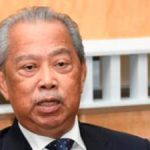
    Prime Minister Tan Sri Muhyiddin Yassin (pix), through a posting on his Facebook, stated that as of Monday (April 6), a total of RM5.68 million from the fund was channeled to the National Welfare Foundation (YKN) for purchase of daily necessities to be donated to those affected by the outbreak.

    He said RM195,000 was also distributed to 39 next-of-kin of Covid-19 victims as ‘Bayaran Ihsan Kematian’.

    The Covid-19 Fund was launched on March 11 as an effort by the government to help the people who are affected by the outbreak.

    As such, Malaysia needs the cooperation and support of all the people during this MCO period to prevent Covid-19 from further spreading.

    As citizens of the country, we should comply with the rules of MCO, to not spread fake news, including on social media and to appreciate the role of the frontline personnel in protecting the people’s lives and security in the country. –Bernama

    MCO extension: Will be known in 72 hours
    Read More
    https://www.thesundaily.my/home/mco-extension-will-be-known-in-72-hours-DX2231467

    Views: 0

  • #BeActive for the UN International Day of Sport for Development and Peace

    #BeActive for the UN International Day of Sport for Development and Peace

    FIFA has joined forces with the United Nations (UN) and the World Health Organization (WHO) in supporting the #BeActive campaign launched on the UN International Day of Sport for Development and Peace to encourage people to be #HealthyAtHome as the world comes together in the fight against COVID-19, today and every day.

    WHO recommends all healthy adults do at least 30 minutes a day of physical activity and children at least 60 minutes per day. As part of this, #BeActive and remain #HealthyAtHome include the following suggestions along with any other form of recreation
    to stay healthy at home:

    #BeActive for the UN International Day of Sport for Development and Peace 6

    1. Taking some online exercise classes,
    2. Dancing,
    3. Playing active video games,
    4. Jumping rope, and
    5. Practising muscle strength and balance training.

    “We are delighted that football is strongly supporting the International Day of Sport for Development and Peace by asking everyone to #BeActive and to remain healthy at home during this difficult time,” said António Guterres Secretary-General
    of the United Nations. “FIFA has asked the football community, from member associations and clubs, to players and fans, to show their support, to put their rivalries aside and to show a new solidarity so we can overcome the coronavirus.
    This is an important lesson not only for today, but for every day.”

    “More than ever, especially now, one thing must be clear to everyone, health comes first,” said FIFA President Gianni Infantino. “FIFA is delighted to support both the United Nations and the World Health Organization in amplifying
    the #BeActive campaign today, and we are encouraged that the football community is also playing an active role in ensuring the message understood globally. For the first time ever, we are all on the same team and together, with team spirit and
    positive energy, we will win.” 

    “WHO is proud to collaborate as part of the UN family with FIFA and football lovers worldwide to promote the importance of being active for both physical and mental health,” said Dr Tedros Adhanom Ghebreyesus, Director-General of the World Health Organization. “The #BeActive campaign supports WHO’s drive to help people be healthy at home.”

    The campaign kicks off with Real Madrid CF, FC Barcelona, Liverpool FC and Manchester United FC asking football fans to set aside their rivalries and to come together to #BeActive in order to defeat the coronavirus. Other clubs, including Club América,
    CD Guadalajara, Beijing Guoan FC, Shanghai Shenhua FC, Mohun Bagan AC, East Bengal FC, Melbourne City FC, Sydney FC, Auckland City FC, Team Wellington FC, CA River Plate, Olympique de Marseille, TP Mazembe, CR Flamengo and SE Palmeiras will also
    join the initiative in the coming days.

    As part of the campaign, world-famous players share the following message: “At this time, even rivals need to stick together. We have to keep our distance, but we do not lose our focus. We can show solidarity by being active, and active means
    following the guidelines from the WHO.”

    The video campaign will
    be published on various FIFA digital channels, with regular subsequent updates from clubs and players across the world during subsequent days. #BeActive is also being supported with graphics toolkits for the 211 FIFA member associations and various
    media agencies to facilitate additional localisation and to further amplify the message.

    WHO, the UN’s specialized health agency, and FIFA, football’s world governing body, collaborate closely to promote healthy lifestyles through football globally and launched the “
    Pass the message to kick out coronavirus” campaign last month to share advice effective measures to protect people from COVID-19.

    The video campaign can also be downloaded here for editorial purposes.


    #BeActive for the UN International Day of Sport for Development and Peace
    Read More
    https://www.who.int/news-room/detail/06-04-2020-beactive-for-the-un-international-day-of-sport-for-development-and-peace

    Views: 0