Tag: Prevent

  • Dracunculiasis eradication: intensifying surveillance amid continued zero human cases in Ethiopia and Mali

    Dracunculiasis eradication: intensifying surveillance amid continued zero human cases in Ethiopia and Mali

    A total of 54 human cases of dracunculiasis (guinea-worm disease) were reported to the World Health Organization (WHO) in 2019, with Chad reporting 48 out of the 54 cases.

    In Chad, Ethiopia, Mali and South Sudan, trained volunteers are supporting surveillance and detection of infections in domestic dogs and cats. Surveillance has been heightened, as evidenced by the increase in reports of rumoured human cases which in 2019 peaked at 108 207 out of which 106 678 were investigated within 24 hours.

    “We are working with the broader scientific community to understand the epidemiology of animal infections, mainly in dogs in Chad, where the highest number of human cases were reported in 2019,” said Dr Dieudonné Sankara, who leads WHO’s eradication and elimination team in the Department of Control of Neglected Tropical Diseases. “Interestingly, there have been no human cases in Ethiopia and Mali, and 4 human cases in South Sudan in 2019, compared with 10 in 2018.”

    In Mali, the number of animals infected with Dracunculus medinensis (the guinea-worm) has decreased from 20 animals in 2018 to 8 dogs and 1 cat in 2019. However, insecurity remains a challenge to freely accessing some endemic areas in Mali.

    Conversely, Chad reported 1935 infections in dogs and 46 in cats in 2019, an increase of 85% from 2018, and a 176% increase among humans.

    Angola reported only 1 human case in 2019. Community-based surveillance is being reinforced mainly in Cunene Province where a case was reported in 2018.

    In South Sudan, integrated surveillance activities have been carried out with the trachoma and onchocerciasis control programmes, in accordance with WHO’s recommendation that programmes collaborate, integrate and co-implement activities, whenever possible, to strengthen surveillance.

    In order to strengthen cross-border surveillance, WHO led a mission to Cameroon in November 2019 to investigate circumstances around an “imported” case in the country’s Far North Region. Discussions were held with the health authorities to establish active surveillance in all villages in the area, including training for application of temephos.[1]  

    Also, in 2019, and with the support of trained field workers, vector control was intensified to larvicide ponds and water sources in more than 400 villages, compared with 72 villages in 2018.

    In late 2019, WHO supported cross-border meetings with officials of national dracunculiasis eradication programmes from Mali, Burkina Faso and Côte d’Ivoire in West Africa; between Ethiopia and South Sudan in East Africa, and between Angola and Namibia in Southern Africa, to share experiences and plan joint surveillance activities across the borders to prevent transmission of the disease.

    The disease

    Dracunculiasis is a crippling parasitic disease caused by infection with D. medinensis, a long, thread-like worm. It is usually transmitted when people drink stagnant water contaminated with parasite-infected water fleas.

    WHO works with Member States and in partnership with The Carter Center and the United Nations Children’s Fund to support efforts to eradicate the disease. WHO provides technical guidance, works with national programmes to coordinate surveillance in dracunculiasis-free areas, and monitors and reports on the progress achieved.

    WHO is the only Organization mandated to certify countries as free of transmission of the disease following the recommendations of the International Commission for the Certification of Dracunculiasis Eradication.

    Since 1995, WHO has certified a total of 199 countries, territories and areas, including 187 Member States, as free of dracunculiasis transmission.

    [1] Temephos is a cyclopicide used to kill water fleas (cyclops) that carry the infective guinea-worm larvae.


    Dracunculiasis eradication: intensifying surveillance amid continued zero human cases in Ethiopia and Mali
    Read More
    https://www.who.int/news-room/detail/19-03-2020-dracunculiasis-eradication-intensifying-surveillance-amid-continued-zero-human-cases-in-ethiopia-and-mali

    Views: 0
  • Analysis suggests UK still not doing enough to prevent covid-19 deaths

    Analysis suggests UK still not doing enough to prevent covid-19 deaths

    To really reduce the potential coronavirus death toll, modelling suggests that the UK needs to bring in stricter social distancing and perhaps close schools
    Analysis suggests UK still not doing enough to prevent covid-19 deaths
    Read More
    https://www.newscientist.com/article/2237755-analysis-suggests-uk-still-not-doing-enough-to-prevent-covid-19-deaths/?utm_campaign=RSS%7CNSNS&utm_source=NSNS&utm_medium=RSS&utm_content=home

    Views: 0

  • Do not bring family to buy essential goods: NSC

    Do not bring family to buy essential goods: NSC

    Do not bring family to buy essential goods: NSC 1

    PUTRAJAYA: There is no restriction on individuals going out to buy essential goods when the Movement Control Order comes into effect from March 18 to 31 throughout the country, but they are not allowed to bring their family members along.

    National Security Council (NSC) Maritime Sovereignty Division director Roselin Rajab said the order was aimed at reducing the movement of people in public places in the effort to curb the spread of the Covid-19 infection.

    “There is no problem if you want to buy daily necessities but do not bring the entire family and children for the chore. Just go out alone,” he told reporters after a special Covid-19 meeting between Communications and Multimedia Minister Datuk Saifuddin Abdullah and media editors, here today.

    In terms of surveillance, Roselin said the authorities would be monitoring to ensure there is no assembly or gathering at public places.

    “If we come across people meeting in a place, they will be told to return home,” he said.

    On transit flights at the country’s airports, Roselin said these passengers would not be allowed to come out of the terminal.

    “As they are on transit, the passengers would not be allowed come out of the terminal. This is because, they have not entered the country so long as they do not pass the Immigration checkpoint,” he said.

    The Movement Control Order was announced by Prime Minister Tan Sri Muhyiddin Yassin on Monday to prevent the virus from infecting more people. – Bernama

    Do not bring family to buy essential goods: NSC
    Read More
    https://www.thesundaily.my/local/do-not-bring-family-to-buy-essential-goods-nsc-EC2141556

    Views: 0

  • King decrees all Malaysians to obey movement control order

    King decrees all Malaysians to obey movement control order

    King decrees all Malaysians to obey movement control order 2

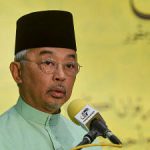
    KUALA LUMPUR: Yang di-Pertuan Agong Al-Sultan Abdullah Ri’ayatuddin Al-Mustafa Billah Shah (pix) today decreed all Malaysians to obey the movement control order announced by Prime Minister Tan Sri Muhyiddin Yassin yesterday and to give full cooperation in containing the spread of Covid-19 infections in the country.

    The order will take effect from tomorrow until March 31.

    Comptroller of the Royal Household of Istana Negara Datuk Ahmad Fadil Shamsuddin said His Majesty, nevertheless, said that the people should face the situation calmly to help the government and the relevant authorities tackle the situation effectively.

    “His Majesty urges the people not to take the movement control lightly. The people were also asked to follow the guidelines and preventive measures issued by the Ministry of Health because this is our mutual responsibility to ensure safety and wellbeing of our families, our communities and our beloved country,” he said in a statement issued by Istana Negara today.

    He said Al-Sultan Abdullah also viewed seriously the rising number of positive Covid-19 cases in Malaysia, which was recorded at 553 yesterday and had placed his full trust in the government and the authorities to discharge their duties in containing the spread of the disease.

    Ahmad Fadil said His Majesty was well aware that the people might feel that the action taken by the Perikatan Nasional government had made it difficult for them to go about their daily activities.

    “However, we must try to understand and be patient because the government cannot wait for the situation to become more critical to take drastic action.

    “As the Head of State, His Majesty also called on all Malaysians, regardless of race and religion, to stay united and play their parts to help the government in containing the spread of Covid-19 in the country.

    “His Majesty believes that with the strong spirit, concern and cooperation from the people, we will be able to contain the spread of the disease quickly and effectively,” he said.

    Ahmad Fadil said Al-Sultan Abdullah also decreed all Malaysians to refer to the Online Health Advisory Service or the National Crisis Preparedness and Response Centre (CPRC) via the Ministry of Health’s website to find the answers to all their doubts and questions so as to prevent the spread of fake news and false information that may cause panic and confusion among themselves.

    The Yang di-Pertuan Agong also expressed appreciation and thanks to the government under the leadership of Muhyiddin, government agencies and most of all to the unsung heroes, the medical staff and healthcare personnel, the civil servants and all the others who have sacrificed their time and energy in ensuring that all preventive measures and control of the infectious disease were being implemented efficiently.

    “His Majesty also called on all Muslims to join him to pray to Allah SWT so that all our efforts be blessed and so that the COVID-19 situation can be tackled and put to end as soon as possible. InsyaAllah,” he said. – Bernama

    King decrees all Malaysians to obey movement control order
    Read More
    https://www.thesundaily.my/local/king-decrees-all-malaysians-to-obey-movement-control-order-YD2140919

    Views: 0

  • Singaporeans should avoid overseas travel, government says

    Singaporeans should avoid overseas travel, government says

    Singaporeans should avoid overseas travel, government says 3

    SINGAPORE: Singapore’s health ministry on Sunday urged its citizens to defer all non-essential travel abroad in an unprecedented move for the Asian transport hub, as part of new measures to control the coronavirus that is fast spreading around the world.

    Singapore will also tell all entering the country with recent travel history to the Asean group of nations, Japan, Switzerland or the United Kingdom to quarantine themselves at their place of residence for 14 days, the ministry added.

    The Association of Southeast Asian Nations (Asean) comprises Indonesia, Malaysia, Philippines, Singapore, Thailand, Brunei, Laos, Myanmar, Cambodia and Vietnam.

    Countries, such as the UK and Switzerland have “abandoned” any attempt at containing the spread of the infection, said Lawrence Wong, a minister who co-heads Singapore’s virus fighting taskforce.

    “That’s why we are more concerned that Singapore may well be exposed to a new wave of infections, which is potentially larger than what we have seen previously.”

    The majority of new infections being reported in Singapore, an island nation with a population of 5.7 million, over the past few days have been people returning from overseas rather than local transmissions.

    At least five cases of Singaporeans have been linked to a large religious gathering in Malaysia that was attended by more than 10,000 people from several countries.

    Short-term visitors who are nationals of its Southeast Asian neighbours will also have to seek prior approval from the health ministry before their journey to prevent hospitals from being overwhelmed.

    The restriction comes after a number of cases that entered Singapore with the specific purpose of seeking healthcare, the health ministry said. There have been two cases of Indonesians who had coronavirus symptoms at home before arriving in Singapore, known for its superior healthcare facilities.

    The measures will be reviewed after a month. They will not apply to sea and land crossings with Malaysia, which will have separate precautions. Wong said 300,000 people a day move across the land checkpoints with Malaysia.

    The Asian travel hub has previously announced bans on visitors from several coronavirus-hit countries, including China, Italy and France.

    Singapore has won international praise for its painstaking onslaught on the virus since it initially emerged with one of the highest tallies of infections outside China. But other nations have since outpaced it.

    Singapore has reported 212 infections, but no fatalities. Globally, more than 150,000 people have been infected while over 5,800 have died, a Reuters tally shows. — Reuters

    Singaporeans should avoid overseas travel, government says
    Read More
    https://www.thesundaily.my/world/singaporeans-should-avoid-overseas-travel-government-says-XI2129044

    Views: 0

  • Covid-19: 41 new cases reported, tally now 238

    Covid-19: 41 new cases reported, tally now 238

    Covid-19: 41 new cases reported, tally now 238 4

    KUALA LUMPUR: A total of 41 new COVID-19 cases were reported as at noon today, bringing cumulative cases in the country to 238, Health Director-General Datuk Dr Noor Hisham Abdullah said.

    He said all 41 new cases were linked to the tabligh religious gathering, and they involved 37 patient under investigation (PUI) cases while four more are close contact cases.

    “To date, a total 203 cases are still being treated, with five in the intensive care unit (ICU) and requiring ventilator support. The five are also being given anti-viral treatment.

    “Also, as of today, a total 1,321 samples from influenza-like-illnesses (ILI) and severe acute respiratory infections (SARI) have been tested at the Institute for Medical Research (IMR), all public health laboratories and hospitals. Of those, three samples tested positive for COVID-19,” he said in a statement, here today.

    In another development, two earlier cases (case 35 and 61) have recovered and have been discharged from the Sungai Buloh hospital, he said.

    This brings the number of recovered cases to 35 so far.

    Dr Noor Hisham also advised the public to remain calm and not to spread inaccurate information with regard to the tabligh religious gathering that took place from Feb 28-March 1.

    Also, to prevent risk of infection on those from the vulnerable communities and those prone to infection, especially the Orang Asli community, the Health Ministry (MOH) is advising organisations or groups who have plans to conduct activities with these communities to postpone them, he said.

    Dr Noor Hisham said the ministry will continue to provide health services to rural communities through outreach activities.

    “The ministry also welcomes any form of medical aid, contributions or collaborations from any party, including non-governmental organisations,” he said, adding that offers or inquiries can be submitted through the ministry’s email cprc@moh.gov.my.

    Meanwhile in an updated statement issued at 7pm, the MOH said a total 4,942 participants from the tabligh event at the Sri Petaling mosque have been identified.

    Of these, 3,069 reported themselves in at Health Clinics for examination and screening while another 137 were referred to hospitals.

    “Only 1,634 of them experienced respiratory tract infection symptoms and samples were taken, while 2,932 of them were asked to undergo home surveillance for 14 days from the last day of the gathering. Investigations and tracking of the event participants is ongoing,” the statement read. — Bernama

    Covid-19: 41 new cases reported, tally now 238
    Read More
    https://www.thesundaily.my/local/covid-19-41-new-cases-reported-tally-now-238-EC2127446

    Views: 0

  • How secure are four and six-digit mobile phone PINs?

    How secure are four and six-digit mobile phone PINs?

    A German-American team of IT security researchers has investigated how users choose the PIN for their mobile phones and how they can be convinced to use a more secure number combination. They found that six-digit PINs actually provide little more security than four-digit ones. They also showed that the blacklist used by Apple to prevent particularly frequent PINs could be optimised and that it would make even greater sense to implement one on Android devices.

    Read More

    Views: 0

  • COVID-19: IFRC, UNICEF and WHO issue guidance to protect children and support safe school operations

    GENEVA/NEW YORK – The International Federation of the Red Cross (IFRC), UNICEF and the World Health Organization (WHO) today issued new guidance to help protect children and schools from transmission of the COVID-19 virus. The guidance provides critical considerations and practical checklists to keep schools safe. It also advises national and local authorities on how to adapt and implement emergency plans for educational facilities. 

    In the event of school closures, the guidance includes recommendations to mitigate against the possible negative impacts on children’s learning and wellbeing. This means having solid plans in place to ensure the continuity of learning, including remote learning options such as online education strategies and radio broadcasts of academic content, and access to essential services for all children. These plans should also include necessary steps for the eventual safe reopening of schools.

    Where schools remain open, and to make sure that children and their families remain protected and informed, the guidance calls for:

    • Providing children with information about how to protect themselves;
    • Promoting best handwashing and hygiene practices and providing hygiene supplies;
    • Cleaning and disinfecting school buildings, especially water and sanitation facilities; and
    • Increasing airflow and ventilation.

    The guidance, while specific to countries that have already confirmed the transmission of COVID-19, is still relevant in all other contexts. Education can encourage students to become advocates for disease prevention and control at home, in school, and in their community by talking to others about how to prevent the spread of viruses. Maintaining safe school operations or reopening schools after a closure, requires many considerations, but if done well, can promote public health.

    For example, safe school guidelines implemented in Guinea, Liberia and Sierra Leone during the outbreak of Ebola virus disease from 2014 to 2016 helped prevent school-based transmissions of the virus.

    UNICEF is urging schools – whether open or helping students through remote learning – to provide students with holistic support. Schools should provide children with vital information on handwashing and other measures to protect themselves and their families; facilitate mental health support; and help to prevent stigma and discrimination by encouraging students to be kind to each other and avoid stereotypes when talking about the virus.

    The new guidance also offers helpful tips and checklists for parents and caregivers, as well as children and students themselves. These actions include:

    • Monitoring children’s health and keeping them home from school if they are ill;
    • Encouraging children to ask questions and express their concerns; and
    • Coughing or sneezing into a tissue or your elbow and avoid touching your face, eyes, mouth and nose.

    Read More
    https://www.who.int/news-room/detail/10-03-2020-covid-19-ifrc-unicef-and-who-issue-guidance-to-protect-children-and-support-safe-school-operations

    Views: 0

  • The unmet need for social context in family planning

    The unmet need for social context in family planning

    New evidence on the relationship between sexual health and social context finds a strong association between gender equality, education and family planning

    Twenty-five years ago, two global events – the International Conference on Population and Development and the Fourth World Conference on Women in Beijing – formally recognized that women’s health and reproductive choices cannot be separated from the social context of their lives.

    Now, researchers have created a dataset which brings together national surveys from 74 countries, representing 3 million women. For the first time, it allows them to describe trends in demand/use of modern contraceptives alongside social and economic indicators.

    The data is published in The Lancet Global Health and is authored by the London School of Hygiene & Tropical Medicine and the World Health Organization.

    It shows that, over time, women are more likely to have their demand for modern contraception met in countries where gender equality and their educational opportunities improve.

    Gender equality and education increases access to modern contraception

    Trends in sexual activity and demand for use and use of modern contraceptive methods in 74 countries: a retrospective analysis of nationally representative surveys finds that met need for modern contraception is strongly correlated with positive shifts in social structures.
    For every 0.1-point increase in a country’s gender development index, it found a 6.7% rise in women who were sexually active and did not want to conceive. Of those women, an additional 13.5% used modern methods to prevent a pregnancy.

    Expectations of every girl’s right to education also made a difference. Each extra year in schooling is linked to an increase of 2.3% in demand, and a 4.7% increase in use of modern contraceptive methods.

    “This study shows how every woman must negotiate her reproductive autonomy within the social framework in which she lives, responding to barriers and opportunities as they emerge,” says Dr Lale Say, one of the authors of the study and Unit Head at WHO and HRP.

    “Gender equality is both a precondition and a driving force for securing women’s reproductive health and rights – as well as the sustainable development targets, which are our best chance for delivering health and well-being for all.”

    Global trends reveal new challenges in family planning

    Overall, the data reinforce global trends: more time spent sexually-active and single, postponement of parenthood, and the near-universal desire for smaller families.

    The study also highlights where action is needed at country-level to avoid family planning services falling behind demand.

    Out of the 74 countries analyzed, 42 showed an increase in demand for contraception. Only 37 countries show an increase in use of a modern method to prevent pregnancy.

    Although unmet need for contraception declined in 34 countries, it increased in 14 countries. Significantly more progress is needed, and faster, to ensure each girl and woman is able to access the sexual and reproductive health services she needs.

    Barriers and solutions to reproductive health and rights

    Gender equality can affect contraceptive use in many ways. From the personal and political degree to which women are free to choose their sexual activity, to accessing family planning services it can also shape any power imbalances within personal relationships. This study supports recent efforts by WHO to adopt a broader, integrated concept of sexual and reproductive health – and to translate it into a framework for policy and practice.

    The authors argue that family planning targets in the 2030 Agenda for Sustainable Development will not be met without a profound shift: from focus on ‘access to contraception’, to broader aspects of sexual health and social context.

    Since reproductive health and women’s empowerment are intertwined, trends in contraceptive use can also reveal progress towards another global target: progress towards gender equality.


    The unmet need for social context in family planning
    Read More
    https://www.who.int/news-room/detail/10-03-2020-the-unmet-need-for-social-context-in-family-planning

    Views: 0

  • Guideline on parent training to prevent child maltreatment and promote the positive development of children aged 0-17 years

    WHO is developing a guideline on parent training to prevent child maltreatment and promote the positive development of children aged 0-17 years. Part of the guideline development process involves constitution of a Guideline Development Group (GDG) which
    should represent a broad spectrum of perspectives, constituencies, and relevant expertise. The biographies of individuals proposed for membership of the GDG are provided below for public review and comment. Any comment or concern about the individuals
    listed should be sent to Dr Alexander Butchart (butcharta@who.int).

    Read More
    https://www.who.int/news-room/detail/01-03-2020-guideline-on-parent-training-to-prevent-child-maltreatment-and-promote-the-positive-development-of-children-aged-0-17-years

    Views: 0