
Tag: Peter

  • Losing Her Religion: Nigeria’s Faith Unveiled In The Face Of COVID-19 By R. Evon Benson-Idahosa

    Losing Her Religion: Nigeria’s Faith Unveiled In The Face Of COVID-19 By R. Evon Benson-Idahosa

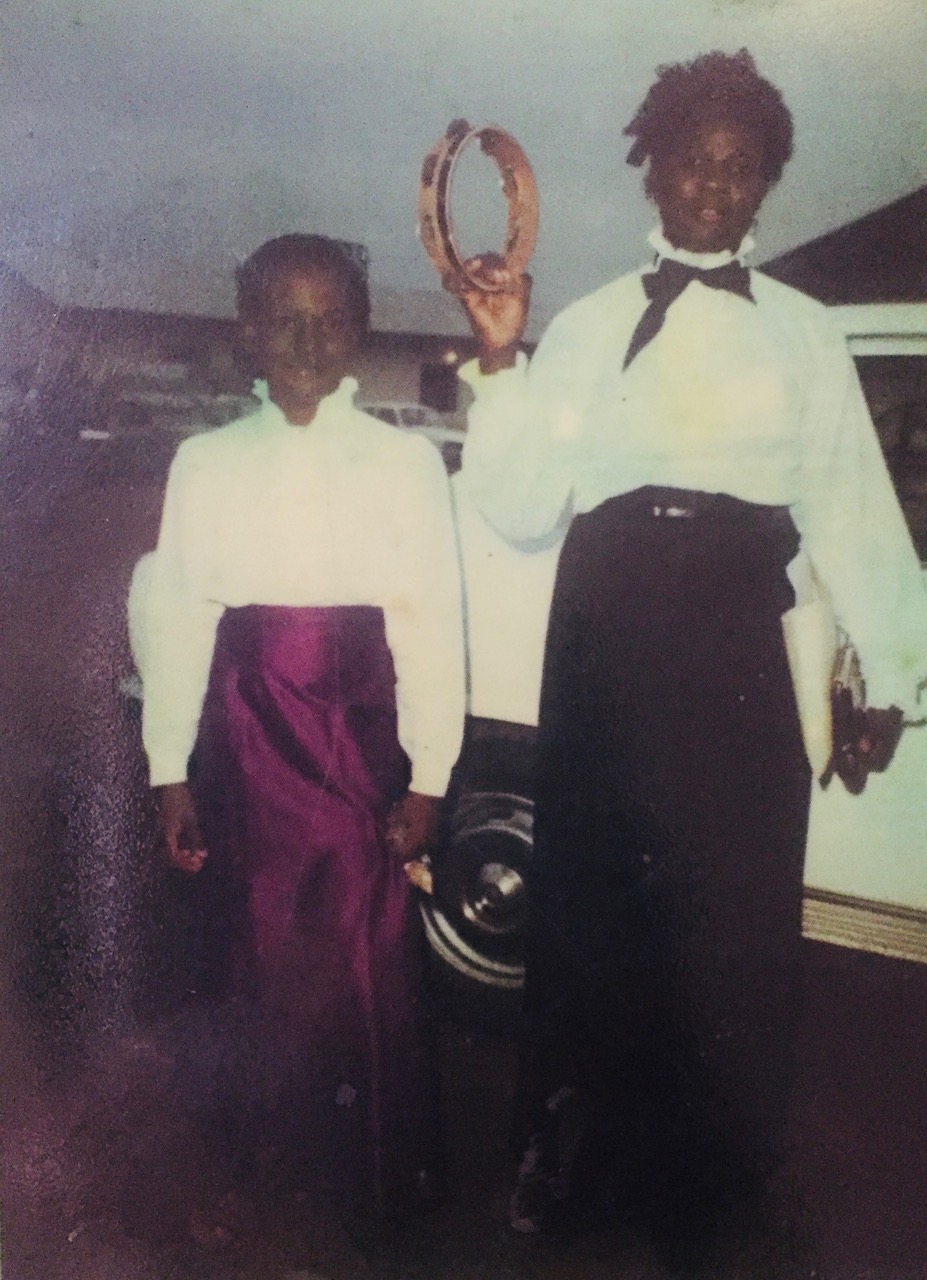
    Me, circa 1984, in my choir uniform and what was possibly the now infamous tambourine.
    Me, circa 1984, in my choir uniform and what was possibly the now infamous tambourine.

    R. Evon Benson-Idahosa, Esq
    R. Evon Benson-Idahosa, Esq

    Losing Her Religion: Nigeria’s Faith Unveiled In The Face Of COVID-19 By R. Evon Benson-Idahosa 1R. Evon Benson-Idahosa, Esq


    I remember falling asleep at a Tuesday evening church service as a 9 year old child. I had a tambourine on my lap and as I fell to the floor, it reverberated thunderously throughout the hall, drawing the attention of everyone who had been attentively listening to the dynamic preacherman. I awakened to piercing stares and side eyes- particularly from my father- whose message I had disrupted. Every Nigerian child knows that stare, that glare that silently speaks a thousand words, cloaks you in debilitating fear and assures your quivering being that there will be consequences. Needless to say, it was a quiet ride home and for the rest of the revival week, I was ushered to the front row where I forced my eyes open, humming tunes to myself to stay awake.

    Losing Her Religion: Nigeria’s Faith Unveiled In The Face Of COVID-19 By R. Evon Benson-Idahosa 2Me, circa 1984, in my choir uniform and what was possibly the now infamous tambourine.


    Saying that I literally grew up in church would be an understatement. Week long revival services, such as the one I reference above, were customary. I was also in the choir, went to Sunday school before church services on Sunday, Agape Force Children’s meetings on Saturdays, mid-week services and the occasional 6:30 am morning prayer services, followed by our home bible study with Auntie B. And because my father was Archbishop Benson Idahosa, there were no negotiations. It just was.

    At the age of10, shortly after the infamous “tambourine experience,” the truth of those messages became real and I earnestly became a follower of The Way. And so, as news began to sweep the globe of the novel corona virus and its import, I found myself immediately turning to my faith as a source of comfort and peace. I also called my mother, who now heads CGMI, the global ministry my father left when he passed away 22 years ago. Her words of encouragement and the tone of her voice assured me that, as we like to say in Nigeria, ‘it is well.’

    And it will be.

    But for now, the pandemic continues to rage, as thousands succumb to its will. First China. Then South Korea. Japan. An epidemic. Then Italy, the UK, the US. Thousands upon thousands of cases were being reported and every day brought the reality closer to home. Then it became a global pandemic and as it stands, the WHO estimates that there are 719,700 confirmed cases globally, with almost 34,000 deaths.

    On February 28th, Nigeria, Africa’s most populous nation, confirmed its index case of the corona virus which arrived the country via an Italian businessman. As I write, her Centre for Disease Control is reporting a total of 135 confirmed cases and two deaths, having conducted just several hundred tests, even though thousands of passengers have arrived from varying countries since the index. Self isolation has been deemed an advisory, not mandatory measure.

    Nigeria has taken what some would consider drastic, yet in this writer’s opinion, insufficient and strikingly Western style measures to address what is likely to come in the absence of a miracle. In addition to finally closing her borders from international travelers, including Nigerians, schools have been shut down, civil servants are being asked to work from home, “social distancing” policies are being enacted and several states, including my home state of Edo, have prohibited religious, social and public gatherings of more than 20 persons.

    In a country where over 90% of her citizens profess to be religious, most Nigerians are accustomed to turning to their faith in times of crisis. The corona virus pandemic is no exception. Many who had strayed from God are now repenting of their sins and brandishing the sign of the cross as they leave their homes. Others are praying for a “Passover,” as CNN and other news outlets flood us with “end of the world,” doomsday messaging. As a result, many of us are yearning to collectively gather to pray.

    Whether the desire to collectively gather is buttressed by denial (“coronavirus is not here” — “the spirit of corona virus is dead in Nigeria”) or stems from a deep seeded longing for God to show mercy to a healthcare system that is wholly unprepared to handle the worst case scenario, the fact remains that Nigeria’s religious faithfuls are unaccustomed to missing gatherings for anything. Services are considered sacred times to commune with God and to be encouraged by the brethren. Others hang on to every word of their clerics who, in some cases, insist on serving as a religious crutch- intermediaries between their congregants and God. Many believers who engage with God on a transactional basis come bearing tithes and/or offerings in the hopes that God will hear their prayers. (He hears them regardless.)

    As such, the prohibition on religious gatherings of more than 20 (which essentially translates to a prohibition of services in general) has resulted in many Nigerian believers losing their ‘religion,’ i.e., left bewildered as to how to make the adjustment to a God who potentially exists outside the four walls of their churches; to a God who speaks directly to them in God’s long forgotten voice. Who, precisely, are Nigerian believers without our religions and religious houses of worship?

    Could it be that for the first time in a long time, Nigerian believers are being presented with a church-less opportunity to develop even more meaningful personal relationships with their God; to ‘lay hands’ on themselves and speak words of healing into their children from a God who has always heard them? Could this pandemic serve as an opportunity for believers to be what Murray Bowen describes as a ‘non-anxious presence’ to those who may be paralyzed by fear? Or as a practical example, to give our hired staff the much deserved paid time off to assuage the fears of their own elderly parents? As we creatively consider our individual responses, it is imperative that we recognise that our actions are a reflection of what we truly believe about our faith and the One who implores us to be salt and light.

    As the Church, however, it is unhelpful that some of our pastors are refusing to comply. The other day, I was tagged on a rather unfortunate video of a pastor irresponsibly screaming to congregants that the corona virus cannot withstand Nigeria’s “corrosive anointing.” However, even Jesus instructed us to obey the law of the land (render unto Caesar what is Caesar’s). This blatant refusal to consider the reality that may most aggressively affect those on the margins begs the question of why some churches are so adamant against temporarily closing their doors.

    Sure, we all need hope and encouragement in these perilous and uncertain times, but have we not, after all these years, fed the flock enough “meat” to trust that they can and will turn to God for themselves? Or are we, draped in our own egos, more selfishly concerned that they may not return to our fold and thus, affect our financial bottom line?

    It is not a lack of faith to use wisdom or to be practical. Even Jesus reached out his hand to save Peter when he could easily have let him drown and then used his “corrosive anointing” to raise him from the dead. Wisdom is profitable to direct and I believe my father, who I consider one of the greatest men of faith to ever walk this earth, would have done the needful to protect the sheep. My mother most certainly is.

    To this end, some larger churches are offering their services online. However, for the working poor who faithfully make up the backbone of most Nigerian churches, internet connectivity and/or live streaming of an entire service make that option impractical and/or unaffordable. They are the ones, who because they live day to day, cannot afford to practice social distancing, “stay at home” and for some, even “wash your hands,” because soap becomes a luxury when one’s ‘daily bread’ is devoid of the ‘daily.’ If our government does not step up to courageously seek support that is tailored to our unique realities and then provide that support to those on the margins, the import of the corona virus in our beloved Nigeria could be felt by generations to come.

    As such, could this pandemic present an opportunity for churches to fill the glaring gaps and practically serve the last and the least in a manner that reveals who we profess to be as followers of The Way? Might this be an opportunity for the church to put our egos aside and creatively heed Jesus’ instructions to ‘feed my sheep’, to apply the Balm of Gilead, by serving those who will be most physically, mentally and economically impacted? Practically speaking, could we convert our sanctuaries to temporary hospitals or food pantries where those in need can obtain essentials? Can we use the funds of those who have faithfully donated over the years to buy ventilators and personal protective gear for our hospitals and health workers on the front lines? Can we purchase hygiene products and distribute them to those who may be confined to their homes? This, I believe, is our mandate.

    At the end of the day, my faith in God runs deep. It has guided my life since I was 10 and I prayerfully trust that we will get through this. But as the Nigerian Church temporarily loses her ‘religion’ and her faith is unveiled in the face of COVID-19, she is presented with an opportunity to reverberate thunderously and rise up to be who she professes for such a novel time as this. After all, in the words of Dietrich Bonhoeffer, ‘the church is the church only when it exists for others…not dominating, but helping and serving.’

    WRITTEN BY

    R. Evon Benson-Idahosa, Esq.

    Lead table turner and expert troublemaker at Pathfinders Justice Initiative (www.pathfindersji.org); creating more space for women at the table.


    Opinion

    AddThis

    : 

    Featured Image

    : 

    Losing Her Religion: Nigeria’s Faith Unveiled In The Face Of COVID-19 By R. Evon Benson-Idahosa 3

    Original Author

    : 

    R. Evon Benson-Idahosa, Esq

    Disable advertisements

    : 
    Losing Her Religion: Nigeria’s Faith Unveiled In The Face Of COVID-19 By R. Evon Benson-Idahosa
    Read More
    http://saharareporters.com/2020/03/31/losing-her-religion-nigeria%E2%80%99s-faith-unveiled-face-covid-19-r-evon-benson-idahosa

    Views: 0

  • COVID-19: Should Education Hit A Pause Or Are We Just Unprepared In Nigeria? By Olabisi Deji-Folutile

    COVID-19: Should Education Hit A Pause Or Are We Just Unprepared In Nigeria? By Olabisi Deji-Folutile

    Olabisi Deji-Folutile
    Olabisi Deji-Folutile

    COVID-19: Should Education Hit A Pause Or Are We Just Unprepared In Nigeria? By Olabisi Deji-Folutile 4Olabisi Deji-Folutile


    The world is facing its most trying and unprecedented times as the last few weeks have been most challenging for almost everybody.  What started in Wuhan, China, as an epidemic, has put the entire world in disarray.  Major streets across the globes have become empty. Both the rich and the poor are being ravaged by the plague of COVID-19, which the World Health Organisation has rightly described as a pandemic. Work places have been shut; religious and social gatherings banned and many countries are on total lockdown, in a bid to curb the spread of this viral disease. Expectedly, schools are also affected across board.  Every day people are being told to embrace social distancing and suddenly things like human contacts, hitherto considered as free gifts of life, are becoming very expensive.

    No one knows when this whole chaos will end, so people are making different kinds of adjustments to cope with the situation while it lasts. Many companies have shifted their operations online. Likewise, many schools have opted for e-learning, making use of available technology for teaching and learning.

     Universities around the world are making use of communication technology to ease the effects of the global pandemic on their academic calendars.   In China, universities are going for online teaching instead of in-class teaching; the ones in Australia have moved their classes online just as UK universities have suspended face-to-face teaching.  Turkey started its remote university classes on March 23. In Kenya, universities have activated communication between lecturers and students via social media platforms and emails while classes have gone totally online in the Philippines and Kyrgyzstan.  Teachers in France have been working with their students on Zoom.  

    Just a few days ago, Ghana’s President Addo Dankwa Akufo-Addo, directed the ministry of education to collaborate with the ministry of communications in rolling out open learning programmes in response to the closure of all educational institutions in the country. In the same vein, Mount Kenya University’s Vice-Chancellor Peter Wanderi, has announced the extension of online teaching platforms for regular students to facilitate the learning process.  And to take care of the over six million students that have experienced disruption to their studies, ten North African and 12 Arab countries have begun work on an e-learning initiative to facilitate open and online education.

    These are some of the steps being taken across the globe to bridge the gap created by school closure in the wake of COVID-19.  Unfortunately, while all these activities are going on in other parts of the world, Nigerian government has not said anything about steps being taken to take care of its students’ community.  Rather, the only message from the Federal Government was a total closure of all tertiary institutions and FG-owned unity schools till further notice. A statement issued by the National Universities Commission simply said universities would remain   shut   for one month while the Education Minister, Adamu Adamu, said tertiary institutions would remain shut indefinitely.

     Assuming government has been overwhelmed by the burden of controlling the spread of COVID- 19, hence its silence on options for learning for its teeming student population, one would have expected the higher institutions themselves to at least say something, but as it is, they too are not helping matters. The silence in our universities has been deafening. To worsen the situation, the Academic Staff Union of Universities, decided to choose this time, of all times, to embark on an indefinite strike. One wonders how the academic body   manages to feel comfortable being on a strike at a time when researchers across the globe   are busy looking for solution to a pandemic that is ravaging the entire world.  This kind of action makes one query the essence of having Research and Development as a core component of tertiary education in Nigeria when researchers can be nowhere to be found at a critical time of societal needs.

    By now, our researchers should be adding their voices to the various efforts being made towards developing a vaccine or cure for COVID-19. After all, universities are expected to proffer solutions to societal problems.  This is a wrong time for ASUU to embark on an indefinite strike. This should be a time of strategising and proffering solutions. This is really the time for everyone to get involved. Besides, I think Nigerian universities should also be more forthcoming on their responses to the challenges posed to their students by COVID-19.

    As it is, religious organisations are doing far better in terms of their responses to the effects of this pandemic on their primary constituencies.  Many of them have devised other means of getting the attention of   their members following several government directives prohibiting either gatherings or limiting the number of people allowed to congregate at a time.   Almost all the churches have switched to online platforms for their services.  How come religious organisations are working hard to keep their flocks and both government and higher institutions in Nigeria are just moving on as if all is well?  No word on how to keep the students busy or keep them engaged using available online technology! Should teaching and learning be restricted to the classrooms alone in this 21st century?

     Nigeria has always been described as a religious society. Corona Virus has further exposed the smartness of our religious bodies and the dullness of those in charge of our public educational institutions.  This is not an attempt to blame any religious organisation for having the foresight to deploy technology in reaching their audiences. Instead, it is a wakeup call to managers of our educational institutions to adopt and use available technology to help their students at a time like this.

    Apart from the National Open University of Nigeria, which basically runs online, I doubt if there is any other public university in the country that has capacity for online teaching.  This is in spite of the launch of the Nigerian Communication Satellite known as NIGCOMSAT by the Nigerian Government first in 2007 and then NIGCOMSAT-IR in December 2011, to provide critical ICT backbone infrastructure to support e-learning, among others in the country. 

    What is the essence of investing so much money in a communication satellite if it cannot be deployed at a time of need?   Those in charge of NIGCOMSAT, the commercial arm of Nigeria’s space centre, have consistently claimed that the technology has the capacity to cover the entire Africa.  If that is the case, why is the country still struggling to deploy internet connectivity facilities to its schools to aide e-learning?  If we are truly a serious country, by now, all the schools in urban and rural areas should have been connected to the e-learning services.

    No doubt, COVID-19 has exposed Nigeria’s unpreparedness for e-learning. But, we can’t afford to remain where we are. That is why it is important for every institution to start thinking of how to deploy available technology in the world for the good of their students at this critical period.   Universities should as a matter of urgency migrate online. This shouldn’t be another season of waiting and probably wasting for the Nigerian student.  There is no reason why any higher institution worth its name should suspend all academic activities until the end of Corona Virus with all the available resources and technology in the world today. The minimum expected of them is to upload teaching resources online for students to have access to them.  At least this will give the students the opportunity to learn on their own.

    This is also an opportunity for telecommunications companies like Glo, MTN and the rest of them to make a difference in Nigeria’s educational institutions. They can as part of their corporate social responsibility decide to boost internet facilities in universities and other educational institutions; or provide data at cheaper rates to help poor students have access to the internet for online learning.

    I know there are obvious stumbling blocks to digital learning in Nigeria. Many students don’t even have access to devices while the cost of buying data is still high. These challenges and others have provided    telecommunications companies a huge opportunity of making a difference in Nigerian higher institutions by providing e-learning solutions and broadband connectivity to universities and other higher institutions.

    They can as part of their corporate social responsibility decide to boost internet facilities in universities and other higher institutions; or help poor students who have limited or poor internet access to enhance online learning.

    Olabisi Deji-Folutile is the Editor-in-Chief of Franktalknow.com and member of the Nigerian Guild of Editors. Email: bisideji@yahoo.co.uk

    Opinion

    AddThis

    : 

    Original Author

    : 

    Olabisi Deji-Folutile

    Disable advertisements

    : 
    COVID-19: Should Education Hit A Pause Or Are We Just Unprepared In Nigeria? By Olabisi Deji-Folutile
    Read More
    http://saharareporters.com/2020/03/26/covid-19-should-education-hit-pause-or-are-we-just-unprepared-nigeria-olabisi-deji

    Views: 0

  • How Did Don Vierra Become the World Renowned Consultant in Health Information System?

    [ad_1]

    For those in Health Informatics, the name “Vieira” might not sound strange. Immanuel Antonius, professionally known as Don Vieira, is a successful and independent consultant who has reached horizons beyond expectations. The 32-year old Technoprenuer has ticked off projects, which most consultants still consider as a dream.While he was brought up in Namibia, his expertise and skills were never limited to the boundaries. If Namibia is his primary home, his work stations or contracted duty stations have become the secondary residence where he used to spend most of his days.

    As far as his academic background is concerned, he holds an Honors’ degree in Computer Science, Advanced diploma in Monitoring and Evaluation, certifications on Health Information Systems (HIS) and A masters’ degree in Biometrics from the University of Paris – Est créteil in France.

    Like people dream of being associated with tech giants such as Facebook or Google, he achieved the milestone of serving for similar giants in the health sector. Some of his notable associations are with World Health Organization (WHO), Centre for Disease Control and Prevention (CDC), United Nations (UN), United States Agency for International Development (USAID), Clinton Health Access Initiative (CHAI), IntraHealth International, Global Fund, Population Service International (PSI), Jay Snow Inc. and the list goes on.

    Apart from his experience in healthcare informatics, language is one of those factors that contributed to his stature elevation. His understanding about seven languages, including English, Spanish, French and Portuguese, has helped him deal with people from different backgrounds.In other words, there has never been any force that stopped him from achieving his goals across the borders.

    With Ten (10) years of experience, he has built and supported several national systems such as the e-Health, Malaria, TB, PMTCT, Nutrition, VMMC and HIV- just to mention a few. He also trained more than 20,000 people including government officials, managers, nurses, doctors and technical people to bring significant changes in their methods of elevating the quality of life for the public.

    Vieira has developed strong professional relationships with several organisations in Kenya, Uganda, Mocambique, South Africa, Namibia, Angola, Germany, India, DRC, Zambia and the United States.Most of them used to admire his determination and skills for giving the best in every area.

    If he is assigned to a work, there is no force that can stop him from transforming a novice into an expert. Below are three of some of the notable milestones that gave a kick start to his career:

    1. A Discrete Choice Experiment for pharmacists- he worked with Dr. Peter Rockers, an assistant professor in the Department of Global Health at the Boston University School of Public Health, to bring visible changes in the health informatics. At the time of experiment, Dr. Peter Rockers was at Harvard Medical School.

    2. Vieira wore the big shoe when he took over the position of HIS Technical Advisor from Jim Sitzer, who went to become the Director in Public Health for the Umatilla County Health Department, Oregon in the US.

    3. During Vieira’s venture as a Technical Advisor for JSI, he developed a web-based master facility (MFL) for Namibia. It consists of a map indicating the location of all public health facilities in the country.The list aims to assist public locate services provided by the nearest health facilities, on the other hand, it also aims to guide the ministry of health in planning and equity in resource allocation and distribution. The MFL was built based on WHO guidelines

    Due to internet connectivity issues in most rural áreas, the Health Extension Workers were forced to use paper registers to collect patients’ information. This led to poor data quality since paper would torn or get lost. With an urge to find an appropriate solution, he created a mobile app that has the capability to store data without internet connectivity.

    Over the past few years, Vieira has won few accolades and gained international recognition for his consultancy expertise.His efforts have also managed to attract new audiences including influential decision makers from government authorities to NGOs. His passion for innovation and Technopreneurshipis what that has always made him different from others.

    For his next project, he promised to create what most government bodies and NGOs have failed to implement- “The Situation Room” that will bring new changes to the health sector.

    [ad_2]

    Source by Anusha Saeed

    Views: 0

  • Advantages and Disadvantages of Alternative Medicine

    [ad_1]

    There are reasons why people chose alternative medicine and reasons why they avoid it, preferring conventional medicine. Alternative medicine is safer than standard health treatments and usually works. It’s true that it can’t be used in severe conditions like car accidents or other severe emergencies, but be that as it may, there are enough situations in which alternative medicine is recommended. When it comes to emotional and spiritual needs, non-conventional medicine may come up with the solution. Furthermore, it’s better for preventing illnesses than standard medicine. More and more physicians nowadays agree upon the benefits of alternative medicine and also even advise their clients to choose the best natural treatment for them.

    One of the advantages of alternative medicine is that it encompasses a broad range of therapies, treatments and products, thus the search for obtaining positive results doesn’t flow on a narrow path at all.

    A pretty important disadvantage states the idea that, even though the expenses of using acupuncture or chiropractic are sometimes covered by health insurances, the majority of alternative treatments are not reimbursed.

    There are certain risks that come along with the usage of natural remedies. Despite the use of herbs throughout the years and even ancient times, not all of them have been studied regarding their safety and efficiency. There are issues concerning their purity and their possible interaction with other substances related to conventional therapies. The majority of information regarding herbs have been perpetuated throughout history and with the help of tradition. Many people assume that herbal medicines are better than synthetic drugs simply because, well, they are natural and not synthetic, therefore present no risk. But they are not risk free; they can do more harm than good if taken without having the details of their effects over the body.

    People might abuse of natural medicines the same way as they do it in the case of synthetic drugs. They have the misconception that if unconventional medicine consists of herbal products which are natural, then there is no harm done if they triple the dosage or more. This is totally wrong and can have serious consequences. Take vitamins for example. They are just vitamins, right? They can’t possibly do any damage inside the body. But they do. Vitamin overdosing or vitamin toxicity can lead to unpleasant effects depending on the vitamin that has been taken one too many times. Vitamin A over dosage can cause liver problems, osteoporosis, hair loss and other dangerous effects and Hypervitaminosis D leads to dehydration, vomiting, anorexia and even kidney stones.

    An advantage of using herbal remedies concerns the effectiveness related with chronic health issues that don’t respond well or even at all to traditional medicines. If long term medication is needed, then herbs are pretty much safer than conventional drugs. The alternative medicine industry takes advantage from this and keeps evolving and developing due to the constant need for natural remedies.

    Another advantage is the low cost of herbal products compared to synthetic drugs which are highly priced for the simple reason that researching and testing the products is expensive. Furthermore, herbal products can be bought without a prescription and are easy to procure. The availability of natural remedies is outstanding; chamomile for example can be easily picked out from a nearby field.

    The advantages of using herbal medicines are numerous, but so are the disadvantages. The best idea would be to consider modern medicine according to the severity of the illness, to consult a physician upon the proper medication and dosage and if you do chose the alternative medicine, try to gather enough information upon both kinds of treatments, natural or synthetic, so you may reassure yourself that you took the right decision to balance your health situation.

    [ad_2]

    Source by Peter Rosenblum

    Views: 0

  • The Single Sales Principle and The 8 Myths of Selling

    [ad_1]

    The Single Sales Principle states that:

    ‘People buy when a compelling need is met by a credible solution that offers perceived value’.

    Simple. Too simple? Well, as Jim Collins claims in his book Good to Great, “Freud, Darwin and Einstein all had one thing in common. They took a complex world and simplified it.” And Single Principled Salespeople do just that. They understand that selling doesn’t have to be complicated. They simply make it easy for a customer to buy.

    It’s one of the two things they have in common. They are customer centric, not sales centric.

    The other thing that Single Principled Salespeople have in common is that they never follow the 8 myths of selling. Simply never.

    The 8 myths of selling were taught by well-meaning sales managers, eager to pass on the wisdom and knowledge that their sales managers had passed on to them. Like a cult, however, no one had questioned whether they were true. The 8 myths may have worked in their day, but they simply do not work today.

    Do you remember how you felt when you discovered there wasn’t really a Santa Claus? I remember it well. It was the 12th December 1971 and my (so called) best friend Johnny Harrison broke the fateful news to me over a Curly Wurly. I felt like I had been had. You don’t question what you are told as a kid; you just believe it to be true.

    Well, that was also the way I felt the day that I discovered that everything that I had been taught up to that point in sales was a complete lie; all myths. They were theories that had no substance in the modern world.

    Walk onto most sales floors and you’ll see the 8 myths of selling proudly displayed on the wall (probably next to the target and the ‘Inspiration’ poster):

    “Attitude Sets Altitude”

    “People Buy People”

    “Always Be Closing”

    “Customers Like to Talk about Themselves”

    “It’s a Numbers Game”

    “Sell the Sizzle not the Sausage”

    “Money Talks”

    “Fail to Plan, Plan to Fail”

    Be honest, you believe in at least half of the 8 myths yourself, don’t you? You are not alone.

    Most salespeople will quote them as the ‘sales gospel’. Suggest that they are myths and they will think you have gone mad.

    On the surface the 8 myths look perfectly reasonable. In fact, set inside a picture frame, each one looks positively motivating. And I am sure they made a lot of sense, at the time. But things change. And so has selling.

    Myth 1: Always Be Closing

    If you need to use closing techniques to get a sale, you clearly haven’t demonstrated that your product meets their needs. Rather than force the customer into a decision they will regret, simply go back to where you lost them in the buying process, and start again from there. If you apply the Single Sales Principle® you don’t need to close… the customer should be asking you to buy.

    Myth 2: Attitude sets Altitude

    Abraham Lincoln asked the question: “How many legs does a dog have if you call the tail a leg? Four. Calling a tail a leg doesn’t make it a leg”. No amount of looking in the mirror and telling yourself ‘you’re a tiger’ will work if you don’t believe in your product.

    The better the value proposition, the better the attitude of a salesperson. Single Principled Salespeople ensure that they have a deep, genuine belief in their value proposition.

    Myth 3: People Buy People

    People buy when the product/service cost-effectively meets the customer’s needs. No amount of schmoozing with a client will make up for a poor product match.

    Being personable is, of course, important in sales. But isn’t it important in all vocations? Friendly plumbers are more pleasant to deal with than unfriendly plumbers. Friendly bus drivers are more pleasant to deal with than unfriendly bus drivers. Friendly lawyers are more pleasant to deal with than unfriendly lawyers (unless they’re on your team of course!) Ken Hubbard, the American writer said “Beauty is only skin deep, but it’s a valuable asset if you’re poor or haven’t any common sense!”

    In the good old/bad old days, salespeople would use their charm (‘beauty’) to cover up for this lack of a credible solution (‘common sense’). Today’s professional buyer can see through that. It’s what is underneath that counts most.

    Myth 4: Customers Like to Talk about Themselves

    We have sat on thousands of sales calls. Some were good. Some were bad. And some were downright ugly. The bad ones were those where the salesperson doesn’t ask any questions at all. They launch into their features and benefits without any consideration for what the buyer may actually needed.

    And then there were the ugly calls. The salesperson knew that they had to conduct a fact find, and gain as much information about the customer as possible. So they launched into a ‘Spanish inquisition’, asking a list of meaningless questions that did nothing but bore the customer.

    Yes, there is a certain amount of information that needs to be identified in a sales intervention, as without it it is difficult to make a recommendation and know whether the opportunity is worth fighting for. But this is all for your benefit, not theirs. Needs make sales, not customer biographies.

    Myth 5: It’s a Numbers Game

    Average salespeople get a long way by putting in long hours and running around contacting a lot of people. They then submit ‘phantom forecasts’; over-optimistic sales projections based on a pipeline of proposals that never convert into actual business. This is because the needs identified in the sales call were not compelling needs.

    Just having a need doesn’t mean that the customer will act upon it. Many of the deals on a salesperson’s pipeline remain unclosed because the customer keeps procrastinating over the decision. Playing the numbers game doesn’t help them deliver more sales. It just creates more work for themselves and everyone around them.

    The Single Principled Salesperson ensures that the needs are compelling prior to presenting the solution. Why? Because only then are they assured that the customer will be motivated into action.

    Myth 6: Sell the Sizzle, not the Sausage

    We love the concept of making presentations sizzle. Our issue with the myth of ‘selling the sizzle’ is with how salespeople think that they can bamboozle a customer with fancy presentations that are high on show but low on substance.

    At first sight, ‘selling the sizzle’ seems to make perfect sense. The sausage sizzling away on a griddle is much more likely to sell than an uncooked sausage sitting in the fridge. But this is because the sizzle fired up your senses bringing attention to the fact that you are hungry. The sizzle satisfied your compelling need.

    Ever smelt a sizzling sausage when you have food poisoning? It would probably make you feel even worse. This is because this time your need isn’t hunger. In fact, food is the last thing you need.

    Myth 7: Money Talks

    Listen to buyers and you’d think that they really do believe that money talks. Buyers are a brutal species, taking sheer delight in making a salesperson sweat on price. They trick them into thinking it is all about cost, and if the salesperson doesn’t drop their price they will find a supplier who will. Indeed, some buyers actually believe in this hype themselves.

    But customers actually want value, not the cheapest price. If people wanted cheap we would all be driving around in 10-year-old cars and shopping in charity shops. Products are only perceived as expensive if the value is not appreciated by the customer. You’ll never lose a deal on price, only on value.

    Myth 8: Fail to Plan, Plan to Fail

    Salespeople tend to fall into two camps: those who plan too much and those who hardly plan at all.

    Those who plan too much tend to be ‘busy fools,’ i.e. running around doing very little. When we go out with these salespeople on calls they show us all the planning they have done: a tour of the client’s website; the previous history; a list of questions they are going to ask; competitor information etc. The problem is they don’t even refer to it.

    The second type are those salespeople who do very little planning. Indeed, most salespeople fall into this category. You may be surprised to learn that so do Single Principled Salespeople.

    “Hooray!” I hear the cry from the sales community at large. “What? No need to plan?” Not quite!

    Peter Drucker, the management guru, defined the difference between ‘effectiveness’ and ‘efficiency’ as being:

    “Efficiency is doing things right; Effectiveness is doing the right things.”

    Single Principled Salespeople are effective because they identify the right things to do. It’s why they often work fewer hours than the average performers.

    The cartoonist, Doug Larson, said on time management, “For disappearing acts, it’s hard to beat what happens to the eight hours supposedly left after eight of sleep and eight of work.” I think we can all empathise with this sentiment. Life is too short to be planning for the sake of it.

    The 8 Myths of Selling Summary

    Winston Churchill said “Out of intense complexities, simplicities emerge.” Selling has become a complicated business. But it doesn’t have to be. Simple is good.

    And that’s why great sales people follow the Single Sales Principle®. By focussing on matching compelling needs with credible solutions that offer perceived value you will succeed in selling. We guarantee it. Follow the 8 myths and you will become frustrated and disillusioned with our wonderful profession.

    Original article written by Mark Blackmore (MD of Lammore)

    For more information on the ‘Single Sales Principle’ sales training programme contact:

    Ben Thompson

    ben.thompson@lammore.com

    [ad_2]

    Source by Ben Charles Thompson

    Views: 0

  • What Do You Think When You Hear The Word Success?

    [ad_1]

    Success… It is repetitious… It is as easy as following proven steps… No different from K-12… Only difference is your education is put to the side and the knowledge of life becomes self-driven with determination. You become a part of your inner being. The old ignorant self of you begins to diminish and becomes a past erased. It becomes a tool instead of an excuse. You become a product of your environment in any circle you choose to be in…

    So should you choose to be successful, you only fraternize with like-minded people who are making a move forward. With an idea, faith, or negative changing positives. Your world and how you choose to live it is in YOUR hands. The way you choose to make your bed in the morning is how you lay in it.

    Success… It is something that is self-attainable through being involved with your own kind to build a strong case or strong foundation for which the environment you live in.

    Success… It is the reaction after you fail. Aaliyah said it best, “If at first you don’t succeed. Dust yourself off and try again.” An inspirational song with a meaningful message. It is what I call the dreamer anthem. Humans make mistakes or take wrong turns in life. It is how they articulate a new path and trying to distinguish a stop sign from a freeway.

    Let’s face it; it’s easier to get on the freeway to get somewhere. More gas for your mile and more time spent doing other things.

    The back roads are for leisure.

    You have to be willing to leverage you. Leverage the work with a team as a collective energy.

    Success… It is a building. It can be your cardboard box, your cottage or mansion. Depending on your goals and how you obtain the building materials to house your mission.

    I have been reading, The 250 Personal Finance Questions Everyone Should Ask, the author Peter Sander types the question, “What personal character traits are required for financial success?” Then he goes on to mention a few simple steps. Awareness is a key component to keeping track of your current finances. Step two, have the Commitment to carry out the plan that you put in place. Finally, in step three he mentions Control, the most important tool because temptations are the devil (Bobby Bouchey voice)… LOL! In a sentence or two he mentions how you have to look at the bigger picture of your plan.

    One powerful book to sit down and read.

    Success… It has a following. It is your Twitter, Facebook, and Instagram to life. Of course it filters out the nonsense. You can’t bring all of Yo momma this and into your life but, the concept is merely a metaphor. People who follow you they follow you because they are attracted to your content. You become a brand. You have the appearance of success. Your following goes where you go.

    Lastly, Success… It is a lifestyle. It’s how you wake up in the morning. It is the way you stare at yourself in the mirror. It is type of food that your body takes in. It is the way you risk your life for happiness. You can be anything you want to be. You have to make the decision for YOU. Everything in life starts with you. “Life is what you make it.” So live in 2013 making your actions ring and you will be rewarded with a feeling that can’t be replaced by money any day. I’m going to end this with a great quote.

    “Always be yourself, express yourself, have faith in yourself, do not go out and look for a successful personality and duplicate it. “

    -Bruce Le

    [ad_2]

    Source by Tyshaun M Taylor

    Views: 0

  • The Importance of Proper Sales Techniques

    [ad_1]

    The success of any business can be directly related to the quality of its staff and the ability to meet any consumer demand. When your business struggles in this regard it helps to identify the areas of inconsistency which can result in the loss of consumers due to employee negligence. To avoid this unfortunate turn of events with your own company, it is necessary to identify the many factors influencing the importance of pursuing proper sales techniques.

    Factor I: Building Consumer Relationships

    One of the greatest mistakes amateur sales associates make is focusing on the drive to make a single sale form a single individual. This short sighted strategy may help in improving sales numbers in the short run but will provide no value with developing future success. The first factor influencing the importance of sales management skills is found with building consumer relationships overtime. Whether you run a store or an online website, pursuing a relationship with your client will help to secure greater sales as well as develop the best form of marketing, positive word of mouth.

    Factor II: Enhancing Selling Ability

    If you were to provide any employee with the opportunity to work with a consumer eager to invest in a product you will develop a high level of sales success. The true skill or value of an associate is to have the ability to work with consumers who may not have this interest yet still make a purchase after working with your employee. The selling skills of an employee staff often represents the financial success the company has displaying this factor of importance with enhancing selling ability.

    Factor III: Problem Solving

    When a customer discovers a problem with a good or service it is often easy to lose their business to a competitor in a short period of time. If a customer contacts your company with a problem it creates the possibility of salvaging your relationship by resolving the problem and enhancing consumer satisfaction. When your sales staff can utilize the sales management skills of problem solving it will boost your business success, marking the importance of this factor in relation to proper selling techniques.

    Factor IV: Revenue Development

    The final factor of importance identifying the need for proper selling skills is seen with the value of revenue development. Every business relies on the resources of revenue development so the elements of building consumer relationships, enhancing selling ability and efficient problem solving will all help in keeping consumers and meeting this high demand factor.

    [ad_2]

    Source by Peter McKeon

    Views: 0

  • Does God Heal Today?

    [ad_1]

    I’d never faced this decision before… I didn’t know what to do. When I was first diagnosed with the HIV virus, I read innumerable articles on it and later suffered from an information overload and depressing confusion. One article would speak in favor of taking the highly toxic HIV/AIDS medicines, and then I’d read another one that spoke against it with just as convincing of an argument.

    As a Church of God member, I knew we encourage members to have faith in God and teach doctors have their place but that it is very limited. As I told my doctor: “Miracles have no side effects and are for free.” We’re all familiar with the poor lady in the scriptures who spent all she had on doctors and wasn’t any better for it and then Jesus mercifully healed her.

    I cried out to God: “I don’t know what to do. What should I do? I know you can heal me, but what am I supposed to do for myself?” And shortly thereafter called my mother, who simply said: “You could always try the medicines and if you don’t like them, you can always stop taking them.” How logical!

    I immediately began my HIV drug therapy, my AIDS “cocktail.” I know some who have taken meds with few side effects but I could hardly walk when I first started — it was worse than being a staggering drunk — and the nightmares were out of this world…when you finally fell asleep. Later I regained my balance but the nightmares, nightsweats and irritability continued. I would be drenched like I had just gotten out of the shower and I would have some tingling in my arms and legs. Regardless, I strictly adhered to the program for over a year and then said enough was enough. I admit it reduced the HIV viral load to “undetectable” (although it’s still lurking).

    I decided I wanted quality over quantity of life. I would rather feel good for less years than have more years in misery. At least that sounded good. Again, I saw stories on television about others who praised the meds and were near death and bounced back, but one thing is sure: everybody is an individual and everybody must make up their own mind about whether or not to take medicines.

    My infectious disease doctor wanted me on the meds and encouraged me to try another regimen. So I tried nine pills a day of this with two a day of that and endured for several weeks and then said I would rather be dead and stopped again. Later I went on other drugs, and took Bactrim to fight off infections and although I didn’t have any serious side effects, I just didn’t feel right. I actually felt so much better off the drugs!

    So I created my own program: on drugs for 6-8 weeks to knock my viral load down (because I start to get scared as it escalates) and then go off them. I discovered it’s called “Systematic Treatment Interruption” which some studies suggested was good but now the consensus appears to be it’s bad, although I’m skeptical about the lucrative drug industry, a view that has been reinforced by Dr. Peter Duesberg.

    I’ve seen Scriptures where God promises to forgive all your sins and heal all your diseases (Ps. 103:3), and wonder why God hasn’t removed this self-inflicted dreaded disease from me since I have confessed and forsaken my sins (Jer. 30:15, 17). (Some have diseases through no fault of their own). I also know AIDS has helped me to stay celibate, as the Bible prescribes for all singles, and that God says, “My grace is sufficient for you” (2 Cor. 12:9).

    I’ve had miraculous answers to prayer; I’m confident God can heal:

    “I shall not die, but live and declare the works of the LORD. The LORD has chastened me sore, but He has not given me over to death” (Ps. 118:17-18).

    Thy will be done.

    [ad_2]

    Source by David Ben-Ariel

    Views: 0
