Tag: Include

  • Medical Product Alert N°5/2020 – 7 May 2020

    Medical Product Alert N°5/2020 – 7 May 2020

    Falsified and contaminated Defibrotide identified in WHO regions of Western Pacific, Europe and Eastern Mediterranean

    This alert relates to falsified DEFIBROTIDE 200MG VIALS OF 2.5ML (80MG/ML) CONCENTRATE FOR SOLUTION FOR INFUSION identified in Australia, Latvia and Saudi Arabia. This product is sold under the brand name Defitelio.

    On 13 March 2020, the WHO Global Surveillance and Monitoring System on Substandard and Falsified (SF) Medical Products was informed that falsified DEFIBROTIDE 200MG vials were identified at patient level in Australia, displaying batch number 0286 (see Table 1 below for full details).

    Following enquiries with stakeholders, on 8 April 2020, WHO was informed that falsified DEFIBROTIDE 200MG vials had also been supplied to Saudi Arabia, displaying batch number 0286 and 0126 (see Table 1 below for full details).

    Following enquiries with stakeholders, on 9 April 2020, WHO was informed that falsified DEFIBROTIDE 200MG vials, displaying batch number 0126, had also been identified in Australia and Latvia.

    DEFIBROTIDE is used to treat hepatic veno-occlusive disease, in which the blood vessels in the liver become damaged and obstructed by blood clots. This can be caused by treatments prior to a stem cell transplantation.

    Laboratory analyses, conducted by national medicines regulatory authorities and the manufacturer of the genuine product, established that these falsified products do not contain any of the expected active ingredient. The solution in the vials is also contaminated with mould (Cladosporium sp. and Aspergillus niger).

    Information available to WHO indicates that both batches of falsified DEFIBROTIDE 200MG vials were present within the regulated supply chain in Latvia as early as January 2020 and were also handled by medicine wholesalers in the United Kingdom in February 2020. It is important to note that widespread vigilance is required from all countries, regardless of where the product was originally identified.

    Table 1: falsified defibrotide subject of WHO Alert n°5/2020, identified in Australia, Latvia and Saudi Arabia

    Medical Product Alert N°5/2020 - 7 May 2020 1

    The two products listed in Table 1 are confirmed falsified, on the basis that there is deliberate misrepresentation of their identity, composition and source.

    The genuine manufacturer of Defibrotide, GENTIUM S.R.L has also confirmed to WHO that:

    • They did not manufacture the above products.
    • Authentic DEFIBROTIDE 200MG VIALS with batch number 0286 were supplied to Argentina, Hong Kong, Malaysia, Singapore and Turkey.
    • Authentic DEFIBROTIDE 200MG VIALS with batch number 0126 were supplied to Australia, Jordan, Kuwait, Lebanon, New Zealand, Qatar, Singapore, Turkey and the United Arab Emirates. 

      For guidance and photographs, please refer to page 2 of this Alert n°5/2020.

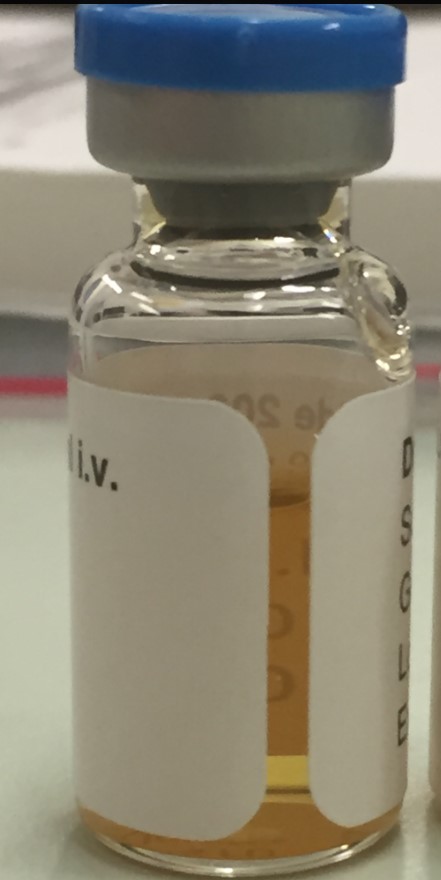
    Photos of Falsified DEFIBROTIDE Batch number: 0286, with expiry date: 09/2021

    Medical Product Alert N°5/2020 - 7 May 2020 2         Medical Product Alert N°5/2020 - 7 May 2020 3
    Sample from Latvia       Sample from Latvia

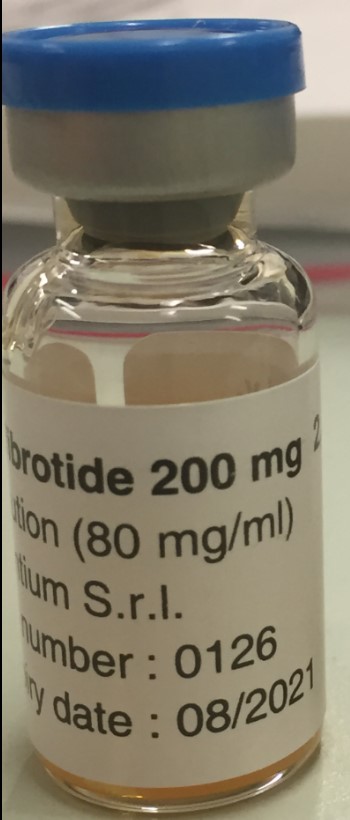
    Photos of Falsified DEFIBROTIDE Batch number: 0126, with expiry date: 08/2021
    Medical Product Alert N°5/2020 - 7 May 2020 4           Medical Product Alert N°5/2020 - 7 May 2020 5
    Sample from Australia       Sample from Australia

    WHO requests increased vigilance within the supply chains of countries likely to be affected by these falsified products. Increased vigilance should include hospitals, clinics, health centres, wholesalers, distributors, pharmacies and any other suppliers of medical products.

    If you are in possession of the above products, please do not use them. If you have used these falsified products, or if you suffer an adverse reaction/event having used these products, you are advised to seek immediate medical advice from a qualified healthcare professional, and to report the incident to the National Regulatory Authorities/National Pharmacovigilance Centre.

    All medical products must be obtained from licensed, authorized and reliable sources. Their authenticity and condition should be carefully checked. Seek advice from a healthcare professional in case of doubt.

    National regulatory/health authorities are advised to immediately notify WHO if these falsified products are identified in their country(ies). If you have any information concerning the manufacture, distribution, or supply of these products, please contact rapidalert@who.int.

    WHO Global Surveillance and Monitoring System for Substandard and Falsified Medical Products

    For further information, please visit our website: https://www.who.int/medicines/regulation/ssffc/en/ 

    Medical Product Alert N°5/2020 - 7 May 2020
    Read More
    https://www.who.int/news-room/detail/07-05-2020-medical-product-alert-n-5-2020

    Views: 0

  • Compendium of research projects at the interface of tuberculosis and COVID-19

    As the world comes together to tackle the COVID-19 pandemic, it is important to ensure that tuberculosis (TB) prevention and care approaches are adapting appropriately to ensure continuous and safe delivery of high-quality TB services. Considering the overlaps in TB and COVID-19 in disease presentation and transmission, the pandemic presents many questions for the TB field that may require learning through research and innovation. 

    To better understand challenges and opportunities in this space, the World Health Organization Global TB Programme is collating information on ongoing research at the interface of TB and COVID-19 (i.e. research which would improve TB prevention and care approaches in the context of the COVID-19 pandemic). We are developing a living compendium (listing), which will be updated periodically to make ongoing research projects and publications visible on its website. With your consent we would like to include any study you have in this compendium.

    To fulfill these objectives, we need the cooperation of organizations and individuals engaged in TB/COVID-19 research to complete this  one page template before 20 May 2020. We encourage you to please share this in your network, so we can reach all stakeholders widely.

    We thank you in advance for your cooperation, and please do not hesitate to contact us if you have any questions.

    Read More
    https://www.who.int/news-room/detail/04-05-2020-compendium-of-research-projects-at-the-interface-of-tuberculosis-and-covid-19

    Views: 0

  • New estimates highlight need to step up the response to hepatitis D

    Lyon, France, 29 April 2020 – In a study published in the Journal of Hepatology, 1 Professor Anna Maria Geretti and Dr Alexander Stockdale from the University of Liverpool (United Kingdom), in collaboration with researchers
    from the World Health Organization (WHO) and the International Agency for Research on Cancer (IARC), estimate that worldwide, hepatitis D virus (HDV) affects nearly 5% of people who have a chronic infection with hepatitis B virus (HBV) and that HDV
    co-infection could explain about 1 in 5 cases of liver disease and liver cancer in people with HBV infection..

    To map the epidemiology of HDV infection in the world, Professor Geretti and Dr Stockdale joined forces with the WHO Global Hepatitis Programme and IARC, alongside investigators in Germany, Malawi, and the United Kingdom. “Infection with HDV occurs
    in about 1 in 22 cases of chronic HBV infection in the world,” Dr Stockdale says. “More high-quality data are needed, but we have identified several geographical hotspots of high prevalence of HDV infection: in Mongolia, the Republic of
    Moldova, and countries in Western and Middle Africa.”

    “Although it is less common than hepatitis B, hepatitis D is a serious disease that often affects underprivileged and vulnerable populations,” says Dr Meg Doherty, Director of the WHO Global Hepatitis Programme. Those who are more likely to
    have HBV and HDV co-infection include people who inject drugs and people with hepatitis C virus or HIV infection. The risk of co-infection also appears to be higher in recipients of haemodialysis, men who have sex with men, and commercial sex workers.
    Dr Doherty points out, “This information helps in identifying the groups with HBV among whom we should be looking for HDV.”

    HDV (formerly known as the Delta agent) is a small virus – one of the smallest that is known to cause disease in humans – and can replicate only in the presence of HBV, from which HDV borrows some of its structures. Compared with people with
    HBV infection alone, those who have a chronic infection with both HBV and HDV have a much higher risk of developing disease in the form of cirrhosis and liver cancer. “HDV is a significant contributor to severe liver disease and liver cancer,”
    says IARC scientist Dr Catherine de Martel. “The findings from this study inform our work on the association between viral infections and cancer, which is focused on developing improved prevention strategies.”

    Professor Geretti concludes, “HDV has long been neglected, because for decades the prevalence of infection remained uncertain and effective treatment was lacking. Mapping the epidemiology of the infection is just the first step. More efforts are
    needed to reduce the global burden of chronic hepatitis B and develop medicines that are safe and effective against hepatitis D and are affordable enough to be deployed on a large scale to those who are most in need.”

    1 Stockdale AJ, Kreuels B, Henrion MYR, Giorgi E, Kyomuhangi I, de Martel C, Hutin Y, Geretti AM (2020). The global prevalence of hepatitis D virus infection: systematic review and meta-analysis. J Hepatol. Published online 23 April 2020;
    https://doi.org/10.1016/j.jhep.2020.04.008

    For more information, please contact

    Véronique Terrasse, Communications Group, at +33 (0)6 45 28 49 52 or terrassev@iarc.fr or IARC Communications, at com@iarc.fr

    The International Agency for Research on Cancer (IARC) is part of the World Health Organization. Its mission is to coordinate and conduct research on the causes of human cancer, the mechanisms of carcinogenesis, and to develop scientific strategies for
    cancer control. The Agency is involved in both epidemiological and laboratory research and disseminates scientific information through publications, meetings, courses, and fellowships. If you wish your name to be removed from our press release emailing
    list, please write to com@iarc.fr. 

    About University of Liverpool

    Founded in 1881 as the original ‘red brick’, the University of Liverpool is one of the UK’s leading research-intensive higher education institutions. Consistently ranked in the top 200 universities worldwide, we are a member of the prestigious
    Russell Group and have a global reach and influence that reflects our academic heritage as one of the country’s largest civic institutions. For more information please visit us at www.liverpool.ac.uk

    Read More
    https://www.who.int/news-room/detail/29-04-2020-new-estimates-highlight-need-to-step-up-the-response-to-hepatitis-d

    Views: 0

  • WHO calls for healthy, safe and decent working conditions for all health workers, amidst COVID-19 pandemic

    WHO calls for healthy, safe and decent working conditions for all health workers, amidst COVID-19 pandemic

    On World Day for Safety and Health at Work, the World Health Organization calls upon all governments, employers and workers organizations and the global community to take urgent measures for strengthen countries’ capacities to protect occupational health and safety of health workers and emergency responders respect their rights to decent working conditions, and develop national programmes for occupational health of health workers and to provide them with occupational health services. Amidst the COVID-19 pandemic, ILO has dedicated World Day for Safety and Health at Work 2020 in addressing the outbreak of infectious diseases at work, in particular, on the COVID-19 pandemic.

    Health workers are at the front line of the COVID-19 outbreak response and as such are exposed to hazards that put them at risk of infection. Hazards include pathogen exposure, long working hours, psychological distress, fatigue, occupational burnout, stigma, and physical and psychological violence.

    Infections with COVID-19, insufficient measures for infection prevention and control, occupational safety and health, mental health and psychosocial support for health workers result in high rates of absenteeism and deplete the health workforce – the most precision resources for stopping the COVID outbreak. 

    Key Messages and Facts

    COVID-19 infections among health workers:

    • As of 21 April 2020 countries reported to WHO that over 35, 000 health workers were infected with COVID19. This number is significantly higher because of underreporting.
    • The major occupational risks for COVID19 infection among health workers are: late recognition or suspicion of COVID-19 in patients, working in a higher-risk department, longer duty hours, sub-optimal adherence to infection prevention and control measures, such as hand hygiene practices, and lack of or improper use of personal protective equipment (PPE). Other factors have also been documented, such as inadequate or insufficient IPC training for respiratory pathogens, including the COVID-19 virus, as well as long exposure in areas in healthcare facilities where large numbers of COVID-19 patients were being cared for.
    • The prevention of infections requires the use of appropriate infection prevention and control measures by all health workers, with a special focus on the adherence to hand hygiene and personal protective equipment when caring for COVID-19 patients, as well as a combination of environmental and administrative controls
    • Health workers infected with COVID-19 following exposure in the workplace should have the right to employment injury benefits for occupational disease, including compensation, rehabilitation, and curative services.

    Violence and stigma against health workers:

    • Health workers are at high risk of violence all over the world. Between 8% and 38% of health workers suffer physical violence at some point in their careers. Many more are threatened or exposed to verbal aggression and social stigma because of their work.
    • In the COVID19 crisis, shortage of staff and resources and increasing social tensions result in increased level of violence against health workers and even attacks against health care facilities. Doctors, nurses, security personnel and those who are assisting in testing, tracing contacts and enforcing physical distancing measures to stop COVID-19 experience threats and aggression.
    • WHO calls upon governments, employers and workers organizations to institute measures for zero-tolerance to violence against health workers at the workplace and at the way to and from their workplace, and for intensifying social support and respect for health workers and their families.

    Long working hours and psychosocial hazards for health workers:

    • Many health workers have to work longer or irregular hours because of the increasing demand for health services. In addition, many countries experience shortage of health workers, or junior staff are working in demanding new roles.
    • Health workers face psychosocial hazards, which are exacerbated during emergencies where demands increase and they have to experience risk of infection witness higher suffering or mortality.
    • Long working hours, shift work, high workload and other psychosocial hazards can lead to fatigue, occupational burnout, increased psychological distress or declining mental health – affecting the health of health workers, and the quality and safety of care delivered.
    • WHO calls for adequate staffing levels and clinical rotation in healthcare facilities, measures to minimize psychosocial hazards, and provision of access to mental health and psychosocial support for health workers.

    The annual World Day for Safety and Health at Work on 28 April promotes the prevention of occupational accidents and diseases globally. It is an awareness-raising campaign intended to focus international attention on the magnitude of the problem and on how promoting and creating a safety and health culture can help reduce the number of work-related deaths and injuries.


    WHO calls for healthy, safe and decent working conditions for all health workers, amidst COVID-19 pandemic
    Read More
    https://www.who.int/news-room/detail/28-04-2020-who-calls-for-healthy-safe-and-decent-working-conditions-for-all-health-workers-amidst-covid-19-pandemic

    Views: 0

  • Maternal infections in health facilities

    Maternal infections in health facilities

    A clearer picture of the global impact 

    New research from the Global Maternal Sepsis Study (GLOSS), a major WHO/HRP initiative, shows that infection has a much larger impact on global maternal mortality and morbidity than previously thought.

    Logo of the Lancet Global HealthThe
    results from GLOSS, published in The Lancet Global Health, are the first to provide data on frequency of maternal infections and
    sepsis across the pregnancy and post-pregnancy period, in a large number of health facilities around the world. 

    Around 11 women per 1000 live births had an infection which resulted in or contributed to what is known as a severe maternal outcome – either they died or nearly died – during their hospitalization. 

    Urgent improvement is needed to manage this life-threatening risk faced by all pregnant and recently pregnant women, wherever they are in the world. 

    What is maternal sepsis and how does it lead to maternal death?

    Maternal sepsis is a life-threatening condition that arises when the body’s response to infection causes injury to its own tissues and organs during pregnancy, child-birth, post-abortion or the postpartum period.

    The latest global estimates place sepsis due to obstetric infections as the third most common cause of maternal mortality. However, this only includes infections as a direct result of pregnancy, such as endometritis or post-caesarean wound infections.

    Few
    previous studies include post-abortion infections. Neither do they address indirect infections such as respiratory and meningitis, which are aggravated by pregnancy but not directly caused by it.

    A better understanding of maternal infection

    GLOSS was a massive facility-based data collection effort led by WHO, accompanied by a ‘STOP SEPSIS!’ campaign to increase awareness among healthcare providers.

    The study gathered data on women who were admitted with suspected or confirmed infection during pregnancy or post-pregnancy over a one-week period in 2017. More than 2800 women participated in the study in 52 countries.

    GLOSS included healthcare facilities that care for women during pregnancy, childbirth or at the end of pregnancy, as well as facilities without maternity service but where women could be hospitalized during or after pregnancy, and data on infections
    which are not usually recorded as maternal sepsis, including post-abortion and indirect infections. 

    The result is a more complete understanding of the frequency and impact of maternal infections in health facilities. 

    GLOSS calls attention not only to the wider range of risks faced by pregnant women but also to the long period of time during which they are at risk. 

    Putting global numbers on maternal infection and sepsis

    Overall, around 70 pregnant or recently-pregnant women per 1000 live births were found to have a maternal infection needing hospital management. 

    Across the study, 11 women with either direct or indirect infection per 1000 live births developed a severe maternal outcome, but in low- and middle-income countries up to 15 women per 1000 births were affected.

    Infections were the underlying cause of most of the deaths recorded during the study, primarily post-abortion infection and indirect infections. Infections were also present in about a third of deaths attributed to other causes, such as postpartum
    haemorrhage.

    This suggests that the contribution of infection to global maternal mortality and morbidity may be larger than current reports of maternal sepsis mortality suggest.

    Preventing, identifying and treating maternal infection and sepsis

    Some of the most common maternal infections found in the study, such as urinary tract infections, post-caesarean and post-abortion infections, are largely preventable and treatable.

    GLOSS results suggest that current levels of monitoring and clinical care across health facilities are not enough to prevent, identify and treat levels of maternal infection effectively. 

    For instance, a complete set of vital signs was not reported for a third of the women in the study, on the day their infection was suspected or diagnosed. Delays in antimicrobial therapy were frequent.

    GLOSS also shows marked differences across countries, with the highest burden in low- and middle-income countries, compared with high-income countries.

    This may reflect the impact of broader health determinants in different country contexts. Challenges of overcrowding, limited access to water and sanitation and constraints to safe births by skilled birth attendants can reduce the ability of healthcare
    providers to manage the frequency and outcome of maternal infections.

    An opportunity to implement evidence-based practice

    GLOSS gives healthcare providers, policy-makers, and the public at large an opportunity: to mobilise around these data improve evidence-based practice, and save lives. 

    WHO has produced a number of resources which can support timely action to prevent, diagnose and treat maternal infection, as well as activities such as the upcoming SAVE LIVES: Clean Your Hands campaign
    on 5 May which celebrates the central role played by nurses and midwives in clean health care. 

    In addition, WHO will publish a global sepsis epidemiology report around the 73rd World Health Assembly (WHA) in May, as requested in the
    2017
    WHA Resolution on Improving the prevention, diagnosis and clinical managementof sepsis.

    Understanding why and how infection affects women is essential for equipping healthcare providers with life-saving knowledge and enabling health care systems to bring down global maternal mortality and morbidity.

    Related publications

    WHO recommendations for prevention and treatment of maternal peripartum infections

    WHO Clinical practice handbook for safe abortion

    Global guidelines on the prevention of surgical site infection

    WHO statement on maternal sepsis

    World Health Assembly resolution on Improving the prevention, diagnosis and clinical management of sepsis

    Health Topics

    Antimicrobial resistance

    Infection Prevention and Control

    Water Sanitation Hygiene

    Other links

    Global Maternal Sepsis Study

    SAVE LIVES: Clean Your Hands 5 May 2020


    Maternal infections in health facilities
    Read More
    https://www.who.int/news-room/detail/27-04-2020-maternal-infections-in-health-facilities

    Views: 0

  • MIEA warns public to beware of property scams

    MIEA warns public to beware of property scams

    MIEA warns public to beware of property scams 6

    KUALA LUMPUR: The Malaysian Institute of Estate Agents (MIEA) is advising the public to be cautious in buying and selling properties during the Movement Control Order (MCO) period to avoid falling prey to scams.

    MIEA noted that amid the MCO, the majority of Malaysians who are keen to buy or sell property will be relying on online platforms.

    “Be extra vigilant as there are still a high number of cases where the general public has fallen prey to these property pitfalls,” it said yesterday.

    MIEA president Lim Boon Ping highlighted that registered estate agents (REA) and negotiators (REN) are recognised as professionals under Malaysian law and that there are firm requirements that need to be adhered to when publishing an advertisement in order to protect the public’s interest.

    Among others, they are required to include their name, REN/REA number, contact number and the real estate firm they represent with its E registration number and the firm’s telephone number, which the public can verify on www.lppeh.gov.my.

    “There will a sudden surge on online and offline advertisement by those illegal brokers who will take advantage on the Covid-19 rise in low priced property deals and these advertisements will not contain the before-mentioned authenticity information and the public should avoid calling them,“ warned Lim.

    He reminded that if one sees an advertisement or a property deal that looks “too good to be true”, be extra cautious and do your research”.

    “Always engage a registered estate agent or a certified negotiator to verify these potential property deals,“ added Lim. — Bernama

    MIEA warns public to beware of property scams
    Read More
    https://www.thesundaily.my/local/miea-warns-public-to-beware-of-property-scams-AB2245651

    Views: 0

  • Medical Product Alert N°4/2020

    Medical Product Alert N°4/2020

    This Medical Product Alert relates to a number of confirmed falsified chloroquine products circulating in the WHO region of Africa. Please note that this Medical Product Alert n°4/2020 will be updated as new reports of falsified chloroquine are received and validated by WHO.

    Between 31 March and 2 April 2020, the WHO global surveillance and monitoring system on substandard and falsified (SF) medical products received nine reports of confirmed falsified chloroquine products from three countries. All reported products were identified at patient level and all have been confirmed as falsified.

    This WHO medical product alert N°4/2020 refers to nine different falsified chloroquine products, with different presentations (see Table 1). It is important to note that widespread vigilance is required from all countries, regardless of where the product was originally identified.

    Table 1: List of identified falsified chloroquine products, subject of WHO Alert N°4/2020
    table1

    All the products listed in Table 1 are confirmed as falsified, on the basis that they deliberately/fraudulently misrepresent their identity, composition or source. Indeed, it can be noted that:

    • either: the products do not contain the correct amount of the active pharmaceutical ingredient, based on the results of preliminary or full compendial analysis;
    • and/or: the products were not produced by the manufacturer whose name is stated on the product labels, and the variable data (batch number and dates) of the above products do not correspond to genuine manufacturing records;
    • and/or: the manufacturer whose name is stated on the product labels does not exist.

    Chloroquine phosphate or sulfate is referenced on the WHO Model List of Essential Medicines for the treatment of Plasmodium vivax infection (malaria). Large clinical trials are under way to generate the robust data needed to establish the efficacy and safety of chloroquine and hydroxychloroquine in the treatment of COVID-19. These medicines are currently authorized for malaria and certain autoimmune diseases and it is important that patients do not face shortages caused by stockpiling or use outside the authorized indications. 
    Both chloroquine and  hydroxychloroquine can have serious side effects, especially at high doses or when combined with other medicines.

    The SOLIDARITY trial, led by WHO, is reviewing potential treatments for COVID-19. Please refer to  WHO medical product alert n°3/2020 for general information on falsified medical products in relation to the management 
    of COVID-19.

    For photographs of products listed in Table 1, please refer to the WHO Medical Product Alert website, and 
    to the annex of this medical product alert n°4/2020 (see pages 3-7).

    WHO requests increased vigilance within the supply chains of countries likely to be affected by these falsified products. Increased vigilance should include hospitals, clinics, health centres, wholesalers, distributors, pharmacies and any other suppliers of medical products.

    If you are in possession of the above products, please do not use. If you have used these falsified products, or if you suffer an adverse reaction/event having used these products, you are advised to seek immediate medical advice from a qualified healthcare professional, and to report the incident to the National Regulatory Authorities/National Pharmacovigilance Centre.

    All medical products must be obtained from licensed, authentic and reliable sources. Their authenticity and condition should be carefully checked. Seek advice from a healthcare professional in case of doubt.

    National regulatory/health authorities are advised to immediately notify WHO if these falsified products are discovered in their country. If you have any information concerning the manufacture, distribution, or supply of these products, please contact: rapidalert@who.int. 

    WHO Global Surveillance and Monitoring System for Substandard and Falsified Medical Products
    For more information, please visit: www.who.int/medicines/regulation/ssffc/en/ 

    Annex: Photographs of falsified chloroquine products circulating in the WHO region of Africa, Medical Product Alert N°4/2020

    CAMEROON

    Photographs of confirmed falsified Chloroquine Phosphate (100mg)
    ChloroquinePhosphate250mgCameroon-1

    Photographs of confirmed falsified Chloroquine Phosphate (250mg)
    ChloroquinePhosphate250mgCameroon-2

    Photographs of confirmed falsified Chloroquine Phosphate 250mg
    ChloroquinePhosphate250mg-Cameroon 3

    DEMOCRATIC REPUBLIC OF CONGO

    Photographs of confirmed falsified CLOROQUINE 250MG
    ChloroquinePhosphate250mgDRC1

    Photographs of confirmed falsified Chloroquine Phosphate 250mg
    ChloroquinePhosphate250mgDRC2

    NIGER

    Photographs of confirmed falsified Samquine 100 (100mg)

    Samquine100-100mgNiger 1

    Photographs of confirmed falsified Chloroquine phosphate tablets B.P 100mg

    Chloroquine-phosphate-tabletsB.P100mgNiger2

    Photographs of confirmed falsified Niruquine (100mg)
    Niruquine00mgNiger3


    Medical Product Alert N°4/2020
    Read More
    https://www.who.int/news-room/detail/09-04-2020-medical-product-alert-n4-2020

    Views: 0

  • Glossary of Youth: Its Education, Regimen, and Hygiene, by G. Stanley Hall

    Glossary of Youth: Its Education, Regimen, and Hygiene, by G. Stanley Hall

    GLOSSARY

    AGAMIC. Unmarried; unmarriageable, sometimes non-sexed.

    AGENIC. Lacking in reproductive power; sterile.

    AMPHIMIXIS. That form of reproduction which involves the mingling of substance from two individuals so as to effect a mixture of hereditary characteristics. It includes the phenomena of conjugation and fertilization among both unicellular and multicellular organisms.

    ANABOLISM. See METABOLISM.

    ANAMNESIC. Pertaining to or aiding recollection.

    ANEMIC. Deficient in blood; bloodless.

    ANTHROPOMORPHISM. The attributing of human characteristics to natural, supernatural, or divine beings.

    ANTHROPOMETRY. Science of measurement of the human body.

    ARTIFACT. Any artificial product.

    APHASIA. Impairment or lose of the ability to understand or use speech.

    ASSOCIATIONISM. The psychological theory which regards the laws of association as the fundamental laws of mental action and development.

    ATAVISTIC. Pertaining to reversion through the influence of heredity to remote ancestral characteristics.

    ATAXIC. Pertaining to inability to coördinate voluntary movements; irregular.

    CALAMO-PAPYRUS. Reed papyrus or pen-paper.

    CATABOLISM. See METABOLISM.

    CATHARSIS. Purgation or cleansing. Aristotle’s esthetic theory that little renders immune for much.

    CEREBRATION. Brain action, conscious or unconscious.

    CHOREA. St. Vitus’s dance; a nervous disease marked by irregular and involuntary movements of the limbs and face.

    CHRESTOMATHY. A collection of extracts and choice pieces.

    CHRISTENTHUM. The Christian belief; the spirit of Christianity.

    COMMANDO EXERCISES. Gymnastic exercises whose order is dependent upon the spoken command of the director.

    CORTEX. The gray matter of the brain, mostly on its surface.

    CORTICAL. Pertaining to the cortex.

    CRANIOMETRY. The measurement of skulls.

    CRYPTOGAMOUS. Having an obscure mode of fertilization; or, of plants that do not blossom.

    CULTUS. A system of religious belief and worship.

    DEUTSCHENTHUM. The spirit of the German people.

    DIATHESIS. A constitutional predisposition.

    EPHEBIC. Pertaining to the Greek system of instruction given to young men to fit them for citizenship; adolescent.

    EPIGONI. Successors; followers who only follow.

    EPISTEMOLOGY. The theory of knowledge; that branch of logic which undertakes to explain how knowledge is possible and to define its limitations, meaning, and worth.

    EUPEPTIC. Having good digestion.

    EUPHORIA. The sense of well-being; of fullness of life.

    EVIRATION. Emasculation; loss of manly characteristics.

    FERAL. Wild by nature; untamed; undomesticated.

    FORMICARY. An artificial ants’ nest.

    GEMÜTH. Disposition; the entire affective soul and its habitual state.

    HEBETUDE. Dullness; stupidity.

    HEDONISTIC. Relating to hedonism, that form of Greek philosophy which taught that pleasure is the chief end of existence.

    HETAERA. A Greek courtesan. This class was often highly trained in music and social art, and represented the highest grade of culture among Greek women.

    HETEROGENY. (1) The spontaneous generation of animals and vegetables, low in the scale of organization, from inorganic elements. (2) That kind of generation in which the parent, whether plant or animal, produces offspring differing in structure or habit from itself, but in which after one or more generations the original form reappears.

    HETERONOMOUS. Having a different name.

    HOROLOGY. The science of measuring time and of constructing instruments for that purpose.

    HYGEIA. The Greek goddess of health; health.

    HYPERMETHODIC. Methodic to excess; overmethodic.

    HYPERTROPHY. Excessive growth.

    INDISCERPTIBLE. Incapable of being destroyed by separation of parts.

    INHIBITION. Interference with the normal result of a nervous excitement by an opposing force.

    IRRADIATION. The diffusion of nervous stimuli out of the path of normal discharge which, as a result of the excitation of a peripheral end organ may excite other central organs than those directly connected with it.

    KINESOLOGICAL. Pertaining to the science of tests and measurements of bodily strength.

    KINESOMETER. An instrument for measuring muscular strength.

    MEDULLATION. The investment of nerve fibers with a protective covering or medullary sheath, consisting of white, fat-like matter.

    MERISTIC. Pertaining to the levels or spinal and cerebral segments of the body.

    METABOLISM. The act or process by which, on the one hand, dead food is built up into living matter—anabolism, and by which, on the other, the living matter is broken down into simpler products within a cell or organism—catabolism.

    METAMORPHOSIS. Change of form or structure; transformation.

    METEMPSYCHOSIS. The doctrine of the transmigration of the soul from one body to another.

    MONOPHRASTIC. Pertaining to or consisting of a single phrase.

    MONOTECHNIC. Pertaining to a single art or craft.

    MORPHOLOGY. The science of form and structure of plants and animals without regard to function.

    MYOLOGY. The scientific knowledge of the muscular system.

    MYTHOPOEIC. Producing or having a tendency to produce myths.

    NOETIC. Of, pertaining to, or conceived by, mind.

    NUANCE. Slight shade; difference; distinction; degree.

    ORTHOGENIC. Pertaining to right beginning and development.

    ORTHOPEDIC. Relating to the art of curing deformities.

    OSSUARY. A depository of dry bones.

    PALEOPSYCHIC. Pertaining to the antiquity of the soul.

    PANTHEISTIC. Relating to that doctrine which holds that the entire phenomenal universe, including man and nature, is the ever-changing manifestation of God, who rises to self-consciousness and personality only in man.

    PATRISTICS. That department of study occupied with the doctrines and writings of the fathers of the Christian Church.

    PHOBIA. Excessive or morbid fear of anything.

    PHYLETICALLY. In accordance with the phylum or race; racially.

    PHYLETIC. Pertaining to a race or clan.

    PHYLOGENY. The history of the evolution of a species or group; tribal history; ancestral development as opposed to ontogeny or the development of the individual.

    PHYLUM. A term introduced by Haeckel to designate the great branches of the animal and vegetable kingdoms. Each phylum may include several classes.

    PICKELHAUBE. The spiked helmet of the German army.

    PLANKTON. Sea animals and plants collectively; distinguished from coast or bottom forms and floating in a great mass.

    POLYGAMIC (LOVE). Pertaining to the habit of having more than one mate of the opposite sex.

    POLYPHRASTIC. Having many phrases; pertaining to rambling, incoherent speech.

    POST-SIMIAN. Pertaining to an age later than that in which simian or monkey-like forms prevailed.

    PRENUBILE. Pertaining to the age before sexual maturity or marriageability is reached.

    PRIE DIEU. A praying desk.

    PROPEDEUTIC. Preliminary; introductory.

    PROPHYLACTIC. Any medicine or measure efficacious in preventing disease.

    PSEUDOPHOBIAC. Pertaining to a morbid condition in which the subject is continually in fear of having said something not strictly true.

    PSYCHOGENESIS. The origin and development of soul.

    PSYCHONOMIC. Pertaining to the laws of mind.

    PSYCHOSIS. Mental constitution or condition; any change in consciousness, especially if abnormal.

    PUBERTY. The age of sexual maturity.

    PUBESCENT. Relating to the dawning of puberty.

    PYGMOID. Of pygmy size and form.

    RABULIST. A chronic wrangler; one who argues about everything.

    SCHEMA. A synopsis; a summary. In the Kantian sense, a general type.

    SCHEMATISM. An outline of any systematic arrangement; an outline.

    SUPERFOETATION. A second conception some time after a prior one, by which two foetuses of different age exist together in the same female. Often used figuratively.

    TEMIBILITY. (From Italian temibile, to be feared.) The principle of adjustment of penalty to crime in just that degree necessary to prevent a repetition of the criminal act.

    TIC. A nervous affection of the muscles; a twitching.

    TRANSCENDENTAL. In the Kantian system having an a priori character, transcending experience, presupposed in and necessary to experience.

    TRAUMATA. Wounds.

    TRAUMATISM. A wound; any morbid condition produced by wounds or other external violence.

    VERBIGERATION. The continual utterance of certain words or phrases at short intervals, without reference to their meaning, as seen in insane Gedankenflucht or rapid flight of thought.

    Extract from Youth: Its Education, Regimen, and Hygiene, by G. Stanley Hall

    Views: 0