Tag: group

  • New virus hits Mideast airlines with $100M loss, group says

    New virus hits Mideast airlines with $100M loss, group says

    Major travel disruptions due to the new coronavirus have already caused the equivalent of a roughly $100 million loss to airlines in the Middle East, which serves as a connection hub for east-west travel, the industry’s main trade association said Monday.

    Read More

    Views: 0

  • Lufthansa further slashes flight plan over virus

    Lufthansa further slashes flight plan over virus

    German airline group Lufthansa said Monday it was extending flight cancellations on Iran and China routes until late April, part of a broader rollback because of the novel coronavirus.

    Read More

    Views: 0

  • WHO launch eEML

    WHO launch eEML

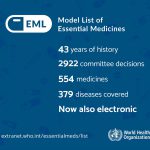
    The World Health Organization has launched a new easy-to-access, digital version of its Model list of Essential Medicines (EML). The move will revolutionize the way this core WHO reference tool is used.

    More than 150 countries currently use the WHO list to work out which medicines best meet their national health contexts and priorities, so they can compile their own national essential medicines lists.

    Essential medicines are those that satisfy the priority health care needs of a population. They are the medicines that need to be available in a functioning health system at all times, in appropriate dosage forms, of assured quality, and at prices individuals and the community can afford.

    Keeping up-to-date lists of the most important medicines a country needs is key to achieving health for all in a sustainable way.

    Since 1977, the WHO list has been revised every 2 years (most recently in 2019) by a group of experts and published in print or PDF formats. It includes information about available dose forms and strengths; specifications as to who should take a medicine; what conditions a medicine can treat and how it should be taken, as well as details about the clinical evidence supporting recommendations being made.

    The new electronic version brings the traditional EML to smartphones and computer screens in a comprehensive, freely accessible, online database. Instead of flicking through pages of information, users can search by simply clicking on the name of a medicine, for example, or a health issue. They can also make their own customized lists by exporting the list – in full or in part – into an Excel or Word version.  

    The electronic EML is the latest step in WHO’s effort to harness digital technologies to drive improvements in global public health, and advance progress towards universal health coverage. 


    WHO launch eEML
    Read More
    https://www.who.int/news-room/detail/27-02-2020-who-launch-e-eml

    Views: 0

  • Statement on the meeting of the International Health Regulations (2005) Emergency Committee for Ebola virus disease in the Democratic Republic of the Congo on 12 February 2020

    Statement on the meeting of the International Health Regulations (2005) Emergency Committee for Ebola virus disease in the Democratic Republic of the Congo on 12 February 2020

    The meeting of the Emergency Committee convened by the WHO Director-General under the International Health Regulations (IHR) (2005) to review the current Ebola virus disease (EVD) outbreak in the Democratic Republic of the Congo (DRC) took place on Wednesday, 12 February 2020, from 14:00 to 16:45 Geneva time (CEST).

    Proceedings of the meeting

    Members and advisors of the Emergency Committee were convened by teleconference.

    The Secretariat welcomed the Committee and thanked them for their support. The meeting was turned over to the Chair, Dr Robert Steffen.

    Dr Steffen also welcomed the Committee and gave the floor back to the Secretariat.

    Representatives of WHO’s legal department and the department of compliance, risk management, and ethics briefed the Committee members on their roles and responsibilities.

    Committee members were reminded of their duty of confidentiality and their responsibility to disclose personal, financial, or professional connections that might be seen to constitute a conflict of interest. Each member who was present was surveyed and no conflicts of interest were judged to be relevant to the meeting.

    The Chair then reviewed the agenda for the meeting and introduced the presenters.

    Presentations were made by representatives of the Ministry of Health of the Democratic Republic of the Congo (DRC), the WHO Secretariat, and the UN Ebola Emergency Response Coordinator.

    The current situation in the DRC was reviewed. As of 10 February 2020, there were a total of 3431 cases, of which 3308 were confirmed and 123 were probable. 2253 persons have died (66%). Between 3 and 9 February 2020, three new confirmed cases were reported in Beni Health Zone, North Kivu. These three cases were already registered as contacts and two were under surveillance at the time of detection. More than 2000 contacts are being followed. There has been an increase in the number of security incidents in recent months.

    Challenges that remain include: strengthening of community acceptance for full commitment to response measures; protection of personnel at strategic health checkpoints; improvement of infection prevention and control practices in health facilities; strengthening of the local health system; and comprehensive treatment and support for patients in recovery.

    The WHO Secretariat gave an overview of the epidemiological situation, which shows an overall encouraging trend in case incidence and geographic spread. It was noted that sustaining this progress depends on the security situation and control of the well-known drivers of transmission, particularly in traditional health facilities, and on continued trust and communication with the community.

    A risk communication and community engagement programme has been developed, as has an EVD survivors programme. It is critical to ensure the long-term sustainability of these two initiatives.   

    The situation in countries neighbouring DRC was reviewed, as was preparedness in nonaffected areas of DRC. An EVD operational readiness standardized approach has been implemented in 9 priority countries. More than 2400 alerts have been investigated, and more than 14,600 health workers have been vaccinated.

    The UN Ebola Emergency Response Coordinator gave a brief report on operational support, focused on security challenges and preparations for any resurgence of disease.

    Context and Discussion

    The Committee noted a great deal of progress in the situation since its last meeting and commended the response, under the leadership of the DRC Ministry of Health and the multisectoral coordination commission established in July 2019. Support provided by WHO, UN agencies, nongovernmental organizations and other partners has also contributed to limiting the spread and impact of this virus in a difficult context. An increase in the number of alerts was attributed to strong and proactive community surveillance.

    Conclusions and Advice

    It was the unanimous view of the Committee that this event still constitutes a public health emergency of international concern (PHEIC) under the IHR (2005).

    The Committee acknowledged the revised risk assessment, which puts the risk now as high at national and regional levels, and low at the global level.

    The Committee was concerned that withdrawing the PHEIC now might have adverse consequences for the response efforts through diminishing focus. Additionally, although the primary concern of the Committee is EVD, there are serious ongoing outbreaks of other diseases, including measles and cholera, in DRC. The country continues to need support to combat infectious diseases as well as to strengthen its health system. Further, there remains an urgent need to maintain international solidarity for the response.

    The Committee noted the ongoing discussions about the interpretation in the text of the IHR (2005) of the terms international and regional spread, and about creating an intermediate level of response between the binary possibilities of PHEIC or no PHEIC, in a way that does not require reopening negotiations on the Regulations. The Committee supports these discussions, as an intermediate level would be as useful for gradually ending a PHEIC and for signaling the potential for one to be declared.

    The Committee provided the following advice to the Director-General for his issuance as revised Temporary Recommendations under the IHR (2005).

    For DRC:

    • Sustain the political commitment and multisectoral coordination approach to the response.
    • Continue to engage and build trust with associations of survivors to facilitate rapid detection of any cases arising from exposure to infected bodily fluids of survivors.
    • Continue to strengthen capacity, implementation, and coordination for community awareness and engagement, including a focus on hotspots, preventing resurgence where cases have declined, and to support survivors in their communities.
    • Further enhance the acceptance of response measures and address access and security issues by engaging influencers and decision makers for all interventions.
    • Strengthen measures to prevent and manage nosocomial infections, including systematic mapping of health facilities, targeting of IPC interventions and sustain support to those facilities through monitoring and supervision, including in private-sector and traditional health facilities.
    • Continue cross-border screening and step up monitoring at checkpoints around hotspots and at main roads.
    • Continue to implement and share real-time full-genome genetic sequencing of all new confirmed cases.
    • Strengthen measures to prevent and manage nosocomial infections, including systematic mapping of health facilities, targeting of IPC interventions and sustain support to those facilities through monitoring and supervision.
    • Strengthen preparedness in non-affected provinces of DRC, and more generally strengthen the health system across the country to respond to concurrent health emergencies.
    • Continue to implement optimal vaccine strategies that have proven maximum impact on curtailing the outbreak, as recommended by WHO’s Strategic Advisory Group of Experts (SAGE).

    For countries at risk:

    • At-risk countries should maintain their work with partners to improve their preparedness for detecting and managing imported or locally acquired cases, including the transparent sharing of detailed information on suspect cases, as required by the International Health Regulations (2005), and sharing laboratory samples of suspect cases for confirmatory testing in accordance with WHO norms and guidance.
    • Countries should continue to map population movements and sociological patterns that can predict risk of disease spread.
    • Risk communications and community engagement, especially at points of entry, should be maintained.

    For all countries:

    • As recommended previously, no country should close its borders or place any restrictions on travel and trade.
    • The Committee does not consider entry screening at airports or other ports of entry outside the region to be necessary.

    The Committee emphasized the importance of continued support by WHO and other national and international partners towards the effective implementation and monitoring of these recommendations.

    Based on this advice, the reports made by the affected State Party, and the currently available information, the Director-General accepted the Committee’s assessment and on 12 February 2020 maintained the Ebola outbreak in the Democratic Republic of the Congo as a Public Health Emergency of International Concern (PHEIC).

    The Director-General endorsed the Committee’s advice and issued them as Temporary Recommendations under IHR (2005) to reduce the international spread of Ebola, effective 12 February 2020. The Director-General thanked the Committee Members and Advisors for their advice and requested their reassessment of this situation within two months or earlier if the situation requires.

    Statement on the meeting of the International Health Regulations (2005) Emergency Committee for Ebola virus disease in the Democratic Republic of the Congo on 12 February 2020
    Read More
    https://www.who.int/news-room/detail/12-02-2020-statement-on-the-meeting-of-the-international-health-regulations-(2005)-emergency-committee-for-ebola-virus-disease-in-the-democratic-republic-of-the-congo-on-12-february-2020

    Views: 0

  • World experts and funders set priorities for COVID-19 research

    World experts and funders set priorities for COVID-19 research

    Leading health experts from around the world have been meeting at the World Health Organization’s Geneva headquarters to assess the current level of knowledge about the new COVID-19 disease, identify gaps and work together to accelerate and fund priority research needed to help stop this outbreak and prepare for any future outbreaks.

    The 2-day forum was convened in line with the WHO R&D Blueprint – a strategy for developing drugs and vaccines before epidemics, and accelerating research and development while they are occurring.

    “This outbreak is a test of solidarity — political, financial and scientific. We need to come together to fight a common enemy that does not respect borders, ensure that we have the resources necessary to bring this outbreak to an end and bring our best science to the forefront to find shared answers to shared problems. Research is an integral part of the outbreak response,” said WHO Director-General Dr Tedros Adhanom Ghebreyesus. “I appreciate the positive response of the research community to join us at short notice and come up with concrete plans and commitment to work together.”

    The meeting, hosted in collaboration with GloPID-R (the Global Research Collaboration for Infectious Disease Preparedness) brought together major research funders and over 300 scientists and researchers from a large variety of disciplines. They discussed all aspects of the outbreak and ways to control it including:

    • the natural history of the virus, its transmission and diagnosis;
    • animal and environmental research on the origin of the virus, including management measures at the human-animal interface;
    • epidemiological studies;
    • clinical characterization and management of disease caused by the virus;
    • infection prevention and control, including best ways to protect health care workers;
    • research and development for candidate therapeutics and vaccines;
    • ethical considerations for research;
    • and integration of social sciences into the outbreak response.

    “This meeting allowed us to identify the urgent priorities for research. As a group of funders we will continue to mobilize, coordinate and align our funding to enable the research needed to tackle this crisis and stop the outbreak, in partnership with WHO,” said Professor Yazdan Yazdanpanah, chair of GloPID-R. “Equitable access – making sure we share data and reach those most in need,  in particular those in lower and middle-income countries, is fundamental to this work which must be guided by ethical considerations at all times.”  

    During the meeting, the more than 300 scientists and researchers participating both in person and virtually agreed on a set of global research priorities. They also outlined mechanisms for continuing scientific interactions and collaborations beyond the meeting which will be coordinated and facilitated by WHO. They worked with research funders to determine how necessary resources can be mobilized so that critical research can start immediately.

    The deliberations will form the basis of a research and innovation roadmap charting all the research needed and this will be used by researchers and funders to accelerate the research response.

    Note to editors

    GloPID-R is a global alliance of international research funding organizations investing in preparedness and response to epidemics.

    World experts and funders set priorities for COVID-19 research
    Read More
    https://www.who.int/news-room/detail/12-02-2020-world-experts-and-funders-set-priorities-for-covid-19-research

    Views: 0

  • Changes needed to increase access to colorectal cancer screening

    Changes needed to increase access to colorectal cancer screening

    Colorectal cancer is the second highest cause of cancer death in the United States, expected to claim the lives of an estimated 49,190 people in 2016. The Affordable Care Act (ACA) aimed to increase access to CRC screening by not holding patients responsible for all costs of the procedure, yet current Medicare insurance beneficiaries lacking supplemental insurance may not be able to afford colon cancer screening and treatment. This policy disproportionally puts low-income Americans at risk and adds unnecessary strains on overall health care costs, according to a commentary in the May issue of the journal Gastroenterology.

    “Study after study shows that screening saves lives,” said Chyke A. Doubeni, MD, MPH, chair and the Presidential Associate Professor of Family Medicine and Community Health at the Perelman School of Medicine at the University of Pennsylvania, and lead author of the commentary. “Yet many of those in the group most affected by this deadly disease are unable to afford the screening they critically need. We must renew efforts to ensure equitable access to and use of disease prevention, detection, and treatment services for colorectal cancer.”

    For CRC screening, a full colonoscopy is necessary, where the doctor inspects the rectum and entire colon through a flexible lighted tube, and can remove any abnormal growth. The entire colon has to be cleansed before the colonoscopy, for which the patient is usually sedated

    There are currently an estimated 55.5 million Medicare beneficiaries in the U.S. A 2010 Kaiser Family Foundation survey found that 14 percent lacked supplemental coverage. Until recently, colon cancer screening has been viewed as a one-time activity, while in practice, screening is a series of clinical activities to identify and test patients and perform diagnostic confirmation when necessary. This series of tests and steps include a diagnostic workup, which can include a biopsy to obtain a tissue sample or polypectomy, in which polyps are removed to prevent them from becoming cancerous.

    Views: 0

  • Despite efforts, childhood obesity remains on the rise

    Despite efforts, childhood obesity remains on the rise

    The alarming increase in U.S. childhood obesity rates that began nearly 30 years ago continues unabated, with the biggest increases in severe obesity, according to a study led by a Duke Clinical Research Institute scientist.

    “Despite some other recent reports, we found no indication of a decline in obesity prevalence in the United States in any group of children aged 2 through 19,” said lead author Asheley Skinner, Ph.D., associate professor at Duke. “This is particularly true with severe obesity, which remains high, especially among adolescents.”

    Skinner, along with colleagues at the University of North Carolina at Chapel Hill and Wake Forest University, analyzed data from the National Health and Nutritional Examination Survey, a large, ongoing compilation of health information that has spanned decades.

    Views: 0

  • How to Write Technically for the Lay Person

    [ad_1]

    While you are writing a book or for a specific magazine or article site, you must be using flowery language using striking words, long sentences, phrases or idioms. In short, you need all those elements that will make the text more catchy and will hook the readers! However, that is not the case in technical writing, i.e. when you are writing for websites that are services or products based. Built using advanced web development frameworks, they need to be produced with clean and simple content that is conversational to the buyers. Specifically, the web content must be representative of the services and the company. But, why called technical writing? A good content on the websites plays a great part in SEO and content marketing. It helps in getting the backlinks and scale up in position of the websites in the search engines to get more visitors.

    So, the next time you are preparing content for a high-end website or online application for your business, keep these tips in mind.

    #1 Know your target audience

    The first thing you need clear-off in your head is the target audience of your site. Be it a group of businessmen or corporate services clients, they are all layman! So, keep your vocabulary outright simple. Don’t use more of technical words and flowery English to make the content snappy. Instead, keep it outright simple, such that even a kid can understand what you provide from your site.

    #2 Show but don’t dictate

    Do not dictate or describe everything about your products or services to the visitors in text. Let them discover that gradually as they proceed to different pages. It makes the visitors curious and persuades them to visit more pages of your site in a session. Thus, show them what you provide, but don’t spell it.

    #3 Use simple, short sentences and active voice

    There is actually no point in over-elaborating technical stuff in the websites. Most visitors are basically skimmers and like to wrap up things quickly. So, try using shorter and simple sentences. And, also use active voice as it’s like you are directly interacting with them.

    #4 Be assertive

    Do not assume that everyone knows about your company, products or services. They don’t. But, they are coming to your site to know about it. So, write with absolute authority and command.

    #5 Avoid the jargon

    Your website is for the layman. Not only for the technically skilled ones! Be sure you are putting information that is also easily understandable by the non-specialists. Even if you need to use complex, technical or niche terms, explain them or hyperlink them to other pages that will give their basic information.

    #6 Use text to compliment the images

    While you will be putting images at every relevant point or pages on the website, create content that will perfectly compliment them. This will enhance the visuals of the site and make it more captivating for the readers.

    These explain web development just do not end with creating a great website or application. But, developers need to have some online content marketing ideas too. They have to know well what exactly can fetch a good amount of visitors to a website, besides making it design-wise attractive.

    [ad_2]

    Source by Rob Stephen

    Views: 0

  • Stephen King Is More Introspective in His New Novel Doctor Sleep

    [ad_1]

    In Stephen King’s new novel, Doctor Sleep, King brings back the character of Danny Torrence, the little boy in The Shining. In interviews King says that when fans ask about the fate of specific characters (the one’s that actually live through the horror), he’s been more interested in the those that question the fate of Danny. I think most people who have seen the movie remember the cute little boy on a tricycle with a bowl haircut racing down the empty corridors of The Overlook Hotel. Later to run from a mad “white knuckle alcoholic” who was his father.

    Doctor Sleep is, in my opinion, semi autobiographical. Like Duma Key, which deals with the aftermath of a man who is in a horrendous accident (like King), Doctor Sleep deals with the reality of what it is like to be a recovering alcoholic. I didn’t know King was an alcoholic, but he has been in recovery for over twenty years. So he knows the depths to which one can plunge as well as the difficulties in trying to remain sober. In Doctor Sleep, Danny is an alcoholic like his father and a chain smoker like his mother (who, in the novel, has died of lung cancer). When writing the book, King’s son, Owen, told him that the “plunge” he had given Danny, now Dan, was not far enough to equal the plunge Dan’s father, Jack, had taken. King takes his advice. So, if you don’t want gross, speed read ahead. Dan, after having picked up a girl, gotten in a fight, spends all of his paycheck on cocaine, wakes up still drunk and has to go to the bathroom. “Another lurch from his unhappy gut… That released all of the puke triggers: the vinegar smell of hard cooked eggs in a big glass jar, the taste of barbecue-flavored pork rinds, the sight of french fries drowning in a ketchup nosebleed. All of that crammed into his mouth last night between shots. He was going to spew… ” And that he does in spectacular fashion. But that leads to the main reason for the scene… Dan’s plunge. As he’s leaving the bathroom, out of another room comes a toddler with a baggy diaper full of everything a baby discards, sees the coke on the table, runs to it crying, “canny, mama, canny!” Danny keeps him from getting the “canny” and the little boy falls asleep with his drunk mother. Danny notices bruises on the little boy’s body. While the mom is passed out, he goes through her wallet taking all of her money. Justifying this by saying she’d been the one who made him spend his paycheck on coke. The taking of the money haunts Dan. And the bruises on the little boy haunt Dan. This, to me, is the real crux of the novel. Dan can not get beyond the demons of his past, his murderous, alcoholic father, the dead but not dead people from The Overlook who visit him leaving behind pieces of their rotting, putrefying bodies and the mother with her bruised baby boy. Dan discovers “that memories are the real ghosts” and that, “you take yourself with you, wherever you go.”

    Of course in every King novel there has to be some type of supernatural forces causing havoc. In this novel, King expands on the concept of “the shining”. It’s the ability to read other people’s minds, or move objects, or project out of one’s self. Dan has it and so does a young teenage girl named Abra. In Doctor Sleep, they have to battle a bunch of centuries old serial killers, the True Knot, disguised as RV driving pensioners who literally feed off the pain of others. They only feed on those with “the shining”, and they make their deaths particularly brutal. It makes for better “steam”. They get a big kick out of 9/11 and other tragedies. The leader of this group, a woman named Rose, has a tusk. In Doctor Sleep, Dan fights his past with much greater dread and sense of terror than he does the woman with the tusk. Dan does, through AA, “come to know a new freedom and new happiness.” He also comes to realize that he “will not regret the past nor wish to shut the door on it.” With this novel King, apparently, is not shutting the door on his past.

    [ad_2]

    Source by Linda M Caminiti

    Views: 0

  • Distinguishing Drug Abuse From Drug Addiction

    [ad_1]

    Though “drug abuse” and “drug addiction” are often used interchangeably, in reality the terms refer to two distinct behavior patterns. An individual can abuse or misuse drugs without being inevitably addicted to them. Abuse or misuse involves the use of drugs defying the culturally acceptable standards or medically prescribed doses to attain a certain effect. The substances abused may be legal, such as alcohol or prescription drugs, or illegal, like heroin and other street drugs which have no medicinal value.

    On the other hand, drug addiction, or compulsive drug use, refers to an uncontrollable desire to use a drug in spite of being aware of harmful psychological and physiological effects that they can have on the body. Addiction is often characterized by an insatiable appetite for substances by increasing the dosage, leading to a complete dependence on them.

    Since abuse and addiction are two distinct concepts, their causes are unique as well. Abuse is generally considered to be more complicated but it is not necessarily triggered by any motivational factor, unlike addiction which is caused by a powerful motivational force. Therefore, in most of the cases, abuse may not always result in addiction, but addiction can certainly lead to abuse.

    Impact of drug abuse and addiction on the brain

    It has been observed that both drug abuse and drug addiction have similar effects on mind and body. People often view abuse and addiction as a moral weakness or character flaw. One of the common myths surrounding drug use is that quitting it is directly linked to behavioral changes. In reality, addiction is a disease which alters the brain functions, hijacking the natural motivational control circuits. Thus, quitting is simply not a matter of choice or willpower. Though, the decision to use the drug initially might be voluntary, changes in the brain structure due to repeated drug use can inhibit someone’s self-control and decision-making ability, causing intense cravings.

    Experts attribute the inability to refrain from drug use to these changes in the brain. However, modern medical advancements have led to the development of an array of treatment and rehabilitation options to combat the disastrous effects of addiction and help abusers take control of their lives. Studies have shown that a combination of medications and behavioral therapy can boost the recovery process with minimal withdrawal effects.

    Possible reasons leading to drug abuse and addiction

    For those who are dependent on illegal substances, it can be difficult to know whether they have crossed the limit. Here are some possible reasons that can trigger drug abuse or addiction:

    • Connecting socially: A strong desire driven by an urge to fit into a certain group could lead people toward drugs.
    • Dealing with problems in life: Continuous drug use can get individuals accustomed to it, and soon it might become the only way to escape from problems and challenges.
    • Using drugs to combat other issues: Serious concerns, such as panic attacks or chronic pain, can cause dependence on drugs, until people discover healthier alternative methods to counter such problems.
    • Strong influence of any drug: Frequent use of drugs triggers dependence on them. Thus, what started as a voluntary choice may slowly transform into a physical and psychological need.

    Leading a drug-free life

    Many families and individuals have suffered great losses due to addiction to drugs. Fortunately, there is hope, though the battle to eliminate addiction and regain sobriety is challenging. There are numerous treatment strategies that can go a long way in helping people come out of their addiction-related problems.

    [ad_2]

    Source by Barbara Odozi

    Views: 0