Tag: Effects

  • Nigerians Suggest Lockdown Extension As Lagos Records All-time Daily High Of 183 COVID-19 Cases

    Nigerians Suggest Lockdown Extension As Lagos Records All-time Daily High Of 183 COVID-19 Cases

    Nigerians Suggest Lockdown Extension As Lagos Records All-time Daily High Of 183 COVID-19 Cases 1

    Some Nigerians are piling pressure on the federal and Lagos State government to place a fresh lockdown on Lagos to reduce the spread of Coronavirus.

    On Thursday, Lagos recorded an all-time high of 183 cases of COVID-19 in a single day. 

    A dusk-to-dawn curfew was announced by President Muhammadu Buhari last week after the outrage that greeted the lockdown. 

    Nigerians Suggest Lockdown Extension As Lagos Records All-time Daily High Of 183 COVID-19 Cases 2


    Since the  lockdown was lifted on Sunday, the state has recorded 423 cases. 

    While calling for the extension of the lockdown, some Nigerians are however, urging the government to provide palliatives to cushion the effects of the lockdown.Using the hashtag, #extendlockdown, many Nigerians took to Twitter to ask the government to do something before it gets out of hand.

    @Irunnia_ said, “When I saw 183 cases in Lagos, I thought my eyes made a mistake. Please, the government should #extendlockdown before we turn to Italy.” 

    See Also

    Nigerians Suggest Lockdown Extension As Lagos Records All-time Daily High Of 183 COVID-19 Cases 3

    Breaking News

    BREAKING: Lagos Projects 120,000 COVID-19 Cases By July, August


    @Danny_Walterr tweeted, “The idea of #extendlockdown is brilliant if this government provides palliatives for people just as in other countries but asking people who feed daily from sales to stay at home with nothing and eat what? sand?”

    @ezraallen14 said, “183 cases in Lagos. At this rate, if the government doesn’t call for a second total lockdown of the nation, I’m afraid the number will increase drastically within days. How can the government see this happening and still decide to keep quiet?”

    @debbietolz said, “183 cases in Lagos and the lockdown has only been lifted for four days. We don’t need a prophet to tell us what would happen if Lagos isn’t locked down. Everyone, please stay at home.”

    @bimboro1 tweeted, “183 cases in Lagos! Very impressive! Is this government clueless? Another way to kill Lagosians. Numbers are now getting to this point and no one can think clearly that you should #lockdownLagos now.” 

    @toyinobaterulp said, “Once upon a time, the total number of cases was less than 300, now we are recording 381 cases in a day. God help us! #lockdownlagos.”
     

    PUBLIC HEALTH

    News

    AddThis

    : 

    Original Author

    : 

    SaharaReporters, New York

    Disable advertisements

    : 
    Nigerians Suggest Lockdown Extension As Lagos Records All-time Daily High Of 183 COVID-19 Cases
    Read More
    http://saharareporters.com/2020/05/08/nigerians-suggest-lockdown-extension-lagos-records-all-time-daily-high-183-covid-19-cases

    Views: 0

  • The ‘Great Fall’ and the road to recovery

    The ‘Great Fall’ and the road to recovery

    The economic effects unleashed by the COVID-19 pandemic defy conventional labels. Here’s how we’ll move forward.
    The ‘Great Fall’ and the road to recovery
    Read More
    https://investornews.vanguard/the-great-fall-and-the-road-to-recovery/

    Views: 0

  • Massive proportion of world’s population are living with herpes infection

    Massive proportion of world’s population are living with herpes infection

    Virus causing genital herpes may put millions of people at greater risk of infection with HIV

    About half a billion people worldwide are living with genital herpes, and several billion have an oral herpes infection, new estimates show.

    Authored by staff at the University of Bristol, World Health Organization (WHO), and Weill Cornell Medical College-Qatar, and published in the Bulletin of the World Health Organization,
    the new study estimates the global infection prevalence and incidence of herpes simplex virus types 1 and 2 (HSV-1 and HSV-2) in 2016. 

    “Herpes infection affects millions of people across the globe and can have far-reaching health effects. We need more investment and commitment to develop better treatment and prevention tools for this infection.” says Dr Sami Gottlieb, Medical
    Officer at WHO and an author of the study.

    Prevalence and incidence

    An estimated 491.5 million people were living with HSV-2 infection in 2016, equivalent to 13.2% of the world’s population aged 15 to 49 years. HSV-2 is almost exclusively sexually transmitted, causing infection in the genital or anal area (genital
    herpes).

    An estimated 3.7 billion people had HSV-1 infection during the same year – around 66.6% of the world’s population aged 0 to 49. HSV-1 is mainly transmitted by oral to oral contact to cause infection in or around the mouth (oral herpes). However,
    HSV-1 can also be transmitted to the genital area through oral-genital contact – during oral sex – to cause genital herpes. Most HSV-1 infections were oral; however, between 122 million to 192 million people were estimated to have genital
    HSV-1 infection, depending on the assumptions used in the estimation model.

    Because herpes is a lifelong infection, estimated prevalence increased with age; HSV-2 prevalence was also higher among women and in the WHO African Region.

    Health and social impacts

    Most people living with herpes, caused by either HSV-1 or 2, are unaware they have the infection.

    When symptoms do occur however, oral herpes infection can lead to painful sores around the mouth (“cold sores”). Genital herpes infection can cause recurring, often painful, genital sores, often referred to as genital ulcer disease. 

    WHO and partners published a study in March 2020 estimating that around 5% of the world’s population (187 million people) suffered from at least one episode of herpes-related genital ulcer disease in 2016 (1). Most of these episodes were due to
    HSV-2, which can recur frequently over many years.

    Recurrent symptoms of genital herpes can lead to stigma and psychological distress, and can have an important impact on quality of life and sexual relationships. However, in time, most people with herpes adjust to living with the infection.

    “Genital herpes is a substantial health concern worldwide – beyond the potential pain and discomfort suffered by people living with the infection, the associated social consequences can have a profound effect on sexual and reproductive health”
    says Dr Ian Askew, Director of the Department of Sexual and Reproductive Health and Research at WHO. 

    Herpes and HIV

    A strong association exists between HSV-2 infection and HIV infection. In 2019, WHO commissioned a modeling study to estimate how much HSV-2 infection might contribute to HIV incidence. The study estimated that almost 30% of new sexually acquired HIV
    infections in 2016 worldwide were likely attributable to HSV-2 infection (2). 

    Evidence shows that people with HSV-2 infection are at least three times more likely to become infected with HIV, if exposed. HSV-2 leads to inflammation and small breaks in the genital and anal skin that can make it easier for HIV to cause infection.
    In addition, people with both HIV and HSV-2 infection are more likely to spread HIV to others.

    Women have higher biologic susceptibility to both HSV-2 and HIV. Women living in the WHO Africa Region have the highest HSV-2 prevalence and exposure to HIV – putting them at greatest risk of HIV infection, with negative implications for their health
    and well-being. 

    For people living with HIV (or who are living with other conditions that compromise their immune systems) as well as HSV-2, the symptoms of herpes can be more severe and more frequent. 

    Neonatal herpes

    Neonatal herpes can occur when an infant is exposed to HSV in the genital tract during delivery. This is a rare condition, occurring in an estimated 10 out of every 100,000 births globally, but can lead to lasting neurologic disability or death. The risk
    for neonatal herpes is greatest when a mother acquires HSV infection for the first time in late pregnancy. Women who have genital herpes before they become pregnant are at very low risk of transmitting HSV to their infants.

    No cure – better treatment and prevention needed

    There is no cure for herpes. At present, antiviral medications, such as acyclovir, famciclovir, and valacyclovir, can help to reduce the severity and frequency of symptoms but cannot cure the infection.

    As well as increasing awareness about HSV infection and its symptoms, improved access to antiviral medications and heightened HIV prevention efforts for those with genital HSV symptoms are needed globally. 

    In addition, development of better treatment and prevention interventions is needed, particularly HSV vaccines. WHO and partners are working to accelerate research to develop new strategies for prevention and control of HSV infections. Such research includes
    the development of HSV vaccines and topical microbicides. Several candidate vaccines and microbicides are currently being studied.

    “A vaccine against HSV infection would not only help to promote and protect the health and well-being of millions of people, particularly women, worldwide – it could also potentially have an impact on slowing the spread of HIV, if developed
    and provided alongside other HIV prevention strategies” says Dr Meg Doherty, Director of the WHO Department of Global HIV, Hepatitis, and STI Programmes.

    Related publications

    WHO guidelines for the treatment of Genital Herpes Simplex Virus

    WHO preferred product characteristics for herpes simplex virus vaccines


    ———————-

    (1) Looker KJ, Johnston C, Welton NJ, et al. The global and regional burden of genital ulcer disease due to herpes simplex virus: a natural history modelling study. BMJ Glob Health. 2020;5(3):e001875. doi: 10.1136/bmjgh-2019- 001875.

    (2) Looker KJ, Welton NJ, Sabin KM, et al.Global and regional estimates of the contribution of herpes simplex virus type 2 infection to HIV incidence: a population attributable fraction analysis using published epidemiological data. Lancet Infect Dis.2020;20(2):240-249. doi: 10.1016/S1473-3099(19)30470-0.

    Massive proportion of world’s population are living with herpes infection
    Read More
    https://www.who.int/news-room/detail/01-05-2020-massive-proportion-world-population-living-with-herpes-infection

    Views: 0

  • New FAQs address healthcare workers questions on breastfeeding and COVID-19

    New FAQs address healthcare workers questions on breastfeeding and COVID-19

    Mothers and healthcare workers who support them have many questions and concerns about whether it is safe for mothers with confirmed or suspected COVID-19 to be close to and breastfeed their babies during the pandemic.

    To address their questions, WHO has released a list of Frequently asked questions: Breastfeeding and COVID-19. The FAQ complements the WHO interim guidance: Clinical management of severe acute respiratory infection when COVID-19 is suspected and draws upon other WHO recommendations on infant and young child feeding.

    The FAQs aim to provide information to healthcare workers supporting mothers and families in maternity services and community settings, and communicate how the interim guidance should be implemented. Additionally, the FAQs provide information about the protective effects of breastfeeding and skin-to-skin contact, and the harmful effects of inappropriate use of infant formula milk.

    Accompanying the FAQs is a decision tree which provides step-by-step guidance to health workers on how to support mothers with confirmed or suspected COVID-19 to breastfeed. It provides advice on what to do if mothers are not well enough to breastfeed, as well as appropriate hygiene measures for mothers, including wearing a medical mask if available, to reduce the possibility of the COVID-19 virus being spread to her infant.

    Benefits of breastfeeding outweigh potential risks

    The COVID-19 virus has not been detected in the breastmilk of any mother with confirmed and suspected COVID-19 and there is no evidence so far that the virus is transmitted through breastfeeding. Researchers continue to test breastmilk from mothers with the infection.

    WHO recommends that all mothers with confirmed or suspected COVID-19 continue to have skin-to-skin contact and to breastfeed. In all socio-economic settings, breastfeeding improves survival and provides lifelong health and development advantages to newborns and infants. Breastfeeding also reduces the risk of breast and ovarian cancer for the mother. Skin-to-skin contact, including kangaroo mother care, reduces neonatal mortality, especially for low birth weight newborns.

    While infants and children can contract COVID-19, they are at low risk of infection. The few confirmed cases of COVID-19 in young children to date have experienced only mild or asymptomatic illness.

    WHO’s recommendations on the care and feeding of infants whose mothers have confirmed or suspected COVID-19 aim to improve the immediate and lifelong survival, health and development of their newborns and infants. These recommendations consider the likelihood and potential risks of COVID-19 in infants and also the risks of serious illness and death when infants are not breastfed or when infant formula milk are used inappropriately.

    WHO’s Q&A on breastfeeding and COVID-19 also provides additional infection prevention advice to mothers with confirmed or suspected COVID-19.

    New FAQs address healthcare workers questions on breastfeeding and COVID-19
    Read More
    https://www.who.int/news-room/detail/28-04-2020-new-faqs-address-healthcare-workers-questions-on-breastfeeding-and-covid-19

    Views: 0

  • WHO urges countries to move quickly to save lives from malaria in sub-Saharan Africa

    WHO urges countries to move quickly to save lives from malaria in sub-Saharan Africa

    Severe disruptions to insecticide-treated net campaigns and in access to antimalarial medicines could lead to a doubling in the number of malaria deaths in sub-Saharan Africa this year compared to 2018, according to a new modelling analysis released by
    WHO and partners ahead of World Malaria Day (25 April).

    WHO urges countries to move fast and distribute malaria prevention and treatment tools at this stage of the COVID-19 outbreak in sub-Saharan Africa, and to do their utmost to safely maintain these essential malaria control services.

    The analysis considers nine scenarios for potential disruptions in access to core malaria control tools during the pandemic in 41 countries, and the resulting increases that may be seen in cases and deaths. 

    Under the worst-case scenario, in which all insecticide-treated net (ITN) campaigns are suspended and there is a 75% reduction in access to effective antimalarial medicines, the estimated tally of malaria deaths in sub-Saharan Africa in 2020 would reach
    769 000, twice the number of deaths reported in the region in 2018. This would represent a return to malaria mortality levels last seen 20 years ago.

    According to the World malaria report 2019, sub-Saharan Africa accounted for approximately 93% of all malaria cases and 94% of deaths in 2018. More than two-thirds of deaths were among children under the age of five.

    A window of opportunity

    To date, the number of reported cases of COVID-19 in sub-Saharan Africa has represented only a small proportion of the global total, though cases are increasing every week. This means that countries across the region have a critical window of opportunity
    to minimize disruptions in malaria prevention and treatment and save lives at this stage of the COVID-19 outbreak.

    Mass vector control campaigns should be accelerated, while ensuring that they are deployed in ways that protect health workers and communities against potential COVID-19 transmission. WHO and partners commend the leaders of Benin, the Democratic Republic of the Congo, Sierra Leone and Chad
    for initiating ITN campaigns during the pandemic. Other countries are adapting their net distribution strategies to ensure households receive the nets as quickly and safely as possible.

    Preventive therapies for pregnant women and children must be maintained. The provision of prompt diagnostic testing and effective antimalarial medicines are also essential to prevent a mild case of malaria from progressing to severe illness and death.

    WHO and partners have developed guidance to ensure that those suffering from malaria can safely receive the care they need within the package of essential health services to be delivered in COVID-19 settings. Tailoring malaria interventions in COVID-19 response includes guidance on the prevention of infection through vector control and chemoprevention, testing, treatment of cases, clinical services, supply chain and laboratory activities.

    Note to the editor

    The modelling analysis was conducted by WHO in close collaboration with partners, including PATH, the Malaria Atlas Project and the Bill & Melinda Gates Foundation. 

    The analysis is subject to uncertainties. It does not consider, for example, the effects of an interruption in indoor residual spraying or seasonal malaria chemoprevention (except in Burkina Faso); a suspension of these core malaria prevention tools would
    also lead to considerable loss of life.

    In addition, there is limited understanding of the spread of COVID-19, its epidemiology and interactions with malaria. The model will be updated as such data become available, and countries will be provided with relevant information to tailor their responses
    accordingly.

    WHO urges countries to move quickly to save lives from malaria in sub-Saharan Africa
    Read More
    https://www.who.int/news-room/detail/23-04-2020-who-urges-countries-to-move-quickly-to-save-lives-from-malaria-in-sub-saharan-africa

    Views: 0

  • Medical Product Alert N°4/2020

    Medical Product Alert N°4/2020

    This Medical Product Alert relates to a number of confirmed falsified chloroquine products circulating in the WHO region of Africa. Please note that this Medical Product Alert n°4/2020 will be updated as new reports of falsified chloroquine are received and validated by WHO.

    Between 31 March and 2 April 2020, the WHO global surveillance and monitoring system on substandard and falsified (SF) medical products received nine reports of confirmed falsified chloroquine products from three countries. All reported products were identified at patient level and all have been confirmed as falsified.

    This WHO medical product alert N°4/2020 refers to nine different falsified chloroquine products, with different presentations (see Table 1). It is important to note that widespread vigilance is required from all countries, regardless of where the product was originally identified.

    Table 1: List of identified falsified chloroquine products, subject of WHO Alert N°4/2020
    table1

    All the products listed in Table 1 are confirmed as falsified, on the basis that they deliberately/fraudulently misrepresent their identity, composition or source. Indeed, it can be noted that:

    • either: the products do not contain the correct amount of the active pharmaceutical ingredient, based on the results of preliminary or full compendial analysis;
    • and/or: the products were not produced by the manufacturer whose name is stated on the product labels, and the variable data (batch number and dates) of the above products do not correspond to genuine manufacturing records;
    • and/or: the manufacturer whose name is stated on the product labels does not exist.

    Chloroquine phosphate or sulfate is referenced on the WHO Model List of Essential Medicines for the treatment of Plasmodium vivax infection (malaria). Large clinical trials are under way to generate the robust data needed to establish the efficacy and safety of chloroquine and hydroxychloroquine in the treatment of COVID-19. These medicines are currently authorized for malaria and certain autoimmune diseases and it is important that patients do not face shortages caused by stockpiling or use outside the authorized indications. 
    Both chloroquine and  hydroxychloroquine can have serious side effects, especially at high doses or when combined with other medicines.

    The SOLIDARITY trial, led by WHO, is reviewing potential treatments for COVID-19. Please refer to  WHO medical product alert n°3/2020 for general information on falsified medical products in relation to the management 
    of COVID-19.

    For photographs of products listed in Table 1, please refer to the WHO Medical Product Alert website, and 
    to the annex of this medical product alert n°4/2020 (see pages 3-7).

    WHO requests increased vigilance within the supply chains of countries likely to be affected by these falsified products. Increased vigilance should include hospitals, clinics, health centres, wholesalers, distributors, pharmacies and any other suppliers of medical products.

    If you are in possession of the above products, please do not use. If you have used these falsified products, or if you suffer an adverse reaction/event having used these products, you are advised to seek immediate medical advice from a qualified healthcare professional, and to report the incident to the National Regulatory Authorities/National Pharmacovigilance Centre.

    All medical products must be obtained from licensed, authentic and reliable sources. Their authenticity and condition should be carefully checked. Seek advice from a healthcare professional in case of doubt.

    National regulatory/health authorities are advised to immediately notify WHO if these falsified products are discovered in their country. If you have any information concerning the manufacture, distribution, or supply of these products, please contact: rapidalert@who.int. 

    WHO Global Surveillance and Monitoring System for Substandard and Falsified Medical Products
    For more information, please visit: www.who.int/medicines/regulation/ssffc/en/ 

    Annex: Photographs of falsified chloroquine products circulating in the WHO region of Africa, Medical Product Alert N°4/2020

    CAMEROON

    Photographs of confirmed falsified Chloroquine Phosphate (100mg)
    ChloroquinePhosphate250mgCameroon-1

    Photographs of confirmed falsified Chloroquine Phosphate (250mg)
    ChloroquinePhosphate250mgCameroon-2

    Photographs of confirmed falsified Chloroquine Phosphate 250mg
    ChloroquinePhosphate250mg-Cameroon 3

    DEMOCRATIC REPUBLIC OF CONGO

    Photographs of confirmed falsified CLOROQUINE 250MG
    ChloroquinePhosphate250mgDRC1

    Photographs of confirmed falsified Chloroquine Phosphate 250mg
    ChloroquinePhosphate250mgDRC2

    NIGER

    Photographs of confirmed falsified Samquine 100 (100mg)

    Samquine100-100mgNiger 1

    Photographs of confirmed falsified Chloroquine phosphate tablets B.P 100mg

    Chloroquine-phosphate-tabletsB.P100mgNiger2

    Photographs of confirmed falsified Niruquine (100mg)
    Niruquine00mgNiger3


    Medical Product Alert N°4/2020
    Read More
    https://www.who.int/news-room/detail/09-04-2020-medical-product-alert-n4-2020

    Views: 0

  • YOUTH GYMNASTICS

    YOUTH GYMNASTICS

    The story of Jahn and the Turners—The enthusiasm which this movement generated in Germany—The ideal of bringing out latent powers—The concept of more perfect voluntary control—Swedish gymnastics—Doing everything possible for the body as a machine—Liberal physical culture—Ling’s orthogenic scheme of economic postures and movements and correcting defects—The ideal of symmetry and prescribing exercises to bring the body to a standard—Lamentable lack of correlation between these four systems—Illustrations of the great good that a systematic training can effect—Athletic records—Greek physical training.

    Under the term gymnastics, literally naked exercises, we here include those denuded of all utilities or ulterior ends save those of physical culture. This is essentially modern and was unknown in antiquity, where training was for games, for war, etc. Several ideals underlie this movement, which although closely related are distinct and as yet by no means entirely harmonized. These may be described as follows:

    A. One aim of Jahn, more developed by Spiess, and their successors, was to do everything physically possible for the body as a mechanism. Many postures and attitudes are assumed and many movements made that are never called for in life. Some of these are so novel that a great variety of new apparatus had to be devised to bring them out; and Jahn invented many new names, some of them without etymologies, to designate the repertory of his discoveries and inventions that extended the range of motor life. Common movements, industries, and even games, train only a limited number of muscles, activities, and coördinations, and leave more or less unused groups and combinations, so that many latent possibilities slumber, and powers slowly lapse through disuse. Not only must these be rescued, but the new nascent possibilities of modern progressive man must be addressed and developed. Even the common things that the average untrained youth can not do are legion, and each of these should be a new incentive to the trainer as he realizes how very far below their motor possibilities meet men live. The man of the future may, and even must, do things impossible in the past and acquire new motor variations not given by heredity. Our somatic frame and its powers must therefore be carefully studied, inventoried, and assessed afresh, and a kind and amount of exercise required that is exactly proportioned, not perhaps to the size but to the capability of each voluntary muscle. Thus only can we have a truly humanistic physical development, analogous to the training of all the powers of the mind in a broad, truly liberal, and non-professional or non-vocational educational curriculum. The body will thus have its rightful share in the pedagogic traditions and inspirations of the renaissance. Thus only can we have a true scale of standardised culture values for efferent processes; and from this we can measure the degrees of departure, both in the direction of excess and defect, of each form of work, motor habit; and even play. Many modern Epigoni in the wake of this great ideal, where its momentum was early spent, feeling that new activities might be discovered with virtues hitherto undreamed of, have almost made fetiches of special disciplines, both developmental and corrective, that are pictured and landed in scores of manuals. Others have had expectations no less excessive in the opposite direction and have argued that the greatest possible variety of movements best developed the greatest total of motor energy. Jahn especially thus made gymnastics a special art and inspired great enthusiasm of humanity, and the songs of his pupils were of a better race of man and a greater and united fatherland. It was this feature that made his work unique in the world, and his disciples are fond of reminding us of the fact that it was just about one generation of men after the acme of influence of his system that, in 1870, Germany showed herself the greatest military power since ancient Rome, and took the acknowledged leadership of the world both in education and science.

    These theorizations even in their extreme forms have been not only highly suggestive but have brought great and new enthusiasms and ideals into the educational world that admirably fit adolescence. The motive of bringing out latent, decaying, or even new powers, skills, knacks, and feats, is full of inspiration. Patriotism is aroused, for thus the country can be better served; thus the German Fatherland was to be restored and unified after the dark days that followed the humiliation of Jena. Now the ideals of religion are invoked that the soul may have a better and regenerated somatic organism with which to serve Jesus and the Church. Exercise is made a form of praise to God and of service to man, and these motives are reënforced by those of the new hygiene which strives for a new wholeness-holiness, and would purify the body as the temple of the Holy Ghost. Thus in Young Men’s Christian Association training schools and gymnasiums the gospel of Christianity is preached anew and seeks to bring salvation to man’s physical frame, which the still lingering effects of asceticism have caused to be too long neglected in its progressive degeneration. As the Greek games were in honor of the gods, so now the body is trained to better glorify God; and regimen, chastity, and temperance are given a new momentum. The physical salvation thus wrought will be, when adequately written, one of the most splendid chapters in the modern history of Christianity. Military ideals have been revived in cult and song to hearten the warfare against evil within and without. Strength is prayed for as well as worked for, and consecrated to the highest uses. Last but not least, power thus developed over a large surface may be applied to athletic contests in the field, and victories here are valuable as fore-gleams of how sweet the glory of achievements in higher moral and spiritual tasks will taste later.

    The dangers and sources of error in this ideal of all-sided training are, alas, only too obvious, although they only qualify its paramount good. First, it is impossible thus to measure the quanta of training needed so as rightly to assign to each its modicum and best modality of training. Indeed no method of doing this has ever been attempted, but the assessments have been arbitrary and conjectural, probably right in some and wrong in other respects, with no adequate criterion or test for either save only empirical experience. Secondly, heredity, which lays its heavy ictus upon some neglected forms of activity and fails of all support for others, has been ignored. As we shall see later, one of the best norms here is phyletic emphasis, and what lacks this must at best be feeble; and if new powers are unfolding, their growth must be very slow and they must be nurtured as tender buds for generations. Thirdly, too little regard is had for the vast differences in individuals, most of whom need much personal prescription.

    B. In practise the above ideal is never isolated from others. Perhaps the most closely associated with it is that of increased volitional control. Man is largely a creature of habit, and many of his activities are more or less automatic reflexes from the stimuli of his environment. Every new power of controlling these by the will frees man from slavery and widens the field of freedom. To acquire the power of doing all with consciousness and volition mentalizes the body, gives control over to higher brain levels, and develops them by rescuing activities from the dominance of lower centers. Thus mens agitat molem.[Footnote: Mind rules the body.] This end is favored by the Swedish commando exercises, which require great alertness of attention to translate instantly a verbal order into an act and also, although in somewhat less degree, by quick imitation of a leader. The stimulus of music and rhythm are excluded because thought to interfere with this end. A somewhat sophisticated form of this goal is sought by several Delsartian schemes of relaxation, decomposition, and recomposition of movements. To do all things with consciousness and to encroach on the field of instinct involves new and more vivid sense impressions, the range of which is increased directly as that of motion, the more closely it approaches the focus of attention. By thus analyzing settled and established coördinations, their elements are set free and may be organized into new combinations, so that the former is the first stage toward becoming a virtuoso with new special skills. This is the road to inner secrets or intellectual rules of professional and expert successes, such as older athletes often rely upon when their strength begins to wane. Every untrained automatism must be domesticated, and every striated muscle capable of direct muscular control must be dominated by volition. Thus tensions and incipient contractures that drain off energy can be relaxed by fiat. Sandow’s “muscle dance,” the differentiation of movements of the right and left hand—one, e.g., writing a French madrigal while the other is drawing a picture of a country dance, or each playing tunes of disparate rhythm and character simultaneously on the piano—controlling heart rate, moving the ears, crying, laughing, blushing, moving the bowels, etc., at will, feats of inhibition of reflexes, stunts of all kinds, proficiency with many tools, deftness in sports—these altogether would mark the extremes in this direction.

    This, too, has its inspiration for youth. To be a universal adept like Hippias suggests Diderot and the encyclopedists in the intellectual realm. To do all with consciousness is a means to both remedial and expert ends. Motor life often needs to be made over to a greater or less extent; and that possibilities of vastly greater accomplishments exist than are at present realized, is undoubted, even in manners and morals, which are both at root only motor habits. Indeed consciousness itself is largely and perhaps wholly corrective in its very essence and origin. Thus life is adjusted to new environments; and if the Platonic postulate be correct, that untaught virtues that come by nature and instinct are no virtues, but must be made products of reflection and reason, the sphere and need of this principle is great indeed. But this implies a distrust of physical human nature as deep-seated and radical as that of Calvinism for the unregenerate heart, against which modern common sense, so often the best muse of both psychophysics and pedagogy, protests. Individual prescription is here as imperative as it is difficult. Wonders that now seem to be most incredible, both of hurt and help, can undoubtedly be wrought, but analysis should always be for the sake of synthesis and never be beyond its need and assured completion. No thoughtful student fully informed of the facts and tentatives in this field can doubt that here lies one of the most promising fields of future development, full of far-reaching and rich results for those, as yet far too few, experts in physical training, who have philosophic minds, command the facts of modern psychology, and whom the world awaits now as never before.

    C. Another yet closely correlated ideal is that of economic postures and movements. The system of Ling is less orthopedic than orthogenic, although he sought primarily to correct bad attitudes and perverted growth. Starting from the respiratory and proceeding to the muscular system, he and his immediate pupils were content to refer to the ill-shapen bodies of most men about them. One of their important aims was to relax the flexor and tone up the extensor muscles and to open the human form into postures as opposite as possible to those of the embryo, which it tends so persistently to approximate in sitting, and in fatigue and collapse attitudes generally. The head must balance on the cervical vertebra and not call upon the muscles of the neck to keep it from rolling off; the weight of the shoulders must be thrown back off the thorax; the spine be erect to allow the abdomen free action; the joints of the thigh extended; the hand and arm supinated, etc. Bones must relieve muscles and nerves. Thus an erect, self-respecting carriage must be given, and the unfortunate association, so difficult to overcome, between effort and an involuted posture must be broken up. This means economy and a great saving of vital energy. Extensor action goes with expansive, flexor with depressive states of mind; hence courage, buoyancy, hope, are favored and handicaps removed. All that is done with great effort causes wide irradiation of tensions to the other half of the body and also sympathetic activities in those not involved; the law of maximal ease and minimal expenditure of energy must be always striven for, and the interests of the viscera never lost sight of. This involves educating weak and neglected muscles, and like the next ideal, often shades over by almost imperceptible gradation into the passive movements by the Zander machines. Realizing that certain activities are sufficiently or too much emphasized in ordinary life, stress is laid upon those which are complemental to them, so that there is no pretense of taking charge of the totality of motor processes, the intention being principally to supplement deficiencies, to insure men against being warped, distorted, or deformed by their work in life, to compensate specialties and perform more exactly what recreation to some extent aims at.

    This wholesome but less inspiring endeavor, which combats one of the greatest evils that under modern civilization threatens man’s physical weal, is in some respects as easy and practical as it is useful. The great majority of city bred men, as well as all students, are prone to deleterious effects from too much sitting; and indeed there is anatomical evidence in the structure of the tissues, and especially the blood-vessels of the groins, that, at his best, man is not yet entirely adjusted to the upright position. So a method that straightens knees, hips, spine, and shoulders, or combats the school-desk attitude, is a most salutary contribution to a great and growing need. In the very act of stretching, and perhaps yawning, for which much is to be said, nature itself suggests such correctives and preventives. To save men from being victims of their occupations is often to add a better and larger half to their motor development. The danger of the system, which now best represents this ideal, is inflexibility and overscholastic treatment. It needs a great range of individual variations if it would do more than increase circulation, respiration, and health, or the normal functions of internal organs and fundamental physiological activities. To clothe the frame with honest muscles that are faithful servants of the will adds not only strength, more active habits and efficiency, but health; and in its material installation this system is financially economic. Personal faults and shortcomings are constantly pointed out where this work is best represented, and it has a distinct advantage in inciting an acquaintance with physiology and inviting the larger fields of medical knowledge.

    D. The fourth gymnastic aim is symmetry and correct proportions. Anthropometry and average girths and dimensions, strength, etc., of the parts of the body are first charted in percentile grades; and each individual is referred to the apparatus and exercises best fitted to correct weaknesses and subnormalities. The norms here followed are not the canons of Greek art, but those established by the measurement of the largest numbers properly grouped by age, weight, height, etc. Young men are found to differ very widely. Some can lift 1,000 pounds, and some not 100; some can lift their weight between twenty and forty times, and some not once; some are most deficient in legs, others in shoulders, arms, backs, chests. By photography, tape, and scales, each is interested in his own bodily condition and incited to overcome his greatest defects; and those best endowed by nature to attain ideal dimensions and make new records are encouraged along these lines. Thus this ideal is also largely though not exclusively remedial.

    This system can arouse youth to the greatest pitch of zest in watching their own rapidly multiplying curves of growth in dimensions and capacities, in plotting curves that record their own increment in girths, lifts, and other tests, and in observing the effects of sleep, food, correct and incorrect living upon a system so exquisitely responsive to all these influences as are the muscles. To learn to know and grade excellence and defect, to be known for the list of things one can do and to have a record, or to realize what we lack of power to break best records, even to know that we are strengthening some point where heredity has left us with some shortage and perhaps danger, the realization of all this may bring the first real and deep feeling for growth that may become a passion later in things of the soul. Growth always has its selfish aspects, and to be constantly passing our own examination in this respect is a new and perhaps sometimes too self-conscious endeavor of our young college barbarians; but it is on the whole a healthful regulative, and this form of the struggle toward perfection and escape from the handicap of birth will later move upward to the intellectual and moral plane. To kindle a sense of physical beauty of form in every part, such as a sculptor has, may be to start youth on the lowest round of the Platonic ladder that leads up to the vision of ideal beauty of soul, if his ideal be not excess of brawn, or mere brute strength, but the true proportion represented by the classic or mean temperance balanced like justice between all extremes. Hard, patient, regular work, with the right dosage for this self-cultural end, has thus at the same time a unique moral effect.

    The dangers of this system are also obvious. Nature’s intent can not be too far thwarted; and as in mental training the question is always pertinent, so here we may ask whether it be not best in all cases to some extent, and in some cases almost exclusively, to develop in the direction in which we most excel, to emphasize physical individuality and even idiosyncrasy, rather than to strive for monotonous uniformity. Weaknesses and parts that lag behind are the most easily overworked to the point of reaction and perhaps permanent injury. Again, work for curative purposes lacks the exuberance of free sports: it is not inspiring to make up areas; and therapeutic exercises imposed like a sentence for the shortcomings of our forebears bring a whiff of the atmosphere of the hospital, if not of the prison, into the gymnasium.

    These four ideals, while so closely interrelated, are as yet far from harmonized. Swedish, Turner, Sargent, and American systems are each, most unfortunately, still too blind to the others’ merits and too conscious of the others’ shortcomings. To some extent they are prevented from getting together by narrow devotion to a single cult, aided sometimes by a pecuniary interest in the sale of their own apparatus and books or in the training of teachers according to one set of rubrics. The real elephant is neither a fan, a rope, a tree nor a log, as the blind men in the fable contended, each thinking the part he had touched to be the whole. This inability of leaders to combine causes uncertainty and lack of confidence in, and of enthusiastic support for, any system on the part of the public. Even the radically different needs of the sexes have failed of recognition from the same partisanship. All together represent only a fraction of the nature and needs of youth. The world now demands what this country has never had, a man who, knowing the human body, gymnastic history, and the various great athletic traditions of the past, shall study anew the whole motor field, as a few great leaders early in the last century tried to do; who shall gather and correlate the literature and experiences of the past and present with a deep sense of responsibility to the future; who shall examine martial training with all the inspirations, warnings, and new demands; and who shall know how to revive the inspiration of the past animated by the same spirit as the Turners, who were almost inflamed by referring back to the hardy life of the early Teutons and trying to reproduce its best features; who shall catch the spirit of, and make due connections with, popular sports past and present, study both industry and education to compensate their debilitating effects, and be himself animated by a great ethical and humanistic hope and faith in a better future. Such a man, if he ever walks the earth, will be the idol of youth, will know their physical secrets, will come almost as a savior to the bodies of men, and will, like Jahn, feel his calling and work sacred, and his institution a temple in which every physical act will be for the sake of the soul. The world of adolescence, especially that part which sits in closed spaces conning books, groans and travails all the more grievously and yearningly, because unconsciously, waiting for a redeemer for its body. Till he appears, our culture must remain for most a little hollow, falsetto, and handicapped by school-bred diseases. The modern gymnasium performs its chief service during adolescence and is one of the most beneficent agencies of which not a few, but every youth, should make large use. Its spirit should be instinct with euphoria, where the joy of being alive reaches a point of high, although not quite its highest, intensity. While the stimulus of rivalry and even of records is not excluded, and social feelings may be appealed to by unison exercises and by the club spirit, and while competitions, tournaments, and the artificial motives of prizes and exhibitions may be invoked, the culture is in fact largely individual. And yet in this country the annual Turnerfest brings 4,000 or 5,000 men from all parts of the Union, who sometimes all deploy and go through some of the standard exercises together under one leader. Instead of training a few athletes, the real problem now presented is how to raise the general level of vitality so that children and youth may be fitted to stand the strain of modern civilization, resist zymotic diseases, and overcome the deleterious influences of city life. The almost immediate effects of systematic training are surprising and would hardly be inferred from the annual increments tabled earlier in this chapter. Sandow was a rather weakly boy and ascribes his development chiefly to systematic training.

    We have space but for two reports believed to be typical. Enebuske reports on the effects of seven months’ training on young women averaging 22.3 years. The figures are based on the 50 percentile column.

    ————————+————+—————————————————+———— | | Strength of | |Lung | | | |right |left |Total |capacity| legs |back |chest|forearm|forearm|Strength ————————+————+———+——-+——-+———-+———-+———— Before training | 2.65 | 93 |65.5 | 27 | 26 | 23 | 230 After six months| 2.87 | 120 |81.5 | 32 | 28 | 25 | 293 ————————+————+———+——-+——-+———-+———-+————

    By comparing records of what he deems standard normal growth with that of 188 naval cadets from sixteen to twenty-one, who had special and systematic training, just after the period of most rapid growth in height, Beyer concluded that the effect of four years of this added a little over an inch of stature, and that this gain as greatest at the beginning. This increase was greatest for the youngest cadets. He found also a marked increase in weight, nearly the same for each year from seventeen to twenty one. This he thought more easily influenced by exercise than height. A high vital index ratio of lung capacity to weight is a very important attribute of good training. Beyer[1] found, however, that the addition of lung area gained by exercise did not keep up with the increase thus caused in muscular substance, and that the vital index always became smaller in those who had gained weight and strength by special physical training. How much gain in weight is desirable beyond the point where the lung capacity increases at an equal rate is unknown. If such measurements were applied to the different gymnastic systems, we might be able to compare their efficiency, which would be a great desideratum in view of the unfortunate rivalry between them. Total strength, too, can be greatly increased. Beyer thinks that from sixteen to twenty-one it may exceed the average or normal increment fivefold, and he adds, “I firmly believe that the now so wonderful performances of most of our strong men are well within the reach of the majority of healthy men, if such performances were a serious enough part of their ambition to make them do the exercises necessary to develop them.” Power of the organs to respond to good training by increased strength probably reaches well into middle life.

    It is not encouraging to learn that, according to a recent writer,[2] we now have seventy times as many physicians in proportion to the general population as there are physical directors, even for the school population alone considered. We have twice as many physicians per population as Great Britain, four times a many as Germany, or 2 physicians, 1.8 ministers, 1.4 lawyers per thousand of the general population; while even if all male teachers of physical training taught only males of the military age, we should have but 0.05 of a teacher per thousand, or if the school population alone be considered, 20 teachers per million pupils. Hence, it is inferred that the need of wise and classified teachers in this field is at present greater than in any other. But fortunately while spontaneous, unsystematic exercise in a well-equipped modern gymnasium may in rare cases do harm, so far from sharing the prejudice often felt for it by professional trainers, we believe that free access to it without control or direction is unquestionably a boon to youth. Even if its use be sporadic and occasional, as it is likely to be with equal opportunity for out-of-door exercises and especially sports, practise is sometimes hygienic almost inversely to its amount, while even lameness from initial excess has its lessons, and the sense of manifoldness of inferiorities brought home by experiences gives a wholesome self-knowledge and stimulus.

    In this country more than elsewhere, especially in high school and college, gymnasium work has been brought into healthful connection with field sports and record competitions for both teams and individuals who aspire to championship. This has given the former a healthful stimulus although it is felt only by a picked few. Scores of records have been established for running, walking, hurdling, throwing, putting, swimming, rowing, skating, etc., each for various shorter and longer distances and under manifold conditions, and for both amateurs and professionals, who are easily accessible. These, in general, show a slow but steady advance in this country since 1876, when athletics were established here. In that year there was not a single world’s best record held by an American amateur, and high-school boys of to-day could in most, though not in all lines, have won the American championship twenty-five years ago. Of course, in a strict sense, intercollegiate contests do not show the real advance in athletics, because it is not necessary for a man in order to win a championship to do his best; but they do show general improvement.

    We select for our purpose a few of those records longest kept. Not dependent on external conditions like boat-racing, or on improved apparatus like bicycling, we have interesting data of a very different order for physical measurements. These down to present writing—July, 1906—are as follows: For the 100-yard dash, every annual record from 1876 to 1895 is 10 or 11 seconds, or between these, save in 1890, where Owen’s record of 9-4/5 seconds still stands. In the 220-yard run there is slight improvement since 1877, but here the record of 1896 (Wefers, 21-1/5 seconds) has not been surpassed. In the quarter-mile run, the beet record was in 1900 (Long, 47 seconds). The half-mile record, which still stands, was made in 1895 (Kilpatrick, 1 minute 52-2/5 seconds); the mile run in 1895 (Conneff, 4 minutes 15-3/5 seconds). The running broad jump shows a very steady improvement, with the best record in 1900 (Prinstein, 24 feet 7-1/4 inches). The running high jump shows improvement, but less, with the record of 1895 still standing (Sweeney, 6 feet 5-5/8 inches). The record for pole vaulting, corrected to November, 1905, is 12 feet 132/100 inches (Dole); for throwing the 16-pound hammer head, 100 feet 5 inches (Queckberner); for putting the 16-pound shot, 49 feet 6 inches (Coe, 1905); the standing high jump, 5 feet 5-1/2 inches (Ewry); for the running high jump, 6 feet 5-5/8 inches (Sweeney). We also find that if we extend our purview to include all kinds of records for physical achievement, that not a few of the amateur records for activities involving strength combined with rapid rhythm movement are held by young men of twenty or even less.

    In putting the 16-pound shot under uniform conditions the record has improved since the early years nearly 10 feet (Coe, 49 feet 6 inches, best at present writing, 1906). Pole vaulting shows a very marked advance culminating in 1904 (Dole, 12 feet 132/100 inches). Most marked of all perhaps is the great advance in throwing the 16-pound hammer. Beginning between 70 and 80 feet in the early years, the record is now 172 feet 11 inches (Flanagan, 1904). The two-mile bicycle race also shows marked gain, partly, of course, due to improvement in the wheel, the early records being nearly 7 minutes, and the best being 2 minutes 19 seconds (McLean, 1903). Some of these are world records, and more exceed professional records.[3] These, of course, no more indicate general improvement than the steady reduction of time in horse-racing suggests betterment in horses generally.

    In Panhellenic games as well as at present, athleticism in its manifold forms was one of the most characteristic expressions of adolescent nature and needs. Not a single time or distance record of antiquity has been preserved, although Grasberger[4] and other writers would have us believe that in those that are comparable, ancient youthful champions greatly excelled ours, especially in leaping and running. While we are far from cultivating mere strength, our training is very one-sided from the Greek norm of unity or of the ideals that develop the body only for the salve of the soul. While gymnastics in our sense, with apparatus, exercises, and measurements independently of games was unknown, the ideal and motive were as different from ours as was its method. Nothing, so far as is known, was done for correcting the ravages of work, or for overcoming hereditary defects; and until athletics degenerated there were Do exercises for the sole purpose of developing muscle.

    On the whole, while modern gymnastics has done more for the trunk, shoulders, and arms than for the legs, it is now too selfish and ego-centric, deficient on the side of psychic impulsion, and but little subordinated to ethical or intellectual development. Yet it does a great physical service to all who cultivate it, and is a safeguard of virtue and temperance. Its need is radical revision and coordination of various cults and theories in the light of the latest psycho-physiological science.

    Gymnastics allies itself to biometric work. The present academic zeal for physical development is in great need of closer affiliation with anthropometry. This important and growing department will be represented in the ideal gymnasium of the future—First, by courses, if not by a chair, devoted to the apparatus of measurements of human proportions and symmetry, with a kinesological cabinet where young men are instructed in the elements of auscultation, the use of calipers, the sphygmograph, spirometer, plethysmograph, kinesometer to plot graphic curves, compute average errors, and tables of percentile grades and in statistical methods, etc. Second, anatomy, especially of muscles, bones, heart, and skin, will be taught, and also their physiology, with stress upon myology, the effects of exercise on the flow of blood and lymph, not excluding the development of the upright position, and all that it involves and implies. Third, hygiene will be prominent and comprehensive enough to cover all that pertains to body-keeping, regimen, sleep, connecting with school and domestic and public hygiene—all on the basis of modern as distinct from the archaic physiology of Ling, who, it is sufficient to remember, died in 1839, before this science was recreated, and the persistence of whose concepts are an anomalous survival to-day. Mechanico-therapeutics, the purpose and service of each chief kind of apparatus and exercise, the value of work on stall bars with chest weights, of chinning, use of the quarter-staff, somersaults, rings, clubs, dumb-bells, work with straight and flexed knees on machinery, etc., will be taught. Fourth, the history of gymnastics from the time of its highest development in Greece to the present is full of interest and has a very high and not yet developed culture value for youth. This department, both in its practical and theoretical side, should have its full share of prizes and scholarships to stimulate the seventy to seventy-five per cent of students who are now unaffected by the influence of athletics. By these methods the motivation of gymnastics, which now in large measure goes to waste in enthusiasm, could be utilised to aid the greatly needed intellectualization of those exercises which in their nature are more akin to work than play. Indeed, Gutsmuths’s first definition of athletics was “work under the garb of youthful pleasure.” So to develop these courses that they could chiefly, if not entirely, satisfy the requirements for the A.B. degree, would coordinate the work of the now isolated curriculum of the training-schools with that of the college and thus broaden the sphere of the latter; but besides its culture value, which I hold very high, such a step would prepare for the new, important, and, as we have seen, very inadequately manned profession of physical trainers. This has, moreover, great but yet latent and even unsuspected capacities for the morals of our academic youth. Grote states that among the ancient Greeks one-half of all education as devoted to the body, and Galton urges that they as much excelled us as we do the African negro. They held that if physical perfection was cultivated, moral and mental excellence would follow; and that, without this, national culture rests on an insecure basis. In our day there are many new reasons to believe that the best nations of the future will be those which give most intelligent care to the body.

    [Footnote 1: See H.G. Beyer. The Influence of Exercise on Growth. American Physical Education Review, September-December, 1896, vol. I, pp. 76-87.]

    [Footnote 2: J.H. McCurdy, Physical Training as a Profession.
    Association Seminar, March, 1902, vol. 10, pp. 11-24.]

    [Footnote 3: These records are taken from the World Almanac, 1906, and
    Olympic Games of 1906 at Athens. Edited by J.E. Sullivan, Commissioner
    from the United States to the Olympic Games. Spalding’s Athletic
    Library, New York, July, 1906.]

    [Footnote 4: O.H. Jaeger, Die Gymnastik der Hellenen. Heitz,
    Stuttgart 1881. L. Grasberger’s great standard work, Erziehung und
    Untericht im klassischen Alterthum. Würzburg, 1864-81, 3 vols.]

    Extract from Youth: Its Education, Regimen, and Hygiene, by G. Stanley Hall

    Views: 0

  • With Humans In Hiding, Animals Take Back The World

    With Humans In Hiding, Animals Take Back The World

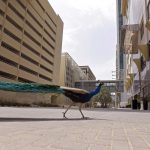
    Gulf states have tightened lockdown measures in large cities, and with Dubai’s shops closed and almost no people on the streets, peacocks that normally live in nearby gardens ventured out to explore other areas of the Middle Eastern city.
    Gulf states have tightened lockdown measures in large cities, and with Dubai’s shops closed and almost no people on the streets, peacocks that normally live in nearby gardens ventured out to explore other areas of the Middle Eastern city.

    A flock of geese searched for food inside a temple in Nagaon, in India’s state of Assam, on April 3. Many temples and shrines across the country have closed during the nationwide lockdown.
    A flock of geese searched for food inside a temple in Nagaon, in India’s state of Assam, on April 3. Many temples and shrines across the country have closed during the nationwide lockdown.

    On April 5, two cows strolled on a Corsican beach usually popular with tourists. It was the 20th day of a strict shutdown in France.
    On April 5, two cows strolled on a Corsican beach usually popular with tourists. It was the 20th day of a strict shutdown in France.

    A young puma walked the streets of Santiago on March 24 after the government ordered confinement measures in some areas of the Chilean capital.
    A young puma walked the streets of Santiago on March 24 after the government ordered confinement measures in some areas of the Chilean capital.

    Mountain goats roamed the streets of Llandudno, in Wales, on March 31, one week after U.K. Prime Minister Boris Johnson issued a stay-at-home order.
    Mountain goats roamed the streets of Llandudno, in Wales, on March 31, one week after U.K. Prime Minister Boris Johnson issued a stay-at-home order.

    Sika deer wandered over to a sushi restaurant in Nara, Japan, on March 12. When Prime Minister Shinzo Abe declared a state of emergency for Tokyo and its surrounding regions, the number of visitors to the city of Nara dropped significantly
    Sika deer wandered over to a sushi restaurant in Nara, Japan, on March 12. When Prime Minister Shinzo Abe declared a state of emergency for Tokyo and its surrounding regions, the number of visitors to the city of Nara dropped significantly

    Macaques searched for food around the closed stalls of the Johari Bazar in Jaipur, India, on March 26. After Prime Minister Narendra Modi declared a nationwide lockdown, the marketplace was deserted.
    Macaques searched for food around the closed stalls of the Johari Bazar in Jaipur, India, on March 26. After Prime Minister Narendra Modi declared a nationwide lockdown, the marketplace was deserted.

    Since Italy’s countrywide lockdown was imposed, the water in Venice’s canals have cleared, and residents have noticed more birds appearing.
    Since Italy’s countrywide lockdown was imposed, the water in Venice’s canals have cleared, and residents have noticed more birds appearing.

    On March 30, ducks ventured across the street in the heart of Paris, which is typically bustling with traffic.
    On March 30, ducks ventured across the street in the heart of Paris, which is typically bustling with traffic.

    Goats sauntered on abandoned streets in Jaipur on March 24
    Goats sauntered on abandoned streets in Jaipur on March 24

    A baby rabbit crossed a main road in Christchurch on April 1. New Zealand entered its strictest state of lockdown on March 25.
    A baby rabbit crossed a main road in Christchurch on April 1. New Zealand entered its strictest state of lockdown on March 25.

    A wild fox roamed the empty streets of London on the night of March 28.
    A wild fox roamed the empty streets of London on the night of March 28.

    On April 1, cattle looked for food in Palu, Central Sulawesi, in Indonesia, where the government is recommending that people avoid public spaces.
    On April 1, cattle looked for food in Palu, Central Sulawesi, in Indonesia, where the government is recommending that people avoid public spaces.

    A coyote stood outside Dodger Stadium in Los Angeles on April 3, weeks after Major League Baseball suspended all play.
    A coyote stood outside Dodger Stadium in Los Angeles on April 3, weeks after Major League Baseball suspended all play.

    The movie theater was closed in Westbury, N.Y., on March 20, leaving the parking lot empty for Canadian geese to roam.
    The movie theater was closed in Westbury, N.Y., on March 20, leaving the parking lot empty for Canadian geese to roam.

    With Humans In Hiding, Animals Take Back The World 4Gulf states have tightened lockdown measures in large cities, and with Dubai’s shops closed and almost no people on the streets, peacocks that normally live in nearby gardens ventured out to explore other areas of the Middle Eastern city.


    It took just a few days of lockdown for baby rabbits to dare to cross once-bustling roads in Christchurch, New Zealand, and less than a week for a puma to descend from the Andes Mountains into Santiago, one of South America’s busiest capitals. In Barcelona, wild boar, a familiar sight for citizens on the city’s outskirts, have made their way into Diagonal Avenue, an eight-lane thoroughfare. 

    It’s surprising and strange, yes, but also meaningful. Research suggests that ecosystems can rebound with speed once human intervention subsides. A review published last week determined that damaged ecosystems and wildlife can be rebuilt if the right conditions are achieved. Marine ecosystems in particular can substantially recover by 2050, according to the study, led by Carlos Duarte at the Red Sea Research Center in Saudi Arabia.

    Of course, a deadly pandemic that brings about a sudden economic collapse is no way to sustainably restore threatened ecosystems. Yet it’s a clear reminder of how quickly the wild world responds when humans take a step back.

    Scientists have tracked this pattern for decades. The number of humpback whales migrating from Antarctica to eastern Australia has been increasing each year, from a few hundred animals in 1968, when commercial whaling was banned, to more than 40,000 today. In 1880 only 20 breeding northern elephant seals had survived decades of hunting, and today there are more than 200,000.

    Hunting bans, habitat restoration, and the reduction of water pollution are all linked to the recovery of marine species. The continuation of these practices—and, most of all, working to mitigate the effects of climate change—would contribute to oceans recovering significantly by 2050, the researchers said.

    It’s more difficult for land ecosystems to bounce back because both the scale of extinction and the scale of human presence are so large there, said Duarte, a marine science professor. But these differences don’t mean the return of wildlife to deserted city streets isn’t significant, he said: “I believe our own confinement, and the release of wildlife from confinement, should bring some empathy between humans and wildlife moving forward.”

    With Humans In Hiding, Animals Take Back The World 5A flock of geese searched for food inside a temple in Nagaon, in India’s state of Assam, on April 3. Many temples and shrines across the country have closed during the nationwide lockdown.


    With Humans In Hiding, Animals Take Back The World 6On April 5, two cows strolled on a Corsican beach usually popular with tourists. It was the 20th day of a strict shutdown in France.


    With Humans In Hiding, Animals Take Back The World 7A young puma walked the streets of Santiago on March 24 after the government ordered confinement measures in some areas of the Chilean capital.


    With Humans In Hiding, Animals Take Back The World 8Mountain goats roamed the streets of Llandudno, in Wales, on March 31, one week after U.K. Prime Minister Boris Johnson issued a stay-at-home order.


    With Humans In Hiding, Animals Take Back The World 9Sika deer wandered over to a sushi restaurant in Nara, Japan, on March 12. When Prime Minister Shinzo Abe declared a state of emergency for Tokyo and its surrounding regions, the number of visitors to the city of Nara dropped significantly


    With Humans In Hiding, Animals Take Back The World 10Macaques searched for food around the closed stalls of the Johari Bazar in Jaipur, India, on March 26. After Prime Minister Narendra Modi declared a nationwide lockdown, the marketplace was deserted.


    With Humans In Hiding, Animals Take Back The World 11Since Italy’s countrywide lockdown was imposed, the water in Venice’s canals have cleared, and residents have noticed more birds appearing.


    With Humans In Hiding, Animals Take Back The World 12On March 30, ducks ventured across the street in the heart of Paris, which is typically bustling with traffic.


    With Humans In Hiding, Animals Take Back The World 13Goats sauntered on abandoned streets in Jaipur on March 24


    With Humans In Hiding, Animals Take Back The World 14A baby rabbit crossed a main road in Christchurch on April 1. New Zealand entered its strictest state of lockdown on March 25.


    With Humans In Hiding, Animals Take Back The World 15A wild fox roamed the empty streets of London on the night of March 28.


    With Humans In Hiding, Animals Take Back The World 16On April 1, cattle looked for food in Palu, Central Sulawesi, in Indonesia, where the government is recommending that people avoid public spaces.


    With Humans In Hiding, Animals Take Back The World 17A coyote stood outside Dodger Stadium in Los Angeles on April 3, weeks after Major League Baseball suspended all play.


    With Humans In Hiding, Animals Take Back The World 18The movie theater was closed in Westbury, N.Y., on March 20, leaving the parking lot empty for Canadian geese to roam.


    Credits: Bloomberg

    PUBLIC HEALTH

    News

    AddThis

    : 

    Original Author

    : 

    Bloomberg

    Disable advertisements

    : 
    With Humans In Hiding, Animals Take Back The World
    Read More
    http://saharareporters.com/2020/04/08/humans-hiding-animals-take-back-world

    Views: 0

  • COVID-19 And Nigeria’s Pathetic Leadership Deficit By Ugochukwu Ejinkeonye

    COVID-19 And Nigeria’s Pathetic Leadership Deficit By Ugochukwu Ejinkeonye

    COVID-19 And Nigeria’s Pathetic Leadership Deficit By Ugochukwu Ejinkeonye 19

    COVID-19 And Nigeria’s Pathetic Leadership Deficit By Ugochukwu Ejinkeonye 20


    There is no better warning about the growing confusion that seems to be gradually beclouding the federal government’s response to the coronavirus challenge than the belief it betrayed last week that, perhaps, all it needs to calm the fears and apprehensions of Nigerians about its ability to halt the spread of the virus is to reel out a catalogue of activities President Buhari was said to have undertaken so far concerning the pestilence, whether the people felt their impact or not. 

    Now, if your family is starving badly, do you solve the rumbling signs of biting hunger in their stomach with some wild tales of the efforts deployed by you so far to feed them, or just keep quiet, give them food, and they will see and feel for themselves that you have played your role responsively and effectively?  Or if you must talk, tell them something you have done whose benefits they can readily verify and identify with. 

    Indeed, some Nigerians are beginning to achieve the conviction that there must be something about being in government in this country that seems to diminish the reasoning ability of people once they get in there and deprives them of the capacity to realize when they have stopped making sense or even become downright annoying. This is very pathetic. 

    And so, last week, presidential spokesperson, Mr. Femi Adesina, issued a document entitled: “COVID-19: What President Buhari Has Done And Is Doing.” And, I suppose that with the release of that handout, the virus immediately received a deadly blow and vanished from the country! Aren’t we so blessed? Why then are Nigerians not on the streets celebrating the unprecedented feat? 

    A prominent item on Mr. Adesina’s list is the president’s March 29 broadcast. And what exactly did the broadcast achieve? The two things I can readily remember now is that Gen Buhari had announced the continuation of the school feeding programme for pupils who are all at home now due to the closure of schools as part of the efforts to contain the spread of the coronavirus. Probably, nobody remembered to inform him and his speech writers that school children were on compulsory holidays, or are they going to send the food to them in their homes? Or, perhaps, somebody is trying to find a justification for the billions of naira we will be informed later was spent on the exercise?  

    Also, the president proclaimed the lockdown of Lagos and Ogun states and the Federal Capital Territory (FCT).  And when he was through, he returned to his hideout – where only a few privileged eyes and ears see and hear from him, and then come out to tell us what they think he has said or done.

    Now, what exactly was the lockdown meant to achieve?  Okay, as social interactions are reduced, the chances of spreading the virus decrease.  Yes, but what else?  Has anyone seen any evidence that there were any plans to use the stay-at-home period to access the people and step up medical tests to determine how many people have become infected with the virus and how they could be attended to? 

    The government that was boasting that it was “adequately prepared” to tackle the virus was later to prove when the virus eventually arrived that it was only making empty claims as usual.  A country of 200 million people has yet to demonstrate any capacity to test even a reasonable fraction of one percent of her population. And somebody is publishing a document to tell us what the president was supposed to have done or is doing. As if such boring tales will remove the cloud of gloom hovering over Nigeria? 

    Again, in a country where electric power is just an unaffordable luxury for many, how can a leader just lock down some states and return to his hideout to continue his “vacation” that was rudely interrupted by the loud, persistent and widespread demands that he should address his country even though some other presidents were doing daily briefings and leading the war against the virus from the front?  As the markets closed and movements became restricted, how are those who could afford to buy and stock food items at home preserve them without electric power?  

    What of the greater population which depend on daily earnings for their survival?  What is the government’s plan for them? Okay, we are hearing of palliatives that have been extended to this category of people and the billions of naira that have already been transferred to their accounts?  Now, who has encountered the happy recipients of the twenty thousand naira (N20, 000) said to have been given to each of them?  Are there really existing data showing the social and economic status of every Nigerian which is in the possession of the authorities?  So, all the “poor and vulnerable” Nigerians now have bank accounts whose details are known to the government?  So, why then are too many Nigerians very suspicious of these claims as shown in their social media comments? And why is such a rare display of kindness by this government not being celebrated? Or have the funds (if indeed any were shared) ended up in the hands of the same people who have more than enough to need them while those who are genuinely deprived remain terribly famished? 

    Already, the biting hunger out there is forcing a growing number of people to defy the no-movement decree and soon, the whole effort might be defeated, and the country will return to square one.  Information Minister, Mr. Lai Mohammed, is threatening that the lockdown may be extended if Nigerians fail to behave themselves. But what he should rather have done is to hasten to school himself to realize that there is always a price to pay when leaders leave the country they claim to be governing in great disarray only to suddenly wake up when there is an emergency to grope for fix-quick solutions. 

    A few days after the president’s broadcast (that is, Tuesday, March 31), Daily Independent carried a front page lead story about 26 Americans who came into the country through the Murtala Mohammed International Airport and headed to Calabar without being screened.  Now, who cleared their trip to the country and why were there no health officials available to screen them and ensure they were quarantined for 14 days before being allowed to fly to Calabar?  Is it because they are Americans or clients of the Nigerian National Petroleum Corporation (NNPC) or both?  Does that automatically exempt any of them from being a carrier of the virus which is presently ravaging their own country?  What kind of government claims to be fighting a virus with one hand and using the other hand to be undermining the efforts being deployed to contain it? 

    Okay, the Minister of Health, Dr. Osagie Ehanire, has just announced that an 18-man Chinese team of medical “experts” will soon arrive the country to “assist” Nigeria in the fight against the coronavirus.  Now, is it the federal government that asked China for help or was it China that volunteered their assistance?  Indeed many Nigerians are vehemently opposed to this gesture at this time.  Our own local medical experts have not shown any signs of being overburdened by the work, so what difference are these 18 Chinese doctors and nurses going to make?  Will they, like the 26 privileged Americans, also be given express entry into the country or will they be isolated for 14 days as should be the case, before they would be allowed to start rendering their “assistance”?  

    Do we really need this Chinese gift now or is it that the government lacks the liver to politely decline their offer of help, despite the widespread apprehension among the citizenry about their involvement (since many Nigerians, habour strong fears that the gesture might turn out a Greek gift)? Even the umbrella body of Nigerian doctors, the Nigerian Medical Association (NMA), has come out to strongly oppose the coming of the Chinese medical team.  Is it that our government is too intimidated to say NO to China’s offer probably because it has yoked itself so much with crushing debts due to its excessive borrowings from them – debts, whose positive effects on Nigerian lives many are yet to see? 

    I raise these points because, although, Nigeria has recorded one of the lowest deaths from coronavirus, it was the stubborn refusal of the government to close our borders when it became very necessary and urgent (and despite calls from well-meaning Nigerians) that led to the explosion in the number of confirmed cases that the country has recorded today.  In saner climes, the government should have profusely apologized for that terrible miscalculation that is costing the nation so much now. 

    But it now has another opportunity now to gratify the yearning of Nigerians and reject the Chinese offer even if it is well-meaning and the fears about it are misplaced. 

    Now, what lessons is the government taking away from the scourge of coronavirus? Will they see the need to equip our hospitals this time and upgrade at least few of them to world standard now that they have realized the folly of always waiting to use public funds to send themselves and their families abroad to treat even minor ailments?  For the first time in Nigeria, the naïve and largely misguided Nigerian leaders have found out that it is not always safe to seek solutions for health challenges outside the country and that there is afterall no place like home. This is hoping that the lesson will endure and be redemptive. 

    *Ugochukwu Ejinkeonye, is a Nigerian journalist and writer. (scruples2006@yahoo.com) 

    Opinion

    AddThis

    : 

    Original Author

    : 

    Ugochukwu Ejinkeonye

    Disable advertisements

    : 
    COVID-19 And Nigeria’s Pathetic Leadership Deficit By Ugochukwu Ejinkeonye
    Read More
    http://saharareporters.com/2020/04/08/covid-19-and-nigeria%E2%80%99s-pathetic-leadership-deficit-ugochukwu-ejinkeonye

    Views: 0