
Tag: doubt

  • Presidential Order Not Enforceable Without Legal Backing! By Femi Falana

    Presidential Order Not Enforceable Without Legal Backing! By Femi Falana

    Presidential Order Not Enforceable Without Legal Backing! By Femi Falana 1

    Presidential Order Not Enforceable Without Legal Backing! By Femi Falana 2


    Following the national broadcast of President Muhammadu Buhari on the COVID-19 pandemic on Sunday, some lawyers have questioned the constitutional validity of the restriction of locomotion of people in Abuja, Lagos and Ogun states. No doubt, the President is empowered to adopt any measures deemed fit to combat the dangerous disease but such measures have to be spelt out in a Regulation made pursuant to section 305 of the constitution or under the Quarantine Act. Otherwise the presidential order on restriction of movement in the affected areas cannot be enforced by the police. 

    Even though civil rule was restored in the country 21 years ago the psyche of the political class has not been demilitarised. Hence, decisions taken by rulers are required to be obeyed “with immediate effect” without any legal backing. But in Okafor v Governor of Lagos State (2016) LPELR-41066 (CA) the Court of Appeal called on all authorities to appreciate the need to govern the country under the rule of law. Thus, the directive of the Governor of Lagos State restricting the movement of citizens and residents during the state’s monthly environmental sanitation exercise was struck down because of its unconstitutionality. It was the unanimous view of their lordships that the arrest of appellant for flouting the order or directive of the governor was completely  illegal. According to Georgewill , J.C.A. 

    “It is my view, that democracy thrives more on obeying and promoting the rule of law rather than the whims and caprices of the leaders against the lead. I find the conduct of the Respondent in not only persecuting the Appellant, yes that is what in my view it amounts to when a free citizen of this great country such as Citizen Faith Okafor, is put through the rigours of criminal process for an offence not prescribed in any written law but merely on the directive of the governor of the Lagos State. An action which if allowed to thrive in a democracy such as ours could confer on such office holders infinite, absolute and autocratic powers contrary to the clear provisions of the constitution of the land, to which both the leaders and the led are subject. I  refuse to allow such autocratic, absolute and infinite powers to fester upon our nascent democracy.”

    Lawyers who are saying that the law should  be completely relegated to the background in combating the coronavirus pandemic reminds me of the dissenting judgment of Lord Atkins in the case of Liversidge v Anderson 1944 UKHL 1. While accusing his learned brethren of being “more executive minded than the executive”,  his Lordship said inter alia:

    “In England, amidst the clash of arms, the laws are not silent. They may be changed, but they speak the same language in war as in peace. It has always been one of the pillars of freedom, one of the principles of liberty for which on recent authority we are now fighting, that the judges are no respecters of persons, and stand between the subject and any attempted encroachments on his liberty by the executive, alert to see that any coercive action is justified in law.”

    However. while the nation’s armed forces should be commended for making their medical facilities available to members of the public in the fight against the highly dangerous virus the plan to dispatch armed soldiers to the streets to enforce the COVID-19 guidelines should be shelved because it is  illegal. For the umpteenth time, I am compelled to draw the attention of the military authorities to the case of Yussuf v Obasanjo (2005) 18 NWLR (Pt ) where Salami JCA (as he then was) held that “It is up to the police to protect our nascent democracy and not the military, otherwise the democracy might be wittingly or unwittingly militarized. This is not what the citizenry bargained for in wrestling power from the military in 1999. Conscious steps should be taken to civilianise the polity and thereby ensure the survival of and sustainance of democracy.”

    In the same vein, in the celebrated case of All Progressive Congress v Peoples Democratic Party (2015) LPELR 24349  Aboki JCA held that the President lacks the power to call on the Armed Forces to restore law and order in any part of the federation without the approval of the National Assembly as provided in sections 217(2) and 218(4) of the constitution as amended. His Lordship reminded the Federal Government of its legal obligation  “to confine the military to their demanding assignments especially in these trying times of insurgencies and encroachment into the country’s territories…”

    Finally, just last week the satanic Boko Haram force was reported to have massacred 47 Nigerian troops and 92  Chadian soldiers in two separate attacks. In view of such enormous challenge our patriotic armed forces should concentrate efforts on the counter insurgency operations being carried out in the north east region while  the police and allied security agencies are allowed to enforce the COVID-19 regulations and guidelines.

    Opinion

    AddThis

    : 

    Original Author

    : 

    Femi Falana

    Disable advertisements

    : 
    Presidential Order Not Enforceable Without Legal Backing! By Femi Falana
    Read More
    http://saharareporters.com/2020/03/30/presidential-order-not-enforceable-without-legal-backing-femi-falana

    Views: 0

  • COVID-19: Should Education Hit A Pause Or Are We Just Unprepared In Nigeria? By Olabisi Deji-Folutile

    COVID-19: Should Education Hit A Pause Or Are We Just Unprepared In Nigeria? By Olabisi Deji-Folutile

    Olabisi Deji-Folutile
    Olabisi Deji-Folutile

    COVID-19: Should Education Hit A Pause Or Are We Just Unprepared In Nigeria? By Olabisi Deji-Folutile 3Olabisi Deji-Folutile


    The world is facing its most trying and unprecedented times as the last few weeks have been most challenging for almost everybody.  What started in Wuhan, China, as an epidemic, has put the entire world in disarray.  Major streets across the globes have become empty. Both the rich and the poor are being ravaged by the plague of COVID-19, which the World Health Organisation has rightly described as a pandemic. Work places have been shut; religious and social gatherings banned and many countries are on total lockdown, in a bid to curb the spread of this viral disease. Expectedly, schools are also affected across board.  Every day people are being told to embrace social distancing and suddenly things like human contacts, hitherto considered as free gifts of life, are becoming very expensive.

    No one knows when this whole chaos will end, so people are making different kinds of adjustments to cope with the situation while it lasts. Many companies have shifted their operations online. Likewise, many schools have opted for e-learning, making use of available technology for teaching and learning.

     Universities around the world are making use of communication technology to ease the effects of the global pandemic on their academic calendars.   In China, universities are going for online teaching instead of in-class teaching; the ones in Australia have moved their classes online just as UK universities have suspended face-to-face teaching.  Turkey started its remote university classes on March 23. In Kenya, universities have activated communication between lecturers and students via social media platforms and emails while classes have gone totally online in the Philippines and Kyrgyzstan.  Teachers in France have been working with their students on Zoom.  

    Just a few days ago, Ghana’s President Addo Dankwa Akufo-Addo, directed the ministry of education to collaborate with the ministry of communications in rolling out open learning programmes in response to the closure of all educational institutions in the country. In the same vein, Mount Kenya University’s Vice-Chancellor Peter Wanderi, has announced the extension of online teaching platforms for regular students to facilitate the learning process.  And to take care of the over six million students that have experienced disruption to their studies, ten North African and 12 Arab countries have begun work on an e-learning initiative to facilitate open and online education.

    These are some of the steps being taken across the globe to bridge the gap created by school closure in the wake of COVID-19.  Unfortunately, while all these activities are going on in other parts of the world, Nigerian government has not said anything about steps being taken to take care of its students’ community.  Rather, the only message from the Federal Government was a total closure of all tertiary institutions and FG-owned unity schools till further notice. A statement issued by the National Universities Commission simply said universities would remain   shut   for one month while the Education Minister, Adamu Adamu, said tertiary institutions would remain shut indefinitely.

     Assuming government has been overwhelmed by the burden of controlling the spread of COVID- 19, hence its silence on options for learning for its teeming student population, one would have expected the higher institutions themselves to at least say something, but as it is, they too are not helping matters. The silence in our universities has been deafening. To worsen the situation, the Academic Staff Union of Universities, decided to choose this time, of all times, to embark on an indefinite strike. One wonders how the academic body   manages to feel comfortable being on a strike at a time when researchers across the globe   are busy looking for solution to a pandemic that is ravaging the entire world.  This kind of action makes one query the essence of having Research and Development as a core component of tertiary education in Nigeria when researchers can be nowhere to be found at a critical time of societal needs.

    By now, our researchers should be adding their voices to the various efforts being made towards developing a vaccine or cure for COVID-19. After all, universities are expected to proffer solutions to societal problems.  This is a wrong time for ASUU to embark on an indefinite strike. This should be a time of strategising and proffering solutions. This is really the time for everyone to get involved. Besides, I think Nigerian universities should also be more forthcoming on their responses to the challenges posed to their students by COVID-19.

    As it is, religious organisations are doing far better in terms of their responses to the effects of this pandemic on their primary constituencies.  Many of them have devised other means of getting the attention of   their members following several government directives prohibiting either gatherings or limiting the number of people allowed to congregate at a time.   Almost all the churches have switched to online platforms for their services.  How come religious organisations are working hard to keep their flocks and both government and higher institutions in Nigeria are just moving on as if all is well?  No word on how to keep the students busy or keep them engaged using available online technology! Should teaching and learning be restricted to the classrooms alone in this 21st century?

     Nigeria has always been described as a religious society. Corona Virus has further exposed the smartness of our religious bodies and the dullness of those in charge of our public educational institutions.  This is not an attempt to blame any religious organisation for having the foresight to deploy technology in reaching their audiences. Instead, it is a wakeup call to managers of our educational institutions to adopt and use available technology to help their students at a time like this.

    Apart from the National Open University of Nigeria, which basically runs online, I doubt if there is any other public university in the country that has capacity for online teaching.  This is in spite of the launch of the Nigerian Communication Satellite known as NIGCOMSAT by the Nigerian Government first in 2007 and then NIGCOMSAT-IR in December 2011, to provide critical ICT backbone infrastructure to support e-learning, among others in the country. 

    What is the essence of investing so much money in a communication satellite if it cannot be deployed at a time of need?   Those in charge of NIGCOMSAT, the commercial arm of Nigeria’s space centre, have consistently claimed that the technology has the capacity to cover the entire Africa.  If that is the case, why is the country still struggling to deploy internet connectivity facilities to its schools to aide e-learning?  If we are truly a serious country, by now, all the schools in urban and rural areas should have been connected to the e-learning services.

    No doubt, COVID-19 has exposed Nigeria’s unpreparedness for e-learning. But, we can’t afford to remain where we are. That is why it is important for every institution to start thinking of how to deploy available technology in the world for the good of their students at this critical period.   Universities should as a matter of urgency migrate online. This shouldn’t be another season of waiting and probably wasting for the Nigerian student.  There is no reason why any higher institution worth its name should suspend all academic activities until the end of Corona Virus with all the available resources and technology in the world today. The minimum expected of them is to upload teaching resources online for students to have access to them.  At least this will give the students the opportunity to learn on their own.

    This is also an opportunity for telecommunications companies like Glo, MTN and the rest of them to make a difference in Nigeria’s educational institutions. They can as part of their corporate social responsibility decide to boost internet facilities in universities and other educational institutions; or provide data at cheaper rates to help poor students have access to the internet for online learning.

    I know there are obvious stumbling blocks to digital learning in Nigeria. Many students don’t even have access to devices while the cost of buying data is still high. These challenges and others have provided    telecommunications companies a huge opportunity of making a difference in Nigerian higher institutions by providing e-learning solutions and broadband connectivity to universities and other higher institutions.

    They can as part of their corporate social responsibility decide to boost internet facilities in universities and other higher institutions; or help poor students who have limited or poor internet access to enhance online learning.

    Olabisi Deji-Folutile is the Editor-in-Chief of Franktalknow.com and member of the Nigerian Guild of Editors. Email: bisideji@yahoo.co.uk

    Opinion

    AddThis

    : 

    Original Author

    : 

    Olabisi Deji-Folutile

    Disable advertisements

    : 
    COVID-19: Should Education Hit A Pause Or Are We Just Unprepared In Nigeria? By Olabisi Deji-Folutile
    Read More
    http://saharareporters.com/2020/03/26/covid-19-should-education-hit-pause-or-are-we-just-unprepared-nigeria-olabisi-deji

    Views: 0

  • Pass the message: Five steps to kicking out coronavirus

    Pass the message: Five steps to kicking out coronavirus


    Geneva, 23 March 2020: FIFA, the international governing body of football, and the World Health Organization (WHO) have teamed up to combat the coronavirus (COVID-19) by launching a new awareness campaign led by world-renowned footballers, who are calling on all people around the world to follow five key steps to stop the spread of the disease. 

    The “Pass the message to kick out coronavirus” campaign promotes five key steps for people to follow to protect their health in line with WHO guidance, focused on hand washing, coughing etiquette, not touching your face, physical distance and staying home if feeling unwell. 

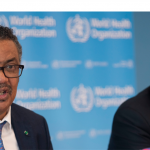
    “FIFA and its President Gianni Infantino have been actively involved in passing the message against this pandemic since the very beginning,” said WHO Director-General Dr Tedros Adhanom Ghebreyesus at the virtual launch of the campaign at WHO headquarters in Geneva, Switzerland. “Be it through campaigns or funding, FIFA has stood up to the coronavirus, and I am delighted that world football is supporting WHO to kick out the coronavirus. I have no doubt with this type of support that together we will win.” 

    “We need teamwork to combat the coronavirus,” said FIFA President Gianni Infantino. “FIFA has teamed up with WHO because health comes first. I call upon the football community worldwide to join us in supporting this campaign to pass the message even further. Some of the greatest players to have played the beautiful game have put their names to the campaign and are united in their desire to pass the message to kick out COVID-19.”

    Twenty-eight players are involved in the video campaign, which is being published in 13 languages.

    Sami Al Jaber (KSA), Alisson Becker (BRA), Emre Belözoğlu (TUR), Jared Borgetti (MEX), Gianluigi Buffon (ITA), Iker Casillas (ESP), Sunil Chhetri (IND), Youri Djorkaeff (FRA), Han Duan (CHN), Samuel Eto’o (CMR), Radamel Falcao (COL), Laura Georges (FRA), Valeri Karpin (RUS), Miroslav Klose (GER), Philipp Lahm (GER), Gary Lineker (ENG), Carli Lloyd (USA), Lionel Messi (ARG), Mido (EGY), Michael Owen (ENG), Park Ji-sung (KOR) , Carles Puyol (ESP), Célia Šašić (GER), Asako Takakura (JPN), Yaya Touré (CIV), Juan Sebastián Verón (ARG), Sun Wen (CHN) and Xavi Hernández (ESP).

    A video campaign, which will be published on player and FIFA digital channels, is also being provided as individual localized files to the 211 FIFA member associations and media agencies, together with a graphics toolkit for implementation on social media to further pass the message. 


    Pass the message: Five steps to kicking out coronavirus 4

    Hands:

    “It starts with your hands,” says Alisson Becker, WHO Goodwill ambassador for health promotion, Liverpool FC and Brazil goalkeeper, and The Best FIFA Men’s Goalkeeper, 2019. “Please wash your hands frequently with soap and water or an alcohol-based solution.”

    Such frequent washing with soap and water, or preferably with an alcohol-based hand solution, kills viruses that may be on your hands. It is simple, but it is very important.

    Pass the message: Five steps to kicking out coronavirus 5

    Elbows:

    “Cover your nose and mouth with a bent elbow or tissue when you sneeze or cough,” says Carli Lloyd two-time FIFA Women’s World Cup winner from the United States. “Dispose of tissue immediately and wash your hands.”

    Droplets spread the coronavirus. By following respiratory hygiene, you protect the people around you from contracting viruses, such as cold, flu and coronavirus.

    Pass the message: Five steps to kicking out coronavirus 6

    Face:

    “Avoid touching your face, particularly your eyes, nose or mouth to prevent the virus from entering your body,” adds FC Barcelona and Argentina forward Lionel Messi, The Best FIFA Men’s Player in 2019, and a multiple FIFA Ballon d’Or winner.

    Hands touch too many surfaces and can quickly pick up viruses. Once contaminated, hands can transfer the virus to your face, from where the virus can move inside your body, making you feel unwell.

    Pass the message: Five steps to kicking out coronavirus 7

    Distance:

    “In terms of social interaction, take a step back,” says Han Duan, who represented China PR 188 times in an international career that spanned 11 years. “Stay at least one metre distance from others.”

    By maintaining such social distancing, you are helping to avoid breathing in any droplets from someone who sneezes or coughs in close proximity.

    Pass the message: Five steps to kicking out coronavirus 8

    Feel – know your symptoms:

    “If you feel unwell, stay home,” concludes Samuel Eto’o, former FC Barcelona and Cameroon striker, who represented his country 114 times. “Please follow all instructions provided by your local health authorities.”

    If you have a fever, cough and difficulty breathing, seek medical attention and call in advance.

    Keep informed as local health authorities provide the latest information on the situation in your area. Please follow their specific instructions, and call in advance to allow them to direct you to the appropriate local health facility. This serves to protect you and to help prevent the spread of virus and other infections.

    FIFA have also pledged $10 million to support the COVID-19 Solidarity Response Fund for WHO.

    For more information, please consult @WHO and follow the latest information online. 


    Pass the message: Five steps to kicking out coronavirus
    Read More
    https://www.who.int/news-room/detail/23-03-2020-pass-the-message-five-steps-to-kicking-out-coronavirus

    Views: 0

  • Why You Need Sales Referrals to Hit Your Next Sales Goal

    Finding leads through cold-calling can often seem relentless, and at times, pointless. A sales referral can come to your aid during such times. A sales referral is one of the best lead generation techniques, as many selling tips have been claiming for ages. Trust is something that doesn’t come that easy to most people when they’re dealing with a sales professional. It?s like they’re perched to flee at any moment as they doubt everything that’s said by the sales professional, as if it were a carefully planned conspiracy. Sound familiar?…

    Read More
    http://www.associationofmarketing.org/articles/view.php?article_id=14371

    Views: 0

  • Medical Product Alert N° 1/2020 (English version)

    Medical Product Alert N° 1/2020 (English version)


    Falsified antimalarials in West and Central Africa displaying an outdated WHO Essential Drugs Programme logo

    This Medical Product Alert relates to a series of confirmed falsified antimalarials circulating in West and Central Africa. Medicines subject of this alert display a similar logo to the outdated
    WHO Essential Drugs Programme logo.
     

    Since 2013, different falsified medicines, all displaying the outdated WHO Essential Drugs Programme logo, have been reported to the WHO Global Surveillance and Monitoring System by various stakeholders. The continued and widespread availability of these falsified medicines highlights a strong need for additional vigilance. WHO previously published two alerts on this issue (No.132 in Oct 2014, and No.131 in March 2014)

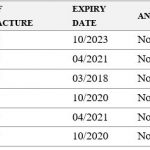
    This WHO medical product alert N°1/2020 refers to falsified Quinine Sulphate 300mg presented in six different combinations of batch numbers, expiry and manufacturing dates (see Table 1). The fraudulent use of the outdated WHO Essential Drugs Programme logo may create a false sense of product quality.

    Table 1: List of identified falsified Quinine Sulphate 300mg, subject of WHO Alert N°1/2020

    Medical Product Alert N° 1/2020 (English version) 9

    Recently received results of analysed samples show they do not contain any of the expected active ingredients.

    Quinine sulphate is referenced on the WHO Model List of Essential Medicines, to manage and treat severe malaria. At this stage, no adverse reactions attributed to these falsified products have been reported to WHO.    

    All the above falsified products claim to be manufactured by REMEDICA LTD – Cyprus and to contain 300mg of quinine sulphate. Remedica Ltd has confirmed that:

    • they did not manufacture the above falsified products; and
    • the variable data (batch number and dates) on the above products has never been used by Remedica.

     These falsified medicines display the following common characteristics (please see photographs):

    • grey or white plastic containers which contain 1000 loose circular tablets each;
    • display the outdated WHO Essential Drugs Programme logo;
    • English and French labelling with mistakes and inconsistencies; and
    • discovered at patient level in both regulated and unregulated outlets.

    Product details, photographs and advice to the public are available on the following pages.

    Outdated WHO Essential Drugs Programme logo 

    Medical Product Alert N° 1/2020 (English version) 10

    Photographs of confirmed falsified Quinine Sulphate 300mg tablets subject of
    Medical Product Alert N°1/2020

    1.       Falsified
    Quinine Sulphate Tablets B.P 300mg
    identified
    in Chad (Batch 44680)

    Medical Product Alert N° 1/2020 (English version) 11


    Medical Product Alert N° 1/2020 (English version) 12

    Medical Product Alert N° 1/2020 (English version) 13Medical Product Alert N° 1/2020 (English version) 14Medical Product Alert N° 1/2020 (English version) 15

    Medical Product Alert N° 1/2020 (English version) 16


    WHO requests increased vigilance within the supply chains of countries likely to be affected by these falsified products. Increased vigilance should include hospitals, clinics, health centres, wholesalers, distributors, pharmacies and any other suppliers of medical products.

    If you are in possession of the above products, please do not use. If you have used these falsified products, or if you suffer an adverse event having used these products, please seek immediate advice from a qualified healthcare professional, and ensure they report the incident to your local Ministry of Health/National Medicines Regulatory Authorities/National Pharmacovigilance Centre.

    All medical products must be obtained from authentic and reliable sources. Their authenticity and condition should be carefully checked. Seek advice from a healthcare professional in case of doubt.

    National health authorities are asked to immediately notify WHO if these falsified products are discovered in their country. If you have any information concerning the manufacture, distribution, or supply of these products, please contact rapidalert@who.int . 

    WHO Global Surveillance and Monitoring System

    for Substandard and Falsified Medical Products

    For further information, please visit our website: www.who.int/medicines/regulation/ssffc/en/


    Medical Product Alert N° 1/2020 (English version)
    Read More
    https://www.who.int/news-room/detail/09-03-2020-medical-product-alert-n-1-2020-english-version

    Views: 0

  • Is a common shoulder surgery useless?

    Is a common shoulder surgery useless?

    New research casts doubt on the true effectiveness of a common type of surgery used to ease shoulder pain.

    A British research team tracked outcomes for patients who underwent “decompression surgery” to treat shoulder impingement – a condition where a shoulder tendon rubs and catches in the joint.

    In decompression surgery, a small area of bone and soft tissue in the shoulder joint is removed, opening up the joint to prevent the abrasion that happens when the arm is lifted.

    Views: 0

  • Businesses Pursuing New Product Development

    [ad_1]

    With the aftermath of globalization, companies are carefully thinking about the best ways to extend their product and service offering. Thus, product development strategy is critical for their success. Yet, many companies are in defensive mode and merely want to maintain the position in the market place.

    However, staying in a holding position is a definite way for companies to be left behind. Innovative thinking that allows for product/service growth is a too sure way for sustainable success. In today’s discussion, we will explore the importance of product development for the growth of businesses, especially in a competitive market.

    Launching into new product offerings is not easy. According to one market research, approximately 75% of consumer-packaged goods and retail products fail to earn even $7.5 million during their first year. Harvard Business School Professor, Clayton Christensen, who is the world’s foremost authority on disruptive innovation, suggests that the failure rate of new products may actually be as high as 95%. Product failure rates relate to the number of products that are launched commercially but fail.

    Geoffrey A. Moore, the author of Crossing the Chasm, maintains the challenges of product deployment: “… the less successful product is often arguably superior. No content to slink off the stage without some revenge, this sullen and resentful crew casts about among themselves to find a scapegoat, and whom do they light upon? With unfailing consistency and unerring accuracy, all fingers point to-the vice president of marketing. It is marketing’s fault!” Thus, new product development is a risky proposition to senior executives making these critical positions as well as the organization as a whole.

    Businesses that want sustainable growth must develop new product and services often and consistently. Philip Kotler and Kevin Keller, authors of Marketing Management, “In an economy of rapid change, continuous innovation is a necessity. Highly innovative firms are able to identify and quickly seize new market opportunities.”

    In taking any actions on new product development, businesses should think strategically about their product development. Alexander Chernev, the author of Strategic Marketing Management, further argues that managing growth is the most preferred route to profitability compared to just cutting cost.

    He outlines four key issues in managing growth, which include: (a) gaining and defending a market position, (b) managing sales growth, (c) new product development, and (d) product-line management. Chernev maintains, “New products and services are the keys to sustainable growth; they enable companies to gain and sustain their market position by taking advantage of the changes in the market to create superior customer value.”

    With that said, new product development meaning having the ability to take a product or service idea and convert it into a tangible offering that customers want. The following are the steps that more products undergo for market consumption: (a) idea generation, (b) concept development, (c) business analysis, (d) product development, (e) market testing, and (f) business deployment.

    The Ansoff Matrix is a strategic tool for product development, consisting of market penetration, market development, product development, and diversification. In market penetration strategy, organizations seek to grow using its existing product offerings in existing markets. With this strategy in mind, organizations try to increase market share. In a market development strategy, companies try to expand into new markets like new buyers using their existing offerings. In product development strategy, businesses seek to create new products and services targeted at its existing buyers.

    In a diversification strategy, an organization tries to grow its market share by introducing new product offerings while at the same time entering a new market. Diversification is the most-risky approach due to simultaneous making new changes (new product, new market). Kotler and Keller further maintain the difficulty of sustainable product success: “It is increasingly difficult to identify blockbuster products that will transform a market, but continuous innovation can force competitors to play catch-up.” The concept sounds easy. However, it is riddled with problems.

    Without a doubt, many companies know that product development is a risky business. Although many consumers will proudly proclaim the success of many innovative products like Apple and Google, these same buyers are not aware of the numerous product launch failures in this country. In our discussion, I demonstrated the importance of product development for the growth of businesses, especially in a competitive market. Failures often lead to innovation.

    American great inventor, Thomas Edison, had his own share of failures, but learned how to innovate because of them: “I have not failed. I’ve just found 10,000 ways that won’t work.” Likewise, today’s businesses can also achieve success if they understand how to deploy their products and services to the marketplace strategically. Although there is enormous danger in failure, there is also the opportunity of unforeseen growth. Don’t wait until it’s too late.

    © 2017 by DD Green

    [ad_2]

    Source by Dr. Daryl D. Green

    Views: 0

  • Success! The Glenn Bland Method

    [ad_1]

    In the early 70s there was a book published by Glenn Bland, called “Success! The Glenn Bland Method. This little 175 page handbook as fundamental skills and systems for succeeding. Glenn Bland became a very successful person in the Life Insurance industry, but his thoughts and ideas are easily transferable to any endeavor that someone wishes to partake in.

    Granted the book is a bit dated since its first copyright was in 1972, but success is universal. One thing that Glenn addresses very directly is the mindset of success. Much of what he talks about harkens back to think and grow Rich by Napoleon Hill for example anything you can think of believing you can achieve. Another idea is that men with goals and plans dictate to others while men who have no goals and plans are dictated to. And also the concept of quit thinking about all the reasons you can’t do something and think of all the reasons why you can.

    Mr. Bland and had quite a bit of research, no doubt, not directly for this book to but just to be successful in his life. One thing he says is you are the sum total of your thoughts, if you think a negative terms you will achieve negative results but if you think in positive terms you will achieve positive results. In short “We become what we think about.” He quoted Emerson who said “a man is what he thinks about all day long.” He also quoted from Roman Emperor Marcus Aurelius who said “a man’s life is what his thoughts make of it.” Another quote that I liked in the book was from William James who said “The greatest discovery of my generation is that human beings can alter the lives by altering their attitudes of mind.”

    If you are a student of success and wish to read another book with some good ideas of how to succeed in whatever endeavors he you are taking on Success! The Glenn Bland Method, how to set goals and make plans that really work, maybe just the book you are looking for.

    [ad_2]

    Source by Philip Kempf

    Views: 0

  • Can Foam And Latex Pillows Be Dangerous To Your Health?

    [ad_1]

    Memory foam pillows and latex pillows are the latest craze in pillow town. You couldn’t blame people who rush out to buy a set for themselves and the whole family. They’re extremely comfortable and without doubt provide excellent support that traditional pillows lack of. Other than they are a dream to sleep on, they are very economical as they last for years. Opposed to most pillows in the market, they don’t go flat over time. And you are guaranteed of pillows that are good as new every day for the years to come. That’s because of the technology applied in these pillows. The materials have the characteristic of being able to return to their normal shape and smooth out themselves from indentations left by your head. It’s as if they were never slept on!

    However, there are a lot of speculations about the danger these pillows pose to human health. Although they are labeled to be hypoallergenic, a number of people have been claiming to have gotten sick since they have acquired of these pillows.

    Latex pillows are made of rubber foam produced by sap from rubber trees. They are resistant to dust mites and mildew by nature. However, synthetic latex can outgas chemicals that may affect the human health. These pillows are of materials formulated from petroleum products.

    Because of the strong smell it emits, there were some users who complained of dizziness, nausea, headache, migraine and difficulty breathing. The smell however was reported to have subsided after a month or so. There weren’t much complaint filed as monitored by FDA.

    There are pillows out in the market that are made of natural latex and claim to be so 100%. They are processed naturally, washed off of proteins that might attract dust mites and free of chemicals. However, the glue used for layering could provoke allergies among sensitive users. It is safe to warn individuals allergic to latex to avoid using latex pillows.

    Memory foam pillows are made of NASA invented polyurethane from petroleum products. This synthetic material generates toxic waste by-products. The fact that it isn’t biodegradable should ring alarms. These pillows outgas volatile organic compounds that are toxic to human health. Although the smell dissipates, the toxic chemicals may penetrate your immune system. That is why hypersensitive people easily get sick from breathing organophosphate chemicals that are not easily detectable. Aside from reported dizziness, migraine, headache and asthma attack, there were also incidence of heart attack and other autoimmune disorders.

    Despite a few negative feedbacks, there are a number of people who are very happy with their latex and memory pillows. A lot has found their perfect match with them and has claimed to have provided the perfect solution for their sleep disorders.

    Although there were no clinical studies published nor publicized complaints, it is always better to be safe than sorry. There’s no harm in trying. Purchase these pillows with warranty or with money back guarantee so you would be able to judge for yourself.

    [ad_2]

    Source by Greg J Dawson

    Views: 0

  • Taekwondo Drug Testing

    [ad_1]

    Every athlete which will participate in any athletic events including Taekwondo tournaments are sanctioned to undergo drug testing which is to be performed solely by their respective Anti-Doping Agency which practices the Protocol for Olympic Movement Testing.

    In the past, there were already several athletes who have been sanctioned by the board and were not allowed to participate in Taekwondo tournament because they failed this drug test. So it is a must that every Taekwondo athlete should never refer to the use of drugs just to enhance your potentials.

    History of Drug Tests amongst Athletes:

    The history of drug test amongst athletes originated during the Summer Olympic Games which involves Carl Lewis and Ben Johnson in their 100m dash competition. Ben Johnson crossed the finish line in a remarkable finish which made him the fastest man alive but this was soon disregarded after he was positively diagnosed to have anabolic steroids in his system a week after the competition.

    This revelation prompted the Olympic Game organizers to have urine drug screens on its participants so as to guarantee that fairness and equality will remain in the competition. Drugs which are prohibited to be used by these athletes include stimulant drugs, beta blockers, masking agents and anabolic androgenic steroids. These drugs are known to help increase and enhance the athletic performance of athletes after they are taken but will also result to several negative side effects which are detrimental to the athletes’ health in the long run.

    How is the drug test performed?

    The drug test will take place at any time during the competition. The athlete is unaware when it will take place but a Doping Control representative will notify the athlete if the time for his or her drug testing has been scheduled. He or she will then be required to comply with the policies and arrive at the Doping Control Station so he or she can proceed with the drug test procedure.

    The Doping Control Representative allows him or her to bring a chaperone but the athlete should remain in the sight of the DC representative all throughout the drug testing procedure.

    What will happen if the athlete refuses to take the random doping test?

    Any athlete who refuses to take the random doping test will be duly sanctioned by the Organization in charge of the event and may receive an athletic suspension of two years such as what has happened to Park Hyo Ji, a South Korean Taekwondo athlete.

    How to pass the required drug test for Taekwondo athletes?

    There is no safer way to pass the urine test for Taekwondo athletes than to do practice a clean and healthy lifestyle. In the end you will be the sole benefactor of your healthy living. Do not fool yourself because honour and prestige which is earned through hard work is always sweeter compared to something acquired through deception. If in doubt, consult the list of banned substances and supplements which are available in all area agencies. Again always cover yourself, if you are taking something that isn’t on the accepted list, that doesn’t mean it has no performance enhancing properties. Write to your Governing Doping Agency to get the all clear prior to starting a new or unknown supplement.

    Keep in mind the Five Tenets of Taekwondo. Be true to your oath as a student and live the principles of you were taught.

    [ad_2]

    Source by Brendan Mark Smith

    Views: 0