Tag: Data

  • WHO, UN Foundation and partners launch first-of-its-kind COVID-19 Solidarity Response Fund

    WHO, UN Foundation and partners launch first-of-its-kind COVID-19 Solidarity Response Fund

    GENEVA and Washington, D.C. – A new coronavirus disease (COVID-19) Solidarity Response Fund will raise money from a wide range of donors to support the work of the World Health Organization (WHO) and partners to help countries respond to the COVID-19 pandemic. The fund, the first-of-its-kind, enables private individuals, corporations and institutions anywhere in the world to come together to directly contribute to global response efforts, and has been created by the United Nations Foundation and the Swiss Philanthropy Foundation, together with WHO. 

    “We are at a critical point in the global response to COVID-19 – we need everyone to get involved in this massive effort to keep the world safe,” said Dr. Tedros Adhanom Ghebreyesus, WHO Director-General. “We are immensely grateful to the UN Foundation and the Swiss Philanthropy Foundation for coming forward to help us set up this fund. A lot of people and institutions have been saying they want to contribute to the fight against the novel coronavirus. Now they can.”

    The fund launches with major support already lined up, including from Facebook and Google who have instituted a matching scheme for funds raised through their platforms, while individual donors are also supporting the fund through www.COVID19ResponseFund.org.

    “We can’t ignore the fact that this is a truly global problem – one that requires truly global solutions,” said Elizabeth Cousens, UN Foundation President and CEO. “The case for global cooperation could not be clearer – communities everywhere are affected, and people want to contribute. This new fund will create space for people everywhere, together, to fight this virus.”

    Funds will go towards actions outlined in the COVID-19 Strategic Preparedness and Response Plan to enable all countries – particularly those most vulnerable and at-risk, and with the weakest health systems – to prepare for and respond to the COVID-19 crisis including rapidly detecting cases, stopping transmission of the virus, and caring for those affected.

    WHO and its partners are seeking financing for protective equipment for frontline health workers; to equip diagnostic laboratories; improve surveillance and data collection; establish and maintain intensive care units; strengthen supply chains; accelerate research and development of vaccines and therapeutics;  and take other critical steps to scale up the public health response to the pandemic.

    The COVID-19 Solidarity Response Fund is hosted by two foundations, the UN Foundation (registered in the United States) and the Swiss Philanthropy Foundation (registered in Switzerland). Both foundations have established relationships with the World Health Organization, allowing for efficient transfer of financial resources to enable COVID-19 response efforts.

    Apart from giving online at www.COVID19ResponseFund.org, the UN Foundation can also receive donations via check or wire from around the world by contacting COVID19Fund@unfoundation.org.  

    All donations made to the United Nations Foundation and Swiss Philanthropy Foundation are tax-deductible to the extent allowable by the law, where applicable (U.S. and Switzerland). Additionally, Swiss Philanthropy Foundation has partnered with Transnational Giving Europe to extend tax benefit to certain additional European countries where applicable.

     ###

    More:

    COVID-19 Strategic Preparedness and Response Plan

    Coronavirus disease (COVID-19) outbreak information

    About the United Nations Foundation

    The UN Foundation brings together the ideas, people, and resources the United Nations needs to drive global progress and tackle urgent problems. Our hallmark is to collaborate for lasting change and innovate to address humanity’s greatest challenges. With an insider’s knowledge and outsider’s flexibility, we stay agile to get things done. Learn more at: www.unfoundation.org.


    WHO, UN Foundation and partners launch first-of-its-kind COVID-19 Solidarity Response Fund
    Read More
    https://www.who.int/news-room/detail/13-03-2020-who-un-foundation-and-partners-launch-first-of-its-kind-covid-19-solidarity-response-fund

    Views: 0

  • 3Q: Collaborating with users to develop accessible designs

    3Q: Collaborating with users to develop accessible designs

    Academic researchers and others have long struggled with making data visualizations accessible to people who are blind. One technological approach has been 3-D printing tactile representations of data, in the form of raised bar graphs and line charts. But, often, the intended users have little say in the actual design process, and the end result isn’t as effective as planned.

    Read More
    https://techxplore.com/news/2020-03-3q-collaborating-users-accessible.html

    Views: 0

  • Watchdog sues for data on airport facial recognition

    Watchdog sues for data on airport facial recognition

    A civil liberties watchdog sued the US government Thursday seeking the disclosure of records on the use of facial recognition technology being deployed at American airports.

    Read More

    Views: 0

  • Unsecured database exposes 76,000 fingerprints

    Unsecured database exposes 76,000 fingerprints

    A security firm handling employee fingerprint identification for companies worldwide has exposed more than 2 million bits of data, including 76,000 fingerprints, according to a cyberthreat research group.

    Read More

    Views: 0

  • Apple, Samsung, Google get letter from lawmakers to protect data from period tracker apps

    Apple, Samsung, Google get letter from lawmakers to protect data from period tracker apps

    Lawmakers are sounding the alarm on Big Tech to ensure that menstruation and fertility tracking apps are not sharing users’ health data without their consent.

    Read More

    Views: 0

  • Comparing Western and Chinese classical music using deep learning algorithms

    Comparing Western and Chinese classical music using deep learning algorithms

    Deep learning techniques are proving to be extremely useful for analyzing all kinds of data, ranging from images to text, online posts and audio recordings. These techniques are designed to identify patterns in large datasets, separate items in different categories and make predictions far quicker than humans.

    Read More

    Views: 0

  • The unmet need for social context in family planning

    The unmet need for social context in family planning

    New evidence on the relationship between sexual health and social context finds a strong association between gender equality, education and family planning

    Twenty-five years ago, two global events – the International Conference on Population and Development and the Fourth World Conference on Women in Beijing – formally recognized that women’s health and reproductive choices cannot be separated from the social context of their lives.

    Now, researchers have created a dataset which brings together national surveys from 74 countries, representing 3 million women. For the first time, it allows them to describe trends in demand/use of modern contraceptives alongside social and economic indicators.

    The data is published in The Lancet Global Health and is authored by the London School of Hygiene & Tropical Medicine and the World Health Organization.

    It shows that, over time, women are more likely to have their demand for modern contraception met in countries where gender equality and their educational opportunities improve.

    Gender equality and education increases access to modern contraception

    Trends in sexual activity and demand for use and use of modern contraceptive methods in 74 countries: a retrospective analysis of nationally representative surveys finds that met need for modern contraception is strongly correlated with positive shifts in social structures.
    For every 0.1-point increase in a country’s gender development index, it found a 6.7% rise in women who were sexually active and did not want to conceive. Of those women, an additional 13.5% used modern methods to prevent a pregnancy.

    Expectations of every girl’s right to education also made a difference. Each extra year in schooling is linked to an increase of 2.3% in demand, and a 4.7% increase in use of modern contraceptive methods.

    “This study shows how every woman must negotiate her reproductive autonomy within the social framework in which she lives, responding to barriers and opportunities as they emerge,” says Dr Lale Say, one of the authors of the study and Unit Head at WHO and HRP.

    “Gender equality is both a precondition and a driving force for securing women’s reproductive health and rights – as well as the sustainable development targets, which are our best chance for delivering health and well-being for all.”

    Global trends reveal new challenges in family planning

    Overall, the data reinforce global trends: more time spent sexually-active and single, postponement of parenthood, and the near-universal desire for smaller families.

    The study also highlights where action is needed at country-level to avoid family planning services falling behind demand.

    Out of the 74 countries analyzed, 42 showed an increase in demand for contraception. Only 37 countries show an increase in use of a modern method to prevent pregnancy.

    Although unmet need for contraception declined in 34 countries, it increased in 14 countries. Significantly more progress is needed, and faster, to ensure each girl and woman is able to access the sexual and reproductive health services she needs.

    Barriers and solutions to reproductive health and rights

    Gender equality can affect contraceptive use in many ways. From the personal and political degree to which women are free to choose their sexual activity, to accessing family planning services it can also shape any power imbalances within personal relationships. This study supports recent efforts by WHO to adopt a broader, integrated concept of sexual and reproductive health – and to translate it into a framework for policy and practice.

    The authors argue that family planning targets in the 2030 Agenda for Sustainable Development will not be met without a profound shift: from focus on ‘access to contraception’, to broader aspects of sexual health and social context.

    Since reproductive health and women’s empowerment are intertwined, trends in contraceptive use can also reveal progress towards another global target: progress towards gender equality.


    The unmet need for social context in family planning
    Read More
    https://www.who.int/news-room/detail/10-03-2020-the-unmet-need-for-social-context-in-family-planning

    Views: 0

  • FBI arrests Russian accused of heading hacker ‘storefront’

    FBI arrests Russian accused of heading hacker ‘storefront’

    US authorities have arrested a Russian national who ran a hacker “storefront” that took in at least $17 million by selling stolen personal data and other illegal products and services, according to court records.

    Read More

    Views: 0

  • Medical Product Alert N° 1/2020 (English version)

    Medical Product Alert N° 1/2020 (English version)


    Falsified antimalarials in West and Central Africa displaying an outdated WHO Essential Drugs Programme logo

    This Medical Product Alert relates to a series of confirmed falsified antimalarials circulating in West and Central Africa. Medicines subject of this alert display a similar logo to the outdated
    WHO Essential Drugs Programme logo.
     

    Since 2013, different falsified medicines, all displaying the outdated WHO Essential Drugs Programme logo, have been reported to the WHO Global Surveillance and Monitoring System by various stakeholders. The continued and widespread availability of these falsified medicines highlights a strong need for additional vigilance. WHO previously published two alerts on this issue (No.132 in Oct 2014, and No.131 in March 2014)

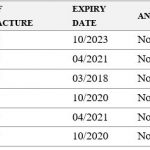
    This WHO medical product alert N°1/2020 refers to falsified Quinine Sulphate 300mg presented in six different combinations of batch numbers, expiry and manufacturing dates (see Table 1). The fraudulent use of the outdated WHO Essential Drugs Programme logo may create a false sense of product quality.

    Table 1: List of identified falsified Quinine Sulphate 300mg, subject of WHO Alert N°1/2020

    Medical Product Alert N° 1/2020 (English version) 1

    Recently received results of analysed samples show they do not contain any of the expected active ingredients.

    Quinine sulphate is referenced on the WHO Model List of Essential Medicines, to manage and treat severe malaria. At this stage, no adverse reactions attributed to these falsified products have been reported to WHO.    

    All the above falsified products claim to be manufactured by REMEDICA LTD – Cyprus and to contain 300mg of quinine sulphate. Remedica Ltd has confirmed that:

    • they did not manufacture the above falsified products; and
    • the variable data (batch number and dates) on the above products has never been used by Remedica.

     These falsified medicines display the following common characteristics (please see photographs):

    • grey or white plastic containers which contain 1000 loose circular tablets each;
    • display the outdated WHO Essential Drugs Programme logo;
    • English and French labelling with mistakes and inconsistencies; and
    • discovered at patient level in both regulated and unregulated outlets.

    Product details, photographs and advice to the public are available on the following pages.

    Outdated WHO Essential Drugs Programme logo 

    Medical Product Alert N° 1/2020 (English version) 2

    Photographs of confirmed falsified Quinine Sulphate 300mg tablets subject of
    Medical Product Alert N°1/2020

    1.       Falsified
    Quinine Sulphate Tablets B.P 300mg
    identified
    in Chad (Batch 44680)

    Medical Product Alert N° 1/2020 (English version) 3


    Medical Product Alert N° 1/2020 (English version) 4

    Medical Product Alert N° 1/2020 (English version) 5Medical Product Alert N° 1/2020 (English version) 6Medical Product Alert N° 1/2020 (English version) 7

    Medical Product Alert N° 1/2020 (English version) 8


    WHO requests increased vigilance within the supply chains of countries likely to be affected by these falsified products. Increased vigilance should include hospitals, clinics, health centres, wholesalers, distributors, pharmacies and any other suppliers of medical products.

    If you are in possession of the above products, please do not use. If you have used these falsified products, or if you suffer an adverse event having used these products, please seek immediate advice from a qualified healthcare professional, and ensure they report the incident to your local Ministry of Health/National Medicines Regulatory Authorities/National Pharmacovigilance Centre.

    All medical products must be obtained from authentic and reliable sources. Their authenticity and condition should be carefully checked. Seek advice from a healthcare professional in case of doubt.

    National health authorities are asked to immediately notify WHO if these falsified products are discovered in their country. If you have any information concerning the manufacture, distribution, or supply of these products, please contact rapidalert@who.int . 

    WHO Global Surveillance and Monitoring System

    for Substandard and Falsified Medical Products

    For further information, please visit our website: www.who.int/medicines/regulation/ssffc/en/


    Medical Product Alert N° 1/2020 (English version)
    Read More
    https://www.who.int/news-room/detail/09-03-2020-medical-product-alert-n-1-2020-english-version

    Views: 0

  • AMD processors susceptible to security vulnerabilities, data leaks

    AMD processors susceptible to security vulnerabilities, data leaks

    Graz University of Technology researchers recently revealed that AMD CPUs dating as far back as the early 2010s are susceptible to side channel attacks. Researchers have now demonstrated that a pair of infiltration approaches—collectively termed “Take A Way”—can access AES encryption keys.

    Read More

    Views: 0