Tag: Central

  • Commemorating Smallpox Eradication – a legacy of hope, for COVID-19 and other diseases

    On 8 May 1980, the 33rd World Health Assembly officially declared: ‘The world and all its peoples have won freedom from smallpox.’ 

    The declaration marked the end of a disease that had plagued humanity for at least 3 000 years, killing 300 million people in the 20th century alone.


    It was ended, thanks to a 10-year global effort, spearheaded by the World Health Organization, that involved thousands of health workers around the world to administer half a billion vaccinations to stamp out smallpox.

    The US$ 300m price-tag to eradicate smallpox saves the world well over US$ 1 billion every year since 1980.

    Speaking at a virtual event hosted at WHO-HQ, involving key players in the eradication effort, WHO Director-General, Dr Tedros Adhanom Ghebreyesus said, “As the world confronts the COVID-19 pandemic, humanity’s victory over smallpox is a reminder of what is possible when nations come together to fight a common health threat.”

    The world got rid of smallpox thanks to an incredible demonstration of global solidarity, and because it had a safe and effective vaccine. Solidarity plus science equalled solution!


    Dr Tedros highlighted that smallpox eradication also offers hope for efforts to eliminate other infectious diseases, including polio, which is now endemic in just two countries. To date, 187 countries, territories and areas have been certified free of Guinea worm disease, with seven more to go. And the fight against malaria has so far resulted in 38 countries and territories certified as malaria-free. In the case of Tuberculosis (TB), 57 countries and territories with low TB incidence are on track to reach TB elimination.

    At the event, Dr Tedros unveiled a commemorative postal stamp to recognize the global solidarity that drove the initiative and honour the efforts of health workers who ensured its success.

    The stamp, developed by the United Nations Postal Administration (UNPA), in collaboration with WHO, signifies what national unity and global solidary can achieve. Numerous countries, such as Guinea, India, Nigeria, Philippines, Togo and others issued smallpox stamps to show support for, and raise awareness about WHO’s Intensified Smallpox Eradication Programme launched in 1967.

    WHO Regional Director for Africa, Dr Matshidiso Moeti’s earliest memories of smallpox is of her father. “I was visiting WHO headquarters, and I saw a photo of my Dad, standing with the other experts on the Global Commission. I remember him going out, doing follow-up visits with patients.  He often would go with a driver and disappear into the bush for days. I felt in awe of his tireless work. The strategies used to eradicate smallpox still apply today.”


    “Lessons learned from smallpox are used today to respond to disease outbreaks. For example, house-to-house active case-finding underpins the polio eradication programme, and ring vaccination of contacts is helping to combat the spread of the Ebola virus disease. Similarly, surveillance, case-finding, testing, contact-tracing, quarantine, and communication campaigns to dispel misinformation are central to controlling COVID-19, “ explained David Heymann, Professor of Infectious Disease Epidemiology at The London School of Hygiene & Tropical Medicine (LSHTM) and  Distinguished Fellow, Global Health Security at Chatham House, London.

    Following smallpox eradication, WHO and UNICEF launched the Expanded Programme on Immunization, under which 85% of the world’s children are vaccinated and protected from debilitating diseases.

    With the potential of a COVID-19 vaccine ahead, ensuring sufficient supplies and reaching people in hard to reach places is a high priority. Addressing vaccine hesitancy poses a significant challenge to stop the virus. Access to accurate public health information and education is critical to ensure that the public has the facts to keep themselves and others safe.

    To permanently commemorate the eradication of smallpox and the lessons learned on a global scale, rather than every 10-years, WHO is calling museums, exhibition companies, designers, curators and associations to develop an immersive, interactive and educational exhibition on smallpox and its relevance for COVID-19 and global health security.  The exhibition, which will be unveiled later this year, will promote a better understanding of public health and empower people to keep informed and safe during a pandemic.

    Notes to the media

    Smallpox stamp

    The smallpox stamp is in the denomination of CHF 1,70. It was designed by Sergio Baradat (United Nations) in collaboration with the World Health Organization and is available for purchase at unstamps.org. The stamp can be used to mail postcards and letters around the world, provided that they are sent from the UN headquarters in New York, Geneva or Vienna respectively.


    Smallpox Eradication dates

    On 9 December 1979, a global commission certified that smallpox had been eradicated, and this certification was officially accepted by the 33rd World Health Assembly in 1980.

    Museum Exhibition

    Exhibition design companies, museums, curators and other companies/organizations in this field are invited to express their interest to develop an immersive, educational exhibition on smallpox and its relevance for COVID-19 and global health security by writing to privatesectorpartners@who.int

    Read More
    https://www.who.int/news-room/detail/08-05-2020-commemorating-smallpox-eradication-a-legacy-of-hope-for-covid-19-and-other-diseases

    Views: 0

  • WHO and European Investment Bank strengthen efforts to combat COVID-19 and build resilient health systems to face future pandemics

    • WHO and the European Investment Bank enhance cooperation to support countries in addressing the health impact of COVID-19
    • The first phase will address urgent needs and strengthen primary health care in ten African countries
    • Enhanced WHO-EIB partnership will scale up financing to assure the chain of essential supplies, including personal protective equipment, diagnostics and clinical management
    • New initiative will accelerate investment in health preparedness and primary health care with a focus on health work force, infrastructure, and water, sanitation and hygiene
    • The initiative involves measures to address the growing threat of antimicrobial resistance

    The World Health Organization and the European Investment Bank will boost cooperation to strengthen public health, supply of essential equipment, training and hygiene investment in countries most vulnerable to the COVID-19 pandemic.

    The new partnership between the United Nations health agency and the world’s largest international public bank, announced at WHO headquarters in Geneva earlier today, will help increase resilience to reduce the health and social impact of future health emergencies. 

    “Combining the public health experience of the World Health Organization and the financial expertise of the European Investment Bank will contribute to a more effective response to COVID-19 and other pressing health challenges,” said Dr Tedros Adhanom Ghebreyesus, WHO Director-General. 

    “WHO looks forward to strengthening cooperation with the EIB to improve access to essential supplies including medical equipment and training, and deliver better water, sanitation and hygiene where most needed. New initiatives to improve primary health care in Africa and support the EU Malaria Fund hint at the potential impact of our new partnership,” Dr Tedros concluded.

    “The world is facing unprecedented health, social and economic shocks from COVID-19. The European Investment Bank is pleased to join forces with the World Health Organization as a key part of Team Europe’s efforts to address the global impact of the COVID-19 pandemic. The EU Bank’s new partnership with the WHO will help communities most at risk by scaling up local medical and public health efforts and better protect people around the world from future pandemics. This new cooperation will enable us to combat malaria, address anti-microbial resistance and enhance public health in Africa more effectively,” said Werner Hoyer, President of the European Investment Bank.

    Improving local public health efforts to tackle coronavirus

    The WHO and the EIB will increase cooperation to help governments in low- and middle-income countries to finance and secure access to essential medical supplies and protective equipment through central procurement.

    Building resilient health systems in vulnerable countries across Africa

    The WHO and the EIB will reinforce cooperation to support immediate COVID-19 needs and jointly develop targeted financing to enhance health investment and build resilient health systems and primary health care to address public health emergencies as well as accelerate progress towards Universal Health Coverage.

    The partnership will benefit from the EIB’s planned 1.4 billion EUR response to address the health, social and economic impact of COVID-19 in Africa.

    This will address immediate needs in the health sector and provide both technical assistance and support for medium-term investment in specialist health infrastructure.

    The collaboration envisages rapid identification and fast-track approval of financing for health care, medical equipment and supplies. 

    The first phase of the collaboration will see public health investment in ten African countries. 

    Long-term collaboration to overcome market failures in global health

    The agreement signed today establishes a close collaboration to overcome market failure and stimulate investments in global health, accelerating progress towards Universal Health Coverage. Increased cooperation between the WHO and the EIB will strengthen the resilience of national public health systems and enhance preparedness of vulnerable countries against future pandemics, thanks to investments in primary care infrastructure, health workers and improved water, sanitation and hygiene. 

    Future cooperation will strengthen the EIB’s 5.2 billion EUR global response to COVID-19 outside the European Union.

    Scaling up investment to tackle antimicrobial resistance

    The two organisations will also cooperate in an initiative to address investment barriers hindering development of new antimicrobial treatment and related diagnostics. Antimicrobial resistance is amongst the most significant global health threats.

    The WHO and the EIB are working on a new financing initiative to support development of novel antimicrobials and address the estimated 1 billion EUR needed to provide medium-term solutions to antimicrobial resistance. Other crucial partners have been invited to join this discussion. 

    Improving the effectiveness of malaria treatment

    Under the new agreement the EIB and WHO will support development of the EU Malaria Fund, a new 250 million EUR public-private initiative intended to address market failures holding back more effective malaria treatment. 

    Strengthening EIB support for healthcare, life science and COVID-19 investment

    In recent years the European Investment Bank has provided more than 2 billion EUR annually for health care and life science investment.

    In the context of the COVID-19 pandemic, the EIB is currently assessing over 20 projects in the field of vaccine development, diagnostic and treatment, leading to potential investments in the 700 million EUR range. The EIB will also take part in the EU’s rolling pledging effort for the coronavirus global response that is taking place on May 4th.

    Background information

    The European Investment Bank (EIB) is the long-term lending institution of the European Union owned by its Member States. It makes long-term finance available for sound investment in order to contribute towards EU policy goals.

    The World Health Organization provides global leadership in public health within the United Nations system. Founded in 1948, WHO works with 194 Member States, across six regions and from more than 150 offices, to promote health, keep the world safe and serve the vulnerable. Our goal for 2019-2023 is to ensure that a billion more people have universal health coverage, to protect a billion more people from health emergencies, and provide a further billion people with better health and wellbeing. For updates on COVID-19 and public health advice to protect yourself from coronavirus, visit www.who.int and follow WHO on Twitter, Facebook, Instagram, LinkedIn, TikTok, Pinterest, Snapchat, YouTube

    WHO’s information site on the COVID-19 pandemic

    Read More
    https://www.who.int/news-room/detail/01-05-2020-who-and-european-investment-bank-strengthen-efforts-to-combat-covid-19-and-build-resilient-health-systems-to-face-future-pandemics

    Views: 0

  • Maternal infections in health facilities

    Maternal infections in health facilities

    A clearer picture of the global impact 

    New research from the Global Maternal Sepsis Study (GLOSS), a major WHO/HRP initiative, shows that infection has a much larger impact on global maternal mortality and morbidity than previously thought.

    Logo of the Lancet Global HealthThe
    results from GLOSS, published in The Lancet Global Health, are the first to provide data on frequency of maternal infections and
    sepsis across the pregnancy and post-pregnancy period, in a large number of health facilities around the world. 

    Around 11 women per 1000 live births had an infection which resulted in or contributed to what is known as a severe maternal outcome – either they died or nearly died – during their hospitalization. 

    Urgent improvement is needed to manage this life-threatening risk faced by all pregnant and recently pregnant women, wherever they are in the world. 

    What is maternal sepsis and how does it lead to maternal death?

    Maternal sepsis is a life-threatening condition that arises when the body’s response to infection causes injury to its own tissues and organs during pregnancy, child-birth, post-abortion or the postpartum period.

    The latest global estimates place sepsis due to obstetric infections as the third most common cause of maternal mortality. However, this only includes infections as a direct result of pregnancy, such as endometritis or post-caesarean wound infections.

    Few
    previous studies include post-abortion infections. Neither do they address indirect infections such as respiratory and meningitis, which are aggravated by pregnancy but not directly caused by it.

    A better understanding of maternal infection

    GLOSS was a massive facility-based data collection effort led by WHO, accompanied by a ‘STOP SEPSIS!’ campaign to increase awareness among healthcare providers.

    The study gathered data on women who were admitted with suspected or confirmed infection during pregnancy or post-pregnancy over a one-week period in 2017. More than 2800 women participated in the study in 52 countries.

    GLOSS included healthcare facilities that care for women during pregnancy, childbirth or at the end of pregnancy, as well as facilities without maternity service but where women could be hospitalized during or after pregnancy, and data on infections
    which are not usually recorded as maternal sepsis, including post-abortion and indirect infections. 

    The result is a more complete understanding of the frequency and impact of maternal infections in health facilities. 

    GLOSS calls attention not only to the wider range of risks faced by pregnant women but also to the long period of time during which they are at risk. 

    Putting global numbers on maternal infection and sepsis

    Overall, around 70 pregnant or recently-pregnant women per 1000 live births were found to have a maternal infection needing hospital management. 

    Across the study, 11 women with either direct or indirect infection per 1000 live births developed a severe maternal outcome, but in low- and middle-income countries up to 15 women per 1000 births were affected.

    Infections were the underlying cause of most of the deaths recorded during the study, primarily post-abortion infection and indirect infections. Infections were also present in about a third of deaths attributed to other causes, such as postpartum
    haemorrhage.

    This suggests that the contribution of infection to global maternal mortality and morbidity may be larger than current reports of maternal sepsis mortality suggest.

    Preventing, identifying and treating maternal infection and sepsis

    Some of the most common maternal infections found in the study, such as urinary tract infections, post-caesarean and post-abortion infections, are largely preventable and treatable.

    GLOSS results suggest that current levels of monitoring and clinical care across health facilities are not enough to prevent, identify and treat levels of maternal infection effectively. 

    For instance, a complete set of vital signs was not reported for a third of the women in the study, on the day their infection was suspected or diagnosed. Delays in antimicrobial therapy were frequent.

    GLOSS also shows marked differences across countries, with the highest burden in low- and middle-income countries, compared with high-income countries.

    This may reflect the impact of broader health determinants in different country contexts. Challenges of overcrowding, limited access to water and sanitation and constraints to safe births by skilled birth attendants can reduce the ability of healthcare
    providers to manage the frequency and outcome of maternal infections.

    An opportunity to implement evidence-based practice

    GLOSS gives healthcare providers, policy-makers, and the public at large an opportunity: to mobilise around these data improve evidence-based practice, and save lives. 

    WHO has produced a number of resources which can support timely action to prevent, diagnose and treat maternal infection, as well as activities such as the upcoming SAVE LIVES: Clean Your Hands campaign
    on 5 May which celebrates the central role played by nurses and midwives in clean health care. 

    In addition, WHO will publish a global sepsis epidemiology report around the 73rd World Health Assembly (WHA) in May, as requested in the
    2017
    WHA Resolution on Improving the prevention, diagnosis and clinical managementof sepsis.

    Understanding why and how infection affects women is essential for equipping healthcare providers with life-saving knowledge and enabling health care systems to bring down global maternal mortality and morbidity.

    Related publications

    WHO recommendations for prevention and treatment of maternal peripartum infections

    WHO Clinical practice handbook for safe abortion

    Global guidelines on the prevention of surgical site infection

    WHO statement on maternal sepsis

    World Health Assembly resolution on Improving the prevention, diagnosis and clinical management of sepsis

    Health Topics

    Antimicrobial resistance

    Infection Prevention and Control

    Water Sanitation Hygiene

    Other links

    Global Maternal Sepsis Study

    SAVE LIVES: Clean Your Hands 5 May 2020


    Maternal infections in health facilities
    Read More
    https://www.who.int/news-room/detail/27-04-2020-maternal-infections-in-health-facilities

    Views: 0

  • UFC 249 postponed again

    UFC 249 postponed again

    UFC 249 postponed again 1

    LOS ANGELES: The Ultimate Fighting Championship on Thursday scrapped controversial plans to stage a fight card later this month as the United States battles the coronavirus pandemic.

    The mixed martial arts organisation had planned to hold UFC 249 without fans at an undisclosed location, reportedly an Indian tribal reservation in California.

    However in an abrupt U-turn on Thursday, UFC said it had postponed the event at the request of broadcasters ESPN.

    “While the organisation was fully prepared to proceed with UFC 249, ESPN has requested the postponement of the event and subsequent bouts until further notice in light of the COVID-19 pandemic,“ a UFC statement said.

    “UFC looks forward to resuming the full live events schedule as soon as possible.”

    The New York Times reported on Wednesday that UFC chief Dana White planned to hold the event at the Tachi Palace Resort Casino in central California on April 18.

    By staging the event on tribal land, the UFC could have sidestepped state guidelines aimed at halting the spread of COVID-19 infections that have brought sports to a standstill.

    However the move met with resistance from California Senator Dianne Feinstein, who urged the UFC to postpone.

    “This event would involve dozens of individuals flying to California and driving to a casino for a purpose no one can honestly claim is essential,“ Feinstein said in a statement.

    “Going ahead with this event is not the right move.”

    The Ultimate Fighting Championship has already postponed three events after officials were unable to find venues to stage fights amid restrictions put in place to combat the COVID-19 pandemic. – AFP

    UFC 249 postponed again
    Read More
    https://www.thesundaily.my/sport/ufc-249-postponed-again-EF2241152

    Views: 0

  • Glossary of Youth: Its Education, Regimen, and Hygiene, by G. Stanley Hall

    Glossary of Youth: Its Education, Regimen, and Hygiene, by G. Stanley Hall

    GLOSSARY

    AGAMIC. Unmarried; unmarriageable, sometimes non-sexed.

    AGENIC. Lacking in reproductive power; sterile.

    AMPHIMIXIS. That form of reproduction which involves the mingling of substance from two individuals so as to effect a mixture of hereditary characteristics. It includes the phenomena of conjugation and fertilization among both unicellular and multicellular organisms.

    ANABOLISM. See METABOLISM.

    ANAMNESIC. Pertaining to or aiding recollection.

    ANEMIC. Deficient in blood; bloodless.

    ANTHROPOMORPHISM. The attributing of human characteristics to natural, supernatural, or divine beings.

    ANTHROPOMETRY. Science of measurement of the human body.

    ARTIFACT. Any artificial product.

    APHASIA. Impairment or lose of the ability to understand or use speech.

    ASSOCIATIONISM. The psychological theory which regards the laws of association as the fundamental laws of mental action and development.

    ATAVISTIC. Pertaining to reversion through the influence of heredity to remote ancestral characteristics.

    ATAXIC. Pertaining to inability to coördinate voluntary movements; irregular.

    CALAMO-PAPYRUS. Reed papyrus or pen-paper.

    CATABOLISM. See METABOLISM.

    CATHARSIS. Purgation or cleansing. Aristotle’s esthetic theory that little renders immune for much.

    CEREBRATION. Brain action, conscious or unconscious.

    CHOREA. St. Vitus’s dance; a nervous disease marked by irregular and involuntary movements of the limbs and face.

    CHRESTOMATHY. A collection of extracts and choice pieces.

    CHRISTENTHUM. The Christian belief; the spirit of Christianity.

    COMMANDO EXERCISES. Gymnastic exercises whose order is dependent upon the spoken command of the director.

    CORTEX. The gray matter of the brain, mostly on its surface.

    CORTICAL. Pertaining to the cortex.

    CRANIOMETRY. The measurement of skulls.

    CRYPTOGAMOUS. Having an obscure mode of fertilization; or, of plants that do not blossom.

    CULTUS. A system of religious belief and worship.

    DEUTSCHENTHUM. The spirit of the German people.

    DIATHESIS. A constitutional predisposition.

    EPHEBIC. Pertaining to the Greek system of instruction given to young men to fit them for citizenship; adolescent.

    EPIGONI. Successors; followers who only follow.

    EPISTEMOLOGY. The theory of knowledge; that branch of logic which undertakes to explain how knowledge is possible and to define its limitations, meaning, and worth.

    EUPEPTIC. Having good digestion.

    EUPHORIA. The sense of well-being; of fullness of life.

    EVIRATION. Emasculation; loss of manly characteristics.

    FERAL. Wild by nature; untamed; undomesticated.

    FORMICARY. An artificial ants’ nest.

    GEMÜTH. Disposition; the entire affective soul and its habitual state.

    HEBETUDE. Dullness; stupidity.

    HEDONISTIC. Relating to hedonism, that form of Greek philosophy which taught that pleasure is the chief end of existence.

    HETAERA. A Greek courtesan. This class was often highly trained in music and social art, and represented the highest grade of culture among Greek women.

    HETEROGENY. (1) The spontaneous generation of animals and vegetables, low in the scale of organization, from inorganic elements. (2) That kind of generation in which the parent, whether plant or animal, produces offspring differing in structure or habit from itself, but in which after one or more generations the original form reappears.

    HETERONOMOUS. Having a different name.

    HOROLOGY. The science of measuring time and of constructing instruments for that purpose.

    HYGEIA. The Greek goddess of health; health.

    HYPERMETHODIC. Methodic to excess; overmethodic.

    HYPERTROPHY. Excessive growth.

    INDISCERPTIBLE. Incapable of being destroyed by separation of parts.

    INHIBITION. Interference with the normal result of a nervous excitement by an opposing force.

    IRRADIATION. The diffusion of nervous stimuli out of the path of normal discharge which, as a result of the excitation of a peripheral end organ may excite other central organs than those directly connected with it.

    KINESOLOGICAL. Pertaining to the science of tests and measurements of bodily strength.

    KINESOMETER. An instrument for measuring muscular strength.

    MEDULLATION. The investment of nerve fibers with a protective covering or medullary sheath, consisting of white, fat-like matter.

    MERISTIC. Pertaining to the levels or spinal and cerebral segments of the body.

    METABOLISM. The act or process by which, on the one hand, dead food is built up into living matter—anabolism, and by which, on the other, the living matter is broken down into simpler products within a cell or organism—catabolism.

    METAMORPHOSIS. Change of form or structure; transformation.

    METEMPSYCHOSIS. The doctrine of the transmigration of the soul from one body to another.

    MONOPHRASTIC. Pertaining to or consisting of a single phrase.

    MONOTECHNIC. Pertaining to a single art or craft.

    MORPHOLOGY. The science of form and structure of plants and animals without regard to function.

    MYOLOGY. The scientific knowledge of the muscular system.

    MYTHOPOEIC. Producing or having a tendency to produce myths.

    NOETIC. Of, pertaining to, or conceived by, mind.

    NUANCE. Slight shade; difference; distinction; degree.

    ORTHOGENIC. Pertaining to right beginning and development.

    ORTHOPEDIC. Relating to the art of curing deformities.

    OSSUARY. A depository of dry bones.

    PALEOPSYCHIC. Pertaining to the antiquity of the soul.

    PANTHEISTIC. Relating to that doctrine which holds that the entire phenomenal universe, including man and nature, is the ever-changing manifestation of God, who rises to self-consciousness and personality only in man.

    PATRISTICS. That department of study occupied with the doctrines and writings of the fathers of the Christian Church.

    PHOBIA. Excessive or morbid fear of anything.

    PHYLETICALLY. In accordance with the phylum or race; racially.

    PHYLETIC. Pertaining to a race or clan.

    PHYLOGENY. The history of the evolution of a species or group; tribal history; ancestral development as opposed to ontogeny or the development of the individual.

    PHYLUM. A term introduced by Haeckel to designate the great branches of the animal and vegetable kingdoms. Each phylum may include several classes.

    PICKELHAUBE. The spiked helmet of the German army.

    PLANKTON. Sea animals and plants collectively; distinguished from coast or bottom forms and floating in a great mass.

    POLYGAMIC (LOVE). Pertaining to the habit of having more than one mate of the opposite sex.

    POLYPHRASTIC. Having many phrases; pertaining to rambling, incoherent speech.

    POST-SIMIAN. Pertaining to an age later than that in which simian or monkey-like forms prevailed.

    PRENUBILE. Pertaining to the age before sexual maturity or marriageability is reached.

    PRIE DIEU. A praying desk.

    PROPEDEUTIC. Preliminary; introductory.

    PROPHYLACTIC. Any medicine or measure efficacious in preventing disease.

    PSEUDOPHOBIAC. Pertaining to a morbid condition in which the subject is continually in fear of having said something not strictly true.

    PSYCHOGENESIS. The origin and development of soul.

    PSYCHONOMIC. Pertaining to the laws of mind.

    PSYCHOSIS. Mental constitution or condition; any change in consciousness, especially if abnormal.

    PUBERTY. The age of sexual maturity.

    PUBESCENT. Relating to the dawning of puberty.

    PYGMOID. Of pygmy size and form.

    RABULIST. A chronic wrangler; one who argues about everything.

    SCHEMA. A synopsis; a summary. In the Kantian sense, a general type.

    SCHEMATISM. An outline of any systematic arrangement; an outline.

    SUPERFOETATION. A second conception some time after a prior one, by which two foetuses of different age exist together in the same female. Often used figuratively.

    TEMIBILITY. (From Italian temibile, to be feared.) The principle of adjustment of penalty to crime in just that degree necessary to prevent a repetition of the criminal act.

    TIC. A nervous affection of the muscles; a twitching.

    TRANSCENDENTAL. In the Kantian system having an a priori character, transcending experience, presupposed in and necessary to experience.

    TRAUMATA. Wounds.

    TRAUMATISM. A wound; any morbid condition produced by wounds or other external violence.

    VERBIGERATION. The continual utterance of certain words or phrases at short intervals, without reference to their meaning, as seen in insane Gedankenflucht or rapid flight of thought.

    Extract from Youth: Its Education, Regimen, and Hygiene, by G. Stanley Hall

    Views: 0

  • With Humans In Hiding, Animals Take Back The World

    With Humans In Hiding, Animals Take Back The World

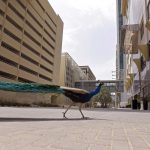
    Gulf states have tightened lockdown measures in large cities, and with Dubai’s shops closed and almost no people on the streets, peacocks that normally live in nearby gardens ventured out to explore other areas of the Middle Eastern city.
    Gulf states have tightened lockdown measures in large cities, and with Dubai’s shops closed and almost no people on the streets, peacocks that normally live in nearby gardens ventured out to explore other areas of the Middle Eastern city.

    A flock of geese searched for food inside a temple in Nagaon, in India’s state of Assam, on April 3. Many temples and shrines across the country have closed during the nationwide lockdown.
    A flock of geese searched for food inside a temple in Nagaon, in India’s state of Assam, on April 3. Many temples and shrines across the country have closed during the nationwide lockdown.

    On April 5, two cows strolled on a Corsican beach usually popular with tourists. It was the 20th day of a strict shutdown in France.
    On April 5, two cows strolled on a Corsican beach usually popular with tourists. It was the 20th day of a strict shutdown in France.

    A young puma walked the streets of Santiago on March 24 after the government ordered confinement measures in some areas of the Chilean capital.
    A young puma walked the streets of Santiago on March 24 after the government ordered confinement measures in some areas of the Chilean capital.

    Mountain goats roamed the streets of Llandudno, in Wales, on March 31, one week after U.K. Prime Minister Boris Johnson issued a stay-at-home order.
    Mountain goats roamed the streets of Llandudno, in Wales, on March 31, one week after U.K. Prime Minister Boris Johnson issued a stay-at-home order.

    Sika deer wandered over to a sushi restaurant in Nara, Japan, on March 12. When Prime Minister Shinzo Abe declared a state of emergency for Tokyo and its surrounding regions, the number of visitors to the city of Nara dropped significantly
    Sika deer wandered over to a sushi restaurant in Nara, Japan, on March 12. When Prime Minister Shinzo Abe declared a state of emergency for Tokyo and its surrounding regions, the number of visitors to the city of Nara dropped significantly

    Macaques searched for food around the closed stalls of the Johari Bazar in Jaipur, India, on March 26. After Prime Minister Narendra Modi declared a nationwide lockdown, the marketplace was deserted.
    Macaques searched for food around the closed stalls of the Johari Bazar in Jaipur, India, on March 26. After Prime Minister Narendra Modi declared a nationwide lockdown, the marketplace was deserted.

    Since Italy’s countrywide lockdown was imposed, the water in Venice’s canals have cleared, and residents have noticed more birds appearing.
    Since Italy’s countrywide lockdown was imposed, the water in Venice’s canals have cleared, and residents have noticed more birds appearing.

    On March 30, ducks ventured across the street in the heart of Paris, which is typically bustling with traffic.
    On March 30, ducks ventured across the street in the heart of Paris, which is typically bustling with traffic.

    Goats sauntered on abandoned streets in Jaipur on March 24
    Goats sauntered on abandoned streets in Jaipur on March 24

    A baby rabbit crossed a main road in Christchurch on April 1. New Zealand entered its strictest state of lockdown on March 25.
    A baby rabbit crossed a main road in Christchurch on April 1. New Zealand entered its strictest state of lockdown on March 25.

    A wild fox roamed the empty streets of London on the night of March 28.
    A wild fox roamed the empty streets of London on the night of March 28.

    On April 1, cattle looked for food in Palu, Central Sulawesi, in Indonesia, where the government is recommending that people avoid public spaces.
    On April 1, cattle looked for food in Palu, Central Sulawesi, in Indonesia, where the government is recommending that people avoid public spaces.

    A coyote stood outside Dodger Stadium in Los Angeles on April 3, weeks after Major League Baseball suspended all play.
    A coyote stood outside Dodger Stadium in Los Angeles on April 3, weeks after Major League Baseball suspended all play.

    The movie theater was closed in Westbury, N.Y., on March 20, leaving the parking lot empty for Canadian geese to roam.
    The movie theater was closed in Westbury, N.Y., on March 20, leaving the parking lot empty for Canadian geese to roam.

    With Humans In Hiding, Animals Take Back The World 2Gulf states have tightened lockdown measures in large cities, and with Dubai’s shops closed and almost no people on the streets, peacocks that normally live in nearby gardens ventured out to explore other areas of the Middle Eastern city.


    It took just a few days of lockdown for baby rabbits to dare to cross once-bustling roads in Christchurch, New Zealand, and less than a week for a puma to descend from the Andes Mountains into Santiago, one of South America’s busiest capitals. In Barcelona, wild boar, a familiar sight for citizens on the city’s outskirts, have made their way into Diagonal Avenue, an eight-lane thoroughfare. 

    It’s surprising and strange, yes, but also meaningful. Research suggests that ecosystems can rebound with speed once human intervention subsides. A review published last week determined that damaged ecosystems and wildlife can be rebuilt if the right conditions are achieved. Marine ecosystems in particular can substantially recover by 2050, according to the study, led by Carlos Duarte at the Red Sea Research Center in Saudi Arabia.

    Of course, a deadly pandemic that brings about a sudden economic collapse is no way to sustainably restore threatened ecosystems. Yet it’s a clear reminder of how quickly the wild world responds when humans take a step back.

    Scientists have tracked this pattern for decades. The number of humpback whales migrating from Antarctica to eastern Australia has been increasing each year, from a few hundred animals in 1968, when commercial whaling was banned, to more than 40,000 today. In 1880 only 20 breeding northern elephant seals had survived decades of hunting, and today there are more than 200,000.

    Hunting bans, habitat restoration, and the reduction of water pollution are all linked to the recovery of marine species. The continuation of these practices—and, most of all, working to mitigate the effects of climate change—would contribute to oceans recovering significantly by 2050, the researchers said.

    It’s more difficult for land ecosystems to bounce back because both the scale of extinction and the scale of human presence are so large there, said Duarte, a marine science professor. But these differences don’t mean the return of wildlife to deserted city streets isn’t significant, he said: “I believe our own confinement, and the release of wildlife from confinement, should bring some empathy between humans and wildlife moving forward.”

    With Humans In Hiding, Animals Take Back The World 3A flock of geese searched for food inside a temple in Nagaon, in India’s state of Assam, on April 3. Many temples and shrines across the country have closed during the nationwide lockdown.


    With Humans In Hiding, Animals Take Back The World 4On April 5, two cows strolled on a Corsican beach usually popular with tourists. It was the 20th day of a strict shutdown in France.


    With Humans In Hiding, Animals Take Back The World 5A young puma walked the streets of Santiago on March 24 after the government ordered confinement measures in some areas of the Chilean capital.


    With Humans In Hiding, Animals Take Back The World 6Mountain goats roamed the streets of Llandudno, in Wales, on March 31, one week after U.K. Prime Minister Boris Johnson issued a stay-at-home order.


    With Humans In Hiding, Animals Take Back The World 7Sika deer wandered over to a sushi restaurant in Nara, Japan, on March 12. When Prime Minister Shinzo Abe declared a state of emergency for Tokyo and its surrounding regions, the number of visitors to the city of Nara dropped significantly


    With Humans In Hiding, Animals Take Back The World 8Macaques searched for food around the closed stalls of the Johari Bazar in Jaipur, India, on March 26. After Prime Minister Narendra Modi declared a nationwide lockdown, the marketplace was deserted.


    With Humans In Hiding, Animals Take Back The World 9Since Italy’s countrywide lockdown was imposed, the water in Venice’s canals have cleared, and residents have noticed more birds appearing.


    With Humans In Hiding, Animals Take Back The World 10On March 30, ducks ventured across the street in the heart of Paris, which is typically bustling with traffic.


    With Humans In Hiding, Animals Take Back The World 11Goats sauntered on abandoned streets in Jaipur on March 24


    With Humans In Hiding, Animals Take Back The World 12A baby rabbit crossed a main road in Christchurch on April 1. New Zealand entered its strictest state of lockdown on March 25.


    With Humans In Hiding, Animals Take Back The World 13A wild fox roamed the empty streets of London on the night of March 28.


    With Humans In Hiding, Animals Take Back The World 14On April 1, cattle looked for food in Palu, Central Sulawesi, in Indonesia, where the government is recommending that people avoid public spaces.


    With Humans In Hiding, Animals Take Back The World 15A coyote stood outside Dodger Stadium in Los Angeles on April 3, weeks after Major League Baseball suspended all play.


    With Humans In Hiding, Animals Take Back The World 16The movie theater was closed in Westbury, N.Y., on March 20, leaving the parking lot empty for Canadian geese to roam.


    Credits: Bloomberg

    PUBLIC HEALTH

    News

    AddThis

    : 

    Original Author

    : 

    Bloomberg

    Disable advertisements

    : 
    With Humans In Hiding, Animals Take Back The World
    Read More
    http://saharareporters.com/2020/04/08/humans-hiding-animals-take-back-world

    Views: 0

  • Joint Leader’s statement – Violence against children: A hidden crisis of the COVID-19 pandemic

    Joint Leader’s statement – Violence against children: A hidden crisis of the COVID-19 pandemic


    The COVID-19 pandemic is having a devastating impact across the world. Efforts to contain the coronavirus are vital to the
    health of the world’s population, but they are also exposing children to increased risk of violence – including maltreatment,
    gender-based violence and sexual exploitation.

    As leaders of organisations committed to ending violence against children, we come together in solidarity to share our deep
    concern, call for action and pledge our support to protect children from violence and reduce the impact of COVID-19 on
    children in every country and community.

    A third of the global population is on COVID-19 lockdown, and school closures have impacted more than 1.5 billion children.
    Movement restrictions, loss of income, isolation, overcrowding and high levels of stress and anxiety are increasing the
    likelihood that children experience and observe physical, psychological and sexual abuse at home – particularly those
    children already living in violent or dysfunctional family situations. And while online communities have become central to
    maintain many children’s learning, support and play, it is also increasing their exposure to cyberbullying, risky online behavior
    and sexual exploitation.

    The situation is aggravated by children’s lack of access to schoolfriends, teachers, social workers and the safe space and
    services that schools provide. The most vulnerable children – including refugees, migrants, and children who are internally
    displaced, deprived of liberty, living without parental care, living on the street and in urban slums, with disabilities, and living
    in conflict-affected areas – are a particular concern. For many, growing economic vulnerability will increase the threat of child
    labour, child marriage and child trafficking.

    We must act now. Together, we call on governments, the international community and leaders in every sector to urgently
    respond with a united effort to protect children from the heightened risk of violence, exploitation and abuse as part of the
    broader response to COVID-19.

    Governments have a central role to play. They must ensure that COVID-19 prevention and response plans integrate age
    appropriate and gender sensitive measures to protect all children from violence, neglect and abuse. Child protection services
    and workers must be designated as essential and resourced accordingly.

    Working with and supporting governments, our collective response must include: maintaining essential health and social
    welfare services, including mental health and psychosocial support; providing child protection case management and
    emergency alternative care arrangements; ensuring social protection for the most vulnerable children and households;
    continuing care and protection for children in institutions; and communicating with and engaging parents, caregivers and
    children themselves with evidence-based information and advice. National helplines, school counsellors and other child-friendly
    reporting mechanisms enable children in distress to reach out for help, and must be adapted to the challenges of COVID-19.

    Given the heightened risks of online harms, technology companies and telecoms providers must do everything they can
    to keep children safe online. This includes providing access to cost-free child helplines, age-appropriate services and safe
    e-education platforms – and using their platforms to share child online safety advice. They must also do more to detect and
    stop harmful activity against children online, including grooming and the creation and distribution of child sexual abuse
    images and videos.

    As global organisations working to end violence against children, we will continue to advocate for and invest in effective child
    protection solutions. We will collectively develop and share technical resources and guidance for policymakers, practitioners,
    parents, caregivers and children themselves. And we will support the courageous health, child protection and humanitarian
    professionals working around the clock to keep children safe during these unprecedented times.

    In recent years, the global community has made significant gains in protecting children from violence. We must not allow those
    gains to be lost during the current turmoil. We must do all we can to keep children safe now. And we must plan ahead together,
    so that once the immediate health crisis is over, we can get back on track towards the goal of ending all forms of violence,
    abuse and neglect of children


    Joint Leader's statement - Violence against children: A hidden crisis of the COVID-19 pandemic 17


    Joint Leader's statement - Violence against children: A hidden crisis of the COVID-19 pandemic
    Read More
    https://www.who.int/news-room/detail/08-04-2020-joint-leader-s-statement—violence-against-children-a-hidden-crisis-of-the-covid-19-pandemic

    Views: 0

  • Armed Conflicts, State Repression Causing Human Rights Abuses In Africa, Says Amnesty International

    Armed Conflicts, State Repression Causing Human Rights Abuses In Africa, Says Amnesty International

    Armed Conflicts, State Repression Causing Human Rights Abuses In Africa, Says Amnesty International 18

    Armed Conflicts, State Repression Causing Human Rights Abuses In Africa, Says Amnesty International 19


    Amnesty International has said that armed conflicts and state repression were causes of human rights abuses in Africa.

    The organisation in its annual review of human rights in the region on Tuesday said rights defenders in Africa were persecuted and harassed for standing up and speaking out against governments.

    According to the report, there are major developments from the past year, which include the deposition of Sudanese President Omar al-Bashir, Zimbabwean Government’s response to mass protests, and increasing attacks on civilians in Mozambique and Mali.

    “In 2019, we saw incredible people power in mass protests which swept across Sub-Saharan Africa. From Sudan to Zimbabwe, and Democratic Republic of Congo to Guinea, people braved brutal crackdowns to stand up for their rights,” said Deprose Muchena, Amnesty International’s East and Southern Africa Director.

    “In some cases, these protests led to major changes, following the toppling of Sudan’s long-time leader, Omar al-Bashir, the new authorities promised human rights friendly reforms and following protest a raft package of human rights reforms was introduced by the Ethiopian Government.

    “Sadly, other changes needed are being blocked by repressive governments, who continue to carry out violations with impunity.

    “In Sudan’s Darfur region, government forces continued to commit possible war crimes and other serious human rights violations including unlawful killings, sexual violence, systematic looting and forced displacement.

    “In DRC, dozens of local and foreign armed groups together with the country’s security forces continued to carry out human rights abuses resulting in more than 2000 civilian deaths and at least one million were forcibly displaced in the course of 2019.

    “In Somalia, civilians continued to live with attacks from the armed group Al-Shabaab, while government and allied international forces failed to take sufficient precautions to spare civilians from their attacks targeted at Al-Shabaab. 

    “Armed groups carried out attacks directed against civilians in Cameroon, Central African Republic and Burkina Faso, while governments failed to protect civilians,” he added.

    The organisation said access to healthcare remains a major concern for people across the region, with underfunded health budgets leading to shortages of beds and drugs in hospitals.

    It said, “Governments from Angola to Zimbabwe, Burundi to Cameroon have failed to respect the right to health, and conflicts have exacerbated the situation.

    “With the COVID-19 pandemic looming, there is no time to waste in addressing the inequalities and human rights violations which make healthcare inaccessible for so many.”

    The organisation also condemned the persecution and harassment of human rights defenders for standing up and speaking out against governments.

    It said Burundi, Malawi, Mozambique, Eswatini, Zambia and Equatorial Guinea all saw surging crackdowns on activism in 2019.

    “In 17 countries across sub-Saharan Africa, journalists were arbitrarily arrested and detained in 2019. In Nigeria for example, 19 cases of assault, arbitrary arrest, and detention of journalists were recorded, with many facing trumped up charges.

    “In Burundi, authorities continued to crack down on the work of human rights defenders and civil society organisations including by subjecting them to prosecution and lengthy prison terms.

    “Human rights violations forced hundreds of thousands of people in the region to flee their homes in search of protection. There were about 600,000 internally displaced people in CAR; more than 222,000 people in Chad, and over half a million in Burkina Faso,” the report added.


    Human Rights

    News

    AddThis

    : 

    Original Author

    : 

    SaharaReporters, New York

    Disable advertisements

    : 
    Armed Conflicts, State Repression Causing Human Rights Abuses In Africa, Says Amnesty International
    Read More
    http://saharareporters.com/2020/04/07/armed-conflicts-state-repression-causing-human-rights-abuses-africa-says-amnesty

    Views: 0

  • People allowed to leave China’s Wuhan as Covid-19 lockdown eases

    People allowed to leave China’s Wuhan as Covid-19 lockdown eases

    People allowed to leave China’s Wuhan as Covid-19 lockdown eases 20

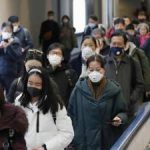
    WUHAN: The central Chinese city of Wuhan began allowing people to leave on Wednesday for the first time since it was locked down 76 days ago to contain the novel coronavirus, despite fears of a second wave of infection if such restrictions are eased too soon.

    China sealed off the city of 11 million people on Jan. 23 after it became clear that the flu-like virus that had emerged there late last year was highly contagious and potentially deadly.

    The first train to carry departing passengers out of the city left at 00:50 a.m. (1650 GMT), and outbound highways were opened to vehicular traffic around the same time.

    “I’m very happy, I’m going home today,“ migrant worker Liu Xiaomin told Reuters as she stood with her suitcases inside Wuhan’s Hankou railway station, bound for Xiangyang city.

    The topic “Wuhan lifts lockdown” quickly became the top trending topic on China’s Twitter-like Weibo platform, with posters leaving comments such as “welcome back Wuhan”.

    Based on ticket sales, 55,000 people will leave Wuhan by train on Wednesday, state broadcaster CCTV reported, citing the railway authority.

    That is slightly more than the number of people who have caught the virus in Wuhan since December. The death toll in the city has reached 2,571, about 80% of the total fatalities in China, according to official figures.

    At its peak, the lockdown saw people forcibly confined to their homes and the transport and industrial hub resembled a ghost town, with streets deserted except for police patrols and emergency vehicles.

    But such restrictions have eased in recent days as new infections dropped to a trickle. Mainland China reported no coronavirus deaths for the first time on Tuesday, and Wuhan has counted only two new infections in the past fortnight.

    Authorities are walking a fine line between allowing greater freedom of movement and economic activity while also guarding against a second wave of infection, with particular concern around imported cases and people who show no symptoms but can still pass on the virus.

    Wuhan residents are still urged not to leave their neighbourhoods, the city and even the province unless necessary, health officials said on Tuesday.

    Many people remain fearful of catching the disease, with China reporting 137 new asymptomatic cases on April 7.

    “The number of asymptomatic patients has been slowly going up, I’m worried about this,“ said Yang Chengjun, who was leaving Wuhan by train to get back to his design job in Fuzhou. He was wearing a knee-length raincoat and speaking through a mask.

    Tall barriers continue to surround housing compounds in Wuhan and residents can only leave if they have a green health code or documents showing a valid reason.

    Migrant worker Liu said she and her husband would still be careful about going outside even when they get home to Xiangyang city.

    “My mood will be better but when I get back I still won’t go out too much,“ she said.

    Interactive graphic tracking global spread of coronavirus: open https://tmsnrt.rs/3aIRuz7 in an external browser. – Reuters

    People allowed to leave China’s Wuhan as Covid-19 lockdown eases
    Read More
    https://www.thesundaily.my/world/people-allowed-to-leave-china-s-wuhan-as-covid-19-lockdown-eases-EB2232134

    Views: 0