Tag: Action

  • WHO Global Initiative for Childhood Cancer: progress on all fronts

    WHO Global Initiative for Childhood Cancer: progress on all fronts

     Peru shows the way forward and the courage of Ander Martinez

    “When Ander was diagnosed, I didn´t have the possibility to cover the cost of the treatment. It was very expensive, and I had nothing,” says Rosalina Tocto, 29 years mother of Ander Martínez Tocto. Ander had just been diagnosed with acute leukemia at the young age of 6 years. From the beginning, the odds were stacked against him. He and his family lived in a rural town, six hours from the nearest city. His parents did not have a formal job, placing the family under financial strain.

    Ander and his family were not alone in this situation. “In Peru, nearly 1800 children and adolescents are diagnosed with cancer every year; however, up to 70% will have a late stage, often metastatic due to delays in diagnosis,” says Dr. Juan García, medical chief of the Pediatric Department of in the National Institute of Neoplastic Diseases (INEN) in Lima, Peru. “Most of our patients come from outside Lima and the majority of parents do not have formal employment and therefore do not have any type of insurance.”

    Fortunately, Peru has made a strong commitment to Universal Health Coverage. In 2009, a law was passed to improve access to care by introducing a mandatory health insurance system and registering everyone living in extreme poverty under Seguro Integral de Salud (SIS), regardless of age or circumstance.  

    Dr. Reina Bustamante, Executive Director of the Division of Prevention and Control of Cancer of the MINSA says “UHC is an important step in public health particularly for those who lack public or private insurance like Ander. In this context, we are trying to follow WHO guidance to achieve UHC and ensure all individuals and communities receive the health services they need without suffering financial hardship.”

    In 2019, Peru was selected as a focus country for the WHO Global Initiative for Childhood Cancer as the first focus country in the Region. The Global Initiative aims to improve survival for all children with cancer to at least 60% by 2030 while reducing suffering, altogether with the potential to save an additional one million lives.

    Four main goals were formulated for the national pediatric cancer plan: (1) improve early diagnosis of childhood cancer, (2) decrease treatment abandonment, (3) implement a national pediatric cancer registry and (4) improve the quality of services in pediatric oncology units.

    Dr. Liliana Vasquez, pediatric oncologist who works as an external consultant for the Division of Prevention and Control of Cancer of MINSA said, “Ten working groups have been established to achieve the goals.”

    Dr. Vivian Perez, advisor of the Non-Communicable Diseases Office in PAHO-Peru added “the initial focus for the Initiative will be on six cancers selected as tracers for monitoring progress across the health system, alongside engagement of at least six focus countries with a record of strong political commitment and foundational efforts supporting children with cancer.”

    For Ander, his health care team, the commitments from the government of Peru and partners and Global Initiative have made it possible to be successfully treated and will now allow him to dream of a healthy future though better access to surveillance monitoring and psycho-oncological support aimed at childhood cancer survivors.

    Peru is showing what is possible for all countries. By concerted action and promoting universal health coverage, every child in the world can have access to high-quality care with the greatest likelihood of survival, and every family should be protected from financial hardship. We can do more together. 


    WHO Global Initiative for Childhood Cancer: progress on all fronts
    Read More
    https://www.who.int/news-room/detail/14-02-2020-who-global-initiative-for-childhood-cancer-progress-on-all-fronts

    Views: 0

  • Ministers to agree new global road safety agenda to 2030

    Ministers to agree new global road safety agenda to 2030

    Government ministers and senior officials from over 100 countries will meet in Stockholm, Sweden from 19-20 February to discuss new steps to halve road traffic deaths and injuries by 2030, in line with global targets agreed in the United Nations Sustainable Development Goals (SDGs).

    “The fact that an estimated 1.35 million lives are lost every year due to road traffic collisions is an outrage. It is an unacceptable price to pay for mobility,” said Dr Tedros Adhanom Ghebreyesus, Director-General at the World Health Organization (WHO).

    Road traffic injuries are now the leading cause of death for children and young adults aged 5 to 29 years, according to WHO’s most recent Global status report on road safety.

    More than half of all road traffic deaths occur among pedestrians, cyclists and motorcyclists. The risk of a road traffic death remains three times higher in low-income countries than in high-income countries. Moreover, as many as 50 million people experience non-fatal road injuries, which impose human suffering and major economic losses.

    “Most road traffic deaths and injuries can be prevented, using tried and tested strategies,” added Dr Tedros. “This conference is an opportunity for the world to embrace a new agenda to radically reduce the number of lives lost on our roads and re-think how we can provide access to safe, affordable, accessible and sustainable transport systems for all.”

    Progress in road safety

    Many countries have already made progress through effective road safety management and focusing on better legislation and enforcement around key risks such as speeding; drinking and driving, and failing to use seatbelts. They have also improved infrastructure through measures such as safer sidewalks and dedicated lanes for cyclists; implemented vehicle standards such as those that mandate advanced braking and electronic stability control; and enhanced post-crash care.

    Improvements have occurred when a number of sectors have been involved – including transport, health, urban planning and law enforcement, among others. Success has also depended mainly on strong leadership and political will at the highest level of government and in close collaboration with civil society and the private sector.

    The Stockholm Declaration

    Hosted by the Government of Sweden in collaboration with WHO, the 3rd Global Ministerial Conference on Road Safety offers delegates an opportunity to share successes and lessons learned, chart future strategic directions for global road safety, and define ways to fast-track progress around proven strategies to save lives.

    The Stockholm Declaration will be presented as the final outcome document of the Ministerial Conference calling for strong political will and international cooperation as well as partnerships across many sectors of society. The Declaration will lay out key recommendations for accelerated action to drive progress towards halving global road traffic deaths and injuries by 2030.

    Beyond preventing human suffering and major economic losses, addressing road traffic deaths and injuries has positive impact across all aspects of society and development ─ including those linked to environment, climate change, education, employment, energy, poverty, human rights and equality ─ as outlined in the SDG targets.

    Note to editors:

    Road safety is reflected in the SDGs agreed in 2015, with two dedicated targets: (a) 3.6 aimed at preventing road traffic deaths and injuries and (b) 11.2 providing access to safe, affordable, accessible and sustainable transport systems for all.

    Achieving these targets would lead to increases in walking, cycling and using public transport, in other words, those modes of transport which impact most favorably on noncommunicable diseases like heart and lung diseases, cancer and diabetes. It would also contribute to reducing environmental risks, such as air and noise pollution, and steering sustainable urbanization, with less congestion and universal access to safe, inclusive and green public spaces. 

    Ministers to agree new global road safety agenda to 2030
    Read More
    https://www.who.int/news-room/detail/07-02-2020-ministers-to-agree-new-global-road-safety-agenda-to-2030

    Views: 0

  • WHO to accelerate research and innovation for new coronavirus

    WHO to accelerate research and innovation for new coronavirus

    WHO is convening a global research and innovation forum to mobilize international action in response to the new coronavirus (2019-nCoV). 
    “Harnessing the power of science is critical for bringing this outbreak under control,” said WHO Director-General Dr Tedros Adhanom Ghebreyesus. “There are questions we need answers to, and tools we need developed as quickly as possible. WHO is playing an important coordinating role by bringing the scientific community together to identify research priorities and accelerate progress.”
    The forum, to be held 11-12 February in Geneva, is organized in collaboration with the Global Research Collaboration for Infectious Disease Preparedness.
    The forum will bring together key players including leading scientists as well as public health agencies, ministries of health and research funders pursuing 2019-nCoV critical animal health and public health research and the development of vaccines, therapeutics and diagnostics, among other innovations. 
    Participants will discuss several areas of research, including identifying the source of the virus as well as sharing of biological samples and genetic sequences.
     
    Experts will build on existing SARS and MERS coronavirus research and identify knowledge gaps and research priorities in order to accelerate scientific information and medical products most needed to minimize the impact of the 2019-nCoV outbreak.  
    The meeting is expected to produce a global research agenda for the new coronavirus, setting priorities and frameworks that can guide which projects are undertaken first. “Understanding the disease, its reservoirs, transmission and clinical severity and then developing effective counter-measures is critical for the control of the outbreak, to reduce deaths and minimize the economic impact,” said Dr. Soumya Swaminathan, WHO Chief Scientist.
    This will also fast-track the development and evaluation of effective diagnostic tests, vaccines and medicines, while establishing mechanisms for affordable access to vulnerable populations and facilitating community engagement.
    “The WHO R&D Blueprint is a global strategy and preparedness platform that drives coordinated development of drugs and vaccines before epidemics, and allows the rapid activation of R&D activities during epidemics. It speeds up the availability of the diagnostics, vaccines and treatments and technologies that ultimately save lives,” added Dr Michael Ryan, Executive Director, WHO Health Emergencies Programme.  
    Setting clear global research priorities for the novel coronavirus should lead to more efficient investments, high-quality research and synergies among global researchers.

    WHO to accelerate research and innovation for new coronavirus
    Read More
    https://www.who.int/news-room/detail/06-02-2020-who-to-accelerate-research-and-innovation-for-new-coronavirus

    Views: 0

  • US$675 million needed for new coronavirus preparedness and response global plan

    US$675 million needed for new coronavirus preparedness and response global plan

    To fight further spread of the new coronavirus (2019-nCoV) outbreak in China and globally, and protect states with weaker health systems, the international community has launched a US$675 million preparedness and response plan covering the months of February through to April 2020.

    “My biggest worry is that there are countries today who do not have the systems in place to detect people who have contracted with the virus, even if it were to emerge,” said Dr Tedros Adhanom Ghebreyesus, WHO Director-General. “Urgent support is needed to bolster weak health systems to detect, diagnose and care for people with the virus, to prevent further human to human transmission and protect health workers.”

    The Strategic Preparedness and Response Plan (SPRP) for the new coronavirus lays out activities and resources needed by international health organizations globally, including WHO, to implement priority public health measures in support of countries to prepare and respond to nCoV-2019 for a period February-April 2020. The objectives of the plan are to  limit human-to-human transmission of the virus, particularly in countries most vulnerable if they were to face an outbreak; identify, isolate and care for patients early; communicate critical risk and event information; minimize social and economic impact; reduce virus spread from animal sources; and address crucial unknowns.

    The plan focuses on:

    • Rapidly establishing international coordination and operational support;
    • Scaling up country readiness and response operations;
    • Accelerating priority research and innovation.

    “The effectiveness of outbreak response depends on the preparedness measures put in place before outbreaks strike,” said Dr Mike Ryan, head of WHO’s Health Emergencies Programme. “That is why we are seeking resources to safeguard the most vulnerable countries to protect people from the new coronavirus before it arrives on the doorstep.”

    As noted in the SPRP, WHO assesses that the outbreak poses a very high risk in China, and high risk regionally and globally. The risk assessment was based on factors including the likelihood of further spread, the potential impact on human health, and the varying levels of effectiveness in national preparedness and response measures. Accelerated action, as called for in the plan, can address these risks and areas requiring support.

    As of 10 a.m. Central European Time on 5 February, 25 countries have reported confirmed cases of the new coronavirus, including China, where 24,363 people had contracted the virus, or over 99% of all cases. In all other countries, 191 cases have contracted the virus.

    US$675 million needed for new coronavirus preparedness and response global plan
    Read More
    https://www.who.int/news-room/detail/05-02-2020-us-675-million-needed-for-new-coronavirus-preparedness-and-response-global-plan

    Views: 0

  • Unleashing Youth Power:A Decade of Accelerating Actions Towards Zero Female Genital Mutilation

    Joint statement by UNFPA Executive Director Dr Natalia Kanem, UNICEF Executive Director Henrietta Fore and UN Women Executive Director Phumzile Mlambo-Ngcuka and WHO Director-General Dr Tedros Adhanom Ghebreyesus on the occasion of International Day of Zero Tolerance for Female Genital Mutilation

    – “When Tabitha was growing up in rural Kenya, most of her 16-year-old peers were subjected to female genital mutilation – a human rights violation that more than 4 million girls worldwide are at risk of this year. Yet Tabitha remains unharmed, thanks to the unwavering support of her parents, who, in spite of enormous social pressure, saved their daughter from the same fate. 

    “On the International Day of Zero Tolerance for Female Genital Mutilation, we join with Tabitha and young people around the world who are standing up for their rights with urgency and energy. They are engaging their peers, families, communities and governments with a call to end this harmful act of gender-based violence once and for all, as promised by the international community in the 2030 Agenda for Sustainable Development.

     “While significant progress in eliminating the practice has been made in the last 30 years, approximately 200 million girls and women alive today have had their genitals mutilated. This can lead to long-term physical, psychological and social consequences.        

    “Support for the practice is dwindling. Adolescent girls aged 15 to 19 in countries where female genital mutilation is prevalent are less supportive of continuing the practice than are women aged 45 to 49. And in many countries, young girls are at much lower risk of being subjected to female genital mutilation than their mothers and grandmothers were. However, rapid youth population growth in countries where female genital mutilation is prevalent could lead to a significant rise in the number of girls at risk by 2030.

    “Today’s young people can play a critical role in ending the practice. Unleashing the power of youth means investing in youth-led movements to champion gender equality, an end to violence against women and girls and the elimination of harmful practices. This requires including young people as partners when designing and implementing national action plans, building relationships with youth-led organizations and networks that work to end female genital mutilation and recognize it as a form of violence against women and girls, empowering young people to lead community campaigns that challenge social norms and myths, and engaging men and boys as allies.

    “But this is not a goal young people can achieve alone, nor can it be addressed in isolation from other forms of violence against women and girls or from gender inequality. It also requires strong political leadership and commitment.

    “Last year, at the Nairobi Summit on ICPD25, governments, civil society, faith-based organizations and private companies recommitted to ending gender-based violence and harmful practices – such as female genital mutilation – in 10 years, the same timeframe for achieving the Sustainable Development Goals. In March, we mark 25 years since the Beijing Platform for Action, a global commitment to advance women’s rights across 12 critical areas, including the elimination of all harmful practices against girls and women. This year, we will announce the creation of a new Generation Equality to drive further investment and results for gender equality.


    “Now is the time to invest, translating the political commitments already made into concrete action. Now is the time to do more and do it better and faster to end the practice once and for all. Now is the time to keep our promise to Tabitha and all girls of reaching zero female genital mutilation by 2030.”


    Read More
    https://www.who.int/news-room/detail/06-02-2020-unleashing-youth-power-a-decade-of-accelerating-actions-towards-zero-female-genital-mutilation

    Views: 0

  • Female Genital Mutilation Hurts Women and Economies

    Female Genital Mutilation Hurts Women and Economies

    Female genital mutilation (FGM) exacts a crippling economic as well as human cost, according to World Health Organization (WHO).

    “FGM is not only a catastrophic abuse of human rights that significantly harms the physical and mental health of millions of girls and women; it is also a drain on a country’s vital economic resources,” said Dr Ian Askew, Director of WHO’s Department of Sexual and Reproductive Health and Research. “More investment is urgently needed to stop FGM and end the suffering it inflicts.”

    New modelling reveals that the total costs of treating the health impacts of FGM would amount to USD 1.4 billion globally per year, if all resulting medical needs were addressed. For individual countries, these costs would near 10% of their entire yearly expenditure on health on average; in some countries, this figure rises to as much as 30%.

    The interactive modelling tool that generated these data was launched on the International Day of Zero Tolerance for Female Genital Mutilation.

    Severe physical and mental health impacts for women and girls

    Women and girls living with FGM face serious risks to their health and well-being. These include immediate consequences after being cut, such as infections, bleeding or psychological trauma, as well as chronic health conditions that can occur throughout life.

    Women who have undergone the procedure are more likely to experience life-threatening complications during childbirth. They may face mental health disorders or suffer chronic infections. They may also have pain or problems when they menstruate, urinate or have sexual intercourse. 

    All of these conditions warrant much-needed medical attention and care.

    “High healthcare costs for countries mount because of the tragic personal impacts on women and girls. Governments have a moral responsibility to help end this harmful practice,” says Dr Prosper Tumusiime, Acting Director for Universal Health Coverage and the Life Course in the African Regional Office of WHO. “FGM hurts girls, imposes lifelong health risks on the women they become, and strains the healthcare systems that need to treat them.”

    Preventing FGM brings major benefits for women, girls, communities and economies

    Using data from 27 high-prevalence countries, the Cost Calculator demonstrates clear economic benefits from ending FGM. If it were abandoned now, it shows that the associated savings in health costs would be more than 60% by 2050.

    In contrast, if no action is taken, it is estimated that these costs will soar by 50% over the same time period, as populations grow and as more girls undergo the procedure.

    Since 1997, great efforts have been made to end FGM, through work within communities, research, and changes in legislation and policy. 26 countries in Africa and the Middle East now explicitly legislate against FGM, as well as 33 other countries with migrant populations from FGM-practicing countries.

    WHO is also working with countries to raise awareness of the harmful impacts of the practice among their health workers, and to engage them in prevention efforts.

    “Many countries and communities are showing that abandoning female genital mutilation is possible,” states Dr Christina Pallitto, scientist at WHO. “If countries invest to end female genital mutilation, they can prevent their girls from undergoing this harmful practice and promote the health, rights and well-being of women and girls.”

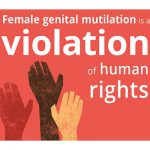
    Female genital mutilation is internationally recognized as a human rights violation. It has no medical benefits and causes only harm. WHO’s position is that FGM must never be carried out.

    Further information

    The FGM Cost Calculator will be available here, as of 00:30 CET 6 February 2020:
    www.who.int/news-room/detail/06-02-2020-economic-cost-of-female-genital-mutilation

    More on FGM

    Notes for Editors

    About FGM

    FGM includes procedures that intentionally alter or cause injury to the female genital organs for non-medical reasons. More than 200 million girls and women alive today are estimated to have undergone the practice across 30 countries in Africa, the Middle East and Asia where FGM is concentrated.

    FGM is mostly carried out on young girls between infancy and 15 years of age.

    About the FGM Cost Calculator

    The WHO FGM Cost Calculator shows the economic cost of treating the health complications caused by FGM across 27 high-prevalence countries. These costs were calculated using the WHO One Health tool and other available scientific evidence.

    Users of the tool can calculate costs by country in a ‘business as usual’ scenario; a scenario of partial abandonment of FGM, and full abandonment of FGM over a 30-year period. In addition, the distribution of costs by different types of health complications is presented by country.

    The tool does not consider other indirect costs that hit families and communities, or the socio-economic impacts of the practice, which would be significantly higher still.

    The 27 countries modelled include Benin, Burkina Faso, Central African Republic, Còte d’Ivoire, Cameroon, Chad, Djibouti, Egypt, Eritrea, Ethiopia, Ghana, Guinea, Gambia, Guinea-Bissau, Iraq, Kenya, Mali, Mauritania, Niger, Nigeria, Soudan, Senegal, Sierra Leone, Somalia, Togo, United Republic of Tanzania, Yemen.

    Female Genital Mutilation Hurts Women and Economies
    Read More
    https://www.who.int/news-room/detail/06-02-2020-female-genital-mutilation-hurts-women-and-economies

    Views: 0

  • Effective Restaurant Training Techniques: Jump-Start Your Training Program Today

    [ad_1]

    I have seen different types of training techniques for restaurant staff. Some restaurants send new hires to their corporate training school; others hire experienced staff thinking they already know how to work that position. I think all new staff members should receive quality training regardless of previous experience.

    Each role in a restaurant is important for the restaurant’s success!

    Management must be able to work in every position. Their knowledge of each job is vital. Managers must step into those other roles to maintain customer service. Some reasons could be if there is a call-out, or if the sales are higher than projected.

    If people tell you that managing a restaurant is easy, they are dead wrong. In-fact it is the most difficult position in the restaurant. Running a restaurant is challenging; management needs to be able to multitask, give direction, and follow-up on that direction. Managers must be able to retain large amounts of information and make quick decisions and be ready to step into any position.

    Managers are not born to run a restaurant; they are developed into that position. The same goes for the rest of the staff. Train the management staff, then the trainers. Management will oversee the trainers as they train the rest of the staff.

    The most effective restaurant training techniques are:

    • Show-Do-Review: The trainer shows the staff member how to do the task. Then the trainer observes the trainee actually doing the task. After completion, they review the task together and the trainer gives feedback to the new hire. The Show-Do-Review technique is especially effective in learning recipes, kitchen duties, cleaning tasks, or service tasks.
    • The Memory Game: Once the new hire has some understanding of their new job, the trainer shadows the staff member and helps the new hire remember different key components of the job. Periodically the trainer will ask the trainee a question. If the trainee does not answer the question correctly, then the trainer will provide the answer. The trainer will continually repeat the question all throughout the day or night until the trainee answers it correctly. The purpose of the exercise is getting the staff member to retain the information. The Memory Game can be used to remember important food time and temperature, menu and recipe knowledge, service steps, or even manager responsibilities.
    • Role-Playing: Role-playing is one of the most effective training techniques to use in creating top-notch performers. Existing staff members and new hires experience real life situations and “learn by doing”. The trainees will experience “real life” situations in a simulated and controlled environment. This technique allows the trainer to evaluate the trainee’s strengths and areas to improve. This also helps to develop an action plan so that the trainee can overcome any obstacles to their success. “Practice make perfect.” This technique allows the employees to see different perspectives, build confidence, and form good habits. The trainer will observe the role-playing and my correct the staff members periodically to ensure they on the right path. Role-playing is a great technique for service staff and managers to learn the proper way to handle customer questions or complaints, how to approach a table, and the steps of service.
    • Shadowing: The trainee shadows the trainer, and the trainer shows the trainee the correct procedures in completing the assigned task. The trainer should ask open-ended questions in reference to the task. Once the trainee is more comfortable, then the trainer will shadow the employee. Communication between the staff members is crucial in developing the trainees. Shadowing could be used for nearly any role, especially on the first days and last days of training.

    Once the trainer evaluates the staff member and determines that the employee has mastered that position, then that person is ready to work independently.

    Management should observe or be involved in the training process to ensure that employee is receiving quality training. The general manager/owner oversees the managers. The general manager/owner may have the final say in whether a new employee is ready to work solo.

    Utilize any tool available to help achieve the training goals. During the training process using feedback or assessment forms can help track the quality of the training. Documenting the progress of the training and reviewing it with the employee will help the employee to know your expectations. It also gives you a paper trail of that particular employees training.

    Using a variety of training techniques for your restaurant is useful in getting all your staff on the same page. It also is more interesting than sitting down with someone and reading a scripted presentation. It will help you retain staff, because too many people are thrown into their jobs without the proper training and get frustrated and quit. Having a training program that is easy and effective is important in your restaurant’s success.

    [ad_2]

    Source by Jeffrey Schim

    Views: 0

  • Pharmacy Technician Jobs – Positive Aspects

    [ad_1]

    There often are several different positive aspects to pharmacy technician jobs. Individuals that become interested in this profession usually are looking to be of assistance to other people. These people will be given an amazing opportunity to help others every day of their career. This is advantageous for people that want to make a positive impact on the world around them.

    Individuals in this profession will be given the opportunity to help customers understand the medication that they are taking. This is advantageous because the social action will be good for the person that is performing the job. Customers usually appreciate when they are able to understand what they are putting into their body.

    People involved with this profession also will have the ability to work closely with the pharmacist to make completely certain that medications are being distributed properly. Answering customer questions is also important so that there is not interaction between medications. People involved with this line of employment often will be able to explain things very clearly to individuals.

    People that are involved with this work will also make sure that paperwork is filed properly. Documentation is a very important part of this profession. When a person has the ability to stay organized and they will be very successful in this line of making money. Organization is important so that mistakes do not happen when medication is dispensed.

    These individuals will also help to make sure that there are no problems between different medications that a patient is taking. The responsibilities of an individual that has this job will vary throughout the day. The various responsibilities will make the job extremely enjoyable for anyone that has chosen this career path.

    Interacting with medical professionals is also part of the responsibilities. Clarifying information in regards to prescriptions can also be part of the job description. Performing this task is extremely valuable so that people do not wind up taking the wrong medications. It will be very clear to understand the obligations involved with this type of employment.

    Pharmacy technician jobs are very interesting and challenging. People that are making valid attempts to look for a fantastic job that will keep them intellectually stimulated will be very pleased with this career choice. When an individual has the opportunity to remain intellectually stimulated when performing their job they will usually succeed very well. Professional success is very important to individuals who are part of this line of work.

    [ad_2]

    Source by Susan Bean

    Views: 0

  • Anal Sex: Here’s How To Make Your Woman BEG YOU For It – YES, Really – BEG YOU FOR IT

    [ad_1]

    You may think that the title of this article sounds too good to be true – but it’s 100% serious. You are about to discover exactly how to make your woman beg you for anal sex.

    If you want to do your woman ‘up the back door’ but she isn’t currently too happy about the idea, here is how to make her want anal sex.

    Most guys approach the issue of anal sex with their woman totally the wrong way. Here are a few examples of common methods that men use to try to get their woman to have anal sex with them.

    If you are currently using any of the following ideas, stop it straight away:

    Mistake #1: They try to persuade their woman to have anal sex with them by using logical arguments. For a woman sex is virtually 100% emotional. Therefore, logical arguments are a total waste of time.

    Mistake #2: Some men just try to ‘slip it in the back door’ when they are making love to them and hope their woman just lets them carry on with it. This is a terrible idea and one that you must avoid because it will probably hurt your woman and this could turn her off the idea of anal sex for a very long time.

    Worse still, it may break the sexual trust that you have with your woman. And when you lose that all important trust, you can say goodbye to your woman doing the really dirty, naughty stuff (like ‘back door action’) with you.

    So now that you know how not to try to get your woman to have anal sex with you, I can share the secret of how to make your woman beg you for anal sex.

    Pay attention, this is going to be fun…

    For starters, stop viewing anal sex as something that you need to ‘win’ from your woman and something that at best she’ll tolerate in order to allow you to have a good time. There isn’t a real man on the planet who thinks like that.

    Instead, adopt the belief that you are going to cause your woman to link massive amounts of pleasure to anal sex.

    That is the most important step, so I’ll repeat it – you are going to cause your woman to link massive amounts of pleasure to anal sex.

    And they way you do this is in very small steps.

    You cannot expect her to go from having never had anything up her butt, to taking your whole ‘tool’ all in one night.

    It ain’t gonna happen.

    No, no, no – your game plan for back door action has to be much cleverer than that. But don’t worry; I have already got the game plan for you, so all you have to do it put it into action…

    The 5 Step Plan To Make Your Woman Beg You For Anal Sex

    – Step 1: Use your tongue to give your woman oral pleasure, wait until she is just about to come and then gently rub her asshole with your finger. Keep rubbing it as she comes and you have started the process of getting her to link pleasure to her ass.

    – Step 2: Do the same as step one, but this time insert the tip of your finger into her butt as she is about to come and carry on doing it during her orgasm.

    – Step 3: Repeat the process again, this time inserting much more of your finger (all of it if possible), into her ‘back door’ as she gets on the verge of orgasm and during her orgasm

    – Step 4: Get a butt plug (start with a small one) and get her used to taking this up her ass. Be sure to insert the butt plug as she is about to come and during her orgasm. This way she links massive pleasure to her ass being touched by you

    – Step 5: Get your woman extremely turned on and wet. Give her a clitoral orgasm (with anal fingering) and then give her a deep spot orgasm. Next, bring out the lube and attempt to put your tool in her back door (use the doggy style position).

    Chances are that she’ll help you get inside her and totally enjoy the process. If she struggles to take you, repeat steps 3 and 4 and then retry step 5. Sooner or later she will beg you to take her in her butt.

    I’m the first to admit that this process is not set in stone.

    You have to be flexible in your approach. But this IS the way to do it if you want your woman to absolutely LOVE it when you take her in the butt.

    After-all, do you really want her to just oblige you because you begged for it, OR do you want to expertly and patiently make her crave back door action?

    If you want to make her crave it, use this 5 step process and be ready to repeat certain steps if need be. At the end of the day, it’s all good fun!

    Let me know how you get on.

    [ad_2]

    Source by Adam A Armstrong

    Views: 0