Tag: World

  • WHO outlines steps to save 7 million lives from cancer

    WHO outlines steps to save 7 million lives from cancer

    The World Health Organization (WHO) today spells out the need to step up cancer services in low and middle-income countries. WHO warns that, if current trends continue, the world will see a 60% increase in cancer cases over the next two decades. The greatest increase (an estimated 81%) in new cases will occur in low- and middle-income countries, where survival rates are currently lowest.

    This is largely because these countries have had to focus limited health resources on combating infectious diseases and improving maternal and child health, while health services are not equipped to prevent, diagnose and treat cancers. In 2019, more than 90% of high-income countries reported that comprehensive treatment services for cancer were available in the public health system compared to less than 15% of low-income countries.

    “This is a wake-up call to all of us to tackle the unacceptable inequalities between cancer services in rich and poor countries,” says Dr Ren Minghui, Assistant Director-General, Universal Health Coverage/ Communicable and Noncommunicable Diseases, World Health Organization. “If people have access to primary care and referral systems then cancer can be detected early, treated effectively and cured. Cancer should not be a death sentence for anyone, anywhere.”

    Yet, progress in poorer countries is achievable. WHO and the International Agency for Research on Cancer (IARC) are releasing two coordinated reports on World Cancer Day (4 February), in response to government calls for more research into the scope and potential policies and programmes to improve cancer control.

    “At least 7 million lives could be saved over the next decade, by identifying the most appropriate science for each country situation, by basing strong cancer responses on universal health coverage, and by mobilizing different stakeholders to work together”, said Dr Tedros Adhanom Ghebreyesus, Director-General, WHO.

    WHO highlights a wide range of proven interventions to prevent new cancer cases. These include controlling tobacco use (responsible for 25% of cancer deaths), vaccinating against hepatitis B to prevent liver cancer, eliminating cervical cancer by vaccinating against HPV, screening and treatment, implementing high-impact cancer management interventions that bring value for money and ensuring access to palliative care including pain relief.

    “The past 50 years have seen tremendous advances in research on cancer prevention and treatment,” says Dr Elisabete Weiderpass, Director of IARC. “Deaths from cancer have been reduced. High-income countries have adopted prevention, early diagnosis and screening programmes, which together with better treatment, have contributed to an estimated 20% reduction in the probability of premature mortality between 2000 and 2015, but low-income countries only saw a reduction of 5%. We need to see everyone benefitting equally.” The challenge will be for countries to select treatments balancing considerations including cost, feasibility and effectiveness. Each government is tasked with choosing the appropriate innovative cancer therapies, while recognizing that established treatments, many of which are very effective and affordable, can provide benefits for cancer without causing financial hardship.

    Note to editors

    World Health Organization

    Report on Cancer: Setting priorities, investing wisely and providing care for all

    The report aims to set the global agenda on cancer, mobilize stakeholders and help countries set priorities for investing in cancer control and universal health coverage. It introduces the principles, tools and current priority cancer control interventions in the context of the current and future cancer burden and opportunities.

    International Agency for Research on Cancer

    World Cancer Report “Cancer research for cancer prevention”

    The report focuses on prevention and offers the most comprehensive overview of relevant research available to date, ranging from descriptive etiology, cellular and molecular biology, toxicology and pathology through to behavioural and social science. Key chapters include discussions on the impact of inequalities in cancer, vaccination and screening, genomic individual susceptibility to cancer and the finer identification of those at risk, which may allow ‘precision cancer prevention’.

    WHO outlines steps to save 7 million lives from cancer
    Read More
    https://www.who.int/news-room/detail/04-02-2020-who-outlines-steps-to-save-7-million-lives-from-cancer

    Views: 0
  • France pledges US$100 million (€90 million) for WHO Academy

    France pledges US$100 million (€90 million) for WHO Academy

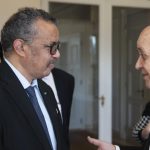
    Geneva: France’s Minister for Europe and Foreign Affairs, Mr Jean-Yves Le Drian, and Dr Tedros Adhanom Ghebreyesus,  Director-General of WHO today met at the Permanent Mission of France to the United Nations in Geneva to discuss the WHO Academy, which will be the world’s largest and most innovative lifelong learning platform in global health.

    The WHO Academy aims to reach millions of people worldwide, offering high-tech learning environments at a “hub” in Lyon with “spokes” in the six WHO regions. The Academy will provide learning opportunities for leaders, educators, researchers, health workers, WHO staff and the broader public, and will deliver high quality, multilingual learning, both online and in-person, alongside a cutting-edge simulation centre for health emergencies.

    The discussion today follows a Declaration of Intent signed by Emmanuel Macron, President of the French Republic and Dr Tedros on 11 June 2019, and a pledge by France in the amount of US$ 100 million (€ 90 million) to WHO to support the creation of the WHO Academy, which will be established as an internal division within WHO.

    “Technology and innovation in learning are creating exciting new opportunities to accelerate progress towards health for all in every country,” said Dr Tedros Adhanom Ghebreyesus, Director-General of WHO. “The WHO Academy will support millions of learners to maximize health impacts with the best evidence, adult learning approaches and state-of-the-art technologies.”

    By propelling and strengthening digital innovations and lifelong learning opportunities around the world, the WHO Academy will play an instrumental role towards achieving WHO’s triple billion goal by 2023 and the health Sustainable Development Goals: 1 billion more people will benefit from universal health coverage; 1 billion more will be better protected in health emergencies, and 1 billion more will enjoy improved health and wellbeing.

    The funding from France represents a commitment to accelerate the development of the WHO Academy, and confirms the engagement of France — a longstanding partner of WHO and a key actor in global health – and its strong support to the ambitions of 13th WHO General Programme of Work to ensure healthy lives and well-being for all ages. 


    France pledges US$100 million (€90 million) for WHO Academy
    Read More
    https://www.who.int/news-room/detail/24-02-2020-france-pledges-us100-million-for-who-academy

    Views: 0

  • Key dates for nursing and midwifery discussions in May 2020

    Key dates for nursing and midwifery discussions in May 2020

    WHO has declared 2020 as the International Year of the Nurse and the Midwife to mark the bicentenary of the birth of the founder of modern nursing, Florence Nightingale and to recognize the critical contribution both professions make to global health. May is a key moment to catalyse high-level dialogue and collaborative engagements for moving forward the findings of The State of the World’s Nursing Report, which will be launched on World Health Day, 7 April 2020, as part of the activities of the International Year of the Nurse and the Midwife.

    Key dates for May 2020

    Ninth WHO Global Forum for Government Chief Nursing and Midwifery Officers (GCNMOs) and the Eighth Triad Meeting, 13–15 May, Geneva– organized jointly by WHO, the International Confederation of Midwives and the International Council of Nurses. The meetings will be held at the Centre International de Conférence (CICG), immediately prior to the Seventy-third World Health Assembly. (by invitation only)

    Health for All, Film Festival, 16 May (PM), Geneva – special focus on nursing and midwifery film submission

    Walk the Talk, 17 May (AM), Geneva – special focus will be given to nurses and midwives in celebration of the International Year of the Nurse and Midwife. We encourage you to register at https://www.who.int/news-room/events/detail/2020/05/17/default-calendar/walk-the-talk-the-health-for-all-challenge

    World Health Assembly 17- 20 May, Geneva


    Key dates for nursing and midwifery discussions in May 2020
    Read More
    https://www.who.int/news-room/detail/20-02-2020-key-dates-for-nursing-and-midwifery-discussions-in-may-2020

    Views: 0

  • WHO Action framework to advance universal access to safe, effective and quality assured blood products 2020 -2023

    WHO Action framework to advance universal access to safe, effective and quality assured blood products 2020 -2023

    In response to calls for action, WHO has provided guidelines, physical standards, training and technical support to improve blood product quality, safety and availability in WHO regions and in countries. Despite these actions, progress in blood availability and safety under effective regulation has been slow in many parts of the world.

    For that reason, the WHO Action framework for blood products 2020-2023, proposes a renewed effort to scale up programme implementation to improve global adequacy of blood donation, and universal access to quality and safe blood and blood components for transfusion, and plasma derived medicinal products.

    The Action Framework provides strategic direction to WHO’s work for the years 2020-2023. It identifies six strategic objectives: appropriately structured, well-coordinated and sustainably resourced national blood systems; regulatory capacity to ensure the quality and safety of blood; functioning and efficiently managed blood services; effective implementation of patient blood management to optimize transfusion practices, effective surveillance, haemovigilance and pharmacovigilance, supported by comprehensive and accurate data collection systems; and partnerships, collaboration and information exchange to achieve key priorities and jointly address challenges and emerging threats at global, regional and national levels.

    The Action Framework will improve coordination and collaboration at all levels of WHO. The document will promote and strengthen new and existing partnerships, as areas for collaborative action are clearly identified. Moreover, it demonstrates the need for support to WHO (including sustainable funding) to coordinate the implementation of this ambitious plan. As a result, the Action Framework for blood products will allow WHO to more effectively carry out its mandate on blood, and to increase the impact of WHO activities to strengthen blood systems and blood regulation in countries and regions and eventually to ensure universal access to blood products worldwide.


    WHO Action framework to advance universal access to safe, effective and quality assured blood products 2020 -2023
    Read More
    https://www.who.int/news-room/detail/19-02-2020-who-action-framework-to-advance-universal-access-to-safe-effective-and-quality-assured-blood-products-2020–2023

    Views: 0

  • International Day of Women and Girls in Science

    International Day of Women and Girls in Science 1

    The theme of the 5th International Day of Women and Girls in Science, was on driving Investment in Equality in Science, Technology and Innovation in the Digitalization Era for Inclusive Green Growth with special focus on Agriculture, Technology and Digital Economy. The commemoration brought together stakeholders from high-level government officials, representatives of international organizations, foundations, private sector, civil society as well as women in science experts from around the world to explore how women in all fields of sciences can accelerate socio-economic sustainable development.


    Discussion focused on the interlinkages between gender inequality -specifically in science- digital and technological revolution, and agricultural sector for Sustainable Development. WUN Executive Director Dr Nata Menabde participated in the assembly and highlighted the key role of women and girls in science for health and emphasized on the obstacles women and girls encounter in various levels of health sector – from access to health services, to engagement in health workforce and research. She explained the systematic challenges where women are facing higher health costs than men due to their greater use of health care, as well as the need to extend coverage of health care that deals with the content of benefit packages, to ensure they include a greater range of services for girls and women of all ages. Dr Menabde also shared some conclusions from WHO’s work on nutrition, stressing that gender inequality means girls get less food, are more likely to get sick, and are less likely to be able to attend school, receive an education (including on science) and get a job. However, they are more likely to marry and get pregnant too young, be poorly nourished and have under-nourished babies. In conclusion, she mentioned that healthy women and girls are the cornerstone of healthy societies and proper nutrition is essential to empowering women and girls. Nutrition, through its effect on health and cognitive development, is also vital for academic performance and productivity to ensure healthy economies and socioeconomic development.


    Read More
    https://www.who.int/news-room/detail/11-02-2020-international-day-of-women-and-girls-in-science

    Views: 0

  • WHO Global Initiative for Childhood Cancer: progress on all fronts

    WHO Global Initiative for Childhood Cancer: progress on all fronts

     Peru shows the way forward and the courage of Ander Martinez

    “When Ander was diagnosed, I didn´t have the possibility to cover the cost of the treatment. It was very expensive, and I had nothing,” says Rosalina Tocto, 29 years mother of Ander Martínez Tocto. Ander had just been diagnosed with acute leukemia at the young age of 6 years. From the beginning, the odds were stacked against him. He and his family lived in a rural town, six hours from the nearest city. His parents did not have a formal job, placing the family under financial strain.

    Ander and his family were not alone in this situation. “In Peru, nearly 1800 children and adolescents are diagnosed with cancer every year; however, up to 70% will have a late stage, often metastatic due to delays in diagnosis,” says Dr. Juan García, medical chief of the Pediatric Department of in the National Institute of Neoplastic Diseases (INEN) in Lima, Peru. “Most of our patients come from outside Lima and the majority of parents do not have formal employment and therefore do not have any type of insurance.”

    Fortunately, Peru has made a strong commitment to Universal Health Coverage. In 2009, a law was passed to improve access to care by introducing a mandatory health insurance system and registering everyone living in extreme poverty under Seguro Integral de Salud (SIS), regardless of age or circumstance.  

    Dr. Reina Bustamante, Executive Director of the Division of Prevention and Control of Cancer of the MINSA says “UHC is an important step in public health particularly for those who lack public or private insurance like Ander. In this context, we are trying to follow WHO guidance to achieve UHC and ensure all individuals and communities receive the health services they need without suffering financial hardship.”

    In 2019, Peru was selected as a focus country for the WHO Global Initiative for Childhood Cancer as the first focus country in the Region. The Global Initiative aims to improve survival for all children with cancer to at least 60% by 2030 while reducing suffering, altogether with the potential to save an additional one million lives.

    Four main goals were formulated for the national pediatric cancer plan: (1) improve early diagnosis of childhood cancer, (2) decrease treatment abandonment, (3) implement a national pediatric cancer registry and (4) improve the quality of services in pediatric oncology units.

    Dr. Liliana Vasquez, pediatric oncologist who works as an external consultant for the Division of Prevention and Control of Cancer of MINSA said, “Ten working groups have been established to achieve the goals.”

    Dr. Vivian Perez, advisor of the Non-Communicable Diseases Office in PAHO-Peru added “the initial focus for the Initiative will be on six cancers selected as tracers for monitoring progress across the health system, alongside engagement of at least six focus countries with a record of strong political commitment and foundational efforts supporting children with cancer.”

    For Ander, his health care team, the commitments from the government of Peru and partners and Global Initiative have made it possible to be successfully treated and will now allow him to dream of a healthy future though better access to surveillance monitoring and psycho-oncological support aimed at childhood cancer survivors.

    Peru is showing what is possible for all countries. By concerted action and promoting universal health coverage, every child in the world can have access to high-quality care with the greatest likelihood of survival, and every family should be protected from financial hardship. We can do more together. 


    WHO Global Initiative for Childhood Cancer: progress on all fronts
    Read More
    https://www.who.int/news-room/detail/14-02-2020-who-global-initiative-for-childhood-cancer-progress-on-all-fronts

    Views: 0

  • Four countries in the African region license vaccine in milestone for Ebola prevention

    The Democratic Republic of the Congo (DRC), Burundi, Ghana and Zambia have licensed an Ebola vaccine, just 90 days after World Health Organization (WHO) prequalification. Registration of the vaccine is expected in additional countries in the coming weeks.

    The licensing of the vaccine means that the manufacturer can stockpile and widely distribute this vaccine to African countries at risk of Ebola virus disease outbreaks. Once licensed doses are available, use of the vaccine will not require clinical trial or other research protocols.

    “The approval of the Ebola vaccine by these countries is another milestone in the fight against this unforgiving disease,” said WHO Director-General Dr Tedros Adhanom Ghebreyesus. “Africa has rallied to cement hard-fought progress to keep its people safe from Ebola.”

    WHO accelerated the licensing and roll-out of the Ebola vaccine by certifying that it met the organization’s standards for quality, safety and efficacy in its fastest vaccine prequalification process ever, announced in November 2019.

    The speed with which this has been achieved has been made possible by a different approach, where national licensing procedures were done in parallel based on one single scientific review process. Usually, these process are done one by one, which can take years. The process was led by WHO with the participation of the African Vaccine Regulatory Forum (an African network of national regulatory authorities and ethics committees), the European Medicines Agency, and Merck.

    “The rapid approval of the Ebola vaccine by countries in the Africa Region helps ensure this critical prevention tool will be available when and where it is needed most,” said Dr Matshidiso Moeti, WHO Regional Director for Africa. “This kind of collaboration and innovation is a model for other health priorities.”

    The injectable Ebola vaccine, Ervebo, is manufactured by Merck (known as MSD outside the US and Canada). Preliminary study results have shown a 97.5% vaccine efficacy. Data also suggests that vaccinating people who are already infected reduces their chances of dying.

    In response to the ongoing Ebola outbreak in the DRC, over 290 000 people have been vaccinated under compassionate use protocols. Once licensed doses are available, use of the vaccine in DRC will no longer require these protocols

    Read More
    https://www.who.int/news-room/detail/14-02-2020-four-countries-in-the-african-region-license-vaccine-in-milestone-for-ebola-prevention

    Views: 0

  • World experts and funders set priorities for COVID-19 research

    World experts and funders set priorities for COVID-19 research

    Leading health experts from around the world have been meeting at the World Health Organization’s Geneva headquarters to assess the current level of knowledge about the new COVID-19 disease, identify gaps and work together to accelerate and fund priority research needed to help stop this outbreak and prepare for any future outbreaks.

    The 2-day forum was convened in line with the WHO R&D Blueprint – a strategy for developing drugs and vaccines before epidemics, and accelerating research and development while they are occurring.

    “This outbreak is a test of solidarity — political, financial and scientific. We need to come together to fight a common enemy that does not respect borders, ensure that we have the resources necessary to bring this outbreak to an end and bring our best science to the forefront to find shared answers to shared problems. Research is an integral part of the outbreak response,” said WHO Director-General Dr Tedros Adhanom Ghebreyesus. “I appreciate the positive response of the research community to join us at short notice and come up with concrete plans and commitment to work together.”

    The meeting, hosted in collaboration with GloPID-R (the Global Research Collaboration for Infectious Disease Preparedness) brought together major research funders and over 300 scientists and researchers from a large variety of disciplines. They discussed all aspects of the outbreak and ways to control it including:

    • the natural history of the virus, its transmission and diagnosis;
    • animal and environmental research on the origin of the virus, including management measures at the human-animal interface;
    • epidemiological studies;
    • clinical characterization and management of disease caused by the virus;
    • infection prevention and control, including best ways to protect health care workers;
    • research and development for candidate therapeutics and vaccines;
    • ethical considerations for research;
    • and integration of social sciences into the outbreak response.

    “This meeting allowed us to identify the urgent priorities for research. As a group of funders we will continue to mobilize, coordinate and align our funding to enable the research needed to tackle this crisis and stop the outbreak, in partnership with WHO,” said Professor Yazdan Yazdanpanah, chair of GloPID-R. “Equitable access – making sure we share data and reach those most in need,  in particular those in lower and middle-income countries, is fundamental to this work which must be guided by ethical considerations at all times.”  

    During the meeting, the more than 300 scientists and researchers participating both in person and virtually agreed on a set of global research priorities. They also outlined mechanisms for continuing scientific interactions and collaborations beyond the meeting which will be coordinated and facilitated by WHO. They worked with research funders to determine how necessary resources can be mobilized so that critical research can start immediately.

    The deliberations will form the basis of a research and innovation roadmap charting all the research needed and this will be used by researchers and funders to accelerate the research response.

    Note to editors

    GloPID-R is a global alliance of international research funding organizations investing in preparedness and response to epidemics.

    World experts and funders set priorities for COVID-19 research
    Read More
    https://www.who.int/news-room/detail/12-02-2020-world-experts-and-funders-set-priorities-for-covid-19-research

    Views: 0