Tag: World

  • Dracunculiasis eradication: intensifying surveillance amid continued zero human cases in Ethiopia and Mali

    Dracunculiasis eradication: intensifying surveillance amid continued zero human cases in Ethiopia and Mali

    A total of 54 human cases of dracunculiasis (guinea-worm disease) were reported to the World Health Organization (WHO) in 2019, with Chad reporting 48 out of the 54 cases.

    In Chad, Ethiopia, Mali and South Sudan, trained volunteers are supporting surveillance and detection of infections in domestic dogs and cats. Surveillance has been heightened, as evidenced by the increase in reports of rumoured human cases which in 2019 peaked at 108 207 out of which 106 678 were investigated within 24 hours.

    “We are working with the broader scientific community to understand the epidemiology of animal infections, mainly in dogs in Chad, where the highest number of human cases were reported in 2019,” said Dr Dieudonné Sankara, who leads WHO’s eradication and elimination team in the Department of Control of Neglected Tropical Diseases. “Interestingly, there have been no human cases in Ethiopia and Mali, and 4 human cases in South Sudan in 2019, compared with 10 in 2018.”

    In Mali, the number of animals infected with Dracunculus medinensis (the guinea-worm) has decreased from 20 animals in 2018 to 8 dogs and 1 cat in 2019. However, insecurity remains a challenge to freely accessing some endemic areas in Mali.

    Conversely, Chad reported 1935 infections in dogs and 46 in cats in 2019, an increase of 85% from 2018, and a 176% increase among humans.

    Angola reported only 1 human case in 2019. Community-based surveillance is being reinforced mainly in Cunene Province where a case was reported in 2018.

    In South Sudan, integrated surveillance activities have been carried out with the trachoma and onchocerciasis control programmes, in accordance with WHO’s recommendation that programmes collaborate, integrate and co-implement activities, whenever possible, to strengthen surveillance.

    In order to strengthen cross-border surveillance, WHO led a mission to Cameroon in November 2019 to investigate circumstances around an “imported” case in the country’s Far North Region. Discussions were held with the health authorities to establish active surveillance in all villages in the area, including training for application of temephos.[1]  

    Also, in 2019, and with the support of trained field workers, vector control was intensified to larvicide ponds and water sources in more than 400 villages, compared with 72 villages in 2018.

    In late 2019, WHO supported cross-border meetings with officials of national dracunculiasis eradication programmes from Mali, Burkina Faso and Côte d’Ivoire in West Africa; between Ethiopia and South Sudan in East Africa, and between Angola and Namibia in Southern Africa, to share experiences and plan joint surveillance activities across the borders to prevent transmission of the disease.

    The disease

    Dracunculiasis is a crippling parasitic disease caused by infection with D. medinensis, a long, thread-like worm. It is usually transmitted when people drink stagnant water contaminated with parasite-infected water fleas.

    WHO works with Member States and in partnership with The Carter Center and the United Nations Children’s Fund to support efforts to eradicate the disease. WHO provides technical guidance, works with national programmes to coordinate surveillance in dracunculiasis-free areas, and monitors and reports on the progress achieved.

    WHO is the only Organization mandated to certify countries as free of transmission of the disease following the recommendations of the International Commission for the Certification of Dracunculiasis Eradication.

    Since 1995, WHO has certified a total of 199 countries, territories and areas, including 187 Member States, as free of dracunculiasis transmission.

    [1] Temephos is a cyclopicide used to kill water fleas (cyclops) that carry the infective guinea-worm larvae.


    Dracunculiasis eradication: intensifying surveillance amid continued zero human cases in Ethiopia and Mali
    Read More
    https://www.who.int/news-room/detail/19-03-2020-dracunculiasis-eradication-intensifying-surveillance-amid-continued-zero-human-cases-in-ethiopia-and-mali

    Views: 0

  • Uber shares surge after citing signs of rebound from virus slump

    Uber shares surge after citing signs of rebound from virus slump

    Uber shares surged Thursday after the ridesharing giant suggested it is seeing the “beginnings of a recovery” in parts of the world following a brutal coronavirus-induced slump.

    Read More
    https://techxplore.com/news/2020-03-uber-surge-citing-rebound-virus.html

    Views: 0

  • World’s highest mammal discovered at the top of a Mars-like volcano

    World’s highest mammal discovered at the top of a Mars-like volcano

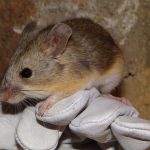
    The highest dwelling mammal – a mouse – has been discovered at 6700 metres above sea level, where conditions are so harsh they have been compared to Mars
    World’s highest mammal discovered at the top of a Mars-like volcano
    Read More
    https://www.newscientist.com/article/2237997-worlds-highest-mammal-discovered-at-the-top-of-a-mars-like-volcano/?utm_campaign=RSS%7CNSNS&utm_source=NSNS&utm_medium=RSS&utm_content=home

    Views: 0

  • WHO teams with partners to mitigate the potential impact of the COVID-19 pandemic in malaria-affected areas

    The rapid spread of COVID-19 is testing the resilience of robust health systems around the world. WHO and its partners are taking measures to mitigate the potential impact of sustained transmission of the coronavirus in malaria-endemic settings –
    particularly in sub-Saharan Africa, which shoulders more than 90% of the global malaria burden.

    To date, a small proportion of the global COVID-19 cases have been identified in malaria-affected countries. However, as of 17 March, 25 countries in the African Region had reported cases of COVID-19, and local transmission of the disease had been detected
    in 6 countries (Algeria, Cameroon, Kenya, Rwanda, Senegal, South Africa).

    “At this point, we still don’t know what the COVID-19 pandemic will look like in sub-Saharan Africa,” said Dr Pedro Alonso, Director of the WHO Global Malaria Programme. “But we do know that when public health emergencies have
    hit parts of Africa with weak health systems and high malaria transmission, the impact on malaria disease and death has been very severe.”

    The 2014-2016 Ebola outbreak in Guinea, Liberia and Sierra Leone, for example, undermined malaria control efforts and led to a massive increase in malaria-related illness and death in the 3 countries.

    Joint action 

    To support malaria-affected countries, WHO has identified the need for a set of inter-related actions among global partners: 

    • generating, using and disseminating accurate information; 
    • mitigating against health system disruptions; and 
    • ensuring the continuity of routine malaria-specific interventions while also providing, where needed, additional emergency measures, such as mass drug administration, in health systems significantly impacted by COVID-19. 

    The Organization convened partners on 17 March to discuss areas of collaboration, coordination and next steps.

    WHO has begun monitoring the evolving geographic location of COVID-19 cases to understand the extent to which the coronavirus and malaria affect the same target groups. This information will reveal who is likely to be at greatest risk, where and when,
    and thus inform the need for malaria-specific interventions to save lives.

    In parallel, WHO is working across the 3 levels of the organization to ensure that any advice intended to curb coronavirus transmission and to guide COVID-19 disease management is appropriate in malaria-affected settings.  

    In recent days, there have been reports of disruptions, as a result of COVID-19, in the production and global supply chains of essential malaria commodities, such as the long-lasting insecticidal nets, diagnostic testing and antimalarial medicines. Coordinated
    efforts are required to ensure the availability of key malaria control tools – particularly in countries with a high burden of the disease – and that efforts to limit transmission of COVID-19 do not compromise access to malaria prevention,
    diagnosis and treatment services. 

    Malaria-affected countries may also experience disruptions in health systems in the coming months. A marked increase in febrile patients seeking treatment for COVID-19 at health facilities, for example, would present a significant challenge for a health
    workforce that may itself be depleted by the disease.

    Policy guidance

    WHO is developing guidance for national malaria control programmes and implementing partners to prepare them for the challenges they may face as result of COVID-19.  Among other areas, the guidance will address the mitigation of stockouts of
    malaria medicines and commodities; the use of preventive malaria therapy for health workers; the deployment of emergency measures in some settings; and the generation of information relating to the geographic distribution and populations affected
    by COVID-19 in malaria-endemic settings.  

    Restrictions around grouping people together – for training, social and behavior change communication activities, fixed-site distribution and clinical care – as well as the restrictions around movement of people in the country, will require
    significant adaptations in order to deliver quality interventions and care.

    All people living in malaria-affected areas are advised to follow same precautions as the general population, including: frequent hand-washing, respiratory hygiene, social distancing, seeking prompt medical care if symptoms arise (cough, fever,
    difficulty breathing), and other WHO-recommended actions. 

    WHO stands ready to work with countries and other stakeholders to mitigate the negative impact of the coronavirus on malaria responses worldwide and, where possible, contribute towards a successful COVID-19 response.  

    About COVID-19

    COVID-19 is the infectious disease caused by the most recently discovered coronavirus. This new virus and disease were unknown before the outbreak began in Wuhan, China, in December 2019. Essential information on the COVID-19 pandemic can be found in
    a dedicated WHO site.

    About malaria

    Malaria is a preventable and treatable disease caused by parasites that are transmitted to people through the bites of infected female Anopheles mosquitoes. In 2018, there were an estimated 228 million cases of malaria worldwide and
    405 000 malaria-related deaths. For more on malaria, visit: www.who.int/malaria

    Read More
    https://www.who.int/news-room/detail/18-03-2020-who-teams-with-partners-to-mitigate-the-potential-impact-of-the-covid-19-pandemic-in-malaria-affected-areas

    Views: 0

  • Optical character recognition for graffiti

    Optical character recognition for graffiti

    Researchers in China have recognised that optical character recognition (OCR) has matured and can identify and extract information from documents that use standard writing styles. However, the world over people have very different ways of writing that might remain obscure to OCR. Moreover, people scrawl and gesture on tablets and phones and other devices in ways that are not even close to their normal handwriting and so are likely to be illegible to a computer.

    Read More
    https://techxplore.com/news/2020-03-optical-character-recognition-graffiti.html

    Views: 0

  • Gov’t cancels ‘Visit Malaysia 2020’ campaign over Covid-19

    Gov’t cancels ‘Visit Malaysia 2020’ campaign over Covid-19

    Gov’t cancels ‘Visit Malaysia 2020’ campaign over Covid-19 1

    KUALA LUMPUR: The government has cancelled the Visit Malaysia 2020 campaign due to the Covid-19 situation, Tourism, Arts and Culture Minister Datuk Seri Nancy Shukri announced tonight.

    She said Covid-19 has had a detrimental effect on the tourism sector in Malaysia in particular and the world in general.

    Due to the movement control order from March 18 to 31 to check the spread of Covid-19, the ministry had to freeze many tourism-related services, she said in a statement.

    The services include all counter and online services at the Tourism Licensing Division and ministry offices in the states, such as licensing of tour companies, tour guides, tourism accommodation, spas and foot reflexology centres, she added.

    Nancy said in line with the Movement Control Order, all tourist accommodations are allowed to operate at a minimum level.

    “All guests at the accommodation premises must remain in their respective rooms during the quarantine period and order their meals through room service.

    “Check-ins at tourist accommodation will also be permitted, but on a small and limited scale,” she said.

    However, new domestic tourists wanted to check-in at the premises would not be allowed, she added.

    VM2020 was launched on Dec 31, targeting 30 million visitor arrivals and RM100 billion tourist receipts. – Bernama

    Gov’t cancels ‘Visit Malaysia 2020’ campaign over Covid-19
    Read More
    https://www.thesundaily.my/local/gov-t-cancels-visit-malaysia-2020-campaign-over-covid-19-LA2147278

    Views: 0

  • Six Ways to get Up, Close and Personal with Every Customer

    There has been a marked change in the attitude of customers over the past few years with regard to privacy concerns. Customers are slowly getting accustomed to seeing ads that speak to them directly and encountering sales experiences that boast of personalization. Personalized Marketing is the new mantra in the world of sales professionals and marketers, who aim at targeting customers using the data and information collected on the customer.

    Read More
    http://www.associationofmarketing.org/articles/view.php?article_id=14499

    Views: 0

  • Facebook Grafts Personal News Feed Design to Branded Pages

    It was only last week that the world’s favorite social media site, Facebook introduced a leaner and more simpler news feed on users’ personal pages. The idea may have caught on well with Facebook users because the company has now copied that design to branded pages.

    Read More
    http://www.associationofmarketing.org/articles/view.php?article_id=14486

    Views: 0

  • Doom Eternal review: A welcome adrenaline-inducing distraction

    Doom Eternal review: A welcome adrenaline-inducing distraction

    Doom Eternal does contain gratuitous violence, but the evidence suggests violence in video games doesn’t affect people’s behaviour in the real world, says Jacob Aron
    Doom Eternal review: A welcome adrenaline-inducing distraction
    Read More
    https://www.newscientist.com/article/2237470-doom-eternal-review-a-welcome-adrenaline-inducing-distraction/?utm_campaign=RSS%7CNSNS&utm_source=NSNS&utm_medium=RSS&utm_content=home

    Views: 0

  • Google +Post Ads to Maximize Brand Content

    Google +Post ads help you to connect with the world and create your own brand. You can use +Post ads to advance the engagement and content you have already constructed on Google + to promote around the web. A bigger audience will be driven to the posts, videos and even Hangouts. With Google +Post ads, your business can only grow.

    Read More
    http://www.associationofmarketing.org/articles/view.php?article_id=14579

    Views: 0