Tag: Working

  • A Joint Statement on Tourism and COVID-19 – UNWTO and WHO Call for Responsibility and Coordination

    A Joint Statement on Tourism and COVID-19 – UNWTO and WHO Call for Responsibility and Coordination

    As the current outbreak of the Coronavirus Disease (COVID-19) continues to develop, the World Health Organization (WHO) and the World Tourism Organization (UNWTO) are committed to working together in guiding the travel and tourism sectors’ response to COVID-19.

    On 30 January 2020, the Director-General of the World Health Organization (WHO) declared the outbreak of COVID-19 to be a Public Health Emergency of International Concern and issued a set of Temporary Recommendations. WHO did not recommend any travel or trade restriction based on the current information available. WHO is working closely with global experts, governments and partners to rapidly expand scientific knowledge on this new virus, to track the spread and virulence of the virus, and to provide advice to countries and the global community on measures to protect health and prevent the spread of this outbreak.

    Cooperation is key

    The tourism sector is fully committed to putting people and their well-being first. International cooperation is vital for ensuring the sector can effectively contribute to the containment of COVID-19. UNWTO and WHO are working in close consultation and with other partners to assist States in ensuring that health measures be implemented in ways that minimize unnecessary interference with international traffic and trade.

    Tourism’s response needs to be measured and consistent, proportionate to the public health threat and based on local risk assessment, involving every part of the tourism value chain – public bodies, private companies and tourists, in line with WHO’s overall guidance and recommendations.

    UNWTO and WHO stand ready to work closely with all those communities and countries affected by the current health emergency, to build for a better and more resilient future. Travel restrictions going beyond these may cause unnecessary interference with international traffic, including negative repercussions on the tourism sector.

    At this challenging time, UNWTO and WHO join the international community in standing in solidarity with affected countries.

    A Joint Statement on Tourism and COVID-19 - UNWTO and WHO Call for Responsibility and Coordination
    Read More
    https://www.who.int/news-room/detail/27-02-2020-a-joint-statement-on-tourism-and-covid-19—unwto-and-who-call-for-responsibility-and-coordination

    Views: 0

  • The economic cost of female genital mutilation

    The economic cost of female genital mutilation

    An interactive data tool launched by WHO reveals for the first time the current and future financial cost of health care for women living with conditions caused by female genital mutilation (FGM).

    The total costs amount to USD 1.4 billion annually.

    fgm-cost-thumbnail

    The FGM Cost Calculator is being launched on this year’s International Day of Zero Tolerance for FGM. This new tool shows that if FGM were abandoned now the associated savings
    in health costs would be more than 60% by 2050. This data, available for 27 of the 30 countries where FGM is practiced, will strengthen the economic argument of community activists, policy makers, programme planners and donors working to end this
    human rights violation.

    Q&As on the FGM Cost Calculator
    Access the FGM Cost Calculator

    A human rights violation with economic costs

    FGM includes procedures that intentionally alter or cause injury to the female genital organs for non-medical reasons. More than 200 million girls and women alive today have been cut in 30 countries in Africa, the Middle East and Asia where FGM is concentrated.
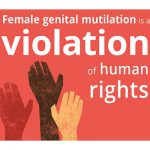
    [1] An extreme form of gender discrimination, it is recognized internationally as a violation of the human rights of girls and women: including the right to health, security and physical integrity and the right to be free from torture and cruel, inhuman
    or degrading treatment.

    FGM has no health benefits and causes only harm. Women and girls who are subjected to FGM are at risk of both short- and long-term negative health consequences – including for their physical, sexual, mental, and social well-being.

    The direct financial cost of treating the negative health complications caused by FGM can span generations, starting as early as childbirth. This puts a significant economic burden on health systems and national budgets, especially in countries with rates
    of FGM greater than 10%.

    Until now, there have been limited data on the financial costs associated with FGM, making it hard to demonstrate the cost-effectiveness of programmes and policies that can prevent FGM by 2030 – a global priority in the Sustainable Development Agenda.
    The new WHO Cost Calculator now provides an economic argument which can be used by those advocating for an end to FGM.

    Calculating health care costs of FGM

    Users of the new FGM Cost Calculator can choose a country and identify current costs of treating health conditions caused by FGM. Since the tool is interactive, it produces bespoke graphs showing the potential amount of money saved if FGM is prevented
    by a selected percentage.

    If no action is taken to prevent FGM, it is estimated that related health costs will soar by 50% by 2050, as populations grow and as more girls undergo the procedure.

    How it works

    The FGM Cost Calculator combines data on health risk associated with FGM, health costs and national FGM prevalence to analyze the economic impact on national health services of treating the consequences of these harmful practices.

    Health risk data were taken from a WHO database created for this analysis, pooling all available information from systematic reviews of health consequences of FGM. The following categories were used, each with a biological link to FGM: gynaecological,
    obstetric, urological, mental and sexual, as well as the immediate health complications that can result following the cutting.

    To be included in the calculator, a health condition needed to show evidence of increased risk when comparing women with and without FGM. It also needed to have a treatment which could be implemented and costed in the health sector.

    Health costs were calculated from the WHO One Health Tool and other data. The financial burden of treating selected health conditions was calculated at a national level.

    A strong case for investment in preventing FGM

    Rates of FGM have declined over the past 30 years, but not fast enough to keep up with population growth. If trends continue, the number of girls and women undergoing FGM will rise significantly in the next 15 years, in turn raising national health care
    costs of caring for them.

    Additional resources are urgently needed to scale up interventions that can prevent FGM in the future and reduce health complications.

    By providing quantifiable numbers on the cost of treating health conditions directly linked to FGM, for the first time, the FGM Cost Calculator can be a crucial tool in building an investment case for a future where no girl or woman is cut.


    [1] Female Genital Mutilation/Cutting: A Global Concern, UNICEF, New York, 2016
    The economic cost of female genital mutilation
    Read More
    https://www.who.int/news-room/detail/06-02-2020-economic-cost-of-female-genital-mutilation

    Views: 0

  • WHO Global Initiative for Childhood Cancer: progress on all fronts

    WHO Global Initiative for Childhood Cancer: progress on all fronts

     Peru shows the way forward and the courage of Ander Martinez

    “When Ander was diagnosed, I didn´t have the possibility to cover the cost of the treatment. It was very expensive, and I had nothing,” says Rosalina Tocto, 29 years mother of Ander Martínez Tocto. Ander had just been diagnosed with acute leukemia at the young age of 6 years. From the beginning, the odds were stacked against him. He and his family lived in a rural town, six hours from the nearest city. His parents did not have a formal job, placing the family under financial strain.

    Ander and his family were not alone in this situation. “In Peru, nearly 1800 children and adolescents are diagnosed with cancer every year; however, up to 70% will have a late stage, often metastatic due to delays in diagnosis,” says Dr. Juan García, medical chief of the Pediatric Department of in the National Institute of Neoplastic Diseases (INEN) in Lima, Peru. “Most of our patients come from outside Lima and the majority of parents do not have formal employment and therefore do not have any type of insurance.”

    Fortunately, Peru has made a strong commitment to Universal Health Coverage. In 2009, a law was passed to improve access to care by introducing a mandatory health insurance system and registering everyone living in extreme poverty under Seguro Integral de Salud (SIS), regardless of age or circumstance.  

    Dr. Reina Bustamante, Executive Director of the Division of Prevention and Control of Cancer of the MINSA says “UHC is an important step in public health particularly for those who lack public or private insurance like Ander. In this context, we are trying to follow WHO guidance to achieve UHC and ensure all individuals and communities receive the health services they need without suffering financial hardship.”

    In 2019, Peru was selected as a focus country for the WHO Global Initiative for Childhood Cancer as the first focus country in the Region. The Global Initiative aims to improve survival for all children with cancer to at least 60% by 2030 while reducing suffering, altogether with the potential to save an additional one million lives.

    Four main goals were formulated for the national pediatric cancer plan: (1) improve early diagnosis of childhood cancer, (2) decrease treatment abandonment, (3) implement a national pediatric cancer registry and (4) improve the quality of services in pediatric oncology units.

    Dr. Liliana Vasquez, pediatric oncologist who works as an external consultant for the Division of Prevention and Control of Cancer of MINSA said, “Ten working groups have been established to achieve the goals.”

    Dr. Vivian Perez, advisor of the Non-Communicable Diseases Office in PAHO-Peru added “the initial focus for the Initiative will be on six cancers selected as tracers for monitoring progress across the health system, alongside engagement of at least six focus countries with a record of strong political commitment and foundational efforts supporting children with cancer.”

    For Ander, his health care team, the commitments from the government of Peru and partners and Global Initiative have made it possible to be successfully treated and will now allow him to dream of a healthy future though better access to surveillance monitoring and psycho-oncological support aimed at childhood cancer survivors.

    Peru is showing what is possible for all countries. By concerted action and promoting universal health coverage, every child in the world can have access to high-quality care with the greatest likelihood of survival, and every family should be protected from financial hardship. We can do more together. 


    WHO Global Initiative for Childhood Cancer: progress on all fronts
    Read More
    https://www.who.int/news-room/detail/14-02-2020-who-global-initiative-for-childhood-cancer-progress-on-all-fronts

    Views: 0

  • WHO and FIND formalize strategic collaboration to drive universal access to essential diagnostics

    Geneva, Switzerland – 10 February 2020 – The World Health Organization (WHO) and the Foundation for Innovative New Diagnostics (FIND) announced today that a memorandum of understanding has been signed by the two organizations to formalize a strategic collaboration that will strengthen diagnosis in resource-poor countries by closing major diagnostic gaps at country level and bolstering disease surveillance that will inform public health initiatives and enhance outbreak preparedness and response.

    “This collaboration is an inspiring development that will take us a long way towards ensuring access to diagnostics to all who need them,” said Dr Tedros Adhanom Ghebreyesus, Director-General of the World Health Organization. “Global health challenges such as the ongoing novel coronavirus (2019-nCoV) outbreak demonstrates that without these essential elements of health systems, we cannot hope to promote health, keep the world safe, and serve the vulnerable. I look forward to working closely with FIND to determine what countries need and to forge a path to deliver these innovations so that no one is left behind.”

    Diagnosis is a driver of patient, financial and health systems impact, and a critical enabler of universal health coverage, but it is also the weakest link in the care cascade. This is especially true in primary healthcare settings in low- and middle-income countries. A unique and unprecedented opportunity exists to expand the role and impact of diagnostics to fully realize their potential to address major health security threats and evolving disease burdens through technological and digital advances.

    FIND has been an active partner with WHO since 2008 and a WHO Collaborating Centre since 2014, acting in the areas of laboratory strengthening and diagnostic technology evaluation. This expanded collaboration will put in place the building blocks necessary to enable transformative change in a move toward a country-led diagnostics alliance. Initial workstreams will focus on demand-driven access to essential diagnostics and the development of national Essential Diagnostics Lists, alongside collection of data that assist the scale up of diagnostics to support low- and middle-income countries on their paths to universal health coverage.

    “Each and every person has the right to a quality, timely diagnosis,” said Catharina Boehme, CEO of FIND. “Comprehensive diagnostic services underpin functional and efficient health systems not only to manage day-to-day healthcare needs, but also to ensure new disease outbreaks can be spotted and contained quickly. Working closely with WHO as part of a country-led alliance, we will strive to ensure that low- and middle-income countries have what they need to develop their own comprehensive, data-driven diagnostic strategies that enable universal health coverage and empower disease surveillance. Our ambition is that all patients, providers and decision-makers have access to the diagnostic solutions needed for optimal health outcomes.”

    The strategic collaboration agreement will initially run for a period of 5 years, until 2025.

    #  #  #

    About FIND

    FIND is a global non-profit organization that drives innovation in the development and delivery of diagnostics to combat major diseases affecting the world’s poorest populations. Our work bridges R&D to access, overcoming scientific barriers to technology development; generating evidence for regulators and policy-makers; addressing market failures; and enabling accelerated uptake and access to diagnostics in low- and middle-income countries (LMICs). Since 2003, we have been instrumental in the development of 24 new diagnostic tools used in 150 LMICs. Over 50 million FIND-supported products have been provided to our target markets since the start of 2015. A WHO Collaborating Centre, we work with more than 200 academic, industry, governmental, and civil society partners worldwide, on over 70 active projects that cross six priority disease areas. FIND is committed to a future in which diagnostics underpin treatment decisions and provide the foundation for disease surveillance, control and prevention. For more information, please visit www.finddx.org


    About WHO

    The World Health Organization is the directing and coordinating authority for health within the United Nations system. It is responsible for providing leadership on global health matters, shaping the health research agenda, setting norms and standards, articulating evidence-based policy options, providing technical support to countries and monitoring and assessing health trends. WHO is committed to the enjoyment of the highest attainable standard of health as one of the fundamental rights of every human being without distinction of race, religion, political belief, economic or social condition. WHO’s current global programme of work sets out three interconnected strategic priorities: ensuring healthy lives and well-being for all at all ages; achieving universal health coverage; and addressing health emergencies and promoting healthier populations. These priorities are linked to three ambitious targets, the “triple billion”: one billion more people to benefit from universal health coverage; one billion more people better protected from health emergencies; and one billion more people enjoying better health and well-being.


    Read More
    https://www.who.int/news-room/detail/10-02-2020-who-and-find-formalize-strategic-collaboration-to-drive-universal-access-to-essential-diagnostics

    Views: 0

  • Female Genital Mutilation Hurts Women and Economies

    Female Genital Mutilation Hurts Women and Economies

    Female genital mutilation (FGM) exacts a crippling economic as well as human cost, according to World Health Organization (WHO).

    “FGM is not only a catastrophic abuse of human rights that significantly harms the physical and mental health of millions of girls and women; it is also a drain on a country’s vital economic resources,” said Dr Ian Askew, Director of WHO’s Department of Sexual and Reproductive Health and Research. “More investment is urgently needed to stop FGM and end the suffering it inflicts.”

    New modelling reveals that the total costs of treating the health impacts of FGM would amount to USD 1.4 billion globally per year, if all resulting medical needs were addressed. For individual countries, these costs would near 10% of their entire yearly expenditure on health on average; in some countries, this figure rises to as much as 30%.

    The interactive modelling tool that generated these data was launched on the International Day of Zero Tolerance for Female Genital Mutilation.

    Severe physical and mental health impacts for women and girls

    Women and girls living with FGM face serious risks to their health and well-being. These include immediate consequences after being cut, such as infections, bleeding or psychological trauma, as well as chronic health conditions that can occur throughout life.

    Women who have undergone the procedure are more likely to experience life-threatening complications during childbirth. They may face mental health disorders or suffer chronic infections. They may also have pain or problems when they menstruate, urinate or have sexual intercourse. 

    All of these conditions warrant much-needed medical attention and care.

    “High healthcare costs for countries mount because of the tragic personal impacts on women and girls. Governments have a moral responsibility to help end this harmful practice,” says Dr Prosper Tumusiime, Acting Director for Universal Health Coverage and the Life Course in the African Regional Office of WHO. “FGM hurts girls, imposes lifelong health risks on the women they become, and strains the healthcare systems that need to treat them.”

    Preventing FGM brings major benefits for women, girls, communities and economies

    Using data from 27 high-prevalence countries, the Cost Calculator demonstrates clear economic benefits from ending FGM. If it were abandoned now, it shows that the associated savings in health costs would be more than 60% by 2050.

    In contrast, if no action is taken, it is estimated that these costs will soar by 50% over the same time period, as populations grow and as more girls undergo the procedure.

    Since 1997, great efforts have been made to end FGM, through work within communities, research, and changes in legislation and policy. 26 countries in Africa and the Middle East now explicitly legislate against FGM, as well as 33 other countries with migrant populations from FGM-practicing countries.

    WHO is also working with countries to raise awareness of the harmful impacts of the practice among their health workers, and to engage them in prevention efforts.

    “Many countries and communities are showing that abandoning female genital mutilation is possible,” states Dr Christina Pallitto, scientist at WHO. “If countries invest to end female genital mutilation, they can prevent their girls from undergoing this harmful practice and promote the health, rights and well-being of women and girls.”

    Female genital mutilation is internationally recognized as a human rights violation. It has no medical benefits and causes only harm. WHO’s position is that FGM must never be carried out.

    Further information

    The FGM Cost Calculator will be available here, as of 00:30 CET 6 February 2020:
    www.who.int/news-room/detail/06-02-2020-economic-cost-of-female-genital-mutilation

    More on FGM

    Notes for Editors

    About FGM

    FGM includes procedures that intentionally alter or cause injury to the female genital organs for non-medical reasons. More than 200 million girls and women alive today are estimated to have undergone the practice across 30 countries in Africa, the Middle East and Asia where FGM is concentrated.

    FGM is mostly carried out on young girls between infancy and 15 years of age.

    About the FGM Cost Calculator

    The WHO FGM Cost Calculator shows the economic cost of treating the health complications caused by FGM across 27 high-prevalence countries. These costs were calculated using the WHO One Health tool and other available scientific evidence.

    Users of the tool can calculate costs by country in a ‘business as usual’ scenario; a scenario of partial abandonment of FGM, and full abandonment of FGM over a 30-year period. In addition, the distribution of costs by different types of health complications is presented by country.

    The tool does not consider other indirect costs that hit families and communities, or the socio-economic impacts of the practice, which would be significantly higher still.

    The 27 countries modelled include Benin, Burkina Faso, Central African Republic, Còte d’Ivoire, Cameroon, Chad, Djibouti, Egypt, Eritrea, Ethiopia, Ghana, Guinea, Gambia, Guinea-Bissau, Iraq, Kenya, Mali, Mauritania, Niger, Nigeria, Soudan, Senegal, Sierra Leone, Somalia, Togo, United Republic of Tanzania, Yemen.

    Female Genital Mutilation Hurts Women and Economies
    Read More
    https://www.who.int/news-room/detail/06-02-2020-female-genital-mutilation-hurts-women-and-economies

    Views: 0

  • New patented invention stabilizes, rotates satellites

    New patented invention stabilizes, rotates satellites

    Many satellites are in space to take photos. But a vibrating satellite, like a camera in shaky hands, can’t get a sharp image. Pointing it at a precise location to take a photo or perform another task, is another important function that requires accuracy. Vedant, an aerospace engineering doctoral student at the University of Illinois at Urbana-Champaign was working on a way to eliminate vibrations on a satellite when he discovered his invention could also rotate the satellite.

    Views: 0

  • Intercepting enemy unmanned aircraft systems midflight

    Intercepting enemy unmanned aircraft systems midflight

    Sandia National Laboratories robotics experts are working on a way to intercept enemy unmanned aircraft systems midflight. They successfully tested their concept indoors with a swarm of four unmanned aircraft systems that flew in unison, each carrying one corner of a net. Acting as a team, they intercepted the flying target, trapped it in air like an insect caught in a web and safely lowered it to the ground.

    Views: 0

  • Sustainable light sources: LEDs from bacterial production

    Sustainable light sources: LEDs from bacterial production

    In the FET Open project ENABLED, TU Graz protein designer Gustav Oberdorfer is working together with researchers from Spain and Italy on environmentally friendly and inexpensive light-emitting diodes.

    Views: 0

  • Who Will Become Wealthy in the Information Age?

    [ad_1]

    As you know, we’re now well and truly in the
    Information Age. It began about 10 years ago. In fact,
    many economists say it began in 1989, with the Fall of
    the Berlin Wall (and the start of the World Wide Web).

    To understand who will become wealthy in the
    Information Age, first we need to understand how the
    Information Age differs from the Industrial Age (born
    about 1860, died about 1989).

    In fact, let’s get a complete overview and go back to
    the Agrarian Age.

    In the Agrarian Age, society was basically divided
    into two classes: the landowners and the people who
    worked on the land (the serfs). If you were a serf,
    there wasn’t much you could do about it:
    land-ownership passed down through families and you
    were stuck with the status you were born into.

    When the Industrial Age arrived, everything changed:
    it was no longer agriculture that generated most of
    the wealth, but manufacturing. Suddenly, land was no
    longer the key to wealth. A factory occupied far less
    land than a sheep farm or a wheat farm.

    With the Industrial Age came a new kind of wealthy
    person: the self-made businessman. Wealth no longer
    depended on land-ownership and the family you were
    born into. Business acumen and factories were creating
    a new class of wealthy person. But it still required
    enormous capital to build a factory and start a
    business.

    Then came the World Wide Web (in about 1989) and
    globalization. Suddenly, everything changed again.

    Factories (or real estate) were no longer necessary to
    run a business. Anyone with a website could start a
    business. The barriers to wealth that existed in the
    Agrarian Age and the Industrial Age were completely
    gone. People who could never have dreamed of owning
    their own business were making millions from their
    kitchen table.

    Of course, the Information Revolution didn’t begin
    in 1989.

    It began in 1444 when Gutenberg invented the printing
    press in Mainz, Germany.

    But the printing press (newspapers, magazines,
    paperbacks) belonged to the Industrial Age, not the
    Information Age.

    The printing press is a ‘one-to-many’ technology. The
    Internet is a ‘many-to-many’ technology. And that was
    what changed in 1989.

    The Industrial Age was about centralization and
    control. The Information Age is about
    de-centralization and no control. No government and no
    media magnate controls the Internet. This is the
    crucial thing to understand about the Information Age.

    As we moved from the Agrarian Age through the
    Industrial Age to the Information Age, there’s been a
    steady collapse of the barriers that kept one section of
    society wealthy and the other section poor.

    In the Information Age, literally anyone can become
    wealthy.

    So now that we have a clearer picture of how the
    Information Age differs from the Industrial Age, let’s
    ask that question again: ‘Who will become wealthy in
    the Information Age?’:

    (1) People Who are Self-Taught

    To explain this better, let’s go back to the Agrarian
    Age and the Industrial Age, and the Transmission of
    Skills.

    In the Agrarian Age, skills were passed on from father
    to son. If you wanted to learn how to be a blacksmith
    you had to be a blacksmith’s son. If you wanted to
    learn to be a stone-mason, you had to be the son of a
    stone-mason.

    With the coming of the Industrial Age, all this
    changed. You could go to University and learn whatever
    skills you wanted. Knowledge was freely available.

    But in the Information Age, the Transmission of Skills
    is changing once again.

    The skills necessary to succeed in the Information Age
    are not being learnt from our parents (as in the
    Agrarian Age), nor are they being learnt in schools
    and colleges (as in the Industrial Age). Children are
    teaching their parents computer skills. And many of
    the entrepreneurs who start hi-tech Internet companies
    have never been to college.

    The millionaires (and billionaires) of tomorrow
    probably won’t have a college education. They will be
    high-school drop-outs, self-taught people.

    (2) People with New Ideas.

    Again, it’s the people who are able to think outside
    of the existing structures who will become wealthy in
    the Information Age. Often, it’s just a Simple Idea
    that launches people to success in the Information
    Age.

    Take Sabhir Bhatia, for example – the man who invented
    Hotmail. Bhatia was a computer engineer working in
    Silicon Valley. He had no previous business
    experience, whatsoever.

    But one day, while he was driving back from work, a
    friend called him on his cell phone and said that he
    had an idea: What about starting a free, web-based
    email service? Bhatia knew this was the idea he’d been
    waiting for. He told his friend to hang up immediately
    and ring him at home on a secure line.

    Three years later he sold Hotmail to Microsoft for
    $400 million.

    (3) Writers

    The third group who will become wealthy in the
    Information Age are Writers.

    In the Industrial Age, Writers depended on large
    publishing Houses to get published (remember that the
    printing press is an Industrial Age technology – it is
    centralized and controlled). And the Publishing Houses
    took the lion’s share of the profits.

    In the Information Age, Writers are doing their own
    publishing – and keeping most of the profits
    themselves. Indeed, Writers are flourishing on the
    Web – mainly through eBooks and Ezine Articles.
    But even if you don’t write eBooks or Ezine Articles,
    if you own a website, you are a Writer.

    Why?

    Because the Internet is basically a written medium. It
    favors writers, people who are able to communicate
    effectively through the written word. Remember, it’s
    not the graphics on your website that sell, it’s the
    words you use.

    In the Information Age, we’re all Writers!

    [ad_2]

    Source by

    Views: 0