Tag: Water

  • Dracunculiasis eradication: intensifying surveillance amid continued zero human cases in Ethiopia and Mali

    Dracunculiasis eradication: intensifying surveillance amid continued zero human cases in Ethiopia and Mali

    A total of 54 human cases of dracunculiasis (guinea-worm disease) were reported to the World Health Organization (WHO) in 2019, with Chad reporting 48 out of the 54 cases.

    In Chad, Ethiopia, Mali and South Sudan, trained volunteers are supporting surveillance and detection of infections in domestic dogs and cats. Surveillance has been heightened, as evidenced by the increase in reports of rumoured human cases which in 2019 peaked at 108 207 out of which 106 678 were investigated within 24 hours.

    “We are working with the broader scientific community to understand the epidemiology of animal infections, mainly in dogs in Chad, where the highest number of human cases were reported in 2019,” said Dr Dieudonné Sankara, who leads WHO’s eradication and elimination team in the Department of Control of Neglected Tropical Diseases. “Interestingly, there have been no human cases in Ethiopia and Mali, and 4 human cases in South Sudan in 2019, compared with 10 in 2018.”

    In Mali, the number of animals infected with Dracunculus medinensis (the guinea-worm) has decreased from 20 animals in 2018 to 8 dogs and 1 cat in 2019. However, insecurity remains a challenge to freely accessing some endemic areas in Mali.

    Conversely, Chad reported 1935 infections in dogs and 46 in cats in 2019, an increase of 85% from 2018, and a 176% increase among humans.

    Angola reported only 1 human case in 2019. Community-based surveillance is being reinforced mainly in Cunene Province where a case was reported in 2018.

    In South Sudan, integrated surveillance activities have been carried out with the trachoma and onchocerciasis control programmes, in accordance with WHO’s recommendation that programmes collaborate, integrate and co-implement activities, whenever possible, to strengthen surveillance.

    In order to strengthen cross-border surveillance, WHO led a mission to Cameroon in November 2019 to investigate circumstances around an “imported” case in the country’s Far North Region. Discussions were held with the health authorities to establish active surveillance in all villages in the area, including training for application of temephos.[1]  

    Also, in 2019, and with the support of trained field workers, vector control was intensified to larvicide ponds and water sources in more than 400 villages, compared with 72 villages in 2018.

    In late 2019, WHO supported cross-border meetings with officials of national dracunculiasis eradication programmes from Mali, Burkina Faso and Côte d’Ivoire in West Africa; between Ethiopia and South Sudan in East Africa, and between Angola and Namibia in Southern Africa, to share experiences and plan joint surveillance activities across the borders to prevent transmission of the disease.

    The disease

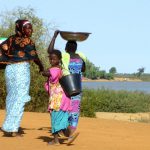
    Dracunculiasis is a crippling parasitic disease caused by infection with D. medinensis, a long, thread-like worm. It is usually transmitted when people drink stagnant water contaminated with parasite-infected water fleas.

    WHO works with Member States and in partnership with The Carter Center and the United Nations Children’s Fund to support efforts to eradicate the disease. WHO provides technical guidance, works with national programmes to coordinate surveillance in dracunculiasis-free areas, and monitors and reports on the progress achieved.

    WHO is the only Organization mandated to certify countries as free of transmission of the disease following the recommendations of the International Commission for the Certification of Dracunculiasis Eradication.

    Since 1995, WHO has certified a total of 199 countries, territories and areas, including 187 Member States, as free of dracunculiasis transmission.

    [1] Temephos is a cyclopicide used to kill water fleas (cyclops) that carry the infective guinea-worm larvae.


    Dracunculiasis eradication: intensifying surveillance amid continued zero human cases in Ethiopia and Mali
    Read More
    https://www.who.int/news-room/detail/19-03-2020-dracunculiasis-eradication-intensifying-surveillance-amid-continued-zero-human-cases-in-ethiopia-and-mali

    Views: 0
  • Doctor loses RM135,000 in early morning robbery

    Doctor loses RM135,000 in early morning robbery

    Doctor loses RM135,000 in early morning robbery 1

    IPOH: A doctor suffered losses of about RM135,000 when his bungalow at Meru Valley Golf Resort was broken into by six suspects including a woman, believed to be foreigners, at about 4am today.

    Ipoh district police chief ACP A. Asmadi Abdul Aziz said the suspects, who wore black ski-masks and gloves, used two machetes and a cleaver to threaten the victim and his family members before they escaped with RM70,000 worth of jewellery; six branded wrist watches; three mobile phones and foreign currencies worth RM40,000.

    He said the victim woke up when his bedroom door was suddenly pried open. The victim’s daughter was also brought into the room before the suspects tied all the victims with phone cables and asked for all valuables to be handed over or they would be harmed.

    “The victim and his family were unhurt, while the suspects were believed to have escaped through the back door. There was no closed-circuit television cameras around the residential area where the victim has lived for more than a year,“ he said when contacted today.

    He added that the forensic team found a fingerprint and a strand of hair near the window apart from shoelaces, a wire, a mineral water bottle, a stainless steel mug and three pebbles.

    “Through the search by the canine unit, it was believed that the suspects went around the area before making their escape through a small stream behind the victim’s house,“ said A. Asmadi, adding that the case was being investigated under Section 395/397 of the Penal Code. – Bernama

    Doctor loses RM135,000 in early morning robbery
    Read More
    https://www.thesundaily.my/local/doctor-loses-rm135000-in-early-morning-robbery-LE2152397

    Views: 0

  • Penguins call out as they hunt under water but we’re not sure why

    Penguins call out as they hunt under water but we’re not sure why

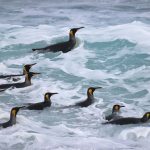
    Penguins are the first seabirds we have recorded making sounds under water – they may be calling out for help when they hunt or making noise to disorient their prey
    Penguins call out as they hunt under water but we’re not sure why
    Read More
    https://www.newscientist.com/article/2238025-penguins-call-out-as-they-hunt-under-water-but-were-not-sure-why/?utm_campaign=RSS%7CNSNS&utm_source=NSNS&utm_medium=RSS&utm_content=home

    Views: 0

  • Amid coronavirus buying, Amazon sold out of bottled water and toilet paper, too

    Amid coronavirus buying, Amazon sold out of bottled water and toilet paper, too

    Those toilet paper and water shortages at your local markets and big-box retailers have affected Amazon, as well.

    Read More
    https://techxplore.com/news/2020-03-coronavirus-amazon-sold-bottled-toilet.html

    Views: 0

  • Water and Climate Change

    World Water Day 2020 is about water and climate change – and how the two are inextricably linked. This year’s campaign shows how our use of water will help reduce floods, droughts, scarcity and pollution, and will help fight climate change itself. By adapting to the water effects of climate change, we will protect health and save lives. And, by using water more efficiently, we will reduce greenhouse gases. Our key messages are clear:

    • We cannot afford to wait. Climate policy makers must put water at the heart of action plans.
    • Climate change effects water supplies and human health.
    • Health systems need to prepare for more water-related disease associated with climate change.
    • Water can help fight climate change and protect health. There are sustainable, affordable and scalable water and sanitation solutions.
    • Everyone has a role to play. In our daily lives, there are surprisingly easy steps we can all take to address climate change, and protect health.

    Read More
    https://www.who.int/news-room/detail/17-03-2020-water-and-climate-change

    Views: 0

  • Nationwide movement restriction measures to begin on Wednesday (Updated)

    Nationwide movement restriction measures to begin on Wednesday (Updated)

    Nationwide movement restriction measures to begin on Wednesday (Updated) 2

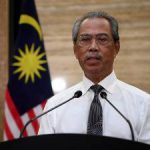
    PETALING JAYA: Prime Minister Tan Sri Muhyiddin Yassin has declared that Malaysia will be placed under a nationwide movement restriction order from Wednesday (March 18) to March 31, 2020, due to the Covid-19 outbreak.

    The order, the first in the country’s history, was announced by the prime minister in a live broadcast over national television tonight.

    A total of 315 new positive cases of Covid-19 have been reported over the past two days, bringing the total in Malaysia to 553 cases.

    Of this total, 511 have been hospitalised while 42 people have recovered.

    Muhyiddin said the nationwide movement restriction order means that all business premises have to be shut down, except for outlets such as supermarkets and grocery stores selling daily essentials.

    He said all government and private premises would be closed, except for essential services such as utilities, telecommunications, transport, banking, health, pharmacies, ports, airports, cleaning and food supplies.

    He said the movement restriction also means all Malaysians will be banned from travelling abroad, and that no tourists or foreigners will be allowed to enter the country. Those who have just arrived from abroad must undergo self-quarantine for 14 days.

    All public and private schools, including kindergartens, nurseries, residential school and other educational institutions are also to close. All private and public higher institutions of learning will also close.

    Closure of all government and private premises except essential services such as water and electricity, telecommunication, postal service, transport, fuel, gas, lubrication, broadcasting, banking, health, pharmacy, fire-fighting, ports, airports, prisons, security and defence, sanitary services, provision and food supply.

    The order also calls on a ban on all mass gatherings, including religious, sports, social and cultural activities.

    The Prime Minister said the measures were taken to protect the rakyat from the spread of the virus but advised Malaysian to not panic and stay calm.

    Muhyiddin added that the Ministry of Domestic Trade and Consumer Affairs will ensure that the supply of groceries and health care essentials will be readily available.

    He also said that the government will address the situation daily and provided a hotline number – 0388882010- that will answer any queries from the public.

    In an immediate response, former health minister Datuk Seri Dr Dzulkefly Ahmad told theSun that the order was the right action made in the right time.

    “I am okay with it because it is in line with what I was advocating, I did not implement this earlier because at that time it wasn’t warranted and it wasn’t the right thing to do then,” he said.

    Meanwhile, Lawyer Mohamed Haniff Khatri Abdullah said that the provision of Section 11 (5) of the Prevention and Control of Infectious Diseases Act 1988 is read together with Section 24(a) of the same act.

    Haniff said this would make any breach to the restriction order a criminal offence.

    “The offense under section 11(5) carries a maximum sentence of two years imprisonment. Whereas the second offence under section 24(b) warrants a maximum imprisonment sentence of five years.”

    He also urged government officials to give a clear guideline on the extent of which a member of public can be out before it is considered an offense.

    “This is to ensure proper and dutiful compliance on the part of public and to allow strict enforcement by the authorities.” he told theSun.

    Nationwide movement restriction measures to begin on Wednesday (Updated)
    Read More
    https://www.thesundaily.my/local/nationwide-movement-restriction-measures-to-begin-on-wednesday-updated-IC2136749

    Views: 0

  • Decades of work at Argonne National Laboratory led to pivotal moment for U.S. nuclear plants

    Decades of work at Argonne National Laboratory led to pivotal moment for U.S. nuclear plants

    A few years ago, several nuclear reactors in the United States were facing the possibility of unforeseen shutdowns in the wake of disaster at Japan’s Fukushima Daiichi power plant. The 2011 accident prompted worldwide scrutiny of nuclear power safety—especially regarding boiling water reactors, or BWRs.

    Read More

    Views: 0

  • COVID-19: IFRC, UNICEF and WHO issue guidance to protect children and support safe school operations

    GENEVA/NEW YORK – The International Federation of the Red Cross (IFRC), UNICEF and the World Health Organization (WHO) today issued new guidance to help protect children and schools from transmission of the COVID-19 virus. The guidance provides critical considerations and practical checklists to keep schools safe. It also advises national and local authorities on how to adapt and implement emergency plans for educational facilities. 

    In the event of school closures, the guidance includes recommendations to mitigate against the possible negative impacts on children’s learning and wellbeing. This means having solid plans in place to ensure the continuity of learning, including remote learning options such as online education strategies and radio broadcasts of academic content, and access to essential services for all children. These plans should also include necessary steps for the eventual safe reopening of schools.

    Where schools remain open, and to make sure that children and their families remain protected and informed, the guidance calls for:

    • Providing children with information about how to protect themselves;
    • Promoting best handwashing and hygiene practices and providing hygiene supplies;
    • Cleaning and disinfecting school buildings, especially water and sanitation facilities; and
    • Increasing airflow and ventilation.

    The guidance, while specific to countries that have already confirmed the transmission of COVID-19, is still relevant in all other contexts. Education can encourage students to become advocates for disease prevention and control at home, in school, and in their community by talking to others about how to prevent the spread of viruses. Maintaining safe school operations or reopening schools after a closure, requires many considerations, but if done well, can promote public health.

    For example, safe school guidelines implemented in Guinea, Liberia and Sierra Leone during the outbreak of Ebola virus disease from 2014 to 2016 helped prevent school-based transmissions of the virus.

    UNICEF is urging schools – whether open or helping students through remote learning – to provide students with holistic support. Schools should provide children with vital information on handwashing and other measures to protect themselves and their families; facilitate mental health support; and help to prevent stigma and discrimination by encouraging students to be kind to each other and avoid stereotypes when talking about the virus.

    The new guidance also offers helpful tips and checklists for parents and caregivers, as well as children and students themselves. These actions include:

    • Monitoring children’s health and keeping them home from school if they are ill;
    • Encouraging children to ask questions and express their concerns; and
    • Coughing or sneezing into a tissue or your elbow and avoid touching your face, eyes, mouth and nose.

    Read More
    https://www.who.int/news-room/detail/10-03-2020-covid-19-ifrc-unicef-and-who-issue-guidance-to-protect-children-and-support-safe-school-operations

    Views: 0

  • Water splitting advance holds promise for affordable renewable energy

    Water splitting advance holds promise for affordable renewable energy

    A breakthrough into splitting water into its parts could help make renewable energy pay off, even when the sun isn’t shining and the wind isn’t blowing.

    Read More

    Views: 0

  • Researchers develop flooding prediction tool

    Researchers develop flooding prediction tool

    By incorporating the architecture of city drainage systems and readings from flood gauges into a comprehensive statistical framework, researchers at Texas A&M University can now accurately predict the evolution of floods in extreme situations like hurricanes. With their new approach, the researchers said their algorithm could forecast the flow of flood water in almost real-time, which can then lead to timelier emergency response and planning.

    Read More

    Views: 0