Tag: video

  • Assuaging Plight Of The Poor In This Perilous Time By Okechukwu Nwanguma

    Assuaging Plight Of The Poor In This Perilous Time By Okechukwu Nwanguma

    Assuaging Plight Of The Poor In This Perilous Time By Okechukwu Nwanguma 1

    Assuaging Plight Of The Poor In This Perilous Time By Okechukwu Nwanguma 2


    Rule of Law and Accountability Advocacy Centre has been monitoring and receiving information on public compliance with the Federal Government ordered lockdown in Abuja, Lagos and Ogun states, which contain measures to contain the ravaging Covid-19 pandemic.

    Our monitoring of the compliance with the lockdown and stay-at-home orders in Lagos, Abuja and few other states indicate that most people are finding it difficult to effectively comply for various reasons. 

    First, there are those, who still don’t believe that Covid-19 is a real life-threatening pandemic and that precautionary measures such as social distancing, personal hygiene and other outlined measures can prevent its infection and spread. 

    In fact some have been made to believe that the lockdown is a deception by government to achieve other ulterior motives. Those, who promote this narrative are mainly the apocalyptic Pentecostal ‘Men of God’, who push arguments linking Covid-19 to 5G mobile technology, which they argue is a part of the biblically ordained designs of the Anti-Christ.

    Second, some Nigerians are simply lawless or lack discipline, just like when passengers are asked to switch off their phones prior to flight take off and you still find some people, seemingly ladies and gentlemen, fiddling with their phones.

    To illustrate, a relative of mine called me yesterday to complain that he was arrested by the police somewhere in Lagos when he drove out to buy pap for his baby. I asked him whether he knew about the lockdown order and whether there was nowhere around his neighbourhood he could walk down to buy the pap. He said ‘but other vehicles are on the road’. I told him that he had broken the law as much as those other people. Everybody may not be arrested at once.

    He wanted me to talk to the police officers, who arrested him and ordered him to drive to their station. I asked him what he wanted me to tell them.

    Third, and most significantly, there are yet others, who are forced out of their homes by want and hunger. They can’t stand the site of their tender children crying for hunger.

    As I said elsewhere, majority of the population fall within the poor and vulnerable category. Usually, many feed themselves and their dependents on their daily earnings. They live from hand to mouth.

    Under the prevailing difficult and uncertain situation, many families and individuals are already suffering and starving, just one week into the lockdown, with one more week left to go, with the probability of an extension.

    The Federal Government’s Social Intervention Policy, the so-called conditional cash transfer is not yet addressing mass poverty, deprivation and hunger. The billions, which government announced that it has released and made available for conditional cash transfer to the poor and vulnerable in communities are not reaching the targets. There are still cries of woe and anguish in most communities.

    We have seen videos of caricature of the ‘social intervention’, of food items shared to some communities. In one video, we saw a street in Lagos of over 30 families, who said they were given two loaves of bread and few cups of rice and garri and few condiments (tomato paste sachets) to share. And we see members of the community lamenting and asking how a whole street of over 30 families could be given such quantity of food items not enough to serve one family for two days to share!

    Corruption has become our national culture. A seemingly intractable challenge to our progress and development. Most of our politicians and public office holders are unscrupulously avaricious.

    Given our past experiences where public funds meant for and released to assuage the sufferings of poor and vulnerable communities were  either unconscionably used to ‘cut grasses’ or inexplicably got ‘swallowed by snakes’, we call for transparent and community-based approaches to the management and disbursement of social intervention funds.

    Considering complaints by many local communities about not benefiting from the released billions of naira announced and meant to alleviate poverty and hardship, especially during this difficult and uncertain period, we call for a transparent and effective investigation of the management of the funds so far allocated. Efforts must be put in place to ensure that the funds are not diverted as usual.

    Independent community committees must receive these funds and be charged with identifying those in their midst, who qualify to benefit.

    The management of the funds should be monitored by a multi-stakeholder committee including government and community representatives as well as credible media and civil society representatives.

    Government must put effective measures in place to check corrupt public officials, who want to steal or divert funds meant to relieve the sufferings of the poor and vulnerable people in this perilous times.

    This is the only way to help the people comply with the law and stay at home for now!

    Finally, since government has been announcing huge numbers of beneficiaries of cash transfer program running into millions and claiming to have paid billions, can the government make the system transparent by publishing the names and addresses of the beneficiaries on an electronic portal so that Nigerians can do the verification?

    Okechukwu Nwanguma is the Executive Director of Rule of Law and Accountability Advocacy Centre

    Opinion

    AddThis

    : 

    Original Author

    : 

    Okechukwu Nwanguma

    Disable advertisements

    : 
    Assuaging Plight Of The Poor In This Perilous Time By Okechukwu Nwanguma
    Read More
    http://saharareporters.com/2020/04/08/assuaging-plight-poor-perilous-time-okechukwu-nwanguma

    Views: 0

  • Software recreates a 3D model of your face from a smartphone video

    Software recreates a 3D model of your face from a smartphone video

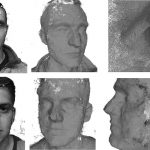
    A program that combines artificial intelligence and geometrical modelling can create an accurate 3D model of your face from a single 20-second video
    Software recreates a 3D model of your face from a smartphone video
    Read More
    https://www.newscientist.com/article/2238800-software-recreates-a-3d-model-of-your-face-from-a-smartphone-video/?utm_campaign=RSS%7CNSNS&utm_source=NSNS&utm_medium=RSS&utm_content=home

    Views: 0

  • UK PM listened to his scientists about Covid-19, but they were slow to sound the alarm

    UK PM listened to his scientists about Covid-19, but they were slow to sound the alarm

    UK PM listened to his scientists about Covid-19, but they were slow to sound the alarm 3

    LONDON: It was early spring when British scientists laid out the bald truth to their government. It was “highly likely,“ they said, that there was now “sustained transmission” of COVID-19 in the United Kingdom.

    If unconstrained and if the virus behaved as in China, up to four-fifths of Britons could be infected and one in a hundred might die, wrote the scientists, members of an official committee set up to model the spread of pandemic flu, on March 2. Their assessment didn’t spell it out, but that was a prediction of over 500,000 deaths in this nation of nearly 70 million.

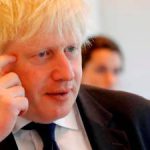
    Yet the next day, March 3, Prime Minister Boris Johnson was his cheery self. He joked that he was still shaking hands with everyone, including at a hospital treating coronavirus patients.

    “Our country remains extremely well prepared,“ Johnson said as Italy reached 79 deaths. “We already have a fantastic NHS,“ the national public health service, “fantastic testing systems and fantastic surveillance of the spread of disease.”

    Alongside him at the Downing Street press conference was Chris Whitty, the government’s chief medical adviser and himself an epidemiologist. Whitty passed on the modelling committee’s broad conclusions, including the prediction of a possible 80% infection rate and the consequent deaths. But he played them down, saying the number of people who would be infected was probably “a lot lower” and coming up with a total was “largely speculative.”

    The upbeat tone of that briefing stood in sharp contrast with the growing unease of many of the government’s scientific advisers behind the scenes. They were already convinced that Britain was on the brink of a disastrous outbreak, a Reuters investigation has found.

    Interviews with more than 20 British scientists, key officials and senior sources in Johnson’s Conservative Party, and a study of minutes of advisory committee meetings and public testimony and documents, show how these scientific advisers concluded early the virus could be devastating.

    But the interviews and documents also reveal that for more than two months, the scientists whose advice guided Downing Street did not clearly signal their worsening fears to the public or the government. Until March 12, the risk level, set by the government’s top medical advisers on the recommendation of the scientists, remained at “moderate,“ suggesting only the possibility of a wider outbreak.

    “You know, there’s a small little cadre of people in the middle, who absolutely did realise what was going on, and likely to happen,“ said John Edmunds, a professor of infectious disease modelling and a key adviser to the government, known for his work on tracking Ebola. Edmunds was among those who did call on the government to elevate the warning level earlier.

    From the outset, said Edmunds, work by scientists had shown that, with only limited interventions, the virus would trigger an “overwhelming epidemic” in which Britain’s health service was not going “to get anywhere near being able to cope with it. That was clear from the beginning.”

    But he said: “I do think there’s a bit of a worry in terms you don’t want to unnecessarily panic people.”

    Johnson, who himself has sickened with the virus, moved more slowly than the leaders of many other prosperous countries to adopt a lockdown. He has been criticised for not moving more swiftly to organise mass tests and mobilise supplies of life-saving equipment and beds. Johnson was hospitalized on April 5 and moved to intensive care the next day.

    It is too soon to judge the ultimate soundness of the UK’s early response. If history concludes that it was lacking, then the criticism levelled at the prime minister may be that, rather than ignoring the advice of his scientific advisers, he failed to question their assumptions.

    Interviews and records published so far suggest that the scientific committees that advised Johnson didn’t study, until mid-March, the option of the kind of stringent lockdown adopted early on in China, where the disease arose in December, and then followed by much of Europe and finally by Britain itself. The scientists’ reasoning: Britons, many of them assumed, simply wouldn’t accept such restrictions.

    The UK scientists were also mostly convinced – and many still are – that, once the new virus escaped China, quarantine measures would likely not succeed. Minutes of technical committees reviewed by Reuters indicate that almost no attention was paid to preparing a programme of mass testing. Other minutes and interviews show Britain was following closely a well-laid plan to fight a flu pandemic – not this deadlier disease. The scientists involved, however, deny that the flu focus ultimately made much difference.

    Now, as countries debate how to combat the virus, some experts here say, the lesson from the British experience may be that governments and scientists worldwide must increase the transparency of their planning so that their thinking and assumptions are open to challenge.

    John Ashton, a clinician and former regional director of Public Health England, the government agency overseeing healthcare, said the government’s advisers took too narrow a view and hewed to limited assumptions. They were too “narrowly drawn as scientists from a few institutions,“ he said. Their handling of COVID-19, Ashton said, shows the need for a broader approach. “In the future we need a much wider group of independent advisers.”

    Michael Cates, who succeeded Stephen Hawking as Lucasian Professor of Mathematics at Cambridge University, is leading an initiative by the Royal Society, the UK’s leading scientific body, to bring modellers in from other scientific disciplines to help understand the epidemic.

    “Without faulting anyone so far, it’s vital, where there is such a lot at stake, to throw the maximum possible light on the methods, assumptions and data built into our understanding of how this epidemic will develop,“ he told Reuters.

    In a statement to Reuters, a spokesperson for the Department of Health and Social Care said the government was delivering “a science-led action plan” to contain the outbreak. “As the public would expect, we regularly test our pandemic plans and what we learned from previous exercises has helped us to rapidly respond to COVID-19.”

    A LOW RISK TO THE PUBLIC

    When news came from China in January of a new infectious disease, Johnson had reason to believe his country was well prepared. It had some of the world’s best scientists and a well-drilled plan to deal with potentially lethal pandemics. Perhaps, some scientists say in hindsight, the plan made them slow to adapt.

    For many years, the Cabinet Office – a collection of officials who act as the prime minister’s direct arm to run the government – took the threat of pandemics seriously. Presciently, it rated pandemics as the Number 1 threat to the country, ahead of terrorism and financial crashes.

    At the centre of planning was a small group of scientists, among them Edmunds. His research group at the London School of Hygiene and Tropical Medicine runs one of the two computer modelling centres for epidemics that have mostly driven government policy. The other is at nearby Imperial College. Edmunds remembers that early in the outbreak, the data from China were sketchy, in the period “where the Chinese were trying to pretend that this wasn’t transmissible between humans.”

    Edmunds and his colleague at Imperial, Neil Ferguson, were part of an alphabet soup of committees that fed advice into the Cabinet Office machinery around the prime minister. Both were founders of the flu pandemic modelling committee, known as SPI-M, that produced the March 2 report warning of more than 500,000 deaths. This committee had met together for nearly 15 years.

    Ferguson did not respond to a request to be interviewed for this article.

    Edmunds and Ferguson were also part of NERVTAG, the New and Emerging Respiratory Virus Threats Advisory Group. Both too were members of the Scientific Advisory Group for Emergencies, known as SAGE, that advises the government in times of crisis. SAGE reports directly to Johnson and the government’s main emergency committee, COBRA.

    At first, when NERVTAG met on January 13, it studied information from China that there was “no evidence of significant human to human transmission” of the new virus, according to minutes of the meeting. The scientists agreed the risk to the UK population was “very low.”

    The evidence soon changed, but this wasn’t reflected in the official threat level. By the end of January, scientists in China began releasing clinical data. Case studies published in the British medical journal, The Lancet, showed 17% of the first 99 coronavirus cases needed critical care. Eleven patients died. Another Chinese study, in the same magazine, warned starkly of a global spread and urged: “Preparedness plans and mitigation interventions should be readied for quick deployment globally.”

    Edmunds recalled that “from about mid January onwards, it was absolutely obvious that this was serious, very serious.” Graham Medley, a professor of infectious diseases modelling at the London School and chairman of SPI-M, agreed. He said that the committee was “clear that this was going to be big from the first meeting.” At the end of January, his committee moved into “wartime” mode, he said, reporting directly into SAGE.

    Dr Jon Read, a senior lecturer in biostatistics at the University of Lancaster, also a member of SPI-M, said by the end of January it was apparent the virus had “pandemic potential” and that death rates for the elderly were brutal. “From my perspective within the sort of modelling community, everybody’s aware of this, and we’re saying that this is probably going to be pretty bad,“ he said.

    But the scientists did not articulate their fears forcefully to the government, minutes of committee meetings reveal.

    On January 21, scientists on NERVTAG endorsed the elevation of the UK risk warning from COVID-19 from “very low” to “low.” SAGE met formally for the first time the following day about the coronavirus threat. So did COBRA, which was chaired by Matt Hancock, the health secretary, who would contract the virus himself in late March. He told reporters after the meeting: “The clinical advice is that the risk to the public remains low.”

    In response to questions from Reuters, the government’s Department of Health declined to clarify how the risk levels are defined or what action, if any, they trigger. In a statement, a spokesperson said: “Increasing the risk level in the UK is a belt and braces measure which allows the government to plan for all future eventualities.”

    Two days later, China put the city of Wuhan, where the outbreak began, into a complete lockdown. Hubei, the surrounding province, would follow. But already, 17 passenger flights had flown directly from Wuhan to Britain since the start of 2020, and 614 flights from the whole of China, according to FlightRadar24, a flight-tracking service. That meant thousands of Chinese, some of them potential carriers, had come to Britain. On April 5, scientific adviser Ferguson said he estimated only one-third of infected people reaching Britain had been detected.

    As they watched China impose its lockdown, the British scientists assumed that such drastic actions would never be acceptable in a democracy like the UK. Among those modelling the outbreak, such stringent counter-measures were not, at first, examined.

    “We had milder interventions in place,“ said Edmunds, because no one thought it would be acceptable politically “to shut the country down.” He added: “We didn’t model it because it didn’t seem to be on the agenda. And Imperial (College) didn’t look at it either.” The NERVTAG committee agreed, noting in its minutes that tough measures in the short term would be pointless, as they “would only delay the UK outbreak, not prevent it.”

    That limited approach mirrored the UK’s longstanding pandemic flu strategy. The Department of Health declined a request from Reuters for a copy of its updated pandemic plan, without providing a reason. But a copy of the 2011 “UK Influenza Pandemic Preparedness Strategy 2011,“ which a spokesman said was still relevant, stated the “working presumption will be that Government will not impose any such restrictions. The emphasis will instead be on encouraging all those who have symptoms to follow the advice to stay at home and avoid spreading their illness.”

    According to one senior Conservative Party politician, who was officially briefed as the crisis unfolded, the close involvement in the response to the coronavirus of the same scientific advisers and civil servants who drew up the flu plan may have created a “cognitive bias.”

    “We had in our minds that COVID-19 was a nasty flu and needed to be treated as such,“ he said. “The implication was it was a disease that could not be stopped and that it was ultimately not that deadly.”

    While the UK was prepared to fight the flu, places in Asia like China, Hong Kong, Singapore and South Korea had built their pandemic plans with lessons learned from fighting the more lethal SARS outbreak that began in 2002, he said. SARS had a fatality rate of up to 14%. As a result, these countries, he said, were more ready to resort to widespread testing, lockdowns and other draconian measures to keep their citizens from spreading the virus.

    Scientists involved in the UK response disagree that following the government’s flu plan clouded their thinking or influenced the outbreak’s course. The plan had a “reasonable worst case” scenario as devastating as the worst predictions for COVID-19, they note.

    Mark Woolhouse, a professor of infectious diseases epidemiology at the University of Edinburgh, and a member of the SPI-M committee, said COVID-19 did behave differently than an expected pandemic flu – for example school closures proved to be far less effective in slowing the spread of the coronavirus. But, broadly, “the government has been consistently responsive to changing facts.”

    By the end of January, the government’s chief medical adviser, Whitty, was explaining to politicians in private, according to at least two people who spoke to him, that if the virus escaped China, it would in time infect the great majority of people in Britain. It could only be slowed down, not stopped. On Jan 30, the government raised the threat level to “moderate” from “low.”

    The country’s medical officers “consider it prudent for our governments to escalate planning and preparation in case of a more widespread outbreak,“ a statement said at the time. Whitty did not respond to questions from Reuters for this article.

    A TIME TO PREPARE

    On the evening of January 31, Boris Johnson sat before a fireplace in 10 Downing Street and told the nation, in a televised address: “This is the moment when the dawn breaks and the curtain goes up on a new act in our great national drama.”

    He was talking of finally delivering Brexit, or what he called “this recaptured sovereignty.” Until that moment, Johnson’s premiership had been utterly absorbed by delivering on that challenge.

    With Brexit done, Johnson had the chance to focus on other matters the following month, among them the emerging virus threat. But leaving the European Union had a consequence.

    Between February 13 and March 30, Britain missed a total of eight conference calls or meetings about the coronavirus between EU heads of state or health ministers – meetings that Britain was still entitled to join. Although Britain did later make an arrangement to attend lower-level meetings of officials, it had missed a deadline to participate in a common purchase scheme for ventilators, to which it was invited. Ventilators, vitally important to treating the direst cases of COVID-19, have fallen into short supply globally. Johnson’s spokesman blamed an administrative error.

    A Downing Street aide told Reuters that from around the end of January, Johnson concentrated his attention increasingly on the coronavirus threat, receiving “very frequent” updates at least once per day from mid February, either in person or via a daily dashboard of cases.

    In the medical and scientific world, there was growing concern about the threat of the virus to the UK. A report from Exeter University, published on February 12, warned a UK outbreak could peak within four months and, without mitigation, infect 45 million people.

    That worried Rahuldeb Sarkar, a consultant physician in respiratory medicine and critical care in the county of Kent, who foresaw that intensive care beds could be swamped. Even if disease transmission was reduced by half, he wrote in a report aimed at clinicians and actuaries in mid-February, a coronavirus outbreak in the UK would “have a chance of overwhelming the system.”

    With Whitty stating in a BBC interview on February 13 that a UK outbreak was still an “if, not a when,“ Richard Horton, a medical doctor and editor of the Lancet, said the government and public health service wasted an opportunity that month to prepare quarantine restriction measures and a programme of mass tests, and procure resources like ventilators and personal protective equipment for expanded intensive care.

    Calling the lost chance a “national scandal” in a later editorial, he would testify to parliament about a mismatch between “the urgent warning that was coming from the frontline in China” and the “somewhat pedestrian evaluation” of the threat from the scientific advice to the government.

    After developing a test for the new virus by January 10, health officials adopted a centralised approach to its deployment, initially assigning a single public laboratory in north London to perform the tests. But, according to later government statements, there was no wider plan envisaged to make use of hundreds of laboratories across the country, both public and private, that could have been recruited.

    According to emails and more than a dozen scientists interviewed by Reuters, the government issued no requests to labs for assistance with staff or testing equipment until the middle of March, when many abruptly received requests to hand over nucleic acid extraction instruments, used in testing. An executive at the Weatherall Institute of Molecular Medicine at the University of Oxford said he could have carried out up to 1,000 tests per day from February. But the call never came.

    “You would have thought that they would be bashing down the door,“ said the executive, who spoke on condition of anonymity. By April 5, Britain had carried out 195,524 tests, in contrast to at least 918,000 completed a week earlier in Germany.

    Nor was there an effective effort to expand the supply of ventilators. The Department of Health told Reuters in a statement that the government started talking to manufacturers of ventilators about procuring extra supplies in February. But it was not until March 16, after it was clear supplies could run out, that Johnson launched an appeal to industry to help ramp up production.

    Charles Bellm, managing director of Intersurgical, a global supplier of medical ventilation products based outside London, said he has been contacted by more than a dozen governments around the world, including France, New Zealand and Indonesia. But there had been no contact from the British government. “I find it somewhat surprising, I have spoken to a lot of other governments,“ he said.

    Countering such criticism, Hancock, the health minister, said the government is on track to deliver about 10,000 more ventilators in the coming weeks. One reason Britain was behind some countries on testing, he said, was the absence of a large diagnostics industry at the outbreak of the epidemic. “We didn’t have the scale.”

    GAME OVER

    It was during the school half-term holidays in February that frontline doctor Nicky Longley began to realise that early efforts to contain the disease were likely doomed.

    For weeks now, doctors and public health workers had been watching out for people with flu-like symptoms coming in from China. Longley, an infectious diseases consultant at London’s Hospital for Tropical Diseases, was part of a team that staffed a public health service helpline for those with symptoms. The plan, she said, had been to make all effort to catch every case and their contacts. And “to start with, it looked like it was working.”

    But then, bad news. First, on Wednesday the 19th of February, came the shock news from Iran of two deaths. Then, on Friday the 21st, came a death in Italy and a bloom of cases in Lombardy and Veneto regions. Britain has close links to both countries. Thousands of Britons were holidaying in Italy that week.

    “I don’t think anybody really foresaw what was happening in Italy,“ Longley said. “And I think, the minute everybody saw that, we thought: ‘This is game over now.’”

    Until then, Longley said, everyone felt “there was a chance to stamp it out” even though most were sceptical it could be done long-term. But after Iran and Italy, it was obvious containment would not work. The contact tracing continued for a while. But as the cases in London built up, and the volume of calls to the helpline mushroomed, the priority began to shift to clinical care of the serious cases. “At a certain point you have to make a decision about where you put your efforts as a workforce.”

    Edmunds noted that Iran and Italy had hardly reported a case until that point. “And then, all of sudden you had deaths recorded.” There was a rule of thumb that, in an outbreak’s early stages, for each death there were probably 1,000 cases in a community. “And so it was quite clear that there were at least thousands of cases in Italy, possibly tens of thousands of cases in Italy right then.”

    Amid the dreadful news from Italy, the scientists at NERVTAG convened by phone that Friday, 21st February. But they decided to recommend keeping the threat level at “moderate,“ where it had sat since January 30th. The minutes don’t give a detailed explanation of the decision. Edmunds, who had technical difficulties and couldn’t be heard on the call, emailed afterwards to ask the warning to be elevated to “high,“ the minutes revealed. But the warning level remained lower. It’s unclear why.

    “I just thought, are we still, we still thinking that it’s mild or something? It definitely isn’t, you know,“ said Edmunds.

    A spokesman for the government’s chief scientific adviser, Sir Patrick Vallance, didn’t directly respond to Reuters questions about the threat level. Asked whether, with hindsight, the scientists’ approach was the right one, the spokesperson said in a statement that “SAGE and advisers provide advice, while Ministers and the Government make decisions.”

    HERD IMMUNITY

    On Sunday, March 1st, Ferguson, Edmunds and other advisers spent the day with NHS public health service experts trying to work out how many hospital beds and other key resources would be needed as the outbreak exploded. By now, Italian data was showing that a tenth of all infected patients needed intensive care.

    The following day, pandemic modelling committee SPI-M produced its “consensus report” that warned the coronavirus was now transmitting freely in the UK. That Thursday, March 5, the first death in the UK was announced. Italy, which reached 827 deaths by March 11, ordered a national lockdown. Spain and France prepared to follow suit.

    Johnson held out against stringent measures, saying he was following the advice of the government’s scientists. He asserted on March 9: “We are doing everything we can to combat this outbreak, based on the very latest scientific and medical advice.”

    Indeed, the government’s Scientific Advisory Group for Emergencies, SAGE, had recommended that day, with no dissension recorded in its summary, that the UK reject a China-style lockdown. SAGE decided that “implementing a subset of measures would be ideal,“ according to a record of its conclusions. Tougher measures could create a “large second epidemic wave once the measures were lifted,“ SAGE said.

    On March 12 came a bombshell for the British public. Chris Whitty, the chief medical officer, announced Britain had moved the threat to UK citizens from “moderate” to “high.” And he said the country had moved from trying to contain the disease to trying to slow its spread. New cases were not going to be tracked at all. “It is no longer necessary for us to identify every case,“ he said. Only hospital cases would, in future, be tested for the virus. What had been an undisclosed policy was in the open: beyond a certain point, attempts to completely extinguish the virus would stop.

    The same day, putting aside his jokey self, Johnson made a speech in Downing Street, flanked by two Union Jacks and evoking the spirit of Winston Churchill’s “darkest hour” address. He warned: “I must level with you, level with the British public – more families, many more families are going to lose loved ones before their time.”

    For most Britons, it came as a shock. Several of the next day’s newspapers splashed Johnson’s words on their front pages.

    Vallance, the government’s chief scientific adviser, who chaired SAGE, said in a BBC interview on March 13 that the plan was to simply control the pace of infection. The government had, for now, rejected what he called “eye-catching measures” like stopping mass gatherings such as football games or closing schools. The “aim is to try and reduce the peak, broaden the peak, not to suppress it completely.” Most people would get the virus mildly, and this would build up “herd immunity” which, in time, would stop the disease’s progress.

    But by now, the country was rebelling. Major institutions decided to close. After players began to get infected, the professional football leagues suspended their games. As Johnson still refused to close schools and ban mass gatherings, the Daily Mirror’s banner headline, summing up a widespread feeling, asked on March 13: “Is It Enough?”

    The catalyst for a policy reversal came on March 16 with the publication of a report by Neil Ferguson’s Imperial College team. It predicted that, unconstrained, the virus could kill 510,000 people. Even the government’s “mitigation” approach could lead to 250,000 deaths and intensive care units being overwhelmed at least eight times over.

    Imperial’s prediction of over half a million deaths was no different from the report by the government’s own pandemic modelling committee two weeks earlier. Yet it helped trigger a policy turn-around, both in London and in Washington, culminating seven days later in Johnson announcing a full lockdown of Britain. The report also jarred the U.S. administration into tougher measures to slow the virus’ spread.

    Ferguson was now in isolation himself after catching the virus. Testifying by video link to a committee in Parliament, he explained why he and other scientific advisers had shifted from advocating partial social-distancing measures to warning that without a rigorous shutdown, the NHS would be overwhelmed. The reason, he said, lay in data coming out of Italy that showed large numbers of patients required critical care.

    “The revision was that, basically, estimates of the proportion of patients requiring invasive ventilation, mechanical ventilation, which is only done in a critical care unit, roughly doubled,“ he said.

    Edmunds had a different explanation for the policy shift.

    What allowed Britain to alter course, said Edmunds, was a lockdown in Italy that “opened up the policy space” coupled with new data. First came a paper by Edmunds’ own London School team that examined intermittent lockdowns, sent to the modelling committee on March 11 and validated by Edinburgh University. Ferguson’s revised Imperial research followed.

    Woolhouse, the Edinburgh professor, confirmed the sequence.

    Edmunds said these new studies together had demonstrated that if the British government imposed a lengthy period of tougher measures, perhaps relaxed periodically, then the size of the epidemic could be substantially reduced.

    Still, without a vaccine or effective treatments, it’s going to be hard to avoid a substantial part of the British population getting infected, said Edmunds. “Until you get to a vaccine, there is no way of getting out of this without certainly tens of thousands of deaths,“ he said. “And probably more than that.”

    Now subject to intense public scrutiny, the modelling teams at universities across Britain continue to work on different scenarios for how the world can escape the virus’s clutches. According to Medley, the chairman of the SPI-M pandemic modelling committee, no one now doubts, for all the initial reservations, that a lockdown was essential in Britain.

    Medley added: “At the moment we don’t know what’s going to happen in six months. All we know is that unless we stop transmission now, the health service will collapse. Yep, that’s the only thing we know for sure.” – Reuters

    UK PM listened to his scientists about Covid-19, but they were slow to sound the alarm
    Read More
    https://www.thesundaily.my/home/uk-pm-listened-to-his-scientists-about-covid-19-but-they-were-slow-to-sound-the-alarm-GE2237109

    Views: 0

  • (Video) Dr Amalina appears on ‘The Sexiest Doctor Alive’ Dr Mike’s YouTube video

    (Video) Dr Amalina appears on ‘The Sexiest Doctor Alive’ Dr Mike’s YouTube video

    (Video) Dr Amalina appears on ‘The Sexiest Doctor Alive’ Dr Mike’s YouTube video 4

    TOUTED by People’s magazine as The Sexiest Doctor Alive, Dr Mikhail Varshavski (or Dr Mike) has more than good looks to offer, because these days he has been educating the masses on the fight against Covid-19.

    In a YouTube video which premiered today, Dr Mike spoke to 100 doctors from around the globe to get their perspectives on Covid-19. The video includes the likes of Dr Anthony Fauci who’s currently serving on the White House Coronavirus Task Force and our very own Dr Amalina Bakri.

    (Video) Dr Amalina appears on ‘The Sexiest Doctor Alive’ Dr Mike’s YouTube video
    Read More
    https://www.thesundaily.my/style-life/all-the-buzz/video-dr-amalina-appears-on-the-sexiest-doctor-alive-dr-mike-s-youtube-video-EE2237035

    Views: 0

  • Resident Evil 3 review: A glimpse into post-pandemic fiction

    Resident Evil 3 review: A glimpse into post-pandemic fiction

    The video game Resident Evil 3 was in development long before the coronavirus outbreak, but it holds up a mirror to the strange times we live in today
    Resident Evil 3 review: A glimpse into post-pandemic fiction
    Read More
    https://www.newscientist.com/article/2239924-resident-evil-3-review-a-glimpse-into-post-pandemic-fiction/?utm_campaign=RSS%7CNSNS&utm_source=NSNS&utm_medium=RSS&utm_content=home

    Views: 0

  • #BeActive for the UN International Day of Sport for Development and Peace

    #BeActive for the UN International Day of Sport for Development and Peace

    FIFA has joined forces with the United Nations (UN) and the World Health Organization (WHO) in supporting the #BeActive campaign launched on the UN International Day of Sport for Development and Peace to encourage people to be #HealthyAtHome as the world comes together in the fight against COVID-19, today and every day.

    WHO recommends all healthy adults do at least 30 minutes a day of physical activity and children at least 60 minutes per day. As part of this, #BeActive and remain #HealthyAtHome include the following suggestions along with any other form of recreation
    to stay healthy at home:

    #BeActive for the UN International Day of Sport for Development and Peace 5

    1. Taking some online exercise classes,
    2. Dancing,
    3. Playing active video games,
    4. Jumping rope, and
    5. Practising muscle strength and balance training.

    “We are delighted that football is strongly supporting the International Day of Sport for Development and Peace by asking everyone to #BeActive and to remain healthy at home during this difficult time,” said António Guterres Secretary-General
    of the United Nations. “FIFA has asked the football community, from member associations and clubs, to players and fans, to show their support, to put their rivalries aside and to show a new solidarity so we can overcome the coronavirus.
    This is an important lesson not only for today, but for every day.”

    “More than ever, especially now, one thing must be clear to everyone, health comes first,” said FIFA President Gianni Infantino. “FIFA is delighted to support both the United Nations and the World Health Organization in amplifying
    the #BeActive campaign today, and we are encouraged that the football community is also playing an active role in ensuring the message understood globally. For the first time ever, we are all on the same team and together, with team spirit and
    positive energy, we will win.” 

    “WHO is proud to collaborate as part of the UN family with FIFA and football lovers worldwide to promote the importance of being active for both physical and mental health,” said Dr Tedros Adhanom Ghebreyesus, Director-General of the World Health Organization. “The #BeActive campaign supports WHO’s drive to help people be healthy at home.”

    The campaign kicks off with Real Madrid CF, FC Barcelona, Liverpool FC and Manchester United FC asking football fans to set aside their rivalries and to come together to #BeActive in order to defeat the coronavirus. Other clubs, including Club América,
    CD Guadalajara, Beijing Guoan FC, Shanghai Shenhua FC, Mohun Bagan AC, East Bengal FC, Melbourne City FC, Sydney FC, Auckland City FC, Team Wellington FC, CA River Plate, Olympique de Marseille, TP Mazembe, CR Flamengo and SE Palmeiras will also
    join the initiative in the coming days.

    As part of the campaign, world-famous players share the following message: “At this time, even rivals need to stick together. We have to keep our distance, but we do not lose our focus. We can show solidarity by being active, and active means
    following the guidelines from the WHO.”

    The video campaign will
    be published on various FIFA digital channels, with regular subsequent updates from clubs and players across the world during subsequent days. #BeActive is also being supported with graphics toolkits for the 211 FIFA member associations and various
    media agencies to facilitate additional localisation and to further amplify the message.

    WHO, the UN’s specialized health agency, and FIFA, football’s world governing body, collaborate closely to promote healthy lifestyles through football globally and launched the “
    Pass the message to kick out coronavirus” campaign last month to share advice effective measures to protect people from COVID-19.

    The video campaign can also be downloaded here for editorial purposes.


    #BeActive for the UN International Day of Sport for Development and Peace
    Read More
    https://www.who.int/news-room/detail/06-04-2020-beactive-for-the-un-international-day-of-sport-for-development-and-peace

    Views: 0

  • WHO and Global Citizen announce: ‘One World: Together at home’ Global Special to support healthcare workers in the fight against the COVID-19 pandemic

    WHO and Global Citizen announce: ‘One World: Together at home’ Global Special to support healthcare workers in the fight against the COVID-19 pandemic


    ‘One World: Together At Home’ global special to air on Saturday, 18 April 2020 in celebration and support of healthcare workers, broadcast to feature real experiences from doctors, nurses and families around the world.

    Powered by commitments from supporters and corporate partners in benefit of the COVID-19 Solidarity Response Fund, Broadcast special to also benefit local and regional charities that provide food, shelter and healthcare to those that need help most.

    Historic broadcast to be hosted by Jimmy Fallon of ‘The Tonight Show,’  Jimmy Kimmel of ‘Jimmy Kimmel Live’ and Stephen Colbert of ‘The Late Show with Stephen Colbert,’ Friends from Sesame Street Also on hand to help unify and inspire people around the world to take meaningful actions that increase support for the global COVID-19 response.

    Curated in collaboration with Lady Gaga, broadcast to include Alanis Morissette, Andrea Bocelli, Billie Eilish, Billie Joe Armstrong of Green Day, Burna Boy, Chris Martin, David Beckham, Eddie Vedder, Elton John, FINNEAS, Idris and Sabrina Elba, J Balvin, John Legend, Kacey Musgraves, Keith Urban, Kerry Washington, Lang Lang, Lizzo, Maluma, Paul McCartney, Priyanka Chopra Jonas,  Shah Rukh Khan and Stevie Wonder.

    ——————————————

    Geneva/New York – International advocacy organization Global Citizen and the World Health Organization today
    announced the One World: Together At Home — a globally televised and streamed special in support of the fight against the COVID-19 pandemic. One World: Together At Home will be broadcast live on Saturday, 18 April 2020 at 5:00
    p.m. PDT/8:00 p.m. EDT/12:00 a.m. GMT airing on ABC, NBC, ViacomCBS Networks, iHeartMedia and Bell Media networks and platforms in Canada. Internationally, BBC One will run the program on Sunday 19 April 2020. Additional
    international broadcasters include beIN Media Group, MultiChoice Group and RTE. The virtual broadcast will show unity among all people who are affected by COVID-19 and will also celebrate and support brave healthcare
    workers doing life-saving work on the front lines.

    Hugh Evans, Co-Founder and CEO of Global Citizen, said “As we honor and support the heroic efforts of community health workers, ‘One World: Together At Home’ aims to serve as a source of unity and encouragement in the global fight
    to end COVID-19. Through music, entertainment and impact, the global live-cast will celebrate those who risk their own health to safeguard everyone else’s.”

    One World: Together At Home will also be a multi-hour digital broadcast streaming online on multiple global platforms, including: Alibaba, Amazon Prime Video, Apple, Facebook, Instagram, LiveXLive, Tencent, Tencent Music Entertainment Group, TIDAL, TuneIn, Twitch, Twitter, Yahoo and
    YouTube. This digital special will include additional artists and performances from all over the globe as well as unique stories from the world’s healthcare heroes. For information about how to tune in and take action, visit 
    www.globalcitizen.org/togetherathome.

    “The World Health Organization is committed to defeating the coronavirus pandemic with science and public health measures, and supporting the health workers who are on the frontlines of the response,” said Dr Tedros Adhanom Ghebreyesus,
    Director-General of WHO. “We may have to be apart physically for a while, but we can still come together virtually to enjoy great music. The ‘One World: Together At Home’ concert represents a powerful show of solidarity against
    a common threat.”

    “The United Nations system is fully mobilized: supporting country responses, placing our supply chains at the world’s disposal and advocating for a global cease-fire. We are proud to join forces with ‘One World: Together At Home’
    to help suppress the transmission of the virus, minimize social-economic impacts on the global community and work together now to advance Global Goals for the future,” said António Guterres, Secretary-General of the United Nations.
    “There is no greater case for collective action than our joint response to COVID-19 – we are in this together and we will get through this together.”

    Last month in response to the global pandemic, Global Citizen launched an urgent campaign in support of the COVID-19 Solidarity Response Fund for WHO, powered by the UN Foundation. Calling on individuals to take action,
    and asking world leaders and corporations to support the response with sufficient resources, Global Citizens from over 130 countries around the world have taken tens of thousands of actions in support of the response fund.

    At this critical moment in history, Global Citizen is also calling on philanthropists to join and support immediate COVID-19 response efforts as part of the organization’s Give While You Live effort. Investors, changemakers and foundation
    leaders are being urged to actualize their giving and invest quickly in related efforts like stronger health systems and vaccine development.

    Over the past three weeks, the Together At Home series has featured performances from artists including,
    Chris Martin, John Legend, Charlie Puth, Common, Shawn Mendes, Camila Cabello, Ryan Tedder of OneRepublic, Niall Horan, Steve Aoki, Jennifer Hudson, Miguel, H.E.R., Anthony Hamilton, Rufus Wainwright, Hozier and Julianne Hough, among others in
    support of WHO and Global Citizen’s campaign.

    Commitments from supporters and corporate partners will go to the COVID-19 Solidarity Response Fund for WHO to support and equip frontline healthcare workers around the world, with masks, gowns and other vital equipment, and to local charities that provide food, shelter, and healthcare to those that need it most. These local groups have been verified
    to ensure that they are helping communities impacted by COVID-19.

    For more information about Global Citizen and the campaign to support the WHO’s Solidarity Response Fund, please visit globalcitizen.org and
    follow @GlblCtzn Twitter, Facebook and Instagram using #GlobalCitizen. 

    To learn more about WHO’s response to the pandemic and the COVID-19 Solidarity Response Fund, please go to www.who.int/COVID-19 and follow @WHO on Twitter, Facebook, Instagram,
    LinkedIn and TikTok.


    ###

    About Global Citizen:

    Global Citizen is the world’s largest movement of action takers and impact makers dedicated to ending extreme poverty by 2030. With over 10 million monthly advocates, our voices have the power to drive lasting change around sustainability, equality,
    and humanity. We post, tweet, message, vote, sign, and call to inspire those who can make things happen to act — government leaders, businesses, philanthropists, artists, and citizens — together improving lives. By downloading our
    app, Global Citizens learn about the systemic causes of extreme poverty, take action on those issues, and earn rewards, which can be redeemed for tickets to concerts, events, and experiences all over the world. To date, the actions of our community,
    along with high-level advocacy efforts and work with partners, has resulted in commitments and policy announcements from leaders valued at over $48 billion, affecting the lives of more than 2.25 billion people by 2030. For more information, visit
    www.GlobalCitizen.org.


    About the World Health Organization:

    The World Health Organization (WHO) is the United Nations’ specialized agency for health. It is an inter-governmental organization and works in collaboration with its Member States usually through the Ministries of Health. The World Health Organization
    is responsible for providing leadership on global health matters, shaping the health research agenda, setting norms and standards, articulating evidence-based policy options, providing technical support to countries and monitoring and assessing
    health trends. Learn more at www.who.int.


    About the United Nations Foundation:

    The UN Foundation brings together the ideas, people, and resources the United Nations needs to drive global progress and tackle urgent problems. To support the work of the World Health Organization (WHO) in its global work on COVID-19, UN Foundation
    helped launch the COVID-19 Solidarity Response Fund that has raised more than $100 million in less than two weeks for lifesaving work around the world.  Learn more about the COVID-19 Solidarity Response Fund at www.covid19responsefund.org. Learn more about the UN Foundation at www.unfoundation.org.
    Follow @unfoundation on Twitter and Instagram, and @United Nations Foundation on Facebook.

    —————-

    Note to Editors:

    Resources donated to the COVID-19 Solidarity Response Fund will be spent in alignment with the WHO Strategic Preparedness and Response Plan and support the work of multiple organizations. These include WHO, for tracking the virus spread, equipping
    health workers, making lab and testing tools available, and providing communities and frontline responders with the latest guidance; enabling UNICEF to equip children and families globally with evidence-based guidance to protect them from COVID-19,
    providing water, sanitation and hygiene, and basic infection prevention and control measures to vulnerable countries, and caring for vulnerable families and children; and to CEPI, the Coalition for Epidemic Preparedness Innovations, a key partner
    leading the financing for research and development for novel vaccines to combat COVID-19.


    WHO and Global Citizen announce: 'One World: Together at home' Global Special to support healthcare workers in the fight against the COVID-19 pandemic
    Read More
    https://www.who.int/news-room/detail/06-04-2020-who-and-global-citizen-announce-one-world-together-at-home-global-special-to-support-healthcare-workers-in-the-fight-against-the-covid-19-pandemic

    Views: 0

  • BREAKING: Nigerian Army Arrests Personnel In Viral Video Threatening To Rape, Infect Women With HIV In Warri After SaharaReporters’ Story

    BREAKING: Nigerian Army Arrests Personnel In Viral Video Threatening To Rape, Infect Women With HIV In Warri After SaharaReporters' Story 6

    BREAKING: Nigerian Army Arrests Personnel In Viral Video Threatening To Rape, Infect Women With HIV In Warri After SaharaReporters' Story 7


    The Nigerian Army has arrested two of its troopers, who threatened to rape and infect ladies in Warri, Delta State, with HIV in retaliation for the alleged killing of their colleague. 

    The slain soldier was alleged to have been killed by a mob after he shot lifeless a person named Joseph Pessu in Warri on Thursday. 

    Pessu’s killing led to protest by indignant residents of Ugbuwangue, a suburb of Warri, who blocked main roads and burnt tyres to precise their ache. 

    See Also

    BREAKING: Nigerian Army Arrests Personnel In Viral Video Threatening To Rape, Infect Women With HIV In Warri After SaharaReporters' Story 8

    Human Rights

    Protest Erupts In Delta Over Killing Of Man By Army Personnel


    In the 26-second lengthy video, the 2 arrested troopers sweared on the individuals of Warri and promised them a tormenting expertise for daring to take the lifetime of their colleague.

    Speaking in disjointed Pidgin, one of many troopers stated, “Warri individuals, una don purchase job o. Una kill soldier ba? Your moms, I’ll ensure that I f..ok your moms pores and skin to pores and skin with out condom. 

    “I’ll ensure that she carry HIV, your daughters will carry HIV, your wives will carry HIV. 

    “You get mind to kill soldier ba? Dan ubanku.”  

    But reacting to the difficulty in a press release on Friday, the Nigerian Army stated the lads had been arrested at 9 Brigade, Ikeja Military Cantonment, Lagos, including that additional investigations had been ongoing.

    The assertion reads, “Soldiers in a viral video utilizing uncouth and uncivilised language purportedly threatening to molest ladies in Warri, Delta State, had been arrested at 9 Brigade, Ikeja Military Cantonment, Lagos State, right now 3 April, 2020 and additional investigation is ongoing. 

    See Also

    BREAKING: Nigerian Army Arrests Personnel In Viral Video Threatening To Rape, Infect Women With HIV In Warri After SaharaReporters' Story 9

    Military

    Panic In Warri As Nigerian Army Personnel Threaten To Rape, Infect Women With HIV After Death Of Colleague


    “The common public must be assured that the investigations might be swift and truthful in accordance with relevant navy legal guidelines. 

    “The final result of the investigations will decide essentially the most acceptable disciplinary measures that may be taken within the circumstances.

    “The Nigerian Army wishes to reiterate that it would not tolerate any form of irresponsibility and indiscipline on the part of any of its personnel.”

    The Nigerian Army place rubbishes an earlier denial by the Delta State Government, who described the video first printed by SaharaReporters as “fake”. 

    Commissioner for Information within the state, Charles Aniagwu, had stated that the video was concocted and created by disgruntled components bent on pitching the individuals towards the state authorities.

    But with the newest improvement, it’s clear info prevailed over sentiment.
     

    Military

    Breaking News

    News

    AddThis

    : 

    Original Author

    : 

    SaharaReporters, New York

    Disable commercials

    : 
    BREAKING: Nigerian Army Arrests Personnel In Viral Video Threatening To Rape, Infect Women With HIV In Warri After SaharaReporters' Story
    Read More
    http://saharareporters.com/2020/04/03/breaking-nigerian-army-arrests-personnel-viral-video-threatening-rape-infect-women-hiv

    Views: 0

  • BREAKING: Kogi Governor, Yahaya Bello, Suspends Commissioner Who Brutalised, Raped Lady Over Facebook Post

    BREAKING: Kogi Governor, Yahaya Bello, Suspends Commissioner Who Brutalised, Raped Lady Over Facebook Post

    Commissioner Danga
    Commissioner Danga

    BREAKING: Kogi Governor, Yahaya Bello, Suspends Commissioner Who Brutalised, Raped Lady Over Facebook Post 10Commissioner Danga


    Governor Yahaya Bello of Kogi State has ordered the suspension of Mr Abdulmumuni Danga, Commissioner for Water Resources within the state, who assaulted and raped a girl over a Facebook put up.

    Sources revealed to SaharaReporters that the governor has additionally ordered an accelerated investigation into the case.

    SaharaReporters had reported how the commissioner kidnapped, assaulted and raped the girl recognized as Elizabeth Oyeniyi earlier than releasing her.

    See Also

    BREAKING: Kogi Governor, Yahaya Bello, Suspends Commissioner Who Brutalised, Raped Lady Over Facebook Post 11

    Human Rights

    Kogi Commissioner, Abdulmumuni Danga, Brutalises Lady For Calling Him Out On Facebook


    An on-line petition has additionally been launched to demand the prosecution of Danga.

    The petition will be signed right here: http://chng.it/ygKH2vMbzM

    CRIME

    Human Rights

    Politics

    Sex

    Breaking News

    News

    AddThis

    : 

    Original Author

    : 

    Saharareporters, New York

    Disable commercials

    : 
    BREAKING: Kogi Governor, Yahaya Bello, Suspends Commissioner Who Brutalised, Raped Lady Over Facebook Post
    Read More
    http://saharareporters.com/2020/04/03/breaking-kogi-governor-yahaya-bello-suspends-commissioner-who-brutalised-raped-lady-over

    Views: 0

  • No Ramadan Bazaar in Sabah this year: State Secretary

    No Ramadan Bazaar in Sabah this year: State Secretary

    No Ramadan Bazaar in Sabah this year: State Secretary 12

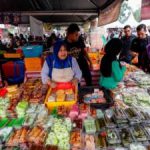
    KOTA KINABALU: The Sabah authorities in principal will not be permitting Ramadan bazaar all through the state this yr in the trouble to curb the Covid-19 outbreak.

    State Secretary Datuk Safar Untong mentioned the ruling was in line with the federal government’s resolution to ban the ‘tamu’ and farmer’s market.

    “The state government will make an official announcement (regarding this matter) including the standard operating procedure (SOP), among others, involving every activity to be carried out in the state,” he informed reporters right here, at this time.

    Safar mentioned the state authorities was now in the method of finalising the SOP, together with the operation hours of each grocery store in the state, to make sure the outbreak can be completely contained.

    “If previously the SOP and the operation hours were not standardised, now we want to standardise them, for example, in supermarkets; every worker and shopper must wear face masks and use the sanitiser,” he mentioned.

    Meanwhile, Safar mentioned the Public Works Department (PWD) has been ordered to restore or exchange damaged primary requirements in each quarantine centre in the state.

    “Any quarantine centre in Sabah that needs repairs, we will fix them using the state’s government allocation, although the buildings are owned by the Federal government. I am sure PWD is now in process of repairing (broken basic needs in quarantine centres),” he mentioned, in response to a viraled video on social media, which confirmed unsatisfactory situation at a quarantine facility in the state.

    A complete of 28 quarantine centres had been established in Sabah to isolate people suspected to be constructive Covid-19 and susceptible to infecting others.

    Commenting on quarantine lodging in three-star motels, Safar mentioned Sabah in the intervening time had been utilizing two three-star motels to deal with people who returned from overseas and wanted to bear the 14-day quarantine.

    “However the costs will be borne by those involved,” he mentioned, including that the federal government’s quarantine centres had been freed from cost and had meals served. — Bernama

    No Ramadan Bazaar in Sabah this year: State Secretary
    Read More
    https://www.thesundaily.my/local/no-ramadan-bazaar-in-sabah-this-year-state-secretary-YB2210023

    Views: 0