Key strategies and tools across these several digital marketing trends that will help you win in the great game of marketing
Read More
http://www.associationofmarketing.org/articles/view.php?article_id=6715
Views: 0
Key strategies and tools across these several digital marketing trends that will help you win in the great game of marketing
Read More
http://www.associationofmarketing.org/articles/view.php?article_id=6715
Views: 0



According to John F. Kennedy, “The war against hunger is truly mankind’s war of liberation.” It is no longer news that Coronavirus (Covid-19) is quite alarming and far spreading while food prices have risen dramatically around the country in recent days, fuelling widespread concern and social unrest in communities confronted with devastating price increases when buying provisions and food stuff. Exactly what accounts for this wild upswing in market prices and what do these trends hold for those already living in precarious conditions?
Hunger and malnutrition are self-perpetuating issues that affect a person’s mental ability, health, work and productivity. They constitute the world’s greatest public health risk, more pressing than corona virus (Covid-19).
There will be restrictions of movement due to the outbreak of Covid-19 (Corona Virus) and yet the government have no plan for its citizen during the sit at home period while other countries made provisions for their citizen so as not to lose their lives to hunger because hunger kills faster than a virus. At least 70 per cent of Nigerians are living on stipend even when they go out to hustle to put food on their tables, what will be their fate staying at home for a longer period without having an alternative? How do they survive? If they eventually survive the virus, will they survive the hunger?
The Nigerian government should put a proper measure in place so our case won’t end up like that of Italy, Spain and America respectively or even worse. Nigerians cherish their lives and am very sure the whole of the cities will be empty like a grave yard if the government can roll out an economic stimulus package to its citizen or better still give out relief funds to every individuals.
Influential individuals and organizations are not left out, I personally go against the act of tokenism portrayed by our banking sectors as i see it as policy or practice of making only a symbolic effort. 80% Nigerians are bank users and as well have a BVN (Bank Verification Number), relief funds can be disbursed to Nigerians via their BVN numbers irrespective of where they are. Billions of naira have been paid to the government account by individuals, organizations as well as the banking sectors to support during this pandemic while its citizens are languishing. I hope mosquitoes don’t swallow all the billions as we will be left with no choice as usual to believe it was swallowed by mosquitoes.
The government should put in place an alternatives for its citizen not just to tell us to sit at home and die of hunger as majority of Nigerians lives on hand to mouth on daily basis.
Education and awareness are the first steps to understanding and solving any issue and hunger is no different, while malnutrition is the single largest contributor to disease.
You pray for the hungry, then you feed them. This is how prayer works. – Pope Francis.
AddThis
:
Original Author
:
Adekunle Adeyemi (Scotty Aluta)
Disable advertisements
:
Read More
http://saharareporters.com/2020/03/29/covid-19-pandemic-hungry-man-not-free-man-adekunle-adeyemi-scotty-aluta
Views: 0

Common trends among parents who are saving for college for their kids.

Read More
https://investornews.vanguard/5-trends-among-parents-saving-for-college/
Views: 0

University of Massachusetts Amherst researchers have invented a portable surveillance device powered by machine learning—called FluSense—which can detect coughing and crowd size in real time, then analyze the data to directly monitor flu-like illnesses and influenza trends.
Read More
https://techxplore.com/news/2020-03-portable-ai-device-health-flu.html
Views: 0
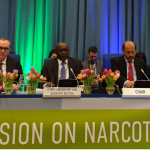
During its 63rd session, the Commission on Narcotic Drugs (CND) accepted all recommendations from the 42nd meeting of the WHO Expert Committee on Drug Dependence (ECDD). This effectively brings twelve psychoactive substances, including eleven New Psychoactive Substances (NPS) and one medicine, under international control. Given the potential for dependence or abuse and known adverse effects, these compounds pose a risk to public health and society and are largely without any therapeutic benefit.
Based on an in-depth review of candidate compounds by the ECDD, an independent group of experts in the field of drugs and medicines, the WHO provides annual recommendations on substance scheduling to the CND, a policy-making body comprised of 53 UN Member States. This ECDD review includes a balanced consideration of potential for abuse, dependence and harm with therapeutic value. The CND then votes on whether or not the WHO recommendations for placing reviewed substances under international control should be endorsed.
The 42nd ECDD recommendations included the addition of four synthetic cannabinoids and three synthetic stimulants to Schedule II of the 1971 Convention on Psychotropic Substances given similar action and adverse effects to other substances in this Schedule. These synthetic cannabinoids have been associated with impaired mental status, impaired driving, and fatalities, whereas the included synthetic stimulants have been linked to fatal intoxication. Similarly, two fentanyl analogues, with their opioid-like effects, were brought under Schedule I control (strict control) of the 1961 Single Convention on Narcotic Drugs given similar action and effects to other drugs in this Schedule. Two benzodiazepines including the medicine etizolam were brought under Schedule IV control of the 1971 Convention on Psychotropic Substances, both of which have been implicated in fatal and non-fatal intoxication and impaired driving. A hallucinogen was also recommended to be brought under control, specifically to Schedule I of the Convention on Psychotropic Substances of 1971, based on abuse potential and non-fatal and fatal intoxication. This is the first hallucinogen to be reviewed in many years, suggesting a potential shift in drug trends. For more information on these recommendations, please review the 42nd ECDD meeting report. .
In addition, the ECDD conducted a pre-review of several Schedule III opioid preparations, some of which can be accessed as over-the-counter options, such as codeine-based cough syrups, to consider their abuse potential. The ECDD recommended a critical review be carried out at a later date.

Read More
https://www.who.int/news-room/detail/18-03-2020-c-n-d-accepts-all-w-h-o-recommendations-from-42nd-e-c-d-d
Views: 0

Twenty-five years ago, two global events – the International Conference on Population and Development and the Fourth World Conference on Women in Beijing – formally recognized that women’s health and reproductive choices cannot be separated from the social context of their lives.
Now, researchers have created a dataset which brings together national surveys from 74 countries, representing 3 million women. For the first time, it allows them to describe trends in demand/use of modern contraceptives alongside social and economic indicators.
The data is published in The Lancet Global Health and is authored by the London School of Hygiene & Tropical Medicine and the World Health Organization.
It shows that, over time, women are more likely to have their demand for modern contraception met in countries where gender equality and their educational opportunities improve.
Trends in sexual activity and demand for use and use of modern contraceptive methods in 74 countries: a retrospective analysis of nationally representative surveys finds that met need for modern contraception is strongly correlated with positive shifts in social structures.
For every 0.1-point increase in a country’s gender development index, it found a 6.7% rise in women who were sexually active and did not want to conceive. Of those women, an additional 13.5% used modern methods to prevent a pregnancy.
Expectations of every girl’s right to education also made a difference. Each extra year in schooling is linked to an increase of 2.3% in demand, and a 4.7% increase in use of modern contraceptive methods.
“This study shows how every woman must negotiate her reproductive autonomy within the social framework in which she lives, responding to barriers and opportunities as they emerge,” says Dr Lale Say, one of the authors of the study and Unit Head at WHO and HRP.
“Gender equality is both a precondition and a driving force for securing women’s reproductive health and rights – as well as the sustainable development targets, which are our best chance for delivering health and well-being for all.”
Overall, the data reinforce global trends: more time spent sexually-active and single, postponement of parenthood, and the near-universal desire for smaller families.
The study also highlights where action is needed at country-level to avoid family planning services falling behind demand.
Out of the 74 countries analyzed, 42 showed an increase in demand for contraception. Only 37 countries show an increase in use of a modern method to prevent pregnancy.
Although unmet need for contraception declined in 34 countries, it increased in 14 countries. Significantly more progress is needed, and faster, to ensure each girl and woman is able to access the sexual and reproductive health services she needs.
Gender equality can affect contraceptive use in many ways. From the personal and political degree to which women are free to choose their sexual activity, to accessing family planning services it can also shape any power imbalances within personal relationships. This study supports recent efforts by WHO to adopt a broader, integrated concept of sexual and reproductive health – and to translate it into a framework for policy and practice.
The authors argue that family planning targets in the 2030 Agenda for Sustainable Development will not be met without a profound shift: from focus on ‘access to contraception’, to broader aspects of sexual health and social context.
Since reproductive health and women’s empowerment are intertwined, trends in contraceptive use can also reveal progress towards another global target: progress towards gender equality.

Read More
https://www.who.int/news-room/detail/10-03-2020-the-unmet-need-for-social-context-in-family-planning
Views: 0

Bucking current trends toward safe, clean and renewable energy resources, a Silicon Valley entrepreneur last week launched an initiative to reignite enthusiasm for nuclear energy.
Read More
Views: 0
An interactive data tool launched by WHO reveals for the first time the current and future financial cost of health care for women living with conditions caused by female genital mutilation (FGM).
The total costs amount to USD 1.4 billion annually.

The FGM Cost Calculator is being launched on this year’s International Day of Zero Tolerance for FGM. This new tool shows that if FGM were abandoned now the associated savings
in health costs would be more than 60% by 2050. This data, available for 27 of the 30 countries where FGM is practiced, will strengthen the economic argument of community activists, policy makers, programme planners and donors working to end this
human rights violation.
Q&As on the FGM Cost Calculator
Access the FGM Cost Calculator
FGM includes procedures that intentionally alter or cause injury to the female genital organs for non-medical reasons. More than 200 million girls and women alive today have been cut in 30 countries in Africa, the Middle East and Asia where FGM is concentrated.
[1] An extreme form of gender discrimination, it is recognized internationally as a violation of the human rights of girls and women: including the right to health, security and physical integrity and the right to be free from torture and cruel, inhuman
or degrading treatment.
FGM has no health benefits and causes only harm. Women and girls who are subjected to FGM are at risk of both short- and long-term negative health consequences – including for their physical, sexual, mental, and social well-being.
The direct financial cost of treating the negative health complications caused by FGM can span generations, starting as early as childbirth. This puts a significant economic burden on health systems and national budgets, especially in countries with rates
of FGM greater than 10%.
Until now, there have been limited data on the financial costs associated with FGM, making it hard to demonstrate the cost-effectiveness of programmes and policies that can prevent FGM by 2030 – a global priority in the Sustainable Development Agenda.
The new WHO Cost Calculator now provides an economic argument which can be used by those advocating for an end to FGM.
Users of the new FGM Cost Calculator can choose a country and identify current costs of treating health conditions caused by FGM. Since the tool is interactive, it produces bespoke graphs showing the potential amount of money saved if FGM is prevented
by a selected percentage.
If no action is taken to prevent FGM, it is estimated that related health costs will soar by 50% by 2050, as populations grow and as more girls undergo the procedure.
The FGM Cost Calculator combines data on health risk associated with FGM, health costs and national FGM prevalence to analyze the economic impact on national health services of treating the consequences of these harmful practices.
Health risk data were taken from a WHO database created for this analysis, pooling all available information from systematic reviews of health consequences of FGM. The following categories were used, each with a biological link to FGM: gynaecological,
obstetric, urological, mental and sexual, as well as the immediate health complications that can result following the cutting.
To be included in the calculator, a health condition needed to show evidence of increased risk when comparing women with and without FGM. It also needed to have a treatment which could be implemented and costed in the health sector.
Health costs were calculated from the WHO One Health Tool and other data. The financial burden of treating selected health conditions was calculated at a national level.
Rates of FGM have declined over the past 30 years, but not fast enough to keep up with population growth. If trends continue, the number of girls and women undergoing FGM will rise significantly in the next 15 years, in turn raising national health care
costs of caring for them.
Additional resources are urgently needed to scale up interventions that can prevent FGM in the future and reduce health complications.
By providing quantifiable numbers on the cost of treating health conditions directly linked to FGM, for the first time, the FGM Cost Calculator can be a crucial tool in building an investment case for a future where no girl or woman is cut.
[1] Female Genital Mutilation/Cutting: A Global Concern, UNICEF, New York, 2016

Read More
https://www.who.int/news-room/detail/06-02-2020-economic-cost-of-female-genital-mutilation
Views: 0
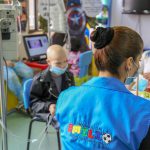
The World Health Organization (WHO) today spells out the need to step up cancer services in low and middle-income countries. WHO warns that, if current trends continue, the world will see a 60% increase in cancer cases over the next two decades. The greatest increase (an estimated 81%) in new cases will occur in low- and middle-income countries, where survival rates are currently lowest.
This is largely because these countries have had to focus limited health resources on combating infectious diseases and improving maternal and child health, while health services are not equipped to prevent, diagnose and treat cancers. In 2019, more than 90% of high-income countries reported that comprehensive treatment services for cancer were available in the public health system compared to less than 15% of low-income countries.
“This is a wake-up call to all of us to tackle the unacceptable inequalities between cancer services in rich and poor countries,” says Dr Ren Minghui, Assistant Director-General, Universal Health Coverage/ Communicable and Noncommunicable Diseases, World Health Organization. “If people have access to primary care and referral systems then cancer can be detected early, treated effectively and cured. Cancer should not be a death sentence for anyone, anywhere.”
Yet, progress in poorer countries is achievable. WHO and the International Agency for Research on Cancer (IARC) are releasing two coordinated reports on World Cancer Day (4 February), in response to government calls for more research into the scope and potential policies and programmes to improve cancer control.
“At least 7 million lives could be saved over the next decade, by identifying the most appropriate science for each country situation, by basing strong cancer responses on universal health coverage, and by mobilizing different stakeholders to work together”, said Dr Tedros Adhanom Ghebreyesus, Director-General, WHO.
WHO highlights a wide range of proven interventions to prevent new cancer cases. These include controlling tobacco use (responsible for 25% of cancer deaths), vaccinating against hepatitis B to prevent liver cancer, eliminating cervical cancer by vaccinating against HPV, screening and treatment, implementing high-impact cancer management interventions that bring value for money and ensuring access to palliative care including pain relief.
“The past 50 years have seen tremendous advances in research on cancer prevention and treatment,” says Dr Elisabete Weiderpass, Director of IARC. “Deaths from cancer have been reduced. High-income countries have adopted prevention, early diagnosis and screening programmes, which together with better treatment, have contributed to an estimated 20% reduction in the probability of premature mortality between 2000 and 2015, but low-income countries only saw a reduction of 5%. We need to see everyone benefitting equally.” The challenge will be for countries to select treatments balancing considerations including cost, feasibility and effectiveness. Each government is tasked with choosing the appropriate innovative cancer therapies, while recognizing that established treatments, many of which are very effective and affordable, can provide benefits for cancer without causing financial hardship.
World Health Organization
Report on Cancer: Setting priorities, investing wisely and providing care for all
The report aims to set the global agenda on cancer, mobilize stakeholders and help countries set priorities for investing in cancer control and universal health coverage. It introduces the principles, tools and current priority cancer control interventions in the context of the current and future cancer burden and opportunities.
International Agency for Research on Cancer
World Cancer Report “Cancer research for cancer prevention”
The report focuses on prevention and offers the most comprehensive overview of relevant research available to date, ranging from descriptive etiology, cellular and molecular biology, toxicology and pathology through to behavioural and social science. Key chapters include discussions on the impact of inequalities in cancer, vaccination and screening, genomic individual susceptibility to cancer and the finer identification of those at risk, which may allow ‘precision cancer prevention’.

Read More
https://www.who.int/news-room/detail/04-02-2020-who-outlines-steps-to-save-7-million-lives-from-cancer
Views: 0