Tag: Treat

  • Medical Product Alert N° 1/2020 (English version)

    Medical Product Alert N° 1/2020 (English version)


    Falsified antimalarials in West and Central Africa displaying an outdated WHO Essential Drugs Programme logo

    This Medical Product Alert relates to a series of confirmed falsified antimalarials circulating in West and Central Africa. Medicines subject of this alert display a similar logo to the outdated
    WHO Essential Drugs Programme logo.
     

    Since 2013, different falsified medicines, all displaying the outdated WHO Essential Drugs Programme logo, have been reported to the WHO Global Surveillance and Monitoring System by various stakeholders. The continued and widespread availability of these falsified medicines highlights a strong need for additional vigilance. WHO previously published two alerts on this issue (No.132 in Oct 2014, and No.131 in March 2014)

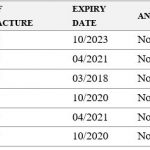
    This WHO medical product alert N°1/2020 refers to falsified Quinine Sulphate 300mg presented in six different combinations of batch numbers, expiry and manufacturing dates (see Table 1). The fraudulent use of the outdated WHO Essential Drugs Programme logo may create a false sense of product quality.

    Table 1: List of identified falsified Quinine Sulphate 300mg, subject of WHO Alert N°1/2020

    Medical Product Alert N° 1/2020 (English version) 1

    Recently received results of analysed samples show they do not contain any of the expected active ingredients.

    Quinine sulphate is referenced on the WHO Model List of Essential Medicines, to manage and treat severe malaria. At this stage, no adverse reactions attributed to these falsified products have been reported to WHO.    

    All the above falsified products claim to be manufactured by REMEDICA LTD – Cyprus and to contain 300mg of quinine sulphate. Remedica Ltd has confirmed that:

    • they did not manufacture the above falsified products; and
    • the variable data (batch number and dates) on the above products has never been used by Remedica.

     These falsified medicines display the following common characteristics (please see photographs):

    • grey or white plastic containers which contain 1000 loose circular tablets each;
    • display the outdated WHO Essential Drugs Programme logo;
    • English and French labelling with mistakes and inconsistencies; and
    • discovered at patient level in both regulated and unregulated outlets.

    Product details, photographs and advice to the public are available on the following pages.

    Outdated WHO Essential Drugs Programme logo 

    Medical Product Alert N° 1/2020 (English version) 2

    Photographs of confirmed falsified Quinine Sulphate 300mg tablets subject of
    Medical Product Alert N°1/2020

    1.       Falsified
    Quinine Sulphate Tablets B.P 300mg
    identified
    in Chad (Batch 44680)

    Medical Product Alert N° 1/2020 (English version) 3


    Medical Product Alert N° 1/2020 (English version) 4

    Medical Product Alert N° 1/2020 (English version) 5Medical Product Alert N° 1/2020 (English version) 6Medical Product Alert N° 1/2020 (English version) 7

    Medical Product Alert N° 1/2020 (English version) 8


    WHO requests increased vigilance within the supply chains of countries likely to be affected by these falsified products. Increased vigilance should include hospitals, clinics, health centres, wholesalers, distributors, pharmacies and any other suppliers of medical products.

    If you are in possession of the above products, please do not use. If you have used these falsified products, or if you suffer an adverse event having used these products, please seek immediate advice from a qualified healthcare professional, and ensure they report the incident to your local Ministry of Health/National Medicines Regulatory Authorities/National Pharmacovigilance Centre.

    All medical products must be obtained from authentic and reliable sources. Their authenticity and condition should be carefully checked. Seek advice from a healthcare professional in case of doubt.

    National health authorities are asked to immediately notify WHO if these falsified products are discovered in their country. If you have any information concerning the manufacture, distribution, or supply of these products, please contact rapidalert@who.int . 

    WHO Global Surveillance and Monitoring System

    for Substandard and Falsified Medical Products

    For further information, please visit our website: www.who.int/medicines/regulation/ssffc/en/


    Medical Product Alert N° 1/2020 (English version)
    Read More
    https://www.who.int/news-room/detail/09-03-2020-medical-product-alert-n-1-2020-english-version

    Views: 0

  • The Moral Machine reexamined: Forced-choice testing does not reveal true wishes

    The Moral Machine reexamined: Forced-choice testing does not reveal true wishes

    A pair of researchers at The University of North Carolina at Chapel Hill is challenging the findings of the team that published a paper called “The Moral Machine experiment” two years ago. Yochanan Bigman and Kurt Gray claim the results of the experiment were flawed because they did not allow test-takers the option of choosing to treat potential victims equally.

    Read More

    Views: 0

  • WHO launch eEML

    WHO launch eEML

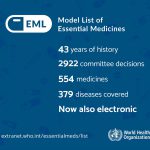
    The World Health Organization has launched a new easy-to-access, digital version of its Model list of Essential Medicines (EML). The move will revolutionize the way this core WHO reference tool is used.

    More than 150 countries currently use the WHO list to work out which medicines best meet their national health contexts and priorities, so they can compile their own national essential medicines lists.

    Essential medicines are those that satisfy the priority health care needs of a population. They are the medicines that need to be available in a functioning health system at all times, in appropriate dosage forms, of assured quality, and at prices individuals and the community can afford.

    Keeping up-to-date lists of the most important medicines a country needs is key to achieving health for all in a sustainable way.

    Since 1977, the WHO list has been revised every 2 years (most recently in 2019) by a group of experts and published in print or PDF formats. It includes information about available dose forms and strengths; specifications as to who should take a medicine; what conditions a medicine can treat and how it should be taken, as well as details about the clinical evidence supporting recommendations being made.

    The new electronic version brings the traditional EML to smartphones and computer screens in a comprehensive, freely accessible, online database. Instead of flicking through pages of information, users can search by simply clicking on the name of a medicine, for example, or a health issue. They can also make their own customized lists by exporting the list – in full or in part – into an Excel or Word version.  

    The electronic EML is the latest step in WHO’s effort to harness digital technologies to drive improvements in global public health, and advance progress towards universal health coverage. 


    WHO launch eEML
    Read More
    https://www.who.int/news-room/detail/27-02-2020-who-launch-e-eml

    Views: 0

  • WHO outlines steps to save 7 million lives from cancer

    WHO outlines steps to save 7 million lives from cancer

    The World Health Organization (WHO) today spells out the need to step up cancer services in low and middle-income countries. WHO warns that, if current trends continue, the world will see a 60% increase in cancer cases over the next two decades. The greatest increase (an estimated 81%) in new cases will occur in low- and middle-income countries, where survival rates are currently lowest.

    This is largely because these countries have had to focus limited health resources on combating infectious diseases and improving maternal and child health, while health services are not equipped to prevent, diagnose and treat cancers. In 2019, more than 90% of high-income countries reported that comprehensive treatment services for cancer were available in the public health system compared to less than 15% of low-income countries.

    “This is a wake-up call to all of us to tackle the unacceptable inequalities between cancer services in rich and poor countries,” says Dr Ren Minghui, Assistant Director-General, Universal Health Coverage/ Communicable and Noncommunicable Diseases, World Health Organization. “If people have access to primary care and referral systems then cancer can be detected early, treated effectively and cured. Cancer should not be a death sentence for anyone, anywhere.”

    Yet, progress in poorer countries is achievable. WHO and the International Agency for Research on Cancer (IARC) are releasing two coordinated reports on World Cancer Day (4 February), in response to government calls for more research into the scope and potential policies and programmes to improve cancer control.

    “At least 7 million lives could be saved over the next decade, by identifying the most appropriate science for each country situation, by basing strong cancer responses on universal health coverage, and by mobilizing different stakeholders to work together”, said Dr Tedros Adhanom Ghebreyesus, Director-General, WHO.

    WHO highlights a wide range of proven interventions to prevent new cancer cases. These include controlling tobacco use (responsible for 25% of cancer deaths), vaccinating against hepatitis B to prevent liver cancer, eliminating cervical cancer by vaccinating against HPV, screening and treatment, implementing high-impact cancer management interventions that bring value for money and ensuring access to palliative care including pain relief.

    “The past 50 years have seen tremendous advances in research on cancer prevention and treatment,” says Dr Elisabete Weiderpass, Director of IARC. “Deaths from cancer have been reduced. High-income countries have adopted prevention, early diagnosis and screening programmes, which together with better treatment, have contributed to an estimated 20% reduction in the probability of premature mortality between 2000 and 2015, but low-income countries only saw a reduction of 5%. We need to see everyone benefitting equally.” The challenge will be for countries to select treatments balancing considerations including cost, feasibility and effectiveness. Each government is tasked with choosing the appropriate innovative cancer therapies, while recognizing that established treatments, many of which are very effective and affordable, can provide benefits for cancer without causing financial hardship.

    Note to editors

    World Health Organization

    Report on Cancer: Setting priorities, investing wisely and providing care for all

    The report aims to set the global agenda on cancer, mobilize stakeholders and help countries set priorities for investing in cancer control and universal health coverage. It introduces the principles, tools and current priority cancer control interventions in the context of the current and future cancer burden and opportunities.

    International Agency for Research on Cancer

    World Cancer Report “Cancer research for cancer prevention”

    The report focuses on prevention and offers the most comprehensive overview of relevant research available to date, ranging from descriptive etiology, cellular and molecular biology, toxicology and pathology through to behavioural and social science. Key chapters include discussions on the impact of inequalities in cancer, vaccination and screening, genomic individual susceptibility to cancer and the finer identification of those at risk, which may allow ‘precision cancer prevention’.

    WHO outlines steps to save 7 million lives from cancer
    Read More
    https://www.who.int/news-room/detail/04-02-2020-who-outlines-steps-to-save-7-million-lives-from-cancer

    Views: 0

  • Female Genital Mutilation Hurts Women and Economies

    Female Genital Mutilation Hurts Women and Economies

    Female genital mutilation (FGM) exacts a crippling economic as well as human cost, according to World Health Organization (WHO).

    “FGM is not only a catastrophic abuse of human rights that significantly harms the physical and mental health of millions of girls and women; it is also a drain on a country’s vital economic resources,” said Dr Ian Askew, Director of WHO’s Department of Sexual and Reproductive Health and Research. “More investment is urgently needed to stop FGM and end the suffering it inflicts.”

    New modelling reveals that the total costs of treating the health impacts of FGM would amount to USD 1.4 billion globally per year, if all resulting medical needs were addressed. For individual countries, these costs would near 10% of their entire yearly expenditure on health on average; in some countries, this figure rises to as much as 30%.

    The interactive modelling tool that generated these data was launched on the International Day of Zero Tolerance for Female Genital Mutilation.

    Severe physical and mental health impacts for women and girls

    Women and girls living with FGM face serious risks to their health and well-being. These include immediate consequences after being cut, such as infections, bleeding or psychological trauma, as well as chronic health conditions that can occur throughout life.

    Women who have undergone the procedure are more likely to experience life-threatening complications during childbirth. They may face mental health disorders or suffer chronic infections. They may also have pain or problems when they menstruate, urinate or have sexual intercourse. 

    All of these conditions warrant much-needed medical attention and care.

    “High healthcare costs for countries mount because of the tragic personal impacts on women and girls. Governments have a moral responsibility to help end this harmful practice,” says Dr Prosper Tumusiime, Acting Director for Universal Health Coverage and the Life Course in the African Regional Office of WHO. “FGM hurts girls, imposes lifelong health risks on the women they become, and strains the healthcare systems that need to treat them.”

    Preventing FGM brings major benefits for women, girls, communities and economies

    Using data from 27 high-prevalence countries, the Cost Calculator demonstrates clear economic benefits from ending FGM. If it were abandoned now, it shows that the associated savings in health costs would be more than 60% by 2050.

    In contrast, if no action is taken, it is estimated that these costs will soar by 50% over the same time period, as populations grow and as more girls undergo the procedure.

    Since 1997, great efforts have been made to end FGM, through work within communities, research, and changes in legislation and policy. 26 countries in Africa and the Middle East now explicitly legislate against FGM, as well as 33 other countries with migrant populations from FGM-practicing countries.

    WHO is also working with countries to raise awareness of the harmful impacts of the practice among their health workers, and to engage them in prevention efforts.

    “Many countries and communities are showing that abandoning female genital mutilation is possible,” states Dr Christina Pallitto, scientist at WHO. “If countries invest to end female genital mutilation, they can prevent their girls from undergoing this harmful practice and promote the health, rights and well-being of women and girls.”

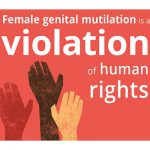
    Female genital mutilation is internationally recognized as a human rights violation. It has no medical benefits and causes only harm. WHO’s position is that FGM must never be carried out.

    Further information

    The FGM Cost Calculator will be available here, as of 00:30 CET 6 February 2020:
    www.who.int/news-room/detail/06-02-2020-economic-cost-of-female-genital-mutilation

    More on FGM

    Notes for Editors

    About FGM

    FGM includes procedures that intentionally alter or cause injury to the female genital organs for non-medical reasons. More than 200 million girls and women alive today are estimated to have undergone the practice across 30 countries in Africa, the Middle East and Asia where FGM is concentrated.

    FGM is mostly carried out on young girls between infancy and 15 years of age.

    About the FGM Cost Calculator

    The WHO FGM Cost Calculator shows the economic cost of treating the health complications caused by FGM across 27 high-prevalence countries. These costs were calculated using the WHO One Health tool and other available scientific evidence.

    Users of the tool can calculate costs by country in a ‘business as usual’ scenario; a scenario of partial abandonment of FGM, and full abandonment of FGM over a 30-year period. In addition, the distribution of costs by different types of health complications is presented by country.

    The tool does not consider other indirect costs that hit families and communities, or the socio-economic impacts of the practice, which would be significantly higher still.

    The 27 countries modelled include Benin, Burkina Faso, Central African Republic, Còte d’Ivoire, Cameroon, Chad, Djibouti, Egypt, Eritrea, Ethiopia, Ghana, Guinea, Gambia, Guinea-Bissau, Iraq, Kenya, Mali, Mauritania, Niger, Nigeria, Soudan, Senegal, Sierra Leone, Somalia, Togo, United Republic of Tanzania, Yemen.

    Female Genital Mutilation Hurts Women and Economies
    Read More
    https://www.who.int/news-room/detail/06-02-2020-female-genital-mutilation-hurts-women-and-economies

    Views: 0

  • Is a common shoulder surgery useless?

    Is a common shoulder surgery useless?

    New research casts doubt on the true effectiveness of a common type of surgery used to ease shoulder pain.

    A British research team tracked outcomes for patients who underwent “decompression surgery” to treat shoulder impingement – a condition where a shoulder tendon rubs and catches in the joint.

    In decompression surgery, a small area of bone and soft tissue in the shoulder joint is removed, opening up the joint to prevent the abrasion that happens when the arm is lifted.

    Views: 0

  • It’s time to consider propranolol as an anti-cancer drug, researchers say

    It’s time to consider propranolol as an anti-cancer drug, researchers say

    Propranolol, a beta-blocker commonly prescribed to treat irregular heart rates and other conditions, has significant anti-cancer properties, say researchers in a new clinical study published in ecancermedicalscience.

    The Repurposing Drugs in Oncology (ReDO) project, an international collaboration between the Anticancer Fund, Belgium, and US based GlobalCures, says that existing and widely-used non-cancer drugs may represent a relatively untapped source of novel therapies for cancer.

    Historically, pharmaceutical companies devote little time to “repurposing” existing drugs. The ReDO project hopes to change that, raising awareness by publishing a series of articles in ecancer to share evidence for using these therapies in cancer medicine.

    Views: 0

  • Rap1, a potential new target to treat obesity

    Rap1, a potential new target to treat obesity

    cientists at Baylor College of Medicine, the National Institutes of Health and Virginia Tech Carilion Research Institute have discovered a new mechanism in the mouse brain that regulates obesity. The study, which appears in Cell Reports today, shows that this new mechanism can potentially be targeted to treat obesity.

    “It’s well known that the brain is involved in the development of obesity, but how a high-fat diet changes the brain so it triggers the accumulation of body fat is still unclear,” said senior author Dr. Makoto Fukuda, assistant professor of pediatrics at Baylor and the USDA/ARS Children’s Nutrition Research Center at Baylor and Texas Children’s Hospital.

    Fukuda and colleagues studied the mouse Rap1 gene, which is expressed in a variety of tissues, including the brain where it is involved in functions such as memory and learning. Little was known, however, of the role brain Rap1 plays in energy balance.

    Views: 0

  • You Can Stop Feeling Bad About Eating Chocolate

    You Can Stop Feeling Bad About Eating Chocolate

    Whether you’re an avid baker, or just love a sweet treat, it’s hard to resist the appeal of chocolate. But increasing evidence shows that resistance may not be necessary. Studies demonstrate myriad benefits of chocolate, from creating a feel-good buzz to boosting cardiovascular health. Read on to learn more, then try some healthy recipes.

    The Latest Research

    A recent study in the journal Heart shows that habitual chocolate consumption is linked to a lower risk of cardiovascular disease and stroke. Keeping in mind that the study only demonstrated correlation (not causation), it’s nonetheless exciting to see that among participants who consumed a relatively high volume of chocolate every day, 12% developed or died of cardiovascular disease during the 12-year study. Compare that to participants who didn’t eat chocolate at all, among whom 17.4% developed or died of the disease. How much were the chocolate-eaters consuming? About 16 to 100 grams per day, or roughly one half to two typical chocolate bars.

    Views: 0

  • Cervical Traction: The Best Way to Heal a Sore Neck

    [ad_1]

    Traction is a centuries old treatment that has been administered by chiropractors for healing conditions like a sore neck or a sore back. Alternately, traction therapy may be used for decompressing any of the ailing joints.

    Who Can Use Traction Therapy

    Traction may broadly be seen as application of continuous force to stretch the spine. It is also very often used and is highly effective for treatment of musculoskeletal conditions, i.e. injuries that are not externally visible, but involve muscles, ligaments, joints, tendons, nerves, bones or the supporting structures. For muscular disorders, including muscle spasms, dislocation or for fracture, traction therapy can be very useful, and is often applied for arms, legs, back or neck.

    Traction Therapy for Neck related Issues

    In particular, traction therapy can be greatly effective for neck related problems. While neck traction is very often applied to ensure pain relief, there are various mechanisms by which it heals the neck.

    1. When traction is applied on the neck, soft tissues and joints are mobilized in the cervical spine.

    2. Alternately, it relieves pressure from the pinched nerve root by applying decompressive forces,

    3. And also reduces herniations on the spine.

    4. By applying traction, one can align any dislocations in the cervical spine, and this can effectively stabilize an injury in the cervical spine.

    5. And for anyone who has a faulty neck posture, such as the forward head posture, home traction therapy can enable the patient to get the curve in the neck again.

    6. This also works very well for anyone who suffers from conditions like military neck, wherein the curve of the neck is not bent forward, as it should ideally be. When a patient suffers from military neck, the curve of the neck is either straight or bent backwards, and with cervical traction, the patient benefits in the long term. Cervical traction not just ensures pain relief for the patient, but also increases the cervical range of motion, such that the patient can comfortably return to everyday activities.

    If one is able to treat a sore neck at home, it simply speeds up the healing process, and might even suffice in terms of treatment. Home cervical traction is advantageous because while it ensures long term pain relief, it is a non invasive treatment methodology.

    When cervical traction is administered, it relieves neck pain by stretching the soft tissue, or the tissues such as tendons, ligaments and fibrous tissue which surround, connect or support the backbone. This in turn works towards separating the spinal joint structures and ensures pain relief.

    With constant traction, the muscles are fatigued out, and the strain then rests on the joints. So with traction, the joint spaces are widened, and this induces pain relief as pressure on the cervical nerves is reduced.

    Cervical Traction: Is It Painful?

    People often wonder if traction therapy or traction devices in particular are painful. But traction therapy has been in prominence for centuries, and has worked very effectively for healing conditions like a stiff neck.

    Moreover, nowadays one can find some highly refined cervical traction devices which allow the patient to himself control the pressure. These are air inflated devices which work using a hand operated air pump, and allow the patient to adjust the air pressure to suit his needs and comfort levels.

    [ad_2]

    Source by Harshad Jethra

    Views: 0