Tag: Terrorism

  • Terrorism – A Threat to Global Peace

    Terrorism – A Threat to Global Peace

    ABSTRACT

    Nowadays, no one seems to be saved in the world. Terrorism, an ugly development which has compelled the world leaders as well as the public figures to spend millions of dollars beefing up their security, has become a global threat. Amidst this seemingly tight security and threat, thousands of innocent souls have lost their lives to the annihilation called terrorism.

    Statistically, it has been proved that no country of the world is exceptional to terrorist attacks. Pius Odiaka writes on the palpable fear pervading world following the series of bombings in some countries. He declares in the Guardian Newspaper, Friday, July 29th, 2005, (page 24) that “No part of the world has been left without terrorist bloodshed. From Kenya, Algeria, Egypt in Africa to many countries in the middle East and the Gulf; Indonesia, Philippine, Pakistan and India across Asia; Washington and New York in America; Spain and now London in Europe, many innocent souls have been sniffed out of existence.”

    The paper will present how terrorism is a threat to Global Peace. It will enumerate the category of acts of terrorism. It will also examine the causes and implications of terrorism in human advancement especially in the area of peace building and keeping. Above all, it will provide recommendations by referring to the United Nations recommendations for a global counter-terrorism strategy. It concludes by affirming that the global peace can only be achieved if the world- the leaders and the followers-condemn terrorism in all forms and ramifications, and act unconditionally and justly in their quest to providing everlasting solutions to peace, as it constitutes one of the most serious threats to global peace and security.

    Introduction

    In human history, terrorism is widely recognized as the world most famous enemy of mankind. As history itself will admit that terrorism is annihilation with far-reaching and destructive effects, it is the cruelest of crimes against humanity. Its remains have turned neighbours into enemies and have made our societies and the whole world unsafe for living. Its aims and applications are global and uncompromising. Neither terrorism nor is perpetrators are new. Even though it has been used since the beginning of recorded time, not history itself can keep, with precision, the number of lives and properties lost to terrorism.

    No doubt, terrorism with its destructive power has reshaped the world we live in. We now live in the world characterized by rising violence and conflicts. This, in turn, has led to the world of growing mistrust, fear, division and represents a significant new threat to international justice, peace and security. This ugly development thus made Amnesty International to observe in its 2004 Report the lasting effects of the crime on humanity.

    This report and others provide a valid point on how terrorism or terrorist acts have made the world unsafe and how it has threatened global peace.

    Historical Background of terrorism

    It is pertinent to recall that forms of society and governments in the past differ from what they are today, when describing the history of terrorism and the use of terror through time. Not until 1648 (Treaty of Westphalia), there was nothing like modern nation-states. More recent is the state’s monopoly on warfare or interstate-violence. The absence of central authority gave many more players opportunity to participate in the game of warfare. However, this did not make the use of terror a method of affecting a political change. In contrast to the modern era, where only nations go to war, the involvement of players such as religious leaders, mercenaries, mercantile companies, national armies and many more was considered to be lawful and normal.

    Terrorist acts or the threat of such action have been in existence for millennia. So, in narrating the history of terrorism, it is important to talk about the various types of terrorism and terrorist individuals and groups. Below is the summary of the history of terrorism.

    Ancient World:

    Sicarii Zealots

    Political scientists see the radical Sicarii offshoot of the Jewish Zealots as one of the earliest forerunners of modern terrorism. Like modern terrorists, they intended their actions to suggest a message to a wider target audience: in this instance, the roman imperial officials and all pro-Roman and collaborationists

    Al-Assassin

    The Hashshashin (also Hashishin, Hashsshiyyin or Assassins) were an offshoot of the Isma ili sect of the Shiite Muslims. After a quarrel about the succession of leadership in the ruling Fatimide dynasty in Cairo around the year 1090, the losing Nizariyya faction was driven from Egypt. They established a number of fortified settlements in present day Iran, Iraq, Syria and Lebanon under the charismatic leader Hasan I Sabbah.Persecuted as infidel by the dominant Sunni sect in the Muslim world; they sent dedicated suicide murderers to eliminate prominent Sunni leaders whom they considered “impious usurpers.” The sect was decimated by the invading Mongols, their last stronghold being flattened by Hulegu Khan in the year 1272.Many scholars believe the term Hashshashin, a name given to them by their enemies was derived from the Arabic “hassasin(hashish user),which they are alleged to have ingested prior to their attacks, but this etymology is disputed. The sects referred to themselves as al-da-wa al-jadida, which means the new doctrine, and were known within the organization as Fedayeen.

    Seventeenth century

    Gunpowder Plot (1605)

    On November 5, 1605 a group of conspirators, led by Guy Fawkes, attempted to destroy the English Parliament on the State Opening, by detonating a large quantity of gunpowder secretly placed beneath the building. The design was to kill King James1 and the members of both houses of parliament. In the resulting anarchy, the conspirators planned to implement a coup and restore the Catholic faith to England. However the plan was betrayed and then thwarted.

    Eighteenth century

    1.Sons of Liberty

    The Sons of Liberty were an underground group opposed to British Rule in the colonies, who committed several attacks, most famous among these was the Boston Tea Party. No one was killed or seriously injured by any action that was taken.

    2.The Terror (1793-1794)

    The Reign of Terror ( September 5 1793- July 28 1794) or simply The Terror ( French: la Terreur) was a period of about eleven months during the French Revolution when struggles between rival factions led to mutual radicalization which took on a violent character with mass executions by guillotine.

    The victims of the Reign of Terror totaled approximately 40,000.Among people who are condemned by the revolutionary tribunals, about 8 percent were aristocrats, 6 percent clergy 14 percent middle class, and 70 percent were workers or peasants accused of hoarding, evading the draft, desertion, rebellion, and other purported crimes.

    Nineteenth century

    1.Anarchism

    Anarchists was the most prolific terrorists of the 19th century, with the terroristic tendencies of both nationalism and political movements of Communism or fascism still in there infancy. The disjointed attacks of various anarchists groups lead to the assassination of Russian Tsars and American Presidents but had little real political impact.

    2.Tsarist Russia

    In Russia, by the mid-19 th century, the intelligentsia grew impatient with the slow pace of Tsarist reforms, which had slowed considerably after the attempted assassination of Alexander II of Russia. Radicals then sought instead to transform peasant discontent into open revolution. Anarchists like Mikhail Bakunin maintained that progress was impossible without destruction. With the development of sufficiently powerful, stable, and affordable explosives, the gap closed between the firepower of the state and the means available to dissidents. The main group responsible for the resulting campaign of terror-‘Narodnaya Volya’ (people’s will) (1878-81) – used the word ‘terrorist’ proudly. They believed in the targeted killing of the ‘leaders of oppression’; they were convinced that the developing technologies of the age-symbolized by bombs and bullets- enabled them to strike directly and discriminately.” People’s Will”, possessing only 30 members, attempted several assassination attempts upon Tsa. Culminating in the assassination of Tsar Alexander II on 13 March 1881, killing the Tsar as he was traveling by train.

    3. Irish Republican Brotherhood

    In 1867, the Irish Republican Brotherhood, a revolutionary nationalist group with support from Irish-Americans, carried out attacks in England. These were the first acts of “republican terrorism”, which became a recurrent feature of British history, and these Fenians were the precursor of the Irish Republican Army. The ideology of the group was Irish nationalism.

    4. Nationalist terrorism

    The Fenians/IRA and the IMRO may be considered the prototype of all ‘nationalist terrorism’, and equally illustrate the (itself controversial) expression that “one man’s terrorist is another man’s freedom fighter’. At least one of these groups achieve its goal: an independent Ireland came into being. So did an independent Macedonia, but original IMRO probably contributed little to this outcome. Some groups resorted to the use of dynamite, as did Catalan nationalists such as La Reixa and Bandera Negra.

    5. John Brown

    John Brown was an abolitionist who advocated armed opposition to slavery. He committed several terrorist attacks and was also involved in an illegal smuggling of slaves. His most famous attack was upon the armory at Harpers Ferry, though the local forces would soon recapture the fort and Brown, trying and executing him for treason. His death would make him a martyr to the abolitionist cause, one of the origins of American Civil War, and a hero to the Union forces that fought in it.

    6. Ku Klux Klan (1865)

    The original Ku Klux Klan (KKK) was created after the end of the American Civil War on December 24, 1865, by six educated middle-class confederate veterans from Pulaski, Tennessee. It soon spread into nearly every southern state of the United States. The Klan has advocated for what is generally perceived as white supremacy, anti-Semitism, racism, anti-Catholicism, homophobia, and nativism. They have often used terrorism, violence and acts of intimidation such as cross burning to oppress African Americans and other groups. The name ‘Ku Klux Klan’ has been used by many different unrelated groups, but they all seem to center on the belief of white supremacy. From its creation to the present day, the number of members and influence has varied greatly. However, there is little doubt that, especially in the southern United States, it has at times wielded much political influence and generated great fear among African Americans and their supporters. At one time KKK controlled the governments of Tennessee, Indiana, Oklahoma and Oregon, in addition to some of the southern U.S legislatures.

    Twentieth century

    Suffragette, Assassination of Archduke Ferdinand (1914), KKK(1915),Irgun (1936-1948), World War II, Nationalism and the End of Empire,Cold War proxies,,IRA,,ETA, Aum Shinrikyo (1984-1995), Achille Lauro Hijacking (1985), Lockerbie bombing (1988), Umkhonto we Sizwe (South Africa 1961-1990), PLO (1964-c.1988), Columbian terrorist groups, Munich Massacre (1972),Matsumoto incident(1994), Sarin gas attack on Tokyo subway(1995),and Oklahoma City bombing (1995) are types of terrorism and individual terrorists and groups that operated in the twentieth century.

    Twenty-First Centuries

    The well-celebrated September 11 (2002) attack and the Beslan school siege are recent terrorist attacks of the twenty-first century.

    Terrorism: Definition of a Phenomenon

    As clearly stated above, terrorism has established itself as a world phenomenon before 1648. But then, it becomes imperative to look into the true meaning of the term.Although providing a definite definition for it has been accorded with series of controversies, etymologically, the term emanates from Latin, “terrere”, meaning “to frighten” via the French word terrorisme, which is often associated with the regime de la terreur, the Reign of Terror of the revolutionary government in France from 1793 to 1794.The Committee of Public Safety agents that enforced the policies of “The Terror” were referred to as ” Terrorists”.

    The English word “terrorism” was first recorded in English dictionaries in 1798 as meaning “systematic use of terror as a policy”. The Oxford English Dictionary still records a definition of terrorism as “Government by intimidation carried out by the party in power in France between 1789-1794.

    The controversial issue is that the vocabulary of terrorism has become the successor to that of anarchy and communism the catch-all label opprobrium, exploited accordingly by media and politicians.The difficulty in constructing a definition which eliminates any just cause for terrorism is that history provides too many precedents of organizations and their leaders branded as terrorist but who eventually evolved into respected government. This has applied particularly to national liberation movements fighting colonial or oppressive regimes, engaging in violence within their countries often as a last resort. Jomo Kenyatta of Kenya spent years of his life lobbying the British government before his involvement with the Mau Mau rebellion. Nelson Mandela, a hero in his continent and beyond, is another convicted “terrorist” belonging to this class.

    Before making a valid point, it is important to say that this piece would like to consider further statements and criticisms on the issue and recognized that there are other valid arguments on these controversial issues. However, they are not within premises of this paper.

    Arriving at a universally accepted definition of terrorism which narrows down to a specific method of conducting violence instead of “all its forms and manifestations” or which makes it possible to refer terrorist acts to an international court, as for genocide and other war crimes or which makes it impossible for individual countries to outlaw activities they choose to classify as terrorism perhaps for their own political interest is a great challenge in the study of terrorism.

    While the United Nations has not yet accepted a definition of terrorism, the UN’s “academic consensus definition,” has been put forth for consideration. And they are available for public evaluation.

    In final analysis, although, it is not clear the actual number of definitions of terrorism; but it is clear that terrorism does not have respect for human lives and values. It has claimed thousands of lives of innocent souls, rendered millions of people homeless and economically handicapped. Alas, it is clearer that terrorism has turned our world into a place conducive for its existence and spread.

    Effects of terrorism on global peace

    Indisputably, terrorism is a threat to global peace. As it thrives well in a world such as ours- where violation of human rights, rising violence and conflicts, ethnic, national and religious discrimination, socio-economic marginalization and extreme ideology, dehumanization of victims are prominently in practice, it has succeeded in disregarding human lives and values, launching war on freedom and peace, multiplying violence and conflicts, and posting challenges of solving the problem of injustice, insecurity and declining economy.

    Recommendations

    In accordance with the United Nations in a report titled: Uniting Against Terrorism-Recommendations for a global counter-terrorism strategy, this paper hereby presents the following recommendations;

    (1)All stakeholders-the leaders and the followers, individuals and institutions must dissuade people from resorting to terrorism or supporting it.

    (2) All stakeholders, in all ways and at all levels, must deny terrorists the means to carry out an attack by:

    – denying terrorists financial support.

    -denying terrorists access to deadly weapons, including weapons of mass destruction.

    – denying terrorists access to travel.

    -denying terrorists access to their targets and their desired impact.

    (3) All stakeholders, in all capacities, must deter States from supporting terrorists groups.

    (4) All stakeholders must develop State capacity to prevent terrorism by:

    – promoting the rule of law and effective criminal justice systems.

    – promoting quality education and religious and cultural tolerance.

    – countering the financing of terrorism.

    – ensuring transport security.

    – preventing terrorists from acquiring nuclear, biological, chemical or radiological

    materials, and ensuring better preparedness for an attack with such materials

    -improving the defense of soft targets and the response to their attack.

    – promoting United Nations system-wide coherence in countering terrorism.

    (5) All stakeholders, collectively, must defend human rights in the context of terrorism and counter- terrorism.

    Even though my recommendations are fashioned out of United Nations recommendation for a global strategy, they represent a holistic and realistic approach to fighting or countering terrorism. However, if these recommendations are given the opportunity to operate or if implemented and executed properly and continuously, they are effective strategies of countering terrorism and, at the same time, ensuring a world free of violence and conflict, violations of human rights, ethnic, national and religious discrimination, political exclusion, and socio-economic marginalization

    Conclusion

    As you will agree with me that terrorism affects all of us, our approach to fighting or countering terrorism and ensuring a safe and peaceful world must be collective. However, it is worth noting that the world leaders, followers and stakeholders have vital roles to play in the fight against terrorism and in achieving our goals of global peace and security.

    For the world leaders and stakeholders, these roles transcend attending or organizing world summit, conferences, seminars, e.t.c on the topic, and consenting to Global strategy to counter terrorism on papers. They need to commit more resources, at all levels, to the cause, be more sincere and objective in their judgments, more practical in their approach, and create enabling environments conducive for justice, conflict resolutions, human right protection, equality, stability, unity, prosperity, tolerance, peace and security.Above all, they need to promote and support ultimately because that have respect for human lives and values.

    For followers and individuals, we need to carry out the message beyond conferences that terrorism is inexcusable and unacceptable. We need to engage in one- to -one education or group discussions enlightening ourselves on the devastating and destructive effects of terrorism on our lives and values, and emphasizing that terrorism is not an effective way of championing a cause, whether political, religious or otherwise. We must recognize that peace is the most precious need of humanity.

    Source by Azeez Olawale-Arish Yusuff

    Views: 0

  • No Evidence That Shekau Received €5m Foreign Fund From An NGO

    No Evidence That Shekau Received €5m Foreign Fund From An NGO

    Boko Haram Terrorists
    Boko Haram Terrorists

    Fact-checkers at HumAngle online newspaper have described a news report published on Opera News that Abubakar Shekau’s faction of Boko Haram was in disarray after it received a donation of five mIllion euros from an “unidentified” international non-governmental organisation as false.

    The publication claimed that senior members of the group have also turned against each other over how the fund should be shared within the group.

    The story claimed that a military source said “Shekau is getting blind as such only the very close ones of his aides have access to him. The issue of €5m is causing serious disaffection in their camps.

    “Shekau has been receiving such funding in the past and he was never able to build his terror infrastructure beyond what is currently being dismantled. Our commanders are not concerned that he is still defrauding those sponsoring him, if there is any concern it is that we should be able to capture him before his own fighters kill him,” the military source said as claimed by the news report.

    No Evidence That Shekau Received €5m Foreign Fund From An NGO 1Boko Haram Terrorists


    But according to HumAngle newspaper, the Director of Nigerian Army Public Relations, Sagir Musa, when contacted to verify the claim said he was not aware of either the “verified intelligence reports” or the claim that Shekau received five million euros foreign fund through an NGO in the North-East.

    The newspaper also said it searched autogist.com, the blog that the news was attributed to but could not find the story published on the blog.

    “Fact-checkers at HumAngle contacted the Director of Nigerian Army Public Relations, Sagir Musa, to confirm the veracity of the claim and he said he was not aware of either the “verified intelligence reports” or the claim that Shekau received five million euros foreign fund through an NGO in the North-East.

    “We searched autogist.com, the blog that the news was attributed to but could not find the story published on the blog. Also, no reliable medium reporting terrorism published the story. Other conflict and insurgency reporters were contacted by HumAngle but none was aware of the “verified intelligence report”.

    “As the name of the NGO was not disclosed, it became difficult to trace its operation history. 

    “However, Nigeria’s military had suspended several NGOs from operating in the North-East following allegations of collaborating with the terrorist organisation. But no NGO has ever been charged to court by the authorities and the suspended NGOs were later allowed to resume operations in the region.

    “Scholars and experts on Boko Haram have suggested different methods of terrorism financing, from state sponsorship to external support by other terror groups like ISIS and Alqa’eda. But Shekau’s faction of Boko Haram relies on self-funding streams through fishing, farming, crowdfunding, extortion, taxation, raids and ransom taking to finance its operations,” the newspaper published.

    Quoting a report on Boko Haram sources of funding, it continued, “Much of Boko Haram’s funds are transported through human cash couriers, which are able to move rather easily between the porous borders of Nigeria, Niger, Cameroon and Chad… very little evidence of either Gulf or other foreign funding exists,” a report on Boko Haram sources of funding concluded.

    “Due to the strict surveillance of monetary operations to avoid terrorist financing in Nigeria, financial regulations have forced Boko Haram to avoid remittances of funds online. Such a huge amount is not possible to be transferred without its being intercepted by international and local intelligence platforms.”

    The newspaper further said Nigeria Financial Intelligence Unit follows any suspicious transaction with the aim of curbing terrorism financing.

    “It collates information of all beneficiaries of humanitarian assistance to avert financing of terrorism through covert operations, thus making it impossible for any NGO to follow “previous channels and beneficiaries’ templates” of funding terrorism as claimed by the report.

    “Humanitarian organisations work hand in hand with EFFC Department of Special Control against Money Laundering (SCUML) to checkmate their activities to curb terrorism financing, according to Abdurrashid Ibrahim a worker at the financial unit of an NGO in the North-East.

    “Any transaction from five million naira must pass through a special control unit against money laundering (SCUML) clearance process be it for individual or corporate organisation,” he said.

    Furthermore, there is no evidence that an NGO was allowed to operate after the military discovered that “Shekau has been receiving such funding in the past” as claimed by the news.

    According to HumAngle findings, Abubakar Shekau does not operate or rely on an advisory council (Shura). 

    He is reported to be ruthless and brutal to any opposition within the group, making it unlikely for any Boko Haram commander to disagree with the leader.

    Boko Haram

    Terrorism

    News

    AddThis

    : 

    Original Author

    : 

    SaharaReporters, New York

    Disable advertisements

    : 
    No Evidence That Shekau Received €5m Foreign Fund From An NGO
    Read More
    http://saharareporters.com/2020/05/08/no-evidence-shekau-received-%E2%82%AC5m-foreign-fund-ngo

    Views: 0

  • UK PM listened to his scientists about Covid-19, but they were slow to sound the alarm

    UK PM listened to his scientists about Covid-19, but they were slow to sound the alarm

    UK PM listened to his scientists about Covid-19, but they were slow to sound the alarm 2

    LONDON: It was early spring when British scientists laid out the bald truth to their government. It was “highly likely,“ they said, that there was now “sustained transmission” of COVID-19 in the United Kingdom.

    If unconstrained and if the virus behaved as in China, up to four-fifths of Britons could be infected and one in a hundred might die, wrote the scientists, members of an official committee set up to model the spread of pandemic flu, on March 2. Their assessment didn’t spell it out, but that was a prediction of over 500,000 deaths in this nation of nearly 70 million.

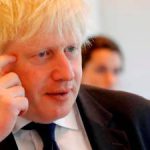
    Yet the next day, March 3, Prime Minister Boris Johnson was his cheery self. He joked that he was still shaking hands with everyone, including at a hospital treating coronavirus patients.

    “Our country remains extremely well prepared,“ Johnson said as Italy reached 79 deaths. “We already have a fantastic NHS,“ the national public health service, “fantastic testing systems and fantastic surveillance of the spread of disease.”

    Alongside him at the Downing Street press conference was Chris Whitty, the government’s chief medical adviser and himself an epidemiologist. Whitty passed on the modelling committee’s broad conclusions, including the prediction of a possible 80% infection rate and the consequent deaths. But he played them down, saying the number of people who would be infected was probably “a lot lower” and coming up with a total was “largely speculative.”

    The upbeat tone of that briefing stood in sharp contrast with the growing unease of many of the government’s scientific advisers behind the scenes. They were already convinced that Britain was on the brink of a disastrous outbreak, a Reuters investigation has found.

    Interviews with more than 20 British scientists, key officials and senior sources in Johnson’s Conservative Party, and a study of minutes of advisory committee meetings and public testimony and documents, show how these scientific advisers concluded early the virus could be devastating.

    But the interviews and documents also reveal that for more than two months, the scientists whose advice guided Downing Street did not clearly signal their worsening fears to the public or the government. Until March 12, the risk level, set by the government’s top medical advisers on the recommendation of the scientists, remained at “moderate,“ suggesting only the possibility of a wider outbreak.

    “You know, there’s a small little cadre of people in the middle, who absolutely did realise what was going on, and likely to happen,“ said John Edmunds, a professor of infectious disease modelling and a key adviser to the government, known for his work on tracking Ebola. Edmunds was among those who did call on the government to elevate the warning level earlier.

    From the outset, said Edmunds, work by scientists had shown that, with only limited interventions, the virus would trigger an “overwhelming epidemic” in which Britain’s health service was not going “to get anywhere near being able to cope with it. That was clear from the beginning.”

    But he said: “I do think there’s a bit of a worry in terms you don’t want to unnecessarily panic people.”

    Johnson, who himself has sickened with the virus, moved more slowly than the leaders of many other prosperous countries to adopt a lockdown. He has been criticised for not moving more swiftly to organise mass tests and mobilise supplies of life-saving equipment and beds. Johnson was hospitalized on April 5 and moved to intensive care the next day.

    It is too soon to judge the ultimate soundness of the UK’s early response. If history concludes that it was lacking, then the criticism levelled at the prime minister may be that, rather than ignoring the advice of his scientific advisers, he failed to question their assumptions.

    Interviews and records published so far suggest that the scientific committees that advised Johnson didn’t study, until mid-March, the option of the kind of stringent lockdown adopted early on in China, where the disease arose in December, and then followed by much of Europe and finally by Britain itself. The scientists’ reasoning: Britons, many of them assumed, simply wouldn’t accept such restrictions.

    The UK scientists were also mostly convinced – and many still are – that, once the new virus escaped China, quarantine measures would likely not succeed. Minutes of technical committees reviewed by Reuters indicate that almost no attention was paid to preparing a programme of mass testing. Other minutes and interviews show Britain was following closely a well-laid plan to fight a flu pandemic – not this deadlier disease. The scientists involved, however, deny that the flu focus ultimately made much difference.

    Now, as countries debate how to combat the virus, some experts here say, the lesson from the British experience may be that governments and scientists worldwide must increase the transparency of their planning so that their thinking and assumptions are open to challenge.

    John Ashton, a clinician and former regional director of Public Health England, the government agency overseeing healthcare, said the government’s advisers took too narrow a view and hewed to limited assumptions. They were too “narrowly drawn as scientists from a few institutions,“ he said. Their handling of COVID-19, Ashton said, shows the need for a broader approach. “In the future we need a much wider group of independent advisers.”

    Michael Cates, who succeeded Stephen Hawking as Lucasian Professor of Mathematics at Cambridge University, is leading an initiative by the Royal Society, the UK’s leading scientific body, to bring modellers in from other scientific disciplines to help understand the epidemic.

    “Without faulting anyone so far, it’s vital, where there is such a lot at stake, to throw the maximum possible light on the methods, assumptions and data built into our understanding of how this epidemic will develop,“ he told Reuters.

    In a statement to Reuters, a spokesperson for the Department of Health and Social Care said the government was delivering “a science-led action plan” to contain the outbreak. “As the public would expect, we regularly test our pandemic plans and what we learned from previous exercises has helped us to rapidly respond to COVID-19.”

    A LOW RISK TO THE PUBLIC

    When news came from China in January of a new infectious disease, Johnson had reason to believe his country was well prepared. It had some of the world’s best scientists and a well-drilled plan to deal with potentially lethal pandemics. Perhaps, some scientists say in hindsight, the plan made them slow to adapt.

    For many years, the Cabinet Office – a collection of officials who act as the prime minister’s direct arm to run the government – took the threat of pandemics seriously. Presciently, it rated pandemics as the Number 1 threat to the country, ahead of terrorism and financial crashes.

    At the centre of planning was a small group of scientists, among them Edmunds. His research group at the London School of Hygiene and Tropical Medicine runs one of the two computer modelling centres for epidemics that have mostly driven government policy. The other is at nearby Imperial College. Edmunds remembers that early in the outbreak, the data from China were sketchy, in the period “where the Chinese were trying to pretend that this wasn’t transmissible between humans.”

    Edmunds and his colleague at Imperial, Neil Ferguson, were part of an alphabet soup of committees that fed advice into the Cabinet Office machinery around the prime minister. Both were founders of the flu pandemic modelling committee, known as SPI-M, that produced the March 2 report warning of more than 500,000 deaths. This committee had met together for nearly 15 years.

    Ferguson did not respond to a request to be interviewed for this article.

    Edmunds and Ferguson were also part of NERVTAG, the New and Emerging Respiratory Virus Threats Advisory Group. Both too were members of the Scientific Advisory Group for Emergencies, known as SAGE, that advises the government in times of crisis. SAGE reports directly to Johnson and the government’s main emergency committee, COBRA.

    At first, when NERVTAG met on January 13, it studied information from China that there was “no evidence of significant human to human transmission” of the new virus, according to minutes of the meeting. The scientists agreed the risk to the UK population was “very low.”

    The evidence soon changed, but this wasn’t reflected in the official threat level. By the end of January, scientists in China began releasing clinical data. Case studies published in the British medical journal, The Lancet, showed 17% of the first 99 coronavirus cases needed critical care. Eleven patients died. Another Chinese study, in the same magazine, warned starkly of a global spread and urged: “Preparedness plans and mitigation interventions should be readied for quick deployment globally.”

    Edmunds recalled that “from about mid January onwards, it was absolutely obvious that this was serious, very serious.” Graham Medley, a professor of infectious diseases modelling at the London School and chairman of SPI-M, agreed. He said that the committee was “clear that this was going to be big from the first meeting.” At the end of January, his committee moved into “wartime” mode, he said, reporting directly into SAGE.

    Dr Jon Read, a senior lecturer in biostatistics at the University of Lancaster, also a member of SPI-M, said by the end of January it was apparent the virus had “pandemic potential” and that death rates for the elderly were brutal. “From my perspective within the sort of modelling community, everybody’s aware of this, and we’re saying that this is probably going to be pretty bad,“ he said.

    But the scientists did not articulate their fears forcefully to the government, minutes of committee meetings reveal.

    On January 21, scientists on NERVTAG endorsed the elevation of the UK risk warning from COVID-19 from “very low” to “low.” SAGE met formally for the first time the following day about the coronavirus threat. So did COBRA, which was chaired by Matt Hancock, the health secretary, who would contract the virus himself in late March. He told reporters after the meeting: “The clinical advice is that the risk to the public remains low.”

    In response to questions from Reuters, the government’s Department of Health declined to clarify how the risk levels are defined or what action, if any, they trigger. In a statement, a spokesperson said: “Increasing the risk level in the UK is a belt and braces measure which allows the government to plan for all future eventualities.”

    Two days later, China put the city of Wuhan, where the outbreak began, into a complete lockdown. Hubei, the surrounding province, would follow. But already, 17 passenger flights had flown directly from Wuhan to Britain since the start of 2020, and 614 flights from the whole of China, according to FlightRadar24, a flight-tracking service. That meant thousands of Chinese, some of them potential carriers, had come to Britain. On April 5, scientific adviser Ferguson said he estimated only one-third of infected people reaching Britain had been detected.

    As they watched China impose its lockdown, the British scientists assumed that such drastic actions would never be acceptable in a democracy like the UK. Among those modelling the outbreak, such stringent counter-measures were not, at first, examined.

    “We had milder interventions in place,“ said Edmunds, because no one thought it would be acceptable politically “to shut the country down.” He added: “We didn’t model it because it didn’t seem to be on the agenda. And Imperial (College) didn’t look at it either.” The NERVTAG committee agreed, noting in its minutes that tough measures in the short term would be pointless, as they “would only delay the UK outbreak, not prevent it.”

    That limited approach mirrored the UK’s longstanding pandemic flu strategy. The Department of Health declined a request from Reuters for a copy of its updated pandemic plan, without providing a reason. But a copy of the 2011 “UK Influenza Pandemic Preparedness Strategy 2011,“ which a spokesman said was still relevant, stated the “working presumption will be that Government will not impose any such restrictions. The emphasis will instead be on encouraging all those who have symptoms to follow the advice to stay at home and avoid spreading their illness.”

    According to one senior Conservative Party politician, who was officially briefed as the crisis unfolded, the close involvement in the response to the coronavirus of the same scientific advisers and civil servants who drew up the flu plan may have created a “cognitive bias.”

    “We had in our minds that COVID-19 was a nasty flu and needed to be treated as such,“ he said. “The implication was it was a disease that could not be stopped and that it was ultimately not that deadly.”

    While the UK was prepared to fight the flu, places in Asia like China, Hong Kong, Singapore and South Korea had built their pandemic plans with lessons learned from fighting the more lethal SARS outbreak that began in 2002, he said. SARS had a fatality rate of up to 14%. As a result, these countries, he said, were more ready to resort to widespread testing, lockdowns and other draconian measures to keep their citizens from spreading the virus.

    Scientists involved in the UK response disagree that following the government’s flu plan clouded their thinking or influenced the outbreak’s course. The plan had a “reasonable worst case” scenario as devastating as the worst predictions for COVID-19, they note.

    Mark Woolhouse, a professor of infectious diseases epidemiology at the University of Edinburgh, and a member of the SPI-M committee, said COVID-19 did behave differently than an expected pandemic flu – for example school closures proved to be far less effective in slowing the spread of the coronavirus. But, broadly, “the government has been consistently responsive to changing facts.”

    By the end of January, the government’s chief medical adviser, Whitty, was explaining to politicians in private, according to at least two people who spoke to him, that if the virus escaped China, it would in time infect the great majority of people in Britain. It could only be slowed down, not stopped. On Jan 30, the government raised the threat level to “moderate” from “low.”

    The country’s medical officers “consider it prudent for our governments to escalate planning and preparation in case of a more widespread outbreak,“ a statement said at the time. Whitty did not respond to questions from Reuters for this article.

    A TIME TO PREPARE

    On the evening of January 31, Boris Johnson sat before a fireplace in 10 Downing Street and told the nation, in a televised address: “This is the moment when the dawn breaks and the curtain goes up on a new act in our great national drama.”

    He was talking of finally delivering Brexit, or what he called “this recaptured sovereignty.” Until that moment, Johnson’s premiership had been utterly absorbed by delivering on that challenge.

    With Brexit done, Johnson had the chance to focus on other matters the following month, among them the emerging virus threat. But leaving the European Union had a consequence.

    Between February 13 and March 30, Britain missed a total of eight conference calls or meetings about the coronavirus between EU heads of state or health ministers – meetings that Britain was still entitled to join. Although Britain did later make an arrangement to attend lower-level meetings of officials, it had missed a deadline to participate in a common purchase scheme for ventilators, to which it was invited. Ventilators, vitally important to treating the direst cases of COVID-19, have fallen into short supply globally. Johnson’s spokesman blamed an administrative error.

    A Downing Street aide told Reuters that from around the end of January, Johnson concentrated his attention increasingly on the coronavirus threat, receiving “very frequent” updates at least once per day from mid February, either in person or via a daily dashboard of cases.

    In the medical and scientific world, there was growing concern about the threat of the virus to the UK. A report from Exeter University, published on February 12, warned a UK outbreak could peak within four months and, without mitigation, infect 45 million people.

    That worried Rahuldeb Sarkar, a consultant physician in respiratory medicine and critical care in the county of Kent, who foresaw that intensive care beds could be swamped. Even if disease transmission was reduced by half, he wrote in a report aimed at clinicians and actuaries in mid-February, a coronavirus outbreak in the UK would “have a chance of overwhelming the system.”

    With Whitty stating in a BBC interview on February 13 that a UK outbreak was still an “if, not a when,“ Richard Horton, a medical doctor and editor of the Lancet, said the government and public health service wasted an opportunity that month to prepare quarantine restriction measures and a programme of mass tests, and procure resources like ventilators and personal protective equipment for expanded intensive care.

    Calling the lost chance a “national scandal” in a later editorial, he would testify to parliament about a mismatch between “the urgent warning that was coming from the frontline in China” and the “somewhat pedestrian evaluation” of the threat from the scientific advice to the government.

    After developing a test for the new virus by January 10, health officials adopted a centralised approach to its deployment, initially assigning a single public laboratory in north London to perform the tests. But, according to later government statements, there was no wider plan envisaged to make use of hundreds of laboratories across the country, both public and private, that could have been recruited.

    According to emails and more than a dozen scientists interviewed by Reuters, the government issued no requests to labs for assistance with staff or testing equipment until the middle of March, when many abruptly received requests to hand over nucleic acid extraction instruments, used in testing. An executive at the Weatherall Institute of Molecular Medicine at the University of Oxford said he could have carried out up to 1,000 tests per day from February. But the call never came.

    “You would have thought that they would be bashing down the door,“ said the executive, who spoke on condition of anonymity. By April 5, Britain had carried out 195,524 tests, in contrast to at least 918,000 completed a week earlier in Germany.

    Nor was there an effective effort to expand the supply of ventilators. The Department of Health told Reuters in a statement that the government started talking to manufacturers of ventilators about procuring extra supplies in February. But it was not until March 16, after it was clear supplies could run out, that Johnson launched an appeal to industry to help ramp up production.

    Charles Bellm, managing director of Intersurgical, a global supplier of medical ventilation products based outside London, said he has been contacted by more than a dozen governments around the world, including France, New Zealand and Indonesia. But there had been no contact from the British government. “I find it somewhat surprising, I have spoken to a lot of other governments,“ he said.

    Countering such criticism, Hancock, the health minister, said the government is on track to deliver about 10,000 more ventilators in the coming weeks. One reason Britain was behind some countries on testing, he said, was the absence of a large diagnostics industry at the outbreak of the epidemic. “We didn’t have the scale.”

    GAME OVER

    It was during the school half-term holidays in February that frontline doctor Nicky Longley began to realise that early efforts to contain the disease were likely doomed.

    For weeks now, doctors and public health workers had been watching out for people with flu-like symptoms coming in from China. Longley, an infectious diseases consultant at London’s Hospital for Tropical Diseases, was part of a team that staffed a public health service helpline for those with symptoms. The plan, she said, had been to make all effort to catch every case and their contacts. And “to start with, it looked like it was working.”

    But then, bad news. First, on Wednesday the 19th of February, came the shock news from Iran of two deaths. Then, on Friday the 21st, came a death in Italy and a bloom of cases in Lombardy and Veneto regions. Britain has close links to both countries. Thousands of Britons were holidaying in Italy that week.

    “I don’t think anybody really foresaw what was happening in Italy,“ Longley said. “And I think, the minute everybody saw that, we thought: ‘This is game over now.’”

    Until then, Longley said, everyone felt “there was a chance to stamp it out” even though most were sceptical it could be done long-term. But after Iran and Italy, it was obvious containment would not work. The contact tracing continued for a while. But as the cases in London built up, and the volume of calls to the helpline mushroomed, the priority began to shift to clinical care of the serious cases. “At a certain point you have to make a decision about where you put your efforts as a workforce.”

    Edmunds noted that Iran and Italy had hardly reported a case until that point. “And then, all of sudden you had deaths recorded.” There was a rule of thumb that, in an outbreak’s early stages, for each death there were probably 1,000 cases in a community. “And so it was quite clear that there were at least thousands of cases in Italy, possibly tens of thousands of cases in Italy right then.”

    Amid the dreadful news from Italy, the scientists at NERVTAG convened by phone that Friday, 21st February. But they decided to recommend keeping the threat level at “moderate,“ where it had sat since January 30th. The minutes don’t give a detailed explanation of the decision. Edmunds, who had technical difficulties and couldn’t be heard on the call, emailed afterwards to ask the warning to be elevated to “high,“ the minutes revealed. But the warning level remained lower. It’s unclear why.

    “I just thought, are we still, we still thinking that it’s mild or something? It definitely isn’t, you know,“ said Edmunds.

    A spokesman for the government’s chief scientific adviser, Sir Patrick Vallance, didn’t directly respond to Reuters questions about the threat level. Asked whether, with hindsight, the scientists’ approach was the right one, the spokesperson said in a statement that “SAGE and advisers provide advice, while Ministers and the Government make decisions.”

    HERD IMMUNITY

    On Sunday, March 1st, Ferguson, Edmunds and other advisers spent the day with NHS public health service experts trying to work out how many hospital beds and other key resources would be needed as the outbreak exploded. By now, Italian data was showing that a tenth of all infected patients needed intensive care.

    The following day, pandemic modelling committee SPI-M produced its “consensus report” that warned the coronavirus was now transmitting freely in the UK. That Thursday, March 5, the first death in the UK was announced. Italy, which reached 827 deaths by March 11, ordered a national lockdown. Spain and France prepared to follow suit.

    Johnson held out against stringent measures, saying he was following the advice of the government’s scientists. He asserted on March 9: “We are doing everything we can to combat this outbreak, based on the very latest scientific and medical advice.”

    Indeed, the government’s Scientific Advisory Group for Emergencies, SAGE, had recommended that day, with no dissension recorded in its summary, that the UK reject a China-style lockdown. SAGE decided that “implementing a subset of measures would be ideal,“ according to a record of its conclusions. Tougher measures could create a “large second epidemic wave once the measures were lifted,“ SAGE said.

    On March 12 came a bombshell for the British public. Chris Whitty, the chief medical officer, announced Britain had moved the threat to UK citizens from “moderate” to “high.” And he said the country had moved from trying to contain the disease to trying to slow its spread. New cases were not going to be tracked at all. “It is no longer necessary for us to identify every case,“ he said. Only hospital cases would, in future, be tested for the virus. What had been an undisclosed policy was in the open: beyond a certain point, attempts to completely extinguish the virus would stop.

    The same day, putting aside his jokey self, Johnson made a speech in Downing Street, flanked by two Union Jacks and evoking the spirit of Winston Churchill’s “darkest hour” address. He warned: “I must level with you, level with the British public – more families, many more families are going to lose loved ones before their time.”

    For most Britons, it came as a shock. Several of the next day’s newspapers splashed Johnson’s words on their front pages.

    Vallance, the government’s chief scientific adviser, who chaired SAGE, said in a BBC interview on March 13 that the plan was to simply control the pace of infection. The government had, for now, rejected what he called “eye-catching measures” like stopping mass gatherings such as football games or closing schools. The “aim is to try and reduce the peak, broaden the peak, not to suppress it completely.” Most people would get the virus mildly, and this would build up “herd immunity” which, in time, would stop the disease’s progress.

    But by now, the country was rebelling. Major institutions decided to close. After players began to get infected, the professional football leagues suspended their games. As Johnson still refused to close schools and ban mass gatherings, the Daily Mirror’s banner headline, summing up a widespread feeling, asked on March 13: “Is It Enough?”

    The catalyst for a policy reversal came on March 16 with the publication of a report by Neil Ferguson’s Imperial College team. It predicted that, unconstrained, the virus could kill 510,000 people. Even the government’s “mitigation” approach could lead to 250,000 deaths and intensive care units being overwhelmed at least eight times over.

    Imperial’s prediction of over half a million deaths was no different from the report by the government’s own pandemic modelling committee two weeks earlier. Yet it helped trigger a policy turn-around, both in London and in Washington, culminating seven days later in Johnson announcing a full lockdown of Britain. The report also jarred the U.S. administration into tougher measures to slow the virus’ spread.

    Ferguson was now in isolation himself after catching the virus. Testifying by video link to a committee in Parliament, he explained why he and other scientific advisers had shifted from advocating partial social-distancing measures to warning that without a rigorous shutdown, the NHS would be overwhelmed. The reason, he said, lay in data coming out of Italy that showed large numbers of patients required critical care.

    “The revision was that, basically, estimates of the proportion of patients requiring invasive ventilation, mechanical ventilation, which is only done in a critical care unit, roughly doubled,“ he said.

    Edmunds had a different explanation for the policy shift.

    What allowed Britain to alter course, said Edmunds, was a lockdown in Italy that “opened up the policy space” coupled with new data. First came a paper by Edmunds’ own London School team that examined intermittent lockdowns, sent to the modelling committee on March 11 and validated by Edinburgh University. Ferguson’s revised Imperial research followed.

    Woolhouse, the Edinburgh professor, confirmed the sequence.

    Edmunds said these new studies together had demonstrated that if the British government imposed a lengthy period of tougher measures, perhaps relaxed periodically, then the size of the epidemic could be substantially reduced.

    Still, without a vaccine or effective treatments, it’s going to be hard to avoid a substantial part of the British population getting infected, said Edmunds. “Until you get to a vaccine, there is no way of getting out of this without certainly tens of thousands of deaths,“ he said. “And probably more than that.”

    Now subject to intense public scrutiny, the modelling teams at universities across Britain continue to work on different scenarios for how the world can escape the virus’s clutches. According to Medley, the chairman of the SPI-M pandemic modelling committee, no one now doubts, for all the initial reservations, that a lockdown was essential in Britain.

    Medley added: “At the moment we don’t know what’s going to happen in six months. All we know is that unless we stop transmission now, the health service will collapse. Yep, that’s the only thing we know for sure.” – Reuters

    UK PM listened to his scientists about Covid-19, but they were slow to sound the alarm
    Read More
    https://www.thesundaily.my/home/uk-pm-listened-to-his-scientists-about-covid-19-but-they-were-slow-to-sound-the-alarm-GE2237109

    Views: 0

  • BREAKING: Boko Haram Currently Attacking Borno Community

    BREAKING: Boko Haram Currently Attacking Borno Community

    BREAKING: Boko Haram Currently Attacking Borno Community 3

    BREAKING: Boko Haram Currently Attacking Borno Community 4


    Boko Haram terrorists are currently attacking Ngala in Borno State, SaharaReporters can confirm. 

    The attack comes less than 24 hours after the insurgents pounced on Kirchinga under Madagali Local Government Area of Adamawa State on Monday night, razing no fewer than five houses. 

    The insurgents launched the attack after they emerged from Rann near the border with Cameroon in Northern Borno State.

    Boko Haram

    Terrorism

    Breaking News

    News

    AddThis

    : 

    Original Author

    : 

    SaharaReporters, New York

    Disable advertisements

    : 
    BREAKING: Boko Haram Currently Attacking Borno Community
    Read More
    http://saharareporters.com/2020/04/07/breaking-boko-haram-currently-attacking-borno-community

    Views: 0

  • Nigerian Army Redeploys Senior Officers In Major Shake-up

    Nigerian Army Redeploys Senior Officers In Major Shake-up

    Nigerian Army Redeploys Senior Officers In Major Shake-up 5

    Nigerian Army Redeploys Senior Officers In Major Shake-up 6


    As earlier reported by SaharaReporters, the Nigerian Army has announced the redeployment of senior officers, claiming that the move was in a bid to add freshness into the war against terrorism in the country.

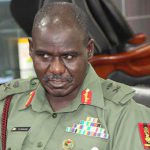
    The posting, which was approved by the Chief of Army Staff, Lt Gen Tukur Yusuf Buratai, led to the removal of Maj. Gen. Olusegun Adeniyi as Theatre Command Operation LAFIYA DOLE, the group fighting Boko Haram terrorists in the North-East region of the country.

    Adeniyi, who spoke out against the lack of weapons and accurate intelligence to fight terrorists in the region in a video that went viral a few days ago, was moved to the Nigerian Army Resource Centre as Senior Research Fellow after his outburst embarrassed the military authorities. 

    See Also

    Nigerian Army Redeploys Senior Officers In Major Shake-up 7

    Breaking News

    BREAKING: Nigerian Army Removes General In Viral Video Asking For Weapons To Fight Boko Haram


    In a statement on Tuesday, Acting Director Army Public Relations, Col. Sagir Musa, said, “The major highlight of the posting includes the posting and appointment of Maj Gen ACC Agundu from Special Task Force, Operation SAFE HAVEN, Jos, to Nigerian Army Resource Centre (NARC), Abuja, as Senior Research Fellow, Major General HI Bature from Defence Headquarters (DHQ), Defence Liaison Office, National Assembly Abuja, to Army Headquarters, Department of Civil Military Affairs and appointed Chief of Civil-Military Affairs, Maj Gen UM Mohammed from Nigerian Army Property Limited (NAPL) to the Office of the Chief of Army Staff and appointed Special Adviser Nigerian Army University Biu/Deputy Chairman Board of Trustees NAPL, while the erstwhile Special Adviser Nigerian Army University Biu Maj Gen CC Okonkwo now redeployed to STF Operation SAFE HAVEN Jos  and appointed Commander, Maj Gen F Yahaya from Headquarters 1 Division Kaduna to Headquarters.

    “Theatre Command Operation LAFIYA DOLE (OPLD) Maiduguri and appointed Commander, while Maj Gen OG Adeniyi is redeployed from Headquarters Theatre Command OPLD Maiduguri to NARC as Senior Research Fellow, Maj Gen S Idris from Sector 2 OPLD Damaturu- Yobe State redeployed to DHQ Abuja and appointed Director Liaison. 

    “Others affected include – Maj General AA Adesope from Office of the Chief of Army Staff Directorate of Audit and Financial Management to NAPL and appointed Group Managing Director, Maj Gen MG Ali from Headquarters Theatre Command OPLD Maiduguri to Headquarters 4 Special Forces Command Doma, Nasarawa State as Commander while the erstwhile Chief of Civil-Military Affairs AHQ Abuja Maj Gen US Mohammed has been redeployed to 1 Division Kaduna and appointed General Officer Commanding. 

    “Similarly, Brig Gen HI Daniel from the Defunct  Army Special Forces Command Maiduguri to Headquarters Training and Doctrine Command Minna and appointed Director Army Training Support, Brig Gen BE Onyeuko is to remain in DHQ Abuja as Acting Director Defence Media Operation, Brig Gen NM Jega from Training and Doctrine Command Minna to Infantry Corps Centre Jaji and appointed Chief of Staff, Brig Gen LA Araba from Nigerian Army Welfare Limited by Guaranty Abuja now redeployed to Sector 2 OPLD Damaturu, Yobe State as Ag Commander, Brig Gen VO Ita from DHQ, Abuja to Headquarters 402 Special Forces Brigade Azare and appointed Commander while Brig Gen JAL Jimoh from Sector 3 Artillery Brigade OPLD Monguno to Headquarters 31 Brigade Minna and appointed Commander and Brig Gen GTO Ajetunmobi has been redeployed from 31 Brigade Minna to Nigeria Army Welfare Limited by Guaranty, Abuja as Executive Director Operation. 

    See Also

    Nigerian Army Redeploys Senior Officers In Major Shake-up 8

    Boko Haram

    How Boko Haram Terrorists Dealt Us Heavy Blow –Nigerian Army Commander


    “Others are – Brig Gen LG Lepdung from Headquarters Infantry Corps Centre Jaji to DHQ Abuja and appointed Deputy Director Procurement (Logistics), Brig Gen MO Ihanuwaze to remain in Office of the Chief of Army Staff Directorate of Audit and Financial Management as Acting Director, Brig Gen EC Obi – Osang from the defunct Headquarters 707 Special Forces’ Brigade Makurdi to Headquarters 401 Special Forces’ Brigade Makurdi as Commander while Brig Gen GM Mutkut is redeployed from the Defunct Nigerian Army Amphibious Command OPLD Baga to Headquarters 403 Amphibious Brigade Baga and appointed Commander and Brig Gen JR Lar from Nigerian Army School of Artillery Kachia to Sector 3 Artillery Brigade OPLD Monguno as Commander.

    “Also, Colonel DJ Abdullahi from the defunct Headquarters Nigerian Army Special Forces’ Command Maiduguri to Headquarters 4 Special Forces’ Command Doma Nasarawa State and appointed Acting Chief of Staff, Colonel EC Emere from Nigerian Army Archives to Nigerian Military School Zaria as Deputy Commandant and Col MO Agi is to remain in Headquarters Nigerian Army Armour Corps Bauchi as Acting Chief of Staff among others.

    “All the postings and appointments take effect from the 1st of April 2020. 

    “While wishing all the officers well in their respective appointments, the Chief of Army Staff enjoins them to take their new responsibilities/appointments seriously and discharge all duties professionally with utmost loyalty to the Nation and the Service.” 

    Military

    News

    AddThis

    : 

    Original Author

    : 

    SaharaReporters, New York

    Disable advertisements

    : 
    Nigerian Army Redeploys Senior Officers In Major Shake-up
    Read More
    http://saharareporters.com/2020/03/31/nigerian-army-redeploys-senior-officers-major-shake

    Views: 0

  • How Boko Haram Terrorists Dealt Us Heavy Blow –Nigerian Army Commander

    How Boko Haram Terrorists Dealt Us Heavy Blow –Nigerian Army Commander

    How Boko Haram Terrorists Dealt Us Heavy Blow –Nigerian Army Commander 9

    How Boko Haram Terrorists Dealt Us Heavy Blow –Nigerian Army Commander 10


    Olusegun Adeniyi, Commander of Operation Lafiya Dole, a group of Nigerian soldiers deployed to the North-East region to combat Boko Haram terrorists and other insurgent groups, has revealed how they recorded heavy casualty during a recent encounter with the hoodlums.

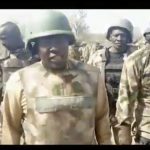
    In a video making the rounds on the Internet, Adeniyi could be seen standing together with his men on the battle field and lamenting how the terrorists shelled their positions with heavy artillery and mortar bombs. 

    According to him, they lost several soldiers during the mission due to wrong intelligence provided by military authorities.

    He added that they lacked necessary weapons to face the firepower of the terrorists.

    Speaking in the widely-circulated video, Adeniyi said, “We have been met with very strong resistance – from more than pockets of Boko Haram. From every flank not less than 15 gun trucks were facing us.  

    “I’m standing here with Sector 2 Commander; the armed helicopter has just come to hover our air, the instruction I gave them was that anything they see moving they should engage because most of my gun trucks are not moving. Like I said earlier, the three battalions are fighting as deployed — nobody is running.

    “But what we have here, I will give you some estimates. Boko Haram has fired more than a hundred mortar bombs at us; they have fired 80 to a hundred RPGs at us; in addition to eight to 10 gun trucks firing at us from all sides. We have not run, and the soldiers are not misbehaving or disobeying orders.

    “We have casualties. I will come and see you in person on what we need to do. But we are not running.

    “We lost about 20 MRAP tires here. We have changed close to 250 Hilux tires due to the terrain.

    “This is what we are facing in the Timbuktu triangle. We are not running, we are fighting as a system to curtail the situation.”

    Several wounded soldiers could be seen crying in the video while bodies of their colleagues was scattered all over location.

    Recall that Boko Haram recently ambushed troops in Borno and killed more than 50 soldiers during that attack.

    An unspecified number of military personnel, who participated in that mission, remain missing and unaccounted for till this day.

    Boko Haram

    Military

    Terrorism

    News

    AddThis

    : 

    Original Author

    : 

    Saharareporters, New York

    Disable advertisements

    : 
    How Boko Haram Terrorists Dealt Us Heavy Blow –Nigerian Army Commander
    Read More
    http://saharareporters.com/2020/03/30/how-boko-haram-terrorists-dealt-us-heavy-blow-%E2%80%93nigerian-army-commander

    Views: 0

  • Buhari Expresses Grief Over Killing Of Soldiers In Borno Boko Haram Ambush

    Buhari Expresses Grief Over Killing Of Soldiers In Borno Boko Haram Ambush

    Buhari Expresses Grief Over Killing Of Soldiers In Borno Boko Haram Ambush 11

    Buhari Expresses Grief Over Killing Of Soldiers In Borno Boko Haram Ambush 12


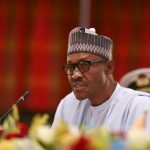
    President Muhammadu Buhari has expressed “grief and sorrow’’ over loss of soldiers ambushed by Boko Haram terrorists in Gorgi Village, Borno State.

    According to a statement by Garba Shehu, Senior Special Assistant to the President on Media and Publicity, Buhari while commiserating with families of the slain soldiers, said, “Sacrifices of our gallant patriots cannot be quantified, and their sacrifices cannot go in vain.’’

    The President said the death of every soldier causes deep pains because he knows what it means to be a soldier, and fully understands the extreme risks associated with the profession.

    According to the statement, Buhari appealed to the military “not to allow the incident to affect their morale’’. 

    Meanwhile, the Nigerian Army has dispatched a team to assess the situation and report back to the government.

    More than 50 military personnel including top commanders were killed during the ambush, which took place on Saturday. 
     

    Boko Haram

    Military

    Politics

    Terrorism

    News

    AddThis

    : 

    Original Author

    : 

    SaharaReporters, New York

    Disable advertisements

    : 
    Buhari Expresses Grief Over Killing Of Soldiers In Borno Boko Haram Ambush
    Read More
    http://saharareporters.com/2020/03/24/buhari-expresses-grief-over-killing-soldiers-borno-boko-haram-ambush

    Views: 0

  • 10 Soldiers Missing After Ambush By Bandits In Niger State

    10 Soldiers Missing After Ambush By Bandits In Niger State

    10 Soldiers Missing After Ambush By Bandits In Niger State 13

    10 Soldiers Missing After Ambush By Bandits In Niger State 14


    At least 10 soldiers that responded to an attack by bandits in Galadima Kogo Village in Shiroro Local Government Area of Niger State have been declared missing days after the team suffered a heavy casualty in an ambush. 

    According to findings by SaharaReporters, the soldiers from a forward operation base received a distress call of bandits shooting sporadically at a village located on the outskirts of Galadima Kogo on the night of March 15, 2020. 

    See Also

    10 Soldiers Missing After Ambush By Bandits In Niger State 15

    Breaking News

    BREAKING: Boko Haram Terrorists Ambush Nigerian Soldiers In Borno, Kill 45


    The team consisting of soldiers, mobile policemen and vigilantes arrived at the location to discover the community sacked and with an unspecified number of cows carted away and some persons abducted by the bandits.

    After conducting a clearance operation, the team went in pursuit of the bandits supported by one NAF helicopter. 

    While the helicopter went for refuelling, the team reportedly ran into an ambush set up by the bandits at about 2:00pm and subsequently lost communication with the base.  

    By the time they were tracked down to Farin Doki by 4:00pm, 10 soldiers were missing with four wounded in action and evacuated to the hospital.  

    See Also

    10 Soldiers Missing After Ambush By Bandits In Niger State 16

    Exclusive

    EXCLUSIVE: How Top Military Commanders Were Ambushed, Killed In Borno By Boko Haram Terrorists


    Additional reinforcement of 30 military personnel dispatched from Pandogari subsequently arrived at Farin Doki at about 4:40pm to conduct a search and rescue operation for the missing soldiers. 

    A report from the Headquarters of 31 Artillery Brigade affirmed that 10 soldiers had been declared missing and not killed in action. 


    Military

    Terrorism

    News

    AddThis

    : 

    Original Author

    : 

    SaharaReporters, New York

    Disable advertisements

    : 
    10 Soldiers Missing After Ambush By Bandits In Niger State
    Read More
    http://saharareporters.com/2020/03/24/10-soldiers-missing-after-ambush-bandits-niger-state

    Views: 0

  • Coronavirus: ISIS Warns Fighters To Stay Safe, Not To Kill

    Coronavirus: ISIS Warns Fighters To Stay Safe, Not To Kill

    Coronavirus: ISIS Warns Fighters To Stay Safe, Not To Kill 17

    Coronavirus: ISIS Warns Fighters To Stay Safe, Not To Kill 18


    Terror group, ISIS, has instructed members to stay safe and avoid killing anybody at the moment. 

    In a full-page infographic on the back cover of its most recent Al-Naba  Newsletter, the terror group gave a list of tips instructing fighters how to stop the spread of Coronavirus. 

    Since the pandemic broke out in China, the group has been covering the outbreak like a responsible media outfit with its newsletters. 

    It has spoken less of killing ‘infidels’ and carrying out jihads, rather focusing on keeping the plague away from members.

    The terror group has cells scattered all over Europe, Asia and Africa.

    PUBLIC HEALTH

    Terrorism

    News

    AddThis

    : 

    Original Author

    : 

    SaharaReporters, New York

    Disable advertisements

    : 
    Coronavirus: ISIS Warns Fighters To Stay Safe, Not To Kill
    Read More
    http://saharareporters.com/2020/03/17/coronavirus-isis-warns-fighters-stay-safe-not-kill

    Views: 0