Tag: school

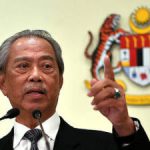
  • Just stay at home, pleads PM (Updated)

    Just stay at home, pleads PM (Updated)

    Just stay at home, pleads PM (Updated) 1

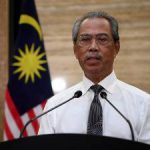
    PETALING JAYA: Please, stay at home and protect yourself and your family.

    This was the ultimate message by Prime Minister Tan Sri Muhyiddin Yassin to all Malaysians in his special address tonight as the country enters its second day of the 14 days restriction of movement order (RMO).

    Muhyiddin explained that the goal of the movement restrictions was to minimise exposure to the Covid-19 virus, after many among the public disregarded the order to travel to their hometowns, while others were spotted in public areas.

    “The reason of the RMO is so that all of you need not travel. You don’t have to crowd the trains and buses or eateries, and your children are not required to go to school, which could expose them (to the virus).

    “I plead to you, please, stay put where you are. I plead, just for this two weeks … stay at home quietly,” he said.

    Muhyiddin said it was pertinent that Malaysians adhere to the RMO to break the chain of infection and ultimately reduce the number of those infected with the novel coronavirus.

    He reminded the public that the virus could be transmitted from person to person through touch, and that if they continue to travel around, the chances of them contracting Covid-19 was higher.

    He added that the reason the RMO was set to two weeks was because the Covid-19 has an incubation period of 14 days.

    “The government is hoping that after this period, those still with symptoms can be identified and separated for treatment, and finally make Malaysia free of Covid-19.

    “If during this period we are not successful, the government may be forced to extend the restriction order,” he said.

    Muhyiddin said while the concept of staying home and avoiding public places looked simple in principle, this was particularly important if the country wishes to contain the virus.

    He also urged those who need to move around to purchase essential daily items to practise good hygiene and avoid any physical contact with others.

    “As a prime minister, I have a huge responsibility to handle the crisis. But I can’t possibly do it alone. I need all of your help. God willing, we can overcome this crisis together,” he said.

    To date, 790 people have been infected by the Covid-19, with 117 new cases recorded today. Two Malaysians died to the virus on Tuesday.

    Just stay at home, pleads PM (Updated)
    Read More
    https://www.thesundaily.my/local/just-stay-at-home-pleads-pm-updated-YB2146735

    Views: 0

  • How big data is reshaping aging research and education

    How big data is reshaping aging research and education

    The age of big data is here: The world has created more data in the past two years than in the entire previous history of the human race. USC Leonard Davis School of Gerontology researchers are dissecting treasure troves of information—from sources as diverse as brain scans and the human genome—to fuel groundbreaking research on improving how we age, and to reshape gerontology education to enable future scientists to make an impact in a changing field.

    Read More
    https://techxplore.com/news/2020-03-big-reshaping-aging.html

    Views: 0

  • Nationwide movement restriction measures to begin on Wednesday (Updated)

    Nationwide movement restriction measures to begin on Wednesday (Updated)

    Nationwide movement restriction measures to begin on Wednesday (Updated) 2

    PETALING JAYA: Prime Minister Tan Sri Muhyiddin Yassin has declared that Malaysia will be placed under a nationwide movement restriction order from Wednesday (March 18) to March 31, 2020, due to the Covid-19 outbreak.

    The order, the first in the country’s history, was announced by the prime minister in a live broadcast over national television tonight.

    A total of 315 new positive cases of Covid-19 have been reported over the past two days, bringing the total in Malaysia to 553 cases.

    Of this total, 511 have been hospitalised while 42 people have recovered.

    Muhyiddin said the nationwide movement restriction order means that all business premises have to be shut down, except for outlets such as supermarkets and grocery stores selling daily essentials.

    He said all government and private premises would be closed, except for essential services such as utilities, telecommunications, transport, banking, health, pharmacies, ports, airports, cleaning and food supplies.

    He said the movement restriction also means all Malaysians will be banned from travelling abroad, and that no tourists or foreigners will be allowed to enter the country. Those who have just arrived from abroad must undergo self-quarantine for 14 days.

    All public and private schools, including kindergartens, nurseries, residential school and other educational institutions are also to close. All private and public higher institutions of learning will also close.

    Closure of all government and private premises except essential services such as water and electricity, telecommunication, postal service, transport, fuel, gas, lubrication, broadcasting, banking, health, pharmacy, fire-fighting, ports, airports, prisons, security and defence, sanitary services, provision and food supply.

    The order also calls on a ban on all mass gatherings, including religious, sports, social and cultural activities.

    The Prime Minister said the measures were taken to protect the rakyat from the spread of the virus but advised Malaysian to not panic and stay calm.

    Muhyiddin added that the Ministry of Domestic Trade and Consumer Affairs will ensure that the supply of groceries and health care essentials will be readily available.

    He also said that the government will address the situation daily and provided a hotline number – 0388882010- that will answer any queries from the public.

    In an immediate response, former health minister Datuk Seri Dr Dzulkefly Ahmad told theSun that the order was the right action made in the right time.

    “I am okay with it because it is in line with what I was advocating, I did not implement this earlier because at that time it wasn’t warranted and it wasn’t the right thing to do then,” he said.

    Meanwhile, Lawyer Mohamed Haniff Khatri Abdullah said that the provision of Section 11 (5) of the Prevention and Control of Infectious Diseases Act 1988 is read together with Section 24(a) of the same act.

    Haniff said this would make any breach to the restriction order a criminal offence.

    “The offense under section 11(5) carries a maximum sentence of two years imprisonment. Whereas the second offence under section 24(b) warrants a maximum imprisonment sentence of five years.”

    He also urged government officials to give a clear guideline on the extent of which a member of public can be out before it is considered an offense.

    “This is to ensure proper and dutiful compliance on the part of public and to allow strict enforcement by the authorities.” he told theSun.

    Nationwide movement restriction measures to begin on Wednesday (Updated)
    Read More
    https://www.thesundaily.my/local/nationwide-movement-restriction-measures-to-begin-on-wednesday-updated-IC2136749

    Views: 0

  • Covid-19: Sabah may extend school holidays, get private sector to let employees work from home

    Covid-19: Sabah may extend school holidays, get private sector to let employees work from home

    Covid-19: Sabah may extend school holidays, get private sector to let employees work from home 3

    KOTA KINABALU: The Sabah government is considering the possibility of extending the current school holidays and getting the private sector to allow their employees to work from home in order to curb the spread of Covid-19.

    In appealing to the people to minimise their movements, including avoiding non-essential travel, Chief Minister Datuk Seri Mohd Shafie Apdal said that more measures might be considered.

    “I urge the public to stay calm and fully cooperate with the authorities in order to curb the spread of Covid-19. We can overcome this if we all come together to do our part,” he said in a statement today.

    Since the first positive case was detected last week, involving a 58-year-old man in Tawau who was among those who attended the Sri Petaling Mosque tabligh gathering in Kuala Lumpur between Feb 27 and March 1, the Sabah Health Department has identified 49 cases in the state as of today.

    Health officials in the state have detected more cases from among those who attended the mosque event and steps are being taken to trace the other participants and also the people they have come into contact with over the past 10 days since their return.

    “The Health Department and others have been going all out to locate and identify areas that could have been contaminated.

    “They have also taken swift measures, including temporarily closing mosque and suraus in areas that have had Covid-19 cases,” said Mohd Shafie, adding that since Jan 30, the Sabah government had halted the arrivals of tourists directly from countries affected by the virus.

    Of the 49 cases reported in Sabah so far, 14 were in Lahad Datu; followed by Kota Kinabalu (nine); Tawau (eight); Kinabatangan (five); Tuaran (three); Kunak, Putatan and Sandakan (two each); Beaufort, Kota Belud; Papar and Sipitang (one each). — Bernama

    Covid-19: Sabah may extend school holidays, get private sector to let employees work from home
    Read More
    https://www.thesundaily.my/local/covid-19-sabah-may-extend-school-holidays-get-private-sector-to-let-employees-work-from-home-HI2129382

    Views: 0

  • Covid-19: Management of Manjung mosques, surau urged to conduct disinfection

    Covid-19: Management of Manjung mosques, surau urged to conduct disinfection

    Covid-19: Management of Manjung mosques, surau urged to conduct disinfection 4

    LUMUT: The Perak Health Department has urged the management of mosques and ‘surau’ in the Manjung district to carry out disinfection activities following the classification of two individuals from the area as Covid-19 Patients-Under-Investigation (PUI).

    “They are only suspected cases but preventive action must be taken,” department director Datuk Dr Ding Lay Ming said in a statement issued today.

    Ding was commenting in response to WhatsApp messages circulating since yesterday that the two cases in Manjung were said to be participants of the ‘tabligh’ (religious outreach) rally held on Feb 28 at the Sri Petaling Mosque in Kuala Lumpur.

    Meanwhile in KUALA TERENGGANU, all mosques and surau in the state have been encouraged to take the initiative to conduct disinfection activities to curb the spread of the virus.

    Terengganu Religious Affairs Department (JHEAT) commissioner Mat Azmi Arshad said although the state had yet to record any cases, implementing preventive measures was very important.

    “Besides that, it is hoped that the management of all mosques and surau are more observant of the congregation, advising those who are not healthy to go for a health check-up immediately,” he told Bernama when contacted today.

    On the closure of a ‘madrasah’ (religious school) in Kuala Terengganu allegedly due to Covid-19, he said members of the public need not panic as the authorities had taken appropriate action. — Bernama

    Covid-19: Management of Manjung mosques, surau urged to conduct disinfection
    Read More
    https://www.thesundaily.my/local/covid-19-management-of-manjung-mosques-surau-urged-to-conduct-disinfection-IJ2128875

    Views: 0

  • COVID-19: IFRC, UNICEF and WHO issue guidance to protect children and support safe school operations

    GENEVA/NEW YORK – The International Federation of the Red Cross (IFRC), UNICEF and the World Health Organization (WHO) today issued new guidance to help protect children and schools from transmission of the COVID-19 virus. The guidance provides critical considerations and practical checklists to keep schools safe. It also advises national and local authorities on how to adapt and implement emergency plans for educational facilities. 

    In the event of school closures, the guidance includes recommendations to mitigate against the possible negative impacts on children’s learning and wellbeing. This means having solid plans in place to ensure the continuity of learning, including remote learning options such as online education strategies and radio broadcasts of academic content, and access to essential services for all children. These plans should also include necessary steps for the eventual safe reopening of schools.

    Where schools remain open, and to make sure that children and their families remain protected and informed, the guidance calls for:

    • Providing children with information about how to protect themselves;
    • Promoting best handwashing and hygiene practices and providing hygiene supplies;
    • Cleaning and disinfecting school buildings, especially water and sanitation facilities; and
    • Increasing airflow and ventilation.

    The guidance, while specific to countries that have already confirmed the transmission of COVID-19, is still relevant in all other contexts. Education can encourage students to become advocates for disease prevention and control at home, in school, and in their community by talking to others about how to prevent the spread of viruses. Maintaining safe school operations or reopening schools after a closure, requires many considerations, but if done well, can promote public health.

    For example, safe school guidelines implemented in Guinea, Liberia and Sierra Leone during the outbreak of Ebola virus disease from 2014 to 2016 helped prevent school-based transmissions of the virus.

    UNICEF is urging schools – whether open or helping students through remote learning – to provide students with holistic support. Schools should provide children with vital information on handwashing and other measures to protect themselves and their families; facilitate mental health support; and help to prevent stigma and discrimination by encouraging students to be kind to each other and avoid stereotypes when talking about the virus.

    The new guidance also offers helpful tips and checklists for parents and caregivers, as well as children and students themselves. These actions include:

    • Monitoring children’s health and keeping them home from school if they are ill;
    • Encouraging children to ask questions and express their concerns; and
    • Coughing or sneezing into a tissue or your elbow and avoid touching your face, eyes, mouth and nose.

    Read More
    https://www.who.int/news-room/detail/10-03-2020-covid-19-ifrc-unicef-and-who-issue-guidance-to-protect-children-and-support-safe-school-operations

    Views: 0

  • The unmet need for social context in family planning

    The unmet need for social context in family planning

    New evidence on the relationship between sexual health and social context finds a strong association between gender equality, education and family planning

    Twenty-five years ago, two global events – the International Conference on Population and Development and the Fourth World Conference on Women in Beijing – formally recognized that women’s health and reproductive choices cannot be separated from the social context of their lives.

    Now, researchers have created a dataset which brings together national surveys from 74 countries, representing 3 million women. For the first time, it allows them to describe trends in demand/use of modern contraceptives alongside social and economic indicators.

    The data is published in The Lancet Global Health and is authored by the London School of Hygiene & Tropical Medicine and the World Health Organization.

    It shows that, over time, women are more likely to have their demand for modern contraception met in countries where gender equality and their educational opportunities improve.

    Gender equality and education increases access to modern contraception

    Trends in sexual activity and demand for use and use of modern contraceptive methods in 74 countries: a retrospective analysis of nationally representative surveys finds that met need for modern contraception is strongly correlated with positive shifts in social structures.
    For every 0.1-point increase in a country’s gender development index, it found a 6.7% rise in women who were sexually active and did not want to conceive. Of those women, an additional 13.5% used modern methods to prevent a pregnancy.

    Expectations of every girl’s right to education also made a difference. Each extra year in schooling is linked to an increase of 2.3% in demand, and a 4.7% increase in use of modern contraceptive methods.

    “This study shows how every woman must negotiate her reproductive autonomy within the social framework in which she lives, responding to barriers and opportunities as they emerge,” says Dr Lale Say, one of the authors of the study and Unit Head at WHO and HRP.

    “Gender equality is both a precondition and a driving force for securing women’s reproductive health and rights – as well as the sustainable development targets, which are our best chance for delivering health and well-being for all.”

    Global trends reveal new challenges in family planning

    Overall, the data reinforce global trends: more time spent sexually-active and single, postponement of parenthood, and the near-universal desire for smaller families.

    The study also highlights where action is needed at country-level to avoid family planning services falling behind demand.

    Out of the 74 countries analyzed, 42 showed an increase in demand for contraception. Only 37 countries show an increase in use of a modern method to prevent pregnancy.

    Although unmet need for contraception declined in 34 countries, it increased in 14 countries. Significantly more progress is needed, and faster, to ensure each girl and woman is able to access the sexual and reproductive health services she needs.

    Barriers and solutions to reproductive health and rights

    Gender equality can affect contraceptive use in many ways. From the personal and political degree to which women are free to choose their sexual activity, to accessing family planning services it can also shape any power imbalances within personal relationships. This study supports recent efforts by WHO to adopt a broader, integrated concept of sexual and reproductive health – and to translate it into a framework for policy and practice.

    The authors argue that family planning targets in the 2030 Agenda for Sustainable Development will not be met without a profound shift: from focus on ‘access to contraception’, to broader aspects of sexual health and social context.

    Since reproductive health and women’s empowerment are intertwined, trends in contraceptive use can also reveal progress towards another global target: progress towards gender equality.


    The unmet need for social context in family planning
    Read More
    https://www.who.int/news-room/detail/10-03-2020-the-unmet-need-for-social-context-in-family-planning

    Views: 0

  • Say goodbye to power outages

    Say goodbye to power outages

    With the goal of eliminating brownouts and blackouts, new research from UBC’s Okanagan School of Engineering is redesigning how electricity is distributed within power grids.

    Read More

    Views: 1

  • LSU professor relaunches fake news and disinformation resource website

    LSU professor relaunches fake news and disinformation resource website

    LSU’s Manship School of Mass Communication professor Leonard Apcar is relaunching a website designed to aggregate news, analysis and research about fake news and disinformation for students, academics and citizens to defend themselves against misinformation.

    Read More

    Views: 1

  • Socially assistive robot helps children with autism learn

    Socially assistive robot helps children with autism learn

    Many children with autism face developmental delays, including communication and behavioral challenges and difficulties with social interaction. This makes learning new skills a major challenge, especially in traditional school environments.

    Read More

    Views: 0