Tag: Room

  • WHO Information Note: Ensuring continuity of TB services during the COVID-19 pandemic

    WHO Information Note: Ensuring continuity of TB services during the COVID-19 pandemic

    As the world comes together to tackle the COVID-19 pandemic, it is important to ensure that essential health services and operations are continued to protect the lives of people with TB and other diseases or health conditions. Health services, including national programmes to combat TB, need to be actively engaged in ensuring an effective and rapid response to COVID-19 while ensuring that TB services are maintained.  

    In the lead- up to World TB Day, Dr Tedros Adhanom Ghebreyesus, WHO Director-General emphasized in a news release, “COVID-19 is highlighting just how vulnerable people with lung diseases and weakened immune systems can be. The world committed to end TB by 2030; improving prevention is key to making this happen.”  

    WHO Global TB Programme, along with WHO regional and country offices, has developed an information note, in collaboration with stakeholders. This note is intended to assist national TB programmes and health personnel to urgently maintain continuity of essential services for people affected with TB during the COVID-19 pandemic, driven by innovative people-centred approaches, as well as maximizing joint support to tackle both diseases.  

    “We stand in solidarity with those affected by COVID-19 and those at the frontlines of the fight to combat the disease,” said Dr Tereza Kasaeva, Director of the WHO Global TB Programme. “We need to act with urgency to ensure that in line with our vision of Health for All, no one with TB, COVID-19 or any health condition will miss out on the prevention and care they need. It’s time for action.”


    WHO Information Note: Ensuring continuity of TB services during the COVID-19 pandemic
    Read More
    https://www.who.int/news-room/detail/20-03-2020-who-information-note-ensuring-continuity-of-tb-services-during-the-covid-19-pandemic

    Views: 0

  • New WHO recommendations to prevent tuberculosis aim to save millions of lives

    Geneva –  New World Health Organization (WHO) guidance will help countries accelerate efforts to stop people with tuberculosis (TB) infection becoming sick with TB by giving them preventive treatment.

    A quarter of the world‘s population is estimated to be infected with TB bacteria. These people are neither sick nor contagious. However, they are at greater risk of developing TB disease, especially those with weakened immunity. Offering them TB
    preventive treatment will not only protect them from becoming sick but also cut down on the risk of transmission in the community.  

    As we mark World TB Day 2020, the disease remains the world’s top infectious killer. In 2018, 10 million people fell ill with TB worldwide and 1.5 million people lost their lives to this disease.

    “COVID-19 is highlighting just how vulnerable people with lung diseases and weakened immune systems can be,“ said Dr Tedros Adhanom Ghebreyesus, WHO Director-General. “The world committed to end TB by 2030; improving prevention is key
    to making this happen. Millions of people need to be able to take TB preventive treatment to stop the onset of disease, avert suffering and save lives”.

    Dr Tedros highlighted the importance to continue efforts to tackle longstanding health problems, including TB during global outbreaks such as COVID-19. At the same time, programmes already in place to combat TB and other major infectious diseases
    can be leveraged to make the response to COVID-19 more effective and rapid.

    Although some progress has been made towards targets set at the UN high-level Meeting on TB in 2018, TB preventive treatment has been largely neglected. Global leaders committed to ensuring access to TB preventive treatment to at least 24 million contacts
    of people with active TB and 6 million people living with HIV by 2022.  To date only a fraction of that target has been reached, with countries putting less than 430,000 contacts and 1.8 million people on TB preventive treatment in 2018.

    TB remains the top cause of death among people with HIV. TB preventive treatment works synergistically with antiretroviral therapy to prevent TB and save lives. Reinvigorated efforts by governments, health services, partners, donors and civil society
    will be needed to increase access to TB preventive treatment to the levels targeted.

    The new consolidated guidelines recommend a range of innovative approaches to scale up access to TB preventive treatment:

    • WHO recommends a scale-up of TB preventive treatment among populations at highest risk including household contacts of TB patients, people living with HIV and other people at risk with lowered” immunity or living in crowded settings.
    • WHO recommends an integration of TB preventive treatment services into ongoing case finding efforts for active TB. All household contacts of TB patients and people living with HIV are recommended to be screened
      for active TB. If active TB is ruled out, they should be initiated on TB preventive treatment.
    • WHO recommends that either a tuberculin skin test  or interferon-gamma release assay (IGRA) be used to test for TB infection. Both tests are helpful to find people more likely to benefit from TB preventive treatment
      but should not become a barrier to scale-up access. Testing for TB infection is not required before starting TB preventive treatment in people living with HIV, and children under 5 years who are contacts of people with active TB.
    • WHO recommends new shorter options for preventive treatment in addition to the widely used 6 months of daily isoniazid. The shorter options that are now recommended range from a 1 month daily regimen of rifapentine plus isoniazid
      to 3 months weekly rifapentine plus isoniazid, 3 months daily rifampicin plus isoniazid, or 4 months of daily rifampicin alone.

    “As people around the globe come together to commemorate World TB Day, WHO is calling on governments, affected communities, civil society organizations, health-care providers, donors, partners and the industry to unite forces and step up
    the TB response – notably for TB preventive treatment – to ensure no one is left behind,” said Dr Tereza Kasaeva, Director of WHO’s Global TB Programme. “The new WHO guidance shows the way forward for millions to rapidly
    access new tools and shorter, safer options for preventive treatment. The time for action is now.”

    TB preventive treatment is an affordable intervention that can prevent families from sliding into poverty and preserve the health and economy of whole communities. WHO anticipates that as new and safer drugs come onto the markets, and as prices
    fall, it will become a highly-cost effective way to save millions of lives.


    NOTES FOR EDITORS:

    WORK BY WHO AND PARTNERS

    WHO works closely with Member States including the US Government and technical and funding partners such as UNITAID to enhance access to shorter TB preventive treatment regimens. UNITAID-supported projects such as IMPAACT4TB and Cap-TB projects
    enabled by WHO with partners in Brazil, Cambodia, Cameroon, Côte d’Ivoire, Democratic Republic of Congo, Ethiopia, Ghana, India, Indonesia, Kenya, Lesotho, Malawi, Mozambique, South Africa, Uganda, United Republic of Tanzania and
    Zimbabwe are leading the way. The new treatment options are also now more affordable, thanks to the significant price drop of rifapentine – a key drug – facilitated recently by UNITAID, the Global Fund to Fight AIDS, Tuberculosis and Malaria
    and global biopharmaceutical company Sanofi, along with forthcoming arrangements underway with generic manufacturers.

    MORE ABOUT THE GUIDELINES

    The new consolidated WHO guidelines come with an operational handbook to help guide countries step-by-step as they take TB preventive treatment to scale. This includes guidance on how to prioritize and invest from demand creation for TB prevention
    to supervision and monitoring of the programme.

    The guidelines and operational handbook are also accompanied by an innovative mobile application – Prevent TB –to help health-care workers manage TB preventive treatment in their communities. Its online dashboard allows programme
    managers to visualize and monitor data in real time. The application can be customized by countries to suit their specific settings and is currently being adopted in India and Philippines.

    WORLD TB DAY

    The new guidelines and tools are being released ahead of World TB Day. World TB Day is observed on March 24 each year to raise public awareness and understanding about the world’s deadliest infectious killer – TB and its devastating
    health, social and economic impact on people around the world. Under the theme “It’s Time”, the spotlight this year is on urgently accelerating the TB response to save lives and end suffering.

    Read More
    https://www.who.int/news-room/detail/24-03-2020-new-who-recommendations-to-prevent-tuberculosis-aim-to-save-millions-of-lives

    Views: 0

  • Pass the message: Five steps to kicking out coronavirus

    Pass the message: Five steps to kicking out coronavirus


    Geneva, 23 March 2020: FIFA, the international governing body of football, and the World Health Organization (WHO) have teamed up to combat the coronavirus (COVID-19) by launching a new awareness campaign led by world-renowned footballers, who are calling on all people around the world to follow five key steps to stop the spread of the disease. 

    The “Pass the message to kick out coronavirus” campaign promotes five key steps for people to follow to protect their health in line with WHO guidance, focused on hand washing, coughing etiquette, not touching your face, physical distance and staying home if feeling unwell. 

    “FIFA and its President Gianni Infantino have been actively involved in passing the message against this pandemic since the very beginning,” said WHO Director-General Dr Tedros Adhanom Ghebreyesus at the virtual launch of the campaign at WHO headquarters in Geneva, Switzerland. “Be it through campaigns or funding, FIFA has stood up to the coronavirus, and I am delighted that world football is supporting WHO to kick out the coronavirus. I have no doubt with this type of support that together we will win.” 

    “We need teamwork to combat the coronavirus,” said FIFA President Gianni Infantino. “FIFA has teamed up with WHO because health comes first. I call upon the football community worldwide to join us in supporting this campaign to pass the message even further. Some of the greatest players to have played the beautiful game have put their names to the campaign and are united in their desire to pass the message to kick out COVID-19.”

    Twenty-eight players are involved in the video campaign, which is being published in 13 languages.

    Sami Al Jaber (KSA), Alisson Becker (BRA), Emre Belözoğlu (TUR), Jared Borgetti (MEX), Gianluigi Buffon (ITA), Iker Casillas (ESP), Sunil Chhetri (IND), Youri Djorkaeff (FRA), Han Duan (CHN), Samuel Eto’o (CMR), Radamel Falcao (COL), Laura Georges (FRA), Valeri Karpin (RUS), Miroslav Klose (GER), Philipp Lahm (GER), Gary Lineker (ENG), Carli Lloyd (USA), Lionel Messi (ARG), Mido (EGY), Michael Owen (ENG), Park Ji-sung (KOR) , Carles Puyol (ESP), Célia Šašić (GER), Asako Takakura (JPN), Yaya Touré (CIV), Juan Sebastián Verón (ARG), Sun Wen (CHN) and Xavi Hernández (ESP).

    A video campaign, which will be published on player and FIFA digital channels, is also being provided as individual localized files to the 211 FIFA member associations and media agencies, together with a graphics toolkit for implementation on social media to further pass the message. 


    Pass the message: Five steps to kicking out coronavirus 1

    Hands:

    “It starts with your hands,” says Alisson Becker, WHO Goodwill ambassador for health promotion, Liverpool FC and Brazil goalkeeper, and The Best FIFA Men’s Goalkeeper, 2019. “Please wash your hands frequently with soap and water or an alcohol-based solution.”

    Such frequent washing with soap and water, or preferably with an alcohol-based hand solution, kills viruses that may be on your hands. It is simple, but it is very important.

    Pass the message: Five steps to kicking out coronavirus 2

    Elbows:

    “Cover your nose and mouth with a bent elbow or tissue when you sneeze or cough,” says Carli Lloyd two-time FIFA Women’s World Cup winner from the United States. “Dispose of tissue immediately and wash your hands.”

    Droplets spread the coronavirus. By following respiratory hygiene, you protect the people around you from contracting viruses, such as cold, flu and coronavirus.

    Pass the message: Five steps to kicking out coronavirus 3

    Face:

    “Avoid touching your face, particularly your eyes, nose or mouth to prevent the virus from entering your body,” adds FC Barcelona and Argentina forward Lionel Messi, The Best FIFA Men’s Player in 2019, and a multiple FIFA Ballon d’Or winner.

    Hands touch too many surfaces and can quickly pick up viruses. Once contaminated, hands can transfer the virus to your face, from where the virus can move inside your body, making you feel unwell.

    Pass the message: Five steps to kicking out coronavirus 4

    Distance:

    “In terms of social interaction, take a step back,” says Han Duan, who represented China PR 188 times in an international career that spanned 11 years. “Stay at least one metre distance from others.”

    By maintaining such social distancing, you are helping to avoid breathing in any droplets from someone who sneezes or coughs in close proximity.

    Pass the message: Five steps to kicking out coronavirus 5

    Feel – know your symptoms:

    “If you feel unwell, stay home,” concludes Samuel Eto’o, former FC Barcelona and Cameroon striker, who represented his country 114 times. “Please follow all instructions provided by your local health authorities.”

    If you have a fever, cough and difficulty breathing, seek medical attention and call in advance.

    Keep informed as local health authorities provide the latest information on the situation in your area. Please follow their specific instructions, and call in advance to allow them to direct you to the appropriate local health facility. This serves to protect you and to help prevent the spread of virus and other infections.

    FIFA have also pledged $10 million to support the COVID-19 Solidarity Response Fund for WHO.

    For more information, please consult @WHO and follow the latest information online. 


    Pass the message: Five steps to kicking out coronavirus
    Read More
    https://www.who.int/news-room/detail/23-03-2020-pass-the-message-five-steps-to-kicking-out-coronavirus

    Views: 0

  • EXCLUSIVE: SARS Operatives Unlawfully Arrest Four Men At Night Club In Port Harcourt, Refuse To Disclose Whereabouts To Relatives Two Months After

    EXCLUSIVE: SARS Operatives Unlawfully Arrest Four Men At Night Club In Port Harcourt, Refuse To Disclose Whereabouts To Relatives Two Months After

    EXCLUSIVE: SARS Operatives Unlawfully Arrest Four Men At Night Club In Port Harcourt, Refuse To Disclose Whereabouts To Relatives Two Months After 6

    EXCLUSIVE: SARS Operatives Unlawfully Arrest Four Men At Night Club In Port Harcourt, Refuse To Disclose Whereabouts To Relatives Two Months After 7

    EXCLUSIVE: SARS Operatives Unlawfully Arrest Four Men At Night Club In Port Harcourt, Refuse To Disclose Whereabouts To Relatives Two Months After 8

    The petition
    The petition

    EXCLUSIVE: SARS Operatives Unlawfully Arrest Four Men At Night Club In Port Harcourt, Refuse To Disclose Whereabouts To Relatives Two Months After 9


    Four young men in Port Harcourt, Rivers State, remain missing two months after being unlawfully arrested by personnel of the Special Anti-Robbery Squad.

    The four were arrested at Boss Lounge, a popular nightclub along Woji Road in GRA, Port Harcourt, on Sunday, January 5, 2020 around 8:00pm and their whereabouts have remained unknown since that period.

    Efforts by their family members to locate the four persons have been rebuffed by the police, who deny having a hand in their ordeal. 

    Narrating the incident to SaharaReporters, Mr Ezekiel Tariuwa, elder brother of one of the missing young men, Kingsley, said a Mobile Police officer in charge of security at the lounge, gave access to the SARS officials into the facility to effect the arrest of Kingsley and the three others.

    According to Tariuwa, the police in Rivers have denied ordering the arrest and claimed not to be aware of the incident and whereabouts of the young men.

    He said, “My brother, Kingsley Tariuwa, was arrested alongside three others at the Boss Lounge, on Sunday, January 5, 2020, at around 8:00pm by SARS. 

    “The SARS officers were actually cleared by a Mobile Policeman named Elisha Hassan, who is in charge of security at the facility.

    “Someone at the lounge, who recognised my brother, had to call someone that alerted one of my siblings to the fact that Kingsley had been arrested.

    “We tried calling his phone number from around 9:00pm, it was ringing but there was no response until around 11:30pm when someone picked up the call but all I could hear were voices of police officers ordering them to write statements.

    “The line soon dropped and up until this moment, the number had remained switched off.”

    Speaking further, Tariuwa disclosed that he had been to the SARS headquarters in Port Harcourt several times to search for his brother but the officers deny carrying out any arrest the previous night each time he went there.

    He stated, “I met one officer named Supol Amanze Onyegbula, who sent a junior officer to check their cells if the persons I was looking for were there. 

    “The officer came back and said they were not in their custody.

    “He then advised me to go to radio room at the state police headquarters so that they could help me do a radio search for my brother instead of walking from one station to another.

    “I went there, the lady on duty radioed all the stations around but none of them confirmed to have them in custody. I was there for more than two hours and it was still negative.

    “The lady at the radio room advised me to go and confirm once again from the policeman at Boss Lounge about which people actually made the arrest.”

    Tariuwa further revealed that in the course of his findings, the identity of the SARS official, who led the operation was revealed, adding that the man indirectly confessed to killing the four persons.

    He said, “The Mobile Police officer at Boss Lounge told me that it was men from the Special Anti-Robbery Squad that made the arrest and that one of the SARS officers gave him his number. 

    “He then called the number of the SARS officer, put it on loudspeaker so that I could hear what the man would say while I was standing next to him. 

    “When the SARS officer picked the call, he then told him that he was the Mobile Policeman at the night club where they arrested four young men the previous night and that their relatives were there with him. 

    “The SARS officer then said in pidgin that, ‘Forget them! Them don come our office today, commander tell them say no be we arrest the boys. In fact we don travel those boys, we don clear them, no where he reach, nothing go happen’.”

    Tariuwa disclosed that after running a check on mobile application, Truecaller, with the SARS officer’s number, the name was revealed as Francis Nwankwo.

    He said that a petition had been sent to the Rivers State Commissioner of Police, Mustapha Dandaura, who directed the DCP, CIID, to oversee the matter.

    He added that during the course of investigation, all parties concerned were invited for interrogation and while they honoured the invitation, the SARS officer refused to visit the state CIID.

    Tariuwa also revealed that the Mobile Police officer at Boss Lounge was detained by the command.

    According to the aggrieved man, Nwankwo, the SARS officer, denied arresting anyone at Boss Lounge when he was called by the investigating officer at the state CIID.

    Irked by the slow pace of investigation by the Rivers State Police and ludicrous cooperation of the SARS, Tariuwa lodged another complaint at the Police Complaint Response Unit, which he said triggered some results. 

    EXCLUSIVE: SARS Operatives Unlawfully Arrest Four Men At Night Club In Port Harcourt, Refuse To Disclose Whereabouts To Relatives Two Months After 10


    He said, “After I petitioned the Police CRU in Abuja, two days later, the SARS officers showed up at the state CIID, gave their statements but did not show up with my brother and others arrested. 

    EXCLUSIVE: SARS Operatives Unlawfully Arrest Four Men At Night Club In Port Harcourt, Refuse To Disclose Whereabouts To Relatives Two Months After 11


    “The day that the DCP gave us to update us on their final investigation was the day that the OC, General Investigations, told us that the case had been transferred to Abuja. 

    EXCLUSIVE: SARS Operatives Unlawfully Arrest Four Men At Night Club In Port Harcourt, Refuse To Disclose Whereabouts To Relatives Two Months After 12The petition


    “The result of their investigations has not been relayed to us, no words on the whereabouts of my brother. 

    “The only thing the OC, General Investigation, said was that SARS had agreed that they arrested my brother but they have not told us his current state or the other three men.”

    Apart from family members of Kingsley Tariuwa, relatives of the three other young men unlawfully seized and arbitrarily detained by Rivers State SARS officials are demanding justice. 

    Over recent months, SARS officials have been behind many unlawful arrests, detentions and even killings across Nigeria. For instance, on February 22, 2020, SARS officials arrested a player of Remo Stars Football Club in Sagamu, Ogun State, named Tiyamu Kazeem after accusing him of being an Internet fraudster. While taking him away in their van, the policemen pushed him from the vehicle on motion and on to an oncoming car which crushed and killed him instantly. The incident led to violent protests all across Sagamu, forcing authorities to ban the activities of SARS in the area.

    In April 2019, personnel of the Federal Special Anti-Robbery Squad shot dead a young man named Kolade Johnson in the Mangoro area of Lagos while he was watching an English Premier League match. The policemen claimed to be chasing cult gangs when the bullet from their gun hit and killed the young man. The list is indeed endless. 

    Though police authorities announced a handful of measures put in place to check the excesses of SARS operatives, nothing significant has changed about the unit as they continue to torment innocent Nigerians.

    Human Rights

    Police

    Exclusive

    News

    AddThis

    : 

    Featured Image

    : 

    EXCLUSIVE: SARS Operatives Unlawfully Arrest Four Men At Night Club In Port Harcourt, Refuse To Disclose Whereabouts To Relatives Two Months After 13

    Original Author

    : 

    SaharaReporters, New York

    Disable advertisements

    : 
    EXCLUSIVE: SARS Operatives Unlawfully Arrest Four Men At Night Club In Port Harcourt, Refuse To Disclose Whereabouts To Relatives Two Months After
    Read More
    http://saharareporters.com/2020/03/17/exclusive-sars-operatives-unlawfully-arrest-four-men-night-club-port-harcourt-refuse

    Views: 0
  • Expelled FUNAAB Student Alleges Threat To Life By Institution’s Vice Chancellor

    Expelled FUNAAB Student Alleges Threat To Life By Institution’s Vice Chancellor

    L-R: Ifemosu Michael Adewale and, Prof Felix Salako
    L-R: Ifemosu Michael Adewale and, Prof Felix Salako

    Expelled FUNAAB Student Alleges Threat To Life By Institution’s Vice Chancellor 14

    Expelled FUNAAB Student Alleges Threat To Life By Institution’s Vice Chancellor 15L-R: Ifemosu Michael Adewale and, Prof Felix Salako


    A student of the University of Agriculture, Abeokuta, who was expelled for writing an open letter to the school’s management over issues of transportation and insecurity on campus, Ifemosu Michael Adewale, has raised the alarm over plans to kill him.

    In a petition written to President Muhammadu Buhari, Ogun State governor, Dapo Abiodun, and heads of law enforcement agencies in the country, Adewale alleged that Vice Chancellor of FUNAAB, Prof Felix Salako, was currently doing everything possible to kill him.

    According to the young man, he had been receiving death threats from different persons, who have told him that he would suffer for speaking against Salako.

    Adewale said that he was crying out so that the world would know where his death came from in case he was killed.

    He said, “At exactly 1:00am on Tuesday, March 17, 2020, some hired assassins came to my apartment around Apakila Camp with cutlasses and guns. They tore the net of my room and afterwards moved to the last room in my compound, tore the net and started searching for me. 

    Expelled FUNAAB Student Alleges Threat To Life By Institution’s Vice Chancellor 16


    “When they could not find me, they left but not without warning that they were going to deal with me for fighting the VC.

    “Earlier, I had received a lot of calls from private numbers telling me that they would kill me for challenging my unlawful and illegal expulsion from the university and ridiculing the Vice Chancellor.

    “Prof Salako is close to those in power, whereas I am an ordinary citizen.

    “I am crying out publicly so that at least the world will know where my death came from and I will not join the long list of unresolved murders. My killer should at least be known.”

    But when contacted by SaharaReporters, spokesperson for FUNAAB, Dr Lydia Onwuka, denied the allegations, insisting that the VC, Prof Salako, has no reason to go after the life of Adewale or any other person in fact.

    She said, “There is a matter in court but let me just say that the VC has no reason to kill Ifemosu Adewale or any other person.

    “The allegation is not founded on any proof or fact, so it is not true.”

    News

    Reports

    AddThis

    : 

    Original Author

    : 

    SaharaReporters, New York

    Disable advertisements

    : 
    Expelled FUNAAB Student Alleges Threat To Life By Institution’s Vice Chancellor
    Read More
    http://saharareporters.com/2020/03/17/expelled-funaab-student-alleges-threat-life-institution%E2%80%99s-vice-chancellor

    Views: 0

  • Dracunculiasis eradication: intensifying surveillance amid continued zero human cases in Ethiopia and Mali

    Dracunculiasis eradication: intensifying surveillance amid continued zero human cases in Ethiopia and Mali

    A total of 54 human cases of dracunculiasis (guinea-worm disease) were reported to the World Health Organization (WHO) in 2019, with Chad reporting 48 out of the 54 cases.

    In Chad, Ethiopia, Mali and South Sudan, trained volunteers are supporting surveillance and detection of infections in domestic dogs and cats. Surveillance has been heightened, as evidenced by the increase in reports of rumoured human cases which in 2019 peaked at 108 207 out of which 106 678 were investigated within 24 hours.

    “We are working with the broader scientific community to understand the epidemiology of animal infections, mainly in dogs in Chad, where the highest number of human cases were reported in 2019,” said Dr Dieudonné Sankara, who leads WHO’s eradication and elimination team in the Department of Control of Neglected Tropical Diseases. “Interestingly, there have been no human cases in Ethiopia and Mali, and 4 human cases in South Sudan in 2019, compared with 10 in 2018.”

    In Mali, the number of animals infected with Dracunculus medinensis (the guinea-worm) has decreased from 20 animals in 2018 to 8 dogs and 1 cat in 2019. However, insecurity remains a challenge to freely accessing some endemic areas in Mali.

    Conversely, Chad reported 1935 infections in dogs and 46 in cats in 2019, an increase of 85% from 2018, and a 176% increase among humans.

    Angola reported only 1 human case in 2019. Community-based surveillance is being reinforced mainly in Cunene Province where a case was reported in 2018.

    In South Sudan, integrated surveillance activities have been carried out with the trachoma and onchocerciasis control programmes, in accordance with WHO’s recommendation that programmes collaborate, integrate and co-implement activities, whenever possible, to strengthen surveillance.

    In order to strengthen cross-border surveillance, WHO led a mission to Cameroon in November 2019 to investigate circumstances around an “imported” case in the country’s Far North Region. Discussions were held with the health authorities to establish active surveillance in all villages in the area, including training for application of temephos.[1]  

    Also, in 2019, and with the support of trained field workers, vector control was intensified to larvicide ponds and water sources in more than 400 villages, compared with 72 villages in 2018.

    In late 2019, WHO supported cross-border meetings with officials of national dracunculiasis eradication programmes from Mali, Burkina Faso and Côte d’Ivoire in West Africa; between Ethiopia and South Sudan in East Africa, and between Angola and Namibia in Southern Africa, to share experiences and plan joint surveillance activities across the borders to prevent transmission of the disease.

    The disease

    Dracunculiasis is a crippling parasitic disease caused by infection with D. medinensis, a long, thread-like worm. It is usually transmitted when people drink stagnant water contaminated with parasite-infected water fleas.

    WHO works with Member States and in partnership with The Carter Center and the United Nations Children’s Fund to support efforts to eradicate the disease. WHO provides technical guidance, works with national programmes to coordinate surveillance in dracunculiasis-free areas, and monitors and reports on the progress achieved.

    WHO is the only Organization mandated to certify countries as free of transmission of the disease following the recommendations of the International Commission for the Certification of Dracunculiasis Eradication.

    Since 1995, WHO has certified a total of 199 countries, territories and areas, including 187 Member States, as free of dracunculiasis transmission.

    [1] Temephos is a cyclopicide used to kill water fleas (cyclops) that carry the infective guinea-worm larvae.


    Dracunculiasis eradication: intensifying surveillance amid continued zero human cases in Ethiopia and Mali
    Read More
    https://www.who.int/news-room/detail/19-03-2020-dracunculiasis-eradication-intensifying-surveillance-amid-continued-zero-human-cases-in-ethiopia-and-mali

    Views: 0

  • Doctor loses RM135,000 in early morning robbery

    Doctor loses RM135,000 in early morning robbery

    Doctor loses RM135,000 in early morning robbery 17

    IPOH: A doctor suffered losses of about RM135,000 when his bungalow at Meru Valley Golf Resort was broken into by six suspects including a woman, believed to be foreigners, at about 4am today.

    Ipoh district police chief ACP A. Asmadi Abdul Aziz said the suspects, who wore black ski-masks and gloves, used two machetes and a cleaver to threaten the victim and his family members before they escaped with RM70,000 worth of jewellery; six branded wrist watches; three mobile phones and foreign currencies worth RM40,000.

    He said the victim woke up when his bedroom door was suddenly pried open. The victim’s daughter was also brought into the room before the suspects tied all the victims with phone cables and asked for all valuables to be handed over or they would be harmed.

    “The victim and his family were unhurt, while the suspects were believed to have escaped through the back door. There was no closed-circuit television cameras around the residential area where the victim has lived for more than a year,“ he said when contacted today.

    He added that the forensic team found a fingerprint and a strand of hair near the window apart from shoelaces, a wire, a mineral water bottle, a stainless steel mug and three pebbles.

    “Through the search by the canine unit, it was believed that the suspects went around the area before making their escape through a small stream behind the victim’s house,“ said A. Asmadi, adding that the case was being investigated under Section 395/397 of the Penal Code. – Bernama

    Doctor loses RM135,000 in early morning robbery
    Read More
    https://www.thesundaily.my/local/doctor-loses-rm135000-in-early-morning-robbery-LE2152397

    Views: 0

  • CND accepts all WHO recommendations on the control of several psychoactive substances from the 42nd ECDD meeting

    CND accepts all WHO recommendations on the control of several psychoactive substances from the 42nd ECDD meeting


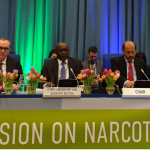
    During its 63rd session, the Commission on Narcotic Drugs (CND) accepted all recommendations from the 42nd meeting of the WHO Expert Committee on Drug Dependence (ECDD). This effectively brings twelve psychoactive substances, including eleven New Psychoactive Substances (NPS) and one medicine, under international control.  Given the potential for dependence or abuse and known adverse effects, these compounds pose a risk to public health and society and are largely without any therapeutic benefit.

       Based on an in-depth review of candidate compounds by the ECDD, an independent group of experts in the field of drugs and medicines, the WHO provides annual recommendations on substance scheduling to the CND, a policy-making body comprised of 53 UN Member States. This ECDD review includes a balanced consideration of potential for abuse, dependence and harm with therapeutic value. The CND then votes on whether or not the WHO recommendations for placing reviewed substances under international control should be endorsed.

          The 42nd ECDD recommendations included the addition of four synthetic cannabinoids and three synthetic stimulants to Schedule II of the 1971 Convention on Psychotropic Substances given similar action and adverse effects to other substances in this Schedule. These synthetic cannabinoids have been associated with impaired mental status, impaired driving, and fatalities, whereas the included synthetic stimulants have been linked to fatal intoxication. Similarly, two fentanyl analogues, with their opioid-like effects, were brought under Schedule I control (strict control) of the 1961 Single Convention on Narcotic Drugs given similar action and effects to other drugs in this Schedule. Two benzodiazepines including the medicine etizolam were brought under Schedule IV control of the 1971 Convention on Psychotropic Substances, both of which have been implicated in fatal and non-fatal intoxication and impaired driving. A hallucinogen was also recommended to be brought under control, specifically to Schedule I of the Convention on Psychotropic Substances of 1971, based on abuse potential and non-fatal and fatal intoxication. This is the first hallucinogen to be reviewed in many years, suggesting a potential shift in drug trends. For more information on these recommendations, please review the 42nd ECDD meeting report. .  

        In addition, the ECDD conducted a pre-review of several Schedule III opioid preparations, some of which can be accessed as over-the-counter options, such as codeine-based cough syrups, to consider their abuse potential.  The ECDD recommended a critical review be carried out at a later date.

    CND accepts all WHO recommendations on the control of several psychoactive substances from the 42nd ECDD meeting
    Read More
    https://www.who.int/news-room/detail/18-03-2020-c-n-d-accepts-all-w-h-o-recommendations-from-42nd-e-c-d-d

    Views: 0

  • WHO teams with partners to mitigate the potential impact of the COVID-19 pandemic in malaria-affected areas

    The rapid spread of COVID-19 is testing the resilience of robust health systems around the world. WHO and its partners are taking measures to mitigate the potential impact of sustained transmission of the coronavirus in malaria-endemic settings –
    particularly in sub-Saharan Africa, which shoulders more than 90% of the global malaria burden.

    To date, a small proportion of the global COVID-19 cases have been identified in malaria-affected countries. However, as of 17 March, 25 countries in the African Region had reported cases of COVID-19, and local transmission of the disease had been detected
    in 6 countries (Algeria, Cameroon, Kenya, Rwanda, Senegal, South Africa).

    “At this point, we still don’t know what the COVID-19 pandemic will look like in sub-Saharan Africa,” said Dr Pedro Alonso, Director of the WHO Global Malaria Programme. “But we do know that when public health emergencies have
    hit parts of Africa with weak health systems and high malaria transmission, the impact on malaria disease and death has been very severe.”

    The 2014-2016 Ebola outbreak in Guinea, Liberia and Sierra Leone, for example, undermined malaria control efforts and led to a massive increase in malaria-related illness and death in the 3 countries.

    Joint action 

    To support malaria-affected countries, WHO has identified the need for a set of inter-related actions among global partners: 

    • generating, using and disseminating accurate information; 
    • mitigating against health system disruptions; and 
    • ensuring the continuity of routine malaria-specific interventions while also providing, where needed, additional emergency measures, such as mass drug administration, in health systems significantly impacted by COVID-19. 

    The Organization convened partners on 17 March to discuss areas of collaboration, coordination and next steps.

    WHO has begun monitoring the evolving geographic location of COVID-19 cases to understand the extent to which the coronavirus and malaria affect the same target groups. This information will reveal who is likely to be at greatest risk, where and when,
    and thus inform the need for malaria-specific interventions to save lives.

    In parallel, WHO is working across the 3 levels of the organization to ensure that any advice intended to curb coronavirus transmission and to guide COVID-19 disease management is appropriate in malaria-affected settings.  

    In recent days, there have been reports of disruptions, as a result of COVID-19, in the production and global supply chains of essential malaria commodities, such as the long-lasting insecticidal nets, diagnostic testing and antimalarial medicines. Coordinated
    efforts are required to ensure the availability of key malaria control tools – particularly in countries with a high burden of the disease – and that efforts to limit transmission of COVID-19 do not compromise access to malaria prevention,
    diagnosis and treatment services. 

    Malaria-affected countries may also experience disruptions in health systems in the coming months. A marked increase in febrile patients seeking treatment for COVID-19 at health facilities, for example, would present a significant challenge for a health
    workforce that may itself be depleted by the disease.

    Policy guidance

    WHO is developing guidance for national malaria control programmes and implementing partners to prepare them for the challenges they may face as result of COVID-19.  Among other areas, the guidance will address the mitigation of stockouts of
    malaria medicines and commodities; the use of preventive malaria therapy for health workers; the deployment of emergency measures in some settings; and the generation of information relating to the geographic distribution and populations affected
    by COVID-19 in malaria-endemic settings.  

    Restrictions around grouping people together – for training, social and behavior change communication activities, fixed-site distribution and clinical care – as well as the restrictions around movement of people in the country, will require
    significant adaptations in order to deliver quality interventions and care.

    All people living in malaria-affected areas are advised to follow same precautions as the general population, including: frequent hand-washing, respiratory hygiene, social distancing, seeking prompt medical care if symptoms arise (cough, fever,
    difficulty breathing), and other WHO-recommended actions. 

    WHO stands ready to work with countries and other stakeholders to mitigate the negative impact of the coronavirus on malaria responses worldwide and, where possible, contribute towards a successful COVID-19 response.  

    About COVID-19

    COVID-19 is the infectious disease caused by the most recently discovered coronavirus. This new virus and disease were unknown before the outbreak began in Wuhan, China, in December 2019. Essential information on the COVID-19 pandemic can be found in
    a dedicated WHO site.

    About malaria

    Malaria is a preventable and treatable disease caused by parasites that are transmitted to people through the bites of infected female Anopheles mosquitoes. In 2018, there were an estimated 228 million cases of malaria worldwide and
    405 000 malaria-related deaths. For more on malaria, visit: www.who.int/malaria

    Read More
    https://www.who.int/news-room/detail/18-03-2020-who-teams-with-partners-to-mitigate-the-potential-impact-of-the-covid-19-pandemic-in-malaria-affected-areas

    Views: 0

  • Gov’t cancels ‘Visit Malaysia 2020’ campaign over Covid-19

    Gov’t cancels ‘Visit Malaysia 2020’ campaign over Covid-19

    Gov’t cancels ‘Visit Malaysia 2020’ campaign over Covid-19 18

    KUALA LUMPUR: The government has cancelled the Visit Malaysia 2020 campaign due to the Covid-19 situation, Tourism, Arts and Culture Minister Datuk Seri Nancy Shukri announced tonight.

    She said Covid-19 has had a detrimental effect on the tourism sector in Malaysia in particular and the world in general.

    Due to the movement control order from March 18 to 31 to check the spread of Covid-19, the ministry had to freeze many tourism-related services, she said in a statement.

    The services include all counter and online services at the Tourism Licensing Division and ministry offices in the states, such as licensing of tour companies, tour guides, tourism accommodation, spas and foot reflexology centres, she added.

    Nancy said in line with the Movement Control Order, all tourist accommodations are allowed to operate at a minimum level.

    “All guests at the accommodation premises must remain in their respective rooms during the quarantine period and order their meals through room service.

    “Check-ins at tourist accommodation will also be permitted, but on a small and limited scale,” she said.

    However, new domestic tourists wanted to check-in at the premises would not be allowed, she added.

    VM2020 was launched on Dec 31, targeting 30 million visitor arrivals and RM100 billion tourist receipts. – Bernama

    Gov’t cancels ‘Visit Malaysia 2020’ campaign over Covid-19
    Read More
    https://www.thesundaily.my/local/gov-t-cancels-visit-malaysia-2020-campaign-over-covid-19-LA2147278

    Views: 0