Tag: Protect

  • UN releases US$15 million to help vulnerable countries battle the spread of the coronavirus

    UN releases US$15 million to help vulnerable countries battle the spread of the coronavirus

    UN Humanitarian Chief Mark Lowcock today released US$15 million from the Central Emergency Response Fund (CERF) to help fund global efforts to contain the COVID-19 virus.

    The announcement came as the World Health Organization (WHO) upgraded the global risk of the coronavirus outbreak to “very high” – its top level of risk assessment. The WHO has said there is still a chance of containing the virus if its chain of transmission is broken.

    The sudden increases of cases in Italy, the Islamic Republic of Iran and the Republic of Korea are deeply concerning. There are now cases linked to Iran in Bahrain, Iraq, Kuwait and Oman, along with cases linked to Italy in Algeria, Austria, Croatia, Germany, Spain and Switzerland.

    The UN funding has been released to the WHO and the United Nations Children’s Fund (UNICEF). It will fund essential activities including monitoring the spread of the virus, investigating cases, and the operation of national laboratories.

    The WHO has called for US$675 million to fund the fight against coronavirus. There is a window of opportunity to contain the spread of the virus if countries take robust measures to detect cases early, isolate and care for patients, and trace contacts.

    Emergency Relief Coordinator and Under-Secretary-General for Humanitarian Affairs, Mark Lowcock said: “We do not yet see evidence that the virus is spreading freely. As long as that’s the case, we still have a chance of containing it.

    “But swift and robust action must be taken to detect cases early, isolate and care for patients, and trace contacts. We must act now to stop this virus from putting more lives at risk.

    “This grant from the UN’s Emergency Fund will help countries with fragile health systems boost their detection and response operations. It has the potential to save the lives of millions of vulnerable people.”

    This is a critical juncture in the outbreak. The focus is on containing COVID-19 by strengthening surveillance, conducting thorough outbreak investigations to identify contacts and applying appropriate measures to prevent further spread.

    Tedros Adhanom Ghebreyesus, WHO Director-General, said: “The potential spread of the virus to countries with weaker health systems is one of our biggest concerns. These funds will help support these countries get ready for detecting and isolating cases, protecting their health workers, and treating patients with dignity and appropriate care. This will help us save lives and push back the virus”

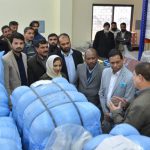
    UNICEF is leading on preventative actions in communities across the affected countries with risk communication, providing hygiene and medical kits to schools and health clinics and monitoring the impact of the outbreak to support continuity of care, education and social services.

    “At this pivotal moment, every effort must be made to push back against the outbreak,” said UNICEF Executive Director Henrietta Fore. “These crucial funds will support our global efforts to bolster weaker health systems and inform children, pregnant women and families about how to protect themselves.”

    Since it was launched in 2006, CERF has provided more than $6 billion to over 100 countries and helped hundreds of millions of people.

    UN releases US$15 million to help vulnerable countries battle the spread of the coronavirus
    Read More
    https://www.who.int/news-room/detail/01-03-2020-un-releases-us-15-million-to-help-vulnerable-countries-battle-the-spread-of-the-coronavirus

    Views: 0

  • A Joint Statement on Tourism and COVID-19 – UNWTO and WHO Call for Responsibility and Coordination

    A Joint Statement on Tourism and COVID-19 – UNWTO and WHO Call for Responsibility and Coordination

    As the current outbreak of the Coronavirus Disease (COVID-19) continues to develop, the World Health Organization (WHO) and the World Tourism Organization (UNWTO) are committed to working together in guiding the travel and tourism sectors’ response to COVID-19.

    On 30 January 2020, the Director-General of the World Health Organization (WHO) declared the outbreak of COVID-19 to be a Public Health Emergency of International Concern and issued a set of Temporary Recommendations. WHO did not recommend any travel or trade restriction based on the current information available. WHO is working closely with global experts, governments and partners to rapidly expand scientific knowledge on this new virus, to track the spread and virulence of the virus, and to provide advice to countries and the global community on measures to protect health and prevent the spread of this outbreak.

    Cooperation is key

    The tourism sector is fully committed to putting people and their well-being first. International cooperation is vital for ensuring the sector can effectively contribute to the containment of COVID-19. UNWTO and WHO are working in close consultation and with other partners to assist States in ensuring that health measures be implemented in ways that minimize unnecessary interference with international traffic and trade.

    Tourism’s response needs to be measured and consistent, proportionate to the public health threat and based on local risk assessment, involving every part of the tourism value chain – public bodies, private companies and tourists, in line with WHO’s overall guidance and recommendations.

    UNWTO and WHO stand ready to work closely with all those communities and countries affected by the current health emergency, to build for a better and more resilient future. Travel restrictions going beyond these may cause unnecessary interference with international traffic, including negative repercussions on the tourism sector.

    At this challenging time, UNWTO and WHO join the international community in standing in solidarity with affected countries.

    A Joint Statement on Tourism and COVID-19 - UNWTO and WHO Call for Responsibility and Coordination
    Read More
    https://www.who.int/news-room/detail/27-02-2020-a-joint-statement-on-tourism-and-covid-19—unwto-and-who-call-for-responsibility-and-coordination

    Views: 0

  • World experts and funders set priorities for COVID-19 research

    World experts and funders set priorities for COVID-19 research

    Leading health experts from around the world have been meeting at the World Health Organization’s Geneva headquarters to assess the current level of knowledge about the new COVID-19 disease, identify gaps and work together to accelerate and fund priority research needed to help stop this outbreak and prepare for any future outbreaks.

    The 2-day forum was convened in line with the WHO R&D Blueprint – a strategy for developing drugs and vaccines before epidemics, and accelerating research and development while they are occurring.

    “This outbreak is a test of solidarity — political, financial and scientific. We need to come together to fight a common enemy that does not respect borders, ensure that we have the resources necessary to bring this outbreak to an end and bring our best science to the forefront to find shared answers to shared problems. Research is an integral part of the outbreak response,” said WHO Director-General Dr Tedros Adhanom Ghebreyesus. “I appreciate the positive response of the research community to join us at short notice and come up with concrete plans and commitment to work together.”

    The meeting, hosted in collaboration with GloPID-R (the Global Research Collaboration for Infectious Disease Preparedness) brought together major research funders and over 300 scientists and researchers from a large variety of disciplines. They discussed all aspects of the outbreak and ways to control it including:

    • the natural history of the virus, its transmission and diagnosis;
    • animal and environmental research on the origin of the virus, including management measures at the human-animal interface;
    • epidemiological studies;
    • clinical characterization and management of disease caused by the virus;
    • infection prevention and control, including best ways to protect health care workers;
    • research and development for candidate therapeutics and vaccines;
    • ethical considerations for research;
    • and integration of social sciences into the outbreak response.

    “This meeting allowed us to identify the urgent priorities for research. As a group of funders we will continue to mobilize, coordinate and align our funding to enable the research needed to tackle this crisis and stop the outbreak, in partnership with WHO,” said Professor Yazdan Yazdanpanah, chair of GloPID-R. “Equitable access – making sure we share data and reach those most in need,  in particular those in lower and middle-income countries, is fundamental to this work which must be guided by ethical considerations at all times.”  

    During the meeting, the more than 300 scientists and researchers participating both in person and virtually agreed on a set of global research priorities. They also outlined mechanisms for continuing scientific interactions and collaborations beyond the meeting which will be coordinated and facilitated by WHO. They worked with research funders to determine how necessary resources can be mobilized so that critical research can start immediately.

    The deliberations will form the basis of a research and innovation roadmap charting all the research needed and this will be used by researchers and funders to accelerate the research response.

    Note to editors

    GloPID-R is a global alliance of international research funding organizations investing in preparedness and response to epidemics.

    World experts and funders set priorities for COVID-19 research
    Read More
    https://www.who.int/news-room/detail/12-02-2020-world-experts-and-funders-set-priorities-for-covid-19-research

    Views: 0

  • Pregnancy and breastfeeding during an Ebola virus outbreak

    Pregnancy and breastfeeding during an Ebola virus outbreak

    Women who are pregnant or breastfeeding in an Ebola outbreak face similar challenges as other population groups, but they have specific health needs which must be met.

    As the second largest Ebola outbreak in history continues in the Democratic Republic of Congo, WHO has released new clinical guidelines for healthcare providers supporting pregnant or breastfeeding women in the context of Ebola virus disease.

    Improving clinical care and reducing mortality

    92-4-000138-1Clear and coherent guidance is needed to meet the combined needs of women requiring Ebola treatment, pregnancy care and management of complications.

    Information on how to protect breastfeeding children and other members in the community from transmission of the disease is also critical.

    Limited scientific evidence on how to best manage these needs has previously been a challenge for affected countries. In addition, misconceptions that pregnant women have a higher mortality rate than other populations with Ebola may in some contexts have put pregnant women at risk of not receiving standard care.

    WHO’s Guideline on the management of pregnant and breastfeeding women in the context of Ebola virus reviews existing evidence and provides a single set of recommendations on the care continuum for women exposed to, diagnosed with, or recovered from Ebola.

    This will enable healthcare providers, emergency response teams and health policy-makers to improve prevention and treatment measures in an Ebola outbreak.

    Obstetric care at an Ebola Treatment Centre

    Optimal supportive care should be offered to all pregnant women with Ebola. Likewise, they should be offered experimental treatment and vaccination under the same conditions as non-pregnant populations.

    Ebola virus disease does increase the risk of miscarriage and early labour, requiring close clinical management at Ebola treatment centres. It is important to engage both obstetric providers and those trained in Ebola response.

    This dual expertise is also important because early Ebola and pregnancy-related symptoms can overlap. Pregnant women should be prioritised for testing to confirm an Ebola infection.

    Ebola virus can persist in pregnancy related fluids as well as breastmilk. If healthcare providers are not clear on how to manage Ebola infection risk, they may be less willing to provide care. This stigma can be life-threatening for women who experience complications during delivery.

    The new WHO guidelines advise healthcare workers on how to protect themselves while caring for pregnant women with Ebola virus disease. This includes induced labour or surgical procedures, which carry greater risk of transmission in cases of acute infection. Any invasive treatments should be carried out in full personal protective equipment.

    Breastfeeding recommendations in an Ebola outbreak

    WHO recommends that women with suspected or confirmed Ebola immediately stop breastfeeding and are prioritised for diagnostic testing. Any child exposed to Ebola through breast milk should be placed into safe care, closely monitored for symptoms over a 21-day period and fed with an appropriate breast milk substitute.  

    The guidelines strongly recommend that breastfeeding is only restarted following two consecutive negative tests of breast milk, separated by 24 hours.

    A breast milk substitute should be used even if infection is confirmed for both the mother and her child. Exceptions can be made for infants under 6 months of age who are already infected, if breast milk substitutes are not feasible, affordable, sustainable or safe and separation cannot be implemented safely.

    Women’s health and rights in a disease outbreak

    A disease outbreak does not change women’s and adolescent girls’ fundamental human right to sexual and reproductive healthcare, including evidence-based care during pregnancy and childbirth.

    Women need support to make informed reproductive health care choices for themselves and their children. Women living in an Ebola outbreak should have access to all relevant reproductive options, regardless of economic, cultural, racial or religious status, including contraception and safe abortion to the full extent of the law.

    Pregnant and breastfeeding women across affected communities need equitable and respectful care that considers the risks they face and supports the choices they make.

    Accessing the guidelines and further research

    These guidelines are now available online and may be freely downloaded. The executive summary will be available in French.

    WHO will closely monitor new data as it emerges, as there is still a pressing need to prioritise ongoing research related to Ebola virus transmission.


    Pregnancy and breastfeeding during an Ebola virus outbreak
    Read More
    https://www.who.int/news-room/detail/10-02-2020-pregnancy-and-breastfeeding-during-an-ebola-virus-outbreak

    Views: 0

  • Online training as a weapon to fight the new coronavirus

    More than 25 000 people across the globe have accessed real-time knowledge from WHO experts on how to detect, prevent, respond to and control the new coronavirus in the 10 days since the launch of an open online training.

    The learning team of the WHO Health Emergencies Programme worked with technical experts to quickly develop and publish the online course on 26 January – 4 days before the 2019-nCoV outbreak was declared a public health emergency of international concern.

    Approximately 3000 new users have registered for the training every day since its launch, demonstrating the high level of interest in the virus among health professionals and the general public. In addition, more than 200 000 people have viewed the introductory video to the course on YouTube.

    The high engagement levels emerged as the international community launched a US$675 million preparedness and response plan to fight further spread of the new coronavirus and protect states with weaker health systems.

    The free learning resource is available to anyone interested in novel coronavirus on WHO’s open learning platform for emergencies, OpenWHO.org. The platform was established 3 years ago with emergencies such as nCoV in mind, in which WHO would need to reach millions of people across the globe with real-time, accessible learning materials.

    The online training – entitled “Emerging respiratory viruses, including nCoV: methods for detection, prevention, response and control” – is currently being produced in all official UN languages and Portuguese.

    “Our job is to work with technical health experts to package knowledge using adult learning principles, quickly so that it is most useful to health workers and our staff,” said Heini Utunen, who manages OpenWHO for the WHO Health Emergencies Programme (WHE). “Our online platform – OpenWHO – is already accessed by users from every country on earth, providing more than 60 courses in 21 languages. Delivering trainings in the local language of responders is really important, especially in an emergency”.    

    WHE has been investing in learning and training to strengthen preparedness and real-time response to health emergencies. The programme developed its first-ever learning strategy in 2018 and has a small dedicated Learning and Capacity Development Unit that allows WHE to develop trainings quickly and get know-how to those who most need it at the front line.  

    For the latest information on the new coronavirus, visit the 2019-nCoV page.

    Read More
    https://www.who.int/news-room/detail/07-02-2020-online-training-as-a-weapon-to-fight-the-new-coronavirus

    Views: 0

  • US$675 million needed for new coronavirus preparedness and response global plan

    US$675 million needed for new coronavirus preparedness and response global plan

    To fight further spread of the new coronavirus (2019-nCoV) outbreak in China and globally, and protect states with weaker health systems, the international community has launched a US$675 million preparedness and response plan covering the months of February through to April 2020.

    “My biggest worry is that there are countries today who do not have the systems in place to detect people who have contracted with the virus, even if it were to emerge,” said Dr Tedros Adhanom Ghebreyesus, WHO Director-General. “Urgent support is needed to bolster weak health systems to detect, diagnose and care for people with the virus, to prevent further human to human transmission and protect health workers.”

    The Strategic Preparedness and Response Plan (SPRP) for the new coronavirus lays out activities and resources needed by international health organizations globally, including WHO, to implement priority public health measures in support of countries to prepare and respond to nCoV-2019 for a period February-April 2020. The objectives of the plan are to  limit human-to-human transmission of the virus, particularly in countries most vulnerable if they were to face an outbreak; identify, isolate and care for patients early; communicate critical risk and event information; minimize social and economic impact; reduce virus spread from animal sources; and address crucial unknowns.

    The plan focuses on:

    • Rapidly establishing international coordination and operational support;
    • Scaling up country readiness and response operations;
    • Accelerating priority research and innovation.

    “The effectiveness of outbreak response depends on the preparedness measures put in place before outbreaks strike,” said Dr Mike Ryan, head of WHO’s Health Emergencies Programme. “That is why we are seeking resources to safeguard the most vulnerable countries to protect people from the new coronavirus before it arrives on the doorstep.”

    As noted in the SPRP, WHO assesses that the outbreak poses a very high risk in China, and high risk regionally and globally. The risk assessment was based on factors including the likelihood of further spread, the potential impact on human health, and the varying levels of effectiveness in national preparedness and response measures. Accelerated action, as called for in the plan, can address these risks and areas requiring support.

    As of 10 a.m. Central European Time on 5 February, 25 countries have reported confirmed cases of the new coronavirus, including China, where 24,363 people had contracted the virus, or over 99% of all cases. In all other countries, 191 cases have contracted the virus.

    US$675 million needed for new coronavirus preparedness and response global plan
    Read More
    https://www.who.int/news-room/detail/05-02-2020-us-675-million-needed-for-new-coronavirus-preparedness-and-response-global-plan

    Views: 0

  • Protecting sensitive metadata so it can’t be used for surveillance

    Protecting sensitive metadata so it can’t be used for surveillance

    MIT researchers have designed a scalable system that secures the metadata—such as who’s corresponding and when—of millions of users in communications networks, to help protect the information against possible state-level surveillance.

    Views: 0

  • How to Make Money Fast by Retrieving and Returning Shopping Carts

    [ad_1]

    Are you looking for a way to make money fast? If you have a large utility vehicle, like a pick-up truck, you can retrieve and return shopping carts for a cash reward.

    Most every mid to large retail grocery, variety and department store has a stock of shopping carts on hand. They are purchased by the store, of course, so that customers can use them when shopping in their store.

    Shopping buggies are expensive. The average cost to the retailer for just one is between 75 and 100 dollars. Large ones like the kind you find at wholesale and club stores can run upwards of 200 dollars or more.

    Most retail stores have dozens of them; busy big-box stores may even have hundreds of them. Purchasing enough of them to meet a store’s demand and traffic levels requires a significant expenditure of cash.

    It is, therefore, in the best interest of the retailer to protect that investment. Most retailers do their best to make sure that carts remain on store property. However, shopping buggy theft is all too common. The average store loses about $8,000 $10,000 to per year to this problem.

    Because they are so expensive to buy, many store owners and retail companies pay cash rewards for the return of their carts which have been stolen (or “borrowed”) and not returned. Cash rewards typically range from 25 to 50 dollars per cart.

    Here’s how you can retrieve and return those buggies for cash: contact retailers in your area which have shopping carts. Find out if they pay for returned carts. Many do, but won’t give cash rewards to just anyone. (Store owners don’t want the public to abuse the reward system by stealing carts themselves in order to get the reward.) Usually you have to sign a cash-for-retrieval contract.

    You’ll have to provide some forms of identification, usually a driver’s license plus one other item (like a Social Security or credit card). You may have to sign a waiver absolving the store of liability in the event of something unforeseen.

    You can make arrangements with any or all of the retailers in your area. The more contracts you have, the more money you can make.

    If you’ve lived in your city for any length of time, you’ve probably seen common dump sites for stolen shopping buggies. Visit these areas regularly. Additionally, get in the habit of keeping your eyes open every time you’re out and about town. You’ll probably spot discarded shopping carts regularly. You can pick these up and return them as you come across them, or store them at home until you have several of them.

    [ad_2]

    Source by Scott Lindsay

    Views: 0

  • Spinoza’s Ethics of Strength of the Emotions in W Somerset Maughm’s Of Human Bondage

    [ad_1]

    The writer probes on the complex world of W. Somerset Maughm’s protagonist in the novel Of Human Bondage, using the propositions the Jewish Portuguese philosopher Baruch Spinoza postulated in his book Ethics in 1674. Some of Spinoza’s propositions are as follows( Morgan, 2006, pp 108-120):

    The following propositions of Spinoza enlighten the changing character of Philip in his own bildungsromans of his life. The force and increase of any passive emotion and its persistence in existing is defined not by the power whereby we ourselves endeavour to persist in existing, but by the power of external causes compared with our own power;

    The force of any passive emotion can surpass the rest of man’s activities or power so that the emotion stays firmly fixed in him;

    An emotion cannot be checked or destroyed except by a contrary emotion which is stronger than the emotion which is to be checked;

    Knowledge of good and evil is nothing other than the emotion of pleasure or pain insofar as we are conscious of it;

    An emotion whose cause we think to be with us in the present is stronger than it would be if we did not think the said cause to be with us;

    We are affected toward a future thing which we imagine to be imminent mo intensely than if we were to imagine its time of existence tofarther away from the present. We are also affected by a remembrance of a thing we imagine to belong to the near past more intensely if we were to imagine it to belong to the distant past;

    An emotion toward a thing which we think of as inevitable [necessarius] is more intense, other things being equal, than emotion toward a thing possible or contingent, that is, not inevitable;

    Emotion toward a thing which we know not exist in the present, and which we imagine to be possible, is, other things being equal, more intense than emotion toward a contingent thing;

    Emotion toward a contingent thing which we know not to exist in the present, is, other things being equal, feebler than emotion toward a thing past;

    No emotion can be checked by the true knowledge of good and evil, insofar as it is true, but only insofar as it is;

    Desire that arises from the true knowledge of good and evil can be extinguished or checked by many other desires that arise from the emotions by which we are assailed;

    The desires that arises from a knowledge of good and evil insofar as this knowledge has regard to to the future can be the more easily checked or extinguished by desire of things that are attractive in the present;

    Desire that arises from the true knowledge of good and evil insofar as this knowledge is concerned with contingent things can be even more easily checked by desire for things which are present;

    Desire arising from pleasure is, other things being equal, stronger than desire arising from pain;

    Every man, from the laws of his nature, necessarily seeks or avoids what he judges to be good or evil.

    The more every man endeavours and is able to seek advantage, that is, to preserve his own being, the more he is endowed with virtue. On the other hand insofar as he neglects to preserve what is to his advantage, that is, his own being to that extent he is weak.

    Philip is highly affected by nature. There is in Nature no individual thing that is surpassed in strength and power by some other thing. Whatsoever thing there is, there is another more powerful by which the said thing can be destroyed. And he was able to surpass all his problems because of the incoming different emotions, problems which proved to make him stronger if not released from “Human Bondage”.

    The force whereby a man persist in existing is limited, and infinitely surpassed by the power of external causes.

    Philip’s deformity limits his own persistence to live. But his meeting with Hayward, Clutton and Lawson, his former classmates in France, who taught him that life is all about passion and the pursuit of it, he became engross in his art. France did not also care about his clubfoot. Cronshaw taught him more philosophy in life about living in let live. Cronshaw even on his death bed, defied doctors’ prohibition. His life is anyway to end just like any other’s lives.

    Set in Kent, England, a sub-urban near London, the novel presents the multifaceted personal, social, political and religious experiences of Philip carey from his childhood to his middle age of thirty. A bildungsroman (1991, Smiley) in style, which highlights the formation of a youngman’s character through education, travels and early life experiences. Philip at the age of nine, as a young boy, is set apart from his peers by some misfortune and undergoes a humiliating experience that later proves strengthening. his first experience of love is unsuccessful or problematic one that nevertheless paves the way to a happy marriage with a suitable mate. The novel has ample observation, if not criticism, with the character’s institutions such as schools, churches and class structures.

    Philip’s personal life is truly an amalgam of life’s tragedies. But how he surpassed the seemingly insurmountable heap of oppressing weight, if not the meaninglessness or nothingness of life, is the focus of this attempt anchored on Spinoza’s propositions. To enumerate, at an early age, his mother died of tuberculosis and his father, a medical doctor, died of lung cancer. His innocence never understood the situation. He has only the temporary joy of travelling to Blackstable to live with his uncle William and childless Auntie Louisa. Forcibly liking his second family as an orphan, he is left reading his books without noise for his uncle, a Vicar in the community, is irated with children’s unruly behaviour. Aunt Louisa is incapable of understanding Philip. he is left with the care of the governess. His personal disability or deformity, being born with a club-foot, proves to be the stigma of his life forever. His early education in Kingston School, caused his early childhood bitter as his peers laughed at him, mocked and physically abused him because of his physical abnormality. Then, his adolescence which brings him to Heidelberg, Germany to study foreign languages, is never sweet. Girls chided him for his deformity. the consolation is meeting friends like Hayward and Miss Wilkinson, who flirted with him, to his disgust. His sojourn to France, albeit, his uncle’s disappointment, proves to be annihilating. His lack of talent in painting plus his deformity, made him a mediocre student. His classmate Fanny Price, who fell in love with him, on the pretext of sharing the same abnormality (hers is lack of beauty), committed suicide out of hunger and wretchedness.

    Then everything escalated to its height, when realizing that painting is not his passion, he goes back to England. He decides to change again to pursue what his uncle William tells him to do: to follow the footsteps of his father. To be a doctor. feeling he has nothing to do, he embraces the new idea. Sauntering along the Parliamentary Street of London, he is driven to dine in a cafe where he meets the slatternly waitress Mildred Rogers who awakens his sexual desire. But his languid mien, caused by his club-foot proves to be a disadvantage. the waitress prefers rugged and rich men. But his desire to pursue the pale, anaemic, aloof Mildred, beomes a challenge to him. Gradually, the two becomeclose. But the ambitious and materialistic waitress always insults him because of his deformity. to slander him cripple, would totally “cripple” his mood and emotion. Even when Philip is generous to the moody Mildred, she hurt him by marrying a German businessman Miller. His desperation is tantamount to his yearning for Mildred. He is left believing that one day, he would see Mildred again. His concentration with his medical study is forlorned. And Mildred came back,looking sickly, with a child. His generosity and forgiveness for his first love, who hurts him the most, is even greater than life. The ingrate waitress after a little recovery from poverty, elopes with Griffith, Philip’s handsome and robust classmate. That is the height of Mildred’s shamelessness. So her expected return is welcomed with derision by the newly awakened Philip. Even when Mildred turns into a prostitute, Philip is only capable of compassion, without passion or sexual desire. She is freed at last. And Philip is extricated from the pains excruciatingly caused by the destitute Mildred.

    His obsession to Mildred costs Philip his fortune and gradually his savings is left with seven pounds. He is forced to stop from his medical studies that brings him to experience unbelievable poverty. He meets the generous Athelneys who fed and sheltered him in his misery. His uncle’s death, leaving an average fortune, helps him to finish his medical studies. His fateful shelter with the Athelneys brings him to his final, harmonious and peaceful resolution to marry Sally Athelney and go on with his life beautifully. Shakespeare is affirmed by saying that “all is well that ends well.

    At this juncture, it is noteworthy to enumerate Spinoza’s propositions to elucidate Philip’s “bondage” and his strength of his emotion. Spinoza in his preface to his philosophical treatise wrote:

    I assign the term “bondage” to man’s lack of power to control and check the emotions. For a man at the mercy of his emotions is not his own master but is subject to fortune, in whose power he so lies that he is often compelled, although he sees the better course, to pursue the worse. In this Part I have set myself the task of demonstrating why is so, and also what is good and what is bad in emotions. But before I begin, I should like to make a few preliminary observations on perfection and imperfection, and on good and bad ( Morgan, 2006).

    In the beginning, Philip is a slave if not a victim of his emotion. His physical deformity, his club-foot, caused him too much pain. He learned to hate his classmates and,worst, abandoned his belief in God. He could not appreciate the God of his uncle vicar when God cannot give him the miracle he wanted to have normal feet. His painful childhood in school changed him to be rough character. He never wanted to become a vicar anymore. His obsession to Mildred indeed showed his real weakness as a man, and even wretchedness as a human being because of his deformity. he would always think that women cannot love him as he is because of his deformity.

    He who has undertaken something and has brought it to completion will say that the thing is completed; and not only he but everyone who rightly knew, or thought he knew, the intention and aim of the author of that work. For example, if anyone sees a work (which I assumed is not yet finished) and knows that the aim of author is to build a house, he will say the house is imperfect. On the other hand, as soon as he sees that the work has been brought to the conclusion that its author had intended to give it, he will say that the house is perfect. But if anyone sees a work whose like he had never seen before, and he does not know the artifecer’s intention, he cannot possibly know whether the work is perfect or imperfect.

    This appears to have been the original meaning of these terms. But when men began to form general ideas and to devise ideal type of houses, buildings, towers, and so on, and to prefer some models to others, it came about that each called “perfect” that which he saw at variance with his own preconceived ideal, although in the artifecer’s opinion it had been fully completed. There seems to be no other reason why even natural phenomena (those not made by human hand) should commonly be called perfect or imperfect. For men there are wont to form general ideas both natural phenomena and artifacts, and these ideas they regard as models, and they believed that Nature (which they consider does nothing without an end in view) looks to this ideas and holds them before herself as models. So when they see something occurring in Nature at variance with their preconceived ideal of the thing in question, they believed that Nature has then failed or blundered and has left that thing imperfect from their own preconceptions rather than from true knowledge.

    So perfection and imperfection are in reality only models of thinking, notions which we are wont to invent from comparing individuals of the same species or kind; and it is for this reason that I previously said (Def. 6, II) that by reality and perfection I mean the same thing. For we are wont to classify all the individuals in Nature under one genus which is called the highest genus, namely, the notion of Entity, which pertains to all the individuals in Nature without exception. Therefore insofar as we classify individuals in Nature under this genus and compare them with one another and find that some have more being or reality than others, to that extent we say that some are more perfect than the others. And insofar as we attribute to them something involving negotiation, such as limit, end, impotence and so on, to that extent we call them imperfect because they do not affect our minds as much as those we call perfect, and not because they lack something of anything except that which follows from the necessity of nature of its efficient cause; and whatever follows from the necessity of the nature of its efficient cause must be necessarily be so.

    To be a master of his emotion is to attain perfection. It may not be physical but spiritual, mental and emotional. His challenges may have hardened him but enlightened him to loosen up and later, embrace the beauty of life. The unattainable perfection, was answered, through his friend Cronshaw, a poet whom he met in France, that the meaning of life cannot be answered unless one lives it. he realized that men are born, study, work, marry, have children and die is the most beautiful pattern that the Persian rug edifies.

    As for the terms “good” and “bad,” they likewise indicate nothing positive in things considered in themselves, and nothing but models of thinking, or notions which we form from comparing things with one another. For one and the same thing can at the same time be good and bad, and also indifferent. For example, music is good for one who is melancholy, bad for one in mourning, and neither good or bad for the deaf. However, although this is so, these terms ought to be retained. For since we desire to form the idea of man which we may look to as model of human nature, we shall find it useful to keep these terms in the sense I have indicated. So in what follows I shall mean by “good” that which we certainly know to be the means for our approaching nearer to the model of human nature that we set before ourselves, and by “bad” that which we certainly know prevents us from reproducing the said model. For it is important to note that when I say somebody passes from a state of less perfection, to a state of greater perfection, and vice versa, I do not mean that he changes from one essence or to form to another (for example, a horse is as completely destroyed if it changes into a man as it would be if it were to change into an insect), but that we conceive his power of activity, insofar as this is understood through his nature, to be increased or diminished.

    Philip may have been both good and bad due to circumstances. he was good in the Blackstable with his Auntie Louisa and Uncle William. he became bad in school because his classmates taunted him because of his clubfoot. In Heidelberg, he is good to all the people even if he did not understand their silence and even their insolence. In France, was forced to become bad, to protect himself from the looming abuses of other foreigners. The death of an anti-social fanny Price, showed him to be the only compassionate painting student.

    Hence, after a series of Philip’s tragedy, his experiences, his meeting with different people, his education, his travel to Heidelberg, to Paris and to London, his affluence and reversal of his fortune to poverty taught him greatest lessons in life. That life can be beautiful if man knows to master his emotion, moderate his desire and be reasonable in every decision. A man is finally freed from the chains and cufflinks ” Of Human Bondage”.

    References:

    Maughm, Somerset W. (1991). Of Human Bondage.

    Canada: Bantam Book Doubleday.

    Morgan, Michael (ed.). (2006). The Essential Spinoza: Ethics And Related Writings.

    Cambridge: Hackett Publishing, Inc.

    [ad_2]

    Source by Wilfredo M. Valois

    Views: 0