Tag: Problem

  • Schistosomiasis elimination: refocusing on snail control to sustain progress

    Schistosomiasis elimination: refocusing on snail control to sustain progress

    Substantial progress has been made during the past decade to prevent and control schistosomiasis (also known as bilharziasis) globally. The disease affects more than 230 million people, mostly in sub-Saharan Africa.

    Progress is mainly due to large-scale periodic treatment of affected populations with praziquantel, the only medicine recommended by the World Health Organization (WHO) against all forms of schistosomiasis. Regular treatment cures mild symptoms and prevents
    progression to severe, chronic disease.

    “Through progressive scale-up of periodic large-scale treatment
    to control morbidity in many endemic countries, we are closer to
    achieving the minimum target of 75% global coverage of all school‐aged
    children,
    ” said Dr Amadou Garba Djirmay, who leads WHO’s global schistosomiasis control programme. “But
    if we want to achieve elimination, we must go a step further to
    introduce snail control in hot spots and in areas targeting elimination.
    This is bound to increase impact and accelerate progress towards
    interruption of transmission
    .”

    Expansion of treatment is largely supported by donated praziquantel from Merck KGaA of up to 250 million tablets annually. In 2018, almost 78 million children were treated, representing 63% of all school‐aged children eligible for treatment.

    Transmission: role of snails

    Schistosomiasis is an acute, chronic parasitic disease caused by infection with trematode worms of the genus Schistosoma. It is prevalent in tropical and subtropical areas, especially in poor, rural communities that have little or no access to
    safe drinking‐water and basic sanitation. Infection is transmitted when people suffering from schistosomiasis contaminate freshwater sources when evacuating urine and faeces containing the parasite’s eggs.

    Once an egg comes into contact with fresh water, it releases miracidia (hatchlings) which enter a snail and produce hundreds of cercariae (larvae) daily. The cercariae enter the human body on contact with the skin and develop into adult worms.

    Besides treatment with praziquantel, eliminating snail hosts and improving sanitation are important methods for sustainable prevention of the disease. Dam and irrigation projects are known to be potential sites for outbreaks of the disease. Snail management,
    often achieved through mollusciciding, can help to reduce transmission by eliminating these intermediate snail hosts.

    Vector control

    In 2017, the World Health Assembly – WHO’s decision making body – adopted resolution WHA70.16 on the Global Vector Control
    Response, calling on Member States to develop or adapt national vector control strategies and operational plans. The strategy aims to reduce by at least 40% the incidence of vector borne diseases, including schistosomiasis, by 2025.

    In response, WHO is reinforcing snail control as part of its strategic approach to achieve the target of eliminating schistosomiasis as a public health problem and, ultimately, the goal of elimination of transmission. Snail control will complement mass
    treatment campaigns and sustain the public health impact of this core intervention.

    To facilitate implementation of snail control, in 2019 WHO published on specific, standardized procedures and criteria for efficacy
    testing and evaluation and in 2017 a manual on the use of molluscicides in the field. WHO is also planning to strengthen capacities
    of health staff in medical malacology in order to reinforce snail control activities in countries.

    In the past, molluscicides (particularly niclosamide1 based products) were widely used in schistosomiasis control programmes. For example, in China programmes largely relied on snail control for over 30 years to overcome the disease as a public
    health problem. In other parts of the world, however, snail control programmes were gradually discontinued and competencies faded away.

    “Snail control is a crucial component of the global schistosomiasis elimination strategy,” said Dr Rajpal Yadav, Scientist, WHO Department of Control of Neglected Tropical Diseases. “It
    is time we look for new snail control products that are cost–effective
    and of low risk to humans and the environment. Some efforts are being
    made to explore molluscicide compounds from plants, marine algae and
    microorganisms
    .”

    An integrated control strategy involving mass treatment with praziquantel, snail control and environmental modification, wider access to sanitation and safe water, economic and environmental development, health education and poverty-alleviation can greatly
    contribute to sustainable control and elimination of schistosomiasis.

    WHO’s new road map on neglected tropical diseases for 2021–2030, due to be launched later this year, advocates enhanced financial and political support to achieve the target of interruption of transmission. Additional research to address gaps,
    develop tools and optimize the impact of existing programmes with snail control will complement the core strategic approach.

    Schistosomiasis: forms of the disease

    There are two major forms of schistosomiasis – intestinal and urogenital.

    Intestinal schistosomiasis usually results in diarrhoea and blood in the stool; enlargement of the liver and of the spleen and portal hypertension are common in advanced cases.

    Urogenital schistosomiasis is characterized by the presence of blood in the urine. Chronic infection results in fibrosis of the bladder and ureter that can evolve to hydronephrosis and create conditions for bladder cancer.

    In women, urogenital schistosomiasis can cause vaginal bleeding, pain during sexual intercourse and nodules in the vulva, a condition now described as female genital schistosomiasis. In men, urogenital schistosomiasis can induce disease in the seminal
    vesicles and prostate.


    1Limitations with the use of formulations based on niclosamide include restrictions on the usage of water immediately after application and temporary toxicity to non-target aquatic organisms including
    fish, amphibians and invertebrates. 


        Schistosomiasis elimination: refocusing on snail control to sustain progress
        Read More
        https://www.who.int/news-room/detail/25-03-2020-schistosomiasis-elimination-refocusing-on-snail-control-to-sustain-progress

        Views: 0
      • Health Ministry can conduct 16,000 screenings a day by April

        Health Ministry can conduct 16,000 screenings a day by April

        Health Ministry can conduct 16,000 screenings a day by April 3

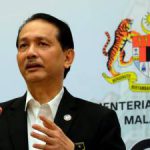
        PUTRAJAYA: The Health Ministry expects to be able to carry out 16,000 Covid-19 screenings a day by April compared to just 3,500 now.

        Health director-general Datuk Dr Noor Hisham Abdullah said that tests are currently being conducted by 18 Health Ministry and five private laboratories.

        “The Institute for Medical Research will train several other laboratories, including in military and university hospitals, to enhance Malaysia’s ability to conduct Covid-19 detection tests,” he said at the Covid-19 daily press conference today.

        Meanwhile, he said the ministry will deploy more nurses in states with a very high number of Covid-19 patients like at the Sungai Buloh Hospital in Selangor as well as recall retired specialist doctors and nurses.

        Other than that, the ministry is also cooperating with private hospitals to jointly tackle the health problem. – Bernama

        Health Ministry can conduct 16,000 screenings a day by April
        Read More
        https://www.thesundaily.my/local/health-ministry-can-conduct-16000-screenings-a-day-by-april-IN2168684

        Views: 0

      • Why the coronavirus is different from flu and warrants major action

        Why the coronavirus is different from flu and warrants major action

        People who argue that covid-19 is no bigger a problem than flu ignore the fact that we lack natural immunity and have no vaccines in our armoury
        Why the coronavirus is different from flu and warrants major action
        Read More
        https://www.newscientist.com/article/mg24532733-400-why-the-coronavirus-is-different-from-flu-and-warrants-major-action/?utm_campaign=RSS%7CNSNS&utm_source=NSNS&utm_medium=RSS&utm_content=home

        Views: 0

      • Microsoft sees huge boost to Teams with 44 million, with COVID-19 sending workers home

        Microsoft sees huge boost to Teams with 44 million, with COVID-19 sending workers home

        Microsoft Teams has come up with a solution to the problem many of us working at home types are facing. Noise in the background.

        Read More
        https://techxplore.com/news/2020-03-microsoft-huge-boost-teams-million.html

        Views: 0

      • Facebook bug wrongly deleted authentic coronavirus news

        Facebook bug wrongly deleted authentic coronavirus news

        Facebook said a bug in its anti-spam system temporarily blocked the publication of links to news stories about the coronavirus. Guy Rosen, Facebook’s vice president of integrity, said on Twitter Tuesday that the company was working on a fix for the problem.

        Read More
        https://techxplore.com/news/2020-03-facebook-bug-wrongly-deleted-authentic.html

        Views: 0

      • Do not bring family to buy essential goods: NSC

        Do not bring family to buy essential goods: NSC

        Do not bring family to buy essential goods: NSC 5

        PUTRAJAYA: There is no restriction on individuals going out to buy essential goods when the Movement Control Order comes into effect from March 18 to 31 throughout the country, but they are not allowed to bring their family members along.

        National Security Council (NSC) Maritime Sovereignty Division director Roselin Rajab said the order was aimed at reducing the movement of people in public places in the effort to curb the spread of the Covid-19 infection.

        “There is no problem if you want to buy daily necessities but do not bring the entire family and children for the chore. Just go out alone,” he told reporters after a special Covid-19 meeting between Communications and Multimedia Minister Datuk Saifuddin Abdullah and media editors, here today.

        In terms of surveillance, Roselin said the authorities would be monitoring to ensure there is no assembly or gathering at public places.

        “If we come across people meeting in a place, they will be told to return home,” he said.

        On transit flights at the country’s airports, Roselin said these passengers would not be allowed to come out of the terminal.

        “As they are on transit, the passengers would not be allowed come out of the terminal. This is because, they have not entered the country so long as they do not pass the Immigration checkpoint,” he said.

        The Movement Control Order was announced by Prime Minister Tan Sri Muhyiddin Yassin on Monday to prevent the virus from infecting more people. – Bernama

        Do not bring family to buy essential goods: NSC
        Read More
        https://www.thesundaily.my/local/do-not-bring-family-to-buy-essential-goods-nsc-EC2141556

        Views: 0

      • The Importance of Knowing Your Audience

        As a marketing or sales professional, knowing your customer is vital for success. Taking extra care to understand what your customer values will help you to communicate in an effective manner with him or her. Customers want to receive assurance about certain things before they purchase a product or invest in a service. They may want to know that a product or service is reliable, will remedy a certain problem or has an extensive warranty in place.

        Read More
        http://www.associationofmarketing.org/articles/view.php?article_id=14640

        Views: 0

      • WHO, UN Foundation and partners launch first-of-its-kind COVID-19 Solidarity Response Fund

        WHO, UN Foundation and partners launch first-of-its-kind COVID-19 Solidarity Response Fund

        GENEVA and Washington, D.C. – A new coronavirus disease (COVID-19) Solidarity Response Fund will raise money from a wide range of donors to support the work of the World Health Organization (WHO) and partners to help countries respond to the COVID-19 pandemic. The fund, the first-of-its-kind, enables private individuals, corporations and institutions anywhere in the world to come together to directly contribute to global response efforts, and has been created by the United Nations Foundation and the Swiss Philanthropy Foundation, together with WHO. 

        “We are at a critical point in the global response to COVID-19 – we need everyone to get involved in this massive effort to keep the world safe,” said Dr. Tedros Adhanom Ghebreyesus, WHO Director-General. “We are immensely grateful to the UN Foundation and the Swiss Philanthropy Foundation for coming forward to help us set up this fund. A lot of people and institutions have been saying they want to contribute to the fight against the novel coronavirus. Now they can.”

        The fund launches with major support already lined up, including from Facebook and Google who have instituted a matching scheme for funds raised through their platforms, while individual donors are also supporting the fund through www.COVID19ResponseFund.org.

        “We can’t ignore the fact that this is a truly global problem – one that requires truly global solutions,” said Elizabeth Cousens, UN Foundation President and CEO. “The case for global cooperation could not be clearer – communities everywhere are affected, and people want to contribute. This new fund will create space for people everywhere, together, to fight this virus.”

        Funds will go towards actions outlined in the COVID-19 Strategic Preparedness and Response Plan to enable all countries – particularly those most vulnerable and at-risk, and with the weakest health systems – to prepare for and respond to the COVID-19 crisis including rapidly detecting cases, stopping transmission of the virus, and caring for those affected.

        WHO and its partners are seeking financing for protective equipment for frontline health workers; to equip diagnostic laboratories; improve surveillance and data collection; establish and maintain intensive care units; strengthen supply chains; accelerate research and development of vaccines and therapeutics;  and take other critical steps to scale up the public health response to the pandemic.

        The COVID-19 Solidarity Response Fund is hosted by two foundations, the UN Foundation (registered in the United States) and the Swiss Philanthropy Foundation (registered in Switzerland). Both foundations have established relationships with the World Health Organization, allowing for efficient transfer of financial resources to enable COVID-19 response efforts.

        Apart from giving online at www.COVID19ResponseFund.org, the UN Foundation can also receive donations via check or wire from around the world by contacting COVID19Fund@unfoundation.org.  

        All donations made to the United Nations Foundation and Swiss Philanthropy Foundation are tax-deductible to the extent allowable by the law, where applicable (U.S. and Switzerland). Additionally, Swiss Philanthropy Foundation has partnered with Transnational Giving Europe to extend tax benefit to certain additional European countries where applicable.

         ###

        More:

        COVID-19 Strategic Preparedness and Response Plan

        Coronavirus disease (COVID-19) outbreak information

        About the United Nations Foundation

        The UN Foundation brings together the ideas, people, and resources the United Nations needs to drive global progress and tackle urgent problems. Our hallmark is to collaborate for lasting change and innovate to address humanity’s greatest challenges. With an insider’s knowledge and outsider’s flexibility, we stay agile to get things done. Learn more at: www.unfoundation.org.


        WHO, UN Foundation and partners launch first-of-its-kind COVID-19 Solidarity Response Fund
        Read More
        https://www.who.int/news-room/detail/13-03-2020-who-un-foundation-and-partners-launch-first-of-its-kind-covid-19-solidarity-response-fund

        Views: 0