Tag: Population

  • WHO releases guidelines to help countries maintain essential health services during the COVID-19 pandemic

    WHO releases guidelines to help countries maintain essential health services during the COVID-19 pandemic

    The COVID-19 pandemic is straining health systems worldwide. The rapidly increasing demand on health facilities and health care workers threatens to leave some health systems overstretched and unable to operate effectively.

    Previous outbreaks have demonstrated that when health systems are overwhelmed, mortality from vaccine-preventable and other treatable conditions can also increase dramatically. During the 2014-2015 Ebola outbreak, the increased number of deaths caused
    by measles, malaria, HIV/AIDS, and tuberculosis attributable to health system failures exceeded deaths from Ebola
    [1,2]. 

    “The best defense against any outbreak is a
    strong health system,” stressed WHO Director-General Tedros Adhanom Ghebreyesus.
    “COVID-19 is revealing how fragile many of the world’s health systems and
    services are, forcing countries to make difficult choices on how to best meet
    the needs of their people.”

    To help countries navigate through these challenges, the World Health Organization (WHO) has updated operational planning guidelines in balancing the demands of responding directly to COVID-19 while maintaining essential health service delivery, and mitigating
    the risk of system collapse. This includes a set of targeted immediate actions that countries should consider at national, regional, and local level to reorganize and maintain access to high-quality essential health services for all.

    Countries should identify essential services that will be prioritized in their efforts to maintain continuity of service delivery and make strategic shifts to ensure that increasingly limited resources provide maximum benefit for the population. They
    also need to comply with the highest standard in precautions, especially in hygiene practices, and the provision of adequate supplies including personal protective equipment This requires robust planning and coordinated actions between governments
    and health facilities and their managers.

    Some examples of essential services include: routine vaccination; reproductive health services including care during pregnancy and childbirth; care of young infants and older adults; management of mental health conditions as well as noncommunicable diseases
    and infectious diseases like HIV, malaria and TB; critical inpatient therapies; management of emergency health conditions; auxiliary services like basic diagnostic imaging, laboratory services, and blood bank services, among others.

    Well-organized and prepared health systems can continue to provide equitable access to essential service delivery throughout an emergency, limiting direct mortality and avoiding increased indirect mortality. 
     

    The guidelines stress the importance of keeping up-to-date information. This requires frequent transparent communications with the public, and strong community engagements so the public   can maintain trust in the system to safely meet their
    essential needs and to control infection risk in health facilities. This will help ensure that people continue to seek care when appropriate, and adhere to public health advice.


    1. Elston, J. W. T., Cartwright, C., Ndumbi, P., & Wright, J. (2017). The health impact of the 2014–15 Ebola outbreak. Public Health, 143, 60-70.

    2. Parpia, A. S., Ndeffo-Mbah, M. L., Wenzel, N. S., & Galvani, A. P. (2016). Effects of response to 2014–2015 Ebola outbreak on deaths from malaria, HIV/AIDS, and tuberculosis, West Africa. Emerging infectious diseases, 22(3), 433.


    For interviews please contact:  Tarik Jasarevic

    To access the full guidance please visit: https://www.who.int/emergencies/diseases/novel-coronavirus-2019/technical-guidance/maintaining-essential-health-services-and-systems

    For further information and guidance on COVID-19 please visit: https://www.who.int/emergencies/diseases/novel-coronavirus-2019


    WHO releases guidelines to help countries maintain essential health services during the COVID-19 pandemic
    Read More
    https://www.who.int/news-room/detail/30-03-2020-who-releases-guidelines-to-help-countries-maintain-essential-health-services-during-the-covid-19-pandemic

    Views: 0

  • World TB Day 2020 Newsletter

    World TB Day 2020 Newsletter

    Latest news and updates from WHO

    World TB Day 2020 Newsletter 1

    Dear colleagues and friends,

    World TB Day, this year, comes at a sobering time – as the world grapples with the COVID-19 pandemic. We stand in solidarity with those affected, those at the frontlines of the fight to combat COVID-19, as well as those who continue efforts to support
    those ill with longstanding health problems like TB, HIV and other diseases. However, we cannot forget the millions and their families who battle TB every day and lose their lives to this ancient disease – which remains the world’s top
    infectious killer.

    As eloquently emphasized by WHO Director-General Dr Tedros Adhanom Ghebreyesus in his press briefing on COVID-19 yesterday, “I’d like to remind everyone that although COVID-19 is dominating the world’s attention-there is another respiratory
    disease that is both preventable and treatable, but kills 1.5 million people every year – that disease is tuberculosis”

    “It’s Time”, the focus for World TB Day this year is therefore on urgently accelerating the TB response to save lives and end suffering, even in times of crisis. This will be essential if we are to reach the targets and commitments made
    by Heads of State at the 2018 UN High Level Meeting on TB. 

    We have made important strides against the TB epidemic to date.

    We announced last year, that more people received life-saving treatment for tuberculosis in 2018 than ever before, largely due to improved detection and diagnosis. Globally, 7 million people were diagnosed and treated for TB – up from 6.4 million in 2017
    – enabling the world to meet one of the milestones towards the United Nations political declaration targets on TB and the WHO Director-General Flagship Initiative Find.Treat.All End TB jointly with Stop TB Partnership and the Global Fund. This
    has been a big win for the TB community.

    WHO is working with countries to roll out important guidelines, including a comprehensive package on TB preventive treatment released today, and updated MDR TB guidelines to promote the use of all-oral regimens for patients with drug-resistant TB which
    would be helpful – particularly at this point, when visiting health centers is a challenge. Furthermore, WHO has developed a note to guide and urge countries to ensure continuity of TB services during the COVID-19 pandemic.

    We are strengthening our collaboration with civil society – more information is highlighted in the WHO Civil Society Taskforce Progress Review released today.

    Youth mobilization is being ramped up through the WHO 1+1 Youth Initiative to end TB and the Global Youth Declaration to End TB. Multisectoral accountability is being promoted in countries through our framework and we have finalized a new global strategy
    on TB research and innovation, that will be reviewed by the World Health Assembly.

    Yet, the gains we have made are at risk – if there is any slackening of commitment and action, especially in times of crisis.

    We are at a crossroads and we need to unite forces to take the path of success that will save lives and end suffering.

    I was especially heartened today, to see the TB community coming together like never before. We all took our events to the virtual realm due to COVID-19 lockdowns. The WHO Online Talk Show held this afternoon, had a powerful line up of speakers that included,
    TB survivors and advocates, civil society, high level government representatives, heads of agencies, researchers and partners. As of this evening we have surpassed 10,000 views on YouTube. I also participated in townhalls organized by Stop TB Partnership.
    Our joint efforts have indeed ensured a continuing spotlight on those affected by TB, and clearly shows that no matter what the barrier, we can surpass it if we work together.

    I am proud to stand shoulder-to-shoulder with you all virtually – and recommit to champion End TB efforts till we reach the finish line.

    It’s time to deliver on our promises and ensure no one is left behind.

    It’s time to End TB!

    Dr Tereza Kasaeva
    Director
    Global TB Programme
    World Health Organization


    World TB Day Talk Show

    World TB Day 2020 Newsletter 2

    In the backdrop of the global battle against COVID-19, WHO organized a special online talk show to mark World TB Day 2020. The talk show had a powerful line up of speakers from among TB survivors and advocates, civil society, high-level government representatives,
    heads of agencies, researchers and partners. The video was streamed live on WHO’s Youtube channel crossing over 10,000 views in a few hours. Watch the talk show video


    Spotlight on TB Preventive Treatment

    New WHO recommendations to prevent tuberculosis aim to save millions of lives

    24 March 2020 News release

    Geneva –  New World Health Organization (WHO) guidance will help countries accelerate efforts to stop people with tuberculosis (TB) infection becoming sick with TB by giving them preventive treatment. A quarter of the world‘s population
    is estimated to be infected with TB bacteria. These people are neither sick nor contagious. However, they are at greater risk of developing TB disease, especially those with weakened immunity. Offering them TB preventive treatment will not only protect
    them from becoming sick but also cut down on the risk of transmission in the community. Read more

    The full package is available below and at our World TB Day Campaign Page


    WHO Civil Society Taskforce on TB: Progress Review

    The WHO Civil Society Taskforce provides a platform for meaningful engagement of civil society, building on the commitment of the Director-General, with emphasis on harnessing the untapped potential in engagement with civil society and affected communities
    al all levels. To mark World TB Day 2020, the Task Force has released a Progress Review highlighting key achievements since its formation in 2018.

    Access link here


    WHO eTB guidelines: A digital platform to promote adolopment of TB recommendations

    World TB Day 2020 Newsletter 3

    WHO Global TB Programme / McMaster University

    The WHO Global Tuberculosis (TB) Programme, in collaboration with McMaster University, Canada, is developing a smart platform to improve access to and use of all WHO recommendations on TB prevention and care. The WHO eTB guidelines platform will facilitate
    the adoption, adaptation and implementation (“adolopment”) by countries of recommendations across the continuum of care. This digital platform will provide a variety of users – TB programme managers, healthcare workers including
    nurses, researchers, patients and affected communities – with easy access to all essential information about WHO-s current policy guidance on TB.

    The first set of recommendations on TB preventive treatment were released on this new platform on World TB Day.

    WHO eTB guidelines platform

    Infographic


    TB and COVID-19

    24 March 2020 News release

    Geneva –  As the world comes together to tackle the COVID-19 pandemic, it is important to ensure that essential health services and operations are continued to protect the lives of people with TB and other diseases or health conditions. Health services,
    including national programmes to combat TB, need to be actively engaged in ensuring an effective and rapid response to COVID-19 while ensuring that TB services are maintained. Read more


    Let’s never forget: It’s time to end TB

    Ksenia Schenina

    World TB Day 2020 Newsletter 4

    Ksenia Schenina

    24 March 2020 Photo story

    On World TB Day 2020, the theme – “Its time” – stresses the urgency to end the TB epidemic. TB survivor and advocate, Ksenia Schenina, talks about her struggle with the disease, the persistence of stigma and the role that remembrance can play
    in fighting it.   Through her TB memorial project, she aims to remember those who passed away from this terrible and ancient disease. “We do it to show what kind of people they were – what kind of things they liked, what kind of music
    they listened to and what their favorite movies were; if they liked fishing or dreamt of a flight to space,” she says. Read more


    Commentary

    To end TB, we must invest in research and innovation

    24 March 2020 Commentary

    If the world is to get anywhere near ending TB, a disease that killed more than 1.5 million people in 2018, something significant needs to change.

    TB remains the world’s leading infectious killer and yet, in the last 50 years, only three new drugs and regimes have been developed to combat the disease. “What we need is more research and more tools in the pipeline; better diagnostics,
    more effective vaccines, and safer, shorter drug regimes,” explains Dr Tereza Kasaeva, Director of the World Health Organization Global Tuberculosis Programme. Read more


    Emily: A Day in the Life of a TB Nurse

    World TB Day 2020 Newsletter 5

    Maria Emily C. Ballesteros

    Watch this story of Emily, a nurse managing the tuberculosis (TB) program of the City Health Office in Tuguegarao City. Her dream for Tuguegarao is to one day see zero TB cases and that no one dies from this infectious disease. Nurses and healthcare workers
    play a critical role in TB prevention and care. It’s time to invest in them to improve healthcare for all. We thank all the nurses, midwives and healthcare workers working to #EndTB! Watch the video


    Updates and messages

    New research tool supports scale-up of digital technologies to End TB

    24 March 2020 TDR news item

    National anti-tuberculosis efforts are increasingly involving digital technologies, such as mobile applications to support treatment adherence and electronic surveillance systems that enable real-time monitoring of a country’s TB situation. Read more

    World TB Day 2020: It’s Time for solidarity

    24 March 2020 HIV/TB news item

    At this unique time in history when the world is grappling with the COVID-19 pandemic, the WHO Department of Global HIV, Hepatitis and STI Programmes stands in solidarity with governments and communities as they seek to maintain health services
    and continue to address the needs of patients suffering from HIV and tuberculosis (TB).  Read more

    New, shorter treatment to prevent TB to be rolled out in five high TB burden countries

    24 March 2020 news item

    Three-month regimen expected to prevent TB in those at highest risk of developing the disease, including people living with HIV and children under the age of five
    Today, the Aurum Institute and its partners, as part of the IMPAACT4TB project, announced that five high-burden TB countries will roll out a new, shorter drug regimen (known as 3HP) to prevent TB. The announcement comes as countries around the world mark World TB Day, which takes place every year on March 24th. Countries that will initially provide the new regimen with funding from Unitaid, U.S. PEPFAR and the Global Fund include Cambodia, Ethiopia, Kenya, Malawi, South Africa and Zimbabwe. More than 120,000 patient courses of 3HP will be delivered by the project to 12 countries in 2020. An additional 1 million patient courses are expected to reach low- and middle-income countries by the end of the year, through the combined support of Unitaid, Global Fund, the Stop TB Partnership’s Global Drug Facility (GDF) and PEPFAR. Read more
    World TB Day 2020 Newsletter
    Read More
    https://www.who.int/news-room/detail/30-03-2020-world-tb-day-2020-newsletter

    Views: 0
  • Information sharing on COVID-19

    WHO’s focus at all times is to ensure that all areas of the globe have the information they need to manage the health of their people. In a recent interview, the WHO official who headed the joint international mission to China, did not answer a question on Taiwan’s response to the COVID-19 outbreak. 

    The question of Taiwanese membership in WHO is up to WHO Member States, not WHO staff. However, WHO is working closely with all health authorities who are facing the current coronavirus pandemic, including Taiwanese health experts. 

    The Taiwanese caseload is low relative to population. We continue to follow developments closely. WHO is taking lessons learned from all areas, including Taiwanese health authorities, to share best practices globally.

    With respect to the COVID-19 outbreak, the WHO Secretariat works with Taiwanese health experts and authorities, following established procedures, to facilitate a fast and effective response and ensure connection and information flow.

    • There is a Taiwanese International Health Regulations Point of Contact, who receives IHR (2005) communications and has access to the Event Information Site (EIS) Platform (a password-protected database and information exchange mechanism supporting the IHR (2005)). 
    • The Taiwanese Field Epidemiology Training Program is a member of the Training Programs in Epidemiology and Public Health Interventions Network (also known as “TEPHINET”). WHO shares Global Outbreak Alert and Response Network alerts and requests for assistance with TEPHINET, and those messages are cascaded to the TEPHINET members.
    • Two Taiwanese public health experts participated in the Global Research and Innovation Forum organized by WHO on 11-12 February 2020, thus contributing, alongside other world scientists, including from mainland China, to critical research questions and to finding ways to work together to advance the response.

      WHO staff work around the world to respond to this pandemic with the best evidence-based guidance and operational support available for all people, based on public health needs.  Membership in WHO and status issues are decided by Member States and the rules they set at WHO’s governing body, the World Health Assembly.

      Information about COVID-19 can be found here: https://www.who.int/emergencies/diseases/novel-coronavirus-2019


    Read More
    https://www.who.int/news-room/detail/29-03-2020-information-sharing-on-covid-19

    Views: 0

  • Stimulus package will flow over the three months, says Azmin

    Stimulus package will flow over the three months, says Azmin

    Stimulus package will flow over the three months, says Azmin 6

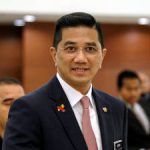
    KUALA LUMPUR: Minister of International Trade and Industry Datuk Seri Mohamed Azmin Ali (pix) said today that the Prihatin Rakyat Economic Stimulus Package is to cushion the adverse impact caused by Covid-19 on the population’s well-being.

    The Prihatin Rakyat package was announced by Prime Minister Tan Sri Muhyiddin Yassin yesterday (Friday).

    According to the senior minister, the situation would simply deteriorate without any form of assistance: “Companies won’t be able to operate and have no choice but to retrench their workers. We have to resort to this (stimulus), to save these workers and help employers not to dismiss them.”

    “But I am confident that this package is not just about three months but will bring about manifold benefits for the future in economic activities and growth,” he said.

    He said this in a programme, Bicara Naratif Pakej Rangsangan Ekonomi that was telecast live today by Radio Televisyen Malaysia (RTM).

    “As we are aware, the world is facing a difficult situation and Malaysia is no exception in the wake of the Covid-19 pandemic and global economic slowdown.

    “Malaysia as an oil producing country is also impacted by falling oil prices. Hence, why we must restructure the country and take the bold step of introducing the RM250 billion stimulus package.

    “Our hope is that when the movement control order (MCO) period is over, we can see a situation that is more reassuring,” he said.

    Azmin revealed that the Finance Ministry has prepared a module and specifics to all the ministries, in line with their respective responsibilities, on the disbursement of assistance to the target groups, which would be monitored by the Economic Stimulus Package Implementation and Coordination of National Agencies Unit (Laksana).

    “We have complete data on the recipients from the B40 and small and medium enterprises (SME).

    “As for the M40, we have some setbacks as I mentioned earlier, the government had given less priority to the category. That’s probably the reason why we do not have the complete data but this will be seen to so they too can have their right to assistance,” he added. — Bernama

    Stimulus package will flow over the three months, says Azmin
    Read More
    https://www.thesundaily.my/local/stimulus-package-will-flow-over-the-three-months-says-azmin-XH2191514

    Views: 0

  • Effective Ways to Market to Teenagers and Their Parents

    Marketing has a certain set of common rules that apply to both online and offline strategies. There should always be a definite target group to which advertisers communicate their ideas instead of voicing them out to the whole global population. There are many products and services centered on teen and parent audiences who are the toughest audiences that marketers have to face…

    Read More
    http://www.associationofmarketing.org/articles/view.php?article_id=7484

    Views: 0

  • Condom shortage looms after coronavirus lockdown shuts world’s top producer

    Condom shortage looms after coronavirus lockdown shuts world’s top producer

    Condom shortage looms after coronavirus lockdown shuts world’s top producer 7

    KUALA LUMPUR: A global shortage of condoms is looming, the world’s biggest producer said, after a coronavirus lockdown forced it to shut down production.

    Malaysia’s Karex Bhd makes one in every five condoms globally. It has not produced a single condom from its three Malaysian factories in the past 10 days due to a lockdown imposed by the government to halt the spread of the virus.

    That’s already a shortfall of 100 million condoms, normally marketed internationally by brands such as Durex, supplied to state healthcare systems such as Britain’s NHS or distributed by aid programmes such as the UN Population Fund.

    “We are going to see a global shortage of condoms everywhere, which is going to be scary,” Karex Chief Executive Goh Miah Kiat told Reuters this week.

    “My concern is that for a lot of humanitarian programmes deep down in Africa, the shortage will not just be two weeks or a month. That shortage can run into months.”

    Malaysia is Southeast Asia’s worst affected country, with 2,161 coronavirus infections and 26 deaths. The lockdown is due to remain in place at least until April 14.

    The other major condom-producing countries are China, where the coronavirus originated and led to widespread factory shutdowns, and India and Thailand, which are seeing infections spiking only now.

    Makers of other critical items like medical gloves have also faced hiccups in their operations in Malaysia.

    Goh said Karex was in the process of appealing to the government for an exemption to operate under specific conditions. Malaysia is approving other essential goods producers to operate with half of their workforce.

    “The good thing is that the demand for condoms is still very strong because like it or not, it’s still an essential to have,“ Goh said. “Given that at this point in time people are probably not planning to have children. It’s not the time, with so much uncertainty.” — Reuters

    Condom shortage looms after coronavirus lockdown shuts world’s top producer
    Read More
    https://www.thesundaily.my/local/condom-shortage-looms-after-coronavirus-lockdown-shuts-world-s-top-producer-AG2190121

    Views: 0

  • How to Effectively Market to the Growing Hispanic Segment

    America is fast embracing multiculturalism, and the changing dynamics have produced new dilemmas for the various marketers who are required to reach the people whose language, customs, and tastes aren’t the same as the ?general market?. It will become more critical to have marketing plans that are culturally relevant as the diversity in the population increases and ethnic minorities such as the U.S. Hispanics gain more prominence. The present-day market trend makes it imperative for the marketers to analyze and adopt novel strategies in the same manner that they’ve allocated the corporate marketing resources through time, in order to use marketing to Hispanics to their advantage…

    Read More
    http://www.associationofmarketing.org/articles/view.php?article_id=7672

    Views: 0

  • Coronavirus: Stop Wasting Testing Kits On Politicians, AIED Tells NCDC

    Coronavirus: Stop Wasting Testing Kits On Politicians, AIED Tells NCDC

    Coronavirus: Stop Wasting Testing Kits On Politicians, AIED Tells NCDC 8

    Coronavirus: Stop Wasting Testing Kits On Politicians, AIED Tells NCDC 9


    The Advocacy for Integrity and Economic Development has urged the Nigeria Centre for Disease Control to stop wasting “limited testing kits” on political office holders and government officials. 

    In a statement on Thursday by its Director of Media and Publicity, Comrade O’Seun John, the organisation said the unchecked usage of the scarce testing kits for COVID-19 on government officials and politicians is appalling and a disservice to ordinary Nigerian, who deserve to be truly tested. 

    The statement reads, “We have noticed with utmost dismay the unending wastage of scarce testing kits for COVID-19 on politicians and political office holders at the detriment of the masses. 

    “We find this endeavour as a disservice to the people of Nigeria who should be the primary focus of the Nigerian Centre for Disease Control and Ministry of Health. 

    “From several reports, the NCDC conducts an average of two tests on governors, senators, House of Representatives and Assembly members, Chief of Staff to the President amongst other influential figures in the country. 

    “These individuals have been solely responsible for the decades of decay and backwardness our health care system is facing. They stood aloof and budgeted billions of naira for frivolous expenses while the citizens suffer in penury, they do not deserve to enjoy the benefits from magnanimous philanthropists who have inconvenient themselves to help Nigerians. 

    “It is also on record that most, if not all, of the cases recorded or perceived in the corridors of power have been caused by the sheer refusal to submit to simple emergency protocols and checks at the airports. Nigerians should not then be the ones suffering for the ego and pride of these few ones. 

    “While we acknowledge that not every Nigerian will get tested for COVID-19, it is extremely important that these testing kits are kept safely for the primary use of the average Nigerian. 

    “The present statistics of less than 200 individuals who have received testing from the NCDC is disgraceful for a population of almost 200 million people. NCDC must channel its resources on improving the testing rates for Nigerians.

    “The NCDC should leave the politicians alone and focus on Nigerians who are more in number and at a greater risk. If any politician feels the need to get tested, such politician can charter a flight to Europe, Asia or America where they get their routine medical check-up.” 


    PUBLIC HEALTH

    News

    AddThis

    : 

    Original Author

    : 

    SaharaReporters, New York

    Disable advertisements

    : 
    Coronavirus: Stop Wasting Testing Kits On Politicians, AIED Tells NCDC
    Read More
    http://saharareporters.com/2020/03/26/coronavirus-stop-wasting-testing-kits-politicians-aied-tells-ncdc

    Views: 0

  • COVID-19: Should Education Hit A Pause Or Are We Just Unprepared In Nigeria? By Olabisi Deji-Folutile

    COVID-19: Should Education Hit A Pause Or Are We Just Unprepared In Nigeria? By Olabisi Deji-Folutile

    Olabisi Deji-Folutile
    Olabisi Deji-Folutile

    COVID-19: Should Education Hit A Pause Or Are We Just Unprepared In Nigeria? By Olabisi Deji-Folutile 10Olabisi Deji-Folutile


    The world is facing its most trying and unprecedented times as the last few weeks have been most challenging for almost everybody.  What started in Wuhan, China, as an epidemic, has put the entire world in disarray.  Major streets across the globes have become empty. Both the rich and the poor are being ravaged by the plague of COVID-19, which the World Health Organisation has rightly described as a pandemic. Work places have been shut; religious and social gatherings banned and many countries are on total lockdown, in a bid to curb the spread of this viral disease. Expectedly, schools are also affected across board.  Every day people are being told to embrace social distancing and suddenly things like human contacts, hitherto considered as free gifts of life, are becoming very expensive.

    No one knows when this whole chaos will end, so people are making different kinds of adjustments to cope with the situation while it lasts. Many companies have shifted their operations online. Likewise, many schools have opted for e-learning, making use of available technology for teaching and learning.

     Universities around the world are making use of communication technology to ease the effects of the global pandemic on their academic calendars.   In China, universities are going for online teaching instead of in-class teaching; the ones in Australia have moved their classes online just as UK universities have suspended face-to-face teaching.  Turkey started its remote university classes on March 23. In Kenya, universities have activated communication between lecturers and students via social media platforms and emails while classes have gone totally online in the Philippines and Kyrgyzstan.  Teachers in France have been working with their students on Zoom.  

    Just a few days ago, Ghana’s President Addo Dankwa Akufo-Addo, directed the ministry of education to collaborate with the ministry of communications in rolling out open learning programmes in response to the closure of all educational institutions in the country. In the same vein, Mount Kenya University’s Vice-Chancellor Peter Wanderi, has announced the extension of online teaching platforms for regular students to facilitate the learning process.  And to take care of the over six million students that have experienced disruption to their studies, ten North African and 12 Arab countries have begun work on an e-learning initiative to facilitate open and online education.

    These are some of the steps being taken across the globe to bridge the gap created by school closure in the wake of COVID-19.  Unfortunately, while all these activities are going on in other parts of the world, Nigerian government has not said anything about steps being taken to take care of its students’ community.  Rather, the only message from the Federal Government was a total closure of all tertiary institutions and FG-owned unity schools till further notice. A statement issued by the National Universities Commission simply said universities would remain   shut   for one month while the Education Minister, Adamu Adamu, said tertiary institutions would remain shut indefinitely.

     Assuming government has been overwhelmed by the burden of controlling the spread of COVID- 19, hence its silence on options for learning for its teeming student population, one would have expected the higher institutions themselves to at least say something, but as it is, they too are not helping matters. The silence in our universities has been deafening. To worsen the situation, the Academic Staff Union of Universities, decided to choose this time, of all times, to embark on an indefinite strike. One wonders how the academic body   manages to feel comfortable being on a strike at a time when researchers across the globe   are busy looking for solution to a pandemic that is ravaging the entire world.  This kind of action makes one query the essence of having Research and Development as a core component of tertiary education in Nigeria when researchers can be nowhere to be found at a critical time of societal needs.

    By now, our researchers should be adding their voices to the various efforts being made towards developing a vaccine or cure for COVID-19. After all, universities are expected to proffer solutions to societal problems.  This is a wrong time for ASUU to embark on an indefinite strike. This should be a time of strategising and proffering solutions. This is really the time for everyone to get involved. Besides, I think Nigerian universities should also be more forthcoming on their responses to the challenges posed to their students by COVID-19.

    As it is, religious organisations are doing far better in terms of their responses to the effects of this pandemic on their primary constituencies.  Many of them have devised other means of getting the attention of   their members following several government directives prohibiting either gatherings or limiting the number of people allowed to congregate at a time.   Almost all the churches have switched to online platforms for their services.  How come religious organisations are working hard to keep their flocks and both government and higher institutions in Nigeria are just moving on as if all is well?  No word on how to keep the students busy or keep them engaged using available online technology! Should teaching and learning be restricted to the classrooms alone in this 21st century?

     Nigeria has always been described as a religious society. Corona Virus has further exposed the smartness of our religious bodies and the dullness of those in charge of our public educational institutions.  This is not an attempt to blame any religious organisation for having the foresight to deploy technology in reaching their audiences. Instead, it is a wakeup call to managers of our educational institutions to adopt and use available technology to help their students at a time like this.

    Apart from the National Open University of Nigeria, which basically runs online, I doubt if there is any other public university in the country that has capacity for online teaching.  This is in spite of the launch of the Nigerian Communication Satellite known as NIGCOMSAT by the Nigerian Government first in 2007 and then NIGCOMSAT-IR in December 2011, to provide critical ICT backbone infrastructure to support e-learning, among others in the country. 

    What is the essence of investing so much money in a communication satellite if it cannot be deployed at a time of need?   Those in charge of NIGCOMSAT, the commercial arm of Nigeria’s space centre, have consistently claimed that the technology has the capacity to cover the entire Africa.  If that is the case, why is the country still struggling to deploy internet connectivity facilities to its schools to aide e-learning?  If we are truly a serious country, by now, all the schools in urban and rural areas should have been connected to the e-learning services.

    No doubt, COVID-19 has exposed Nigeria’s unpreparedness for e-learning. But, we can’t afford to remain where we are. That is why it is important for every institution to start thinking of how to deploy available technology in the world for the good of their students at this critical period.   Universities should as a matter of urgency migrate online. This shouldn’t be another season of waiting and probably wasting for the Nigerian student.  There is no reason why any higher institution worth its name should suspend all academic activities until the end of Corona Virus with all the available resources and technology in the world today. The minimum expected of them is to upload teaching resources online for students to have access to them.  At least this will give the students the opportunity to learn on their own.

    This is also an opportunity for telecommunications companies like Glo, MTN and the rest of them to make a difference in Nigeria’s educational institutions. They can as part of their corporate social responsibility decide to boost internet facilities in universities and other educational institutions; or provide data at cheaper rates to help poor students have access to the internet for online learning.

    I know there are obvious stumbling blocks to digital learning in Nigeria. Many students don’t even have access to devices while the cost of buying data is still high. These challenges and others have provided    telecommunications companies a huge opportunity of making a difference in Nigerian higher institutions by providing e-learning solutions and broadband connectivity to universities and other higher institutions.

    They can as part of their corporate social responsibility decide to boost internet facilities in universities and other higher institutions; or help poor students who have limited or poor internet access to enhance online learning.

    Olabisi Deji-Folutile is the Editor-in-Chief of Franktalknow.com and member of the Nigerian Guild of Editors. Email: bisideji@yahoo.co.uk

    Opinion

    AddThis

    : 

    Original Author

    : 

    Olabisi Deji-Folutile

    Disable advertisements

    : 
    COVID-19: Should Education Hit A Pause Or Are We Just Unprepared In Nigeria? By Olabisi Deji-Folutile
    Read More
    http://saharareporters.com/2020/03/26/covid-19-should-education-hit-pause-or-are-we-just-unprepared-nigeria-olabisi-deji

    Views: 0

  • Covid-19: Malaysia preparing smartphone application to track movements

    Covid-19: Malaysia preparing smartphone application to track movements

    Covid-19: Malaysia preparing smartphone application to track movements 11

    KUALA LUMPUR: Malaysia is preparing a smartphone application that can track movements of individuals in an effort to curb the spread of Covid-19, according to Minister of Science, Technology and Innovation (Mosti) Khairy Jamaluddin.

    He said a similar application had been launched in Singapore which has managed to successfully trace infections through the detection of close contacts.

    “A few days ago, Singapore launched a mobile phone app called ‘TraceTogether’ that can track the movements of people so that in a positive case, they can look at the individual’s movement history and warn others who have been near the patient to be screened,“ he said while appearing as moderator of an online forum on Mosti’s official Facebook page today.

    The forum entitled Adapting to the Challenges of Covid-19 was attended by three panelists who are fellows of the Academy of Sciences Malaysia, namely Prof Datuk Dr Awang Bulgiba Awang Mahmud (epidemiologist); Prof Shamala Devi Sekaran (immunology and virology); and Prof Dr Mahendhiran Sangaran Nair (scientific and statistical data).

    Launched on March 20, the TraceTogether app can identify people who have been within 2m of Covid-19 patients for at least 30 minutes, using wireless Bluetooth technology. Its developers say the app is useful when those infected cannot recall whom they had been in close proximity with for an extended duration.

    Meanwhile, Mahendhiran said the implementation of such an application must be in line with robust regulation as well as educating the public on the importance of technology and data usage in the wellness industry.

    “It’s about educating the population on how the data is used, a lot of awareness, and having regulatory framework on who gets to see and use the data, on what circumstances,“ he added. – Bernama

    Covid-19: Malaysia preparing smartphone application to track movements
    Read More
    https://www.thesundaily.my/local/covid-19-malaysia-preparing-smartphone-application-to-track-movements-GK2185109

    Views: 0