Tag: Plants

  • THE SECOND STORY—BABY OYSTERS AND FISH

    The story of baby oysters.—Before telling this story to my little girls I reviewed the story of the plants. This refreshed in their minds certain very important laws that they had learned in the first talk. This talk was given when they were about six and eight years old.

    In studying the story of life among the plants, you will remember that we learned that in most plants the male and female organs of sex were in the same flower. Among the lower forms of animal life, we find both the male and female natures in the same animal. The oyster furnishes a good example. These little animals are surrounded with and fastened to a very hard and heavy shell. These animals live in great masses and their shells are cemented together. Growing in this way they cannot move about, or mix and mingle with each other. The mother parts of the oyster produce little eggs which are fertilized by a substance formed by other organs containing the father nature. The fertilized egg, when laid, floats off and becomes attached to the shell of some oyster on a nearby rock.{ Later, it hatches and the little baby oyster forms about its body a hard shell that is made larger as the little animal grows. In this way the little oysters come into the world. Among the oysters, we find the same laws that we found in the plants, i. e., each baby oyster must have a father and mother and the father and mother natures must unite. In the plants the father and mother natures unite in a little seed; in the oyster this union takes place in a little egg.

    When God made the fish, lizards, snakes, birds and higher animals, he gave to one a papa or male nature, with suitable sexual organs; to another animal of the same kind he gave a mamma or female nature, with suitable female or sexual organs. In the plants we find that the female sexual organs, the ovaries, produced little seed. We found that the male sexual organs, the stamens, produced a fine powdery substance called pollen. Among the animals, the sexual organs of the mother produces little eggs and the sexual organs of the father produces a fluid called semen.

    The story of baby fish.—Now we will study the fish. In the spring season of the year thousands of tiny eggs are formed in the ovaries of the mother fish. When these eggs are matured, the mother fishes swim in large crowds, called “schools,” from the deep water of a stream, river or sea to some shallow place that seems to them to be suitable for a nest or home for their young. The mother fishes lay their eggs in a mass of albuminous substance, like the white of an egg, that spreads out in a very thin sheet holding the little eggs one in a place and close together. The father fishes swim along sometimes a foot, a yard or more behind the mothers and expel from their bodies the semen that unites with and fertilizes the eggs. This special fluid of the male fish is formed by his sexual glands, called testes. In this way the father nature unites with the mother nature to produce every little fish that comes into this world.

    Why the mother fish lays so many eggs.—The female fish forms thousands of these little eggs in her body each year. The female codfish has been known to lay as many as 6,000,000 eggs in one season. You could not count as many in a lifetime. The reason why the mother fish produces so many eggs is, that not one fish egg in twenty-five, on an average, will ever hatch and not more than one out of twenty-five little fishes ever grow to be an inch long. They have little, or no, protection, and they have so many enemies. There are hogs, turtles, crocodiles and alligators; the ducks, geese and other water fowls; as well as most of the fish that feed upon fish eggs and small fish. That the streams, rivers and seas may be kept supplied with an abundance of fish, God has planned for the mother fish to lay thousands of eggs.{

    All baby fish are orphans.—Most kinds of fish leave their eggs as soon as they are laid and fertilized and never see or know their young. There are a few male fish, known as game fish, which swim over and around the eggs until they are hatched to keep other kinds of fish from eating the eggs. As soon as the eggs are hatched, he leaves. In this way all little fish grow up as orphans. They never know or enjoy the presence of their parents. The parent fish do not labor or sacrifice for their young, and, for this reason, they have no love for them. Should they ever meet their young in the river or sea they would have no way of knowing them or of feeling any sense of joy.

    Fish do not pair off.—We found in the study of the plants that the seed were fertilized while in the pod or ovary. In the fish we found that the eggs are fertilized outside of the mother’s body. In nearly all the animals above the fish the eggs or ova are fertilized while in the mother’s body. There is no love between the male and the female fish. They do not pair off and live in families. Among all the spiders, lizards, serpents, many of the insects, crawfish, frogs and toads there is a tendency, at certain seasons, for the male to choose a female with a view to a home and family. But among all the animals we have named, many of the male and female animals part or leave each other as soon as the eggs are fertilized, and all{ the others leave each other as soon as the eggs are hatched. The love of the male for the female lasts but for a little time; while there is no love for their young after they are hatched. Before the young are hatched some of their parents show interest in their eggs and make some provisions for their young when hatched. But this is all done before the young are hatched. The young all grow up as little orphans.

    Extract from EBook of Self Knowledge and Guide to Sex Instruction, by T. W. Shannon

    Views: 0

  • THE FIRST STORY—BABY PLANTS

    The author’s experience.—When our girls, Fay and Fern, were six and four years of age, they became interested in learning about their coming into the world. Their mamma had told me of their puzzling questions. We agreed that I should tell them a story of life, every six months or a year, until they were nine or ten. Then their mamma should tell them the last story, the story of their life.

    A few days later some young men, whom we were helping through college, and I were working among the flowers, when one of the girls made some inquiry about the relation of birds. This naturally opened the way for my first talk. I promised her and her sister a very interesting story at the rest hour at noon. As ever, they were both anxious to hear a new story. Dinner over, they followed me into the greenhouse. I gathered a number of flowers and invited them to be seated near me while I told them the story.

    Praise a child for asking.—I opened the story by saying, “Mamma tells me that you have become interested in knowing where you were before you were born and how you got into this world. We have talked together about your interest in this matter and we are glad that you have asked these questions, and especially because you came first to us. For you to ask these questions so early in life indicates that you are very bright and intelligent. We are your natural teachers. We love you as no one else does or can. In the future, anything you wish to know about yourselves, come to us and we will take pleasure in telling you all that is best for you to know.”

    Why the child should be told gradually.—You would like to be able to read and understand all there is in the fourth reader. There is nothing in the fourth reader that could do you a particle of harm. There are many things in the fourth reader that you could not understand. Papa and mamma might read and try to explain them to you. Still, there would be some things that we could not make plain to you, for the reason that you are not old enough for your little minds to grasp them. You understand that you must learn first what there is in the first reader. When you have learned all there is in it, then you are ready for the second reader. The mastery of the second reader prepares you for the third and the third reader prepares you for the fourth. There are some things that you understand to-day, that you could not understand six months ago. This great world is full of things that you cannot understand now; but, as you grow older and your mind grows stronger, step by step, you will learn and understand things that you cannot understand now. There are so many things in this world that may be known, that no one lives long enough to learn them all. Just so, you would like to know how God brings little children into this world. This is God’s wonderful plan. It could not do you a bit of harm to know all about it, if you could understand it. But you are not old enough now. Papa can tell you a beautiful story about how God brings all the little sprigs of grass, weeds, vegetables and trees into the world now, and in a few months I can tell you about the mussels, oysters and fish. Then, when you are a year older, I will tell you about the birds; later, I will tell you about the higher animals. When you are eight or ten, mamma will tell you the last story—God’s beautiful plan of bringing little children into the home.

    Some things right one time and wrong at another.—You are both old enough to know that there are some things we do that is right for us to do under certain conditions, but would be very wrong for us to do under other conditions. Some things would be right to do during the week, but wrong if done on Sunday. Every few days you take an all-over bath. It is perfectly right for you to take these baths and for your mamma to help you. All people, who desire to live cleanly lives and enjoy good health, take frequent all-over baths. But you have noticed that when you take baths, other people are not invited to be present, not even papa is present. This is because our bodies are sacred. We wear clothing that our bodies may not be exposed to the gaze of other people.

    We do not speak the name of God and Jesus in a light and frivolous way because these names are sacred.

    Why we do not talk about the origin of life.—One of the most delicate, pure and sacred experiences connected with human life is God’s beautiful plan of bringing little children into the home. It is so sacred, pure and delicate that good people seldom speak of it, and never in a light and foolish way. It is for this reason that you have never heard your mamma and papa speak of it. It is right for fathers and mothers, husbands and wives to speak to each other about this matter; also, for grown people, when there is some good reason for doing so. It is not wise or best for little children to talk about how children come into the world except to their parents. We are your natural teachers and we want you always to feel free to come to us with questions about things of this nature. When you are older you will understand better why papa gives you this advice.

    Many men and women, boys and girls have not been carefully trained to be good. They get angry and quarrel or fight, use bad language, break the Sabbath, and do many other wrong things. Some appear to take pleasure in doing wrong and in leading others to do wrong. This class of people do not look upon God’s plan of bringing little children into the world as being pure and sacred. They use very bad language when they try to talk about the story of life or tell it to others. When little children hear these people talk about the story of life, their little minds and hearts are filled with bad words and very wicked thoughts. In this way many little boys and girls are started wrong in life and they are sure to have a hard and painful struggle to rid themselves of impure thoughts, words and habits in after life.

    It may not be very long until some schoolmate or someone older than you will say, “I know something that you don’t. You would like to know it and I will tell you, if you will not tell your papa and mamma about it.” Now, girls, whenever someone wants to tell you something and asks you not to tell your mamma and papa, you may be sure that it is wrong, that it will injure you, and most likely it is false. Mamma and papa would advise you to say to them, “We don’t want to hear anything that we cannot talk about to mamma and papa.”{

    Story of the plants.—The story of life that papa will tell you to-day will be about the plants, vegetables and trees, how their young come into the world. Papa has gathered some beautiful flowers with which to illustrate the story. This will be our first lesson in Botany. Every part of a plant has special names. Many of the names are too difficult for you to remember. When you get older you will learn and remember the names. The story of life in all flowering plants begins in the flower.

    The outer parts.—At sight, we notice that the many parts of a flower are arranged in whorls or circles. The outer whorl is called the (1) calix. You will notice that in some of these flowers, the calix is highly colored, in others it looks like little green leaves and in some of the flowers the calix is absent. You will observe that in some flowers the calix is composed of four or more parts. These separate parts are called (2) sepals. In other flowers the sepals have grown together so they appear to be only one sepal. In such flowers we count the sepals by the small notches on top.

    The second whorl is called the (3) corolla. This whorl is usually the most highly colored part of the flower. If either of these whorls is absent in a flower, it is the calix. Sometimes both whorls are absent. The separate parts of the corolla are called (4) petals. Sometimes the petals are separate from the base of the flower. In other flowers they are more or less united.

    The papa parts.—While the calix and corolla form the most attractive and beautiful parts, they are not the most important parts of a flower. The prettiest things are not always the best or most useful things. Let us now carefully examine these central organs. They are called the essential organs. Were it not for these organs in the flowers, no new grasses, plants, vegetables and trees would come into this world. Such a misfortune would rob this world of most of its beauty and much of its value. In this flower, the next whorl consists of a number of small slender organs. These are called (5) stamens. They are the father parts of the flower and possess the father nature. On top of these organs are little delicate bodies, poised lightly, and filled with a very fine dust. These little bodies are called (6) anthers. The fine grains of powder are called pollen. You can rub the pollen off with your finger. This dust varies slightly in color in different flowers.

    The mamma parts.—The central organ in this flower is called the pistil. The pistil is composed of three parts. At the base of the pistil is the (7) pod, more correctly called the ovary. In the ovary little seed are formed. On top of the ovary is a slender organ called the style. On top of the style is a spongy enlargement called the (9) stigma. The stigma, style and ovary form the mother part of the flower and possess the mother nature. In some plants each flower has more than one pistil.

    How the papa and mamma natures unite.—When the pollen is ripe, the anther cells burst open and the little, light, powdery pollen falls out and it is carried by gravity, the wind or by insects to the stigma. The little pores of the stigma open and admit the grains of pollen and the style carries the pollen to the ovary where it unites with the little seed. The seed are then said to be fertilized. This means that the father and mother natures have united in the seed. The seed grow and develop in the ovary. While this is being done, food for the little baby plants to live on while only a day or two old, is being stored up in the seed. In such seed is the tiny beginning of a future plant. The seed ripen in the pod. The pod bursts open and the seed fall upon the ground, or men gather them, and later plant them in the soil. The spring sunshine and rain cause the seed to sprout and as tiny stems appear above the ground, only an inch or so high, they are nothing in the world but little baby sprigs of grass, little baby weeds, little baby vegetables or little baby trees.

    When God created the first grasses, plants and trees, He commanded them to be “fruitful and multiply.” In this story you have learned how all the grown-up plants and trees obey this command of God.

    The two natures do not always exist in the same flower.—In the flowers we have studied, we found both the male and female organs in the same flower. Each flower possessed the two natures, male and female. But this is not true of all plants and trees. In some plants and trees flowers can be found having only stamens. These would be father-flowers. They could not produce seed or fruit. On some plants and trees may be found flowers having only pistils. These are mother-flowers. Flowers of these two kinds may be found growing on the same limb of a plant or tree, or on different limbs, or on different trees. The poplar and willow trees are examples of the last kind.

    In the case of the Indian corn, the ear of corn, including the cob, the grains, shuck and silk form the mother part of the cornstalk. The tassel of the cornstalk is the father part and contains the father nature. The tassel produces a great deal of pollen. You have, on passing through a patch of corn, noticed the pollen falling everywhere and covering everything. Ears of corn sometimes have as many as 1000 grains of corn to the cob. Each grain sends out one or more little silks beyond the shuck to catch some of the pollen. Should these little silks fail to catch the grains of pollen, no grains of corn would form on the cob. The father and mother natures must unite if little seed are formed. From this we learn why it is that every little sprig of grass, weed, vegetable, and tree must have a father and mother and their natures must unite.

    The three methods.—We mentioned three ways by which the pollen from the male organs is carried to the stigma of the female organ: wind, gravity and insects. In the corn, the ears are below the tassel and gravity is all that is necessary to carry the pollen to the silks. Where one tree bears bloom having only stamens and another tree of the same species bears flowers having only pistils, nature may use both the wind and insects in carrying the pollen from the male to the female tree. In some plants and trees the blooms are so constructed that gravity and the wind are of but little service. In such flowers a sweet juice is formed at the base of the flower. This attracts the bees and insects. As they press down into the flower to sip the sweet juice they rub off some of the pollen on to their wings, legs and back. The next flower they enter, some of this pollen is rubbed off on the stigma of that flower. In this way the seed are fertilized. From this we see that the real purpose of the sweet juice in the flower, is not produced for food for the insects, but for the purpose of attracting the insects so they may carry the pollen from one flower to another.

    A most wise, sacred and beautiful plan.—In this little story, you have learned in a general way God’s plan of bringing all little grasses, plants, vegetables and trees into being that come from a seed. You have learned two great laws, namely; every plant that comes from a seed must have a father and mother, and, the father and mother natures must unite in the seed. These two great laws are just as true in the animals and in the human family as among the plants. When we most admire a beautiful bed of flowers or a blooming tree, when we gather a bouquet of flowers to wear, or offer to a friend, at that very moment the two natures are uniting for the purpose of increasing their kind. God is the author of the male and female organs of the plants and for this reason the union of their two natures is sacred and pure. Plants were the first living things that God made; man was the last. The plants were at the bottom of God’s work of creation; man was at the top. If the same laws we have found in the plants, that enable them to bring their little children into the world, are the same laws that enable human fathers and mothers to bring their little children into the world, and since we found this plan to be sacred and pure among all the flowers; then this same plan, when used in the human family, must be pure and sacred. If man is so much higher in the scale of life than the flower, then these laws must be even more sacred in the human family. This will show you how very degrading it is to entertain low and vulgar thoughts about the coming of little children into this world, as some people do.

    Extract from EBook of Self Knowledge and Guide to Sex Instruction, by T. W. Shannon

    Views: 0

  • Glossary of Youth: Its Education, Regimen, and Hygiene, by G. Stanley Hall

    Glossary of Youth: Its Education, Regimen, and Hygiene, by G. Stanley Hall

    GLOSSARY

    AGAMIC. Unmarried; unmarriageable, sometimes non-sexed.

    AGENIC. Lacking in reproductive power; sterile.

    AMPHIMIXIS. That form of reproduction which involves the mingling of substance from two individuals so as to effect a mixture of hereditary characteristics. It includes the phenomena of conjugation and fertilization among both unicellular and multicellular organisms.

    ANABOLISM. See METABOLISM.

    ANAMNESIC. Pertaining to or aiding recollection.

    ANEMIC. Deficient in blood; bloodless.

    ANTHROPOMORPHISM. The attributing of human characteristics to natural, supernatural, or divine beings.

    ANTHROPOMETRY. Science of measurement of the human body.

    ARTIFACT. Any artificial product.

    APHASIA. Impairment or lose of the ability to understand or use speech.

    ASSOCIATIONISM. The psychological theory which regards the laws of association as the fundamental laws of mental action and development.

    ATAVISTIC. Pertaining to reversion through the influence of heredity to remote ancestral characteristics.

    ATAXIC. Pertaining to inability to coördinate voluntary movements; irregular.

    CALAMO-PAPYRUS. Reed papyrus or pen-paper.

    CATABOLISM. See METABOLISM.

    CATHARSIS. Purgation or cleansing. Aristotle’s esthetic theory that little renders immune for much.

    CEREBRATION. Brain action, conscious or unconscious.

    CHOREA. St. Vitus’s dance; a nervous disease marked by irregular and involuntary movements of the limbs and face.

    CHRESTOMATHY. A collection of extracts and choice pieces.

    CHRISTENTHUM. The Christian belief; the spirit of Christianity.

    COMMANDO EXERCISES. Gymnastic exercises whose order is dependent upon the spoken command of the director.

    CORTEX. The gray matter of the brain, mostly on its surface.

    CORTICAL. Pertaining to the cortex.

    CRANIOMETRY. The measurement of skulls.

    CRYPTOGAMOUS. Having an obscure mode of fertilization; or, of plants that do not blossom.

    CULTUS. A system of religious belief and worship.

    DEUTSCHENTHUM. The spirit of the German people.

    DIATHESIS. A constitutional predisposition.

    EPHEBIC. Pertaining to the Greek system of instruction given to young men to fit them for citizenship; adolescent.

    EPIGONI. Successors; followers who only follow.

    EPISTEMOLOGY. The theory of knowledge; that branch of logic which undertakes to explain how knowledge is possible and to define its limitations, meaning, and worth.

    EUPEPTIC. Having good digestion.

    EUPHORIA. The sense of well-being; of fullness of life.

    EVIRATION. Emasculation; loss of manly characteristics.

    FERAL. Wild by nature; untamed; undomesticated.

    FORMICARY. An artificial ants’ nest.

    GEMÜTH. Disposition; the entire affective soul and its habitual state.

    HEBETUDE. Dullness; stupidity.

    HEDONISTIC. Relating to hedonism, that form of Greek philosophy which taught that pleasure is the chief end of existence.

    HETAERA. A Greek courtesan. This class was often highly trained in music and social art, and represented the highest grade of culture among Greek women.

    HETEROGENY. (1) The spontaneous generation of animals and vegetables, low in the scale of organization, from inorganic elements. (2) That kind of generation in which the parent, whether plant or animal, produces offspring differing in structure or habit from itself, but in which after one or more generations the original form reappears.

    HETERONOMOUS. Having a different name.

    HOROLOGY. The science of measuring time and of constructing instruments for that purpose.

    HYGEIA. The Greek goddess of health; health.

    HYPERMETHODIC. Methodic to excess; overmethodic.

    HYPERTROPHY. Excessive growth.

    INDISCERPTIBLE. Incapable of being destroyed by separation of parts.

    INHIBITION. Interference with the normal result of a nervous excitement by an opposing force.

    IRRADIATION. The diffusion of nervous stimuli out of the path of normal discharge which, as a result of the excitation of a peripheral end organ may excite other central organs than those directly connected with it.

    KINESOLOGICAL. Pertaining to the science of tests and measurements of bodily strength.

    KINESOMETER. An instrument for measuring muscular strength.

    MEDULLATION. The investment of nerve fibers with a protective covering or medullary sheath, consisting of white, fat-like matter.

    MERISTIC. Pertaining to the levels or spinal and cerebral segments of the body.

    METABOLISM. The act or process by which, on the one hand, dead food is built up into living matter—anabolism, and by which, on the other, the living matter is broken down into simpler products within a cell or organism—catabolism.

    METAMORPHOSIS. Change of form or structure; transformation.

    METEMPSYCHOSIS. The doctrine of the transmigration of the soul from one body to another.

    MONOPHRASTIC. Pertaining to or consisting of a single phrase.

    MONOTECHNIC. Pertaining to a single art or craft.

    MORPHOLOGY. The science of form and structure of plants and animals without regard to function.

    MYOLOGY. The scientific knowledge of the muscular system.

    MYTHOPOEIC. Producing or having a tendency to produce myths.

    NOETIC. Of, pertaining to, or conceived by, mind.

    NUANCE. Slight shade; difference; distinction; degree.

    ORTHOGENIC. Pertaining to right beginning and development.

    ORTHOPEDIC. Relating to the art of curing deformities.

    OSSUARY. A depository of dry bones.

    PALEOPSYCHIC. Pertaining to the antiquity of the soul.

    PANTHEISTIC. Relating to that doctrine which holds that the entire phenomenal universe, including man and nature, is the ever-changing manifestation of God, who rises to self-consciousness and personality only in man.

    PATRISTICS. That department of study occupied with the doctrines and writings of the fathers of the Christian Church.

    PHOBIA. Excessive or morbid fear of anything.

    PHYLETICALLY. In accordance with the phylum or race; racially.

    PHYLETIC. Pertaining to a race or clan.

    PHYLOGENY. The history of the evolution of a species or group; tribal history; ancestral development as opposed to ontogeny or the development of the individual.

    PHYLUM. A term introduced by Haeckel to designate the great branches of the animal and vegetable kingdoms. Each phylum may include several classes.

    PICKELHAUBE. The spiked helmet of the German army.

    PLANKTON. Sea animals and plants collectively; distinguished from coast or bottom forms and floating in a great mass.

    POLYGAMIC (LOVE). Pertaining to the habit of having more than one mate of the opposite sex.

    POLYPHRASTIC. Having many phrases; pertaining to rambling, incoherent speech.

    POST-SIMIAN. Pertaining to an age later than that in which simian or monkey-like forms prevailed.

    PRENUBILE. Pertaining to the age before sexual maturity or marriageability is reached.

    PRIE DIEU. A praying desk.

    PROPEDEUTIC. Preliminary; introductory.

    PROPHYLACTIC. Any medicine or measure efficacious in preventing disease.

    PSEUDOPHOBIAC. Pertaining to a morbid condition in which the subject is continually in fear of having said something not strictly true.

    PSYCHOGENESIS. The origin and development of soul.

    PSYCHONOMIC. Pertaining to the laws of mind.

    PSYCHOSIS. Mental constitution or condition; any change in consciousness, especially if abnormal.

    PUBERTY. The age of sexual maturity.

    PUBESCENT. Relating to the dawning of puberty.

    PYGMOID. Of pygmy size and form.

    RABULIST. A chronic wrangler; one who argues about everything.

    SCHEMA. A synopsis; a summary. In the Kantian sense, a general type.

    SCHEMATISM. An outline of any systematic arrangement; an outline.

    SUPERFOETATION. A second conception some time after a prior one, by which two foetuses of different age exist together in the same female. Often used figuratively.

    TEMIBILITY. (From Italian temibile, to be feared.) The principle of adjustment of penalty to crime in just that degree necessary to prevent a repetition of the criminal act.

    TIC. A nervous affection of the muscles; a twitching.

    TRANSCENDENTAL. In the Kantian system having an a priori character, transcending experience, presupposed in and necessary to experience.

    TRAUMATA. Wounds.

    TRAUMATISM. A wound; any morbid condition produced by wounds or other external violence.

    VERBIGERATION. The continual utterance of certain words or phrases at short intervals, without reference to their meaning, as seen in insane Gedankenflucht or rapid flight of thought.

    Extract from Youth: Its Education, Regimen, and Hygiene, by G. Stanley Hall

    Views: 0

  • Abule Ado Explosion – Have We Moved On? By Oduche Azih

    Abule Ado Explosion – Have We Moved On? By Oduche Azih

    Abule Ado Explosion – Have We Moved On? By Oduche Azih 2

    Abule Ado Explosion – Have We Moved On? By Oduche Azih 3


    Does Nigeria possess the relevant forensic expertise to deduce the size of the explosive that devastated Abule Ado? I am referring here not to the trigger which could jolly well be a match stick, box of matches, a cigarette, a 12.5 or even a 50kg cylinder of LPG. If could also be a 2-ton industrial LPG storage. 

    Let’s leave the trigger alone for now. 

    Even as a layman viewing the field of devastation, I have deduced that the explosion proper cannot be less than 5kilotons TNT equivalent. No, I have no proof. At this point, I request professional backups or refutation? Please!

    What exactly was this explosive? The statement by the NNPC boss at the scene that “it was gas” was unscientific, in view of the fact that the NNPC swears that none of its pipelines was involved.

    Whether it was gas or not, it has been two weeks and the NNPC is yet to identify the ownership of the pipeline spewing those highly inflammable fluids (liquids or gas, we’ve not been told), burning over the next several days? How deep was that particular pipe buried? Is that standard? This is most doubtful. If the pipeline was carrying Natural Gas which the NNPC does NOT transfer from the Atlas Cove to Ejigbo and then to Mosimi and Ibadan, then it seems likely that the suspect pipeline must have been a natural gas line belonging to Gaslink Ltd, a subsidiary of Oando Plc flowing north to south toward the Dangote and other industrial operations on the shorelines by the lagoons. Was it a conspiracy that the ownership of this poorly installed gas delivery pipeline has been kept under wraps. I hope that Oando Plc, which is the ONLY gas distributor South of Ikorodu and the newer Igbesa cement plants in Ogun State, will come out with a statement. Was it one of their gas pipelines?

    Other questions begging for answers:

    – What part did the DPR play in the poor installation practices, now revealed?

    – Since we have been made to understand that a truck was involved, was the sparking incident at a pipeline road crossing?

    – Was there a provision in the design for a steel casing of the correct size and thickness in that location?

    – Was it installed?

    – At the Spec Standard depth?

    – Was the Casing breached?

    – Was there an Earthing Requirement for any/or all of the components?

    – Was the Earthing implemented?

    – Was there prior damage and dislocation there due to Soil Erosion and/or Wilful Trespass by property developers?

    – Can we locate the last Right Of Way Inspection Report where this problem was indicated?

    – When was that?

    – What Remedial Action if any was recommended?

    – Was it implemented?

    – If not, why not?

    My colleagues in the Nigerian Society of Engineers would have their hands full with this Case Study.

    The leadership at the topmost echelons of the NNPC must recognise that what the people of Abule Ado, Lagos and indeed Nigeria need and want is JUSTICE not sympathy. That’s where the Attorney General of Lagos State needs to step in.

    When the Dupont plant in Bhopal blew up more than three decades ago, the Indian government spearheaded by the Engineering Safety community rallied to find answers. Unlike here, every professional did not insist on being involved in the humanitarian relief effort, joining the CBN Governor to mobilize funds. Note that a good part of what we lost at Abule Ado cannot be redeemed by money. Ultimately at Bhopal heads rolled. The plant, manufacturing methyl isocyanate, was closed down permanently. Dupont paid billions in damages and I believe is still paying to this day.

    Opinion

    AddThis

    : 

    Original Author

    : 

    Oduche Azih

    Disable advertisements

    : 
    Abule Ado Explosion – Have We Moved On? By Oduche Azih
    Read More
    http://saharareporters.com/2020/03/27/abule-ado-explosion-%E2%80%93-have-we-moved-oduche-azih

    Views: 0

  • Schistosomiasis elimination: refocusing on snail control to sustain progress

    Schistosomiasis elimination: refocusing on snail control to sustain progress

    Substantial progress has been made during the past decade to prevent and control schistosomiasis (also known as bilharziasis) globally. The disease affects more than 230 million people, mostly in sub-Saharan Africa.

    Progress is mainly due to large-scale periodic treatment of affected populations with praziquantel, the only medicine recommended by the World Health Organization (WHO) against all forms of schistosomiasis. Regular treatment cures mild symptoms and prevents
    progression to severe, chronic disease.

    “Through progressive scale-up of periodic large-scale treatment
    to control morbidity in many endemic countries, we are closer to
    achieving the minimum target of 75% global coverage of all school‐aged
    children,
    ” said Dr Amadou Garba Djirmay, who leads WHO’s global schistosomiasis control programme. “But
    if we want to achieve elimination, we must go a step further to
    introduce snail control in hot spots and in areas targeting elimination.
    This is bound to increase impact and accelerate progress towards
    interruption of transmission
    .”

    Expansion of treatment is largely supported by donated praziquantel from Merck KGaA of up to 250 million tablets annually. In 2018, almost 78 million children were treated, representing 63% of all school‐aged children eligible for treatment.

    Transmission: role of snails

    Schistosomiasis is an acute, chronic parasitic disease caused by infection with trematode worms of the genus Schistosoma. It is prevalent in tropical and subtropical areas, especially in poor, rural communities that have little or no access to
    safe drinking‐water and basic sanitation. Infection is transmitted when people suffering from schistosomiasis contaminate freshwater sources when evacuating urine and faeces containing the parasite’s eggs.

    Once an egg comes into contact with fresh water, it releases miracidia (hatchlings) which enter a snail and produce hundreds of cercariae (larvae) daily. The cercariae enter the human body on contact with the skin and develop into adult worms.

    Besides treatment with praziquantel, eliminating snail hosts and improving sanitation are important methods for sustainable prevention of the disease. Dam and irrigation projects are known to be potential sites for outbreaks of the disease. Snail management,
    often achieved through mollusciciding, can help to reduce transmission by eliminating these intermediate snail hosts.

    Vector control

    In 2017, the World Health Assembly – WHO’s decision making body – adopted resolution WHA70.16 on the Global Vector Control
    Response, calling on Member States to develop or adapt national vector control strategies and operational plans. The strategy aims to reduce by at least 40% the incidence of vector borne diseases, including schistosomiasis, by 2025.

    In response, WHO is reinforcing snail control as part of its strategic approach to achieve the target of eliminating schistosomiasis as a public health problem and, ultimately, the goal of elimination of transmission. Snail control will complement mass
    treatment campaigns and sustain the public health impact of this core intervention.

    To facilitate implementation of snail control, in 2019 WHO published on specific, standardized procedures and criteria for efficacy
    testing and evaluation and in 2017 a manual on the use of molluscicides in the field. WHO is also planning to strengthen capacities
    of health staff in medical malacology in order to reinforce snail control activities in countries.

    In the past, molluscicides (particularly niclosamide1 based products) were widely used in schistosomiasis control programmes. For example, in China programmes largely relied on snail control for over 30 years to overcome the disease as a public
    health problem. In other parts of the world, however, snail control programmes were gradually discontinued and competencies faded away.

    “Snail control is a crucial component of the global schistosomiasis elimination strategy,” said Dr Rajpal Yadav, Scientist, WHO Department of Control of Neglected Tropical Diseases. “It
    is time we look for new snail control products that are cost–effective
    and of low risk to humans and the environment. Some efforts are being
    made to explore molluscicide compounds from plants, marine algae and
    microorganisms
    .”

    An integrated control strategy involving mass treatment with praziquantel, snail control and environmental modification, wider access to sanitation and safe water, economic and environmental development, health education and poverty-alleviation can greatly
    contribute to sustainable control and elimination of schistosomiasis.

    WHO’s new road map on neglected tropical diseases for 2021–2030, due to be launched later this year, advocates enhanced financial and political support to achieve the target of interruption of transmission. Additional research to address gaps,
    develop tools and optimize the impact of existing programmes with snail control will complement the core strategic approach.

    Schistosomiasis: forms of the disease

    There are two major forms of schistosomiasis – intestinal and urogenital.

    Intestinal schistosomiasis usually results in diarrhoea and blood in the stool; enlargement of the liver and of the spleen and portal hypertension are common in advanced cases.

    Urogenital schistosomiasis is characterized by the presence of blood in the urine. Chronic infection results in fibrosis of the bladder and ureter that can evolve to hydronephrosis and create conditions for bladder cancer.

    In women, urogenital schistosomiasis can cause vaginal bleeding, pain during sexual intercourse and nodules in the vulva, a condition now described as female genital schistosomiasis. In men, urogenital schistosomiasis can induce disease in the seminal
    vesicles and prostate.


    1Limitations with the use of formulations based on niclosamide include restrictions on the usage of water immediately after application and temporary toxicity to non-target aquatic organisms including
    fish, amphibians and invertebrates. 


        Schistosomiasis elimination: refocusing on snail control to sustain progress
        Read More
        https://www.who.int/news-room/detail/25-03-2020-schistosomiasis-elimination-refocusing-on-snail-control-to-sustain-progress

        Views: 0

      • Robot with origami leaves can follow the sun like a real plant

        Robot with origami leaves can follow the sun like a real plant

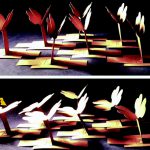
        A robot can recreate the mechanism plants use to transport water to bend itself towards the sun and open its leaves like a real plant
        Robot with origami leaves can follow the sun like a real plant
        Read More
        https://www.newscientist.com/article/2236815-robot-with-origami-leaves-can-follow-the-sun-like-a-real-plant/?utm_campaign=RSS%7CNSNS&utm_source=NSNS&utm_medium=RSS&utm_content=home

        Views: 0

      • Plants sprouted from seeds stored for decades in a disused Arctic mine

        Plants sprouted from seeds stored for decades in a disused Arctic mine

        A project started in 1986 aims to test if seeds can be grown after 100 years in storage. Early results show that half the crops retained most of their initial ability to germinate
        Plants sprouted from seeds stored for decades in a disused Arctic mine
        Read More
        https://www.newscientist.com/article/2236628-plants-sprouted-from-seeds-stored-for-decades-in-a-disused-arctic-mine/?utm_campaign=RSS%7CNSNS&utm_source=NSNS&utm_medium=RSS&utm_content=home

        Views: 0

      • Little Joe review: We should worry about these mind-bending plants

        Little Joe review: We should worry about these mind-bending plants

        The plot of sci-fi movie Little Joe may sound like it plays to powerful 1990s anti-GM fears but bigger issues like human freedom may really be at stake
        Little Joe review: We should worry about these mind-bending plants
        Read More
        https://www.newscientist.com/article/mg24532733-200-little-joe-review-we-should-worry-about-these-mind-bending-plants/?utm_campaign=RSS%7CNSNS&utm_source=NSNS&utm_medium=RSS&utm_content=home

        Views: 0

      • Volvo Cars halts Europe, US production

        Volvo Cars halts Europe, US production

        Chinese-owned Swedish auto maker Volvo Cars said Friday it would temporarily halt production at its European and US plants in order to mitigate the impact of the coronavirus outbreak.

        Read More
        https://techxplore.com/news/2020-03-volvo-cars-halts-europe-production.html

        Views: 0