Tag: Part

  • Schistosomiasis elimination: refocusing on snail control to sustain progress

    Schistosomiasis elimination: refocusing on snail control to sustain progress

    Substantial progress has been made during the past decade to prevent and control schistosomiasis (also known as bilharziasis) globally. The disease affects more than 230 million people, mostly in sub-Saharan Africa.

    Progress is mainly due to large-scale periodic treatment of affected populations with praziquantel, the only medicine recommended by the World Health Organization (WHO) against all forms of schistosomiasis. Regular treatment cures mild symptoms and prevents
    progression to severe, chronic disease.

    “Through progressive scale-up of periodic large-scale treatment
    to control morbidity in many endemic countries, we are closer to
    achieving the minimum target of 75% global coverage of all school‐aged
    children,
    ” said Dr Amadou Garba Djirmay, who leads WHO’s global schistosomiasis control programme. “But
    if we want to achieve elimination, we must go a step further to
    introduce snail control in hot spots and in areas targeting elimination.
    This is bound to increase impact and accelerate progress towards
    interruption of transmission
    .”

    Expansion of treatment is largely supported by donated praziquantel from Merck KGaA of up to 250 million tablets annually. In 2018, almost 78 million children were treated, representing 63% of all school‐aged children eligible for treatment.

    Transmission: role of snails

    Schistosomiasis is an acute, chronic parasitic disease caused by infection with trematode worms of the genus Schistosoma. It is prevalent in tropical and subtropical areas, especially in poor, rural communities that have little or no access to
    safe drinking‐water and basic sanitation. Infection is transmitted when people suffering from schistosomiasis contaminate freshwater sources when evacuating urine and faeces containing the parasite’s eggs.

    Once an egg comes into contact with fresh water, it releases miracidia (hatchlings) which enter a snail and produce hundreds of cercariae (larvae) daily. The cercariae enter the human body on contact with the skin and develop into adult worms.

    Besides treatment with praziquantel, eliminating snail hosts and improving sanitation are important methods for sustainable prevention of the disease. Dam and irrigation projects are known to be potential sites for outbreaks of the disease. Snail management,
    often achieved through mollusciciding, can help to reduce transmission by eliminating these intermediate snail hosts.

    Vector control

    In 2017, the World Health Assembly – WHO’s decision making body – adopted resolution WHA70.16 on the Global Vector Control
    Response, calling on Member States to develop or adapt national vector control strategies and operational plans. The strategy aims to reduce by at least 40% the incidence of vector borne diseases, including schistosomiasis, by 2025.

    In response, WHO is reinforcing snail control as part of its strategic approach to achieve the target of eliminating schistosomiasis as a public health problem and, ultimately, the goal of elimination of transmission. Snail control will complement mass
    treatment campaigns and sustain the public health impact of this core intervention.

    To facilitate implementation of snail control, in 2019 WHO published on specific, standardized procedures and criteria for efficacy
    testing and evaluation and in 2017 a manual on the use of molluscicides in the field. WHO is also planning to strengthen capacities
    of health staff in medical malacology in order to reinforce snail control activities in countries.

    In the past, molluscicides (particularly niclosamide1 based products) were widely used in schistosomiasis control programmes. For example, in China programmes largely relied on snail control for over 30 years to overcome the disease as a public
    health problem. In other parts of the world, however, snail control programmes were gradually discontinued and competencies faded away.

    “Snail control is a crucial component of the global schistosomiasis elimination strategy,” said Dr Rajpal Yadav, Scientist, WHO Department of Control of Neglected Tropical Diseases. “It
    is time we look for new snail control products that are cost–effective
    and of low risk to humans and the environment. Some efforts are being
    made to explore molluscicide compounds from plants, marine algae and
    microorganisms
    .”

    An integrated control strategy involving mass treatment with praziquantel, snail control and environmental modification, wider access to sanitation and safe water, economic and environmental development, health education and poverty-alleviation can greatly
    contribute to sustainable control and elimination of schistosomiasis.

    WHO’s new road map on neglected tropical diseases for 2021–2030, due to be launched later this year, advocates enhanced financial and political support to achieve the target of interruption of transmission. Additional research to address gaps,
    develop tools and optimize the impact of existing programmes with snail control will complement the core strategic approach.

    Schistosomiasis: forms of the disease

    There are two major forms of schistosomiasis – intestinal and urogenital.

    Intestinal schistosomiasis usually results in diarrhoea and blood in the stool; enlargement of the liver and of the spleen and portal hypertension are common in advanced cases.

    Urogenital schistosomiasis is characterized by the presence of blood in the urine. Chronic infection results in fibrosis of the bladder and ureter that can evolve to hydronephrosis and create conditions for bladder cancer.

    In women, urogenital schistosomiasis can cause vaginal bleeding, pain during sexual intercourse and nodules in the vulva, a condition now described as female genital schistosomiasis. In men, urogenital schistosomiasis can induce disease in the seminal
    vesicles and prostate.


    1Limitations with the use of formulations based on niclosamide include restrictions on the usage of water immediately after application and temporary toxicity to non-target aquatic organisms including
    fish, amphibians and invertebrates. 


        Schistosomiasis elimination: refocusing on snail control to sustain progress
        Read More
        https://www.who.int/news-room/detail/25-03-2020-schistosomiasis-elimination-refocusing-on-snail-control-to-sustain-progress

        Views: 0

      • COVID-19: Should Education Hit A Pause Or Are We Just Unprepared In Nigeria? By Olabisi Deji-Folutile

        COVID-19: Should Education Hit A Pause Or Are We Just Unprepared In Nigeria? By Olabisi Deji-Folutile

        Olabisi Deji-Folutile
        Olabisi Deji-Folutile

        COVID-19: Should Education Hit A Pause Or Are We Just Unprepared In Nigeria? By Olabisi Deji-Folutile 1Olabisi Deji-Folutile


        The world is facing its most trying and unprecedented times as the last few weeks have been most challenging for almost everybody.  What started in Wuhan, China, as an epidemic, has put the entire world in disarray.  Major streets across the globes have become empty. Both the rich and the poor are being ravaged by the plague of COVID-19, which the World Health Organisation has rightly described as a pandemic. Work places have been shut; religious and social gatherings banned and many countries are on total lockdown, in a bid to curb the spread of this viral disease. Expectedly, schools are also affected across board.  Every day people are being told to embrace social distancing and suddenly things like human contacts, hitherto considered as free gifts of life, are becoming very expensive.

        No one knows when this whole chaos will end, so people are making different kinds of adjustments to cope with the situation while it lasts. Many companies have shifted their operations online. Likewise, many schools have opted for e-learning, making use of available technology for teaching and learning.

         Universities around the world are making use of communication technology to ease the effects of the global pandemic on their academic calendars.   In China, universities are going for online teaching instead of in-class teaching; the ones in Australia have moved their classes online just as UK universities have suspended face-to-face teaching.  Turkey started its remote university classes on March 23. In Kenya, universities have activated communication between lecturers and students via social media platforms and emails while classes have gone totally online in the Philippines and Kyrgyzstan.  Teachers in France have been working with their students on Zoom.  

        Just a few days ago, Ghana’s President Addo Dankwa Akufo-Addo, directed the ministry of education to collaborate with the ministry of communications in rolling out open learning programmes in response to the closure of all educational institutions in the country. In the same vein, Mount Kenya University’s Vice-Chancellor Peter Wanderi, has announced the extension of online teaching platforms for regular students to facilitate the learning process.  And to take care of the over six million students that have experienced disruption to their studies, ten North African and 12 Arab countries have begun work on an e-learning initiative to facilitate open and online education.

        These are some of the steps being taken across the globe to bridge the gap created by school closure in the wake of COVID-19.  Unfortunately, while all these activities are going on in other parts of the world, Nigerian government has not said anything about steps being taken to take care of its students’ community.  Rather, the only message from the Federal Government was a total closure of all tertiary institutions and FG-owned unity schools till further notice. A statement issued by the National Universities Commission simply said universities would remain   shut   for one month while the Education Minister, Adamu Adamu, said tertiary institutions would remain shut indefinitely.

         Assuming government has been overwhelmed by the burden of controlling the spread of COVID- 19, hence its silence on options for learning for its teeming student population, one would have expected the higher institutions themselves to at least say something, but as it is, they too are not helping matters. The silence in our universities has been deafening. To worsen the situation, the Academic Staff Union of Universities, decided to choose this time, of all times, to embark on an indefinite strike. One wonders how the academic body   manages to feel comfortable being on a strike at a time when researchers across the globe   are busy looking for solution to a pandemic that is ravaging the entire world.  This kind of action makes one query the essence of having Research and Development as a core component of tertiary education in Nigeria when researchers can be nowhere to be found at a critical time of societal needs.

        By now, our researchers should be adding their voices to the various efforts being made towards developing a vaccine or cure for COVID-19. After all, universities are expected to proffer solutions to societal problems.  This is a wrong time for ASUU to embark on an indefinite strike. This should be a time of strategising and proffering solutions. This is really the time for everyone to get involved. Besides, I think Nigerian universities should also be more forthcoming on their responses to the challenges posed to their students by COVID-19.

        As it is, religious organisations are doing far better in terms of their responses to the effects of this pandemic on their primary constituencies.  Many of them have devised other means of getting the attention of   their members following several government directives prohibiting either gatherings or limiting the number of people allowed to congregate at a time.   Almost all the churches have switched to online platforms for their services.  How come religious organisations are working hard to keep their flocks and both government and higher institutions in Nigeria are just moving on as if all is well?  No word on how to keep the students busy or keep them engaged using available online technology! Should teaching and learning be restricted to the classrooms alone in this 21st century?

         Nigeria has always been described as a religious society. Corona Virus has further exposed the smartness of our religious bodies and the dullness of those in charge of our public educational institutions.  This is not an attempt to blame any religious organisation for having the foresight to deploy technology in reaching their audiences. Instead, it is a wakeup call to managers of our educational institutions to adopt and use available technology to help their students at a time like this.

        Apart from the National Open University of Nigeria, which basically runs online, I doubt if there is any other public university in the country that has capacity for online teaching.  This is in spite of the launch of the Nigerian Communication Satellite known as NIGCOMSAT by the Nigerian Government first in 2007 and then NIGCOMSAT-IR in December 2011, to provide critical ICT backbone infrastructure to support e-learning, among others in the country. 

        What is the essence of investing so much money in a communication satellite if it cannot be deployed at a time of need?   Those in charge of NIGCOMSAT, the commercial arm of Nigeria’s space centre, have consistently claimed that the technology has the capacity to cover the entire Africa.  If that is the case, why is the country still struggling to deploy internet connectivity facilities to its schools to aide e-learning?  If we are truly a serious country, by now, all the schools in urban and rural areas should have been connected to the e-learning services.

        No doubt, COVID-19 has exposed Nigeria’s unpreparedness for e-learning. But, we can’t afford to remain where we are. That is why it is important for every institution to start thinking of how to deploy available technology in the world for the good of their students at this critical period.   Universities should as a matter of urgency migrate online. This shouldn’t be another season of waiting and probably wasting for the Nigerian student.  There is no reason why any higher institution worth its name should suspend all academic activities until the end of Corona Virus with all the available resources and technology in the world today. The minimum expected of them is to upload teaching resources online for students to have access to them.  At least this will give the students the opportunity to learn on their own.

        This is also an opportunity for telecommunications companies like Glo, MTN and the rest of them to make a difference in Nigeria’s educational institutions. They can as part of their corporate social responsibility decide to boost internet facilities in universities and other educational institutions; or provide data at cheaper rates to help poor students have access to the internet for online learning.

        I know there are obvious stumbling blocks to digital learning in Nigeria. Many students don’t even have access to devices while the cost of buying data is still high. These challenges and others have provided    telecommunications companies a huge opportunity of making a difference in Nigerian higher institutions by providing e-learning solutions and broadband connectivity to universities and other higher institutions.

        They can as part of their corporate social responsibility decide to boost internet facilities in universities and other higher institutions; or help poor students who have limited or poor internet access to enhance online learning.

        Olabisi Deji-Folutile is the Editor-in-Chief of Franktalknow.com and member of the Nigerian Guild of Editors. Email: bisideji@yahoo.co.uk

        Opinion

        AddThis

        : 

        Original Author

        : 

        Olabisi Deji-Folutile

        Disable advertisements

        : 
        COVID-19: Should Education Hit A Pause Or Are We Just Unprepared In Nigeria? By Olabisi Deji-Folutile
        Read More
        http://saharareporters.com/2020/03/26/covid-19-should-education-hit-pause-or-are-we-just-unprepared-nigeria-olabisi-deji

        Views: 0

      • Inside Story: How Obasa Was Forced To Reinstate Suspended Lawmakers

        Inside Story: How Obasa Was Forced To Reinstate Suspended Lawmakers

        Mudashiru Obasa
        Mudashiru Obasa

        Inside Story: How Obasa Was Forced To Reinstate Suspended Lawmakers 2Mudashiru Obasa


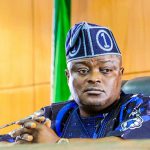
        At the resumption of plenary on Thursday at the Lagos State House of Assembly, Speaker, Mudashiru Obasa, announced the reinstatement of two suspended lawmakers, Moshood Oshun and Raheem Kazeem.

        The two lawmakers were suspended alongside Deputy Majority Leader, Olumuyiwa Jimoh; and Chief Whip, Rotimi Abiru, who were demoted on grounds of misconduct, insubordination and action that could destabilise the Assembly on March 9.

        However, two days after the meeting of the Governor’s Advisory Council, the suspended lawmakers were reinstated to the House. 

        SaharaReporters had exclusively reported that at the meeting, a former governor of Lagos State, who also doubles as Chairman of Lagos State Governor’s Advisory Committee, Bola Tinubu, supported the Speaker as he asked him to use his discretion to direct the affairs of the House.

        See Also

        Inside Story: How Obasa Was Forced To Reinstate Suspended Lawmakers 3

        Exclusive

        EXCLUSIVE: Tinubu, GAC Back Lagos Assembly Speaker, Obasa, Over Suspension Of Lawmakers, Corruption


        However, Obasa tracked back on the decision of the GAC and reinstated the lawmakers following intervention by some bigwigs of the All Progressives Congress including Rauf Aregbesola, Minister of Interior; and Babajide Sanwo-Olu, governor of Lagos.

        Sources privy to the happenings within the party confirmed to SaharaReporters that the Speaker was directed to reinstate the lawmakers after having a separate meeting with them.

        See Also

        Inside Story: How Obasa Was Forced To Reinstate Suspended Lawmakers 4

        Politics

        BREAKING: Lagos Assembly Recalls Suspended Lawmakers After SaharaReporters Story


        “Some members of the GAC, dissatisfied with the treatment of the oppressed members of the Assembly, including the governor of the state, Babajide Sanwo-Olu, made a counter move between Tuesday and Thursday by securing a special appointment with Tinubu for the affected members of the Assembly to present their cases.

        “An appointment was fixed for Wednesday morning with Tinubu where the affected Assembly members presented their cases to the former governor.

        “Among those who intervened was the immediate-past governor of Osun State and current Minister of Interior, Rauf Aregbesola, who had a long telephone conversation with Asiwaju (Tinubu) and succeeded in convincing his boss on the need for an immediate reversal of Obasa’s autocratic decision against his colleagues.

        “The Speaker was subsequently directed by Tinubu to reverse his decision and return to original status,” sources disclosed to SaharaReporters.

        Meanwhile, Obasa, according to insider sources, is likely sitting on a time-bomb as moves are ongoing by some members of the APC to remove him as Speaker of the Lagos Assembly.

        Some strong members of the political dynasty, beyond the reach or influence of Obasa, seem to be amalgamating forces against him. 

        See Also

        Inside Story: How Obasa Was Forced To Reinstate Suspended Lawmakers 5

        Corruption

        EXPOSED: Speaker Of Lagos Assembly, Obasa, Awards Contracts To Self Through Company Registered In Son’s Name


        Obasa, who is not unaware of the ploy, is suspecting Governor Sanwo-Olu of secretly leading the lawmakers to impeach him.

        “The Speaker once nursed strong animosity against the governor, accusing him of sponsoring members for his impeachment.

        “This also stems the suspicion against the suspended principal officers,” sources in the Assembly said.

        A former member of the Assembly and ‘kingmaker’, who is now a member of the Senate, is also making a separate move to report latest action of the Speaker to Asiwaju.

        As at the time of filing this report, the senator is still in the process of securing an appointment with Tinubu.

        The senator used to be the sponsor and major backer of Obasa but they fell apart when Obasa decided to be his own boss and also reduce the influence of the kingmaker.

        The aim was to reduce the returns shared between them which is part of hundreds of millions allocated to the Assembly as monthly running cost.

        Politics

        News

        Reports

        AddThis

        : 

        Original Author

        : 

        SaharaReporters, New York

        Disable advertisements

        : 
        Inside Story: How Obasa Was Forced To Reinstate Suspended Lawmakers
        Read More
        http://saharareporters.com/2020/03/26/inside-story-how-obasa-was-forced-reinstate-suspended-lawmakers

        Views: 0

      • Court Orders Forfeiture Of Retired Army General’s N293m, Property Over Financial Theft

        Court Orders Forfeiture Of Retired Army General’s N293m, Property Over Financial Theft

        Court Orders Forfeiture Of Retired Army General’s N293m, Property Over Financial Theft 6

        Court Orders Forfeiture Of Retired Army General’s N293m, Property Over Financial Theft 7


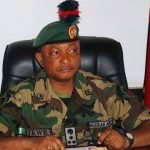
        The Federal High Court in Lagos on Thursday ordered the forfeiture of N293m, six parcels of land and 30, 000 MTN shares recovered from a former commander of the military Joint Task Force, Operation Pulo Shield, in the Niger Delta, Maj. Gen. Emmanuel Atewe (retd).

        Justice Mohammed Liman made an order for the temporary forfeiture of the assets to the Nigerian Government following an ex parte application by the Economic and Financial Crimes Commission.

        The EFCC alleged that the assets were part of proceeds of N8.5bn, which Atewe allegedly diverted from the military operation between September 5, 2014 and May 20, 2015.

        The landed properties were identified as 50 hectares of farmland at Plot No. FL746B Gaube Farmland Extension II Layout, Kuje, Abuja; a piece of land located at Commercial Layout, Yenagoa Gardens, Bayelsa State; one hectare of land in Kuje District, Abuja; Plot No. CP10, Sector Centre B Layout, Kuje, Abuja; Plot MF62 Outer Northern Expressway Cadastral Zone, Abuja; Plot No. 1228 Jahi, Abuja; four hectares of land designated as Plot No.CP6386 and Plot No.CP6387, Sabon Lugbe, Abuja.

        An investigating officer of the EFCC, Adamu Yusuf, said Atewe purchased the 30,000 MTN shares for N170,350,000.

        Counsel to the EFCC, Rotimi Oyedepo, said it would be in the interest of justice for the court to order the temporary forfeiture of the assets.

        After listening to him, Justice Liman granted the prayers and ordered that the temporary forfeiture order be published in a national newspaper.

        The judge adjourned until April 20 for anyone interested in the assets to appear before him to show reasons why they should not be permanently forfeited to the Nigerian Government.

        The EFCC had since 2016 been prosecuting Atewe alongside a former Director-General of the Nigerian Maritime Administration and Safety Agency, Patrick Akpobolokemi; Kime Engozu and Josephine Otuaga.

        They were accused of conspiring to divert N8.5bn of the military Operation Pulo Shield in the Niger Delta.

        Corruption

        Legal

        Military

        News

        AddThis

        : 

        Original Author

        : 

        Saharareporters, New York

        Disable advertisements

        : 
        Court Orders Forfeiture Of Retired Army General’s N293m, Property Over Financial Theft
        Read More
        http://saharareporters.com/2020/03/26/court-orders-forfeiture-retired-army-general%E2%80%99s-n293m-property-over-financial-theft

        Views: 0

      • UBA Donates N5bn To Support Coronavirus Fight In Africa

        UBA Donates N5bn To Support Coronavirus Fight In Africa

        UBA Donates N5bn To Support Coronavirus Fight In Africa 8

        UBA Donates N5bn To Support Coronavirus Fight In Africa 9


        The United Bank for Africa Plc on Thursday announced a donation of N5bn ($14m) through the UBA Foundation to support the fight against Coronavirus.

        The donation will provide significant and much needed support to Nigeria and 19 other African countries by supplying relief materials, critical care facilities, and financial support to governments, according to the bank.

        The donation will be allocated as follows: N1bn to Lagos State Government, N500m to Federal Capital Territory, Abuja, N1bn to the remaining 35 states in Nigeria, N1.5bn to UBA’s presence countries in Africa, N1bn for medical centres with equipment and supplies free telemedicine call centre facility.

        The bank revealed that it will fund a medical centre immediately in Lagos with beds for isolation and ICU facilities, managed and operated in partnership with Heirs Holdings’ healthcare subsidiary, Avon Medical Hospital.

        UBA Group Chairman, Tony Elumelu, said, “This is a time when we must all play our part. This global pandemic must bring citizens, governments and business leaders together – and quickly.

        “As we see a rapidly increasing number of cases of the Coronavirus in Nigeria and Africa, the private sector has to work hand in hand with various governments in stemming the spread of the global pandemic.

        “We commend the efforts of governments and we are keen to partner and contribute our resources to the collective effort that will ensure the response to the pandemic is swift and effective.”

        PUBLIC HEALTH

        News

        AddThis

        : 

        Original Author

        : 

        Saharareporters, New York

        Disable advertisements

        : 
        UBA Donates N5bn To Support Coronavirus Fight In Africa
        Read More
        http://saharareporters.com/2020/03/26/uba-donates-n5bn-support-coronavirus-fight-africa

        Views: 0

      • Socso launches programme to assist workers who have lost jobs

        Socso launches programme to assist workers who have lost jobs

        Socso launches programme to assist workers who have lost jobs 10

        KUALA LUMPUR: The Human Resources Ministry, through its agency, the Social Security Organisation (Socso), has launched the Employment Retention Programme (ERP) to assist workers who have lost their jobs.

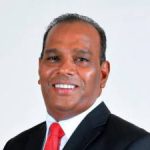
        Minister Datuk Seri M. Saravanan (pix) said the programme which was introduced as part of the 2020 Economic Stimulus Package, will be implemented through the Employment Insurance System.

        “The assistance will be provided in the form of temporary financial benefits and employment services,” he said in a Public Service Announcement today.

        In this connection, Kumpulan Wang Pembangunan Sumber Manusia (KWPSM) also launched a 2020 Training Stimulus Package which will benefit more than 40,000 local workers in the hotel, tourism management and air transport sectors which have been affected by Covid-19.

        Saravanan reminded employers not to impose employee pay cuts or force employees to use their annual leave during the length of the government’s Movement Control Order aimed at containing Covid-19.

        “It is the responsibility of employers to ensure the well-being and health of their workers,” he stressed.

        The minister also called on Malaysians to abide by the Movement Control Order which took effect on March 18 and was recently extended to April 14.

        “Stay calm, stay home,” he urged. – Bernama

        Socso launches programme to assist workers who have lost jobs
        Read More
        https://www.thesundaily.my/local/socso-launches-programme-to-assist-workers-who-have-lost-jobs-BK2185157

        Views: 0

      • Penang rickshaw peddlers to receive three-month aid payout

        Penang rickshaw peddlers to receive three-month aid payout

        Penang rickshaw peddlers to receive three-month aid payout 11

        GEORGE TOWN: The Penang government will issue full payments for April to June to rickshaw peddlers affected by the Covid-19 outbreak next month.

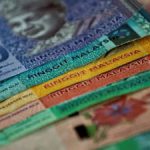
        State Tourism Development, Arts, Culture and Heritage Committee chairman Yeoh Soon Hin said each rickshaw peddler would receive a sum of RM500, which included an allowance of RM300 and a one-off cash assistance of RM200.

        “I have communicated with various sectors to understand the needs of the various parties and I have also conveyed the needs and recommendations to the state government to get the best help for them.

        “The payout is expected to benefit about 318 peddlers,“ he said in a statement today.

        The state government previously allocated RM100 a month to peddlers in the state to help those with no fixed income.

        Yeoh said a total of 1,367 tour guides registered with the Ministry of Tourism, Arts and Culture would also receive a one-off cash assistance worth RM500 each.

        “10,000 e-hailing drivers in Penang will also receive RM300 one-off assistance while 2,248 taxi drivers will benefit from an initial incentive payment of RM300 with an additional RM200 one-off.

        “All of these assistance is part of the Penang People’s Aid Package announced by Chief Minister Chow Kon Yeow yesterday. I will continue to monitor the situation to ensure that the people and sectors that need the most help will benefit, ” he said.

        Yesterday, Chow announced a RM75 million People’s Aid Package to be distributed to 15 target groups involving over 400,000 recipients who are affected by the Covid-19 pandemic. – Bernama

        Penang rickshaw peddlers to receive three-month aid payout
        Read More
        https://www.thesundaily.my/local/penang-rickshaw-peddlers-to-receive-three-month-aid-payout-LK2185085

        Views: 0

      • Medicare questions? Here’s what you need to know from A to D.

        Medicare questions? Here’s what you need to know from A to D.

        Understanding your Medicare options is an important part of planning for health care costs in retirement.
        Medicare questions? Here’s what you need to know from A to D.
        Read More
        https://investornews.vanguard/medicare-questions-heres-what-you-need-to-know-from-a-to-d/

        Views: 0

      • Your 2013 Mid-Year Check-In — 5 Steps to End 2013 With a Bang Rather Than a Whimper

        With 2013 half over, it’s time to pause, take a breath, and see if you’re on track with your goals. This is an essential part of running a successful business — taking structured time throughout the year to work ON your biz and make sure the path you’re on is, in fact, the path you want to be on. Read on for 5 Steps to completing your mid-year check-in…

        Read More
        http://www.associationofmarketing.org/articles/view.php?article_id=7919

        Views: 0