Tag: Opportunity

  • Medical Product Alert N°3/2020

    This Medical Product Alert warns consumers, healthcare professionals, and health authorities against a growing number of falsified medical products that claim to prevent, detect, treat or cure COVID-19. 

    The Coronavirus disease (COVID-19) pandemic (caused by the virus SARS-CoV-2) has increased demand for medicines, vaccines, diagnostics and reagents, all related to COVID-19, creating an opportunity for ill-intended persons to distribute falsified medical products 

    Due diligence is required from all actors in the procurement, use and administration of medical products, in particular those affected by the current crisis of, or related to, COVID-19. 

    1. FALSIFIED IN VITRO DIAGNOSTICS AND LABORATORY REAGENTS 

    WHO has received multiple reports regarding falsified in vitro diagnostics (IVDs) and laboratory reagents for the detection of SARS-CoV-2. Please refer to WHO’s Emergency Use Listing for a list of diagnostics approved for clinical use by WHO. To date, eight countries (Australia, Brazil, Canada, PR China, Russian Federation, Singapore, Republic of Korea, United States of America) have listed IVDs for COVID-19 diagnosis based on expedited regulatory assessments. Please note that, in the European Union, regulatory compliance for SARS-CoV-2 diagnostics are self-declared by the manufacturer.  

    To assist Member States and stakeholders, WHO has published the links to these emergency lists, together with contact details. These links provide information on IVDs authorized for use in the jurisdictions of the International Medical Device Regulators Forum, as well as policies and guidance. WHO will provide updated versions as new information becomes available.

    End-users are encouraged to check the labelling against the information posted by regulatory authorities upon listing to ensure they are in possession of the genuine product. This information might include product name, product code, expiry date, instructions for use and manufacturer details. 

    Unregulated websites supplying medicines and/or vaccines, particularly those concealing their physical address or landline telephone number, are frequently the source of unlicensed, substandard and falsified medical products. WHO has been made aware of various unregistered websites claiming that products on sale can treat or prevent COVID-19. Such products are likely to be falsified medicines. In addition, some websites may appear to provide easy access to legitimate medicines that are otherwise not readily available. End-buyers and consumers should be especially wary of such online scams and exert due diligence when purchasing any medical product, whether online or not.

     2. FALSIFIED MEDICINES AND VACCINES

    At this stage, WHO does not recommend any medicines to treat or cure COVID-19. However, the SOLIDARITY trial, led by WHO, is reviewing potential treatments for COVID-19. 

    WHO requests increased vigilance from national health authorities, healthcare professionals, members of the public and supply chain stakeholders worldwide to prevent the distribution of these falsified medical products. Increased vigilance should focus on hospitals, clinics, health centres, clinical laboratories, wholesalers, distributors, pharmacies and any other suppliers of medical products. All medical products must be obtained from authentic and reliable sources. Their authenticity and condition of the product should be carefully checked. Consumers are advised to seek advice from a healthcare professional in case of doubt. 

    National health authorities are requested to immediately notify WHO if these falsified products are discovered in their country. If you have any information concerning the manufacture, distribution, or supply of these products, please contact rapidalert@who.int

    WHO Global Surveillance and Monitoring System for Substandard and Falsified Medical Products
    For further information, please visit our website: https://www.who.int/medicines/regulation/ssffc/en/ 

    Read More
    https://www.who.int/news-room/detail/31-03-2020-medical-product-alert-n-3-2020

    Views: 0

  • SMX Advanced 2012 – Key Takeaways

    Fathom had the opportunity to attend the 2012 SMX Advanced conference in Seattle. Each year this conference brings together the best and brightest minds in organic and paid search marketing.

    Read More
    http://www.associationofmarketing.org/articles/view.php?article_id=6406

    Views: 0

  • Losing Her Religion: Nigeria’s Faith Unveiled In The Face Of COVID-19 By R. Evon Benson-Idahosa

    Losing Her Religion: Nigeria’s Faith Unveiled In The Face Of COVID-19 By R. Evon Benson-Idahosa

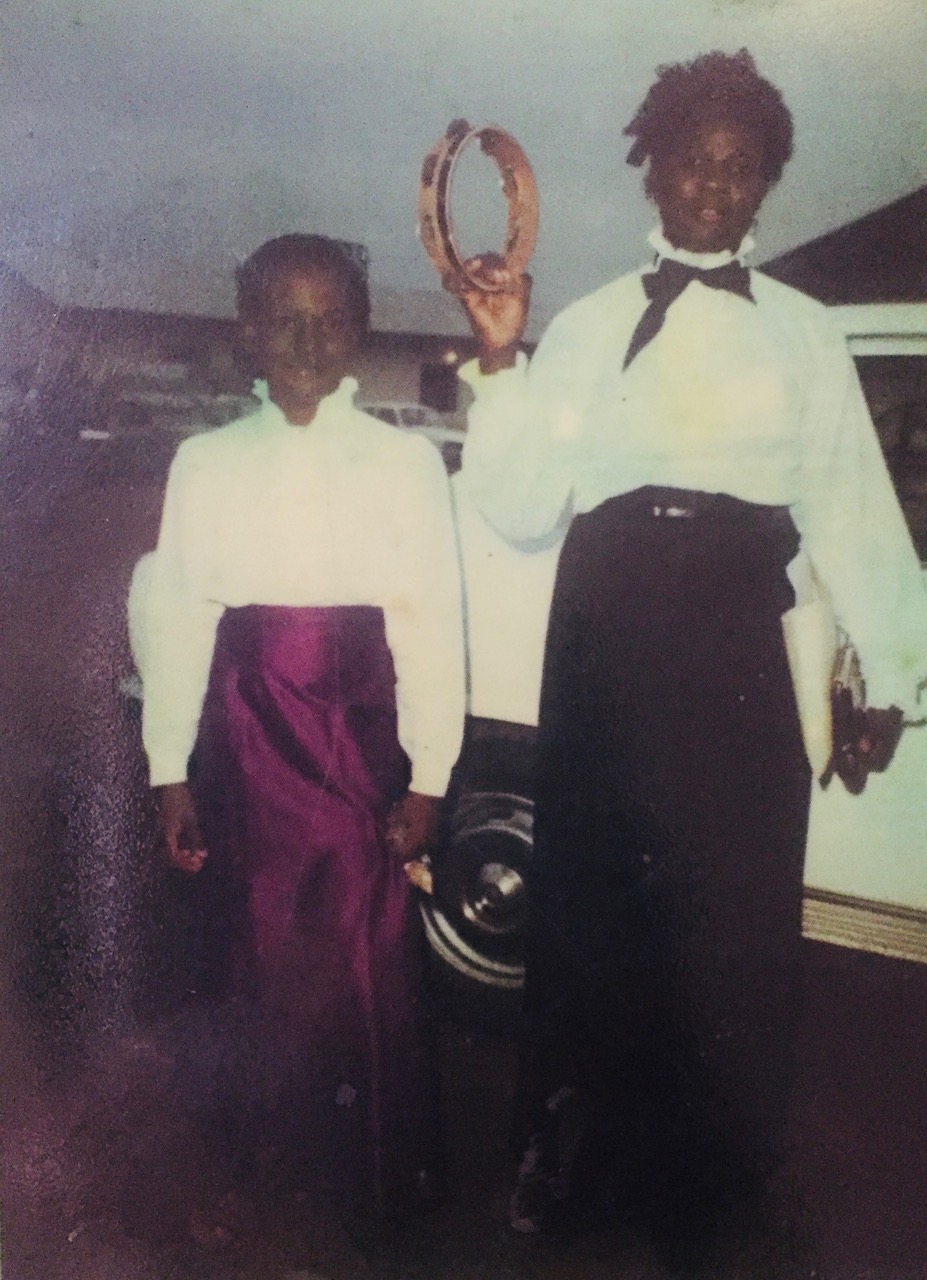
    Me, circa 1984, in my choir uniform and what was possibly the now infamous tambourine.
    Me, circa 1984, in my choir uniform and what was possibly the now infamous tambourine.

    R. Evon Benson-Idahosa, Esq
    R. Evon Benson-Idahosa, Esq

    Losing Her Religion: Nigeria’s Faith Unveiled In The Face Of COVID-19 By R. Evon Benson-Idahosa 1R. Evon Benson-Idahosa, Esq


    I remember falling asleep at a Tuesday evening church service as a 9 year old child. I had a tambourine on my lap and as I fell to the floor, it reverberated thunderously throughout the hall, drawing the attention of everyone who had been attentively listening to the dynamic preacherman. I awakened to piercing stares and side eyes- particularly from my father- whose message I had disrupted. Every Nigerian child knows that stare, that glare that silently speaks a thousand words, cloaks you in debilitating fear and assures your quivering being that there will be consequences. Needless to say, it was a quiet ride home and for the rest of the revival week, I was ushered to the front row where I forced my eyes open, humming tunes to myself to stay awake.

    Losing Her Religion: Nigeria’s Faith Unveiled In The Face Of COVID-19 By R. Evon Benson-Idahosa 2Me, circa 1984, in my choir uniform and what was possibly the now infamous tambourine.


    Saying that I literally grew up in church would be an understatement. Week long revival services, such as the one I reference above, were customary. I was also in the choir, went to Sunday school before church services on Sunday, Agape Force Children’s meetings on Saturdays, mid-week services and the occasional 6:30 am morning prayer services, followed by our home bible study with Auntie B. And because my father was Archbishop Benson Idahosa, there were no negotiations. It just was.

    At the age of10, shortly after the infamous “tambourine experience,” the truth of those messages became real and I earnestly became a follower of The Way. And so, as news began to sweep the globe of the novel corona virus and its import, I found myself immediately turning to my faith as a source of comfort and peace. I also called my mother, who now heads CGMI, the global ministry my father left when he passed away 22 years ago. Her words of encouragement and the tone of her voice assured me that, as we like to say in Nigeria, ‘it is well.’

    And it will be.

    But for now, the pandemic continues to rage, as thousands succumb to its will. First China. Then South Korea. Japan. An epidemic. Then Italy, the UK, the US. Thousands upon thousands of cases were being reported and every day brought the reality closer to home. Then it became a global pandemic and as it stands, the WHO estimates that there are 719,700 confirmed cases globally, with almost 34,000 deaths.

    On February 28th, Nigeria, Africa’s most populous nation, confirmed its index case of the corona virus which arrived the country via an Italian businessman. As I write, her Centre for Disease Control is reporting a total of 135 confirmed cases and two deaths, having conducted just several hundred tests, even though thousands of passengers have arrived from varying countries since the index. Self isolation has been deemed an advisory, not mandatory measure.

    Nigeria has taken what some would consider drastic, yet in this writer’s opinion, insufficient and strikingly Western style measures to address what is likely to come in the absence of a miracle. In addition to finally closing her borders from international travelers, including Nigerians, schools have been shut down, civil servants are being asked to work from home, “social distancing” policies are being enacted and several states, including my home state of Edo, have prohibited religious, social and public gatherings of more than 20 persons.

    In a country where over 90% of her citizens profess to be religious, most Nigerians are accustomed to turning to their faith in times of crisis. The corona virus pandemic is no exception. Many who had strayed from God are now repenting of their sins and brandishing the sign of the cross as they leave their homes. Others are praying for a “Passover,” as CNN and other news outlets flood us with “end of the world,” doomsday messaging. As a result, many of us are yearning to collectively gather to pray.

    Whether the desire to collectively gather is buttressed by denial (“coronavirus is not here” — “the spirit of corona virus is dead in Nigeria”) or stems from a deep seeded longing for God to show mercy to a healthcare system that is wholly unprepared to handle the worst case scenario, the fact remains that Nigeria’s religious faithfuls are unaccustomed to missing gatherings for anything. Services are considered sacred times to commune with God and to be encouraged by the brethren. Others hang on to every word of their clerics who, in some cases, insist on serving as a religious crutch- intermediaries between their congregants and God. Many believers who engage with God on a transactional basis come bearing tithes and/or offerings in the hopes that God will hear their prayers. (He hears them regardless.)

    As such, the prohibition on religious gatherings of more than 20 (which essentially translates to a prohibition of services in general) has resulted in many Nigerian believers losing their ‘religion,’ i.e., left bewildered as to how to make the adjustment to a God who potentially exists outside the four walls of their churches; to a God who speaks directly to them in God’s long forgotten voice. Who, precisely, are Nigerian believers without our religions and religious houses of worship?

    Could it be that for the first time in a long time, Nigerian believers are being presented with a church-less opportunity to develop even more meaningful personal relationships with their God; to ‘lay hands’ on themselves and speak words of healing into their children from a God who has always heard them? Could this pandemic serve as an opportunity for believers to be what Murray Bowen describes as a ‘non-anxious presence’ to those who may be paralyzed by fear? Or as a practical example, to give our hired staff the much deserved paid time off to assuage the fears of their own elderly parents? As we creatively consider our individual responses, it is imperative that we recognise that our actions are a reflection of what we truly believe about our faith and the One who implores us to be salt and light.

    As the Church, however, it is unhelpful that some of our pastors are refusing to comply. The other day, I was tagged on a rather unfortunate video of a pastor irresponsibly screaming to congregants that the corona virus cannot withstand Nigeria’s “corrosive anointing.” However, even Jesus instructed us to obey the law of the land (render unto Caesar what is Caesar’s). This blatant refusal to consider the reality that may most aggressively affect those on the margins begs the question of why some churches are so adamant against temporarily closing their doors.

    Sure, we all need hope and encouragement in these perilous and uncertain times, but have we not, after all these years, fed the flock enough “meat” to trust that they can and will turn to God for themselves? Or are we, draped in our own egos, more selfishly concerned that they may not return to our fold and thus, affect our financial bottom line?

    It is not a lack of faith to use wisdom or to be practical. Even Jesus reached out his hand to save Peter when he could easily have let him drown and then used his “corrosive anointing” to raise him from the dead. Wisdom is profitable to direct and I believe my father, who I consider one of the greatest men of faith to ever walk this earth, would have done the needful to protect the sheep. My mother most certainly is.

    To this end, some larger churches are offering their services online. However, for the working poor who faithfully make up the backbone of most Nigerian churches, internet connectivity and/or live streaming of an entire service make that option impractical and/or unaffordable. They are the ones, who because they live day to day, cannot afford to practice social distancing, “stay at home” and for some, even “wash your hands,” because soap becomes a luxury when one’s ‘daily bread’ is devoid of the ‘daily.’ If our government does not step up to courageously seek support that is tailored to our unique realities and then provide that support to those on the margins, the import of the corona virus in our beloved Nigeria could be felt by generations to come.

    As such, could this pandemic present an opportunity for churches to fill the glaring gaps and practically serve the last and the least in a manner that reveals who we profess to be as followers of The Way? Might this be an opportunity for the church to put our egos aside and creatively heed Jesus’ instructions to ‘feed my sheep’, to apply the Balm of Gilead, by serving those who will be most physically, mentally and economically impacted? Practically speaking, could we convert our sanctuaries to temporary hospitals or food pantries where those in need can obtain essentials? Can we use the funds of those who have faithfully donated over the years to buy ventilators and personal protective gear for our hospitals and health workers on the front lines? Can we purchase hygiene products and distribute them to those who may be confined to their homes? This, I believe, is our mandate.

    At the end of the day, my faith in God runs deep. It has guided my life since I was 10 and I prayerfully trust that we will get through this. But as the Nigerian Church temporarily loses her ‘religion’ and her faith is unveiled in the face of COVID-19, she is presented with an opportunity to reverberate thunderously and rise up to be who she professes for such a novel time as this. After all, in the words of Dietrich Bonhoeffer, ‘the church is the church only when it exists for others…not dominating, but helping and serving.’

    WRITTEN BY

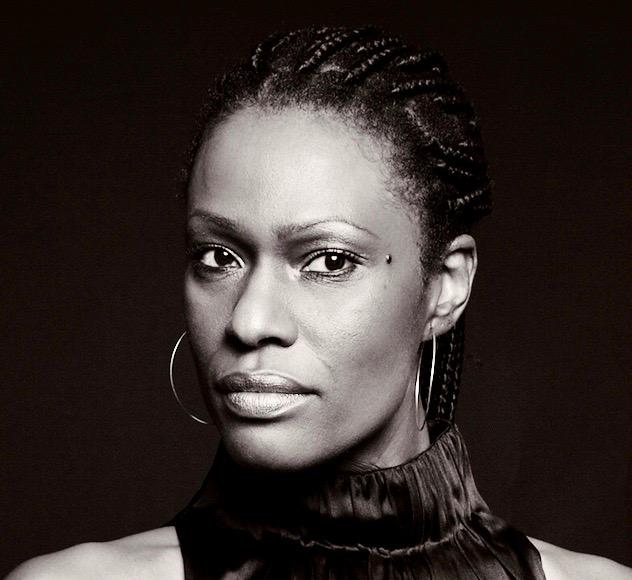
    R. Evon Benson-Idahosa, Esq.

    Lead table turner and expert troublemaker at Pathfinders Justice Initiative (www.pathfindersji.org); creating more space for women at the table.


    Opinion

    AddThis

    : 

    Featured Image

    : 

    Losing Her Religion: Nigeria’s Faith Unveiled In The Face Of COVID-19 By R. Evon Benson-Idahosa 3

    Original Author

    : 

    R. Evon Benson-Idahosa, Esq

    Disable advertisements

    : 
    Losing Her Religion: Nigeria’s Faith Unveiled In The Face Of COVID-19 By R. Evon Benson-Idahosa
    Read More
    http://saharareporters.com/2020/03/31/losing-her-religion-nigeria%E2%80%99s-faith-unveiled-face-covid-19-r-evon-benson-idahosa

    Views: 0

  • BSH recipients need not make new application for BPN

    BSH recipients need not make new application for BPN

    BSH recipients need not make new application for BPN 4

    PUTRAJAYA: Households and single individuals who have been listed as the Cost of Living Aid (BSH) recipients do not need to make a new application for the Bantuan Prihatin Nasional (BPN) cash handouts.

    The Ministry of Finance (MOF) in a statement today said the BPN payments would be made directly to them through their bank accounts registered under BSH.

    “Households earning RM4,000 or less will get BPN of RM1,600 while singles earning RM2,000 or less will receive BPN of RM800.

    For households earning between RM4,001 and RM8,000 and singles earning between RM2,001 and RM4,000 who are registered taxpayers under the Inland Revenue Board (LHDN), MOF said they also do not need to make a new application for BPN.

    BPN payments of RM1,000 for households and RM500 for eligible individuals under the category will be made directly to them through their bank accounts registered with LHDN, it added.

    For those who have not yet registered, new applications can be made starting April 1 via LHDN’s website at www.hasil.gov.my, it said.

    “The ministry wishes to remind the public to be wary of scammers who have become emboldened by the opportunity to commit fraud against those who need such assistance.

    “Recipients are advised to refer to official sources and not to disclose any personal information to any third party,” it said.

    For more information, the public can contact the MOF at 03-8882 9089/ 03-8882 9087/ 03-8882 9191/ 03-8882 4565/ 03-8882 4566 from 9am to 5pm (Sunday to Friday), through email at bsh@treasury.gov.my/ pre2020@treasury.gov.my or Telegram application PRE Prihatin or the MOF official Facebook page.

    Enquiries can also be forwarded to LHDN via calls from 9am to 5pm (Sunday to Friday) at 1-800 882 747 or 03-8911 1000. – Bernama

    BSH recipients need not make new application for BPN
    Read More
    https://www.thesundaily.my/local/bsh-recipients-need-not-make-new-application-for-bpn-FJ2193986

    Views: 0

  • Group Tells Nigerians To Report Cases Of Domestic Violence While Observing Stay-at-home Order

    Group Tells Nigerians To Report Cases Of Domestic Violence While Observing Stay-at-home Order

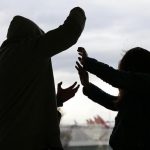
    Group Tells Nigerians To Report Cases Of Domestic Violence While Observing Stay-at-home Order 5

    Group Tells Nigerians To Report Cases Of Domestic Violence While Observing Stay-at-home Order 6


    Women at Risk International Foundation, a non-profit organisation focused on reducing the prevalence of gender-based violence in Nigeria, has urged Nigerians to report any case of domestic or gender-based violence that may occur during the period of stay-at-home order by the government.

    WARIF expressed fear that as the number of Coronavirus cases continue to increase across Nigeria and with stringent measures being put in place for individuals to quarantine and self-isolate, people might be at risk of being harmed by their abusers during the period.

    Founder of WARIF, Dr Kemi Da-Silva Ibru, urged all affected adults and caregivers of young children to make use of its 24-hour confidential help line to report any case of sexual abuse.

    Ibru said, “As borders close down in many countries, and governments institute mandatory lock downs and families are sequestered; children and women at risk will be locked in and quarantined with their abusers in very volatile home environments, we envisage an increase in the cases of domestic and sexual violence as abusers now see this as an opportunity to cause harm to these groups.

    “We urge all individuals at risk to please make use of our 24 hours helpline 0809 210 0009 or send messages to our social media platforms on @Warif_ng.”


    News

    AddThis

    : 

    Original Author

    : 

    SaharaReporters, New York

    Disable advertisements

    : 
    Group Tells Nigerians To Report Cases Of Domestic Violence While Observing Stay-at-home Order
    Read More
    http://saharareporters.com/2020/03/28/group-tells-nigerians-report-cases-domestic-violence-while-observing-stay-home-order

    Views: 0

  • Why You Need to Have a Welcome Series

    Having a Welcome Series gives you an opportunity to engage, educate, and acknowledge your subscribers. The program starts with an email that expresses a sincere ?thank you? to your customers and sometimes speaks about special deals or offers. The series also contains educational information like how-to videos, best practices, special offers, rewards, and tips to capture the interest of the user…

    Read More
    http://www.associationofmarketing.org/articles/view.php?article_id=7334

    Views: 0

  • Nigerian Music Star, Davido, In Self-isolation After Fiancée, Chioma, Tests Positive For Coronavirus

    Nigerian Music Star, Davido, In Self-isolation After Fiancée, Chioma, Tests Positive For Coronavirus

    Nigerian Music Star, Davido, In Self-isolation After Fiancée, Chioma, Tests Positive For Coronavirus 7

    Nigerian Music Star, Davido, In Self-isolation After Fiancée, Chioma, Tests Positive For Coronavirus 8


    Nigerian musician, David Adeleke popularly known as Davido, has announced that his fiancé, Chioma, has tested positive for Coronavirus. 

    Making the announcement on Twitter, Davido said Chioma recently returned from the United Kingdom with their baby.

    While the baby tested negative, her own result returned positive. 

    He said, “Hey everyone, I came back recently from America after cancelling a tour. My fiancé, Chioma, also came back from London recently with our baby. 

    “We had no symptoms and still both feel perfectly fine but because of our recent travel history, we decided to take ourselves and all close associates we’ve come in recent contact with for the COVID-19 test on the 25th of March.

    “Unfortunately, my fiancé’s results came back positive while all 31 others tested have come back negative including our baby. 

    “We are however, doing perfectly fine and she is even still yet to show any symptoms whatsoever. 

    “She is now being quarantined and I have also gone into full self-isolation for the minimum 14 days. 

    “I want to use this opportunity to thank you all for your endless love and prayers in advance and to urge everyone to please stay at home as we control the spread of this virus! Together we can beat this.”

    The Nigerian Center for Disease Control on Friday night announced that Coronavirus cases in the country had hit 70 with one recorded death.

    Celebrity

    PUBLIC HEALTH

    News

    AddThis

    : 

    Original Author

    : 

    Saharareporters, New York

    Disable advertisements

    : 
    Nigerian Music Star, Davido, In Self-isolation After Fiancée, Chioma, Tests Positive For Coronavirus
    Read More
    http://saharareporters.com/2020/03/27/nigerian-music-star-davido-self-isolation-after-fianc%C3%A9e-chioma-tests-positive-coronavirus

    Views: 0

  • Coronavirus: Police Brutalise, Teargas Traders, Buyers During Enforcement Of Market Closure In Osun

    Coronavirus: Police Brutalise, Teargas Traders, Buyers During Enforcement Of Market Closure In Osun

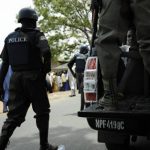
    Coronavirus: Police Brutalise, Teargas Traders, Buyers During Enforcement Of Market Closure In Osun 9

    Coronavirus: Police Brutalise, Teargas Traders, Buyers During Enforcement Of Market Closure In Osun 10


    In trying to enforce the closure of markets as ordered by Governor Gboyega Oyetola of Osun State, the police brutalised and fired teargas canisters at traders and buyers at Ifon Market on Wednesday morning. 

    The governor had on Tuesday ordered the closure of all weekly markets in the state to curb the spread of Coronavirus (COVID-19).

    The government stated that only daily markets would be allowed to operate because they attracted small number of persons at a time.

    However, in enforcing the order, the police in Osun embarked on extra-judicial activities by harassing and brutalising buyers and sellers at Ifon Market.

    Some buyers caught in the melee, explained to our correspondent that they went to purchase food items but were attacked by policemen.

    “Police officers stormed the market in large numbers and teargassed everyone both young and old.

    “The market was filled with people from all over the state, we had to rush out of the place to escape beating from the police,” one witness said. 

    Another resident explained that her husband had to hurriedly go in search for money after the pronouncement by the governor so that they could stock some food items in the house.

    She said, “What would people eat during the period of staying at home if they couldn’t get food?

    “Why should people be dispersed with teargas while trying to get items to be used for a long time during the course of this epidemic?” a woman queried.

    The residents urged the state government to revisit the order and give people the opportunity to stock their houses with food items before closing all markets.

    “Yesterday’s act was not needed at this point where people live from hand to mouth. 

    “I strongly call on the appropriate authorities to look into this and check on those who might have been injured during the ruthless act by police officers,” one of the affected residents of the state said.

    While speaking, another resident of Osun said, “Government and prominent people in the state should also help by providing materials and items which will help to alleviate suffering at this hard time.”

    Police

    PUBLIC HEALTH

    News

    AddThis

    : 

    Original Author

    : 

    SaharaReporters, New York

    Disable advertisements

    : 
    Coronavirus: Police Brutalise, Teargas Traders, Buyers During Enforcement Of Market Closure In Osun
    Read More
    http://saharareporters.com/2020/03/26/coronavirus-police-brutalise-teargas-traders-buyers-during-enforcement-market-closure

    Views: 0

  • COVID-19: Should Education Hit A Pause Or Are We Just Unprepared In Nigeria? By Olabisi Deji-Folutile

    COVID-19: Should Education Hit A Pause Or Are We Just Unprepared In Nigeria? By Olabisi Deji-Folutile

    Olabisi Deji-Folutile
    Olabisi Deji-Folutile

    COVID-19: Should Education Hit A Pause Or Are We Just Unprepared In Nigeria? By Olabisi Deji-Folutile 11Olabisi Deji-Folutile


    The world is facing its most trying and unprecedented times as the last few weeks have been most challenging for almost everybody.  What started in Wuhan, China, as an epidemic, has put the entire world in disarray.  Major streets across the globes have become empty. Both the rich and the poor are being ravaged by the plague of COVID-19, which the World Health Organisation has rightly described as a pandemic. Work places have been shut; religious and social gatherings banned and many countries are on total lockdown, in a bid to curb the spread of this viral disease. Expectedly, schools are also affected across board.  Every day people are being told to embrace social distancing and suddenly things like human contacts, hitherto considered as free gifts of life, are becoming very expensive.

    No one knows when this whole chaos will end, so people are making different kinds of adjustments to cope with the situation while it lasts. Many companies have shifted their operations online. Likewise, many schools have opted for e-learning, making use of available technology for teaching and learning.

     Universities around the world are making use of communication technology to ease the effects of the global pandemic on their academic calendars.   In China, universities are going for online teaching instead of in-class teaching; the ones in Australia have moved their classes online just as UK universities have suspended face-to-face teaching.  Turkey started its remote university classes on March 23. In Kenya, universities have activated communication between lecturers and students via social media platforms and emails while classes have gone totally online in the Philippines and Kyrgyzstan.  Teachers in France have been working with their students on Zoom.  

    Just a few days ago, Ghana’s President Addo Dankwa Akufo-Addo, directed the ministry of education to collaborate with the ministry of communications in rolling out open learning programmes in response to the closure of all educational institutions in the country. In the same vein, Mount Kenya University’s Vice-Chancellor Peter Wanderi, has announced the extension of online teaching platforms for regular students to facilitate the learning process.  And to take care of the over six million students that have experienced disruption to their studies, ten North African and 12 Arab countries have begun work on an e-learning initiative to facilitate open and online education.

    These are some of the steps being taken across the globe to bridge the gap created by school closure in the wake of COVID-19.  Unfortunately, while all these activities are going on in other parts of the world, Nigerian government has not said anything about steps being taken to take care of its students’ community.  Rather, the only message from the Federal Government was a total closure of all tertiary institutions and FG-owned unity schools till further notice. A statement issued by the National Universities Commission simply said universities would remain   shut   for one month while the Education Minister, Adamu Adamu, said tertiary institutions would remain shut indefinitely.

     Assuming government has been overwhelmed by the burden of controlling the spread of COVID- 19, hence its silence on options for learning for its teeming student population, one would have expected the higher institutions themselves to at least say something, but as it is, they too are not helping matters. The silence in our universities has been deafening. To worsen the situation, the Academic Staff Union of Universities, decided to choose this time, of all times, to embark on an indefinite strike. One wonders how the academic body   manages to feel comfortable being on a strike at a time when researchers across the globe   are busy looking for solution to a pandemic that is ravaging the entire world.  This kind of action makes one query the essence of having Research and Development as a core component of tertiary education in Nigeria when researchers can be nowhere to be found at a critical time of societal needs.

    By now, our researchers should be adding their voices to the various efforts being made towards developing a vaccine or cure for COVID-19. After all, universities are expected to proffer solutions to societal problems.  This is a wrong time for ASUU to embark on an indefinite strike. This should be a time of strategising and proffering solutions. This is really the time for everyone to get involved. Besides, I think Nigerian universities should also be more forthcoming on their responses to the challenges posed to their students by COVID-19.

    As it is, religious organisations are doing far better in terms of their responses to the effects of this pandemic on their primary constituencies.  Many of them have devised other means of getting the attention of   their members following several government directives prohibiting either gatherings or limiting the number of people allowed to congregate at a time.   Almost all the churches have switched to online platforms for their services.  How come religious organisations are working hard to keep their flocks and both government and higher institutions in Nigeria are just moving on as if all is well?  No word on how to keep the students busy or keep them engaged using available online technology! Should teaching and learning be restricted to the classrooms alone in this 21st century?

     Nigeria has always been described as a religious society. Corona Virus has further exposed the smartness of our religious bodies and the dullness of those in charge of our public educational institutions.  This is not an attempt to blame any religious organisation for having the foresight to deploy technology in reaching their audiences. Instead, it is a wakeup call to managers of our educational institutions to adopt and use available technology to help their students at a time like this.

    Apart from the National Open University of Nigeria, which basically runs online, I doubt if there is any other public university in the country that has capacity for online teaching.  This is in spite of the launch of the Nigerian Communication Satellite known as NIGCOMSAT by the Nigerian Government first in 2007 and then NIGCOMSAT-IR in December 2011, to provide critical ICT backbone infrastructure to support e-learning, among others in the country. 

    What is the essence of investing so much money in a communication satellite if it cannot be deployed at a time of need?   Those in charge of NIGCOMSAT, the commercial arm of Nigeria’s space centre, have consistently claimed that the technology has the capacity to cover the entire Africa.  If that is the case, why is the country still struggling to deploy internet connectivity facilities to its schools to aide e-learning?  If we are truly a serious country, by now, all the schools in urban and rural areas should have been connected to the e-learning services.

    No doubt, COVID-19 has exposed Nigeria’s unpreparedness for e-learning. But, we can’t afford to remain where we are. That is why it is important for every institution to start thinking of how to deploy available technology in the world for the good of their students at this critical period.   Universities should as a matter of urgency migrate online. This shouldn’t be another season of waiting and probably wasting for the Nigerian student.  There is no reason why any higher institution worth its name should suspend all academic activities until the end of Corona Virus with all the available resources and technology in the world today. The minimum expected of them is to upload teaching resources online for students to have access to them.  At least this will give the students the opportunity to learn on their own.

    This is also an opportunity for telecommunications companies like Glo, MTN and the rest of them to make a difference in Nigeria’s educational institutions. They can as part of their corporate social responsibility decide to boost internet facilities in universities and other educational institutions; or provide data at cheaper rates to help poor students have access to the internet for online learning.

    I know there are obvious stumbling blocks to digital learning in Nigeria. Many students don’t even have access to devices while the cost of buying data is still high. These challenges and others have provided    telecommunications companies a huge opportunity of making a difference in Nigerian higher institutions by providing e-learning solutions and broadband connectivity to universities and other higher institutions.

    They can as part of their corporate social responsibility decide to boost internet facilities in universities and other higher institutions; or help poor students who have limited or poor internet access to enhance online learning.

    Olabisi Deji-Folutile is the Editor-in-Chief of Franktalknow.com and member of the Nigerian Guild of Editors. Email: bisideji@yahoo.co.uk

    Opinion

    AddThis

    : 

    Original Author

    : 

    Olabisi Deji-Folutile

    Disable advertisements

    : 
    COVID-19: Should Education Hit A Pause Or Are We Just Unprepared In Nigeria? By Olabisi Deji-Folutile
    Read More
    http://saharareporters.com/2020/03/26/covid-19-should-education-hit-pause-or-are-we-just-unprepared-nigeria-olabisi-deji

    Views: 0

  • Your Investing Life™: Step 1—Understanding risk and return

    Your Investing Life™: Step 1—Understanding risk and return

    Investing—and taking some risk—gives your money an opportunity to grow so it can maintain purchasing power over time.
    Your Investing Life™: Step 1—Understanding risk and return
    Read More
    https://investornews.vanguard/your-investing-life-step-1-understanding-risk-and-return/

    Views: 0