Tag: Number

  • Nigerians Suggest Lockdown Extension As Lagos Records All-time Daily High Of 183 COVID-19 Cases

    Nigerians Suggest Lockdown Extension As Lagos Records All-time Daily High Of 183 COVID-19 Cases

    Nigerians Suggest Lockdown Extension As Lagos Records All-time Daily High Of 183 COVID-19 Cases 1

    Some Nigerians are piling pressure on the federal and Lagos State government to place a fresh lockdown on Lagos to reduce the spread of Coronavirus.

    On Thursday, Lagos recorded an all-time high of 183 cases of COVID-19 in a single day. 

    A dusk-to-dawn curfew was announced by President Muhammadu Buhari last week after the outrage that greeted the lockdown. 

    Nigerians Suggest Lockdown Extension As Lagos Records All-time Daily High Of 183 COVID-19 Cases 2


    Since the  lockdown was lifted on Sunday, the state has recorded 423 cases. 

    While calling for the extension of the lockdown, some Nigerians are however, urging the government to provide palliatives to cushion the effects of the lockdown.Using the hashtag, #extendlockdown, many Nigerians took to Twitter to ask the government to do something before it gets out of hand.

    @Irunnia_ said, “When I saw 183 cases in Lagos, I thought my eyes made a mistake. Please, the government should #extendlockdown before we turn to Italy.” 

    See Also

    Nigerians Suggest Lockdown Extension As Lagos Records All-time Daily High Of 183 COVID-19 Cases 3

    Breaking News

    BREAKING: Lagos Projects 120,000 COVID-19 Cases By July, August


    @Danny_Walterr tweeted, “The idea of #extendlockdown is brilliant if this government provides palliatives for people just as in other countries but asking people who feed daily from sales to stay at home with nothing and eat what? sand?”

    @ezraallen14 said, “183 cases in Lagos. At this rate, if the government doesn’t call for a second total lockdown of the nation, I’m afraid the number will increase drastically within days. How can the government see this happening and still decide to keep quiet?”

    @debbietolz said, “183 cases in Lagos and the lockdown has only been lifted for four days. We don’t need a prophet to tell us what would happen if Lagos isn’t locked down. Everyone, please stay at home.”

    @bimboro1 tweeted, “183 cases in Lagos! Very impressive! Is this government clueless? Another way to kill Lagosians. Numbers are now getting to this point and no one can think clearly that you should #lockdownLagos now.” 

    @toyinobaterulp said, “Once upon a time, the total number of cases was less than 300, now we are recording 381 cases in a day. God help us! #lockdownlagos.”
     

    PUBLIC HEALTH

    News

    AddThis

    : 

    Original Author

    : 

    SaharaReporters, New York

    Disable advertisements

    : 
    Nigerians Suggest Lockdown Extension As Lagos Records All-time Daily High Of 183 COVID-19 Cases
    Read More
    http://saharareporters.com/2020/05/08/nigerians-suggest-lockdown-extension-lagos-records-all-time-daily-high-183-covid-19-cases

    Views: 0

  • JUST IN: Delta Discharges Third COVID-19 Patient

    JUST IN: Delta Discharges Third COVID-19 Patient

    JUST IN: Delta Discharges Third COVID-19 Patient 4

    Delta State has discharged another person infected with COVID-19 after treatment.

    This was disclosed by the state government via its official Twitter handle, with the latest discharge bringing the total number of persons discharged in the state to three. 

    JUST IN: Delta Discharges Third COVID-19 Patient 5


    The state now has 11 active cases after recording 17 cases with three deaths and three persons discharged.

    The state government has in place a dusk-to-dawn curfew to restrict movement and contain the spread of the virus.

    Also, wearing of face mask has been made compulsory for anyone, who goes to public place.
     

    PUBLIC HEALTH

    News

    AddThis

    : 

    Original Author

    : 

    SaharaReporters, New York

    Disable advertisements

    : 
    JUST IN: Delta Discharges Third COVID-19 Patient
    Read More
    http://saharareporters.com/2020/05/08/just-delta-discharges-third-covid-19-patient

    Views: 0

  • NRD opens all ID-related transactions by appointment during CMCO

    NRD opens all ID-related transactions by appointment during CMCO

    NRD opens all ID-related transactions by appointment during CMCO 6

    PUTRAJAYA: The National Registration Department (NRD) has opened its offices nationwide to assist the public with pending identification document (ID) transaction on an appointment basis.

    In a statement today, the NRD said most of its offices have been operating by appointment since the implementation of the Conditional Movement Control Order (CMCO) on May 4, except the offices located at urban transformation centres (UTC) and in the CMCO areas.

    “This is in line with the government’s announcement. All transactions with the NRD can be done by appointment between 8.30 am and 4 pm. Customers can set their appointments by contacting any of the NRD Customer Service offices nationwide.

    “This appointment-based service is being offered to ensure compliance of the Covid-19 preventive measures, especially in terms of social distancing,” the statement said.

    The statement also said that the NRD will also follow the strict standard operating procedure (SOP) during the CMCO, including taking necessary details of customers and their body temperature, using hand sanitizer and sanitising the counters from time to time.

    It said customers who have secured an appointment are not allowed to bring other people to keep them company during the appointment so as to ensure social distancing and minimise the number of people in the office at any one time.

    For Mykad application involving 12-year-old applicants or a wedding ceremony which requires the attendance of more than one person, they will be advised to come in a minimal number.

    “The public are advised not to walk in to the NRF office without an appointment as service can only be rendered if an appointment slot was vacated. If the transaction is not urgent and can be postponed, they are also advised to come after the MCO is lifted,” it said.

    The government’s announcement that birth registration could be made within 90 days after the end of MCO period without any penalty is still in force, hence no need for the public to rush to register births.

    Further information on the NRD services during the CMCO can be obtained at its website at www.jpn.gov.my or its official social media sites. –Bernama

    NRD opens all ID-related transactions by appointment during CMCO
    Read More
    https://www.thesundaily.my/home/nrd-opens-all-id-related-transactions-by-appointment-during-cmco-IL2386659

    Views: 0

  • Treasury approves 2.3m new application for BPN, total payout RM1.7bln

    Treasury approves 2.3m new application for BPN, total payout RM1.7bln

    Treasury approves 2.3m new application for BPN, total payout RM1.7bln 7

    KUALA LUMPUR: A total of 2.3 million new applications and appeals for Bantuan Prihatin Nasional (BPN) have been approved, with a cumulative total payout of RM1.7 billion, Finance Minister Tengku Datuk Seri Zafrul Tengku Abdul Aziz (pix) announced today.

    The approval came after the Malaysian Inland Revenue Board (LHDN) completed its review of these new applications and appeals, he said.

    “With the approval of these new applications and appeals, the total number of BPN recipients currently stands at 10.6 million, with a cumulative total disbursement of RM11 billion (an increase of RM1 billion on top of the initial allocation of RM10 billion),” he said in a statement today.

    Tengku Zafrul said the government hopes the BPN will benefit the Rakyat and ease their burden during this challenging period.

    The BPN is one of the government aids under the RM260-billion PRIHATIN Rakyat Economic Stimulus Package.

    The MoF opened for new applications and appeals for the BPN between April 1 – 30, 2020. –Bernama

    Treasury approves 2.3m new application for BPN, total payout RM1.7bln
    Read More
    https://www.thesundaily.my/home/treasury-approves-23m-new-application-for-bpn-total-payout-rm17bln-CL2386510

    Views: 0

  • Medical Product Alert N°5/2020 – 7 May 2020

    Medical Product Alert N°5/2020 – 7 May 2020

    Falsified and contaminated Defibrotide identified in WHO regions of Western Pacific, Europe and Eastern Mediterranean

    This alert relates to falsified DEFIBROTIDE 200MG VIALS OF 2.5ML (80MG/ML) CONCENTRATE FOR SOLUTION FOR INFUSION identified in Australia, Latvia and Saudi Arabia. This product is sold under the brand name Defitelio.

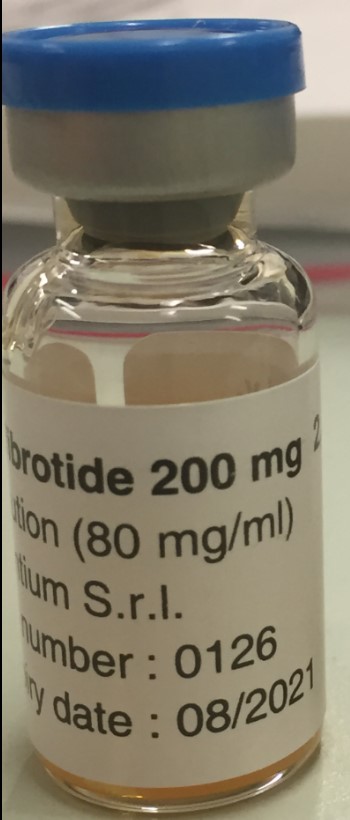
    On 13 March 2020, the WHO Global Surveillance and Monitoring System on Substandard and Falsified (SF) Medical Products was informed that falsified DEFIBROTIDE 200MG vials were identified at patient level in Australia, displaying batch number 0286 (see Table 1 below for full details).

    Following enquiries with stakeholders, on 8 April 2020, WHO was informed that falsified DEFIBROTIDE 200MG vials had also been supplied to Saudi Arabia, displaying batch number 0286 and 0126 (see Table 1 below for full details).

    Following enquiries with stakeholders, on 9 April 2020, WHO was informed that falsified DEFIBROTIDE 200MG vials, displaying batch number 0126, had also been identified in Australia and Latvia.

    DEFIBROTIDE is used to treat hepatic veno-occlusive disease, in which the blood vessels in the liver become damaged and obstructed by blood clots. This can be caused by treatments prior to a stem cell transplantation.

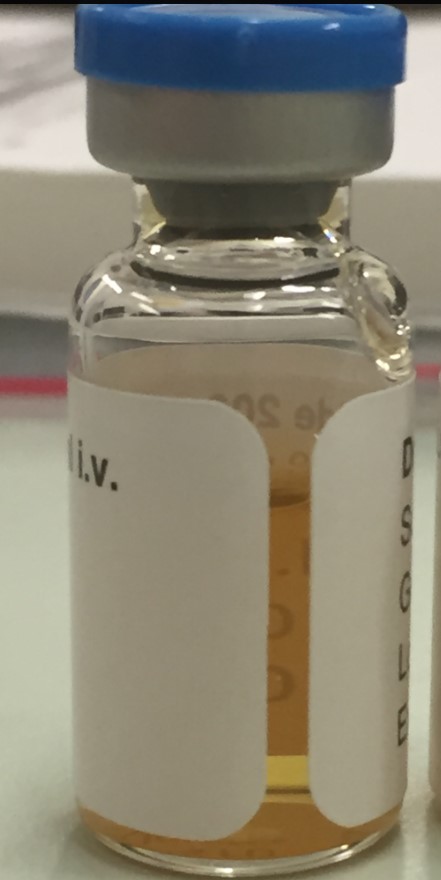
    Laboratory analyses, conducted by national medicines regulatory authorities and the manufacturer of the genuine product, established that these falsified products do not contain any of the expected active ingredient. The solution in the vials is also contaminated with mould (Cladosporium sp. and Aspergillus niger).

    Information available to WHO indicates that both batches of falsified DEFIBROTIDE 200MG vials were present within the regulated supply chain in Latvia as early as January 2020 and were also handled by medicine wholesalers in the United Kingdom in February 2020. It is important to note that widespread vigilance is required from all countries, regardless of where the product was originally identified.

    Table 1: falsified defibrotide subject of WHO Alert n°5/2020, identified in Australia, Latvia and Saudi Arabia

    Medical Product Alert N°5/2020 - 7 May 2020 8

    The two products listed in Table 1 are confirmed falsified, on the basis that there is deliberate misrepresentation of their identity, composition and source.

    The genuine manufacturer of Defibrotide, GENTIUM S.R.L has also confirmed to WHO that:

    • They did not manufacture the above products.
    • Authentic DEFIBROTIDE 200MG VIALS with batch number 0286 were supplied to Argentina, Hong Kong, Malaysia, Singapore and Turkey.
    • Authentic DEFIBROTIDE 200MG VIALS with batch number 0126 were supplied to Australia, Jordan, Kuwait, Lebanon, New Zealand, Qatar, Singapore, Turkey and the United Arab Emirates. 

      For guidance and photographs, please refer to page 2 of this Alert n°5/2020.

    Photos of Falsified DEFIBROTIDE Batch number: 0286, with expiry date: 09/2021

    Medical Product Alert N°5/2020 - 7 May 2020 9         Medical Product Alert N°5/2020 - 7 May 2020 10
    Sample from Latvia       Sample from Latvia

    Photos of Falsified DEFIBROTIDE Batch number: 0126, with expiry date: 08/2021

    Medical Product Alert N°5/2020 - 7 May 2020 11           Medical Product Alert N°5/2020 - 7 May 2020 12
    Sample from Australia       Sample from Australia

    WHO requests increased vigilance within the supply chains of countries likely to be affected by these falsified products. Increased vigilance should include hospitals, clinics, health centres, wholesalers, distributors, pharmacies and any other suppliers of medical products.

    If you are in possession of the above products, please do not use them. If you have used these falsified products, or if you suffer an adverse reaction/event having used these products, you are advised to seek immediate medical advice from a qualified healthcare professional, and to report the incident to the National Regulatory Authorities/National Pharmacovigilance Centre.

    All medical products must be obtained from licensed, authorized and reliable sources. Their authenticity and condition should be carefully checked. Seek advice from a healthcare professional in case of doubt.

    National regulatory/health authorities are advised to immediately notify WHO if these falsified products are identified in their country(ies). If you have any information concerning the manufacture, distribution, or supply of these products, please contact rapidalert@who.int.

    WHO Global Surveillance and Monitoring System for Substandard and Falsified Medical Products

    For further information, please visit our website: https://www.who.int/medicines/regulation/ssffc/en/ 

    Medical Product Alert N°5/2020 - 7 May 2020
    Read More
    https://www.who.int/news-room/detail/07-05-2020-medical-product-alert-n-5-2020

    Views: 0

  • Indonesia firmly committed to eliminating lymphatic filariasis as a public health problem

    Indonesia firmly committed to eliminating lymphatic filariasis as a public health problem

    Indonesia recently completed the last of its annual large-scale treatment for lymphatic filariasis (also known as elephantiasis or Penyakit Kaki Gajah) in Malaka District located in its southernmost province, East Nusa Tenggara. Unprecedented
    progress by the National Lymphatic Filariasis Elimination Programme has strongly placed the country on the path to achieving the elimination of lymphatic filariasis as a public health problem.

    “We reached an estimated number of 40.7 million people living in the 118 high-risk districts during this month-long treatment campaign in October 2019” said Dr Anung Sugihantono, who recently retired as Director General of Diseases
    Prevention and Control, Ministry of Health Indonesia. “
    Single doses of diethylcarbamazine citrate and albendazole facilitated by WHO were delivered to all eligible populations.”

    In 2010, an estimated 125 million Indonesians were still at risk of the disease and required treatment.

    But things changed considerably in 2015 when Indonesia mounted an annual national campaign to resolutely address transmission of the disease and to tackle the morbidity and disability associated with it. The results were apparent as early as 2017, with
    remarkable progress.

    In Indonesia, LF is considered a significant public health concern. In 2009, risk mapping identified a population of 124.5 million people needing treatment for LF. The country initiated a national level LF elimination campaign in 2015, addressing both
    disease prevention and management. 

    “In 2017 and in just two years we managed to achieve 100% geographical coverage of all people requiring treatment” said Dr Sugihantono. “It meant achieving more than 78% epidemiological coverage – much higher than the generally recommended 65% to stop transmission.”

    Transmission of lymphatic filariasis can be stopped through large-scale treatment (or mass drug administration – MDA) of entire at- risk communities with recommended medicines once a year. These medicines kill the microfilariae in an infected patient’s
    blood preventing mosquitoes to transmit1 the disease to others. Through mass treatment, the aim is to reduce the reservoir of microfilariae in the blood to a level insufficient to maintain transmission by the mosquito vector.

    This strategy to interrupt transmission is the corner-stone of the World Health Organization’s (WHO) Global Program to Eliminate Lymphatic Filariasis (GPELF). Indonesia has been using the GPELF’s strategy since 2002 using a district or city
    as its implementation unit.

    In 2005, it listed the elimination of LF as a national priority for controlling infectious diseases and the medicines it has been using in large-scale treatment programmes are diethylcarbamazine citrate (DEC) and albendazole2 which are
    largely distributed by volunteer community health workers3.

    “Community health volunteers are themselves members of the community and know how to reach people effectively to improve compliance” said Dr. Stefanus Bria Seran, the Regent of Malaka District, one of LF endemic district in Indonesia. “Besides ensuring every single person ingests the medicine given to them, these community workers help in disseminating information well before a large-scale treatment campaign and also assist in reporting activities related to each treatment campaign”. 

    Indonesia’s efforts to eliminate lymphatic filariasis began in the 1970s but faced numerous challenges including programme coordination in the many inhabited islands, conducting information, education and awareness programmes, lack of capacity and
    insufficient medicines.

    Furthermore, the situation in Indonesia is unusual than in many other countries endemic for lymphatic filariasis as the country is endemic for all three species of thread-like filarial worms – Brugia malayi, Brugia timori, and Wuchereria bancrofti –
    that cause the disease. Most of the infections in Indonesia, however, are caused by B. malayi.

    In the past, some of the factors that prevented access to the medicines (DEC and albendazole) were social stigmatization linked to the disease, the vast geography of the territory and challenges in reaching remote populations.

    With an estimated population of 242 million, Indonesia is the world’s largest island nation and consists of approximately 17,000 islands, of which 5,000–6,000 are inhabited. It is the fourth most populated nation behind China, India, and the United
    States.

    Indonesia is endemic for many other neglected tropical diseases and an estimated 110 million Indonesians are believed to suffer from at least one neglected tropical disease (NTD), including lymphatic filariasis and soil-transmitted helminth infections.
    Leptospirosis (not classified as NTD) is also widespread.

    Indonesia is the only country of WHO’s South East Asia Region with endemic schistosomiasis. Like many other countries of the Region, it also faces recurrent threats of dengue outbreaks.

    Global progress

    The world has made significant progress towards the elimination of lymphatic filariasis as a public health problem.

    Sixteen countries4 and one territory are now acknowledged by WHO to have achieved elimination of lymphatic filariasis as a public health problem.  

    Seven additional countries have successfully implemented recommended strategies, stopped large-scale treatment and are under surveillance to demonstrate that elimination has been achieved.

    The disease

    Lymphatic filariasis is caused by infection with parasitic worms living in the lymphatic system. The larval stages of the parasite (microfilaria) circulate in the blood and are transmitted from person to person by mosquitoes.

    Infection involves asymptomatic, acute, and chronic conditions. Most infections are asymptomatic, showing no external signs while contributing to transmission of the parasite. Although asymptomatic, these infections still cause damage to the lymphatic
    system and the kidneys and alter the body’s immune system.

    When lymphatic filariasis develops into chronic conditions it leads to lymphoedema (tissue swelling) or elephantiasis (skin/tissue thickening) of limbs and hydrocele (scrotal swelling). Involvement of breasts and genital organs are common.

    Manifestation of the disease after infection takes time and can result in an altered lymphatic system, causing abnormal enlargement of body parts, and leading to severe disability and social stigmatization of those affected.


    1Lymphatic filariasis is transmitted by different types of mosquitoes – e.g the Culex mosquito which widespread across urban and semi-urban areas; Anopheles, mainly found in rural areas; and, Aedes, mainly
    in endemic islands in the Pacific.

    2In 2017, WHO recommended an alternative three drug treatment to accelerate the global elimination of lymphatic filariasis. The treatment, known as IDA, involves a combination of ivermectin, diethylcarbamazine citrate and albendazole.
    It is recommended annually in settings where its use is expected to have the greatest impact.

    3Community health workers, also called ‘cadres’, are volunteers who form part of the communities they serve and work with local
    communities to educate families. Their contribution in promoting health has been significant in the country.

    4Cambodia, The Cook Islands, Egypt, Kiribati, Maldives, Marshall Islands, Niue, Palau, Sri Lanka, Thailand, Togo, Tonga, Vanuatu, Viet Nam, Wallis and Futuna, and Yemen

    Indonesia firmly committed to eliminating lymphatic filariasis as a public health problem
    Read More
    https://www.who.int/news-room/detail/29-04-2020-indonesia-firmly-committed-to-eliminating-lymphatic-filariasis-as-a-public-health-problem

    Views: 0

  • WHO calls for healthy, safe and decent working conditions for all health workers, amidst COVID-19 pandemic

    WHO calls for healthy, safe and decent working conditions for all health workers, amidst COVID-19 pandemic

    On World Day for Safety and Health at Work, the World Health Organization calls upon all governments, employers and workers organizations and the global community to take urgent measures for strengthen countries’ capacities to protect occupational health and safety of health workers and emergency responders respect their rights to decent working conditions, and develop national programmes for occupational health of health workers and to provide them with occupational health services. Amidst the COVID-19 pandemic, ILO has dedicated World Day for Safety and Health at Work 2020 in addressing the outbreak of infectious diseases at work, in particular, on the COVID-19 pandemic.

    Health workers are at the front line of the COVID-19 outbreak response and as such are exposed to hazards that put them at risk of infection. Hazards include pathogen exposure, long working hours, psychological distress, fatigue, occupational burnout, stigma, and physical and psychological violence.

    Infections with COVID-19, insufficient measures for infection prevention and control, occupational safety and health, mental health and psychosocial support for health workers result in high rates of absenteeism and deplete the health workforce – the most precision resources for stopping the COVID outbreak. 

    Key Messages and Facts

    COVID-19 infections among health workers:

    • As of 21 April 2020 countries reported to WHO that over 35, 000 health workers were infected with COVID19. This number is significantly higher because of underreporting.
    • The major occupational risks for COVID19 infection among health workers are: late recognition or suspicion of COVID-19 in patients, working in a higher-risk department, longer duty hours, sub-optimal adherence to infection prevention and control measures, such as hand hygiene practices, and lack of or improper use of personal protective equipment (PPE). Other factors have also been documented, such as inadequate or insufficient IPC training for respiratory pathogens, including the COVID-19 virus, as well as long exposure in areas in healthcare facilities where large numbers of COVID-19 patients were being cared for.
    • The prevention of infections requires the use of appropriate infection prevention and control measures by all health workers, with a special focus on the adherence to hand hygiene and personal protective equipment when caring for COVID-19 patients, as well as a combination of environmental and administrative controls
    • Health workers infected with COVID-19 following exposure in the workplace should have the right to employment injury benefits for occupational disease, including compensation, rehabilitation, and curative services.

    Violence and stigma against health workers:

    • Health workers are at high risk of violence all over the world. Between 8% and 38% of health workers suffer physical violence at some point in their careers. Many more are threatened or exposed to verbal aggression and social stigma because of their work.
    • In the COVID19 crisis, shortage of staff and resources and increasing social tensions result in increased level of violence against health workers and even attacks against health care facilities. Doctors, nurses, security personnel and those who are assisting in testing, tracing contacts and enforcing physical distancing measures to stop COVID-19 experience threats and aggression.
    • WHO calls upon governments, employers and workers organizations to institute measures for zero-tolerance to violence against health workers at the workplace and at the way to and from their workplace, and for intensifying social support and respect for health workers and their families.

    Long working hours and psychosocial hazards for health workers:

    • Many health workers have to work longer or irregular hours because of the increasing demand for health services. In addition, many countries experience shortage of health workers, or junior staff are working in demanding new roles.
    • Health workers face psychosocial hazards, which are exacerbated during emergencies where demands increase and they have to experience risk of infection witness higher suffering or mortality.
    • Long working hours, shift work, high workload and other psychosocial hazards can lead to fatigue, occupational burnout, increased psychological distress or declining mental health – affecting the health of health workers, and the quality and safety of care delivered.
    • WHO calls for adequate staffing levels and clinical rotation in healthcare facilities, measures to minimize psychosocial hazards, and provision of access to mental health and psychosocial support for health workers.

    The annual World Day for Safety and Health at Work on 28 April promotes the prevention of occupational accidents and diseases globally. It is an awareness-raising campaign intended to focus international attention on the magnitude of the problem and on how promoting and creating a safety and health culture can help reduce the number of work-related deaths and injuries.


    WHO calls for healthy, safe and decent working conditions for all health workers, amidst COVID-19 pandemic
    Read More
    https://www.who.int/news-room/detail/28-04-2020-who-calls-for-healthy-safe-and-decent-working-conditions-for-all-health-workers-amidst-covid-19-pandemic

    Views: 0

  • Maternal infections in health facilities

    Maternal infections in health facilities

    A clearer picture of the global impact 

    New research from the Global Maternal Sepsis Study (GLOSS), a major WHO/HRP initiative, shows that infection has a much larger impact on global maternal mortality and morbidity than previously thought.

    Logo of the Lancet Global HealthThe
    results from GLOSS, published in The Lancet Global Health, are the first to provide data on frequency of maternal infections and
    sepsis across the pregnancy and post-pregnancy period, in a large number of health facilities around the world. 

    Around 11 women per 1000 live births had an infection which resulted in or contributed to what is known as a severe maternal outcome – either they died or nearly died – during their hospitalization. 

    Urgent improvement is needed to manage this life-threatening risk faced by all pregnant and recently pregnant women, wherever they are in the world. 

    What is maternal sepsis and how does it lead to maternal death?

    Maternal sepsis is a life-threatening condition that arises when the body’s response to infection causes injury to its own tissues and organs during pregnancy, child-birth, post-abortion or the postpartum period.

    The latest global estimates place sepsis due to obstetric infections as the third most common cause of maternal mortality. However, this only includes infections as a direct result of pregnancy, such as endometritis or post-caesarean wound infections.

    Few
    previous studies include post-abortion infections. Neither do they address indirect infections such as respiratory and meningitis, which are aggravated by pregnancy but not directly caused by it.

    A better understanding of maternal infection

    GLOSS was a massive facility-based data collection effort led by WHO, accompanied by a ‘STOP SEPSIS!’ campaign to increase awareness among healthcare providers.

    The study gathered data on women who were admitted with suspected or confirmed infection during pregnancy or post-pregnancy over a one-week period in 2017. More than 2800 women participated in the study in 52 countries.

    GLOSS included healthcare facilities that care for women during pregnancy, childbirth or at the end of pregnancy, as well as facilities without maternity service but where women could be hospitalized during or after pregnancy, and data on infections
    which are not usually recorded as maternal sepsis, including post-abortion and indirect infections. 

    The result is a more complete understanding of the frequency and impact of maternal infections in health facilities. 

    GLOSS calls attention not only to the wider range of risks faced by pregnant women but also to the long period of time during which they are at risk. 

    Putting global numbers on maternal infection and sepsis

    Overall, around 70 pregnant or recently-pregnant women per 1000 live births were found to have a maternal infection needing hospital management. 

    Across the study, 11 women with either direct or indirect infection per 1000 live births developed a severe maternal outcome, but in low- and middle-income countries up to 15 women per 1000 births were affected.

    Infections were the underlying cause of most of the deaths recorded during the study, primarily post-abortion infection and indirect infections. Infections were also present in about a third of deaths attributed to other causes, such as postpartum
    haemorrhage.

    This suggests that the contribution of infection to global maternal mortality and morbidity may be larger than current reports of maternal sepsis mortality suggest.

    Preventing, identifying and treating maternal infection and sepsis

    Some of the most common maternal infections found in the study, such as urinary tract infections, post-caesarean and post-abortion infections, are largely preventable and treatable.

    GLOSS results suggest that current levels of monitoring and clinical care across health facilities are not enough to prevent, identify and treat levels of maternal infection effectively. 

    For instance, a complete set of vital signs was not reported for a third of the women in the study, on the day their infection was suspected or diagnosed. Delays in antimicrobial therapy were frequent.

    GLOSS also shows marked differences across countries, with the highest burden in low- and middle-income countries, compared with high-income countries.

    This may reflect the impact of broader health determinants in different country contexts. Challenges of overcrowding, limited access to water and sanitation and constraints to safe births by skilled birth attendants can reduce the ability of healthcare
    providers to manage the frequency and outcome of maternal infections.

    An opportunity to implement evidence-based practice

    GLOSS gives healthcare providers, policy-makers, and the public at large an opportunity: to mobilise around these data improve evidence-based practice, and save lives. 

    WHO has produced a number of resources which can support timely action to prevent, diagnose and treat maternal infection, as well as activities such as the upcoming SAVE LIVES: Clean Your Hands campaign
    on 5 May which celebrates the central role played by nurses and midwives in clean health care. 

    In addition, WHO will publish a global sepsis epidemiology report around the 73rd World Health Assembly (WHA) in May, as requested in the
    2017
    WHA Resolution on Improving the prevention, diagnosis and clinical managementof sepsis.

    Understanding why and how infection affects women is essential for equipping healthcare providers with life-saving knowledge and enabling health care systems to bring down global maternal mortality and morbidity.

    Related publications

    WHO recommendations for prevention and treatment of maternal peripartum infections

    WHO Clinical practice handbook for safe abortion

    Global guidelines on the prevention of surgical site infection

    WHO statement on maternal sepsis

    World Health Assembly resolution on Improving the prevention, diagnosis and clinical management of sepsis

    Health Topics

    Antimicrobial resistance

    Infection Prevention and Control

    Water Sanitation Hygiene

    Other links

    Global Maternal Sepsis Study

    SAVE LIVES: Clean Your Hands 5 May 2020


    Maternal infections in health facilities
    Read More
    https://www.who.int/news-room/detail/27-04-2020-maternal-infections-in-health-facilities

    Views: 0

  • WHO reports fivefold increase in cyber attacks, urges vigilance

    WHO reports fivefold increase in cyber attacks, urges vigilance

    Since the start of the COVID-19 pandemic, WHO has seen a dramatic increase in the number of cyber attacks directed at its staff, and email scams targeting the public at large. 

    This week, some 450 active WHO email addresses and passwords were leaked online along with thousands belonging to others working on the novel coronavirus response. 

    The leaked credentials did not put WHO systems at risk because the data was not recent. However, the attack did impact an older extranet system, used by current and retired staff as well as partners. 

    WHO is now migrating affected systems to a more secure authentication system. 

    Scammers impersonating WHO in emails have also increasingly targeted the general public in order to channel donations to a fictitious fund and not the authentic COVID-19 Solidary Response Fund. The number of cyber attacks is now more than five times the number directed at the Organization in the same period last year. 

    “Ensuring the security of health information for Member States and the privacy of users interacting with us a priority for WHO at all times, but also particularly during the COVID-19 pandemic. We are grateful for the alerts we receive from Member States and the private sector. We are all in this fight together,” said Bernardo Mariano, WHO’s Chief Information Officer. 

    WHO is working with the private sector to establish more robust internal systems and to strengthen security measures and is educating staff on cybersecurity risks. 

    WHO asks the public to remain vigilant against fraudulent emails and recommends the use of reliable sources to obtain factual information about COVID-19 and other health issues. 

    For more information, please visit: www.who.int/covid-19.


    WHO reports fivefold increase in cyber attacks, urges vigilance
    Read More
    https://www.who.int/news-room/detail/23-04-2020-who-reports-fivefold-increase-in-cyber-attacks-urges-vigilance

    Views: 0