Tag: North

  • The Sorry State Of Nigeria’s Judiciary Among Others Makes The Battle Cry For A Revolution Inevitable By Francis Adewale

    The Sorry State Of Nigeria’s Judiciary Among Others Makes The Battle Cry For A Revolution Inevitable By Francis Adewale

    Lawyers
    Lawyers

    “Those who make peaceful revolution impossible will make violent revolution inevitable.”
                                                   – President John F. Kennedy (1962)

    This week may be one of the worst weeks for Nigerian judiciary and they might have made the much vaunted Sowore’s revolution inevitable. The first salvo was the list of judges released by the National Judicial Council replete with the names of their sons and daughters as well as hangers on. Second is the farcical decision in EFCC vs Kalu where the Supreme Court “suo motu” created a new section to the constitution of Nigeria by vacating a conviction duly given under an extant law. The strange rationale by the Supreme Court is that the presiding judge, now elevated to the Court of Appeal should not have pronounced the sentence. The Court conveniently ignored the fact that the accused counsel had invited the judge to come back and continue the hearing by a formal letter!

    Gone are the days when Nigerian judiciary is famously celebrated as the last bastion of defense for the common man. The days of Kayode Esho, Chukwudifu Oputa, Muhammed Uwais is long gone. Our judiciary is no more like Caesar’s wife, above board. The problem however is not necessarily down to the hydra headed monster of corruption alone but a more sinister evil called, nepotism. It is my humble opinion that an opaque process for selection of judges led us to where we found ourselves this week. And the problem did not start with the current chief justice. The dysfunction and bastardization have been long in coming, and as we will find out in this piece, the cancer has eaten deep into the fabric of this nation. The revolution is inevitable. 

    The Sorry State Of Nigeria’s Judiciary Among Others Makes The Battle Cry For A Revolution Inevitable By Francis Adewale 1Lawyers


    What precipitate this write up is a social media post by a good friend of mine and I obtained his permission to repost his comment with my personal edits:
    “It took Orji Kalu only 4 months including Covid lockdown challenge to move from the High Court to Supreme Court to get his so called sound judgment from Supreme Court while it took ten years to get his case completed at the High Court level. Ten good years! And we are told justice in Nigeria is not cash and carry? The Supreme Court is preparing the ground for a revolution and very soon something extraordinary will take place. The same Supreme Court that will give 2021 and 2022 court date for poor defendants, sat and summarily decide a case within 4 months while cases of those facing a life sentence languish in the labyrinth of jungle justice!”

    My first response to the post, is to retort that the problem did not start with judiciary, but they seem to have led the “nunc dimitis” for the internment of democracy in Nigeria. The judiciary may have pushed us to the praecipe but they were not the only one. We all recalled the impunity days of PDP rule and how they ride roughshod on people’s right, celebrating acquisition of jets obtained from corrupt practices while hordes of masses suffer the indignity of scrapping for foods from the gutter. Towards the end of that era, we all thought, if we can just get a man of integrity into Aso Rock, someone who will brook no atom of corruption, we will change the country. The election of 2015 seems to have lulled Nigerians into thinking that all we need is someone or a duo with integrity, so we elect Buhari and Osinbajo, a puritan and a pastor and went home satiated. What we were not prepared for or more appositely choose to ignore is the fact that the vehicle that brought them into governance is none other than the decrepit system that PDP used to feather their nest. In the first 4 years, we were told that the problem is with the National Assembly where the legistlooters shifted their control of the vortex of power in Abuja, opposing every anti-corruption moves of the executives. Then come the last election where the ruling party now controls the executive and legislative arm, but corruption runs through the gamut of the judiciary and Aso Rock looks the other way while nepotism festers in its rank.

    It is as if the cancer has completely swallowed up the entire fabric of the nation. Cases involving the poor dragged on for years while those who can afford senior advocate can get quick justice. Many warned that this will sound the death knell of democracy in Nigeria. Every attempt to even build on free and fair election has been truncated by the judiciary. What with the recent confounding judgment from Imo and Bayelsa. Our two gargantuan political parties now owned our judiciary lock, stock and barrel. They sit in smoke filled rooms to determine who will be governors, legislators and judges, and those who will play ball are readily appointed as pawns in the chest board of the Nigerian ruling class, wives, nephews, cousins, sons and daughters are made judges and senior advocates overnight without recourse to any modicum of meritocracy. A friend of mine recently quipped that the problem of nepotism is not just that it defeats meritocracy and breeds mediocrity but that it infects the entire body politics and renders it comatose. Corruption can be traced, and ill-gotten wealth recovered but nepotism is more sinister. Those who obtain position of power and authority through nepotism hold fealty only to their masters who appointed them. Such appointee will readily twist the constitution, made up section that does not exist all at the behest of their “godfather”. It is insidious and evil.

    I graduated from Nigerian Law School 30 years ago, after an excellent stint at Great Ife. My class at Ife, drawn from the north, east, west middle belt and south-south has in its rank some of the best legal minds any country will be proud of. We graduated with high hopes to take on the world and change the land. Few of us found ourselves abroad on scholarship where we flourish and excel. Those in legal practice in Nigeria, either at the federal or state ministry of justice or private practice are the ones my heart bleeds for, especially those without access to members of the National Judicial Council. I have had the privilege to advance my career abroad as an attorney and public defender. I frequently sit on panels that recommend colleagues for appointment as judges in a fair, open and transparent process; something my colleagues in Nigeria could only dream of.

    When I look at the state of Nigerian legal practice my heart bleeds. The career growth of colleagues in the legal profession in Nigeria is stunted not for lack of excellence but influence in the right place. Influence peddling is an art form in Nigeria and politicians used to have the exclusive preserve of selling it to the highest bidder, but our Judicial Council seems to have mastered the art. The problem will not be this pronounced if the sons and daughters they are foisting on Nigerian judiciary are steeped in the Nigerian experience or have a modicum of merit. As many of my colleagues are apt to complain, majority of the recent appointees hardly spend few years in Nigeria. They all went to schools abroad. Totally devoid of the Nigerian experience, and constantly removed from the everyday life Nigerians suffers under. Majority of them lives in the gilded mansions of their forbears in Abuja and other state capitals, where they are rarely touched by the “better angels of our nature” to use the phrase coined by Abraham Lincoln. It is therefore no surprise that they care only for what their “godfather” demand.

    Let me however warns that the biggest mistake we could make is to think that the rot is only in the heart of our judiciary. Think again. Nepotism is next door, next street, next town and everywhere in Nigeria. It rampages through the land, be it North, East or West. Just look at our churches and mosques, who do you see minister or lead the prayers when the founder/visioner is not around? You guess right,  if you say their sons and daughters. Gone are the days when Pa Fadayomi push to have a meritorious doctor of aerodynamics succeed him. Gone are the days when the leader of the faithful in Nigeria is selected by their aptitude in the knowledge of the Quaran. Nowadays, the exit of the leader is the beginning of the reign of the progeny. It has infected our colleges and universities, scholarship and opportunities that used to be available on merit are now exclusive preserve of the vice chancelor’s children and family members. Woe betide the school senate members that dare ask questions. Advertisement for jobs that has already been reserved for the children of the privileged are means to extort money in the form of application fees a la Abba Moro immigration recruitment scheme. A recent recruitment without advertisement at our apex bank reported by Sahara Reporters shows that successful applicants names were picked out of the rolodex of the governor. Commercial Banks staff are not an exemption, they are either recruited based on sex appeal or influential ministers/senators’ “recommendation” which doesn’t come easy for the educated but less privileged applicants.

    A friend concluded an animated discussion on social media on this issue with a distinctively Nigerian resignation: “It is clear that those who do not want things to work properly in Nigeria are more powerful than those who are working towards finding solutions to our problems.” Again, my response is what do we have to lose if we embrace Omoyele Sowore’s revolution, even with its youthful disdain for experience? Especially when our current experienced leadership seems to treat the Nigerian masses with contempt. Look at it this way: They do not need our votes to win election, as they could procure midnight judgment in Abuja a la Bayelsa and Imo. They do not need to legislate to fill any lacunae in our constitutional experience as the Supreme Court proved in Kalu’s case. In fact, as long as oil flows and they have the means to fill their Cayman Island bank accounts, we may as well not exist. Greed and avarice have become the directive principle of Nigerian ruling class. To rescue ourselves from their vice grip, we need revolution now!

    Francis Adewale
    Tioluwanimi@gmail.com

    Opinion

    AddThis

    : 

    Original Author

    : 

    Francis Adewale

    Disable advertisements

    : 
    The Sorry State Of Nigeria’s Judiciary Among Others Makes The Battle Cry For A Revolution Inevitable By Francis Adewale
    Read More
    http://saharareporters.com/2020/05/09/sorry-state-nigeria%E2%80%99s-judiciary-among-others-makes-battle-cry-revolution-inevitable

    Views: 0

  • No Evidence That Shekau Received €5m Foreign Fund From An NGO

    No Evidence That Shekau Received €5m Foreign Fund From An NGO

    Boko Haram Terrorists
    Boko Haram Terrorists

    Fact-checkers at HumAngle online newspaper have described a news report published on Opera News that Abubakar Shekau’s faction of Boko Haram was in disarray after it received a donation of five mIllion euros from an “unidentified” international non-governmental organisation as false.

    The publication claimed that senior members of the group have also turned against each other over how the fund should be shared within the group.

    The story claimed that a military source said “Shekau is getting blind as such only the very close ones of his aides have access to him. The issue of €5m is causing serious disaffection in their camps.

    “Shekau has been receiving such funding in the past and he was never able to build his terror infrastructure beyond what is currently being dismantled. Our commanders are not concerned that he is still defrauding those sponsoring him, if there is any concern it is that we should be able to capture him before his own fighters kill him,” the military source said as claimed by the news report.

    No Evidence That Shekau Received €5m Foreign Fund From An NGO 2Boko Haram Terrorists


    But according to HumAngle newspaper, the Director of Nigerian Army Public Relations, Sagir Musa, when contacted to verify the claim said he was not aware of either the “verified intelligence reports” or the claim that Shekau received five million euros foreign fund through an NGO in the North-East.

    The newspaper also said it searched autogist.com, the blog that the news was attributed to but could not find the story published on the blog.

    “Fact-checkers at HumAngle contacted the Director of Nigerian Army Public Relations, Sagir Musa, to confirm the veracity of the claim and he said he was not aware of either the “verified intelligence reports” or the claim that Shekau received five million euros foreign fund through an NGO in the North-East.

    “We searched autogist.com, the blog that the news was attributed to but could not find the story published on the blog. Also, no reliable medium reporting terrorism published the story. Other conflict and insurgency reporters were contacted by HumAngle but none was aware of the “verified intelligence report”.

    “As the name of the NGO was not disclosed, it became difficult to trace its operation history. 

    “However, Nigeria’s military had suspended several NGOs from operating in the North-East following allegations of collaborating with the terrorist organisation. But no NGO has ever been charged to court by the authorities and the suspended NGOs were later allowed to resume operations in the region.

    “Scholars and experts on Boko Haram have suggested different methods of terrorism financing, from state sponsorship to external support by other terror groups like ISIS and Alqa’eda. But Shekau’s faction of Boko Haram relies on self-funding streams through fishing, farming, crowdfunding, extortion, taxation, raids and ransom taking to finance its operations,” the newspaper published.

    Quoting a report on Boko Haram sources of funding, it continued, “Much of Boko Haram’s funds are transported through human cash couriers, which are able to move rather easily between the porous borders of Nigeria, Niger, Cameroon and Chad… very little evidence of either Gulf or other foreign funding exists,” a report on Boko Haram sources of funding concluded.

    “Due to the strict surveillance of monetary operations to avoid terrorist financing in Nigeria, financial regulations have forced Boko Haram to avoid remittances of funds online. Such a huge amount is not possible to be transferred without its being intercepted by international and local intelligence platforms.”

    The newspaper further said Nigeria Financial Intelligence Unit follows any suspicious transaction with the aim of curbing terrorism financing.

    “It collates information of all beneficiaries of humanitarian assistance to avert financing of terrorism through covert operations, thus making it impossible for any NGO to follow “previous channels and beneficiaries’ templates” of funding terrorism as claimed by the report.

    “Humanitarian organisations work hand in hand with EFFC Department of Special Control against Money Laundering (SCUML) to checkmate their activities to curb terrorism financing, according to Abdurrashid Ibrahim a worker at the financial unit of an NGO in the North-East.

    “Any transaction from five million naira must pass through a special control unit against money laundering (SCUML) clearance process be it for individual or corporate organisation,” he said.

    Furthermore, there is no evidence that an NGO was allowed to operate after the military discovered that “Shekau has been receiving such funding in the past” as claimed by the news.

    According to HumAngle findings, Abubakar Shekau does not operate or rely on an advisory council (Shura). 

    He is reported to be ruthless and brutal to any opposition within the group, making it unlikely for any Boko Haram commander to disagree with the leader.

    Boko Haram

    Terrorism

    News

    AddThis

    : 

    Original Author

    : 

    SaharaReporters, New York

    Disable advertisements

    : 
    No Evidence That Shekau Received €5m Foreign Fund From An NGO
    Read More
    http://saharareporters.com/2020/05/08/no-evidence-shekau-received-%E2%82%AC5m-foreign-fund-ngo

    Views: 0

  • UK PM listened to his scientists about Covid-19, but they were slow to sound the alarm

    UK PM listened to his scientists about Covid-19, but they were slow to sound the alarm

    UK PM listened to his scientists about Covid-19, but they were slow to sound the alarm 3

    LONDON: It was early spring when British scientists laid out the bald truth to their government. It was “highly likely,“ they said, that there was now “sustained transmission” of COVID-19 in the United Kingdom.

    If unconstrained and if the virus behaved as in China, up to four-fifths of Britons could be infected and one in a hundred might die, wrote the scientists, members of an official committee set up to model the spread of pandemic flu, on March 2. Their assessment didn’t spell it out, but that was a prediction of over 500,000 deaths in this nation of nearly 70 million.

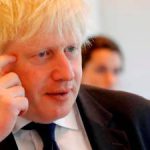
    Yet the next day, March 3, Prime Minister Boris Johnson was his cheery self. He joked that he was still shaking hands with everyone, including at a hospital treating coronavirus patients.

    “Our country remains extremely well prepared,“ Johnson said as Italy reached 79 deaths. “We already have a fantastic NHS,“ the national public health service, “fantastic testing systems and fantastic surveillance of the spread of disease.”

    Alongside him at the Downing Street press conference was Chris Whitty, the government’s chief medical adviser and himself an epidemiologist. Whitty passed on the modelling committee’s broad conclusions, including the prediction of a possible 80% infection rate and the consequent deaths. But he played them down, saying the number of people who would be infected was probably “a lot lower” and coming up with a total was “largely speculative.”

    The upbeat tone of that briefing stood in sharp contrast with the growing unease of many of the government’s scientific advisers behind the scenes. They were already convinced that Britain was on the brink of a disastrous outbreak, a Reuters investigation has found.

    Interviews with more than 20 British scientists, key officials and senior sources in Johnson’s Conservative Party, and a study of minutes of advisory committee meetings and public testimony and documents, show how these scientific advisers concluded early the virus could be devastating.

    But the interviews and documents also reveal that for more than two months, the scientists whose advice guided Downing Street did not clearly signal their worsening fears to the public or the government. Until March 12, the risk level, set by the government’s top medical advisers on the recommendation of the scientists, remained at “moderate,“ suggesting only the possibility of a wider outbreak.

    “You know, there’s a small little cadre of people in the middle, who absolutely did realise what was going on, and likely to happen,“ said John Edmunds, a professor of infectious disease modelling and a key adviser to the government, known for his work on tracking Ebola. Edmunds was among those who did call on the government to elevate the warning level earlier.

    From the outset, said Edmunds, work by scientists had shown that, with only limited interventions, the virus would trigger an “overwhelming epidemic” in which Britain’s health service was not going “to get anywhere near being able to cope with it. That was clear from the beginning.”

    But he said: “I do think there’s a bit of a worry in terms you don’t want to unnecessarily panic people.”

    Johnson, who himself has sickened with the virus, moved more slowly than the leaders of many other prosperous countries to adopt a lockdown. He has been criticised for not moving more swiftly to organise mass tests and mobilise supplies of life-saving equipment and beds. Johnson was hospitalized on April 5 and moved to intensive care the next day.

    It is too soon to judge the ultimate soundness of the UK’s early response. If history concludes that it was lacking, then the criticism levelled at the prime minister may be that, rather than ignoring the advice of his scientific advisers, he failed to question their assumptions.

    Interviews and records published so far suggest that the scientific committees that advised Johnson didn’t study, until mid-March, the option of the kind of stringent lockdown adopted early on in China, where the disease arose in December, and then followed by much of Europe and finally by Britain itself. The scientists’ reasoning: Britons, many of them assumed, simply wouldn’t accept such restrictions.

    The UK scientists were also mostly convinced – and many still are – that, once the new virus escaped China, quarantine measures would likely not succeed. Minutes of technical committees reviewed by Reuters indicate that almost no attention was paid to preparing a programme of mass testing. Other minutes and interviews show Britain was following closely a well-laid plan to fight a flu pandemic – not this deadlier disease. The scientists involved, however, deny that the flu focus ultimately made much difference.

    Now, as countries debate how to combat the virus, some experts here say, the lesson from the British experience may be that governments and scientists worldwide must increase the transparency of their planning so that their thinking and assumptions are open to challenge.

    John Ashton, a clinician and former regional director of Public Health England, the government agency overseeing healthcare, said the government’s advisers took too narrow a view and hewed to limited assumptions. They were too “narrowly drawn as scientists from a few institutions,“ he said. Their handling of COVID-19, Ashton said, shows the need for a broader approach. “In the future we need a much wider group of independent advisers.”

    Michael Cates, who succeeded Stephen Hawking as Lucasian Professor of Mathematics at Cambridge University, is leading an initiative by the Royal Society, the UK’s leading scientific body, to bring modellers in from other scientific disciplines to help understand the epidemic.

    “Without faulting anyone so far, it’s vital, where there is such a lot at stake, to throw the maximum possible light on the methods, assumptions and data built into our understanding of how this epidemic will develop,“ he told Reuters.

    In a statement to Reuters, a spokesperson for the Department of Health and Social Care said the government was delivering “a science-led action plan” to contain the outbreak. “As the public would expect, we regularly test our pandemic plans and what we learned from previous exercises has helped us to rapidly respond to COVID-19.”

    A LOW RISK TO THE PUBLIC

    When news came from China in January of a new infectious disease, Johnson had reason to believe his country was well prepared. It had some of the world’s best scientists and a well-drilled plan to deal with potentially lethal pandemics. Perhaps, some scientists say in hindsight, the plan made them slow to adapt.

    For many years, the Cabinet Office – a collection of officials who act as the prime minister’s direct arm to run the government – took the threat of pandemics seriously. Presciently, it rated pandemics as the Number 1 threat to the country, ahead of terrorism and financial crashes.

    At the centre of planning was a small group of scientists, among them Edmunds. His research group at the London School of Hygiene and Tropical Medicine runs one of the two computer modelling centres for epidemics that have mostly driven government policy. The other is at nearby Imperial College. Edmunds remembers that early in the outbreak, the data from China were sketchy, in the period “where the Chinese were trying to pretend that this wasn’t transmissible between humans.”

    Edmunds and his colleague at Imperial, Neil Ferguson, were part of an alphabet soup of committees that fed advice into the Cabinet Office machinery around the prime minister. Both were founders of the flu pandemic modelling committee, known as SPI-M, that produced the March 2 report warning of more than 500,000 deaths. This committee had met together for nearly 15 years.

    Ferguson did not respond to a request to be interviewed for this article.

    Edmunds and Ferguson were also part of NERVTAG, the New and Emerging Respiratory Virus Threats Advisory Group. Both too were members of the Scientific Advisory Group for Emergencies, known as SAGE, that advises the government in times of crisis. SAGE reports directly to Johnson and the government’s main emergency committee, COBRA.

    At first, when NERVTAG met on January 13, it studied information from China that there was “no evidence of significant human to human transmission” of the new virus, according to minutes of the meeting. The scientists agreed the risk to the UK population was “very low.”

    The evidence soon changed, but this wasn’t reflected in the official threat level. By the end of January, scientists in China began releasing clinical data. Case studies published in the British medical journal, The Lancet, showed 17% of the first 99 coronavirus cases needed critical care. Eleven patients died. Another Chinese study, in the same magazine, warned starkly of a global spread and urged: “Preparedness plans and mitigation interventions should be readied for quick deployment globally.”

    Edmunds recalled that “from about mid January onwards, it was absolutely obvious that this was serious, very serious.” Graham Medley, a professor of infectious diseases modelling at the London School and chairman of SPI-M, agreed. He said that the committee was “clear that this was going to be big from the first meeting.” At the end of January, his committee moved into “wartime” mode, he said, reporting directly into SAGE.

    Dr Jon Read, a senior lecturer in biostatistics at the University of Lancaster, also a member of SPI-M, said by the end of January it was apparent the virus had “pandemic potential” and that death rates for the elderly were brutal. “From my perspective within the sort of modelling community, everybody’s aware of this, and we’re saying that this is probably going to be pretty bad,“ he said.

    But the scientists did not articulate their fears forcefully to the government, minutes of committee meetings reveal.

    On January 21, scientists on NERVTAG endorsed the elevation of the UK risk warning from COVID-19 from “very low” to “low.” SAGE met formally for the first time the following day about the coronavirus threat. So did COBRA, which was chaired by Matt Hancock, the health secretary, who would contract the virus himself in late March. He told reporters after the meeting: “The clinical advice is that the risk to the public remains low.”

    In response to questions from Reuters, the government’s Department of Health declined to clarify how the risk levels are defined or what action, if any, they trigger. In a statement, a spokesperson said: “Increasing the risk level in the UK is a belt and braces measure which allows the government to plan for all future eventualities.”

    Two days later, China put the city of Wuhan, where the outbreak began, into a complete lockdown. Hubei, the surrounding province, would follow. But already, 17 passenger flights had flown directly from Wuhan to Britain since the start of 2020, and 614 flights from the whole of China, according to FlightRadar24, a flight-tracking service. That meant thousands of Chinese, some of them potential carriers, had come to Britain. On April 5, scientific adviser Ferguson said he estimated only one-third of infected people reaching Britain had been detected.

    As they watched China impose its lockdown, the British scientists assumed that such drastic actions would never be acceptable in a democracy like the UK. Among those modelling the outbreak, such stringent counter-measures were not, at first, examined.

    “We had milder interventions in place,“ said Edmunds, because no one thought it would be acceptable politically “to shut the country down.” He added: “We didn’t model it because it didn’t seem to be on the agenda. And Imperial (College) didn’t look at it either.” The NERVTAG committee agreed, noting in its minutes that tough measures in the short term would be pointless, as they “would only delay the UK outbreak, not prevent it.”

    That limited approach mirrored the UK’s longstanding pandemic flu strategy. The Department of Health declined a request from Reuters for a copy of its updated pandemic plan, without providing a reason. But a copy of the 2011 “UK Influenza Pandemic Preparedness Strategy 2011,“ which a spokesman said was still relevant, stated the “working presumption will be that Government will not impose any such restrictions. The emphasis will instead be on encouraging all those who have symptoms to follow the advice to stay at home and avoid spreading their illness.”

    According to one senior Conservative Party politician, who was officially briefed as the crisis unfolded, the close involvement in the response to the coronavirus of the same scientific advisers and civil servants who drew up the flu plan may have created a “cognitive bias.”

    “We had in our minds that COVID-19 was a nasty flu and needed to be treated as such,“ he said. “The implication was it was a disease that could not be stopped and that it was ultimately not that deadly.”

    While the UK was prepared to fight the flu, places in Asia like China, Hong Kong, Singapore and South Korea had built their pandemic plans with lessons learned from fighting the more lethal SARS outbreak that began in 2002, he said. SARS had a fatality rate of up to 14%. As a result, these countries, he said, were more ready to resort to widespread testing, lockdowns and other draconian measures to keep their citizens from spreading the virus.

    Scientists involved in the UK response disagree that following the government’s flu plan clouded their thinking or influenced the outbreak’s course. The plan had a “reasonable worst case” scenario as devastating as the worst predictions for COVID-19, they note.

    Mark Woolhouse, a professor of infectious diseases epidemiology at the University of Edinburgh, and a member of the SPI-M committee, said COVID-19 did behave differently than an expected pandemic flu – for example school closures proved to be far less effective in slowing the spread of the coronavirus. But, broadly, “the government has been consistently responsive to changing facts.”

    By the end of January, the government’s chief medical adviser, Whitty, was explaining to politicians in private, according to at least two people who spoke to him, that if the virus escaped China, it would in time infect the great majority of people in Britain. It could only be slowed down, not stopped. On Jan 30, the government raised the threat level to “moderate” from “low.”

    The country’s medical officers “consider it prudent for our governments to escalate planning and preparation in case of a more widespread outbreak,“ a statement said at the time. Whitty did not respond to questions from Reuters for this article.

    A TIME TO PREPARE

    On the evening of January 31, Boris Johnson sat before a fireplace in 10 Downing Street and told the nation, in a televised address: “This is the moment when the dawn breaks and the curtain goes up on a new act in our great national drama.”

    He was talking of finally delivering Brexit, or what he called “this recaptured sovereignty.” Until that moment, Johnson’s premiership had been utterly absorbed by delivering on that challenge.

    With Brexit done, Johnson had the chance to focus on other matters the following month, among them the emerging virus threat. But leaving the European Union had a consequence.

    Between February 13 and March 30, Britain missed a total of eight conference calls or meetings about the coronavirus between EU heads of state or health ministers – meetings that Britain was still entitled to join. Although Britain did later make an arrangement to attend lower-level meetings of officials, it had missed a deadline to participate in a common purchase scheme for ventilators, to which it was invited. Ventilators, vitally important to treating the direst cases of COVID-19, have fallen into short supply globally. Johnson’s spokesman blamed an administrative error.

    A Downing Street aide told Reuters that from around the end of January, Johnson concentrated his attention increasingly on the coronavirus threat, receiving “very frequent” updates at least once per day from mid February, either in person or via a daily dashboard of cases.

    In the medical and scientific world, there was growing concern about the threat of the virus to the UK. A report from Exeter University, published on February 12, warned a UK outbreak could peak within four months and, without mitigation, infect 45 million people.

    That worried Rahuldeb Sarkar, a consultant physician in respiratory medicine and critical care in the county of Kent, who foresaw that intensive care beds could be swamped. Even if disease transmission was reduced by half, he wrote in a report aimed at clinicians and actuaries in mid-February, a coronavirus outbreak in the UK would “have a chance of overwhelming the system.”

    With Whitty stating in a BBC interview on February 13 that a UK outbreak was still an “if, not a when,“ Richard Horton, a medical doctor and editor of the Lancet, said the government and public health service wasted an opportunity that month to prepare quarantine restriction measures and a programme of mass tests, and procure resources like ventilators and personal protective equipment for expanded intensive care.

    Calling the lost chance a “national scandal” in a later editorial, he would testify to parliament about a mismatch between “the urgent warning that was coming from the frontline in China” and the “somewhat pedestrian evaluation” of the threat from the scientific advice to the government.

    After developing a test for the new virus by January 10, health officials adopted a centralised approach to its deployment, initially assigning a single public laboratory in north London to perform the tests. But, according to later government statements, there was no wider plan envisaged to make use of hundreds of laboratories across the country, both public and private, that could have been recruited.

    According to emails and more than a dozen scientists interviewed by Reuters, the government issued no requests to labs for assistance with staff or testing equipment until the middle of March, when many abruptly received requests to hand over nucleic acid extraction instruments, used in testing. An executive at the Weatherall Institute of Molecular Medicine at the University of Oxford said he could have carried out up to 1,000 tests per day from February. But the call never came.

    “You would have thought that they would be bashing down the door,“ said the executive, who spoke on condition of anonymity. By April 5, Britain had carried out 195,524 tests, in contrast to at least 918,000 completed a week earlier in Germany.

    Nor was there an effective effort to expand the supply of ventilators. The Department of Health told Reuters in a statement that the government started talking to manufacturers of ventilators about procuring extra supplies in February. But it was not until March 16, after it was clear supplies could run out, that Johnson launched an appeal to industry to help ramp up production.

    Charles Bellm, managing director of Intersurgical, a global supplier of medical ventilation products based outside London, said he has been contacted by more than a dozen governments around the world, including France, New Zealand and Indonesia. But there had been no contact from the British government. “I find it somewhat surprising, I have spoken to a lot of other governments,“ he said.

    Countering such criticism, Hancock, the health minister, said the government is on track to deliver about 10,000 more ventilators in the coming weeks. One reason Britain was behind some countries on testing, he said, was the absence of a large diagnostics industry at the outbreak of the epidemic. “We didn’t have the scale.”

    GAME OVER

    It was during the school half-term holidays in February that frontline doctor Nicky Longley began to realise that early efforts to contain the disease were likely doomed.

    For weeks now, doctors and public health workers had been watching out for people with flu-like symptoms coming in from China. Longley, an infectious diseases consultant at London’s Hospital for Tropical Diseases, was part of a team that staffed a public health service helpline for those with symptoms. The plan, she said, had been to make all effort to catch every case and their contacts. And “to start with, it looked like it was working.”

    But then, bad news. First, on Wednesday the 19th of February, came the shock news from Iran of two deaths. Then, on Friday the 21st, came a death in Italy and a bloom of cases in Lombardy and Veneto regions. Britain has close links to both countries. Thousands of Britons were holidaying in Italy that week.

    “I don’t think anybody really foresaw what was happening in Italy,“ Longley said. “And I think, the minute everybody saw that, we thought: ‘This is game over now.’”

    Until then, Longley said, everyone felt “there was a chance to stamp it out” even though most were sceptical it could be done long-term. But after Iran and Italy, it was obvious containment would not work. The contact tracing continued for a while. But as the cases in London built up, and the volume of calls to the helpline mushroomed, the priority began to shift to clinical care of the serious cases. “At a certain point you have to make a decision about where you put your efforts as a workforce.”

    Edmunds noted that Iran and Italy had hardly reported a case until that point. “And then, all of sudden you had deaths recorded.” There was a rule of thumb that, in an outbreak’s early stages, for each death there were probably 1,000 cases in a community. “And so it was quite clear that there were at least thousands of cases in Italy, possibly tens of thousands of cases in Italy right then.”

    Amid the dreadful news from Italy, the scientists at NERVTAG convened by phone that Friday, 21st February. But they decided to recommend keeping the threat level at “moderate,“ where it had sat since January 30th. The minutes don’t give a detailed explanation of the decision. Edmunds, who had technical difficulties and couldn’t be heard on the call, emailed afterwards to ask the warning to be elevated to “high,“ the minutes revealed. But the warning level remained lower. It’s unclear why.

    “I just thought, are we still, we still thinking that it’s mild or something? It definitely isn’t, you know,“ said Edmunds.

    A spokesman for the government’s chief scientific adviser, Sir Patrick Vallance, didn’t directly respond to Reuters questions about the threat level. Asked whether, with hindsight, the scientists’ approach was the right one, the spokesperson said in a statement that “SAGE and advisers provide advice, while Ministers and the Government make decisions.”

    HERD IMMUNITY

    On Sunday, March 1st, Ferguson, Edmunds and other advisers spent the day with NHS public health service experts trying to work out how many hospital beds and other key resources would be needed as the outbreak exploded. By now, Italian data was showing that a tenth of all infected patients needed intensive care.

    The following day, pandemic modelling committee SPI-M produced its “consensus report” that warned the coronavirus was now transmitting freely in the UK. That Thursday, March 5, the first death in the UK was announced. Italy, which reached 827 deaths by March 11, ordered a national lockdown. Spain and France prepared to follow suit.

    Johnson held out against stringent measures, saying he was following the advice of the government’s scientists. He asserted on March 9: “We are doing everything we can to combat this outbreak, based on the very latest scientific and medical advice.”

    Indeed, the government’s Scientific Advisory Group for Emergencies, SAGE, had recommended that day, with no dissension recorded in its summary, that the UK reject a China-style lockdown. SAGE decided that “implementing a subset of measures would be ideal,“ according to a record of its conclusions. Tougher measures could create a “large second epidemic wave once the measures were lifted,“ SAGE said.

    On March 12 came a bombshell for the British public. Chris Whitty, the chief medical officer, announced Britain had moved the threat to UK citizens from “moderate” to “high.” And he said the country had moved from trying to contain the disease to trying to slow its spread. New cases were not going to be tracked at all. “It is no longer necessary for us to identify every case,“ he said. Only hospital cases would, in future, be tested for the virus. What had been an undisclosed policy was in the open: beyond a certain point, attempts to completely extinguish the virus would stop.

    The same day, putting aside his jokey self, Johnson made a speech in Downing Street, flanked by two Union Jacks and evoking the spirit of Winston Churchill’s “darkest hour” address. He warned: “I must level with you, level with the British public – more families, many more families are going to lose loved ones before their time.”

    For most Britons, it came as a shock. Several of the next day’s newspapers splashed Johnson’s words on their front pages.

    Vallance, the government’s chief scientific adviser, who chaired SAGE, said in a BBC interview on March 13 that the plan was to simply control the pace of infection. The government had, for now, rejected what he called “eye-catching measures” like stopping mass gatherings such as football games or closing schools. The “aim is to try and reduce the peak, broaden the peak, not to suppress it completely.” Most people would get the virus mildly, and this would build up “herd immunity” which, in time, would stop the disease’s progress.

    But by now, the country was rebelling. Major institutions decided to close. After players began to get infected, the professional football leagues suspended their games. As Johnson still refused to close schools and ban mass gatherings, the Daily Mirror’s banner headline, summing up a widespread feeling, asked on March 13: “Is It Enough?”

    The catalyst for a policy reversal came on March 16 with the publication of a report by Neil Ferguson’s Imperial College team. It predicted that, unconstrained, the virus could kill 510,000 people. Even the government’s “mitigation” approach could lead to 250,000 deaths and intensive care units being overwhelmed at least eight times over.

    Imperial’s prediction of over half a million deaths was no different from the report by the government’s own pandemic modelling committee two weeks earlier. Yet it helped trigger a policy turn-around, both in London and in Washington, culminating seven days later in Johnson announcing a full lockdown of Britain. The report also jarred the U.S. administration into tougher measures to slow the virus’ spread.

    Ferguson was now in isolation himself after catching the virus. Testifying by video link to a committee in Parliament, he explained why he and other scientific advisers had shifted from advocating partial social-distancing measures to warning that without a rigorous shutdown, the NHS would be overwhelmed. The reason, he said, lay in data coming out of Italy that showed large numbers of patients required critical care.

    “The revision was that, basically, estimates of the proportion of patients requiring invasive ventilation, mechanical ventilation, which is only done in a critical care unit, roughly doubled,“ he said.

    Edmunds had a different explanation for the policy shift.

    What allowed Britain to alter course, said Edmunds, was a lockdown in Italy that “opened up the policy space” coupled with new data. First came a paper by Edmunds’ own London School team that examined intermittent lockdowns, sent to the modelling committee on March 11 and validated by Edinburgh University. Ferguson’s revised Imperial research followed.

    Woolhouse, the Edinburgh professor, confirmed the sequence.

    Edmunds said these new studies together had demonstrated that if the British government imposed a lengthy period of tougher measures, perhaps relaxed periodically, then the size of the epidemic could be substantially reduced.

    Still, without a vaccine or effective treatments, it’s going to be hard to avoid a substantial part of the British population getting infected, said Edmunds. “Until you get to a vaccine, there is no way of getting out of this without certainly tens of thousands of deaths,“ he said. “And probably more than that.”

    Now subject to intense public scrutiny, the modelling teams at universities across Britain continue to work on different scenarios for how the world can escape the virus’s clutches. According to Medley, the chairman of the SPI-M pandemic modelling committee, no one now doubts, for all the initial reservations, that a lockdown was essential in Britain.

    Medley added: “At the moment we don’t know what’s going to happen in six months. All we know is that unless we stop transmission now, the health service will collapse. Yep, that’s the only thing we know for sure.” – Reuters

    UK PM listened to his scientists about Covid-19, but they were slow to sound the alarm
    Read More
    https://www.thesundaily.my/home/uk-pm-listened-to-his-scientists-about-covid-19-but-they-were-slow-to-sound-the-alarm-GE2237109

    Views: 0

  • Why African Americans are dying at higher rates from Covid-19

    Why African Americans are dying at higher rates from Covid-19

    Why African Americans are dying at higher rates from Covid-19 4

    WASHINGTON: The new coronavirus isn’t biased about who it infects – so why does data emerging from some states suggest that African Americans are bearing the brunt of the pandemic in the US?

    Experts say blacks are disproportionately impacted by underlying health conditions linked to poverty, face discrimination in medical care, and are more likely to work jobs that require them to leave their home.

    “We know that blacks are more likely to have diabetes, heart disease, lung disease,“ the nation’s top doctor, Surgeon General Jerome Adams told CBS News on Tuesday.

    These chronic illnesses, which are in turn linked to poverty and structural racism, can lead to more serious forms of the COVID-19 disease.

    Adams, who is himself black and has high blood pressure and asthma, added: “I represent that legacy of growing up poor and black in America.

    “And I, and many black Americans, are at higher risk for COVID.”

    – Emerging trend –

    There is no nationwide data available on COVID-19 cases by race, but a pattern of over-representation by black Americans has emerged in states or jurisdictions that are sharing the numbers.

    Sixty-eight percent of coronavirus deaths in Chicago have been among African Americans, who make up just 30 percent of the city’s population.

    “Those numbers take your breath away,“ the city’s mayor Lori Lightfoot said Monday at a coronavirus briefing. “This is a call to action for all of us.”

    The trend is repeated in North Carolina, Louisiana, Michigan, Wisconsin and the capital Washington.

    Doctor Georges Benjamin, executive director of the American Public Health Association, told AFP the issue was also linked to social class, with black people more likely to work jobs deemed essential that expose them to potential infection.

    “That population is more public facing,“ he said. “More bus drivers, more people taking public transportation to work, more people providing services in nursing homes, more folks working in grocery stores.”

    – Structural bias –

    The problem is compounded by implicit and explicit bias that African Americans face in the medical system.

    Doctor James Hildreth, president of the historically black Meharry Medical College in Nashville, Tennessee told AFP that in his city, most of the initial testing took place at Vanderbilt University Medical Center.

    Most of the patients who go to hospital systems like these have insurance, and it was only recently that three assessment centers run by the city of Nashville were built for the underprivileged and minority communities — one of them located at Meharry’s campus and run by its staff.

    “My point is, depending on which community you live in, and whether or not you have insurance… the chances for getting assessed are much less,“ he said.

    What’s more, it’s well documented that when black people seek care, they are less likely to have their symptoms believed or get adequately treated, Doctor Ebony Hilton, an anesthesiologist at the University of Virginia Medical Center told AFP.

    For example, black women are less likely to have their breast cancer mammograms seen by a specialist as opposed to a general radiologist, according to a 2015 Duke University study.

    Black heart patients who present with elevated levels of a group of proteins indicating cardiac injury are also less likely to be seen by specialists, per a 2018 study.

    A civil rights group wrote this week to the US health secretary, Alex Azar, calling on him to “release daily racial and ethnic demographic data related to COVID-19 testing, disease burden and patient outcomes.”

    This, said the Lawyers’ Committee for Civil Rights Under Law, was necessary to ensure a robust public health response, and to make certain care and testing aren’t being administered in a discriminatory manner.

    The group said the Centers for Disease Control and Prevention (CDC) was already collecting the information but deliberately withholding it.

    Hilton stressed that it was in the interests of Americans as a whole to address the problem, because — unlike high rates of heart disease or cancer — a wave of coronavirus spreading through the black and Hispanic population will ultimately impact everyone else.

    “When you have a system that’s not treating these people of lower social economic status and these minority groups, they are then not being tested, they’re sent back home to infect their community,“ she said.

    “Those workers who are now infected are going to the grocery store, and when the upper echelon of America are going to get their food, they will get infected too.” – AFP

    Why African Americans are dying at higher rates from Covid-19
    Read More
    https://www.thesundaily.my/world/why-african-americans-are-dying-at-higher-rates-from-covid-19-HX2231768

    Views: 0

  • Virtual Press Conference on COVID-19- 06 April 2020

    Virtual Press Conference on COVID-19- 06 April 2020

    Originally broadcast live on 06 April 2020, the daily press briefing on coronavirus COVID-19, direct from WHO Headquarters, Geneva Switzerland with Dr Tedros WHO Director-General, Dr Micheal Ryan, Executive Director of the Health Emergencies Programme, and Dr Maria Van Kerkhove, Technical lead, WHO Health Emergencies Programme with special guests Lady Gaga and Hugh Evans, CEO and Co-founder of Global Citizen.

    Transcript:

    Speaker key:

    TJ        Tarik Jasarevic

    TAG    Dr Tedros Adhanom Ghebreyesus

    LG       Lady Gaga

    HE       Hugh Evans

    MR      Dr Michael Ryan JA  Jamie

    MK      Dr Maria Van Kerkhove KA Kai

    KT       Kate

    IN        Innocent

    YA      Yang

    00:00:19


    TJ        Good evening to everyone from Geneva and WHO headquarters. Welcome to the regular press conference on COVID-19. Journalists who are online can ask their questions by clicking  raise hand if  you are
    on Zoom.  Today we have a special guest but  I will  let Dr Tedros do his opening remarks and introduce them.  Before I give  the floor  to Dr Tedros, just to remind you, we will also be sending you some news from other
    WHO offices around the world with the audio file  from this  press briefing a little  bit  later. I give  the floor  immediately to Dr Tedros.


    00:01:07


    TAG    Good morning, good  afternoon and good  evening.  The COVID-19 pandemic continues to take a heavy toll on families, communities and nations the world over but it’s also giving rise to incredible acts of generosity,
    solidarity and co-operation. We have said consistently that we’re all in this together and we can only succeed together. We need an all- of-society approach with everyone playing their part. That includes  people  in  the entertainment
    industry.


    Today I’m very delighted to be joined by one of the biggest names in entertainment in the world, Lady Gaga, and my friend Hugh Evans, the founder and CEO of Global Citizen.

    WHO has been working with Global Citizen for several weeks on the Together At Home concert series with artists like Chris Martin and John Legend giving free online performances.

    Now we’re working with Lady Gaga and Global Citizen to take this concept and make it even bigger through the  One World  Together  At Home virtual  global  special on Saturday 18th April. It’s now my great pleasure to invite
    Lady Gaga and Hugh Evans to say more about this very special event, One World.

    00:03:10


    LG       Thank you very much, Dr Tedros. Good morning, good afternoon  and good  evening to everyone who’s listening and watching. I would  like  to thank the World  Health Organization and the
    United Nations as well as Global Citizen; thank you very much, Dr Tedros and Hugh Evans, for all of your leadership in this fight against COVID-19 and thank you very much to the World Health Organization  for asking  me to collaborate 
    with  you on this special.

    We are also very grateful to all of the healthcare professionals across the country and around the world who are on the front lines during COVID-19. This  global  pandemic  is  a catastrophe. I’m so thankful to them and I’m also
    praying for those who are sick. It’s been a pleasure to partner with Global Citizen  and we’ve been working  all together  behind  the scenes to raise money for the World Health Organization.

    I would also like to send my prayers as well to people  that are losing  their  jobs  and are having a hard time feeding themselves  and their  children.  We are raising  money  for  the World Health
    Organization’s COVID-19 Solidarity  Response  Fund and seven days ago we held a  call with more than 68 corporate leaders from some of the world’s biggest and most generous companies and I asked them to join my corporate kindness
    list as there have been many corporations and philanthropists that have been very, very generous during this time.

    00:04:38


    Since then we have also been calling on philanthropists around the world as well and tech companies included. I’d like  to reiterate our deep gratitude  to the medical  community.  My heart is very, very aching and warm for those
    who are ER doctors as well as nurses who are sleeping in cars to make sure they don’t infect their families  or  their  patients.  What you’re doing is putting  yourselves  in  harm’s way to help the world 
    and we all salute  you and you are a triumph truly.

    I am proud to say that over the past seven days we’ve raised a total of $35 million for the Solidarity Fund. This money will [inaudible]  essential PPE, supplies  and testing kits around  the world and will help improve lab capacity
    to rapidly process tests. It will also [inaudible] research development. It is so important to think globally and to support the World Health Organization to curb the pandemic and prevent future outbreaks.

    I know Dr Tedros is particularly concerned about Africa and [inaudible]. We also need to act globally by supporting local charities  and initiatives so that the front-line health  workers in most immediate need have the resources they need
    to survive during this time. It has been an honour to help with this huge broadcast event, which will take place on April 18th, where we need to tell the stories of and celebrate the front-line community, healthcare workers and their acts of kindness.

    We will be on different networks, many networks actually and I want to [inaudible] about what we’re going to be doing. What’s very important is that two things happen for all of us; that we celebrate and we highlight the singular, kind global community
    that is arising right now. Two, we want to highlight the gravity of this historically unprecedented cultural movement and, three, we want to celebrate and encourage the power of the human spirit.

    00:06:47

    I would like to, on behalf of  the World  Health Organization  and Global  Citizen,  thank Dr Tedros as well as everyone that has donated so far. We are going to continue fundraising but I would like to also let you know that
    this broadcast special is not actually a fundraiser. We all wanted to raise the money before we went on air so when we do  air  live  on  April  18th  put your wallets away, put your credit  cards away, anything 
    away that you need to and just  sit back and enjoy the show that you all very much deserve.

    I’d like to pass this now to Hugh Evans, who’s been a wonderful partner of mine. Hugh, thank you so much and thank you, Dr Tedros.

    HE       Good morning, good afternoon,  good  evening  and thank you,  Dr Tedros  and thank you, Lady Gaga. Your Excellencies,  ladies  and gentlemen;  Lady Gaga, Dr Tedros, 
    you’ve both demonstrated extraordinary leadership at an unprecedented moment when our society is being challenged like never before and we are so thankful for your leadership. I’d like to echo Lady Gaga’s sentiment and commend the incredible acts
    of bravery demonstrated by the front-line community  health  workers around the world  and I hope  that we as a shared humanity emerge from this moment forever grateful for the work of doctors, nurses, teachers, grocery store workers and all of those who are
    the backbone of our communities.

    Global health is at the very core of the global citizen mission and we must  ensure that the world’s poorest and most  marginalised  people  have  access to resources to cope with and tackle this health crisis. Through One
    World:  Together At Home on April 18th  we’ll be calling on philanthropists, corporations and governments to fund critical global COVID-19 response efforts including distribution of resources and PPE to critical front-line healthcare
    workers.

    00:09:09

    In our partnership with the WHO and United Nations Global Citizen is committed to driving action to help ensure our global health systems are strong enough to stop a future pandemic before it happens. April 18th is going to be a moment of global unity
    connecting the world through a historic global broadcast. We are bringing together the greatest artists in the world under the passionate and extremely talented curation of Lady Gaga.

    In alphabetical order some of the artists we’ll be announcing today include Alanis Morissette, Andrea Bocelli,  Billie  Eilish,  Billy  Joe Armstrong  of Green Day, Burna Boy, Chris Martin, Sir David Beckham, Eddie Vedder,
    Sir Elton John, Finneas, Idris and Sabrina Elba, J Balvin, John Legend, Kacey Musgraves, Keith Urban, Kerry Washington,  Lang Lang,  Lizzo, Maluma, Sir Paul McCartney, Priyanka Chopra Jonas, Shah Rukh Khan, Stevie Wonder and many more to be announced over the coming weeks from all corners of the globe under the passionate and extremely talented curation of Lady Gaga.

    We’re grateful to all of you for participating and supporting this critical effort. One World Together At Home will be broadcast live on Saturday April 18th 2020 at 5:00pm PDT, 8:00pm EDT and 12:00am BST, airing on ABC, NBC, Viacom and CBS networks,
    IHeartMedia, and Bell media networks and platforms in Canada. Internationally BBC1 will run the programme on Sunday April 19th and additional  international  broadcasters include BN Media Group, Multi-Choice Group and RTE in Ireland.

    00:11:43

    The digital broadcast will celebrate and support brave community  health workers who are doing life-saving work on the front line and we’ve all seen the limitations of world leaders around this world to step up and face this extraordinary challenge 
    and we want to do our best to support the essential work of the World Health Organization, driving action and raising critical funds. Thank you again, Dr Tedros, and thank you, Lady Gaga, for your leadership.

    Thank you all.

    TJ        Thank you very much to our guests for their remarks. Dr Tedros, I guess you would like to thank them too.

    TAG    Once again I would like  to thank Lady Gaga and Hugh Evans for their  partnership. We had a call last week and I was so amazed by the energy and passion of Lady Gaga. It’s incredible commitment to humanity and that’s
    when I said, I think what she has planned can happen. It’s bringing the world together to improve awareness and to mobilise  resources to fight the pandemic so I thank her for her incredible passion and commitment  and leadership and
    also to my friend, Hugh Evans, for connecting all the dots and for his leadership.

    We all look forward to joining you for the One World: Together  At Home concert on 18th April. As the pandemic continues we recognise that individuals and governments want to do everything they can to protect themselves and others and so do we.
    We understand that some countries have recommended or are considering the use of both medical  and non-medical masks in the general population to prevent the spread of COVID-19.

    00:14:21

    First and foremost medical masks must be prioritised for health workers on the front lines  of  the response. We know medical masks can help to protect health workers but they’re in short supply globally.  We’re concerned that the mass
    use of medical  masks by the general population could exacerbate the shortage of these specialised masks for the people who need them most. In some places these shortages are putting health workers in real danger.

    In healthcare facilities WHO continues to recommend the use of medical masks, respirators and other personal protective equipment for  health workers. In the community we recommend the use of medical masks by people who are sick and those who
    are caring for a sick person at home.

    WHO has been evaluating the use of medical and non-medical masks for COVID-19 more widely. Today WHO is issuing guidance and criteria to support countries in making that decision. For example countries could consider using masks in communities where other measures such as cleaning hands and physical distancing are harder to achieve because of lack of water or cramped living conditions.

    If masks are worn they must be used safely and properly. WHO has guidance on how to put on, take off and dispose of masks. What’s clear is that there is limited research in  this  area. We encourage countries that are considering the use
    of masks for the general population to study their effectiveness so we can all learn. Most importantly masks should only  ever be used as part of a comprehensive package of interventions. There is no black or white answer and no silver bullet.
    Masks alone cannot stop the pandemic. Countries must continue to find, test, isolate and treat every case and trace every contact. Mask or no mask, there are proven things all of us can do to protect ourselves and others.

    00:17:13

    Keep your distance, clean your hands, cough or sneeze into your elbow  and avoid  touching your face. Less than 100 days since WHO was notified about the new coronavirus  research has accelerated at incredible speed. The viral genome
    was mapped  in  early January and shared globally, which enabled tests to be developed and vaccine research to start. More than 70 countries have joined WHO’s Solidarity Trial to accelerate the search for an effective treatment and about
    20 institutions and companies are racing to develop a vaccine.

    WHO is committed to ensuring that as medicines and vaccines are developed they’re shared equitably with all countries  and people.  I want to thank the  Medicines  Patent Pool and Unitaid for the initiative they announced last
    Friday to include medicines and diagnostics for COVID-19 in their licensing pool.

    I also want to thank the President of Costa Rica, President Carlos Alvadaro, and the Health Minister, Daniel Salas, for their proposal to create a pool of rights to tests, medicines and vaccines with free access or licensing on reasonable and affordable
    terms for all countries. Muchas gracias, Mr President. I support this proposal and we’re working with Costa Rica to finalise the details.

    00:19:09

    Poorer countries and fragile  economies  stand to face the biggest  shock from this  pandemic and leaving anyone unprotected will  only  prolong  the health crisis  and harm economies  more.  I call
    on all countries, companies and research institutions to support open data, open science and open collaboration so that all people can enjoy the benefits of science and research.

    Finally we’re nearing the end of the Ebola outbreak in the Democratic Republic of the Congo. This is one piece of good news. If there are no more cases the Government of the Democratic Republic of Congo could declare the outbreak over  as early
    as this  Sunday.  We’re not  there yet and we remain in full response mode. We’re continuing to investigate alerts and to test samples.

    This would not have been possible without the incredible  health workers who have put themselves at risk for more than 18 months to stop this outbreak, just as health workers are putting themselves in danger to save lives from COVID-19. Health
    workers in DRC faced the 
    double threat of fighting a deadly virus in one of the world’s most dangerous and unstable regions, exposing themselves to Ebola and bullets.

    Tomorrow, as you know, is WHO’s birthday, a day we celebrate each year as World Health Day. This year we’re paying tribute to the incredible contribution of all health workers, especially nurses and midwives. Nurses and midwives are the backbone of
    every health system. They’re there from the first moments of life to the last. Tomorrow we’re publishing our first report on the state of the world’s nursing which highlights gaps and makes recommendations for all countries.

    00:22:00

    One of the lessons I hope the world learns from COVID-19 is that we must invest in health workers, not only to protect lives but also to protect livelihoods. I thank you.

    TJ        Thank you very much, Dr Tedros. Also, as always, we have Dr Mike Ryan and Dr Maria Van Kerkhove, who will be answering questions. We will  now open the floor.  I will  go to one question
    that I received by email this morning and I promised to answer; that’s Ankit Kumar from India Today. Ankit is asking; we have recently seen a spike in  cases caused through religious gatherings in India, in fact almost a third of new cases
    were linked to one gathering in India. We have also seen incidents of violence against health workers due to fear and misinformation. Is WHO concerned with these developments, what is WHO’s message to religious and community leaders and their
    followers?

    MR      First and foremost the idea of violence against health workers is driven by fear and it’s driven by misunderstanding but it’s  really  unacceptable. We ask everyone and every community to see our health workers
    as our heroes and to support them in every way we can.

    With regard to gatherings of any type, be they religious or be they for other  purposes,  there are always risks associated with such gatherings in the midst of a major epidemic. WHO has issued guidance on that. Many of these gatherings
    are now postponed or cancelled.  We’ve been working very, very closely with religious  and faith-based organisations  all  over the world including  groups  from the Islamic  tradition,  Christian 
    traditions  and others and continue to work through faith-based organisations to communicate  using  our  Epiwin platform.

    00:24:21

    We’re also continuing to develop guidance specifically  for the holy  month  of Ramadan and are working through our Eastern Mediterranean regional office to be able to advise governments and religious institutions on how best to manage
    the risks associated with such holy events.

    But it’s very important again; having COVID-19 is not anybody’s fault. Every case is a victim and every case needs to be  treated with sensitivity,  as the health workers who treat them so it’s very important that we’re not profiling COVID-19
    along  racial,  along  religious,  along ethnic lines. This is not helpful.

    TJ        Thank you very much. This was a question  from Ankit  Kumar from India  Today. Now we will go to journalists online. We will start with Jamie from Associated Press. Jamie, can you hear us?

    JA        Hi, yes. Can you hear me? TJ            Yes. Please go ahead.

    JA        Great, thank you very much. I wanted to ask you about… Over the weekend Dr Anthony Fauci mentioned that – if I understood it correctly – as much as 50% of transmission could be asymptomatic. Just aligned 
    with that, if  you could  give  us a little  bit  more  about what you’re thinking about the fact that some countries have said that this outbreak is more infectious than influenza. The CDC is saying that it’s up
    to three times more infectious than influenza so what do you have to say about that? Thanks.

    00:26:13

    MK      I’ll start and then perhaps Mike or DG would like to supplement. The modes of transmission and the way in which this virus is transmitted  are of significant  interest to all of us. What we are doing is working
    with member states, we’re working with everyone that’s affected by this, looking through the research and trying to understand  when most transmission is happening, when any transmission is happening.

    What we know from reports, what we know from published literature is that the predominant way in which transmission is occurring is amongst symptomatic individuals  and these are people that can be very early on in symptoms, even when they start
    to feel a little bit unwell. This is supported by some data that attempts to catch a virus from individuals who are symptomatic.

    We also know that it’s possible that people can transmit in the few days before they become symptomatic or in their pre-symptomatic  phase. There have been some studies  that have come out and we learned about this when we were on mission
    in China back in January or early February, that there are individuals that can shed virus one to three days before they develop symptoms.

    However it’s very important to note that even if you are pre-symptomatic or even if you don’t have any recognised symptoms you still have to transmit through  droplets,  you still  have to have these infectious particles that come out
    of your nose and your mouth. So while we know that that is possible we do not believe that it’s a major driver of transmission.

    00:27:42

    We’ve also seen modelling estimates that suggest that there’re large numbers of unrecognised transmission and I used unrecognised on purpose because I’m not saying asymptomatic. I’m saying that we may be missing people who are out there who are infected
    but we’re missing them because of current surveillance strategies. That is certainly possible in many parts of the globe.

    Whether or not those individuals are asymptomatic; we will have to wait until we see the results of serologic studies, which we hope we’ll be seeing in the coming days if not weeks.

    So what we can say is that most people are transmitting this virus while they are symptomatic.

    JA        Hi, Jamie. Just in addition because I think – I would never in any way contradict my good friend, Tony Fauci, such an eminent man. There are many different estimations of what might represent asymptomatic
    transmission or other infections in the community and we do know and everyone accepts that when the seroepidemiology studies do come online we will probably find more people who’ve been infected unknowingly; there’s no question of that.

    The thing we need to address in all of this is  very often the idea of  severity versus infection and there is a huge association  between the dose  of exposure  and the severity  of infection. We see this in many other
    infectious diseases so we also probably need to look  at who is getting sick and very sick and is the dose and the type of exposure they’re getting different to those who may be exposed and seroconverted in the community.

    00:29:26

    So it’s not just a matter of looking at how many people in the community are infected but are there specific elements  of exposure  that cause individuals  to have  a higher dose of exposure or a specific route of exposure 
    that causes more severe infection?  There is  also that concept of infectious dose when we talk about the different types of transmission. If somebody is exposed to a high dose from another individual directly or from a surface that’s
    heavily contaminated you can imagine the large dose.

    In other circumstances individual particles or virus particles potentially floating through  the air; it can be demonstrated that that may happen in certain circumstances, certainly in healthcare settings. But is that significant  in 
    terms of driving  infection,  is  that significant, does that produce an infectious dose that can successfully infect another individual?

    These are all very important things that still need to be studied. Again we’re only a number of weeks into this. I think we need to have the seroepi studies. I think  we need more information on what is the infectious  dose  and particularly 
    the relationship  between the dose  of exposure or infection and the severity of disease subsequently, which has been seen with many, many other diseases in the past including cholera, Ebola and others.

    TJ        Thank you very much, Mike and Maria. We will go now to our next question; that’s Kai Kupferschmidt. Kai, can you hear us?

    00:31:01

    KA      Yes, Tarik. Thanks a lot for taking my question. I wanted to ask about the global  push  to try and find a pre-exposure  prophylaxis  or a post-exposure  prophylaxis. I understand there’re
    several trials going on, most of them with chloroquine  or hydroxychloroquine.  I was just wondering whether you can speak a little bit to what role this could potentially play.

    Of course also there’re a lot of smaller studies going on. Is there any way to make sure that they all lead to results that can be proved in the end?

    MR      Maria can give you more detail but certainly one of the Solidarity trials – I think Solidarity 3 or 4 – we have one of the trials under design which will be a multi-centre study which will look at prophylaxis in healthcare workers to see whether there’s evidence that giving lower doses of drugs like chloroquine or hydroxychloroquine to healthcare workers would reduce their risk of becoming infected in a healthcare environment.

    Those studies are certainly underway and again there are a number of those studies underway in smaller studies around the world but again as WHO we’re trying  to bring  together  a larger set of collaborative studies that will give
    us the answers we need.

    In terms of post-exposure prophylaxis I don’t believe  we have at the moment  studies  planned but Maria can speak to that but there is certainly evidence for the use of – not proven  evidence of effectiveness but there are a number
    of studies underway and trials underway that use hyperimmune globulin  in  the treatment  of disease; in  other words  they use that purified plasma of recovered individuals to give an antibody boost to people who are
    suffering the disease.

    00:32:49

    Similar approaches have been used in post-exposure prophylaxis for other diseases but Maria may be aware of studies underway in that area.

    MK      Only to add that, as you mentioned, there are a number of smaller studies that are happening globally and across a large number of countries.  We have teams through  our science division and through GOARN,
    through the Global Outbreak Alert Network, who are pulling together  available  literature  on a number  of topics,  one  of which is  looking  at different types of therapeutics and drugs.

    The idea is until we can have a study that pulls together enough of a sample size to get these answers to these questions we’re trying  to evaluate  every piece of evidence  that is  published so that we can look at the way in
    which these studies were done, we can look at the strengths, we can look at the limitations so that can help guide us closer  towards an effective treatment for COVID-19.

    TJ        Thank you very much. The next question is from BFM Radio. Is is Kate who is with us?

    KT       Yes, hi. Good evening or good morning.  I’m from BFM Radio  Malaysia. My question is, many countries around the world have imposed lock-downs or some sort of restrictions on movement. I was wondering
    what WHO’s guidance would  be; what’s the sweet spot, the kind of data that governments need to consider before lifting or relaxing  some  of these lock- downs? Thank you very much.

    00:34:29

    MR      Thank you. It is a difficulty for governments right  now  because the lock-downs  in many situations are proving effective in dampening the flames of the epidemic  in  those countries but those
    lock-downs are also causing great economic hardship and everybody especially in the developing world needs to get to a more sustainable way of managing this epidemic and controlling COVID-19 without continuing to damage economic and social life.

    The transition strategy out  of lock-down  requires  a calibrated,  step-wise approach.  It would be probably very inadvisable just to lift a complete lock-down, all of the measures because lock-downs are a general term that
    include closure of schools, closure of  churches, stay-at- home orders, closure of workplaces. It’s a mixture of different things and I think each government needs to break out, what does our lock-down actually constitute, what are the elements
    of our lock-down, where is that happening in the country, do we now understand the epidemiology of the disease in each area in which we have an element of lock-down or shut- down.

    Then to chart the path out, you have to build strong public health capacity to take over from the lock-down. In other words the lock-down is pushing the disease down by putting people back in their homes, by separating communities. Once you raise
    the lock-down you have to have an alternative method to suppress the infection. The  way to do that is active  case finding, testing, isolation of cases, tracking of contacts, quarantining of contacts and strong community education and
    participation and ownership around normal physical distancing, hygiene and giving communities the power to control infection by in effect managing their own physical distance, managing their own capacities to support the response.

    00:36:32

    In that situation, if you’ve strong public health capacity, if you’ve got a community that’s mobilised and empowered and if you’ve strengthened your health system then you’re potentially in a position to start unlocking or unwinding the lock-down.
    The specific parameters you need to be looking at are on two sides.

    One is, it would be very inadvisable to lock down [sic] if the number  of cases coming  through the hospital is already at a level where your  occupancy of  beds is  nearly at 100%.  You need to be in a position where
    you now have free beds in your system so that you’re managing and coping with the caseload and that means you have some absorption capacity left.

    You need to look at things like the doubling  rate; how  many days does it  take for the  number of cases to double? You need to look at positivity rates; what proportion of all samples that we test are positive? You’ll see in
    somewhere like Korea two to 6% of the samples  they test are positive. Last week in New York 37% of tested samples were positive so you need to carefully look at what proportion of people you test are positive.

    00:37:45

    You need to look at the number of contacts that are generated per case and it goes on and on and WHO will be issuing guidance to countries that is a much more specific around the parameters they should be looking at. There are no absolutes here, there
    are no answers, there are no numbers that say if this number is this then you do that. That doesn’t exist but what we can do is offer countries very specific  measurements  that they need to look  at to chart the path out of lock-down.

    That step-wise approach of unlocking somewhat and then waiting to see; I think you need to say, we will stop doing this element of the shut-down  and then we will  wait and we will  look at the data and if that works we go to the next
    stage and the next stage. So a careful, calibrated, step-wise exit from lock-down with putting in place public health capacities, putting in place community capacity, building the capacity of the health system to cope should the disease bounce back up; that’s the safe path out of lock-down.

    We want to achieve it as quickly as possible and we want to avoid many countries going  into that circumstance and we still have many countries around the world who are not in a locked- down situation. In fact their epidemiology would suggest
    they can avoid the worst of this and we need to support them to avoid them going into that situation.

    The most damaging lock-downs are in many developing countries  where people  – as the  DG has said many times – can live from hand to mouth, not from pay cheque to pay cheque but from day to day and we have to find adaptive solutions
    around lock-down and around disease control in vulnerable periurban populations living in poverty,  in  poor  rural communities.  We have to find alternative, adapted ways to manage lock-downs or slow-downs or shut-downs in
    those situations.

    00:39:41

    TJ        Thank you very much. This was Kate from BFM Radio in Malaysia. Now we will  go to Nigeria to Natural Star and it’s Innocent. Innocent, can you hear us?

    IN        Thank you. Can you hear me?

    TJ        Not very well but we will try. Please go ahead.

    IN        Okay, thank you for taking my questions. I have two questions to ask. One; how will WHO assess African countries on what they’ve done concerning the lock-down and management of COVID-19?

    Then the second one; there’s news going around that vaccines are to be tested on Africans when they’re developed. How true is that and is there a window that’s in the nearer future when a vaccine will be developed for COVID-19? Thank you.

    Hello?

    TJ        Yes, we are just trying to make sure that we understood the question but we will try. MR     I think this is Nigeria. Is it?

    TJ        Yes.

    00:41:08

    MR      Maria may answer the question around vaccine development. With regard to our general assessment on lock-down – and the Director-General may wish to comment on this because he’s been speaking with many leaders in Africa
    and, I believe, spoke with  the whole of the African Union leadership and countries late last week so therefore is in a much better position than me to speak about that.

    We would characterise so far, Africa’s actually doing well in this response thus far. Countries have essential capacities for testing, many countries are taking strong action and want to really focus on finding cases and doing contact tracing and trying to stop this disease becoming much more extensive given the fact that health systems are not as strong in many countries. 

    They need support in that though, they need support in testing, they need support with protective gear and they need to be given the resources to be able to mount those types of responses so I would characterise that Africa has not suffered the worst
    of this pandemic so far. The worst of it can be avoided with very, very swift action to support those countries in Africa who really do want to take a comprehensive approach to this disease.

    With the many vulnerable  people  including  refugees and migrants  who live  in  those countries it is our responsibility to provide that support but, DG, you may wish to speak about your interactions with the African
    Union countries.

    00:42:46

    MK      I’ll answer the question  around vaccines. What we can say is  that there are a number of vaccines that are in development and vaccines will be tested through clinical trials with all ethical considerations
    in place in whichever  populations  are under  study  with informed consent, with open and transparent communication. This is of the utmost importance, that not only do we have strong, robust  scientific  evidence 
    but  we ensure that all  of the studies  that are done are done with appropriate and the highest level of ethical considerations.

    One thing on the first question around Africa is that there are a number of countries in Africa right now which have very few cases and Mike has alluded to this in his earlier response.

    Some only have imported cases and there is an opportunity here, this  window  of opportunity that the DG has spoken about exists  in  many countries  still.  There is  an opportunity to prevent the worst from happening
    in a number of countries across Africa and across countries that are still seeing their first case; in some island countries.

    We need to support those governments, those countries, all of the people in those areas to prevent the worst from happening, to prevent these individual cases from becoming clusters, these clusters from becoming community transmission. I think that’s
    where we need to put  a lot of emphasis and support so that we can prevent countries  from reaching a point  where they need to put in these very restrictive movement restrictions.

    TAG    Thank you. Thank you for that question, my brother from Nigeria. On the situation, as Mike said, of course when you see the number of cases the African continent has the lowest number of cases so far but that doesn’t mean that
    the situation will not deteriorate. It may.

    00:45:06

    So Africa should do everything to prevent this situation from getting worse and that’s why African leaders are doing their best. I had a chance to participate in a meeting, a Leaders’ Coalition which was arranged or invited by the current Chairperson
    of the African Union, the President of South Africa, President Ramaphoza and many leaders from all corners of the continent have actually participated.

    The main agenda is to have a continental strategy and also make sure that that continental strategy helps the national strategy but in addition to a coalition of political leaders or the heads of state and government they have also agreed to have a coalition of business leaders. Business leaders in Africa are also getting together because Africa will need resources and one of the major problems that was identified during the discussion
    was especially shortage of equipment starting from medical equipment, PPE and test kits and so on.

    The leaders have agreed to look for concrete solutions to address the problem and they also believe that considering the number of cases we have in the continent testing cases, tracing contacts and isolating them, meaning using the comprehensive approach,
    will actually  help. They believe that lock-downs alone may not help or the physical distancing alone cannot help and they have agreed to do everything to follow the comprehensive approach.

    From WHO’s side we have been supporting and we increased, improved  the testing capacity in Africa significantly in the past two months and many countries in Africa have now testing capability although we may have a shortage of test kits but 
    we’re working  on that too and we’re finding different ways of addressing the gap.

    00:48:06

    But we will support the African Union, we will support the Africa CDC and also we will continue working through our WHO regional office in Congo Brazzaville and continue to support and fight the pandemic together.

    Then on the vaccines issue there was, I think, a comment last week from a couple of

    scientists who said the testing ground for the new vaccines will be Africa. To be honest,  I was so appalled and it was a time when I said, when we needed solidarity these kind of racist remarks actually would not help, it goes against the solidarity.

    Africa cannot and will not be a testing ground for any vaccine. We will follow all the rules to test any vaccine or therapeutics all over the world using exactly the same rules. Whether it’s

    in Europe, Africa or wherever we will use the same protocol and if there is a need to be tested elsewhere to treat human beings the same way, equally.

    The hangover from a colonial mentality has to stop — and WHO will  not  allow  this  to happen. It was a disgrace actually  and appalling  to hear during the 21st century from scientists that kind of remark and we condemn
    this in  the strongest  terms possible  but  we assure you  that this will not happen in Africa and will not happen elsewhere, in any country. Proper protocols will be followed and human beings will be treated as human
    beings because we’re all human beings.

    00:50:37

    Then after saying this the vaccine development; we’re addressing two issues and we will be announcing as soon as possible, hopefully during this week, a big initiative to accelerate the research and development and production of vaccines and also
    design mechanisms for equitable distribution of the vaccines.

    While we’re looking for vaccines, unless we break the barriers to equitable distribution of the products, whether it’s vaccines or therapeutics, we will have a problem, so we need to address the problem ahead of time, we need to address the problem
    of access or challenges to access ahead of time.

    That’s why we will put together a mechanism and we will appoint senior people from the North and South that will work out the details on how they can accelerate production but at the same time how they can ensure equitable distribution. Solidarity
    is very important here. When a vaccine or a medicine is ready we have to be able to deliver it all over the world.

    There should not be a divide between the haves and the have-nots.

    If we say solidarity, solidarity should be in its full form and I hope each and every individual, each and every human being will go for that kind of solidarity. I thank you.

    TJ        Thank you, Dr Tedros. We’ll take a couple more questions. We go to Yang from Xinhua news agency. Yang, can you hear us?

    00:52:58

    YA      Can I hear you?

    TJ        Yes, we can hear you. Please go ahead.

    YA      As World Health Day is approaching  what do you  have to say to the  front-line medical workers in China and around the world in  the global  anti-virus  efforts? This  question is
    for Dr Tedros. Thank you.

    TJ        If we understood well, the question is what is the message to health workers in China and around the world. Maybe you can repeat the question one more time, please.

    YA      Okay. As World Health Day is approaching what would you say and what message do you want to deliver to the front-line medical workers in China  and around the world  in  the global anti-virus effort?

    TAG    I think I have said it earlier;  as you  know,  this  is  the year of  the nurse and the midwife, 2020. We were ready to celebrate it in a big way and it was supposed to be the main event in our
    Assembly in mid-May. Unfortunately we’re in this situation but  we will  be launching a report tomorrow which is the first of its kind.  It’s a report on the  state of nursing. We will launch it tomorrow during the World Health
    Day.

    00:55:01

    But while launching that report, although it’s about nursing, we will celebrate all health workers, midwives, pharmacists, doctors, you name it. I think the world is now seeing the importance and the central role that health workers play. People,
    when they’re asked, of course, to choose they would say health first because it’s only when you’re healthy that you can aspire to anything, whether it’s wealth or fame or anything. It doesn’t matter if you’re not healthy.

    If you’re not healthy the first thing you ask for is to get back your health and our health workers are making sure that happens and they’re central and very important for any individual. So not only during COVID but during other times too health
    professionals are very important because they are safeguarding that very important aspect of life — that’s health.

    So we have to celebrate them every day. Of course during COVID we can see to what extent they’re sacrificing. We have lost many of them. They’re dying while  saving lives  so my message first is to the public at large; that each and every individual 
    should  recognise, whether it’s during normal times or pandemics like now, the role of health  professionals  and help them, protect them, really appreciate and respect what they are doing.

    To the health workers, although especially during this COVID pandemic you’re working in a difficult situation you should know that your work is the most blessed one, your work is something  special to the extent of losing  your  life 
    while  helping  others to live.  We respect you and appreciate you for that and we also believe in you and that you will do everything to control this pandemic.

    00:58:11

    But you should know that you have – and the world understands – the most important job. We can see the humility which is coming from some leaders because of this pandemic. I know they’re seeing, starting from their own lives, the whole world through 
    a different  prism  and they will also see your role.

    But the most important is not the recognition from the public or from leaders but the internal commitment and passion you have and believing that you’re doing the most blessed thing  and you have all our respect and appreciation and we believe in 
    you,  that together  we will  finish this pandemic. All the respect and appreciation we have to you, the greatest respect and appreciation ever. Thank you.

    TJ        Thank you very much, Dr Tedros. I think this important message will be heard from everyone and we will  conclude  this  press briefing with these important  words from Dr Tedros. We will
    have an audio file available in the minutes to come and we invite you for our next briefing on Wednesday. Thank you.

    TAG    [Inaudible] and see you on Wednesday – tomorrow actually for the launch. Yes, see you tomorrow.

    01:00:18

    Virtual Press Conference on COVID-19- 06 April 2020
    Read More
    https://www.who.int/news-room/detail/06-04-2020-virtual-press-conference-on-covid-19–06-april-2020

    Views: 0

  • Group Hails Army Commander, Adeniyi, For Bravery, Patriotism In Boko Haram Fight After Removal By Buratai

    Group Hails Army Commander, Adeniyi, For Bravery, Patriotism In Boko Haram Fight After Removal By Buratai

    Group Hails Army Commander, Adeniyi, For Bravery, Patriotism In Boko Haram Fight After Removal By Buratai 5

    Group Hails Army Commander, Adeniyi, For Bravery, Patriotism In Boko Haram Fight After Removal By Buratai 6


    Concerned Nigerians, a civil society group, has commended Major General Olusegun Adeniyi for revealing challenges faced by troops fighting Boko Haram in Nigeria’s North-East.

    SaharaReporters had earlier reported that Adeniyi was removed as commander of Operation LAFIYA DOLE for revealing in a viral video that troops fighting Boko Haram terrorists lacked weapons and credible intelligence to execute their mission. 

    See Also

    Group Hails Army Commander, Adeniyi, For Bravery, Patriotism In Boko Haram Fight After Removal By Buratai 7

    Breaking News

    BREAKING: Nigerian Army Removes General In Viral Video Asking For Weapons To Fight Boko Haram


    The rights group in a statement by Convener, Deji Adeyanju, on Tuesday, said it was obvious Adeniyi was vilified for saying the truth and looking out for the safety of his men on the battlefield.

    The statement reads, “We are greatly impressed with Major-General Adeniyi and his men for their unwavering patriotism, steadfastness and gallantry in fighting against these enemies of humanity. 
    “We want to assure Major-General Adeniyi that Nigerian people look up to him and the boys, their devotion to duty, integrity and sense of honour and commitment to each other in the fight against Boko Haram is well appreciated and noted.”

    Adeyanju called on the Nigerian Government to launch a thorough investigation into the welfare of troops fighting Boko Haram terrorists as well as investing in tools for efficient intelligence gathering. 


    Military

    News

    AddThis

    : 

    Original Author

    : 

    SaharaReporters, New York

    Disable advertisements

    : 
    Group Hails Army Commander, Adeniyi, For Bravery, Patriotism In Boko Haram Fight After Removal By Buratai
    Read More
    http://saharareporters.com/2020/03/31/group-hails-army-commander-adeniyi-bravery-patriotism-boko-haram-fight-after-removal

    Views: 0

  • EXCLUSIVE: Viral Video Was Leaked By My Orderly, Army Commander, Olusegun Adeniyi, Says After Removal By Buratai

    EXCLUSIVE: Viral Video Was Leaked By My Orderly, Army Commander, Olusegun Adeniyi, Says After Removal By Buratai

    EXCLUSIVE: Viral Video Was Leaked By My Orderly, Army Commander, Olusegun Adeniyi, Says After Removal By Buratai 8

    EXCLUSIVE: Viral Video Was Leaked By My Orderly, Army Commander, Olusegun Adeniyi, Says After Removal By Buratai 9


    A senior Nigerian Army officer, Maj. Gen. Olusegun Adeniyi, who headed Operation LAFIYA DOLE and spearheaded the fight against Boko Haram terrorists in the country’s North-East region, has reacted to his redeployment to the Nigerian Army Resource Centre as Senior Research Fellow by Chief of Army Staff, Lt Gen Tukur Yusuf Buratai.

    The redeployment of Adeniyi and over 50 senior officers was announced in a statement on Tuesday.

    SaharaReporters had earlier reported that Adeniyi was removed as commander of Operation LAFIYA DOLE for revealing in a viral video that troops fighting Boko Haram terrorists lacked weapons and credible intelligence to execute their mission. 

    In the viral video, Adeniyi was seen standing together with his men on the battle field and lamenting how the terrorists shelled their positions with heavy artillery and mortar bombs during an ambush where they recorded heavy casualty.

    He disclosed that they lost several soldiers during the mission due to wrong intelligence provided by military authorities.

    Reacting shortly after his redeployment on Tuesday, Adeniyi disclosed that the viral video was leaked by his orderly and his friend. 

    See Also

    EXCLUSIVE: Viral Video Was Leaked By My Orderly, Army Commander, Olusegun Adeniyi, Says After Removal By Buratai 10

    Breaking News

    BREAKING: Nigerian Army Removes General In Viral Video Asking For Weapons To Fight Boko Haram


    In a message to some of his soldiers, he said that he had no regret over the leaked video because he served well and defended Nigeria’s territory with commitment. 

    He said, “I am posted and also a happy man. Nobody should send any long pitiable message to me. 

    “I have not failed, nor led irresponsibly. I have demanded your best which you gave. 

    “Video meant for ASA leaked by my orderly and his friend could not have been helped. For even that there is nothing to be bitter about.

    “We all had fun fighting Boko Haram together. God bless you.”

    Military

    Exclusive

    News

    AddThis

    : 

    Original Author

    : 

    Saharareporters, New York

    Disable advertisements

    : 
    EXCLUSIVE: Viral Video Was Leaked By My Orderly, Army Commander, Olusegun Adeniyi, Says After Removal By Buratai
    Read More
    http://saharareporters.com/2020/03/31/exclusive-viral-video-was-leaked-my-orderly-army-commander-olusegun-adeniyi-says-after

    Views: 0

  • Nigerian Army Redeploys Senior Officers In Major Shake-up

    Nigerian Army Redeploys Senior Officers In Major Shake-up

    Nigerian Army Redeploys Senior Officers In Major Shake-up 11

    Nigerian Army Redeploys Senior Officers In Major Shake-up 12


    As earlier reported by SaharaReporters, the Nigerian Army has announced the redeployment of senior officers, claiming that the move was in a bid to add freshness into the war against terrorism in the country.

    The posting, which was approved by the Chief of Army Staff, Lt Gen Tukur Yusuf Buratai, led to the removal of Maj. Gen. Olusegun Adeniyi as Theatre Command Operation LAFIYA DOLE, the group fighting Boko Haram terrorists in the North-East region of the country.

    Adeniyi, who spoke out against the lack of weapons and accurate intelligence to fight terrorists in the region in a video that went viral a few days ago, was moved to the Nigerian Army Resource Centre as Senior Research Fellow after his outburst embarrassed the military authorities. 

    See Also

    Nigerian Army Redeploys Senior Officers In Major Shake-up 13

    Breaking News

    BREAKING: Nigerian Army Removes General In Viral Video Asking For Weapons To Fight Boko Haram


    In a statement on Tuesday, Acting Director Army Public Relations, Col. Sagir Musa, said, “The major highlight of the posting includes the posting and appointment of Maj Gen ACC Agundu from Special Task Force, Operation SAFE HAVEN, Jos, to Nigerian Army Resource Centre (NARC), Abuja, as Senior Research Fellow, Major General HI Bature from Defence Headquarters (DHQ), Defence Liaison Office, National Assembly Abuja, to Army Headquarters, Department of Civil Military Affairs and appointed Chief of Civil-Military Affairs, Maj Gen UM Mohammed from Nigerian Army Property Limited (NAPL) to the Office of the Chief of Army Staff and appointed Special Adviser Nigerian Army University Biu/Deputy Chairman Board of Trustees NAPL, while the erstwhile Special Adviser Nigerian Army University Biu Maj Gen CC Okonkwo now redeployed to STF Operation SAFE HAVEN Jos  and appointed Commander, Maj Gen F Yahaya from Headquarters 1 Division Kaduna to Headquarters.

    “Theatre Command Operation LAFIYA DOLE (OPLD) Maiduguri and appointed Commander, while Maj Gen OG Adeniyi is redeployed from Headquarters Theatre Command OPLD Maiduguri to NARC as Senior Research Fellow, Maj Gen S Idris from Sector 2 OPLD Damaturu- Yobe State redeployed to DHQ Abuja and appointed Director Liaison. 

    “Others affected include – Maj General AA Adesope from Office of the Chief of Army Staff Directorate of Audit and Financial Management to NAPL and appointed Group Managing Director, Maj Gen MG Ali from Headquarters Theatre Command OPLD Maiduguri to Headquarters 4 Special Forces Command Doma, Nasarawa State as Commander while the erstwhile Chief of Civil-Military Affairs AHQ Abuja Maj Gen US Mohammed has been redeployed to 1 Division Kaduna and appointed General Officer Commanding. 

    “Similarly, Brig Gen HI Daniel from the Defunct  Army Special Forces Command Maiduguri to Headquarters Training and Doctrine Command Minna and appointed Director Army Training Support, Brig Gen BE Onyeuko is to remain in DHQ Abuja as Acting Director Defence Media Operation, Brig Gen NM Jega from Training and Doctrine Command Minna to Infantry Corps Centre Jaji and appointed Chief of Staff, Brig Gen LA Araba from Nigerian Army Welfare Limited by Guaranty Abuja now redeployed to Sector 2 OPLD Damaturu, Yobe State as Ag Commander, Brig Gen VO Ita from DHQ, Abuja to Headquarters 402 Special Forces Brigade Azare and appointed Commander while Brig Gen JAL Jimoh from Sector 3 Artillery Brigade OPLD Monguno to Headquarters 31 Brigade Minna and appointed Commander and Brig Gen GTO Ajetunmobi has been redeployed from 31 Brigade Minna to Nigeria Army Welfare Limited by Guaranty, Abuja as Executive Director Operation. 

    See Also

    Nigerian Army Redeploys Senior Officers In Major Shake-up 14

    Boko Haram

    How Boko Haram Terrorists Dealt Us Heavy Blow –Nigerian Army Commander


    “Others are – Brig Gen LG Lepdung from Headquarters Infantry Corps Centre Jaji to DHQ Abuja and appointed Deputy Director Procurement (Logistics), Brig Gen MO Ihanuwaze to remain in Office of the Chief of Army Staff Directorate of Audit and Financial Management as Acting Director, Brig Gen EC Obi – Osang from the defunct Headquarters 707 Special Forces’ Brigade Makurdi to Headquarters 401 Special Forces’ Brigade Makurdi as Commander while Brig Gen GM Mutkut is redeployed from the Defunct Nigerian Army Amphibious Command OPLD Baga to Headquarters 403 Amphibious Brigade Baga and appointed Commander and Brig Gen JR Lar from Nigerian Army School of Artillery Kachia to Sector 3 Artillery Brigade OPLD Monguno as Commander.

    “Also, Colonel DJ Abdullahi from the defunct Headquarters Nigerian Army Special Forces’ Command Maiduguri to Headquarters 4 Special Forces’ Command Doma Nasarawa State and appointed Acting Chief of Staff, Colonel EC Emere from Nigerian Army Archives to Nigerian Military School Zaria as Deputy Commandant and Col MO Agi is to remain in Headquarters Nigerian Army Armour Corps Bauchi as Acting Chief of Staff among others.

    “All the postings and appointments take effect from the 1st of April 2020. 

    “While wishing all the officers well in their respective appointments, the Chief of Army Staff enjoins them to take their new responsibilities/appointments seriously and discharge all duties professionally with utmost loyalty to the Nation and the Service.” 

    Military

    News

    AddThis

    : 

    Original Author

    : 

    SaharaReporters, New York

    Disable advertisements

    : 
    Nigerian Army Redeploys Senior Officers In Major Shake-up
    Read More
    http://saharareporters.com/2020/03/31/nigerian-army-redeploys-senior-officers-major-shake

    Views: 0

  • Presidential Order Not Enforceable Without Legal Backing! By Femi Falana

    Presidential Order Not Enforceable Without Legal Backing! By Femi Falana

    Presidential Order Not Enforceable Without Legal Backing! By Femi Falana 15

    Presidential Order Not Enforceable Without Legal Backing! By Femi Falana 16


    Following the national broadcast of President Muhammadu Buhari on the COVID-19 pandemic on Sunday, some lawyers have questioned the constitutional validity of the restriction of locomotion of people in Abuja, Lagos and Ogun states. No doubt, the President is empowered to adopt any measures deemed fit to combat the dangerous disease but such measures have to be spelt out in a Regulation made pursuant to section 305 of the constitution or under the Quarantine Act. Otherwise the presidential order on restriction of movement in the affected areas cannot be enforced by the police. 

    Even though civil rule was restored in the country 21 years ago the psyche of the political class has not been demilitarised. Hence, decisions taken by rulers are required to be obeyed “with immediate effect” without any legal backing. But in Okafor v Governor of Lagos State (2016) LPELR-41066 (CA) the Court of Appeal called on all authorities to appreciate the need to govern the country under the rule of law. Thus, the directive of the Governor of Lagos State restricting the movement of citizens and residents during the state’s monthly environmental sanitation exercise was struck down because of its unconstitutionality. It was the unanimous view of their lordships that the arrest of appellant for flouting the order or directive of the governor was completely  illegal. According to Georgewill , J.C.A. 

    “It is my view, that democracy thrives more on obeying and promoting the rule of law rather than the whims and caprices of the leaders against the lead. I find the conduct of the Respondent in not only persecuting the Appellant, yes that is what in my view it amounts to when a free citizen of this great country such as Citizen Faith Okafor, is put through the rigours of criminal process for an offence not prescribed in any written law but merely on the directive of the governor of the Lagos State. An action which if allowed to thrive in a democracy such as ours could confer on such office holders infinite, absolute and autocratic powers contrary to the clear provisions of the constitution of the land, to which both the leaders and the led are subject. I  refuse to allow such autocratic, absolute and infinite powers to fester upon our nascent democracy.”

    Lawyers who are saying that the law should  be completely relegated to the background in combating the coronavirus pandemic reminds me of the dissenting judgment of Lord Atkins in the case of Liversidge v Anderson 1944 UKHL 1. While accusing his learned brethren of being “more executive minded than the executive”,  his Lordship said inter alia:

    “In England, amidst the clash of arms, the laws are not silent. They may be changed, but they speak the same language in war as in peace. It has always been one of the pillars of freedom, one of the principles of liberty for which on recent authority we are now fighting, that the judges are no respecters of persons, and stand between the subject and any attempted encroachments on his liberty by the executive, alert to see that any coercive action is justified in law.”

    However. while the nation’s armed forces should be commended for making their medical facilities available to members of the public in the fight against the highly dangerous virus the plan to dispatch armed soldiers to the streets to enforce the COVID-19 guidelines should be shelved because it is  illegal. For the umpteenth time, I am compelled to draw the attention of the military authorities to the case of Yussuf v Obasanjo (2005) 18 NWLR (Pt ) where Salami JCA (as he then was) held that “It is up to the police to protect our nascent democracy and not the military, otherwise the democracy might be wittingly or unwittingly militarized. This is not what the citizenry bargained for in wrestling power from the military in 1999. Conscious steps should be taken to civilianise the polity and thereby ensure the survival of and sustainance of democracy.”

    In the same vein, in the celebrated case of All Progressive Congress v Peoples Democratic Party (2015) LPELR 24349  Aboki JCA held that the President lacks the power to call on the Armed Forces to restore law and order in any part of the federation without the approval of the National Assembly as provided in sections 217(2) and 218(4) of the constitution as amended. His Lordship reminded the Federal Government of its legal obligation  “to confine the military to their demanding assignments especially in these trying times of insurgencies and encroachment into the country’s territories…”

    Finally, just last week the satanic Boko Haram force was reported to have massacred 47 Nigerian troops and 92  Chadian soldiers in two separate attacks. In view of such enormous challenge our patriotic armed forces should concentrate efforts on the counter insurgency operations being carried out in the north east region while  the police and allied security agencies are allowed to enforce the COVID-19 regulations and guidelines.

    Opinion

    AddThis

    : 

    Original Author

    : 

    Femi Falana

    Disable advertisements

    : 
    Presidential Order Not Enforceable Without Legal Backing! By Femi Falana
    Read More
    http://saharareporters.com/2020/03/30/presidential-order-not-enforceable-without-legal-backing-femi-falana

    Views: 0

  • How Boko Haram Terrorists Dealt Us Heavy Blow –Nigerian Army Commander

    How Boko Haram Terrorists Dealt Us Heavy Blow –Nigerian Army Commander

    How Boko Haram Terrorists Dealt Us Heavy Blow –Nigerian Army Commander 17

    How Boko Haram Terrorists Dealt Us Heavy Blow –Nigerian Army Commander 18


    Olusegun Adeniyi, Commander of Operation Lafiya Dole, a group of Nigerian soldiers deployed to the North-East region to combat Boko Haram terrorists and other insurgent groups, has revealed how they recorded heavy casualty during a recent encounter with the hoodlums.

    In a video making the rounds on the Internet, Adeniyi could be seen standing together with his men on the battle field and lamenting how the terrorists shelled their positions with heavy artillery and mortar bombs. 

    According to him, they lost several soldiers during the mission due to wrong intelligence provided by military authorities.

    He added that they lacked necessary weapons to face the firepower of the terrorists.

    Speaking in the widely-circulated video, Adeniyi said, “We have been met with very strong resistance – from more than pockets of Boko Haram. From every flank not less than 15 gun trucks were facing us.  

    “I’m standing here with Sector 2 Commander; the armed helicopter has just come to hover our air, the instruction I gave them was that anything they see moving they should engage because most of my gun trucks are not moving. Like I said earlier, the three battalions are fighting as deployed — nobody is running.

    “But what we have here, I will give you some estimates. Boko Haram has fired more than a hundred mortar bombs at us; they have fired 80 to a hundred RPGs at us; in addition to eight to 10 gun trucks firing at us from all sides. We have not run, and the soldiers are not misbehaving or disobeying orders.

    “We have casualties. I will come and see you in person on what we need to do. But we are not running.

    “We lost about 20 MRAP tires here. We have changed close to 250 Hilux tires due to the terrain.

    “This is what we are facing in the Timbuktu triangle. We are not running, we are fighting as a system to curtail the situation.”

    Several wounded soldiers could be seen crying in the video while bodies of their colleagues was scattered all over location.

    Recall that Boko Haram recently ambushed troops in Borno and killed more than 50 soldiers during that attack.

    An unspecified number of military personnel, who participated in that mission, remain missing and unaccounted for till this day.

    Boko Haram

    Military

    Terrorism

    News

    AddThis

    : 

    Original Author

    : 

    Saharareporters, New York

    Disable advertisements

    : 
    How Boko Haram Terrorists Dealt Us Heavy Blow –Nigerian Army Commander
    Read More
    http://saharareporters.com/2020/03/30/how-boko-haram-terrorists-dealt-us-heavy-blow-%E2%80%93nigerian-army-commander

    Views: 0