Tag: Nigeria

  • Shortage of personal protective equipment endangering health workers worldwide

    WHO calls on industry and governments to increase manufacturing by 40 per cent to meet rising global demand

    The World Health Organization has warned that severe and mounting disruption to the global supply of personal protective equipment (PPE) – caused by rising demand, panic buying, hoarding and misuse – is putting lives at risk from the new coronavirus and other infectious diseases.

    Healthcare workers rely on personal protective equipment to protect themselves and their patients from being infected and infecting others.

    But shortages are leaving doctors, nurses and other frontline workers dangerously ill-equipped to care for COVID-19 patients, due to limited access to supplies such as gloves, medical masks, respirators, goggles, face shields, gowns, and aprons.

    “Without secure supply chains, the risk to healthcare workers around the world is real. Industry and governments must act quickly to boost supply, ease export restrictions and put measures in place to stop speculation and hoarding. We can’t stop COVID-19 without protecting health workers first,” said WHO Director-General Dr Tedros Adhanom Ghebreyesus.

    Since the start of the COVID-19 outbreak, prices have surged. Surgical masks have seen a sixfold increase, N95 respirators have trebled and gowns have doubled.

    Supplies can take months to deliver and market manipulation is widespread, with stocks frequently sold to the highest bidder.

    WHO has so far shipped nearly half a million sets of personal protective equipment to 47 countries,* but supplies are rapidly depleting.

    Based on WHO modelling, an estimated 89 million medical masks are required for the COVID-19 response each month. For examination gloves, that figure goes up to 76 million, while international demand for goggles stands at 1.6 million per month. 

    Recent WHO guidance calls for the rational and appropriate use of PPE in healthcare settings, and the effective management of supply chains.

    WHO is working with governments, industry and the Pandemic Supply Chain Network to boost production and secure allocations for critically affected and at-risk countries.

    To meet rising global demand, WHO estimates that industry must increase manufacturing by 40 per cent.

    Governments should develop incentives for industry to ramp up production. This includes easing restrictions on the export and distribution of personal protective equipment and other medical supplies. 

    Every day, WHO is providing guidance, supporting secure supply chains, and delivering critical equipment to countries in need.  

     *** 

    NOTE TO EDITORS

    Since the start of the COVID-19 outbreak, countries that have received WHO PPE supplies include:

    • Western Pacific region: Cambodia, Fiji, Kiribati, Lao People’s Democratic Republic, Mongolia, Nauru, Papua New Guinea, Samoa, Solomon Islands, Tonga, Vanuatu and the Philippines
    • Southeast Asia region: Bangladesh, Bhutan, Maldives, Myanmar, Nepal and Timor-Leste
    • Eastern Mediteranean region: Afghanistan, Djibouti, Lebanon, Somalia, Pakistan, Sudan, Jordan, Morocco and Iran
    • Africa region: Senegal, Algeria, Ethiopia, Togo, Ivory Coast, Mauritius, Nigeria, Uganda, Tanzania, Angola, Ghana, Kenya, Zambia, Equatorial Guinea, Gambia, Madagascar, Mauritania, Mozambique, Seychelles and Zimbabwe


    Read More
    https://www.who.int/news-room/detail/03-03-2020-shortage-of-personal-protective-equipment-endangering-health-workers-worldwide

    Views: 0
  • Female Genital Mutilation Hurts Women and Economies

    Female Genital Mutilation Hurts Women and Economies

    Female genital mutilation (FGM) exacts a crippling economic as well as human cost, according to World Health Organization (WHO).

    “FGM is not only a catastrophic abuse of human rights that significantly harms the physical and mental health of millions of girls and women; it is also a drain on a country’s vital economic resources,” said Dr Ian Askew, Director of WHO’s Department of Sexual and Reproductive Health and Research. “More investment is urgently needed to stop FGM and end the suffering it inflicts.”

    New modelling reveals that the total costs of treating the health impacts of FGM would amount to USD 1.4 billion globally per year, if all resulting medical needs were addressed. For individual countries, these costs would near 10% of their entire yearly expenditure on health on average; in some countries, this figure rises to as much as 30%.

    The interactive modelling tool that generated these data was launched on the International Day of Zero Tolerance for Female Genital Mutilation.

    Severe physical and mental health impacts for women and girls

    Women and girls living with FGM face serious risks to their health and well-being. These include immediate consequences after being cut, such as infections, bleeding or psychological trauma, as well as chronic health conditions that can occur throughout life.

    Women who have undergone the procedure are more likely to experience life-threatening complications during childbirth. They may face mental health disorders or suffer chronic infections. They may also have pain or problems when they menstruate, urinate or have sexual intercourse. 

    All of these conditions warrant much-needed medical attention and care.

    “High healthcare costs for countries mount because of the tragic personal impacts on women and girls. Governments have a moral responsibility to help end this harmful practice,” says Dr Prosper Tumusiime, Acting Director for Universal Health Coverage and the Life Course in the African Regional Office of WHO. “FGM hurts girls, imposes lifelong health risks on the women they become, and strains the healthcare systems that need to treat them.”

    Preventing FGM brings major benefits for women, girls, communities and economies

    Using data from 27 high-prevalence countries, the Cost Calculator demonstrates clear economic benefits from ending FGM. If it were abandoned now, it shows that the associated savings in health costs would be more than 60% by 2050.

    In contrast, if no action is taken, it is estimated that these costs will soar by 50% over the same time period, as populations grow and as more girls undergo the procedure.

    Since 1997, great efforts have been made to end FGM, through work within communities, research, and changes in legislation and policy. 26 countries in Africa and the Middle East now explicitly legislate against FGM, as well as 33 other countries with migrant populations from FGM-practicing countries.

    WHO is also working with countries to raise awareness of the harmful impacts of the practice among their health workers, and to engage them in prevention efforts.

    “Many countries and communities are showing that abandoning female genital mutilation is possible,” states Dr Christina Pallitto, scientist at WHO. “If countries invest to end female genital mutilation, they can prevent their girls from undergoing this harmful practice and promote the health, rights and well-being of women and girls.”

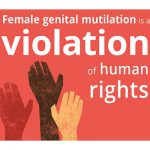
    Female genital mutilation is internationally recognized as a human rights violation. It has no medical benefits and causes only harm. WHO’s position is that FGM must never be carried out.

    Further information

    The FGM Cost Calculator will be available here, as of 00:30 CET 6 February 2020:
    www.who.int/news-room/detail/06-02-2020-economic-cost-of-female-genital-mutilation

    More on FGM

    Notes for Editors

    About FGM

    FGM includes procedures that intentionally alter or cause injury to the female genital organs for non-medical reasons. More than 200 million girls and women alive today are estimated to have undergone the practice across 30 countries in Africa, the Middle East and Asia where FGM is concentrated.

    FGM is mostly carried out on young girls between infancy and 15 years of age.

    About the FGM Cost Calculator

    The WHO FGM Cost Calculator shows the economic cost of treating the health complications caused by FGM across 27 high-prevalence countries. These costs were calculated using the WHO One Health tool and other available scientific evidence.

    Users of the tool can calculate costs by country in a ‘business as usual’ scenario; a scenario of partial abandonment of FGM, and full abandonment of FGM over a 30-year period. In addition, the distribution of costs by different types of health complications is presented by country.

    The tool does not consider other indirect costs that hit families and communities, or the socio-economic impacts of the practice, which would be significantly higher still.

    The 27 countries modelled include Benin, Burkina Faso, Central African Republic, Còte d’Ivoire, Cameroon, Chad, Djibouti, Egypt, Eritrea, Ethiopia, Ghana, Guinea, Gambia, Guinea-Bissau, Iraq, Kenya, Mali, Mauritania, Niger, Nigeria, Soudan, Senegal, Sierra Leone, Somalia, Togo, United Republic of Tanzania, Yemen.

    Female Genital Mutilation Hurts Women and Economies
    Read More
    https://www.who.int/news-room/detail/06-02-2020-female-genital-mutilation-hurts-women-and-economies

    Views: 0

  • Your Lifestyle and Hypertension (Part 1)

    [ad_1]

    Hypertension is a chronic (long term) medical condition which is characterized by a persistent increase in the blood pressure in our arteries. This is why it is also called High Blood Pressure (HBP). We may have come across it in many literatures being referred to as a silent killer! Yes. It sure is one. Nobody wants to reach the end of the time of life, at least not at an age when much work is still left undone, words left unsaid, and special people left unloved. This is where it gets a little dicey. More than 50% of those with hypertension do not even know that they have it! More like an insecure king wining and dining with a traitor and a lot of times many more traitors as we shall come to realize in prospect.

    Here are some epidemiological facts to serve as an eye opener for us to understand what is really at stake here

    Hypertension is generally of two types. A primary type and of course a secondary type. The primary type is caused by non-specific factors involving one’s lifestyle or genetic predisposition. These factors include but are not limited to smoking, obesity, high salt intake, sedentary lifestyle, depression and it accounts for over 95% of the total hypertensive individuals. The remaining 5% or thereabout have the secondary type of hypertension which is due to or secondary to known pre-existing causes such as chronic kidney disease, hormonal abnormalities, use of birth control pills, pregnancy, coarctation of the largest artery in the body, the aorta and stenosis of one or both renal arteries.

    Fortunately, hypertension is one of those medical conditions which are readily preventable and then proper treatments, preventive techniques and management strategies are well utilized. This means there is virtually one way to know your Hypertensive status. This is in essence but in fact that it is by getting your blood pressure checked frequently. Hypertension if left unchecked, could cause any of the following:

    1. Coronary artery disorder; a diseased of the blood vessels that supplies the heart itself with nutrients and blood

    2. Heart failure

    3. Stroke

    4. Blindness

    5. Chronic Kidney Disease

    6. Peripheral Vascular Disease

    7. Multiorgan Failure

    8. Death

    Why must I examine my lifestyle?

    I would start with those who love salt so much that we even salt our soft drinks, drinking water and bathing water. I would have to bring our minds back to the Ebola virus outbreak in Nigeria some years ago where different sacrilegious ideas came up from nowhere advising people to chew kolanut with salt water and to have their bath with salt water. I hope we know that many people supposedly died of this act than from the disease outbreak itself.

    The normal and most striking attribute of salt in the body system is to pull along with it as much water as it can. Hence, engorging the blood vessels and making them overloaded with fluid. The heart in response to this starts to overwork itself so as to compensate for the unnecessary increase in volume it has to pump per cycle. Before you know what is happening, the heart begins to fail until it eventually gives way to stress.

    Next is smoking. This one is very bad and its medical significance goes beyond hypertension. It is the single most important factor for developing coronary artery disease. Smoking grossly increases the chance of getting down with hypertension in the long run. Its close relative, Alcohol is also a major stakeholder in the world of lifestyle diseases. Hypertension gotten via one of these is not good let alone combining both alcohol and smoking. I can imagine the great wall of Jericho falling flat once more.

    Worthy of mention also is a very common one of which virtually everyone is a culprit. This is exercise. The standard approach about this is that one should have at least 30 minutes of exercise each day for at least 3 days in a week. This is the minimum you are permitted to go. Exercise simply helps your heart to improve in its function and enable it to cope with increased workload barring any case, you might have gotten engaged with much salt or other substance that overloads your blood volume. Also, your heartbeat is increased and blood flows faster. These and many more are the wonderful effects of exercise on your body.

    There is a serious relationship between hypertension and obesity. Obese individuals usually have impaired carbohydrate, protein and lipid metabolisms. As such, they usually have a strong tendency to have Diabetes Mellitus and under-utilized high level of glucose in the blood is just as harmful as salt in the blood. Bad lipids are often times deposited on the walls of their arteries thereby reducing their diameters and restricting the flow of blood in it. This is one of the causes of hypertension in the obese; increased peripheral resistance of the blood vessels.

    Lastly, on this episode of your Health column, it would suffice to say that what we see is what you eat. Much need not be said about this. Eat well, eat smart and eat right!

    [ad_2]

    Source by Nelson U Udeme

    Views: 0