Tag: International

  • New estimates highlight need to step up the response to hepatitis D

    Lyon, France, 29 April 2020 – In a study published in the Journal of Hepatology, 1 Professor Anna Maria Geretti and Dr Alexander Stockdale from the University of Liverpool (United Kingdom), in collaboration with researchers
    from the World Health Organization (WHO) and the International Agency for Research on Cancer (IARC), estimate that worldwide, hepatitis D virus (HDV) affects nearly 5% of people who have a chronic infection with hepatitis B virus (HBV) and that HDV
    co-infection could explain about 1 in 5 cases of liver disease and liver cancer in people with HBV infection..

    To map the epidemiology of HDV infection in the world, Professor Geretti and Dr Stockdale joined forces with the WHO Global Hepatitis Programme and IARC, alongside investigators in Germany, Malawi, and the United Kingdom. “Infection with HDV occurs
    in about 1 in 22 cases of chronic HBV infection in the world,” Dr Stockdale says. “More high-quality data are needed, but we have identified several geographical hotspots of high prevalence of HDV infection: in Mongolia, the Republic of
    Moldova, and countries in Western and Middle Africa.”

    “Although it is less common than hepatitis B, hepatitis D is a serious disease that often affects underprivileged and vulnerable populations,” says Dr Meg Doherty, Director of the WHO Global Hepatitis Programme. Those who are more likely to
    have HBV and HDV co-infection include people who inject drugs and people with hepatitis C virus or HIV infection. The risk of co-infection also appears to be higher in recipients of haemodialysis, men who have sex with men, and commercial sex workers.
    Dr Doherty points out, “This information helps in identifying the groups with HBV among whom we should be looking for HDV.”

    HDV (formerly known as the Delta agent) is a small virus – one of the smallest that is known to cause disease in humans – and can replicate only in the presence of HBV, from which HDV borrows some of its structures. Compared with people with
    HBV infection alone, those who have a chronic infection with both HBV and HDV have a much higher risk of developing disease in the form of cirrhosis and liver cancer. “HDV is a significant contributor to severe liver disease and liver cancer,”
    says IARC scientist Dr Catherine de Martel. “The findings from this study inform our work on the association between viral infections and cancer, which is focused on developing improved prevention strategies.”

    Professor Geretti concludes, “HDV has long been neglected, because for decades the prevalence of infection remained uncertain and effective treatment was lacking. Mapping the epidemiology of the infection is just the first step. More efforts are
    needed to reduce the global burden of chronic hepatitis B and develop medicines that are safe and effective against hepatitis D and are affordable enough to be deployed on a large scale to those who are most in need.”

    1 Stockdale AJ, Kreuels B, Henrion MYR, Giorgi E, Kyomuhangi I, de Martel C, Hutin Y, Geretti AM (2020). The global prevalence of hepatitis D virus infection: systematic review and meta-analysis. J Hepatol. Published online 23 April 2020;
    https://doi.org/10.1016/j.jhep.2020.04.008

    For more information, please contact

    Véronique Terrasse, Communications Group, at +33 (0)6 45 28 49 52 or terrassev@iarc.fr or IARC Communications, at com@iarc.fr

    The International Agency for Research on Cancer (IARC) is part of the World Health Organization. Its mission is to coordinate and conduct research on the causes of human cancer, the mechanisms of carcinogenesis, and to develop scientific strategies for
    cancer control. The Agency is involved in both epidemiological and laboratory research and disseminates scientific information through publications, meetings, courses, and fellowships. If you wish your name to be removed from our press release emailing
    list, please write to com@iarc.fr. 

    About University of Liverpool

    Founded in 1881 as the original ‘red brick’, the University of Liverpool is one of the UK’s leading research-intensive higher education institutions. Consistently ranked in the top 200 universities worldwide, we are a member of the prestigious
    Russell Group and have a global reach and influence that reflects our academic heritage as one of the country’s largest civic institutions. For more information please visit us at www.liverpool.ac.uk

    Read More
    https://www.who.int/news-room/detail/29-04-2020-new-estimates-highlight-need-to-step-up-the-response-to-hepatitis-d

    Views: 0

  • WHO calls for healthy, safe and decent working conditions for all health workers, amidst COVID-19 pandemic

    WHO calls for healthy, safe and decent working conditions for all health workers, amidst COVID-19 pandemic

    On World Day for Safety and Health at Work, the World Health Organization calls upon all governments, employers and workers organizations and the global community to take urgent measures for strengthen countries’ capacities to protect occupational health and safety of health workers and emergency responders respect their rights to decent working conditions, and develop national programmes for occupational health of health workers and to provide them with occupational health services. Amidst the COVID-19 pandemic, ILO has dedicated World Day for Safety and Health at Work 2020 in addressing the outbreak of infectious diseases at work, in particular, on the COVID-19 pandemic.

    Health workers are at the front line of the COVID-19 outbreak response and as such are exposed to hazards that put them at risk of infection. Hazards include pathogen exposure, long working hours, psychological distress, fatigue, occupational burnout, stigma, and physical and psychological violence.

    Infections with COVID-19, insufficient measures for infection prevention and control, occupational safety and health, mental health and psychosocial support for health workers result in high rates of absenteeism and deplete the health workforce – the most precision resources for stopping the COVID outbreak. 

    Key Messages and Facts

    COVID-19 infections among health workers:

    • As of 21 April 2020 countries reported to WHO that over 35, 000 health workers were infected with COVID19. This number is significantly higher because of underreporting.
    • The major occupational risks for COVID19 infection among health workers are: late recognition or suspicion of COVID-19 in patients, working in a higher-risk department, longer duty hours, sub-optimal adherence to infection prevention and control measures, such as hand hygiene practices, and lack of or improper use of personal protective equipment (PPE). Other factors have also been documented, such as inadequate or insufficient IPC training for respiratory pathogens, including the COVID-19 virus, as well as long exposure in areas in healthcare facilities where large numbers of COVID-19 patients were being cared for.
    • The prevention of infections requires the use of appropriate infection prevention and control measures by all health workers, with a special focus on the adherence to hand hygiene and personal protective equipment when caring for COVID-19 patients, as well as a combination of environmental and administrative controls
    • Health workers infected with COVID-19 following exposure in the workplace should have the right to employment injury benefits for occupational disease, including compensation, rehabilitation, and curative services.

    Violence and stigma against health workers:

    • Health workers are at high risk of violence all over the world. Between 8% and 38% of health workers suffer physical violence at some point in their careers. Many more are threatened or exposed to verbal aggression and social stigma because of their work.
    • In the COVID19 crisis, shortage of staff and resources and increasing social tensions result in increased level of violence against health workers and even attacks against health care facilities. Doctors, nurses, security personnel and those who are assisting in testing, tracing contacts and enforcing physical distancing measures to stop COVID-19 experience threats and aggression.
    • WHO calls upon governments, employers and workers organizations to institute measures for zero-tolerance to violence against health workers at the workplace and at the way to and from their workplace, and for intensifying social support and respect for health workers and their families.

    Long working hours and psychosocial hazards for health workers:

    • Many health workers have to work longer or irregular hours because of the increasing demand for health services. In addition, many countries experience shortage of health workers, or junior staff are working in demanding new roles.
    • Health workers face psychosocial hazards, which are exacerbated during emergencies where demands increase and they have to experience risk of infection witness higher suffering or mortality.
    • Long working hours, shift work, high workload and other psychosocial hazards can lead to fatigue, occupational burnout, increased psychological distress or declining mental health – affecting the health of health workers, and the quality and safety of care delivered.
    • WHO calls for adequate staffing levels and clinical rotation in healthcare facilities, measures to minimize psychosocial hazards, and provision of access to mental health and psychosocial support for health workers.

    The annual World Day for Safety and Health at Work on 28 April promotes the prevention of occupational accidents and diseases globally. It is an awareness-raising campaign intended to focus international attention on the magnitude of the problem and on how promoting and creating a safety and health culture can help reduce the number of work-related deaths and injuries.


    WHO calls for healthy, safe and decent working conditions for all health workers, amidst COVID-19 pandemic
    Read More
    https://www.who.int/news-room/detail/28-04-2020-who-calls-for-healthy-safe-and-decent-working-conditions-for-all-health-workers-amidst-covid-19-pandemic

    Views: 0

  • Global leaders unite to ensure everyone everywhere can access new vaccines, tests and treatments for COVID-19

    Global leaders unite to ensure everyone everywhere can access new vaccines, tests and treatments for COVID-19

    Heads of state and global health leaders today made an unprecedented commitment to work together to accelerate the development and production of new vaccines, tests and treatments for COVID-19 and assure equitable access worldwide.

    The COVID-19 pandemic has already affected more than 2.4 million people, killing over 160,000. It is taking a huge toll on families, societies, health systems and economies around the world, and for as long as this virus threatens any country, the entire world is at risk. 

    There is an urgent need, therefore, while following existing measures to keep people physically distanced and to test and track all contacts of people who test positive, for innovative COVID-19 vaccines, diagnostics and treatments.

    “We will only halt COVID-19 through solidarity,” said Dr Tedros Adhanom Ghebreyesus, WHO Director-General. “Countries, health partners, manufacturers, and the private sector must act together and ensure that the fruits of science and research can benefit everybody.”

    Work has already started. Since January, WHO has been working with researchers from hundreds of institutions to develop and test vaccines, standardize assays and standardize regulatory approaches on innovative trial designs and define criteria to prioritize vaccine candidates.  The Organization has prequalified diagnostics that are being used all over the world, and more are in the pipeline. And it is coordinating a global trial to assess the safety and efficacy of four therapeutics against COVID-19.

    The challenge is to speed up and harmonize processes to ensure that once products are deemed safe and effective, they can be brought to the billions of people in the world who need them. Past experience, in the early days of HIV treatment, for example, and in the deployment of vaccines against the H1N1 outbreak in 2009, shows that even when tools are available, they have not been equally available to all.

    So today leaders came together at a virtual event, co-hosted by the World Health Organization, the President of France, the President of the European Commission, and the Bill & Melinda Gates Foundation. The event was joined by the UN Secretary General, the AU Commission Chairperson, the G20 President, heads of state of France, South Africa, Germany, Vietnam, Costa Rica, Italy, Rwanda, Norway, Spain, Malaysia and the UK (represented by the First Secretary of State).

    Health leaders from the Coalition for Epidemic Preparedness Innovations (CEPI), GAVI-the Vaccine Alliance, the Global Fund, UNITAID, the Wellcome Trust, the International Red Cross and Red Crescent Movement (IFRC), the International Federation of Pharmaceutical Manufacturers (IFPMA), the Developing Countries Vaccine Manufacturers’ Network (DCVMN), and the International Generic and Biosimilar Medicines Association (IGBA) committed to come together, guided by a common vision of a planet protected from human suffering and the devastating social and economic consequences of COVID-19, to launch this groundbreaking collaboration. They are joined by two Special Envoys:  Ngozi Okonjo-Iweala, Gavi Board Chair and Sir Andrew Witty, former CEO of GlaxoSmithKline.

    They pledged to work towards equitable global access based on an unprecedented level of partnership. They agreed to create a strong unified voice, to build on past experience and to be accountable to the world, to communities and to one another.

    “Our shared commitment is to ensure all people have access to all the tools to prevent, detect, treat and defeat COVID-19,” said Dr Tedros. “No country and no organization can do this alone. The Access to COVID-19 Tools Accelerator brings together the combined power of several organizations to work with speed and scale.”

    Health leaders called on the global community and political leaders to support this landmark collaboration and for donors to provide the necessary resources to accelerate achievement of its objectives, capitalizing on the opportunity provided by a forthcoming pledging initiative that starts on 4 May 2020. This initiative, spearheaded by the European Union, aims to mobilize the significant resources needed to accelerate the work towards protecting the world from COVID-19.


    Global leaders unite to ensure everyone everywhere can access new vaccines, tests and treatments for COVID-19
    Read More
    https://www.who.int/news-room/detail/24-04-2020-global-leaders-unite-to-ensure-everyone-everywhere-can-access-new-vaccines-tests-and-treatments-for-covid-19

    Views: 0

  • INFOSAN Quarterly Summary, 2020 #1

    Food safety incidents

    During the first quarter of 2020, the INFOSAN Secretariat was involved in 38 food safety incidents involving 109 WHO Member States and 9 territories of WHO Member States. There were 25 incidents involving a biological hazard (Salmonella spp. [8], Listeria monocytogenes [5], Norovirus [3] Shiga-toxin producing Escherichia coli [2], Clostridium botulinum [2] Bacillus cereus [2], Cronobacter spp. [1], Shigella sonnei [1], unspecified biological hazard [1]), 6 involving an undeclared allergen (milk [3], peanut (1), egg [1], gluten [1]), 5 involving a physical hazard (undetermined foreign matter [2], glass [1], metal [1], plastic [1]), one involving a chemical/toxin hazard (histamine), and one linked to an unspecified hazard.

    The food categories that were most commonly involved in the 38 incidents during the first quarter of 2020 involved fish and other seafood (8), herbs and spices (4), legumes and pulses (4), milk and dairy products (3), nuts and oilseeds (3), snacks, desserts and other foods (3), cereals and cereal-based products (2), composite food (2), fruit and fruit products (2), meat and meat products (2), vegetables and vegetable products (2), products of special nutritional use (1), and food for infants and small children (1). One incident involved an unknown food source.

    During such international food safety incidents, the INFOSAN Secretariat relies on the swift action of national INFOSAN Emergency Contact Points to respond to requests for information. Rapid sharing of information through INFOSAN enables members to implement appropriate risk management measures to prevent illness in their respective countries.

    Geographic scope

    The outlined incidents involved Member States from all WHO regions: Europe (39), followed by the Americas (24), Africa (24), the Western Pacific (18), the Eastern Mediterranean (8) and South-East Asia (6).

    Recall in several countries of frozen spring roll sheets from Singapore due to the presence of an undeclared allergen

    In February 2020, the INFOSAN Secretariat was notified by the European Rapid Alert System for Food and Feed (RASFF) and INFOSAN colleagues in Australia of a recall in Australia and several European countries of frozen spring roll sheets due to the detection of an undeclared allergen (milk), imported from Singapore. In collaboration with RASFF, the INFOSAN Secretariat was informed that the implicated frozen spring roll sheets were distributed internationally to 46 Member States from four WHO regions and 4 territories in Europe and the Western Pacific. Moreover, through engagement with the INFOSAN Emergency Contact Point (ECP) in Singapore, the INFOSAN Secretariat also received details of further distribution of implicated products to additional WHO Member States from all WHO regions, taking the total number of Member States involved to 65. It was also reported that the products involved had been redistributed by some countries to Europe, the Americas and Africa. Consequently, several countries recalled the implicated products to relabel them and investigated the issue to identify illnesses related to the consumption of the implicated frozen spring roll sheets. No illnesses were reported to the INFOSAN Secretariat.

    This incident has highlighted undeclared allergens as an important category of hazards that can result in a largescale international response to implement risk management measures and prevent illness. In addition, it exemplified efficient communication among INFOSAN members and the Secretariat.

    Outbreak of Listeriosis in the United States of America linked to enoki mushrooms imported from the Republic of Korea

    In March 2020, the INFOSAN Secretariat was made aware by the United States (US) Centers for Disease Control and Prevention (CDC) of an outbreak of Listeriosis in the US linked to the consumption of enoki mushrooms, imported from the Republic of Korea. In total, 36 cases including 4 deaths have been reported in the US. Following investigations in Canada, carried out in collaboration with the US, the INFOSAN Secretariat was informed of 6 cases of Listeriosis between 2017 and 2019 in Canada potentially related by whole genome sequencing (WGS) to the ongoing outbreak in the USA. In addition, food isolates (from enoki mushrooms from the Republic of Korea) genetically associated with the cluster of cases have been collected in 2019 by authorities in Canada. The WGS information pertaining to the cases and food isolates were shared on the INFOSAN Community Website to assist the identification of cases in other countries.

    The INFOSAN Secretariat engaged the INFOSAN Emergency Contact Point (ECP) in the Republic of Korea to seek details on any further international distribution of the implicated enoki mushrooms. Investigations are ongoing. 

    News & activities

    Food Sector and the COVID-19 outbreak

    On 31 December 2019, WHO was alerted to several cases of pneumonia of unknown origin in the city of Wuhan, Hubei Province, China. The virus, a previously unknown coronavirus has been named SARS-CoV-2 and is the cause of the COVID-19 disease.

    The WHO Epidemic Information Network (EPI-WIN) aims to share information tailored to specific sectors, including food and agriculture. The INFOSAN Secretariat has recently developed a guidance document for food businesses with regards to COVID-19 and food safety which is now available online. The guidance has also been disseminated through EPI-WIN and presented during two webinars.

    Call for applicants: INFOSAN Train-the-Trainer Workshop

    In February, the INFOSAN Secretariat issued a call for applications for the INFOSAN Train-the-Trainer workshop. With the constant growth of the network, and the increased need for training that this entails, the INFOSAN Secretariat, in collaboration with the Canadian Food Inspection Agency (CFIA), has announced this workshop which aims to increase the human resources available to train INFOSAN members on a range of INFOSAN-related topics, online or in-person. As a result, it is expected that the understanding of the roles and responsibilities of INFOSAN members will be improved, resulting in greater participation that will enhance speed and efficiency during the response to food safety emergencies at the global level. The INFOSAN Secretariat, together with CFIA, look forward to hosting this important workshop later this year.

    Developing the new INFOSAN Community Website

    The INFOSAN Community Website (ICW) continues to be an effective tool for the network to disseminate information during food safety emergencies. Over the past year, through the INFOSAN member survey, the Secretariat has gained a better understanding of how members use the ICW and how it can be improved to enhance information sharing. The information collected, together with the experience of members of the Secretariat, has provided numerous innovative ideas to guide the development of the new ICW. The Secretariat is pleased to announce that the competitive process to select the vendor that will develop the new INFOSAN Community Website has concluded and the work on the creation of the new ICW has begun. 

    Voice of an active network member

    voice-5-2020

    Read More
    https://www.who.int/news-room/detail/23-04-2020-infosan-quarterly-summary-2020-1

    Views: 0

  • New Ebola case confirmed in the Democratic Republic of the Congo

    A new case of Ebola virus disease was confirmed today in the city of Beni in the Democratic Republic of the Congo (DRC).

    “While not welcome news, this is an event we anticipated. We kept response teams in Beni and other high risk areas for precisely this reason,” said Dr Tedros Adhanom Ghebreyesus, WHO Director-General.  

    As part of the active Ebola surveillance system in place to respond to this ongoing outbreak in DRC, thousands of alerts are still being investigated every day. An alert is a person who has symptoms that could be due to Ebola, or any death in a high risk area that could have been as result of Ebola.

    As with all confirmed cases, efforts are already underway to find everyone who may have been in contact with the person in order to offer them the vaccine and monitor their health status.

    “WHO has worked side by side with health responders from the DRC for over 18 months and our teams are right now supporting the investigation into this latest case,” said Dr Matshidiso Moeti, WHO Regional Director for Africa. “Although the ongoing COVID-19 pandemic adds challenges, we will continue this joint effort until we can declare the end of this Ebola outbreak together.”

    The news of the confirmed case came minutes after the conclusion of a meeting of the International Health Regulations Emergency Committee on Ebola in DRC. The Emergency Committee will reconvene next week in order to re-evaluate their recommendations in light of this new information.

    Prior to this, the last person who was confirmed to have Ebola in DRC tested negative twice and was discharged from a treatment centre on 3 March 2020.

    As of 10 April 2020, 3456 confirmed and probable cases and 2276 deaths have occurred as a result of the outbreak.

    Read More
    https://www.who.int/news-room/detail/10-04-2020-new-ebola-case-confirmed-in-the-democratic-republic-of-the-congo

    Views: 0

  • Fifteen Chinese Doctors Arrive Nigeria To Help Coronavirus Fight

    Fifteen Chinese Doctors Arrive Nigeria To Help Coronavirus Fight

    Fifteen Chinese Doctors Arrive Nigeria To Help Coronavirus Fight 1

    Fifteen Chinese Doctors Arrive Nigeria To Help Coronavirus Fight 2


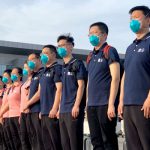
    At least 15 doctors from China have arrived Nigeria through the Nnamdi Azikiwe International Airport, Abuja.

    The team was received by the Chinese Ambassador to Nigeria, Dr Zhou Pingjian; Executive Director, China Civil Engineering Construction Corporation, Mr Jacques Liao, and senior Nigerian Government officials.

    The medical team is expected to support local health workers to tackle the Coronavirus outbreak in Nigeria. 

    The country currently has 254 confirmed infections and six recorded deaths due to the p

    PUBLIC HEALTH

    News

    AddThis

    : 

    Original Author

    : 

    SaharaReporters, New York

    Disable advertisements

    : 
    Fifteen Chinese Doctors Arrive Nigeria To Help Coronavirus Fight
    Read More
    http://saharareporters.com/2020/04/08/fifteen-chinese-doctors-arrive-nigeria-help-coronavirus-fight

    Views: 0

  • COVID-19 And Nigeria’s Pathetic Leadership Deficit By Ugochukwu Ejinkeonye

    COVID-19 And Nigeria’s Pathetic Leadership Deficit By Ugochukwu Ejinkeonye

    COVID-19 And Nigeria’s Pathetic Leadership Deficit By Ugochukwu Ejinkeonye 3

    COVID-19 And Nigeria’s Pathetic Leadership Deficit By Ugochukwu Ejinkeonye 4


    There is no better warning about the growing confusion that seems to be gradually beclouding the federal government’s response to the coronavirus challenge than the belief it betrayed last week that, perhaps, all it needs to calm the fears and apprehensions of Nigerians about its ability to halt the spread of the virus is to reel out a catalogue of activities President Buhari was said to have undertaken so far concerning the pestilence, whether the people felt their impact or not. 

    Now, if your family is starving badly, do you solve the rumbling signs of biting hunger in their stomach with some wild tales of the efforts deployed by you so far to feed them, or just keep quiet, give them food, and they will see and feel for themselves that you have played your role responsively and effectively?  Or if you must talk, tell them something you have done whose benefits they can readily verify and identify with. 

    Indeed, some Nigerians are beginning to achieve the conviction that there must be something about being in government in this country that seems to diminish the reasoning ability of people once they get in there and deprives them of the capacity to realize when they have stopped making sense or even become downright annoying. This is very pathetic. 

    And so, last week, presidential spokesperson, Mr. Femi Adesina, issued a document entitled: “COVID-19: What President Buhari Has Done And Is Doing.” And, I suppose that with the release of that handout, the virus immediately received a deadly blow and vanished from the country! Aren’t we so blessed? Why then are Nigerians not on the streets celebrating the unprecedented feat? 

    A prominent item on Mr. Adesina’s list is the president’s March 29 broadcast. And what exactly did the broadcast achieve? The two things I can readily remember now is that Gen Buhari had announced the continuation of the school feeding programme for pupils who are all at home now due to the closure of schools as part of the efforts to contain the spread of the coronavirus. Probably, nobody remembered to inform him and his speech writers that school children were on compulsory holidays, or are they going to send the food to them in their homes? Or, perhaps, somebody is trying to find a justification for the billions of naira we will be informed later was spent on the exercise?  

    Also, the president proclaimed the lockdown of Lagos and Ogun states and the Federal Capital Territory (FCT).  And when he was through, he returned to his hideout – where only a few privileged eyes and ears see and hear from him, and then come out to tell us what they think he has said or done.

    Now, what exactly was the lockdown meant to achieve?  Okay, as social interactions are reduced, the chances of spreading the virus decrease.  Yes, but what else?  Has anyone seen any evidence that there were any plans to use the stay-at-home period to access the people and step up medical tests to determine how many people have become infected with the virus and how they could be attended to? 

    The government that was boasting that it was “adequately prepared” to tackle the virus was later to prove when the virus eventually arrived that it was only making empty claims as usual.  A country of 200 million people has yet to demonstrate any capacity to test even a reasonable fraction of one percent of her population. And somebody is publishing a document to tell us what the president was supposed to have done or is doing. As if such boring tales will remove the cloud of gloom hovering over Nigeria? 

    Again, in a country where electric power is just an unaffordable luxury for many, how can a leader just lock down some states and return to his hideout to continue his “vacation” that was rudely interrupted by the loud, persistent and widespread demands that he should address his country even though some other presidents were doing daily briefings and leading the war against the virus from the front?  As the markets closed and movements became restricted, how are those who could afford to buy and stock food items at home preserve them without electric power?  

    What of the greater population which depend on daily earnings for their survival?  What is the government’s plan for them? Okay, we are hearing of palliatives that have been extended to this category of people and the billions of naira that have already been transferred to their accounts?  Now, who has encountered the happy recipients of the twenty thousand naira (N20, 000) said to have been given to each of them?  Are there really existing data showing the social and economic status of every Nigerian which is in the possession of the authorities?  So, all the “poor and vulnerable” Nigerians now have bank accounts whose details are known to the government?  So, why then are too many Nigerians very suspicious of these claims as shown in their social media comments? And why is such a rare display of kindness by this government not being celebrated? Or have the funds (if indeed any were shared) ended up in the hands of the same people who have more than enough to need them while those who are genuinely deprived remain terribly famished? 

    Already, the biting hunger out there is forcing a growing number of people to defy the no-movement decree and soon, the whole effort might be defeated, and the country will return to square one.  Information Minister, Mr. Lai Mohammed, is threatening that the lockdown may be extended if Nigerians fail to behave themselves. But what he should rather have done is to hasten to school himself to realize that there is always a price to pay when leaders leave the country they claim to be governing in great disarray only to suddenly wake up when there is an emergency to grope for fix-quick solutions. 

    A few days after the president’s broadcast (that is, Tuesday, March 31), Daily Independent carried a front page lead story about 26 Americans who came into the country through the Murtala Mohammed International Airport and headed to Calabar without being screened.  Now, who cleared their trip to the country and why were there no health officials available to screen them and ensure they were quarantined for 14 days before being allowed to fly to Calabar?  Is it because they are Americans or clients of the Nigerian National Petroleum Corporation (NNPC) or both?  Does that automatically exempt any of them from being a carrier of the virus which is presently ravaging their own country?  What kind of government claims to be fighting a virus with one hand and using the other hand to be undermining the efforts being deployed to contain it? 

    Okay, the Minister of Health, Dr. Osagie Ehanire, has just announced that an 18-man Chinese team of medical “experts” will soon arrive the country to “assist” Nigeria in the fight against the coronavirus.  Now, is it the federal government that asked China for help or was it China that volunteered their assistance?  Indeed many Nigerians are vehemently opposed to this gesture at this time.  Our own local medical experts have not shown any signs of being overburdened by the work, so what difference are these 18 Chinese doctors and nurses going to make?  Will they, like the 26 privileged Americans, also be given express entry into the country or will they be isolated for 14 days as should be the case, before they would be allowed to start rendering their “assistance”?  

    Do we really need this Chinese gift now or is it that the government lacks the liver to politely decline their offer of help, despite the widespread apprehension among the citizenry about their involvement (since many Nigerians, habour strong fears that the gesture might turn out a Greek gift)? Even the umbrella body of Nigerian doctors, the Nigerian Medical Association (NMA), has come out to strongly oppose the coming of the Chinese medical team.  Is it that our government is too intimidated to say NO to China’s offer probably because it has yoked itself so much with crushing debts due to its excessive borrowings from them – debts, whose positive effects on Nigerian lives many are yet to see? 

    I raise these points because, although, Nigeria has recorded one of the lowest deaths from coronavirus, it was the stubborn refusal of the government to close our borders when it became very necessary and urgent (and despite calls from well-meaning Nigerians) that led to the explosion in the number of confirmed cases that the country has recorded today.  In saner climes, the government should have profusely apologized for that terrible miscalculation that is costing the nation so much now. 

    But it now has another opportunity now to gratify the yearning of Nigerians and reject the Chinese offer even if it is well-meaning and the fears about it are misplaced. 

    Now, what lessons is the government taking away from the scourge of coronavirus? Will they see the need to equip our hospitals this time and upgrade at least few of them to world standard now that they have realized the folly of always waiting to use public funds to send themselves and their families abroad to treat even minor ailments?  For the first time in Nigeria, the naïve and largely misguided Nigerian leaders have found out that it is not always safe to seek solutions for health challenges outside the country and that there is afterall no place like home. This is hoping that the lesson will endure and be redemptive. 

    *Ugochukwu Ejinkeonye, is a Nigerian journalist and writer. (scruples2006@yahoo.com) 

    Opinion

    AddThis

    : 

    Original Author

    : 

    Ugochukwu Ejinkeonye

    Disable advertisements

    : 
    COVID-19 And Nigeria’s Pathetic Leadership Deficit By Ugochukwu Ejinkeonye
    Read More
    http://saharareporters.com/2020/04/08/covid-19-and-nigeria%E2%80%99s-pathetic-leadership-deficit-ugochukwu-ejinkeonye

    Views: 0

  • Children’s story book released to help children and young people cope with COVID-19

    Children’s story book released to help children and young people cope with COVID-19

    GENEVA, 9 April 2020 – A new story book that aims to help children understand and come to terms with COVID-19 has been produced by a collaboration of more than 50 organizations working in the humanitarian sector, including the World Health Organization, the United Nations Children’s Fund, the United Nations High Commissioner for Refugees, the International Federation of Red Cross and Red Crescent Societies and Save the Children.

    With the help of a fantasy creature, Ario, “My Hero is You, How kids can fight COVID-19!” explains how children can protect themselves, their families and friends from coronavirus and how to manage difficult emotions when confronted with a new and rapidly changing reality.

    The book – aimed primarily at children aged 6-11 years old – is a project of the Inter-Agency Standing Committee Reference Group on Mental Health and Psychosocial Support in Emergency Settings, a unique collaboration of United Nations agencies, national and international nongovernmental organizations and international agencies providing mental health and psychosocial support in emergency settings.

    During the early stages of the project, more than 1700 children, parents, caregivers and teachers from around the world shared how they were coping with the COVID-19 pandemic. The input was invaluable to script writer and illustrator Helen Patuck and the project team in making sure that the story and its messages resonated with children from different backgrounds and continents.

    In order to reach as many children as possible, the book will be widely translated, with six language versions released today and more than 30 others in the pipeline. It is being released as both an online product and audio book.

    ————

    Download the book here

    My Hero is You: all language versions

    Quotes from collaborating partners

     World Health Organization

    Dr Tedros Adhanom Ghebreyesus, Director-General (awaiting clearance)

    “Previous humanitarian emergencies have shown us how vital it is to address the fears and anxiety of young people when life as they know it gets turned upside down. We hope that this beautifully-illustrated book, which takes children on a journey across time zones and continents, will help them to understand what they can do to stay positive and keep safe during the coronavirus outbreak.”

    UNICEF

    Henrietta Fore, Executive Director

    “All over the world, children’s lives have been completely upended — the majority of them living in countries with some form of restricted movement or lockdown. This wonderful book helps children understand and navigate this new landscape and learn how they can take small actions to become the heroes in their own stories.”

    UNHCR

    Filippo Grandi, United Nations High Commissioner for Refugees.

    “This is an important resource for children around the world with a strong message of inclusion at its heart – that this pandemic can only be beaten if everyone is included in its prevention and response. Children, including those who are refugees, displaced and stateless, can help too. No-one is protected unless we are all protected”.

    UNESCO

    Audrey Azoulay, Director General

    “Sharing facts and reliable information is vital to respond to COVID-19, and I wish to commend the creativity and passion of all artists, writers and publishers who find compelling ways to translate and craft stories and artwork so they can reach children and families to comfort and guide them through a distressing situation.  UNESCO is proud to support this initiative and we see this as an example of the contribution of the artistic community to the well-being and resilience of all.”

    —–

    For requests relating to translations

    Inter-Agency Standing Committee Reference Group on Mental Health and Psychosocial Support in Emergency Settings, Email: mhpss.refgroup@gmail.com


    Children’s story book released to help children and young people cope with COVID-19
    Read More
    https://www.who.int/news-room/detail/09-04-2020-children-s-story-book-released-to-help-children-and-young-people-cope-with-covid-19

    Views: 0

  • WHO Timeline – COVID-19

    31 Dec 2019

    China reported a cluster of cases of pneumonia in Wuhan, Hubei Province. A novel coronavirus was eventually identified.

    1 January 2020

    WHO had set up the IMST (Incident Management Support Team) across the three levels of the organization: headquarters, regional headquarters and country level, putting the organization on an emergency footing for dealing with the outbreak.

    4  January 2020

    WHO reported on social media that there was a cluster of pneumonia cases – with no deaths – in Wuhan, Hubei province. 

    5 January 2020

    WHO published our first Disease Outbreak News on the new virus. This is a flagship technical publication to the scientific and public health community as well as global media. It contained a risk assessment and advice, and reported on what China had told the organization about the status of patients and the public health response on the cluster of pneumonia cases in Wuhan.

    10 January 2020

    WHO issued a comprehensive package of technical guidance online with advice to all countries on how to detect, test and manage potential cases, based on what was known about the virus at the time.

    Evidence at that time suggested there was “no or limited human-to-human transmission.” Based on experience with SARS and MERS and known modes of transmission of respiratory viruses, infection and prevention control guidance were published to protect health workers recommending droplet and contact precautions when caring for patients, and airborne precautions for aerosol generating procedures conducted by health workers.

    12 January 2020

    China shared the genetic sequence of COVID-19. 

    13 January 2020

    Officials confirm case of COVID-19 in Thailand, the first recorded case outside of China.  

    14 January 2020

    Dr. Maria Van Kerkhove noted in a press briefing there had been limited human-to-human transmission of the coronavirus (in the 41 confirmed cases), mainly through family members, and that there was a risk of a possible wider outbreak. Dr. Kerkhove noted that human-to-human transmission would not be surprising given our experience with SARS, MERS and other respiratory pathogens. 

    20-21 January 2020

    WHO experts from its China and Western Pacific regional offices conducted a brief field visit to Wuhan.

    22 January 2020

    WHO mission to China issued a statement saying that there was evidence of human-to-human transmission in Wuhan but more investigation was needed to understand the full extent of transmission.

    22- 23 January 2020

    The WHO Director- General convened an Emergency Committee (EC) under the International Health Regulations (IHR 2005) to assess whether the outbreak constituted a public health emergency of international concern. The independent members from around the world could not reach a consensus based on the evidence available at the time. They asked to be reconvened within 10 days after receiving more information.

    28 January 2020

    A senior WHO delegation led by the Director-General travelled to Beijing to meet China’s leadership, learn more about China’s response, and to offer any technical assistance. 

    While in Beijing, Dr. Tedros agreed with Chinese government leaders that an international team of leading scientists would travel to China on a mission to better understand the context, the overall response, and exchange information and experience.

    11-12 February 2020

    WHO convened a Research and Innovation Forum on COVID-19, attended by more than 400 experts and funders from around the world, which included presentations by George Gao, Director General of China CDC, and Zunyou Wu, China CDC’s chief epidemiologist. 

    16-24 February 2020

    The WHO-China Joint mission, which included experts from Canada, Germany, Japan, Nigeria, Republic of Korea, Russia, Singapore and the US (CDC, NIH) spent time in Beijing and also travelled to Wuhan and two other cities. They spoke with health officials, scientists and health workers in health facilities (maintaining physical distancing). The report of the joint mission can be found here: https://www.who.int/docs/default-source/coronaviruse/who-china-joint-mission-on-covid-19-final-report.pdf


    Read More
    https://www.who.int/news-room/detail/08-04-2020-who-timeline—covid-19

    Views: 0