Tag: history

  • Malaysia gets special consideration in Singapore’s new travel restrictions

    Malaysia gets special consideration in Singapore’s new travel restrictions

    Malaysia gets special consideration in Singapore’s new travel restrictions 1

    SINGAPORE: The new border restrictions on travellers including those from Asean do not include Singapore’s sea and land crossings with Malaysia, meaning Malaysians and Singaporeans can commute from both sides as usual.

    Singapore’s Co-chair of the Multi-Ministry Taskforce on Covid-19, Lawrence Wong, said while the order applies to the whole of Asean, a separate arrangement has been worked out for Malaysia through the bilateral joint working group.

    Special considerations have been put in for Malaysia because of the close proximity and high interdependency between both countries.

    “We do need precautions to be taken, given the high volume of people and vehicles moving in and out of these checkpoints,” he said today when announcing the additional measures that Singapore would be taking on the Covid-19 situation starting midnight on Monday.

    Effective March 16, 2020, 2359 hours, all travellers entering Singapore with recent travel history to Asean countries, Japan, Switzerland, or the United Kingdom within the last 14 days will be issued with a 14-day Stay-Home Notice (SHN).

    Wong, who is also the National Development Minister, said that on land crossing alone 200,000 people move across the checkpoints daily and the imposition of a 14-day SHN requirement would be very difficult and very disruptive for both countries.

    “So the 14-day requirement will not be practical for these travellers and we need to look at other precaution like checking their health. So discussions are ongoing between the two sides,” he said.

    The latest travel order applies to Singapore residents, long-term pass holders, and short-term visitors as well but not those transiting in Singapore without leaving the transit area.

    In addition, they will have to provide proof of the place where they will serve the 14-day SHN, for example a hotel booking covering the entire period, or a place of residence they or their family members own.

    They may also be swabbed for testing for Covid-19, even if asymptomatic because of the risk of community transmission in the countries of their origin and evidence of cases that have been imported from these countries into Singapore.

    In addition to the SHN requirement, from March 16, 2020, 2359 hours, all short-term visitors who are nationals of any Asean country will have to submit requisite information on their health to the Singapore Overseas Mission in the country they are resident before their intended date of travel.

    The submission will have to be approved by Singapore’s Ministry of Health (MOH) before travel to Singapore, and the approval will be verified by the Immigration and Checkpoints Authority (ICA) officers at the Singapore checkpoints.

    Short-term visitors who arrive in Singapore without the necessary approval will be denied entry into Singapore and they are therefore advised to secure the approval before making definitive travel bookings. — Bernama

    Malaysia gets special consideration in Singapore’s new travel restrictions
    Read More
    https://www.thesundaily.my/local/malaysia-gets-special-consideration-in-singapore-s-new-travel-restrictions-BI2129074

    Views: 0
  • Singaporeans should avoid overseas travel, government says

    Singaporeans should avoid overseas travel, government says

    Singaporeans should avoid overseas travel, government says 2

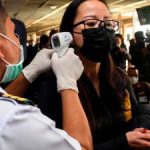
    SINGAPORE: Singapore’s health ministry on Sunday urged its citizens to defer all non-essential travel abroad in an unprecedented move for the Asian transport hub, as part of new measures to control the coronavirus that is fast spreading around the world.

    Singapore will also tell all entering the country with recent travel history to the Asean group of nations, Japan, Switzerland or the United Kingdom to quarantine themselves at their place of residence for 14 days, the ministry added.

    The Association of Southeast Asian Nations (Asean) comprises Indonesia, Malaysia, Philippines, Singapore, Thailand, Brunei, Laos, Myanmar, Cambodia and Vietnam.

    Countries, such as the UK and Switzerland have “abandoned” any attempt at containing the spread of the infection, said Lawrence Wong, a minister who co-heads Singapore’s virus fighting taskforce.

    “That’s why we are more concerned that Singapore may well be exposed to a new wave of infections, which is potentially larger than what we have seen previously.”

    The majority of new infections being reported in Singapore, an island nation with a population of 5.7 million, over the past few days have been people returning from overseas rather than local transmissions.

    At least five cases of Singaporeans have been linked to a large religious gathering in Malaysia that was attended by more than 10,000 people from several countries.

    Short-term visitors who are nationals of its Southeast Asian neighbours will also have to seek prior approval from the health ministry before their journey to prevent hospitals from being overwhelmed.

    The restriction comes after a number of cases that entered Singapore with the specific purpose of seeking healthcare, the health ministry said. There have been two cases of Indonesians who had coronavirus symptoms at home before arriving in Singapore, known for its superior healthcare facilities.

    The measures will be reviewed after a month. They will not apply to sea and land crossings with Malaysia, which will have separate precautions. Wong said 300,000 people a day move across the land checkpoints with Malaysia.

    The Asian travel hub has previously announced bans on visitors from several coronavirus-hit countries, including China, Italy and France.

    Singapore has won international praise for its painstaking onslaught on the virus since it initially emerged with one of the highest tallies of infections outside China. But other nations have since outpaced it.

    Singapore has reported 212 infections, but no fatalities. Globally, more than 150,000 people have been infected while over 5,800 have died, a Reuters tally shows. — Reuters

    Singaporeans should avoid overseas travel, government says
    Read More
    https://www.thesundaily.my/world/singaporeans-should-avoid-overseas-travel-government-says-XI2129044

    Views: 0

  • Whither Boeing? Tough times persist one year after crash

    Whither Boeing? Tough times persist one year after crash

    One year after the crash of an Ethiopian Airlines 737 MAX that killed 157 people and triggered the worst crisis in Boeing’s history, the aviation giant is at a crossroads.

    Read More

    Views: 0

  • Coder charged in massive CIA leak portrayed as vindictive

    Coder charged in massive CIA leak portrayed as vindictive

    A software engineer on trial for the largest leak of classified information in CIA history was “prepared to do anything” to betray the agency, federal prosecutors said Monday as a defense attorney argued the man had been scapegoated for a breach that exposed secret cyberweapons and spying techniques.

    Read More

    Views: 0

  • Relegating ‘no connection’ travel frustrations to the history books

    Relegating ‘no connection’ travel frustrations to the history books

    Academics from Heriot-Watt University have developed an antenna which, it is believed, will end the frustrations of billions of passengers each year who lose internet connectivity on journeys globally.

    Read More

    Views: 1

  • World experts and funders set priorities for COVID-19 research

    World experts and funders set priorities for COVID-19 research

    Leading health experts from around the world have been meeting at the World Health Organization’s Geneva headquarters to assess the current level of knowledge about the new COVID-19 disease, identify gaps and work together to accelerate and fund priority research needed to help stop this outbreak and prepare for any future outbreaks.

    The 2-day forum was convened in line with the WHO R&D Blueprint – a strategy for developing drugs and vaccines before epidemics, and accelerating research and development while they are occurring.

    “This outbreak is a test of solidarity — political, financial and scientific. We need to come together to fight a common enemy that does not respect borders, ensure that we have the resources necessary to bring this outbreak to an end and bring our best science to the forefront to find shared answers to shared problems. Research is an integral part of the outbreak response,” said WHO Director-General Dr Tedros Adhanom Ghebreyesus. “I appreciate the positive response of the research community to join us at short notice and come up with concrete plans and commitment to work together.”

    The meeting, hosted in collaboration with GloPID-R (the Global Research Collaboration for Infectious Disease Preparedness) brought together major research funders and over 300 scientists and researchers from a large variety of disciplines. They discussed all aspects of the outbreak and ways to control it including:

    • the natural history of the virus, its transmission and diagnosis;
    • animal and environmental research on the origin of the virus, including management measures at the human-animal interface;
    • epidemiological studies;
    • clinical characterization and management of disease caused by the virus;
    • infection prevention and control, including best ways to protect health care workers;
    • research and development for candidate therapeutics and vaccines;
    • ethical considerations for research;
    • and integration of social sciences into the outbreak response.

    “This meeting allowed us to identify the urgent priorities for research. As a group of funders we will continue to mobilize, coordinate and align our funding to enable the research needed to tackle this crisis and stop the outbreak, in partnership with WHO,” said Professor Yazdan Yazdanpanah, chair of GloPID-R. “Equitable access – making sure we share data and reach those most in need,  in particular those in lower and middle-income countries, is fundamental to this work which must be guided by ethical considerations at all times.”  

    During the meeting, the more than 300 scientists and researchers participating both in person and virtually agreed on a set of global research priorities. They also outlined mechanisms for continuing scientific interactions and collaborations beyond the meeting which will be coordinated and facilitated by WHO. They worked with research funders to determine how necessary resources can be mobilized so that critical research can start immediately.

    The deliberations will form the basis of a research and innovation roadmap charting all the research needed and this will be used by researchers and funders to accelerate the research response.

    Note to editors

    GloPID-R is a global alliance of international research funding organizations investing in preparedness and response to epidemics.

    World experts and funders set priorities for COVID-19 research
    Read More
    https://www.who.int/news-room/detail/12-02-2020-world-experts-and-funders-set-priorities-for-covid-19-research

    Views: 0

  • Pregnancy and breastfeeding during an Ebola virus outbreak

    Pregnancy and breastfeeding during an Ebola virus outbreak

    Women who are pregnant or breastfeeding in an Ebola outbreak face similar challenges as other population groups, but they have specific health needs which must be met.

    As the second largest Ebola outbreak in history continues in the Democratic Republic of Congo, WHO has released new clinical guidelines for healthcare providers supporting pregnant or breastfeeding women in the context of Ebola virus disease.

    Improving clinical care and reducing mortality

    92-4-000138-1Clear and coherent guidance is needed to meet the combined needs of women requiring Ebola treatment, pregnancy care and management of complications.

    Information on how to protect breastfeeding children and other members in the community from transmission of the disease is also critical.

    Limited scientific evidence on how to best manage these needs has previously been a challenge for affected countries. In addition, misconceptions that pregnant women have a higher mortality rate than other populations with Ebola may in some contexts have put pregnant women at risk of not receiving standard care.

    WHO’s Guideline on the management of pregnant and breastfeeding women in the context of Ebola virus reviews existing evidence and provides a single set of recommendations on the care continuum for women exposed to, diagnosed with, or recovered from Ebola.

    This will enable healthcare providers, emergency response teams and health policy-makers to improve prevention and treatment measures in an Ebola outbreak.

    Obstetric care at an Ebola Treatment Centre

    Optimal supportive care should be offered to all pregnant women with Ebola. Likewise, they should be offered experimental treatment and vaccination under the same conditions as non-pregnant populations.

    Ebola virus disease does increase the risk of miscarriage and early labour, requiring close clinical management at Ebola treatment centres. It is important to engage both obstetric providers and those trained in Ebola response.

    This dual expertise is also important because early Ebola and pregnancy-related symptoms can overlap. Pregnant women should be prioritised for testing to confirm an Ebola infection.

    Ebola virus can persist in pregnancy related fluids as well as breastmilk. If healthcare providers are not clear on how to manage Ebola infection risk, they may be less willing to provide care. This stigma can be life-threatening for women who experience complications during delivery.

    The new WHO guidelines advise healthcare workers on how to protect themselves while caring for pregnant women with Ebola virus disease. This includes induced labour or surgical procedures, which carry greater risk of transmission in cases of acute infection. Any invasive treatments should be carried out in full personal protective equipment.

    Breastfeeding recommendations in an Ebola outbreak

    WHO recommends that women with suspected or confirmed Ebola immediately stop breastfeeding and are prioritised for diagnostic testing. Any child exposed to Ebola through breast milk should be placed into safe care, closely monitored for symptoms over a 21-day period and fed with an appropriate breast milk substitute.  

    The guidelines strongly recommend that breastfeeding is only restarted following two consecutive negative tests of breast milk, separated by 24 hours.

    A breast milk substitute should be used even if infection is confirmed for both the mother and her child. Exceptions can be made for infants under 6 months of age who are already infected, if breast milk substitutes are not feasible, affordable, sustainable or safe and separation cannot be implemented safely.

    Women’s health and rights in a disease outbreak

    A disease outbreak does not change women’s and adolescent girls’ fundamental human right to sexual and reproductive healthcare, including evidence-based care during pregnancy and childbirth.

    Women need support to make informed reproductive health care choices for themselves and their children. Women living in an Ebola outbreak should have access to all relevant reproductive options, regardless of economic, cultural, racial or religious status, including contraception and safe abortion to the full extent of the law.

    Pregnant and breastfeeding women across affected communities need equitable and respectful care that considers the risks they face and supports the choices they make.

    Accessing the guidelines and further research

    These guidelines are now available online and may be freely downloaded. The executive summary will be available in French.

    WHO will closely monitor new data as it emerges, as there is still a pressing need to prioritise ongoing research related to Ebola virus transmission.


    Pregnancy and breastfeeding during an Ebola virus outbreak
    Read More
    https://www.who.int/news-room/detail/10-02-2020-pregnancy-and-breastfeeding-during-an-ebola-virus-outbreak

    Views: 0

  • Three Reasons Why Money Was The Worst Invention Of All Time

    [ad_1]

    Who invented money? Ask any number of people and they couldn’t tell you who it was that actually invented money or where the idea came from. History has given us some bad ideas, but money has to be the worst and here are my top three reasons why.

    1. Something Invented By Man Should Not Have Power Over Him.

      If I think really hard and try to imagine a time without money, before it was invented and used on a daily basis, I tend to imagine that the world was a completely different place. People most likely had a barter type society where goods and services were exchanged and that is how one survived. If I had a particular skill, say hunting, and you were hungry you could come to me for food. The idea would be that if you could make fire, and I could provide the food, then we could exchange our skills or abilities and everyone got what was good for them. I assume, for the sake of argument, that if someone possessed absolutely no skills whatsoever, that person was still allowed to eat. I can’t imagine that I would loan the helpless soul some meat, only if it could be paid back somehow. Before helpless soul could blink, he might owe me for five dinners and then I have to send out the collection agents to call in his debts. Money provides control, in both a positive and negative control. Although it is man made, and essentially just a piece of paper or a mixture of cheap metals, money has power, and is power. I can just imagine Mr. Helpless Soul explaining to his wife that he can’t repay the hunter and doesn’t know what to do. So Mr. Hunter decides to enslave the Helpless Soul family until the debt is repaid. It is unfathomable to me that so many people in my country, and the world go hungry every day. Those who possess the money have the power to deny the needs of those that don’t have means. Where have the humanitarians gone? I’ve seen a business owner kick out a person who was homeless and starving, and then half an hour later deal with a complaining customer as he shouted that his food was not hot enough. Money only has the power that we give it. If we choose to see it as just a means to an end, or just some silly paper we have been told to obey our whole lives, then one can focus on what really matters. I am not advocating not paying debts, or shucking responsibilities. This is the world we live in, and norms must be followed…until the laws change again to suit what the politicians want on any particular whim of a day.

    2. Money Shifts Focus From Helping One Another To Arbitrary “Worth” Of Mere Things.

      Why should I do anything to help anyone else, unless they can pay for it? If my entire focus in life is to obtain material things, then I should only be motivated by money, or obtaining it, to do anything. What is anything really worth? Marketing companies have defined worth for me since I was a child, and it was beaten into me during commercial breaks of GI Joe. What is the value of all of the things you want in comparison to something that really matters? Imagine what the worth is of spending one more hour with a loved one before they pass away and are gone forever. The worth of teaching your children that there is more to life than money and obtaining things. The worth of feeding a homeless man, and helping him have at least one night’s sleep where his stomach doesn’t keep him awake. The value of reaching out a hand and helping someone else in this world is worth more than the largest diamond, the heaviest gold, and the purest oil. Now, I am the biggest hypocrite on this topic, because I love things! It has been programmed in me for so long, it is hard to shake the desire to obtain things. Imagine a life in which people helped each other because it is the right thing to do, and not just for what they could get in return. The argument is, well, that things can’t just be free. You have to pay something to get something. How would the world work if everyone was just giving away everything for free and everyone just had everything they needed and didn’t have to be slave to credit card companies anymore or to a job that they dislike? How would we survive? My answer to those questions is, famously! I would be free to learn a trade that benefits others and could use that ability to provide for my family and to help others. I have wanted to help by donating or giving my entire life, but never had the means. I’ve donated a little time here and there, and not near as much as I should or would have liked to, but at least it was something. But because I like things, and those things have cost me money, I have to continue in my job, and repeat the same cycle my father did.

    3. Money Makes You Question If People Really Care About You, Or Just Your Money.

      I try to envision the end of my life surrounded by those that have made my journey with me, who love and care for me because of the enrichment I gave to them through my friendship and dedication. In my latter years, enjoying my days with my wife, and talking to my grown children and my grand children. I want to soak up every single minute of my life between here and there. I want to feel and love and enjoy all that there is to offer. I have seen families destroyed, fighting over the money left behind after a loved one passes. Some of those grudges are held for the rest of their lives. They lose a relationship and also a loved one, and the only thing they can think about, is how much money they will be getting. More than likely, Mr. Entitlement as we will call him, won’t even miss the loved one that was lost. How many brilliant individuals never get the chance to succeed because of lack of means, and how many elite are given free passes because their pile of paper is bigger than yours. Do the people closest to you care about you or your money? Does the girlfriend only love you because of what you can buy her? Do your children only listen to you in order to get something they want? Take the money away, and would they abandon you? Such a great idea, this money.

    My answer to all of this is that I don’t have an answer. My two year old daughter asked me about money and loves putting money in her piggy bank. It made me start to consider all the reasons I worry about money, and fight about money, and read books about money. Nothing like the honesty of a child, to make you sit and think.

    [ad_2]

    Source by Mitchell Pierce

    Views: 0

  • A Modern-Day David and Goliath – Techno Teen Takes on Computer Giant – and Wins!

    [ad_1]

    “Those who say it can’t be done need to get out of the way of those that are doing it.” Unknown

    The entrepreneur of today’s world can be compared to the legendary Don Quixote – chasing windmills in search of great fortune.

    The entrepreneurial journey I would like to share with you in this article might be a bit of a surprise. I find it remarkable yet I have barely seen it mentioned in the press over the years.

    Imagine the following scenario. The year is 1983. You are a college freshman at The University of Texas in Austin, sitting in your dorm room playing around on your computer.

    1983. Pre-Internet. Pre-computers-on-every-desk, in-every-room-of-the-house. These were the days of PONG, where very few people sat around playing with personal computers. (If you don’t know what PONG is, ask someone a lot older than you.)

    Back to your dorm room. You are supposed to be in class. Instead, you are sitting there playing around on your computer and you have a bright idea – the proverbial “light bulb” goes off in your head.

    “I think I’ll start a computer company and compete with IBM!” Since no one is around to hear you and tell you how ridiculous you sound, you continue.

    You have no employees. No manufacturing facility. No family in the computer business. You’ve never even worked for a computer company. Sure, you’ve been pulling computers apart and putting them back together since your were 15 but come on! Compete with IBM? Everyone around you thinks you have lost your mind.

    Yet, you believe you have a better way.

    You develop a passion for the idea of making better computers and selling them for less by going directly to the consumer.

    The story goes that mom and dad heard that sonny-boy was skipping a lot of classes so that he could play with his computers. Mom and Dad decided to pay a visit one day and caught him red-handed. After reading Michael the riot act, Michael’s dad asked him what he wanted to do with his life. He told his dad that he wanted to compete with IBM.

    Imagine that conversation!

    And so it was that the 19 year old boy genius, techno-teen Michael Dell, armed with only $1000, abandoned his plans of becoming a doctor and dropped out of college after his freshman year to take on the big boys – IBM, Compaq, Hewlett-Packard, and others.

    He believed he could outsource everything – the manufacturing, distribution, sales and service. Remember now, this was pre-Internet. Pre-global-out-sourcing. He believed he could bypass the traditional expensive distribution channels and go straight to the consumers, giving them exactly what they wanted – better quality, lower cost computers made specifically for them.

    He knew what his consumer wanted because he was his own consumer – frustrated by poor customer service, crappy quality, non-existent customization and high prices.

    The rest is history. Modern American business history, that is.

    By the time Dell was 22 years old, his company had achieved annual sales of about $150 million. Starting with only $1000 and growing the company to a $1 billion (with a B!) public company in less than 10 years is a record few companies can match.

    Today Dell, Inc. is a $57 billion company with the leading market share in the United States with over 46,000 employees, including more than 16,000 in Central Texas. Dell is listed as the 8th wealthiest person in the United States according to Forbes magazine (August 2007). Dell first made the Forbes 400 Wealthiest People in the United States at the ripe old age of 26. He is said to have been worth over $20 billion by the age of 40.

    Dell has been named “Entrepreneur of the Year” from Inc. magazine; “Man of the Year” from PC Magazine; “Top CEO in American Business” from Worth Magazine; “CEO of the Year” from Financial World and Industry Week magazines.

    Not bad for a college dropout.

    Michael Dell. At age 19, he realized he could build a better mousetrap and sell it for less.

    Simple formula. Brilliant execution.

    The first time I heard this story, I frankly didn’t believe it. A college freshman takes on IBM, and wins?! No way, said my logical left brain. There has to be more to this story!

    No, this one goes in the “truth is stranger than fiction” category.

    Michael Dell was just a bright boy with a bright idea. Fueled by passion. Too young, too foolish, and certainly too focused to listen to the naysayers who said it couldn’t be done.

    According to Dell, “No one told me that we couldn’t do it, and if they did, I wasn’t listening.”

    It’s a good thing he wasn’t listening. In addition to revolutionizing the personal computer industry, Dell has donated more than $1 billion in stock to the Michael and Susan Dell Foundation, which is now one of the country’s largest foundations. The foundation focuses on children’s health and education initiatives.

    Even though today’s story is about a mega-millionaire with a gazillion dollar company, never forget that once upon a time, Michael Dell was a lot like you and me. Just a kid with a dream that wouldn’t die.

    [ad_2]

    Source by Gina Carr

    Views: 0

  • Taekwondo Drug Testing

    [ad_1]

    Every athlete which will participate in any athletic events including Taekwondo tournaments are sanctioned to undergo drug testing which is to be performed solely by their respective Anti-Doping Agency which practices the Protocol for Olympic Movement Testing.

    In the past, there were already several athletes who have been sanctioned by the board and were not allowed to participate in Taekwondo tournament because they failed this drug test. So it is a must that every Taekwondo athlete should never refer to the use of drugs just to enhance your potentials.

    History of Drug Tests amongst Athletes:

    The history of drug test amongst athletes originated during the Summer Olympic Games which involves Carl Lewis and Ben Johnson in their 100m dash competition. Ben Johnson crossed the finish line in a remarkable finish which made him the fastest man alive but this was soon disregarded after he was positively diagnosed to have anabolic steroids in his system a week after the competition.

    This revelation prompted the Olympic Game organizers to have urine drug screens on its participants so as to guarantee that fairness and equality will remain in the competition. Drugs which are prohibited to be used by these athletes include stimulant drugs, beta blockers, masking agents and anabolic androgenic steroids. These drugs are known to help increase and enhance the athletic performance of athletes after they are taken but will also result to several negative side effects which are detrimental to the athletes’ health in the long run.

    How is the drug test performed?

    The drug test will take place at any time during the competition. The athlete is unaware when it will take place but a Doping Control representative will notify the athlete if the time for his or her drug testing has been scheduled. He or she will then be required to comply with the policies and arrive at the Doping Control Station so he or she can proceed with the drug test procedure.

    The Doping Control Representative allows him or her to bring a chaperone but the athlete should remain in the sight of the DC representative all throughout the drug testing procedure.

    What will happen if the athlete refuses to take the random doping test?

    Any athlete who refuses to take the random doping test will be duly sanctioned by the Organization in charge of the event and may receive an athletic suspension of two years such as what has happened to Park Hyo Ji, a South Korean Taekwondo athlete.

    How to pass the required drug test for Taekwondo athletes?

    There is no safer way to pass the urine test for Taekwondo athletes than to do practice a clean and healthy lifestyle. In the end you will be the sole benefactor of your healthy living. Do not fool yourself because honour and prestige which is earned through hard work is always sweeter compared to something acquired through deception. If in doubt, consult the list of banned substances and supplements which are available in all area agencies. Again always cover yourself, if you are taking something that isn’t on the accepted list, that doesn’t mean it has no performance enhancing properties. Write to your Governing Doping Agency to get the all clear prior to starting a new or unknown supplement.

    Keep in mind the Five Tenets of Taekwondo. Be true to your oath as a student and live the principles of you were taught.

    [ad_2]

    Source by Brendan Mark Smith

    Views: 0