Tag: following

  • Police: Where is Mubarak Bala? By Leo Igwe

    Police: Where is Mubarak Bala? By Leo Igwe

    Leo Igwe
    Leo Igwe

    As it stands now, the fate of Mubarak Bala, Nigerian humanist who was arrested last week is unknown. Nobody is sure if Mr. Bala is alive or dead. If he is alive, no one knows the conditions of his detention. Mr. Bala was last seen on April 29, 2020, a day after police detectives from the Kano State Command arrested him in Kaduna. 

    As soon as the information reached me that Mr. Bala was in the police custody, I contacted the Commissioner of Police (CP) in Kaduna and the Police Public Relations Officer (PPRO). They confirmed the arrest of Mr. Bala but could not provide details. They made it clear that Bala’s case was not their case and that Bala would be transferred to Kano for investigation. They declined to disclose the reason for the arrest and if Bala’s case could be transferred to Abuja or any other neutral place. 

    Police: Where is Mubarak Bala? By Leo Igwe 1Leo Igwe


    After speaking with the police officers in Kaduna and it was obvious that Mr. Bala would be taken to Kano, I tried to interact with the chief police officers in Kano. I rang up the Assistant Inspector General (AIG), the CP, and the PPRO in Kano. The AIG said he did not know about the case and asked me to contact the CP, that the case must be with the state command. I called the CP and he confirmed that there was a petition against Mubarak Bala at the state command. That they had ordered his arrest in Kaduna. He said that they were waiting for him and asked me to go and get a lawyer. I could not reach the PPRO on that day. I called him several times but he did not pick his phone. The following day I called the CP several times, he did not pick the phone. I eventually got through to the PPRO after several attempts but he was more interested in knowing my relationship with Mubarak. He repeatedly asked me if I was among those encouraging him to make blasphemous posts on Facebook. I urged him to allow the lawyer to meet with Mubarak. The lawyer has gone to the state police command on three occasions without seeing Mr. Bala. The police officers that he met claimed that they had no knowledge of Mr. Bala’s case and where he was detained. 

    As it stands now, the whereabouts of Bala is unknown. No one has seen him since the police moved him to Kano. In fact, no one can confirm if Mr. Bala is dead or alive. The police have a responsibility to provide information about Bala’s current state. They need to disclose the conditions of his detention. The police cannot indefinitely keep Bala in custody. In fact, it is illegal for the police to detain a person without charge beyond 48 hours. So the police have a responsibility to produce Bala, give him access to a lawyer, charge him in a court, or unconditionally release him. 

    For now, the police need to provide answers to these very urgent questions: where is Mubarak Bala? Is he dead or alive?

    Opinion

    AddThis

    : 

    Original Author

    : 

    Leo Igwe

    Disable advertisements

    : 
    Police: Where is Mubarak Bala? By Leo Igwe
    Read More
    http://saharareporters.com/2020/05/09/police-where-mubarak-bala-leo-igwe

    Views: 0

  • COVID-19: Media Group Calls For Increased Welfare For Journalists

    COVID-19: Media Group Calls For Increased Welfare For Journalists

    Journalists
    Journalists

    Media/civil society groups have demanded increased welfare of journalists during the outbreak of COVID-19.

    The groups also called for special protection and support for journalists covering the outbreak of the virus in Nigeria.

    The groups made the demand following a survey to assess the support available to journalists for their safety in covering the COVID-19 pandemic. 

    COVID-19: Media Group Calls For Increased Welfare For Journalists 2Journalists


    The Wole Soyinka Centre for Investigative Journalism, Enough is Enough, International Press Centre, the International Centre for Investigative Reporting, and Premium Times Centre for Investigative Journalism, commissioned the survey following perceptions that journalists were being exposed to danger in the course of covering the pandemic.

    The survey, filed by 463 journalists — correspondents, reporters, editors, freelancers and presenters from 73 print, broadcast and online media across 33 states and the Federal Capital Territory – revealed that there has been a poor attention to the needs, safety and welfare of journalists covering the pandemic.

    Drawing from responses from the survey, the media/civil society groups have urged media proprietors to ensure that reporters on the field are adequately insured and financially empowered as they urged media outfits owing salaries to immediately pay their journalists.

    They also demanded that media organisations should, “Establish workplace policy and follow the same to equip their journalists with specialised and personal protective equipment including for observation of social distancing while on the field.

    “Provide training to journalists on how to crowd source information for their stories without having to necessarily go to the field; and explore technological options for interviews while in-house infrastructure should be put in place to ensure the safety of employees and guests (particularly for broadcast media) in line with the safety advisory of the government and health authorities.”

    They also enjoined freelance journalists to take advantage of reporting grants and other opportunities to procure personal protective equipment while covering the pandemic.

    Following the outbreak, media outfits are beginning to introduce reduction in salaries, with organisations citing economic importance as reason for the deduction.


    Journalism

    MEDIA

    News

    AddThis

    : 

    Original Author

    : 

    SaharaReporters, New York

    Disable advertisements

    : 
    COVID-19: Media Group Calls For Increased Welfare For Journalists
    Read More
    http://saharareporters.com/2020/05/08/covid-19-media-group-calls-increased-welfare-journalists

    Views: 0

  • No Evidence That Shekau Received €5m Foreign Fund From An NGO

    No Evidence That Shekau Received €5m Foreign Fund From An NGO

    Boko Haram Terrorists
    Boko Haram Terrorists

    Fact-checkers at HumAngle online newspaper have described a news report published on Opera News that Abubakar Shekau’s faction of Boko Haram was in disarray after it received a donation of five mIllion euros from an “unidentified” international non-governmental organisation as false.

    The publication claimed that senior members of the group have also turned against each other over how the fund should be shared within the group.

    The story claimed that a military source said “Shekau is getting blind as such only the very close ones of his aides have access to him. The issue of €5m is causing serious disaffection in their camps.

    “Shekau has been receiving such funding in the past and he was never able to build his terror infrastructure beyond what is currently being dismantled. Our commanders are not concerned that he is still defrauding those sponsoring him, if there is any concern it is that we should be able to capture him before his own fighters kill him,” the military source said as claimed by the news report.

    No Evidence That Shekau Received €5m Foreign Fund From An NGO 3Boko Haram Terrorists


    But according to HumAngle newspaper, the Director of Nigerian Army Public Relations, Sagir Musa, when contacted to verify the claim said he was not aware of either the “verified intelligence reports” or the claim that Shekau received five million euros foreign fund through an NGO in the North-East.

    The newspaper also said it searched autogist.com, the blog that the news was attributed to but could not find the story published on the blog.

    “Fact-checkers at HumAngle contacted the Director of Nigerian Army Public Relations, Sagir Musa, to confirm the veracity of the claim and he said he was not aware of either the “verified intelligence reports” or the claim that Shekau received five million euros foreign fund through an NGO in the North-East.

    “We searched autogist.com, the blog that the news was attributed to but could not find the story published on the blog. Also, no reliable medium reporting terrorism published the story. Other conflict and insurgency reporters were contacted by HumAngle but none was aware of the “verified intelligence report”.

    “As the name of the NGO was not disclosed, it became difficult to trace its operation history. 

    “However, Nigeria’s military had suspended several NGOs from operating in the North-East following allegations of collaborating with the terrorist organisation. But no NGO has ever been charged to court by the authorities and the suspended NGOs were later allowed to resume operations in the region.

    “Scholars and experts on Boko Haram have suggested different methods of terrorism financing, from state sponsorship to external support by other terror groups like ISIS and Alqa’eda. But Shekau’s faction of Boko Haram relies on self-funding streams through fishing, farming, crowdfunding, extortion, taxation, raids and ransom taking to finance its operations,” the newspaper published.

    Quoting a report on Boko Haram sources of funding, it continued, “Much of Boko Haram’s funds are transported through human cash couriers, which are able to move rather easily between the porous borders of Nigeria, Niger, Cameroon and Chad… very little evidence of either Gulf or other foreign funding exists,” a report on Boko Haram sources of funding concluded.

    “Due to the strict surveillance of monetary operations to avoid terrorist financing in Nigeria, financial regulations have forced Boko Haram to avoid remittances of funds online. Such a huge amount is not possible to be transferred without its being intercepted by international and local intelligence platforms.”

    The newspaper further said Nigeria Financial Intelligence Unit follows any suspicious transaction with the aim of curbing terrorism financing.

    “It collates information of all beneficiaries of humanitarian assistance to avert financing of terrorism through covert operations, thus making it impossible for any NGO to follow “previous channels and beneficiaries’ templates” of funding terrorism as claimed by the report.

    “Humanitarian organisations work hand in hand with EFFC Department of Special Control against Money Laundering (SCUML) to checkmate their activities to curb terrorism financing, according to Abdurrashid Ibrahim a worker at the financial unit of an NGO in the North-East.

    “Any transaction from five million naira must pass through a special control unit against money laundering (SCUML) clearance process be it for individual or corporate organisation,” he said.

    Furthermore, there is no evidence that an NGO was allowed to operate after the military discovered that “Shekau has been receiving such funding in the past” as claimed by the news.

    According to HumAngle findings, Abubakar Shekau does not operate or rely on an advisory council (Shura). 

    He is reported to be ruthless and brutal to any opposition within the group, making it unlikely for any Boko Haram commander to disagree with the leader.

    Boko Haram

    Terrorism

    News

    AddThis

    : 

    Original Author

    : 

    SaharaReporters, New York

    Disable advertisements

    : 
    No Evidence That Shekau Received €5m Foreign Fund From An NGO
    Read More
    http://saharareporters.com/2020/05/08/no-evidence-shekau-received-%E2%82%AC5m-foreign-fund-ngo

    Views: 0

  • Five Myths Of Internet Marketing For Independent Professionals

    So what does that mean for the independent professional whose web presence is primarily aimed at selling his or her own personal services? You know, services delivered the old-fashioned way, by humans interacting face-to-face or at least voice-to-voice. At best, the average professional is likely to be overwhelmed by the sheer volume of Internet marketing advice available. At worst, he or she is being seriously misled by it.
    The problem is that marketing your own professional services is simply not the same as marketing a retail product or an anonymous business service. You can’t sell corporate consulting like you do web hosting; nor can you sell life coaching the same way you do an e-book. If you try to market yourself by following advice designed for marketing Internet products and services, you’re likely to make some serious mistakes.

    Read More
    http://www.associationofmarketing.org/whitepapers/view.php?whitepaper_id=130

    Views: 0

  • Labourer found drowned in Lipis river

    Labourer found drowned in Lipis river

    Labourer found drowned in Lipis river 4

    KUANTAN: The body of a labourer suspected to have slipped and fallen into Sungai Jelai in Lipis was found by rescuers today.

    Lipis district police chief Supt Azli Mohd Noor said the body of Asri Sallih, 47, was found at 8.45 am at a spot about eight kilometres from where he had fallen into the river.

    “The incident is believed to have happened when he was at the jetty in Kampung Tanjung Jati at 12.30 pm on Thursday to drain water from his boat,” he said in a statement today.

    His family reported to the police when they failed to locate him at the jetty two hours later.

    Following that, a 39-man party from the Fire and Rescue Department, police and Civil Defence Force launched an operation to search for Asri, he added. –Bernama

    Labourer found drowned in Lipis river
    Read More
    https://www.thesundaily.my/home/labourer-found-drowned-in-lipis-river-GL2386585

    Views: 0

  • Commemorating Smallpox Eradication – a legacy of hope, for COVID-19 and other diseases

    On 8 May 1980, the 33rd World Health Assembly officially declared: ‘The world and all its peoples have won freedom from smallpox.’ 

    The declaration marked the end of a disease that had plagued humanity for at least 3 000 years, killing 300 million people in the 20th century alone.


    It was ended, thanks to a 10-year global effort, spearheaded by the World Health Organization, that involved thousands of health workers around the world to administer half a billion vaccinations to stamp out smallpox.

    The US$ 300m price-tag to eradicate smallpox saves the world well over US$ 1 billion every year since 1980.

    Speaking at a virtual event hosted at WHO-HQ, involving key players in the eradication effort, WHO Director-General, Dr Tedros Adhanom Ghebreyesus said, “As the world confronts the COVID-19 pandemic, humanity’s victory over smallpox is a reminder of what is possible when nations come together to fight a common health threat.”

    The world got rid of smallpox thanks to an incredible demonstration of global solidarity, and because it had a safe and effective vaccine. Solidarity plus science equalled solution!


    Dr Tedros highlighted that smallpox eradication also offers hope for efforts to eliminate other infectious diseases, including polio, which is now endemic in just two countries. To date, 187 countries, territories and areas have been certified free of Guinea worm disease, with seven more to go. And the fight against malaria has so far resulted in 38 countries and territories certified as malaria-free. In the case of Tuberculosis (TB), 57 countries and territories with low TB incidence are on track to reach TB elimination.

    At the event, Dr Tedros unveiled a commemorative postal stamp to recognize the global solidarity that drove the initiative and honour the efforts of health workers who ensured its success.

    The stamp, developed by the United Nations Postal Administration (UNPA), in collaboration with WHO, signifies what national unity and global solidary can achieve. Numerous countries, such as Guinea, India, Nigeria, Philippines, Togo and others issued smallpox stamps to show support for, and raise awareness about WHO’s Intensified Smallpox Eradication Programme launched in 1967.

    WHO Regional Director for Africa, Dr Matshidiso Moeti’s earliest memories of smallpox is of her father. “I was visiting WHO headquarters, and I saw a photo of my Dad, standing with the other experts on the Global Commission. I remember him going out, doing follow-up visits with patients.  He often would go with a driver and disappear into the bush for days. I felt in awe of his tireless work. The strategies used to eradicate smallpox still apply today.”


    “Lessons learned from smallpox are used today to respond to disease outbreaks. For example, house-to-house active case-finding underpins the polio eradication programme, and ring vaccination of contacts is helping to combat the spread of the Ebola virus disease. Similarly, surveillance, case-finding, testing, contact-tracing, quarantine, and communication campaigns to dispel misinformation are central to controlling COVID-19, “ explained David Heymann, Professor of Infectious Disease Epidemiology at The London School of Hygiene & Tropical Medicine (LSHTM) and  Distinguished Fellow, Global Health Security at Chatham House, London.

    Following smallpox eradication, WHO and UNICEF launched the Expanded Programme on Immunization, under which 85% of the world’s children are vaccinated and protected from debilitating diseases.

    With the potential of a COVID-19 vaccine ahead, ensuring sufficient supplies and reaching people in hard to reach places is a high priority. Addressing vaccine hesitancy poses a significant challenge to stop the virus. Access to accurate public health information and education is critical to ensure that the public has the facts to keep themselves and others safe.

    To permanently commemorate the eradication of smallpox and the lessons learned on a global scale, rather than every 10-years, WHO is calling museums, exhibition companies, designers, curators and associations to develop an immersive, interactive and educational exhibition on smallpox and its relevance for COVID-19 and global health security.  The exhibition, which will be unveiled later this year, will promote a better understanding of public health and empower people to keep informed and safe during a pandemic.

    Notes to the media

    Smallpox stamp

    The smallpox stamp is in the denomination of CHF 1,70. It was designed by Sergio Baradat (United Nations) in collaboration with the World Health Organization and is available for purchase at unstamps.org. The stamp can be used to mail postcards and letters around the world, provided that they are sent from the UN headquarters in New York, Geneva or Vienna respectively.


    Smallpox Eradication dates

    On 9 December 1979, a global commission certified that smallpox had been eradicated, and this certification was officially accepted by the 33rd World Health Assembly in 1980.

    Museum Exhibition

    Exhibition design companies, museums, curators and other companies/organizations in this field are invited to express their interest to develop an immersive, educational exhibition on smallpox and its relevance for COVID-19 and global health security by writing to privatesectorpartners@who.int

    Read More
    https://www.who.int/news-room/detail/08-05-2020-commemorating-smallpox-eradication-a-legacy-of-hope-for-covid-19-and-other-diseases

    Views: 0

  • Medical Product Alert N°5/2020 – 7 May 2020

    Medical Product Alert N°5/2020 – 7 May 2020

    Falsified and contaminated Defibrotide identified in WHO regions of Western Pacific, Europe and Eastern Mediterranean

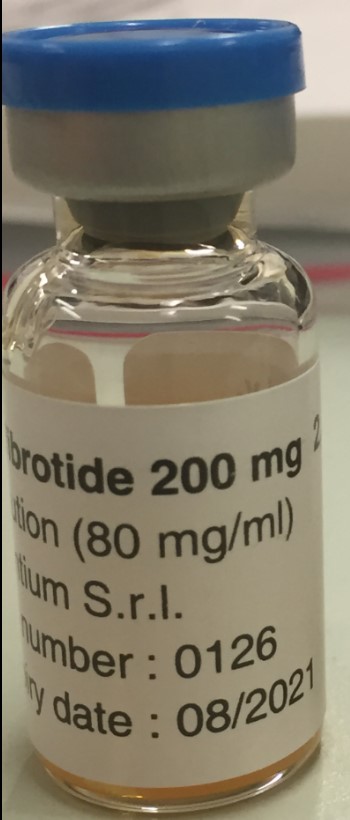
    This alert relates to falsified DEFIBROTIDE 200MG VIALS OF 2.5ML (80MG/ML) CONCENTRATE FOR SOLUTION FOR INFUSION identified in Australia, Latvia and Saudi Arabia. This product is sold under the brand name Defitelio.

    On 13 March 2020, the WHO Global Surveillance and Monitoring System on Substandard and Falsified (SF) Medical Products was informed that falsified DEFIBROTIDE 200MG vials were identified at patient level in Australia, displaying batch number 0286 (see Table 1 below for full details).

    Following enquiries with stakeholders, on 8 April 2020, WHO was informed that falsified DEFIBROTIDE 200MG vials had also been supplied to Saudi Arabia, displaying batch number 0286 and 0126 (see Table 1 below for full details).

    Following enquiries with stakeholders, on 9 April 2020, WHO was informed that falsified DEFIBROTIDE 200MG vials, displaying batch number 0126, had also been identified in Australia and Latvia.

    DEFIBROTIDE is used to treat hepatic veno-occlusive disease, in which the blood vessels in the liver become damaged and obstructed by blood clots. This can be caused by treatments prior to a stem cell transplantation.

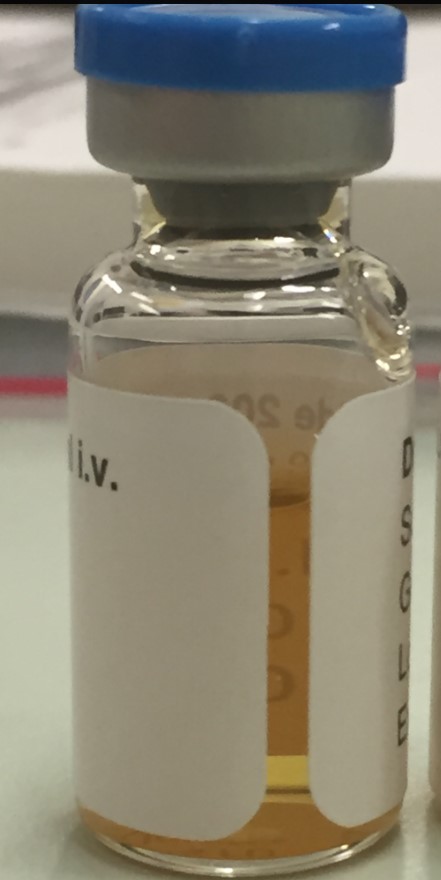
    Laboratory analyses, conducted by national medicines regulatory authorities and the manufacturer of the genuine product, established that these falsified products do not contain any of the expected active ingredient. The solution in the vials is also contaminated with mould (Cladosporium sp. and Aspergillus niger).

    Information available to WHO indicates that both batches of falsified DEFIBROTIDE 200MG vials were present within the regulated supply chain in Latvia as early as January 2020 and were also handled by medicine wholesalers in the United Kingdom in February 2020. It is important to note that widespread vigilance is required from all countries, regardless of where the product was originally identified.

    Table 1: falsified defibrotide subject of WHO Alert n°5/2020, identified in Australia, Latvia and Saudi Arabia

    Medical Product Alert N°5/2020 - 7 May 2020 5

    The two products listed in Table 1 are confirmed falsified, on the basis that there is deliberate misrepresentation of their identity, composition and source.

    The genuine manufacturer of Defibrotide, GENTIUM S.R.L has also confirmed to WHO that:

    • They did not manufacture the above products.
    • Authentic DEFIBROTIDE 200MG VIALS with batch number 0286 were supplied to Argentina, Hong Kong, Malaysia, Singapore and Turkey.
    • Authentic DEFIBROTIDE 200MG VIALS with batch number 0126 were supplied to Australia, Jordan, Kuwait, Lebanon, New Zealand, Qatar, Singapore, Turkey and the United Arab Emirates. 

      For guidance and photographs, please refer to page 2 of this Alert n°5/2020.

    Photos of Falsified DEFIBROTIDE Batch number: 0286, with expiry date: 09/2021

    Medical Product Alert N°5/2020 - 7 May 2020 6         Medical Product Alert N°5/2020 - 7 May 2020 7
    Sample from Latvia       Sample from Latvia

    Photos of Falsified DEFIBROTIDE Batch number: 0126, with expiry date: 08/2021

    Medical Product Alert N°5/2020 - 7 May 2020 8           Medical Product Alert N°5/2020 - 7 May 2020 9
    Sample from Australia       Sample from Australia

    WHO requests increased vigilance within the supply chains of countries likely to be affected by these falsified products. Increased vigilance should include hospitals, clinics, health centres, wholesalers, distributors, pharmacies and any other suppliers of medical products.

    If you are in possession of the above products, please do not use them. If you have used these falsified products, or if you suffer an adverse reaction/event having used these products, you are advised to seek immediate medical advice from a qualified healthcare professional, and to report the incident to the National Regulatory Authorities/National Pharmacovigilance Centre.

    All medical products must be obtained from licensed, authorized and reliable sources. Their authenticity and condition should be carefully checked. Seek advice from a healthcare professional in case of doubt.

    National regulatory/health authorities are advised to immediately notify WHO if these falsified products are identified in their country(ies). If you have any information concerning the manufacture, distribution, or supply of these products, please contact rapidalert@who.int.

    WHO Global Surveillance and Monitoring System for Substandard and Falsified Medical Products

    For further information, please visit our website: https://www.who.int/medicines/regulation/ssffc/en/ 

    Medical Product Alert N°5/2020 - 7 May 2020
    Read More
    https://www.who.int/news-room/detail/07-05-2020-medical-product-alert-n-5-2020

    Views: 0

  • WHO calls for healthy, safe and decent working conditions for all health workers, amidst COVID-19 pandemic

    WHO calls for healthy, safe and decent working conditions for all health workers, amidst COVID-19 pandemic

    On World Day for Safety and Health at Work, the World Health Organization calls upon all governments, employers and workers organizations and the global community to take urgent measures for strengthen countries’ capacities to protect occupational health and safety of health workers and emergency responders respect their rights to decent working conditions, and develop national programmes for occupational health of health workers and to provide them with occupational health services. Amidst the COVID-19 pandemic, ILO has dedicated World Day for Safety and Health at Work 2020 in addressing the outbreak of infectious diseases at work, in particular, on the COVID-19 pandemic.

    Health workers are at the front line of the COVID-19 outbreak response and as such are exposed to hazards that put them at risk of infection. Hazards include pathogen exposure, long working hours, psychological distress, fatigue, occupational burnout, stigma, and physical and psychological violence.

    Infections with COVID-19, insufficient measures for infection prevention and control, occupational safety and health, mental health and psychosocial support for health workers result in high rates of absenteeism and deplete the health workforce – the most precision resources for stopping the COVID outbreak. 

    Key Messages and Facts

    COVID-19 infections among health workers:

    • As of 21 April 2020 countries reported to WHO that over 35, 000 health workers were infected with COVID19. This number is significantly higher because of underreporting.
    • The major occupational risks for COVID19 infection among health workers are: late recognition or suspicion of COVID-19 in patients, working in a higher-risk department, longer duty hours, sub-optimal adherence to infection prevention and control measures, such as hand hygiene practices, and lack of or improper use of personal protective equipment (PPE). Other factors have also been documented, such as inadequate or insufficient IPC training for respiratory pathogens, including the COVID-19 virus, as well as long exposure in areas in healthcare facilities where large numbers of COVID-19 patients were being cared for.
    • The prevention of infections requires the use of appropriate infection prevention and control measures by all health workers, with a special focus on the adherence to hand hygiene and personal protective equipment when caring for COVID-19 patients, as well as a combination of environmental and administrative controls
    • Health workers infected with COVID-19 following exposure in the workplace should have the right to employment injury benefits for occupational disease, including compensation, rehabilitation, and curative services.

    Violence and stigma against health workers:

    • Health workers are at high risk of violence all over the world. Between 8% and 38% of health workers suffer physical violence at some point in their careers. Many more are threatened or exposed to verbal aggression and social stigma because of their work.
    • In the COVID19 crisis, shortage of staff and resources and increasing social tensions result in increased level of violence against health workers and even attacks against health care facilities. Doctors, nurses, security personnel and those who are assisting in testing, tracing contacts and enforcing physical distancing measures to stop COVID-19 experience threats and aggression.
    • WHO calls upon governments, employers and workers organizations to institute measures for zero-tolerance to violence against health workers at the workplace and at the way to and from their workplace, and for intensifying social support and respect for health workers and their families.

    Long working hours and psychosocial hazards for health workers:

    • Many health workers have to work longer or irregular hours because of the increasing demand for health services. In addition, many countries experience shortage of health workers, or junior staff are working in demanding new roles.
    • Health workers face psychosocial hazards, which are exacerbated during emergencies where demands increase and they have to experience risk of infection witness higher suffering or mortality.
    • Long working hours, shift work, high workload and other psychosocial hazards can lead to fatigue, occupational burnout, increased psychological distress or declining mental health – affecting the health of health workers, and the quality and safety of care delivered.
    • WHO calls for adequate staffing levels and clinical rotation in healthcare facilities, measures to minimize psychosocial hazards, and provision of access to mental health and psychosocial support for health workers.

    The annual World Day for Safety and Health at Work on 28 April promotes the prevention of occupational accidents and diseases globally. It is an awareness-raising campaign intended to focus international attention on the magnitude of the problem and on how promoting and creating a safety and health culture can help reduce the number of work-related deaths and injuries.


    WHO calls for healthy, safe and decent working conditions for all health workers, amidst COVID-19 pandemic
    Read More
    https://www.who.int/news-room/detail/28-04-2020-who-calls-for-healthy-safe-and-decent-working-conditions-for-all-health-workers-amidst-covid-19-pandemic

    Views: 0

  • Global leaders unite to ensure everyone everywhere can access new vaccines, tests and treatments for COVID-19

    Global leaders unite to ensure everyone everywhere can access new vaccines, tests and treatments for COVID-19

    Heads of state and global health leaders today made an unprecedented commitment to work together to accelerate the development and production of new vaccines, tests and treatments for COVID-19 and assure equitable access worldwide.

    The COVID-19 pandemic has already affected more than 2.4 million people, killing over 160,000. It is taking a huge toll on families, societies, health systems and economies around the world, and for as long as this virus threatens any country, the entire world is at risk. 

    There is an urgent need, therefore, while following existing measures to keep people physically distanced and to test and track all contacts of people who test positive, for innovative COVID-19 vaccines, diagnostics and treatments.

    “We will only halt COVID-19 through solidarity,” said Dr Tedros Adhanom Ghebreyesus, WHO Director-General. “Countries, health partners, manufacturers, and the private sector must act together and ensure that the fruits of science and research can benefit everybody.”

    Work has already started. Since January, WHO has been working with researchers from hundreds of institutions to develop and test vaccines, standardize assays and standardize regulatory approaches on innovative trial designs and define criteria to prioritize vaccine candidates.  The Organization has prequalified diagnostics that are being used all over the world, and more are in the pipeline. And it is coordinating a global trial to assess the safety and efficacy of four therapeutics against COVID-19.

    The challenge is to speed up and harmonize processes to ensure that once products are deemed safe and effective, they can be brought to the billions of people in the world who need them. Past experience, in the early days of HIV treatment, for example, and in the deployment of vaccines against the H1N1 outbreak in 2009, shows that even when tools are available, they have not been equally available to all.

    So today leaders came together at a virtual event, co-hosted by the World Health Organization, the President of France, the President of the European Commission, and the Bill & Melinda Gates Foundation. The event was joined by the UN Secretary General, the AU Commission Chairperson, the G20 President, heads of state of France, South Africa, Germany, Vietnam, Costa Rica, Italy, Rwanda, Norway, Spain, Malaysia and the UK (represented by the First Secretary of State).

    Health leaders from the Coalition for Epidemic Preparedness Innovations (CEPI), GAVI-the Vaccine Alliance, the Global Fund, UNITAID, the Wellcome Trust, the International Red Cross and Red Crescent Movement (IFRC), the International Federation of Pharmaceutical Manufacturers (IFPMA), the Developing Countries Vaccine Manufacturers’ Network (DCVMN), and the International Generic and Biosimilar Medicines Association (IGBA) committed to come together, guided by a common vision of a planet protected from human suffering and the devastating social and economic consequences of COVID-19, to launch this groundbreaking collaboration. They are joined by two Special Envoys:  Ngozi Okonjo-Iweala, Gavi Board Chair and Sir Andrew Witty, former CEO of GlaxoSmithKline.

    They pledged to work towards equitable global access based on an unprecedented level of partnership. They agreed to create a strong unified voice, to build on past experience and to be accountable to the world, to communities and to one another.

    “Our shared commitment is to ensure all people have access to all the tools to prevent, detect, treat and defeat COVID-19,” said Dr Tedros. “No country and no organization can do this alone. The Access to COVID-19 Tools Accelerator brings together the combined power of several organizations to work with speed and scale.”

    Health leaders called on the global community and political leaders to support this landmark collaboration and for donors to provide the necessary resources to accelerate achievement of its objectives, capitalizing on the opportunity provided by a forthcoming pledging initiative that starts on 4 May 2020. This initiative, spearheaded by the European Union, aims to mobilize the significant resources needed to accelerate the work towards protecting the world from COVID-19.


    Global leaders unite to ensure everyone everywhere can access new vaccines, tests and treatments for COVID-19
    Read More
    https://www.who.int/news-room/detail/24-04-2020-global-leaders-unite-to-ensure-everyone-everywhere-can-access-new-vaccines-tests-and-treatments-for-covid-19

    Views: 0

  • INFOSAN Quarterly Summary, 2020 #1

    Food safety incidents

    During the first quarter of 2020, the INFOSAN Secretariat was involved in 38 food safety incidents involving 109 WHO Member States and 9 territories of WHO Member States. There were 25 incidents involving a biological hazard (Salmonella spp. [8], Listeria monocytogenes [5], Norovirus [3] Shiga-toxin producing Escherichia coli [2], Clostridium botulinum [2] Bacillus cereus [2], Cronobacter spp. [1], Shigella sonnei [1], unspecified biological hazard [1]), 6 involving an undeclared allergen (milk [3], peanut (1), egg [1], gluten [1]), 5 involving a physical hazard (undetermined foreign matter [2], glass [1], metal [1], plastic [1]), one involving a chemical/toxin hazard (histamine), and one linked to an unspecified hazard.

    The food categories that were most commonly involved in the 38 incidents during the first quarter of 2020 involved fish and other seafood (8), herbs and spices (4), legumes and pulses (4), milk and dairy products (3), nuts and oilseeds (3), snacks, desserts and other foods (3), cereals and cereal-based products (2), composite food (2), fruit and fruit products (2), meat and meat products (2), vegetables and vegetable products (2), products of special nutritional use (1), and food for infants and small children (1). One incident involved an unknown food source.

    During such international food safety incidents, the INFOSAN Secretariat relies on the swift action of national INFOSAN Emergency Contact Points to respond to requests for information. Rapid sharing of information through INFOSAN enables members to implement appropriate risk management measures to prevent illness in their respective countries.

    Geographic scope

    The outlined incidents involved Member States from all WHO regions: Europe (39), followed by the Americas (24), Africa (24), the Western Pacific (18), the Eastern Mediterranean (8) and South-East Asia (6).

    Recall in several countries of frozen spring roll sheets from Singapore due to the presence of an undeclared allergen

    In February 2020, the INFOSAN Secretariat was notified by the European Rapid Alert System for Food and Feed (RASFF) and INFOSAN colleagues in Australia of a recall in Australia and several European countries of frozen spring roll sheets due to the detection of an undeclared allergen (milk), imported from Singapore. In collaboration with RASFF, the INFOSAN Secretariat was informed that the implicated frozen spring roll sheets were distributed internationally to 46 Member States from four WHO regions and 4 territories in Europe and the Western Pacific. Moreover, through engagement with the INFOSAN Emergency Contact Point (ECP) in Singapore, the INFOSAN Secretariat also received details of further distribution of implicated products to additional WHO Member States from all WHO regions, taking the total number of Member States involved to 65. It was also reported that the products involved had been redistributed by some countries to Europe, the Americas and Africa. Consequently, several countries recalled the implicated products to relabel them and investigated the issue to identify illnesses related to the consumption of the implicated frozen spring roll sheets. No illnesses were reported to the INFOSAN Secretariat.

    This incident has highlighted undeclared allergens as an important category of hazards that can result in a largescale international response to implement risk management measures and prevent illness. In addition, it exemplified efficient communication among INFOSAN members and the Secretariat.

    Outbreak of Listeriosis in the United States of America linked to enoki mushrooms imported from the Republic of Korea

    In March 2020, the INFOSAN Secretariat was made aware by the United States (US) Centers for Disease Control and Prevention (CDC) of an outbreak of Listeriosis in the US linked to the consumption of enoki mushrooms, imported from the Republic of Korea. In total, 36 cases including 4 deaths have been reported in the US. Following investigations in Canada, carried out in collaboration with the US, the INFOSAN Secretariat was informed of 6 cases of Listeriosis between 2017 and 2019 in Canada potentially related by whole genome sequencing (WGS) to the ongoing outbreak in the USA. In addition, food isolates (from enoki mushrooms from the Republic of Korea) genetically associated with the cluster of cases have been collected in 2019 by authorities in Canada. The WGS information pertaining to the cases and food isolates were shared on the INFOSAN Community Website to assist the identification of cases in other countries.

    The INFOSAN Secretariat engaged the INFOSAN Emergency Contact Point (ECP) in the Republic of Korea to seek details on any further international distribution of the implicated enoki mushrooms. Investigations are ongoing. 

    News & activities

    Food Sector and the COVID-19 outbreak

    On 31 December 2019, WHO was alerted to several cases of pneumonia of unknown origin in the city of Wuhan, Hubei Province, China. The virus, a previously unknown coronavirus has been named SARS-CoV-2 and is the cause of the COVID-19 disease.

    The WHO Epidemic Information Network (EPI-WIN) aims to share information tailored to specific sectors, including food and agriculture. The INFOSAN Secretariat has recently developed a guidance document for food businesses with regards to COVID-19 and food safety which is now available online. The guidance has also been disseminated through EPI-WIN and presented during two webinars.

    Call for applicants: INFOSAN Train-the-Trainer Workshop

    In February, the INFOSAN Secretariat issued a call for applications for the INFOSAN Train-the-Trainer workshop. With the constant growth of the network, and the increased need for training that this entails, the INFOSAN Secretariat, in collaboration with the Canadian Food Inspection Agency (CFIA), has announced this workshop which aims to increase the human resources available to train INFOSAN members on a range of INFOSAN-related topics, online or in-person. As a result, it is expected that the understanding of the roles and responsibilities of INFOSAN members will be improved, resulting in greater participation that will enhance speed and efficiency during the response to food safety emergencies at the global level. The INFOSAN Secretariat, together with CFIA, look forward to hosting this important workshop later this year.

    Developing the new INFOSAN Community Website

    The INFOSAN Community Website (ICW) continues to be an effective tool for the network to disseminate information during food safety emergencies. Over the past year, through the INFOSAN member survey, the Secretariat has gained a better understanding of how members use the ICW and how it can be improved to enhance information sharing. The information collected, together with the experience of members of the Secretariat, has provided numerous innovative ideas to guide the development of the new ICW. The Secretariat is pleased to announce that the competitive process to select the vendor that will develop the new INFOSAN Community Website has concluded and the work on the creation of the new ICW has begun. 

    Voice of an active network member

    voice-5-2020

    Read More
    https://www.who.int/news-room/detail/23-04-2020-infosan-quarterly-summary-2020-1

    Views: 0