Tag: Explore

  • COVID-19: Media Group Calls For Increased Welfare For Journalists

    COVID-19: Media Group Calls For Increased Welfare For Journalists

    Journalists
    Journalists

    Media/civil society groups have demanded increased welfare of journalists during the outbreak of COVID-19.

    The groups also called for special protection and support for journalists covering the outbreak of the virus in Nigeria.

    The groups made the demand following a survey to assess the support available to journalists for their safety in covering the COVID-19 pandemic. 

    COVID-19: Media Group Calls For Increased Welfare For Journalists 1Journalists


    The Wole Soyinka Centre for Investigative Journalism, Enough is Enough, International Press Centre, the International Centre for Investigative Reporting, and Premium Times Centre for Investigative Journalism, commissioned the survey following perceptions that journalists were being exposed to danger in the course of covering the pandemic.

    The survey, filed by 463 journalists — correspondents, reporters, editors, freelancers and presenters from 73 print, broadcast and online media across 33 states and the Federal Capital Territory – revealed that there has been a poor attention to the needs, safety and welfare of journalists covering the pandemic.

    Drawing from responses from the survey, the media/civil society groups have urged media proprietors to ensure that reporters on the field are adequately insured and financially empowered as they urged media outfits owing salaries to immediately pay their journalists.

    They also demanded that media organisations should, “Establish workplace policy and follow the same to equip their journalists with specialised and personal protective equipment including for observation of social distancing while on the field.

    “Provide training to journalists on how to crowd source information for their stories without having to necessarily go to the field; and explore technological options for interviews while in-house infrastructure should be put in place to ensure the safety of employees and guests (particularly for broadcast media) in line with the safety advisory of the government and health authorities.”

    They also enjoined freelance journalists to take advantage of reporting grants and other opportunities to procure personal protective equipment while covering the pandemic.

    Following the outbreak, media outfits are beginning to introduce reduction in salaries, with organisations citing economic importance as reason for the deduction.


    Journalism

    MEDIA

    News

    AddThis

    : 

    Original Author

    : 

    SaharaReporters, New York

    Disable advertisements

    : 
    COVID-19: Media Group Calls For Increased Welfare For Journalists
    Read More
    http://saharareporters.com/2020/05/08/covid-19-media-group-calls-increased-welfare-journalists

    Views: 0

  • Netflix adds an extra episode of Tiger King

    Netflix adds an extra episode of Tiger King

    Netflix adds an extra episode of Tiger King 2

    LOS ANGELES: A new episode of Netflix’s wildly popular “Tiger King” will air this weekend, the company said Thursday, bringing fans up-to-date with the lives of the smash hit zookeeper documentary’s surreal subjects.

    The series about a gay, mullet-wearing private zoo owner who calls himself “Joe Exotic” — now in prison for murder-for-hire — has become a US cultural phenomenon, providing welcome relief to a nation under coronavirus lockdown.

    Exotic and his menagerie of giant cats were watched a reported 34 million times in just 10 days following its release last month, and the show’s impact has even reached the White House.

    President Donald Trump this week offered to “take a look” at granting a pardon to Exotic — real name Joseph Maldonado-Passage — following a light-hearted exchange with a reporter at a press briefing.

    Netflix confirmed in a tweet Thursday that “The Tiger King and I”, billed as an “after show” hosted by Joel McHale (”Community”), will premiere Sunday.

    “I talked to a lot of people involved in the project,“ said McHale in a video, naming Exotic’s ex-husband John Finlay, former zoo manager John Reinke, and Joshua Dial — who ran the zookeeper’s bizarre and ultimately doomed bids for political office.

    The show will explore “what’s happened in their lives since the release of the series,“ said McHale. “It’s eye-opening and hopefully funny.”

    There was no mention of whether the Tiger King himself will appear — Exotic is currently serving a 22-year sentence in federal prison.

    But Netflix this month published clips of a video of Exotic speaking from prison, in which he said his confinement had made him ashamed of keeping animals in prolonged captivity.

    “When I walk out of here, am I gonna be as crazy as I was before? That will never change,“ promised Exotic.

    “No Joe Exotic no party,“ tweeted one fan. – AFP

    Netflix adds an extra episode of Tiger King
    Read More
    https://www.thesundaily.my/world/netflix-adds-an-extra-episode-of-tiger-king-NF2241197

    Views: 0

  • With Humans In Hiding, Animals Take Back The World

    With Humans In Hiding, Animals Take Back The World

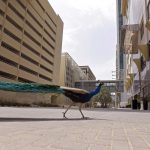
    Gulf states have tightened lockdown measures in large cities, and with Dubai’s shops closed and almost no people on the streets, peacocks that normally live in nearby gardens ventured out to explore other areas of the Middle Eastern city.
    Gulf states have tightened lockdown measures in large cities, and with Dubai’s shops closed and almost no people on the streets, peacocks that normally live in nearby gardens ventured out to explore other areas of the Middle Eastern city.

    A flock of geese searched for food inside a temple in Nagaon, in India’s state of Assam, on April 3. Many temples and shrines across the country have closed during the nationwide lockdown.
    A flock of geese searched for food inside a temple in Nagaon, in India’s state of Assam, on April 3. Many temples and shrines across the country have closed during the nationwide lockdown.

    On April 5, two cows strolled on a Corsican beach usually popular with tourists. It was the 20th day of a strict shutdown in France.
    On April 5, two cows strolled on a Corsican beach usually popular with tourists. It was the 20th day of a strict shutdown in France.

    A young puma walked the streets of Santiago on March 24 after the government ordered confinement measures in some areas of the Chilean capital.
    A young puma walked the streets of Santiago on March 24 after the government ordered confinement measures in some areas of the Chilean capital.

    Mountain goats roamed the streets of Llandudno, in Wales, on March 31, one week after U.K. Prime Minister Boris Johnson issued a stay-at-home order.
    Mountain goats roamed the streets of Llandudno, in Wales, on March 31, one week after U.K. Prime Minister Boris Johnson issued a stay-at-home order.

    Sika deer wandered over to a sushi restaurant in Nara, Japan, on March 12. When Prime Minister Shinzo Abe declared a state of emergency for Tokyo and its surrounding regions, the number of visitors to the city of Nara dropped significantly
    Sika deer wandered over to a sushi restaurant in Nara, Japan, on March 12. When Prime Minister Shinzo Abe declared a state of emergency for Tokyo and its surrounding regions, the number of visitors to the city of Nara dropped significantly

    Macaques searched for food around the closed stalls of the Johari Bazar in Jaipur, India, on March 26. After Prime Minister Narendra Modi declared a nationwide lockdown, the marketplace was deserted.
    Macaques searched for food around the closed stalls of the Johari Bazar in Jaipur, India, on March 26. After Prime Minister Narendra Modi declared a nationwide lockdown, the marketplace was deserted.

    Since Italy’s countrywide lockdown was imposed, the water in Venice’s canals have cleared, and residents have noticed more birds appearing.
    Since Italy’s countrywide lockdown was imposed, the water in Venice’s canals have cleared, and residents have noticed more birds appearing.

    On March 30, ducks ventured across the street in the heart of Paris, which is typically bustling with traffic.
    On March 30, ducks ventured across the street in the heart of Paris, which is typically bustling with traffic.

    Goats sauntered on abandoned streets in Jaipur on March 24
    Goats sauntered on abandoned streets in Jaipur on March 24

    A baby rabbit crossed a main road in Christchurch on April 1. New Zealand entered its strictest state of lockdown on March 25.
    A baby rabbit crossed a main road in Christchurch on April 1. New Zealand entered its strictest state of lockdown on March 25.

    A wild fox roamed the empty streets of London on the night of March 28.
    A wild fox roamed the empty streets of London on the night of March 28.

    On April 1, cattle looked for food in Palu, Central Sulawesi, in Indonesia, where the government is recommending that people avoid public spaces.
    On April 1, cattle looked for food in Palu, Central Sulawesi, in Indonesia, where the government is recommending that people avoid public spaces.

    A coyote stood outside Dodger Stadium in Los Angeles on April 3, weeks after Major League Baseball suspended all play.
    A coyote stood outside Dodger Stadium in Los Angeles on April 3, weeks after Major League Baseball suspended all play.

    The movie theater was closed in Westbury, N.Y., on March 20, leaving the parking lot empty for Canadian geese to roam.
    The movie theater was closed in Westbury, N.Y., on March 20, leaving the parking lot empty for Canadian geese to roam.

    With Humans In Hiding, Animals Take Back The World 3Gulf states have tightened lockdown measures in large cities, and with Dubai’s shops closed and almost no people on the streets, peacocks that normally live in nearby gardens ventured out to explore other areas of the Middle Eastern city.


    It took just a few days of lockdown for baby rabbits to dare to cross once-bustling roads in Christchurch, New Zealand, and less than a week for a puma to descend from the Andes Mountains into Santiago, one of South America’s busiest capitals. In Barcelona, wild boar, a familiar sight for citizens on the city’s outskirts, have made their way into Diagonal Avenue, an eight-lane thoroughfare. 

    It’s surprising and strange, yes, but also meaningful. Research suggests that ecosystems can rebound with speed once human intervention subsides. A review published last week determined that damaged ecosystems and wildlife can be rebuilt if the right conditions are achieved. Marine ecosystems in particular can substantially recover by 2050, according to the study, led by Carlos Duarte at the Red Sea Research Center in Saudi Arabia.

    Of course, a deadly pandemic that brings about a sudden economic collapse is no way to sustainably restore threatened ecosystems. Yet it’s a clear reminder of how quickly the wild world responds when humans take a step back.

    Scientists have tracked this pattern for decades. The number of humpback whales migrating from Antarctica to eastern Australia has been increasing each year, from a few hundred animals in 1968, when commercial whaling was banned, to more than 40,000 today. In 1880 only 20 breeding northern elephant seals had survived decades of hunting, and today there are more than 200,000.

    Hunting bans, habitat restoration, and the reduction of water pollution are all linked to the recovery of marine species. The continuation of these practices—and, most of all, working to mitigate the effects of climate change—would contribute to oceans recovering significantly by 2050, the researchers said.

    It’s more difficult for land ecosystems to bounce back because both the scale of extinction and the scale of human presence are so large there, said Duarte, a marine science professor. But these differences don’t mean the return of wildlife to deserted city streets isn’t significant, he said: “I believe our own confinement, and the release of wildlife from confinement, should bring some empathy between humans and wildlife moving forward.”

    With Humans In Hiding, Animals Take Back The World 4A flock of geese searched for food inside a temple in Nagaon, in India’s state of Assam, on April 3. Many temples and shrines across the country have closed during the nationwide lockdown.


    With Humans In Hiding, Animals Take Back The World 5On April 5, two cows strolled on a Corsican beach usually popular with tourists. It was the 20th day of a strict shutdown in France.


    With Humans In Hiding, Animals Take Back The World 6A young puma walked the streets of Santiago on March 24 after the government ordered confinement measures in some areas of the Chilean capital.


    With Humans In Hiding, Animals Take Back The World 7Mountain goats roamed the streets of Llandudno, in Wales, on March 31, one week after U.K. Prime Minister Boris Johnson issued a stay-at-home order.


    With Humans In Hiding, Animals Take Back The World 8Sika deer wandered over to a sushi restaurant in Nara, Japan, on March 12. When Prime Minister Shinzo Abe declared a state of emergency for Tokyo and its surrounding regions, the number of visitors to the city of Nara dropped significantly


    With Humans In Hiding, Animals Take Back The World 9Macaques searched for food around the closed stalls of the Johari Bazar in Jaipur, India, on March 26. After Prime Minister Narendra Modi declared a nationwide lockdown, the marketplace was deserted.


    With Humans In Hiding, Animals Take Back The World 10Since Italy’s countrywide lockdown was imposed, the water in Venice’s canals have cleared, and residents have noticed more birds appearing.


    With Humans In Hiding, Animals Take Back The World 11On March 30, ducks ventured across the street in the heart of Paris, which is typically bustling with traffic.


    With Humans In Hiding, Animals Take Back The World 12Goats sauntered on abandoned streets in Jaipur on March 24


    With Humans In Hiding, Animals Take Back The World 13A baby rabbit crossed a main road in Christchurch on April 1. New Zealand entered its strictest state of lockdown on March 25.


    With Humans In Hiding, Animals Take Back The World 14A wild fox roamed the empty streets of London on the night of March 28.


    With Humans In Hiding, Animals Take Back The World 15On April 1, cattle looked for food in Palu, Central Sulawesi, in Indonesia, where the government is recommending that people avoid public spaces.


    With Humans In Hiding, Animals Take Back The World 16A coyote stood outside Dodger Stadium in Los Angeles on April 3, weeks after Major League Baseball suspended all play.


    With Humans In Hiding, Animals Take Back The World 17The movie theater was closed in Westbury, N.Y., on March 20, leaving the parking lot empty for Canadian geese to roam.


    Credits: Bloomberg

    PUBLIC HEALTH

    News

    AddThis

    : 

    Original Author

    : 

    Bloomberg

    Disable advertisements

    : 
    With Humans In Hiding, Animals Take Back The World
    Read More
    http://saharareporters.com/2020/04/08/humans-hiding-animals-take-back-world

    Views: 0

  • Visa Foundation Donates $210m As Support For Small And Micro Enterprises

    Visa Foundation Donates $210m As Support For Small And Micro Enterprises

    Visa Foundation Donates $210m As Support For Small And Micro Enterprises 18

    Visa Foundation Donates $210m As Support For Small And Micro Enterprises 19


    Visa Foundation has announced a donation of $210m to support small and micro businesses, aligning with the foundation’s long-term focus on women’s economic advancement and inclusive economic development.

    The first program of $10m is designated for immediate emergency relief to support charitable organisations on the frontlines responding to the COVID-19 pandemic such as public health and food relief in each of the five geographic regions in which Visa operates.

    “As COVID-19 continues to unfold, communities are feeling the effects and need our immediate support,” said Al Kelly, CEO and Chairman of Visa.

    “As a global company that operates a very local business, we recognise this need.

    We’re also committed to the long-term recovery and will continue to explore ways we can accelerate economic activity in line with our mission to help individuals, businesses and economies thrive,” Kelly added.

    The second program is a five-year, strategic $200m commitment to support small and micro-businesses around the world, with a focus on fostering women’s economic advancement.

    The funds from Visa Foundation will provide capital to non-government organisations and investment partners supporting small and micro-businesses.


    Business

    News

    AddThis

    : 

    Original Author

    : 

    SaharaReporters, New York

    Disable advertisements

    : 
    Visa Foundation Donates $210m As Support For Small And Micro Enterprises
    Read More
    http://saharareporters.com/2020/04/07/visa-foundation-donates-210m-support-small-and-micro-enterprises

    Views: 0

  • Incorporating Gamification into Your Website

    The main reason that gamification works is that it brings an element of fun to your web-pages. Studies have shown that when something is made to feel like a game, it becomes visually stimulating and mentally engaging. This encourages users to stay on the website longer and explore further…

    Read More
    http://www.associationofmarketing.org/articles/view.php?article_id=7379

    Views: 0

  • Schistosomiasis elimination: refocusing on snail control to sustain progress

    Schistosomiasis elimination: refocusing on snail control to sustain progress

    Substantial progress has been made during the past decade to prevent and control schistosomiasis (also known as bilharziasis) globally. The disease affects more than 230 million people, mostly in sub-Saharan Africa.

    Progress is mainly due to large-scale periodic treatment of affected populations with praziquantel, the only medicine recommended by the World Health Organization (WHO) against all forms of schistosomiasis. Regular treatment cures mild symptoms and prevents
    progression to severe, chronic disease.

    “Through progressive scale-up of periodic large-scale treatment
    to control morbidity in many endemic countries, we are closer to
    achieving the minimum target of 75% global coverage of all school‐aged
    children,
    ” said Dr Amadou Garba Djirmay, who leads WHO’s global schistosomiasis control programme. “But
    if we want to achieve elimination, we must go a step further to
    introduce snail control in hot spots and in areas targeting elimination.
    This is bound to increase impact and accelerate progress towards
    interruption of transmission
    .”

    Expansion of treatment is largely supported by donated praziquantel from Merck KGaA of up to 250 million tablets annually. In 2018, almost 78 million children were treated, representing 63% of all school‐aged children eligible for treatment.

    Transmission: role of snails

    Schistosomiasis is an acute, chronic parasitic disease caused by infection with trematode worms of the genus Schistosoma. It is prevalent in tropical and subtropical areas, especially in poor, rural communities that have little or no access to
    safe drinking‐water and basic sanitation. Infection is transmitted when people suffering from schistosomiasis contaminate freshwater sources when evacuating urine and faeces containing the parasite’s eggs.

    Once an egg comes into contact with fresh water, it releases miracidia (hatchlings) which enter a snail and produce hundreds of cercariae (larvae) daily. The cercariae enter the human body on contact with the skin and develop into adult worms.

    Besides treatment with praziquantel, eliminating snail hosts and improving sanitation are important methods for sustainable prevention of the disease. Dam and irrigation projects are known to be potential sites for outbreaks of the disease. Snail management,
    often achieved through mollusciciding, can help to reduce transmission by eliminating these intermediate snail hosts.

    Vector control

    In 2017, the World Health Assembly – WHO’s decision making body – adopted resolution WHA70.16 on the Global Vector Control
    Response, calling on Member States to develop or adapt national vector control strategies and operational plans. The strategy aims to reduce by at least 40% the incidence of vector borne diseases, including schistosomiasis, by 2025.

    In response, WHO is reinforcing snail control as part of its strategic approach to achieve the target of eliminating schistosomiasis as a public health problem and, ultimately, the goal of elimination of transmission. Snail control will complement mass
    treatment campaigns and sustain the public health impact of this core intervention.

    To facilitate implementation of snail control, in 2019 WHO published on specific, standardized procedures and criteria for efficacy
    testing and evaluation and in 2017 a manual on the use of molluscicides in the field. WHO is also planning to strengthen capacities
    of health staff in medical malacology in order to reinforce snail control activities in countries.

    In the past, molluscicides (particularly niclosamide1 based products) were widely used in schistosomiasis control programmes. For example, in China programmes largely relied on snail control for over 30 years to overcome the disease as a public
    health problem. In other parts of the world, however, snail control programmes were gradually discontinued and competencies faded away.

    “Snail control is a crucial component of the global schistosomiasis elimination strategy,” said Dr Rajpal Yadav, Scientist, WHO Department of Control of Neglected Tropical Diseases. “It
    is time we look for new snail control products that are cost–effective
    and of low risk to humans and the environment. Some efforts are being
    made to explore molluscicide compounds from plants, marine algae and
    microorganisms
    .”

    An integrated control strategy involving mass treatment with praziquantel, snail control and environmental modification, wider access to sanitation and safe water, economic and environmental development, health education and poverty-alleviation can greatly
    contribute to sustainable control and elimination of schistosomiasis.

    WHO’s new road map on neglected tropical diseases for 2021–2030, due to be launched later this year, advocates enhanced financial and political support to achieve the target of interruption of transmission. Additional research to address gaps,
    develop tools and optimize the impact of existing programmes with snail control will complement the core strategic approach.

    Schistosomiasis: forms of the disease

    There are two major forms of schistosomiasis – intestinal and urogenital.

    Intestinal schistosomiasis usually results in diarrhoea and blood in the stool; enlargement of the liver and of the spleen and portal hypertension are common in advanced cases.

    Urogenital schistosomiasis is characterized by the presence of blood in the urine. Chronic infection results in fibrosis of the bladder and ureter that can evolve to hydronephrosis and create conditions for bladder cancer.

    In women, urogenital schistosomiasis can cause vaginal bleeding, pain during sexual intercourse and nodules in the vulva, a condition now described as female genital schistosomiasis. In men, urogenital schistosomiasis can induce disease in the seminal
    vesicles and prostate.


    1Limitations with the use of formulations based on niclosamide include restrictions on the usage of water immediately after application and temporary toxicity to non-target aquatic organisms including
    fish, amphibians and invertebrates. 


        Schistosomiasis elimination: refocusing on snail control to sustain progress
        Read More
        https://www.who.int/news-room/detail/25-03-2020-schistosomiasis-elimination-refocusing-on-snail-control-to-sustain-progress

        Views: 0

      • Ways To Reduce Stress In Your Life

        Women can be especially susceptible to stress, and new research shows that stress can have devastating consequences, including long-term serious illness. Unchecked, stress can wreak havoc on your mind and body, leading to anxiety and depression as well as physical health problems like gastrointestinal complaints, headaches, and other chronic maladies.Let?s explore some simple techniques you can start using today to help reduce stress.

        Read More
        http://www.associationofmarketing.org/articles/view.php?article_id=16078

        Views: 0

      • International Day of Women and Girls in Science

        International Day of Women and Girls in Science 20

        The theme of the 5th International Day of Women and Girls in Science, was on driving Investment in Equality in Science, Technology and Innovation in the Digitalization Era for Inclusive Green Growth with special focus on Agriculture, Technology and Digital Economy. The commemoration brought together stakeholders from high-level government officials, representatives of international organizations, foundations, private sector, civil society as well as women in science experts from around the world to explore how women in all fields of sciences can accelerate socio-economic sustainable development.


        Discussion focused on the interlinkages between gender inequality -specifically in science- digital and technological revolution, and agricultural sector for Sustainable Development. WUN Executive Director Dr Nata Menabde participated in the assembly and highlighted the key role of women and girls in science for health and emphasized on the obstacles women and girls encounter in various levels of health sector – from access to health services, to engagement in health workforce and research. She explained the systematic challenges where women are facing higher health costs than men due to their greater use of health care, as well as the need to extend coverage of health care that deals with the content of benefit packages, to ensure they include a greater range of services for girls and women of all ages. Dr Menabde also shared some conclusions from WHO’s work on nutrition, stressing that gender inequality means girls get less food, are more likely to get sick, and are less likely to be able to attend school, receive an education (including on science) and get a job. However, they are more likely to marry and get pregnant too young, be poorly nourished and have under-nourished babies. In conclusion, she mentioned that healthy women and girls are the cornerstone of healthy societies and proper nutrition is essential to empowering women and girls. Nutrition, through its effect on health and cognitive development, is also vital for academic performance and productivity to ensure healthy economies and socioeconomic development.

         

        Read More
        https://www.who.int/news-room/detail/11-02-2020-international-day-of-women-and-girls-in-science

        Views: 0

      • Researchers explore epigenetic influences of chronic pain

        Researchers explore epigenetic influences of chronic pain

        Chronic pain is one of the most prevalent, disabling and expensive public health crises in the United States. It affects more than 100 million Americans, with annual costs estimated at $635 billion, says a 2014 report from the American Pain Society.

        Despite the enormous societal impact of chronic pain, present treatment options are limited to nonsteroidal anti-inflammatory drugs (NSAIDS), opioids, anticonvulsants and antidepressants, which provide pain relief to only about half of patients. Furthering the problem, prescription opioid overdoses have quadrupled since 1999. There were more than 45,000 painkiller-related deaths in 2014 alone, according to the Centers for Disease Control and Prevention.

        Now, researchers at Drexel University College of Medicine are aiming to identify new molecular mechanisms involved in pain. Their latest study, published this month in Epigenetics & Chromatin, shows how one protein – acting as a master controller – can regulate the expression of a large number of genes that modulate pain.

        Views: 0

      • Businesses Pursuing New Product Development

        [ad_1]

        With the aftermath of globalization, companies are carefully thinking about the best ways to extend their product and service offering. Thus, product development strategy is critical for their success. Yet, many companies are in defensive mode and merely want to maintain the position in the market place.

        However, staying in a holding position is a definite way for companies to be left behind. Innovative thinking that allows for product/service growth is a too sure way for sustainable success. In today’s discussion, we will explore the importance of product development for the growth of businesses, especially in a competitive market.

        Launching into new product offerings is not easy. According to one market research, approximately 75% of consumer-packaged goods and retail products fail to earn even $7.5 million during their first year. Harvard Business School Professor, Clayton Christensen, who is the world’s foremost authority on disruptive innovation, suggests that the failure rate of new products may actually be as high as 95%. Product failure rates relate to the number of products that are launched commercially but fail.

        Geoffrey A. Moore, the author of Crossing the Chasm, maintains the challenges of product deployment: “… the less successful product is often arguably superior. No content to slink off the stage without some revenge, this sullen and resentful crew casts about among themselves to find a scapegoat, and whom do they light upon? With unfailing consistency and unerring accuracy, all fingers point to-the vice president of marketing. It is marketing’s fault!” Thus, new product development is a risky proposition to senior executives making these critical positions as well as the organization as a whole.

        Businesses that want sustainable growth must develop new product and services often and consistently. Philip Kotler and Kevin Keller, authors of Marketing Management, “In an economy of rapid change, continuous innovation is a necessity. Highly innovative firms are able to identify and quickly seize new market opportunities.”

        In taking any actions on new product development, businesses should think strategically about their product development. Alexander Chernev, the author of Strategic Marketing Management, further argues that managing growth is the most preferred route to profitability compared to just cutting cost.

        He outlines four key issues in managing growth, which include: (a) gaining and defending a market position, (b) managing sales growth, (c) new product development, and (d) product-line management. Chernev maintains, “New products and services are the keys to sustainable growth; they enable companies to gain and sustain their market position by taking advantage of the changes in the market to create superior customer value.”

        With that said, new product development meaning having the ability to take a product or service idea and convert it into a tangible offering that customers want. The following are the steps that more products undergo for market consumption: (a) idea generation, (b) concept development, (c) business analysis, (d) product development, (e) market testing, and (f) business deployment.

        The Ansoff Matrix is a strategic tool for product development, consisting of market penetration, market development, product development, and diversification. In market penetration strategy, organizations seek to grow using its existing product offerings in existing markets. With this strategy in mind, organizations try to increase market share. In a market development strategy, companies try to expand into new markets like new buyers using their existing offerings. In product development strategy, businesses seek to create new products and services targeted at its existing buyers.

        In a diversification strategy, an organization tries to grow its market share by introducing new product offerings while at the same time entering a new market. Diversification is the most-risky approach due to simultaneous making new changes (new product, new market). Kotler and Keller further maintain the difficulty of sustainable product success: “It is increasingly difficult to identify blockbuster products that will transform a market, but continuous innovation can force competitors to play catch-up.” The concept sounds easy. However, it is riddled with problems.

        Without a doubt, many companies know that product development is a risky business. Although many consumers will proudly proclaim the success of many innovative products like Apple and Google, these same buyers are not aware of the numerous product launch failures in this country. In our discussion, I demonstrated the importance of product development for the growth of businesses, especially in a competitive market. Failures often lead to innovation.

        American great inventor, Thomas Edison, had his own share of failures, but learned how to innovate because of them: “I have not failed. I’ve just found 10,000 ways that won’t work.” Likewise, today’s businesses can also achieve success if they understand how to deploy their products and services to the marketplace strategically. Although there is enormous danger in failure, there is also the opportunity of unforeseen growth. Don’t wait until it’s too late.

        © 2017 by DD Green

        [ad_2]

        Source by Dr. Daryl D. Green

        Views: 0