Tag: Essential

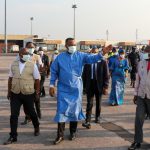
  • ICC-WHO Joint Statement: An unprecedented private sector call to action to tackle COVID-19

    ICC-WHO Joint Statement: An unprecedented private sector call to action to tackle COVID-19

    In a coordinated effort to combat the coronavirus COVID-19 pandemic, the International Chamber of Commerce (ICC) and the World Health Organization (WHO) have agreed to work closely to ensure the latest and most reliable information and tailored guidance reaches the global business community.

    The COVID-19 pandemic is a global health and societal emergency that requires effective immediate action by governments, individuals and businesses. All businesses have a key role to play in minimising the likelihood of transmission and impact on society. Early, bold and effective action will reduce short- term risks to employees and long-term costs to businesses and the  economy.

    To aid this collective effort, ICC will regularly send updated advice to its network of over 45 million businesses so that businesses everywhere can take informed and effective action to protect their workers, customers and local communities and contribute to the production and distribution of essential supplies.

    ICC will also contribute to enhancing information flows on the coronavirus outbreak by surveying its global private sector network to map the global business response. This will both encourage businesses to adopt appropriate precautionary approaches and generate new data and insights to support national and international government efforts.

    As an immediate priority, businesses should be developing or updating, readying or implementing business continuity plans. Business continuity plans should aim to reduce transmission, including by: promoting understanding of the disease, its symptoms and appropriate behavior among employees; setting up a reporting system for any cases and contacts; preparing essentials; limiting travel and physical connectivity; and planning for measures such as teleworking when necessary.

    Calls to Action

    • ICC strongly endorses WHO’s call on national governments everywhere to adopt a whole-of- government and whole-of-society approach in responding to the COVID-19 pandemic. Reducing the further spread of COVID-19 and mitigating its impact should be a top priority for Heads of State and Government. Political action should be coordinated with actors in the private sector and civil society to maximize reach of messaging and effectiveness.
    • Governments should commit to making available all necessary resources to combat COVID-19 with the minimum of delay and to ensure that cross-border medical and other essential goods supply chains are able to function effectively and efficiently
    • ICC and the WHO encourage national chambers of commerce to work closely with UN country teams, including WHO country offices where they exist, and to designate mutual focal points to coordinate this collaboration.
    • ICC encourages its members to support their country’s national response efforts and to contribute to the global response efforts coordinated by the WHO through www.covid19responsefund.org.

    As the pandemic evolves, ICC Secretary General John W.H Denton AO and WHO Director General Dr Tedros Adhanom Ghebreyesus will continue to coordinate their efforts.

    Essential information on the COVID-19 pandemic can be found on the WHO’s dedicated site.


    ICC-WHO Joint Statement: An unprecedented private sector call to action to tackle COVID-19
    Read More
    https://www.who.int/news-room/detail/16-03-2020-icc-who-joint-statement-an-unprecedented-private-sector-call-to-action-to-tackle-covid-19

    Views: 0
  • Nationwide movement restriction measures to begin on Wednesday (Updated)

    Nationwide movement restriction measures to begin on Wednesday (Updated)

    Nationwide movement restriction measures to begin on Wednesday (Updated) 1

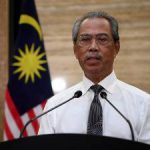
    PETALING JAYA: Prime Minister Tan Sri Muhyiddin Yassin has declared that Malaysia will be placed under a nationwide movement restriction order from Wednesday (March 18) to March 31, 2020, due to the Covid-19 outbreak.

    The order, the first in the country’s history, was announced by the prime minister in a live broadcast over national television tonight.

    A total of 315 new positive cases of Covid-19 have been reported over the past two days, bringing the total in Malaysia to 553 cases.

    Of this total, 511 have been hospitalised while 42 people have recovered.

    Muhyiddin said the nationwide movement restriction order means that all business premises have to be shut down, except for outlets such as supermarkets and grocery stores selling daily essentials.

    He said all government and private premises would be closed, except for essential services such as utilities, telecommunications, transport, banking, health, pharmacies, ports, airports, cleaning and food supplies.

    He said the movement restriction also means all Malaysians will be banned from travelling abroad, and that no tourists or foreigners will be allowed to enter the country. Those who have just arrived from abroad must undergo self-quarantine for 14 days.

    All public and private schools, including kindergartens, nurseries, residential school and other educational institutions are also to close. All private and public higher institutions of learning will also close.

    Closure of all government and private premises except essential services such as water and electricity, telecommunication, postal service, transport, fuel, gas, lubrication, broadcasting, banking, health, pharmacy, fire-fighting, ports, airports, prisons, security and defence, sanitary services, provision and food supply.

    The order also calls on a ban on all mass gatherings, including religious, sports, social and cultural activities.

    The Prime Minister said the measures were taken to protect the rakyat from the spread of the virus but advised Malaysian to not panic and stay calm.

    Muhyiddin added that the Ministry of Domestic Trade and Consumer Affairs will ensure that the supply of groceries and health care essentials will be readily available.

    He also said that the government will address the situation daily and provided a hotline number – 0388882010- that will answer any queries from the public.

    In an immediate response, former health minister Datuk Seri Dr Dzulkefly Ahmad told theSun that the order was the right action made in the right time.

    “I am okay with it because it is in line with what I was advocating, I did not implement this earlier because at that time it wasn’t warranted and it wasn’t the right thing to do then,” he said.

    Meanwhile, Lawyer Mohamed Haniff Khatri Abdullah said that the provision of Section 11 (5) of the Prevention and Control of Infectious Diseases Act 1988 is read together with Section 24(a) of the same act.

    Haniff said this would make any breach to the restriction order a criminal offence.

    “The offense under section 11(5) carries a maximum sentence of two years imprisonment. Whereas the second offence under section 24(b) warrants a maximum imprisonment sentence of five years.”

    He also urged government officials to give a clear guideline on the extent of which a member of public can be out before it is considered an offense.

    “This is to ensure proper and dutiful compliance on the part of public and to allow strict enforcement by the authorities.” he told theSun.

    Nationwide movement restriction measures to begin on Wednesday (Updated)
    Read More
    https://www.thesundaily.my/local/nationwide-movement-restriction-measures-to-begin-on-wednesday-updated-IC2136749

    Views: 0

  • Covid-19: Sabah may extend school holidays, get private sector to let employees work from home

    Covid-19: Sabah may extend school holidays, get private sector to let employees work from home

    Covid-19: Sabah may extend school holidays, get private sector to let employees work from home 2

    KOTA KINABALU: The Sabah government is considering the possibility of extending the current school holidays and getting the private sector to allow their employees to work from home in order to curb the spread of Covid-19.

    In appealing to the people to minimise their movements, including avoiding non-essential travel, Chief Minister Datuk Seri Mohd Shafie Apdal said that more measures might be considered.

    “I urge the public to stay calm and fully cooperate with the authorities in order to curb the spread of Covid-19. We can overcome this if we all come together to do our part,” he said in a statement today.

    Since the first positive case was detected last week, involving a 58-year-old man in Tawau who was among those who attended the Sri Petaling Mosque tabligh gathering in Kuala Lumpur between Feb 27 and March 1, the Sabah Health Department has identified 49 cases in the state as of today.

    Health officials in the state have detected more cases from among those who attended the mosque event and steps are being taken to trace the other participants and also the people they have come into contact with over the past 10 days since their return.

    “The Health Department and others have been going all out to locate and identify areas that could have been contaminated.

    “They have also taken swift measures, including temporarily closing mosque and suraus in areas that have had Covid-19 cases,” said Mohd Shafie, adding that since Jan 30, the Sabah government had halted the arrivals of tourists directly from countries affected by the virus.

    Of the 49 cases reported in Sabah so far, 14 were in Lahad Datu; followed by Kota Kinabalu (nine); Tawau (eight); Kinabatangan (five); Tuaran (three); Kunak, Putatan and Sandakan (two each); Beaufort, Kota Belud; Papar and Sipitang (one each). — Bernama

    Covid-19: Sabah may extend school holidays, get private sector to let employees work from home
    Read More
    https://www.thesundaily.my/local/covid-19-sabah-may-extend-school-holidays-get-private-sector-to-let-employees-work-from-home-HI2129382

    Views: 0

  • Singaporeans should avoid overseas travel, government says

    Singaporeans should avoid overseas travel, government says

    Singaporeans should avoid overseas travel, government says 3

    SINGAPORE: Singapore’s health ministry on Sunday urged its citizens to defer all non-essential travel abroad in an unprecedented move for the Asian transport hub, as part of new measures to control the coronavirus that is fast spreading around the world.

    Singapore will also tell all entering the country with recent travel history to the Asean group of nations, Japan, Switzerland or the United Kingdom to quarantine themselves at their place of residence for 14 days, the ministry added.

    The Association of Southeast Asian Nations (Asean) comprises Indonesia, Malaysia, Philippines, Singapore, Thailand, Brunei, Laos, Myanmar, Cambodia and Vietnam.

    Countries, such as the UK and Switzerland have “abandoned” any attempt at containing the spread of the infection, said Lawrence Wong, a minister who co-heads Singapore’s virus fighting taskforce.

    “That’s why we are more concerned that Singapore may well be exposed to a new wave of infections, which is potentially larger than what we have seen previously.”

    The majority of new infections being reported in Singapore, an island nation with a population of 5.7 million, over the past few days have been people returning from overseas rather than local transmissions.

    At least five cases of Singaporeans have been linked to a large religious gathering in Malaysia that was attended by more than 10,000 people from several countries.

    Short-term visitors who are nationals of its Southeast Asian neighbours will also have to seek prior approval from the health ministry before their journey to prevent hospitals from being overwhelmed.

    The restriction comes after a number of cases that entered Singapore with the specific purpose of seeking healthcare, the health ministry said. There have been two cases of Indonesians who had coronavirus symptoms at home before arriving in Singapore, known for its superior healthcare facilities.

    The measures will be reviewed after a month. They will not apply to sea and land crossings with Malaysia, which will have separate precautions. Wong said 300,000 people a day move across the land checkpoints with Malaysia.

    The Asian travel hub has previously announced bans on visitors from several coronavirus-hit countries, including China, Italy and France.

    Singapore has won international praise for its painstaking onslaught on the virus since it initially emerged with one of the highest tallies of infections outside China. But other nations have since outpaced it.

    Singapore has reported 212 infections, but no fatalities. Globally, more than 150,000 people have been infected while over 5,800 have died, a Reuters tally shows. — Reuters

    Singaporeans should avoid overseas travel, government says
    Read More
    https://www.thesundaily.my/world/singaporeans-should-avoid-overseas-travel-government-says-XI2129044

    Views: 0

  • COVID-19: IFRC, UNICEF and WHO issue guidance to protect children and support safe school operations

    GENEVA/NEW YORK – The International Federation of the Red Cross (IFRC), UNICEF and the World Health Organization (WHO) today issued new guidance to help protect children and schools from transmission of the COVID-19 virus. The guidance provides critical considerations and practical checklists to keep schools safe. It also advises national and local authorities on how to adapt and implement emergency plans for educational facilities. 

    In the event of school closures, the guidance includes recommendations to mitigate against the possible negative impacts on children’s learning and wellbeing. This means having solid plans in place to ensure the continuity of learning, including remote learning options such as online education strategies and radio broadcasts of academic content, and access to essential services for all children. These plans should also include necessary steps for the eventual safe reopening of schools.

    Where schools remain open, and to make sure that children and their families remain protected and informed, the guidance calls for:

    • Providing children with information about how to protect themselves;
    • Promoting best handwashing and hygiene practices and providing hygiene supplies;
    • Cleaning and disinfecting school buildings, especially water and sanitation facilities; and
    • Increasing airflow and ventilation.

    The guidance, while specific to countries that have already confirmed the transmission of COVID-19, is still relevant in all other contexts. Education can encourage students to become advocates for disease prevention and control at home, in school, and in their community by talking to others about how to prevent the spread of viruses. Maintaining safe school operations or reopening schools after a closure, requires many considerations, but if done well, can promote public health.

    For example, safe school guidelines implemented in Guinea, Liberia and Sierra Leone during the outbreak of Ebola virus disease from 2014 to 2016 helped prevent school-based transmissions of the virus.

    UNICEF is urging schools – whether open or helping students through remote learning – to provide students with holistic support. Schools should provide children with vital information on handwashing and other measures to protect themselves and their families; facilitate mental health support; and help to prevent stigma and discrimination by encouraging students to be kind to each other and avoid stereotypes when talking about the virus.

    The new guidance also offers helpful tips and checklists for parents and caregivers, as well as children and students themselves. These actions include:

    • Monitoring children’s health and keeping them home from school if they are ill;
    • Encouraging children to ask questions and express their concerns; and
    • Coughing or sneezing into a tissue or your elbow and avoid touching your face, eyes, mouth and nose.

    Read More
    https://www.who.int/news-room/detail/10-03-2020-covid-19-ifrc-unicef-and-who-issue-guidance-to-protect-children-and-support-safe-school-operations

    Views: 0

  • Medical Product Alert N° 1/2020 (English version)

    Medical Product Alert N° 1/2020 (English version)


    Falsified antimalarials in West and Central Africa displaying an outdated WHO Essential Drugs Programme logo

    This Medical Product Alert relates to a series of confirmed falsified antimalarials circulating in West and Central Africa. Medicines subject of this alert display a similar logo to the outdated
    WHO Essential Drugs Programme logo.
     

    Since 2013, different falsified medicines, all displaying the outdated WHO Essential Drugs Programme logo, have been reported to the WHO Global Surveillance and Monitoring System by various stakeholders. The continued and widespread availability of these falsified medicines highlights a strong need for additional vigilance. WHO previously published two alerts on this issue (No.132 in Oct 2014, and No.131 in March 2014)

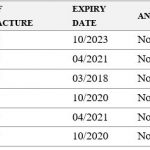
    This WHO medical product alert N°1/2020 refers to falsified Quinine Sulphate 300mg presented in six different combinations of batch numbers, expiry and manufacturing dates (see Table 1). The fraudulent use of the outdated WHO Essential Drugs Programme logo may create a false sense of product quality.

    Table 1: List of identified falsified Quinine Sulphate 300mg, subject of WHO Alert N°1/2020

    Medical Product Alert N° 1/2020 (English version) 4

    Recently received results of analysed samples show they do not contain any of the expected active ingredients.

    Quinine sulphate is referenced on the WHO Model List of Essential Medicines, to manage and treat severe malaria. At this stage, no adverse reactions attributed to these falsified products have been reported to WHO.    

    All the above falsified products claim to be manufactured by REMEDICA LTD – Cyprus and to contain 300mg of quinine sulphate. Remedica Ltd has confirmed that:

    • they did not manufacture the above falsified products; and
    • the variable data (batch number and dates) on the above products has never been used by Remedica.

     These falsified medicines display the following common characteristics (please see photographs):

    • grey or white plastic containers which contain 1000 loose circular tablets each;
    • display the outdated WHO Essential Drugs Programme logo;
    • English and French labelling with mistakes and inconsistencies; and
    • discovered at patient level in both regulated and unregulated outlets.

    Product details, photographs and advice to the public are available on the following pages.

    Outdated WHO Essential Drugs Programme logo 

    Medical Product Alert N° 1/2020 (English version) 5

    Photographs of confirmed falsified Quinine Sulphate 300mg tablets subject of
    Medical Product Alert N°1/2020

    1.       Falsified
    Quinine Sulphate Tablets B.P 300mg
    identified
    in Chad (Batch 44680)

    Medical Product Alert N° 1/2020 (English version) 6


    Medical Product Alert N° 1/2020 (English version) 7

    Medical Product Alert N° 1/2020 (English version) 8Medical Product Alert N° 1/2020 (English version) 9Medical Product Alert N° 1/2020 (English version) 10

    Medical Product Alert N° 1/2020 (English version) 11


    WHO requests increased vigilance within the supply chains of countries likely to be affected by these falsified products. Increased vigilance should include hospitals, clinics, health centres, wholesalers, distributors, pharmacies and any other suppliers of medical products.

    If you are in possession of the above products, please do not use. If you have used these falsified products, or if you suffer an adverse event having used these products, please seek immediate advice from a qualified healthcare professional, and ensure they report the incident to your local Ministry of Health/National Medicines Regulatory Authorities/National Pharmacovigilance Centre.

    All medical products must be obtained from authentic and reliable sources. Their authenticity and condition should be carefully checked. Seek advice from a healthcare professional in case of doubt.

    National health authorities are asked to immediately notify WHO if these falsified products are discovered in their country. If you have any information concerning the manufacture, distribution, or supply of these products, please contact rapidalert@who.int . 

    WHO Global Surveillance and Monitoring System

    for Substandard and Falsified Medical Products

    For further information, please visit our website: www.who.int/medicines/regulation/ssffc/en/


    Medical Product Alert N° 1/2020 (English version)
    Read More
    https://www.who.int/news-room/detail/09-03-2020-medical-product-alert-n-1-2020-english-version

    Views: 0

  • UN releases US$15 million to help vulnerable countries battle the spread of the coronavirus

    UN releases US$15 million to help vulnerable countries battle the spread of the coronavirus

    UN Humanitarian Chief Mark Lowcock today released US$15 million from the Central Emergency Response Fund (CERF) to help fund global efforts to contain the COVID-19 virus.

    The announcement came as the World Health Organization (WHO) upgraded the global risk of the coronavirus outbreak to “very high” – its top level of risk assessment. The WHO has said there is still a chance of containing the virus if its chain of transmission is broken.

    The sudden increases of cases in Italy, the Islamic Republic of Iran and the Republic of Korea are deeply concerning. There are now cases linked to Iran in Bahrain, Iraq, Kuwait and Oman, along with cases linked to Italy in Algeria, Austria, Croatia, Germany, Spain and Switzerland.

    The UN funding has been released to the WHO and the United Nations Children’s Fund (UNICEF). It will fund essential activities including monitoring the spread of the virus, investigating cases, and the operation of national laboratories.

    The WHO has called for US$675 million to fund the fight against coronavirus. There is a window of opportunity to contain the spread of the virus if countries take robust measures to detect cases early, isolate and care for patients, and trace contacts.

    Emergency Relief Coordinator and Under-Secretary-General for Humanitarian Affairs, Mark Lowcock said: “We do not yet see evidence that the virus is spreading freely. As long as that’s the case, we still have a chance of containing it.

    “But swift and robust action must be taken to detect cases early, isolate and care for patients, and trace contacts. We must act now to stop this virus from putting more lives at risk.

    “This grant from the UN’s Emergency Fund will help countries with fragile health systems boost their detection and response operations. It has the potential to save the lives of millions of vulnerable people.”

    This is a critical juncture in the outbreak. The focus is on containing COVID-19 by strengthening surveillance, conducting thorough outbreak investigations to identify contacts and applying appropriate measures to prevent further spread.

    Tedros Adhanom Ghebreyesus, WHO Director-General, said: “The potential spread of the virus to countries with weaker health systems is one of our biggest concerns. These funds will help support these countries get ready for detecting and isolating cases, protecting their health workers, and treating patients with dignity and appropriate care. This will help us save lives and push back the virus”

    UNICEF is leading on preventative actions in communities across the affected countries with risk communication, providing hygiene and medical kits to schools and health clinics and monitoring the impact of the outbreak to support continuity of care, education and social services.

    “At this pivotal moment, every effort must be made to push back against the outbreak,” said UNICEF Executive Director Henrietta Fore. “These crucial funds will support our global efforts to bolster weaker health systems and inform children, pregnant women and families about how to protect themselves.”

    Since it was launched in 2006, CERF has provided more than $6 billion to over 100 countries and helped hundreds of millions of people.

    UN releases US$15 million to help vulnerable countries battle the spread of the coronavirus
    Read More
    https://www.who.int/news-room/detail/01-03-2020-un-releases-us-15-million-to-help-vulnerable-countries-battle-the-spread-of-the-coronavirus

    Views: 0

  • WHO launch eEML

    WHO launch eEML

    The World Health Organization has launched a new easy-to-access, digital version of its Model list of Essential Medicines (EML). The move will revolutionize the way this core WHO reference tool is used.

    More than 150 countries currently use the WHO list to work out which medicines best meet their national health contexts and priorities, so they can compile their own national essential medicines lists.

    Essential medicines are those that satisfy the priority health care needs of a population. They are the medicines that need to be available in a functioning health system at all times, in appropriate dosage forms, of assured quality, and at prices individuals and the community can afford.

    Keeping up-to-date lists of the most important medicines a country needs is key to achieving health for all in a sustainable way.

    Since 1977, the WHO list has been revised every 2 years (most recently in 2019) by a group of experts and published in print or PDF formats. It includes information about available dose forms and strengths; specifications as to who should take a medicine; what conditions a medicine can treat and how it should be taken, as well as details about the clinical evidence supporting recommendations being made.

    The new electronic version brings the traditional EML to smartphones and computer screens in a comprehensive, freely accessible, online database. Instead of flicking through pages of information, users can search by simply clicking on the name of a medicine, for example, or a health issue. They can also make their own customized lists by exporting the list – in full or in part – into an Excel or Word version.  

    The electronic EML is the latest step in WHO’s effort to harness digital technologies to drive improvements in global public health, and advance progress towards universal health coverage. 


    WHO launch eEML
    Read More
    https://www.who.int/news-room/detail/27-02-2020-who-launch-e-eml

    Views: 0

  • International Day of Women and Girls in Science

    International Day of Women and Girls in Science 12

    The theme of the 5th International Day of Women and Girls in Science, was on driving Investment in Equality in Science, Technology and Innovation in the Digitalization Era for Inclusive Green Growth with special focus on Agriculture, Technology and Digital Economy. The commemoration brought together stakeholders from high-level government officials, representatives of international organizations, foundations, private sector, civil society as well as women in science experts from around the world to explore how women in all fields of sciences can accelerate socio-economic sustainable development.


    Discussion focused on the interlinkages between gender inequality -specifically in science- digital and technological revolution, and agricultural sector for Sustainable Development. WUN Executive Director Dr Nata Menabde participated in the assembly and highlighted the key role of women and girls in science for health and emphasized on the obstacles women and girls encounter in various levels of health sector – from access to health services, to engagement in health workforce and research. She explained the systematic challenges where women are facing higher health costs than men due to their greater use of health care, as well as the need to extend coverage of health care that deals with the content of benefit packages, to ensure they include a greater range of services for girls and women of all ages. Dr Menabde also shared some conclusions from WHO’s work on nutrition, stressing that gender inequality means girls get less food, are more likely to get sick, and are less likely to be able to attend school, receive an education (including on science) and get a job. However, they are more likely to marry and get pregnant too young, be poorly nourished and have under-nourished babies. In conclusion, she mentioned that healthy women and girls are the cornerstone of healthy societies and proper nutrition is essential to empowering women and girls. Nutrition, through its effect on health and cognitive development, is also vital for academic performance and productivity to ensure healthy economies and socioeconomic development.


    Read More
    https://www.who.int/news-room/detail/11-02-2020-international-day-of-women-and-girls-in-science

    Views: 0

  • WHO and FIND formalize strategic collaboration to drive universal access to essential diagnostics

    Geneva, Switzerland – 10 February 2020 – The World Health Organization (WHO) and the Foundation for Innovative New Diagnostics (FIND) announced today that a memorandum of understanding has been signed by the two organizations to formalize a strategic collaboration that will strengthen diagnosis in resource-poor countries by closing major diagnostic gaps at country level and bolstering disease surveillance that will inform public health initiatives and enhance outbreak preparedness and response.

    “This collaboration is an inspiring development that will take us a long way towards ensuring access to diagnostics to all who need them,” said Dr Tedros Adhanom Ghebreyesus, Director-General of the World Health Organization. “Global health challenges such as the ongoing novel coronavirus (2019-nCoV) outbreak demonstrates that without these essential elements of health systems, we cannot hope to promote health, keep the world safe, and serve the vulnerable. I look forward to working closely with FIND to determine what countries need and to forge a path to deliver these innovations so that no one is left behind.”

    Diagnosis is a driver of patient, financial and health systems impact, and a critical enabler of universal health coverage, but it is also the weakest link in the care cascade. This is especially true in primary healthcare settings in low- and middle-income countries. A unique and unprecedented opportunity exists to expand the role and impact of diagnostics to fully realize their potential to address major health security threats and evolving disease burdens through technological and digital advances.

    FIND has been an active partner with WHO since 2008 and a WHO Collaborating Centre since 2014, acting in the areas of laboratory strengthening and diagnostic technology evaluation. This expanded collaboration will put in place the building blocks necessary to enable transformative change in a move toward a country-led diagnostics alliance. Initial workstreams will focus on demand-driven access to essential diagnostics and the development of national Essential Diagnostics Lists, alongside collection of data that assist the scale up of diagnostics to support low- and middle-income countries on their paths to universal health coverage.

    “Each and every person has the right to a quality, timely diagnosis,” said Catharina Boehme, CEO of FIND. “Comprehensive diagnostic services underpin functional and efficient health systems not only to manage day-to-day healthcare needs, but also to ensure new disease outbreaks can be spotted and contained quickly. Working closely with WHO as part of a country-led alliance, we will strive to ensure that low- and middle-income countries have what they need to develop their own comprehensive, data-driven diagnostic strategies that enable universal health coverage and empower disease surveillance. Our ambition is that all patients, providers and decision-makers have access to the diagnostic solutions needed for optimal health outcomes.”

    The strategic collaboration agreement will initially run for a period of 5 years, until 2025.

    #  #  #

    About FIND

    FIND is a global non-profit organization that drives innovation in the development and delivery of diagnostics to combat major diseases affecting the world’s poorest populations. Our work bridges R&D to access, overcoming scientific barriers to technology development; generating evidence for regulators and policy-makers; addressing market failures; and enabling accelerated uptake and access to diagnostics in low- and middle-income countries (LMICs). Since 2003, we have been instrumental in the development of 24 new diagnostic tools used in 150 LMICs. Over 50 million FIND-supported products have been provided to our target markets since the start of 2015. A WHO Collaborating Centre, we work with more than 200 academic, industry, governmental, and civil society partners worldwide, on over 70 active projects that cross six priority disease areas. FIND is committed to a future in which diagnostics underpin treatment decisions and provide the foundation for disease surveillance, control and prevention. For more information, please visit www.finddx.org


    About WHO

    The World Health Organization is the directing and coordinating authority for health within the United Nations system. It is responsible for providing leadership on global health matters, shaping the health research agenda, setting norms and standards, articulating evidence-based policy options, providing technical support to countries and monitoring and assessing health trends. WHO is committed to the enjoyment of the highest attainable standard of health as one of the fundamental rights of every human being without distinction of race, religion, political belief, economic or social condition. WHO’s current global programme of work sets out three interconnected strategic priorities: ensuring healthy lives and well-being for all at all ages; achieving universal health coverage; and addressing health emergencies and promoting healthier populations. These priorities are linked to three ambitious targets, the “triple billion”: one billion more people to benefit from universal health coverage; one billion more people better protected from health emergencies; and one billion more people enjoying better health and well-being.


    Read More
    https://www.who.int/news-room/detail/10-02-2020-who-and-find-formalize-strategic-collaboration-to-drive-universal-access-to-essential-diagnostics

    Views: 0