Tag: Ease

  • COVID-19: Should Education Hit A Pause Or Are We Just Unprepared In Nigeria? By Olabisi Deji-Folutile

    COVID-19: Should Education Hit A Pause Or Are We Just Unprepared In Nigeria? By Olabisi Deji-Folutile

    Olabisi Deji-Folutile
    Olabisi Deji-Folutile

    COVID-19: Should Education Hit A Pause Or Are We Just Unprepared In Nigeria? By Olabisi Deji-Folutile 1Olabisi Deji-Folutile


    The world is facing its most trying and unprecedented times as the last few weeks have been most challenging for almost everybody.  What started in Wuhan, China, as an epidemic, has put the entire world in disarray.  Major streets across the globes have become empty. Both the rich and the poor are being ravaged by the plague of COVID-19, which the World Health Organisation has rightly described as a pandemic. Work places have been shut; religious and social gatherings banned and many countries are on total lockdown, in a bid to curb the spread of this viral disease. Expectedly, schools are also affected across board.  Every day people are being told to embrace social distancing and suddenly things like human contacts, hitherto considered as free gifts of life, are becoming very expensive.

    No one knows when this whole chaos will end, so people are making different kinds of adjustments to cope with the situation while it lasts. Many companies have shifted their operations online. Likewise, many schools have opted for e-learning, making use of available technology for teaching and learning.

     Universities around the world are making use of communication technology to ease the effects of the global pandemic on their academic calendars.   In China, universities are going for online teaching instead of in-class teaching; the ones in Australia have moved their classes online just as UK universities have suspended face-to-face teaching.  Turkey started its remote university classes on March 23. In Kenya, universities have activated communication between lecturers and students via social media platforms and emails while classes have gone totally online in the Philippines and Kyrgyzstan.  Teachers in France have been working with their students on Zoom.  

    Just a few days ago, Ghana’s President Addo Dankwa Akufo-Addo, directed the ministry of education to collaborate with the ministry of communications in rolling out open learning programmes in response to the closure of all educational institutions in the country. In the same vein, Mount Kenya University’s Vice-Chancellor Peter Wanderi, has announced the extension of online teaching platforms for regular students to facilitate the learning process.  And to take care of the over six million students that have experienced disruption to their studies, ten North African and 12 Arab countries have begun work on an e-learning initiative to facilitate open and online education.

    These are some of the steps being taken across the globe to bridge the gap created by school closure in the wake of COVID-19.  Unfortunately, while all these activities are going on in other parts of the world, Nigerian government has not said anything about steps being taken to take care of its students’ community.  Rather, the only message from the Federal Government was a total closure of all tertiary institutions and FG-owned unity schools till further notice. A statement issued by the National Universities Commission simply said universities would remain   shut   for one month while the Education Minister, Adamu Adamu, said tertiary institutions would remain shut indefinitely.

     Assuming government has been overwhelmed by the burden of controlling the spread of COVID- 19, hence its silence on options for learning for its teeming student population, one would have expected the higher institutions themselves to at least say something, but as it is, they too are not helping matters. The silence in our universities has been deafening. To worsen the situation, the Academic Staff Union of Universities, decided to choose this time, of all times, to embark on an indefinite strike. One wonders how the academic body   manages to feel comfortable being on a strike at a time when researchers across the globe   are busy looking for solution to a pandemic that is ravaging the entire world.  This kind of action makes one query the essence of having Research and Development as a core component of tertiary education in Nigeria when researchers can be nowhere to be found at a critical time of societal needs.

    By now, our researchers should be adding their voices to the various efforts being made towards developing a vaccine or cure for COVID-19. After all, universities are expected to proffer solutions to societal problems.  This is a wrong time for ASUU to embark on an indefinite strike. This should be a time of strategising and proffering solutions. This is really the time for everyone to get involved. Besides, I think Nigerian universities should also be more forthcoming on their responses to the challenges posed to their students by COVID-19.

    As it is, religious organisations are doing far better in terms of their responses to the effects of this pandemic on their primary constituencies.  Many of them have devised other means of getting the attention of   their members following several government directives prohibiting either gatherings or limiting the number of people allowed to congregate at a time.   Almost all the churches have switched to online platforms for their services.  How come religious organisations are working hard to keep their flocks and both government and higher institutions in Nigeria are just moving on as if all is well?  No word on how to keep the students busy or keep them engaged using available online technology! Should teaching and learning be restricted to the classrooms alone in this 21st century?

     Nigeria has always been described as a religious society. Corona Virus has further exposed the smartness of our religious bodies and the dullness of those in charge of our public educational institutions.  This is not an attempt to blame any religious organisation for having the foresight to deploy technology in reaching their audiences. Instead, it is a wakeup call to managers of our educational institutions to adopt and use available technology to help their students at a time like this.

    Apart from the National Open University of Nigeria, which basically runs online, I doubt if there is any other public university in the country that has capacity for online teaching.  This is in spite of the launch of the Nigerian Communication Satellite known as NIGCOMSAT by the Nigerian Government first in 2007 and then NIGCOMSAT-IR in December 2011, to provide critical ICT backbone infrastructure to support e-learning, among others in the country. 

    What is the essence of investing so much money in a communication satellite if it cannot be deployed at a time of need?   Those in charge of NIGCOMSAT, the commercial arm of Nigeria’s space centre, have consistently claimed that the technology has the capacity to cover the entire Africa.  If that is the case, why is the country still struggling to deploy internet connectivity facilities to its schools to aide e-learning?  If we are truly a serious country, by now, all the schools in urban and rural areas should have been connected to the e-learning services.

    No doubt, COVID-19 has exposed Nigeria’s unpreparedness for e-learning. But, we can’t afford to remain where we are. That is why it is important for every institution to start thinking of how to deploy available technology in the world for the good of their students at this critical period.   Universities should as a matter of urgency migrate online. This shouldn’t be another season of waiting and probably wasting for the Nigerian student.  There is no reason why any higher institution worth its name should suspend all academic activities until the end of Corona Virus with all the available resources and technology in the world today. The minimum expected of them is to upload teaching resources online for students to have access to them.  At least this will give the students the opportunity to learn on their own.

    This is also an opportunity for telecommunications companies like Glo, MTN and the rest of them to make a difference in Nigeria’s educational institutions. They can as part of their corporate social responsibility decide to boost internet facilities in universities and other educational institutions; or provide data at cheaper rates to help poor students have access to the internet for online learning.

    I know there are obvious stumbling blocks to digital learning in Nigeria. Many students don’t even have access to devices while the cost of buying data is still high. These challenges and others have provided    telecommunications companies a huge opportunity of making a difference in Nigerian higher institutions by providing e-learning solutions and broadband connectivity to universities and other higher institutions.

    They can as part of their corporate social responsibility decide to boost internet facilities in universities and other higher institutions; or help poor students who have limited or poor internet access to enhance online learning.

    Olabisi Deji-Folutile is the Editor-in-Chief of Franktalknow.com and member of the Nigerian Guild of Editors. Email: bisideji@yahoo.co.uk

    Opinion

    AddThis

    : 

    Original Author

    : 

    Olabisi Deji-Folutile

    Disable advertisements

    : 
    COVID-19: Should Education Hit A Pause Or Are We Just Unprepared In Nigeria? By Olabisi Deji-Folutile
    Read More
    http://saharareporters.com/2020/03/26/covid-19-should-education-hit-pause-or-are-we-just-unprepared-nigeria-olabisi-deji

    Views: 0
  • WHO urges countries to ensure the continuity of malaria services in the context of the COVID-19 pandemic


    The COVID-19 pandemic is testing the resilience of robust health systems around the world. Recognizing the heavy toll that malaria exacts on vulnerable populations in sub-Saharan Africa, as well as the region’s fragile health infrastructure, WHO underlines the critical importance of sustaining efforts to prevent, detect and treat malaria.

    “As COVID-19 continues its rapid spread, WHO would like to send a clear message to malaria-affected countries in Africa,” said Dr Pedro Alonso, Director of the WHO Global Malaria Programme. “Do not scale back your planned malaria prevention, diagnostic and treatment activities. If someone living in a place with malaria develops a fever, he or she should seek diagnosis and care as soon as possible.”

    Ensuring access to core malaria prevention measures is an important strategy for reducing the strain on health systems; these include vector control measures, such as insecticide-treated nets and indoor residual spraying, as well as chemoprevention for pregnant women and young children (intermittent preventive treatment in pregnancy, intermittent preventive treatment in infants and seasonal malaria chemoprevention). Additional special measures could ease the burden on health systems in the context of COVID-19, such as presumptive malaria treatment and mass drug administration.

    Any interventions must consider the importance of both lowering malaria-related mortality and ensuring the safety of communities and health workers. WHO will provide guidance for countries to safely maintain essential health services in the context of the COVID-19 response.

    About COVID-19

    COVID-19 is the infectious disease caused by the most recently discovered coronavirus. This new virus and disease were unknown before the outbreak began in Wuhan, China, in December 2019. Essential information on the COVID-19 pandemic can be found in a dedicated WHO site.

    About malaria

    Malaria is a preventable and treatable disease caused by parasites that are transmitted to people through the bites of infected female Anopheles mosquitoes. In 2018, there were an estimated 228 million cases of malaria worldwide and 405 000 malaria-related deaths. For more on malaria, visit: www.who.int/malaria


    Read More
    https://www.who.int/news-room/detail/25-03-2020-who-urges-countries-to-ensure-the-continuity-of-malaria-services-in-the-context-of-the-covid-19-pandemic

    Views: 0

  • Sultan Nazrin consents to setting up of Special Zakat Distribution Fund

    Sultan Nazrin consents to setting up of Special Zakat Distribution Fund

    Sultan Nazrin consents to setting up of Special Zakat Distribution Fund 2

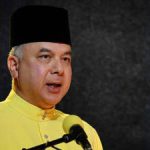
    IPOH: The Sultan of Perak Sultan Nazrin Shah (pix) has consented to the Special Zakat Distribution Fund, involving RM11.95 million, to ease the burden of the people affected by the Covid-19 outbreak and assist efforts by various quarters in addressing the crisis.

    Perak Islamic Religious and Malay Customs Council (MAIPk) chief executive oficer Shahrul Azam Shaari said the special fund was set up by the council, with the cooperation of several of its strategic partners.

    This special fund, involved RM11.11 million from the zakat allocation, RM30,000 from SP Setia Foundation chairman and RM800,000 in tithe from the corporate sector,“ he said in a statement here today.

    He said Sultan Nazrin consented to the setting up of the fund so that it could be used to help those who are affected by the enforcement of the Movement Control Order (MCO) which has been extended until April 14.

    “Sultan Nazrin is concerned and aware that the Covid-19 pandemic has a direct impact on the lives of the people, especially among those with unstable income and those in the low-income group,“ he added.

    Shahrul said the special fund would cover the cost of the Food Box Aid, involving RM240,000, which would be channeled through the Covid-19 Operations Room under the respective District and Land Offices tin the state.

    He said RM5.8 million would be for the Emergency Survival Assistance, which is targeted for households earning RM2,000 and below whose income were affected due to either termination of employment, unpaid leave or other reasons.

    A total of RM2 million is allocated for Special Capital Assistance to assist MAIPk traders, hawkers and entrepreneurs whose business were affected by the MCO; RM100,000 for management and welfare assistance to Perak students studying abroad and RM100, 000 to provide food supply to students at public and private institutions of higher learning in Perak who are still at their respective colleges, he added.

    Shahrul said a special contribution of RM500,000 would be made to the Perak Health Department, the Royal Malaysia Police, the Malaysian Armed Forces and other agencies for the welfare of their Covid-19 frontline personnel.

    RM1 million is for health and medical equipment to be donated to hospitals in Perak, RM1.5 million for purchase of medical equipment to combat Covid-19, like face masks, gloves and disinfectant to be distributed to mosques, suraus and the general public, and RM710,000 for contingency plan, he added. – Bernama

    Sultan Nazrin consents to setting up of Special Zakat Distribution Fund
    Read More
    https://www.thesundaily.my/local/sultan-nazrin-consents-to-setting-up-of-special-zakat-distribution-fund-BH2180355

    Views: 0

  • Water bill exemption, electricity bill discount in Sabah beginning April

    Water bill exemption, electricity bill discount in Sabah beginning April

    Water bill exemption, electricity bill discount in Sabah beginning April 3

    KOTA KINABALU: Sabah people will be exempted from paying their water bills and will be given a 30% discount on electricity bills for three months beginning April, according to Chief Minister Datuk Seri Mohd Shafie Apdal.

    He said the exemption and discount were part of the initiatives introduced under the Sabah Covid-19 aid package in an effort to ease the burden and cost of living of affected people in the state following the virus outbreak.

    “It will benefit 335,000 domestic water users. In addition, the state will give a 28% discount on electricity bills for three months starting April, on top of the 2% provided by the federal government.

    “The discount will involve the state government allocation of RM11.5 million a month or RM35.65 million over the three-month period, and it is expected that 512,000 consumers will benefit from this or equivalent to about 98% of electricity users in Sabah and Labuan,“ he told a press conference, here today.

    Earlier, Mohd Shafie announced the RM670 million Sabah Covid-19 aid package comprising three categories namely assistance to frontliners and affected people as well as efforts to strengthen businesses and improve the quality of rural basic infrastructure.

    Mohd Shafie said residents of the People’s Housing Programme in Sabah will also be exempted from paying rent for six months starting April, which involved an allocation of about RM21.1 million.

    A total of 20,080 households or 110,400 people will benefit from it, he said.

    Also included in the package is a 30% discount on quit rent collections for this year, which will benefit 232,774 individuals and 9,184 companies, among others.

    However, Mohd Shafie said those who had paid the tax this year would be given rebates next year.

    Hawkers are exempted from paying a licence fee by all district councils for this year, which will benefit 26,227 hawkers statewide and rebates will be given for 2021 to those who have paid for the licences this year, he added.

    Mohd Shafie said RM30 million would be allocated for allowance payments of 10 months to Village Community Management Councils (MPKK), which will benefit 2,315 MPKK in Sabah. – Bernama

    Water bill exemption, electricity bill discount in Sabah beginning April
    Read More
    https://www.thesundaily.my/local/water-bill-exemption-electricity-bill-discount-in-sabah-beginning-april-YH2180133

    Views: 0

  • Netflix to reduce streaming quality in Europe to avoid internet overload

    Netflix to reduce streaming quality in Europe to avoid internet overload

    Netflix will reduce the quality of its streaming in Europe to ease pressure on the internet, the firm said, as demand soars across the continent where millions are confined to their homes over coronavirus fears.

    Read More
    https://techxplore.com/news/2020-03-netflix-streaming-quality-europe-internet.html

    Views: 0

  • Cuepacs hopes govt ensures well-being, safety of civil servants on duty

    Cuepacs hopes govt ensures well-being, safety of civil servants on duty

    Cuepacs hopes govt ensures well-being, safety of civil servants on duty 4

    KUALA LUMPUR: The Congress of Unions of Employees in the Public and Civil Services (Cuepacs) hopes the government can take initiatives or steps to safeguard the well-being of civil servants who have to serve during the duration of the movement control order.

    Its president, Adnan Mat said the safety and well-being of staff and their family members should be given priority, especially for those who had to work during the period.

    “The support and cooperation of the public in understanding the work of civil servants is also needed as the country is facing a crisis such as Covid-19,“ he said in a statement today.

    Meanwhile, Cuepacs also hopes that airline companies could be flexible for those who had booked tickets by offering open tickets to set new travel dates rather than cancelling without refunds.

    This would help ease the burden of the people, Adnan said.

    Yesterday, Prime Minister Tan Sri Muhyiddin Yassin declared that Malaysia would enforce a movement control order effective tomorrow until March 31 throughout the country to contain the spread of Covid-19. – Bernama

    Cuepacs hopes govt ensures well-being, safety of civil servants on duty
    Read More
    https://www.thesundaily.my/local/cuepacs-hopes-govt-ensures-well-being-safety-of-civil-servants-on-duty-MC2141349

    Views: 0

  • Shortage of personal protective equipment endangering health workers worldwide

    WHO calls on industry and governments to increase manufacturing by 40 per cent to meet rising global demand

    The World Health Organization has warned that severe and mounting disruption to the global supply of personal protective equipment (PPE) – caused by rising demand, panic buying, hoarding and misuse – is putting lives at risk from the new coronavirus and other infectious diseases.

    Healthcare workers rely on personal protective equipment to protect themselves and their patients from being infected and infecting others.

    But shortages are leaving doctors, nurses and other frontline workers dangerously ill-equipped to care for COVID-19 patients, due to limited access to supplies such as gloves, medical masks, respirators, goggles, face shields, gowns, and aprons.

    “Without secure supply chains, the risk to healthcare workers around the world is real. Industry and governments must act quickly to boost supply, ease export restrictions and put measures in place to stop speculation and hoarding. We can’t stop COVID-19 without protecting health workers first,” said WHO Director-General Dr Tedros Adhanom Ghebreyesus.

    Since the start of the COVID-19 outbreak, prices have surged. Surgical masks have seen a sixfold increase, N95 respirators have trebled and gowns have doubled.

    Supplies can take months to deliver and market manipulation is widespread, with stocks frequently sold to the highest bidder.

    WHO has so far shipped nearly half a million sets of personal protective equipment to 47 countries,* but supplies are rapidly depleting.

    Based on WHO modelling, an estimated 89 million medical masks are required for the COVID-19 response each month. For examination gloves, that figure goes up to 76 million, while international demand for goggles stands at 1.6 million per month. 

    Recent WHO guidance calls for the rational and appropriate use of PPE in healthcare settings, and the effective management of supply chains.

    WHO is working with governments, industry and the Pandemic Supply Chain Network to boost production and secure allocations for critically affected and at-risk countries.

    To meet rising global demand, WHO estimates that industry must increase manufacturing by 40 per cent.

    Governments should develop incentives for industry to ramp up production. This includes easing restrictions on the export and distribution of personal protective equipment and other medical supplies. 

    Every day, WHO is providing guidance, supporting secure supply chains, and delivering critical equipment to countries in need.  

     *** 

    NOTE TO EDITORS

    Since the start of the COVID-19 outbreak, countries that have received WHO PPE supplies include:

    • Western Pacific region: Cambodia, Fiji, Kiribati, Lao People’s Democratic Republic, Mongolia, Nauru, Papua New Guinea, Samoa, Solomon Islands, Tonga, Vanuatu and the Philippines
    • Southeast Asia region: Bangladesh, Bhutan, Maldives, Myanmar, Nepal and Timor-Leste
    • Eastern Mediteranean region: Afghanistan, Djibouti, Lebanon, Somalia, Pakistan, Sudan, Jordan, Morocco and Iran
    • Africa region: Senegal, Algeria, Ethiopia, Togo, Ivory Coast, Mauritius, Nigeria, Uganda, Tanzania, Angola, Ghana, Kenya, Zambia, Equatorial Guinea, Gambia, Madagascar, Mauritania, Mozambique, Seychelles and Zimbabwe


    Read More
    https://www.who.int/news-room/detail/03-03-2020-shortage-of-personal-protective-equipment-endangering-health-workers-worldwide

    Views: 0

  • Coronavirus: How Twitter could more effectively ease its impact

    Coronavirus: How Twitter could more effectively ease its impact

    In the wake of a disaster or crisis, people turn to trusted sources for information.

    Read More

    Views: 0

  • Is a common shoulder surgery useless?

    Is a common shoulder surgery useless?

    New research casts doubt on the true effectiveness of a common type of surgery used to ease shoulder pain.

    A British research team tracked outcomes for patients who underwent “decompression surgery” to treat shoulder impingement – a condition where a shoulder tendon rubs and catches in the joint.

    In decompression surgery, a small area of bone and soft tissue in the shoulder joint is removed, opening up the joint to prevent the abrasion that happens when the arm is lifted.

    Views: 0

  • The Essence of Technical Writing

    [ad_1]

    The Gist of Technical Writing

    Technical writing, though may seem to be complex outwardly, is not that much complicated when approached in a pragmatic and systematic way. To make it simple, technical writing is just the process of peeling the outer chunky cover of the complexity of the entailed subject and showing the common reader the right way to feel the inner softness at ease.

    The Objective of Technical Writing

    Technical Writing is the process of taking away the toughness of the subject and making it simple and straightforward so that even ordinary readers who do not possess the grasp of the subject can easily digest the topic. A technical writer must be capable to assimilate the subject technical communication in its entirety and must be competent enough to translate the same into a commonly used language avoiding all of the included technical jargon.

    Though the subjects can vary, an expert technical writer will have to be skillful in providing the readers practical and precise content regarding the discussed subject in an ordinary language. The topic may be based on issues such as computer snags, recently launched innovative apps, description of a consumer gadget, mobile phones, computer tablets, medical items, or many other such things that are par for the course of modern living. A talented technical writer will delve deep into the subject and will gather all the relevant practical points and then will pass them to the readers without losing the grip of the subject, but, in a simple language. There lies the real significance of a technical writer.

    Give Valuable Information to Readers

    One of the main points that all technical writers will have to take care is to include valuable information that will be useful to the readers rather than detailing the apparent technical data. Readers will be more interested in knowing what the item concerned will impart them, rather than the physical or technical specifications. That does not mean that the writer must completely avoid such technical details; the only thing that he or she must ensure that the detailing must be customer-oriented.

    One Basic Tip

    To become a good writer, one should become a good reader and when the topic comes to technical writing, the writer must be clued-up on the latest technological advancements. The writer must absorb the scientific advancements as and when it comes to pass, and in our time the best bet for it is to rely on the effectiveness of the various internet platforms. In short, all technical writers must comprehend and assimilate the subject concerned fully before trying to pass on to the readers.

    [ad_2]

    Source by Kaliyath Achutha Kumar

    Views: 0