Tag: Distribution

  • ICC-WHO Joint Statement: An unprecedented private sector call to action to tackle COVID-19

    ICC-WHO Joint Statement: An unprecedented private sector call to action to tackle COVID-19

    In a coordinated effort to combat the coronavirus COVID-19 pandemic, the International Chamber of Commerce (ICC) and the World Health Organization (WHO) have agreed to work closely to ensure the latest and most reliable information and tailored guidance reaches the global business community.

    The COVID-19 pandemic is a global health and societal emergency that requires effective immediate action by governments, individuals and businesses. All businesses have a key role to play in minimising the likelihood of transmission and impact on society. Early, bold and effective action will reduce short- term risks to employees and long-term costs to businesses and the  economy.

    To aid this collective effort, ICC will regularly send updated advice to its network of over 45 million businesses so that businesses everywhere can take informed and effective action to protect their workers, customers and local communities and contribute to the production and distribution of essential supplies.

    ICC will also contribute to enhancing information flows on the coronavirus outbreak by surveying its global private sector network to map the global business response. This will both encourage businesses to adopt appropriate precautionary approaches and generate new data and insights to support national and international government efforts.

    As an immediate priority, businesses should be developing or updating, readying or implementing business continuity plans. Business continuity plans should aim to reduce transmission, including by: promoting understanding of the disease, its symptoms and appropriate behavior among employees; setting up a reporting system for any cases and contacts; preparing essentials; limiting travel and physical connectivity; and planning for measures such as teleworking when necessary.

    Calls to Action

    • ICC strongly endorses WHO’s call on national governments everywhere to adopt a whole-of- government and whole-of-society approach in responding to the COVID-19 pandemic. Reducing the further spread of COVID-19 and mitigating its impact should be a top priority for Heads of State and Government. Political action should be coordinated with actors in the private sector and civil society to maximize reach of messaging and effectiveness.
    • Governments should commit to making available all necessary resources to combat COVID-19 with the minimum of delay and to ensure that cross-border medical and other essential goods supply chains are able to function effectively and efficiently
    • ICC and the WHO encourage national chambers of commerce to work closely with UN country teams, including WHO country offices where they exist, and to designate mutual focal points to coordinate this collaboration.
    • ICC encourages its members to support their country’s national response efforts and to contribute to the global response efforts coordinated by the WHO through www.covid19responsefund.org.

    As the pandemic evolves, ICC Secretary General John W.H Denton AO and WHO Director General Dr Tedros Adhanom Ghebreyesus will continue to coordinate their efforts.

    Essential information on the COVID-19 pandemic can be found on the WHO’s dedicated site.


    ICC-WHO Joint Statement: An unprecedented private sector call to action to tackle COVID-19
    Read More
    https://www.who.int/news-room/detail/16-03-2020-icc-who-joint-statement-an-unprecedented-private-sector-call-to-action-to-tackle-covid-19

    Views: 0

  • Novel inexpensive tactile sensor allows robots to feel

    Novel inexpensive tactile sensor allows robots to feel

    With the help of machine learning, ETH researchers have developed a novel yet low-cost tactile sensor. The sensor measures force distribution at high resolution and with great accuracy, enabling robot arms to grasp sensitive or fragile objects.

    Read More
    https://techxplore.com/news/2020-03-inexpensive-tactile-sensor-robots.html

    Views: 0

  • Never forget to take an RMD

    Never forget to take an RMD

    Put your required minimum distribution (RMD) on autopilot with Vanguard’s free RMD service.
    Never forget to take an RMD
    Read More
    https://investornews.vanguard/never-forget-to-take-an-rmd/

    Views: 0

  • Updated distribution estimates for Vanguard Managed Payout Fund

    Updated distribution estimates for Vanguard Managed Payout Fund

    View dividend and capital gains distribution estimates for Vanguard Managed Payout Fund.
    Updated distribution estimates for Vanguard Managed Payout Fund
    Read More
    https://investornews.vanguard/updated-distribution-estimates-for-vanguard-managed-payout-fund-2/

    Views: 0

  • Medical Product Alert N° 1/2020 (English version)

    Medical Product Alert N° 1/2020 (English version)


    Falsified antimalarials in West and Central Africa displaying an outdated WHO Essential Drugs Programme logo

    This Medical Product Alert relates to a series of confirmed falsified antimalarials circulating in West and Central Africa. Medicines subject of this alert display a similar logo to the outdated
    WHO Essential Drugs Programme logo.
     

    Since 2013, different falsified medicines, all displaying the outdated WHO Essential Drugs Programme logo, have been reported to the WHO Global Surveillance and Monitoring System by various stakeholders. The continued and widespread availability of these falsified medicines highlights a strong need for additional vigilance. WHO previously published two alerts on this issue (No.132 in Oct 2014, and No.131 in March 2014)

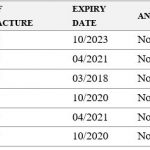
    This WHO medical product alert N°1/2020 refers to falsified Quinine Sulphate 300mg presented in six different combinations of batch numbers, expiry and manufacturing dates (see Table 1). The fraudulent use of the outdated WHO Essential Drugs Programme logo may create a false sense of product quality.

    Table 1: List of identified falsified Quinine Sulphate 300mg, subject of WHO Alert N°1/2020

    Medical Product Alert N° 1/2020 (English version) 1

    Recently received results of analysed samples show they do not contain any of the expected active ingredients.

    Quinine sulphate is referenced on the WHO Model List of Essential Medicines, to manage and treat severe malaria. At this stage, no adverse reactions attributed to these falsified products have been reported to WHO.    

    All the above falsified products claim to be manufactured by REMEDICA LTD – Cyprus and to contain 300mg of quinine sulphate. Remedica Ltd has confirmed that:

    • they did not manufacture the above falsified products; and
    • the variable data (batch number and dates) on the above products has never been used by Remedica.

     These falsified medicines display the following common characteristics (please see photographs):

    • grey or white plastic containers which contain 1000 loose circular tablets each;
    • display the outdated WHO Essential Drugs Programme logo;
    • English and French labelling with mistakes and inconsistencies; and
    • discovered at patient level in both regulated and unregulated outlets.

    Product details, photographs and advice to the public are available on the following pages.

    Outdated WHO Essential Drugs Programme logo 

    Medical Product Alert N° 1/2020 (English version) 2

    Photographs of confirmed falsified Quinine Sulphate 300mg tablets subject of
    Medical Product Alert N°1/2020

    1.       Falsified
    Quinine Sulphate Tablets B.P 300mg
    identified
    in Chad (Batch 44680)

    Medical Product Alert N° 1/2020 (English version) 3


    Medical Product Alert N° 1/2020 (English version) 4

    Medical Product Alert N° 1/2020 (English version) 5Medical Product Alert N° 1/2020 (English version) 6Medical Product Alert N° 1/2020 (English version) 7

    Medical Product Alert N° 1/2020 (English version) 8


    WHO requests increased vigilance within the supply chains of countries likely to be affected by these falsified products. Increased vigilance should include hospitals, clinics, health centres, wholesalers, distributors, pharmacies and any other suppliers of medical products.

    If you are in possession of the above products, please do not use. If you have used these falsified products, or if you suffer an adverse event having used these products, please seek immediate advice from a qualified healthcare professional, and ensure they report the incident to your local Ministry of Health/National Medicines Regulatory Authorities/National Pharmacovigilance Centre.

    All medical products must be obtained from authentic and reliable sources. Their authenticity and condition should be carefully checked. Seek advice from a healthcare professional in case of doubt.

    National health authorities are asked to immediately notify WHO if these falsified products are discovered in their country. If you have any information concerning the manufacture, distribution, or supply of these products, please contact rapidalert@who.int . 

    WHO Global Surveillance and Monitoring System

    for Substandard and Falsified Medical Products

    For further information, please visit our website: www.who.int/medicines/regulation/ssffc/en/


    Medical Product Alert N° 1/2020 (English version)
    Read More
    https://www.who.int/news-room/detail/09-03-2020-medical-product-alert-n-1-2020-english-version

    Views: 0

  • Shortage of personal protective equipment endangering health workers worldwide

    WHO calls on industry and governments to increase manufacturing by 40 per cent to meet rising global demand

    The World Health Organization has warned that severe and mounting disruption to the global supply of personal protective equipment (PPE) – caused by rising demand, panic buying, hoarding and misuse – is putting lives at risk from the new coronavirus and other infectious diseases.

    Healthcare workers rely on personal protective equipment to protect themselves and their patients from being infected and infecting others.

    But shortages are leaving doctors, nurses and other frontline workers dangerously ill-equipped to care for COVID-19 patients, due to limited access to supplies such as gloves, medical masks, respirators, goggles, face shields, gowns, and aprons.

    “Without secure supply chains, the risk to healthcare workers around the world is real. Industry and governments must act quickly to boost supply, ease export restrictions and put measures in place to stop speculation and hoarding. We can’t stop COVID-19 without protecting health workers first,” said WHO Director-General Dr Tedros Adhanom Ghebreyesus.

    Since the start of the COVID-19 outbreak, prices have surged. Surgical masks have seen a sixfold increase, N95 respirators have trebled and gowns have doubled.

    Supplies can take months to deliver and market manipulation is widespread, with stocks frequently sold to the highest bidder.

    WHO has so far shipped nearly half a million sets of personal protective equipment to 47 countries,* but supplies are rapidly depleting.

    Based on WHO modelling, an estimated 89 million medical masks are required for the COVID-19 response each month. For examination gloves, that figure goes up to 76 million, while international demand for goggles stands at 1.6 million per month. 

    Recent WHO guidance calls for the rational and appropriate use of PPE in healthcare settings, and the effective management of supply chains.

    WHO is working with governments, industry and the Pandemic Supply Chain Network to boost production and secure allocations for critically affected and at-risk countries.

    To meet rising global demand, WHO estimates that industry must increase manufacturing by 40 per cent.

    Governments should develop incentives for industry to ramp up production. This includes easing restrictions on the export and distribution of personal protective equipment and other medical supplies. 

    Every day, WHO is providing guidance, supporting secure supply chains, and delivering critical equipment to countries in need.  

     *** 

    NOTE TO EDITORS

    Since the start of the COVID-19 outbreak, countries that have received WHO PPE supplies include:

    • Western Pacific region: Cambodia, Fiji, Kiribati, Lao People’s Democratic Republic, Mongolia, Nauru, Papua New Guinea, Samoa, Solomon Islands, Tonga, Vanuatu and the Philippines
    • Southeast Asia region: Bangladesh, Bhutan, Maldives, Myanmar, Nepal and Timor-Leste
    • Eastern Mediteranean region: Afghanistan, Djibouti, Lebanon, Somalia, Pakistan, Sudan, Jordan, Morocco and Iran
    • Africa region: Senegal, Algeria, Ethiopia, Togo, Ivory Coast, Mauritius, Nigeria, Uganda, Tanzania, Angola, Ghana, Kenya, Zambia, Equatorial Guinea, Gambia, Madagascar, Mauritania, Mozambique, Seychelles and Zimbabwe


    Read More
    https://www.who.int/news-room/detail/03-03-2020-shortage-of-personal-protective-equipment-endangering-health-workers-worldwide

    Views: 0

  • Female Genital Mutilation Hurts Women and Economies

    Female Genital Mutilation Hurts Women and Economies

    Female genital mutilation (FGM) exacts a crippling economic as well as human cost, according to World Health Organization (WHO).

    “FGM is not only a catastrophic abuse of human rights that significantly harms the physical and mental health of millions of girls and women; it is also a drain on a country’s vital economic resources,” said Dr Ian Askew, Director of WHO’s Department of Sexual and Reproductive Health and Research. “More investment is urgently needed to stop FGM and end the suffering it inflicts.”

    New modelling reveals that the total costs of treating the health impacts of FGM would amount to USD 1.4 billion globally per year, if all resulting medical needs were addressed. For individual countries, these costs would near 10% of their entire yearly expenditure on health on average; in some countries, this figure rises to as much as 30%.

    The interactive modelling tool that generated these data was launched on the International Day of Zero Tolerance for Female Genital Mutilation.

    Severe physical and mental health impacts for women and girls

    Women and girls living with FGM face serious risks to their health and well-being. These include immediate consequences after being cut, such as infections, bleeding or psychological trauma, as well as chronic health conditions that can occur throughout life.

    Women who have undergone the procedure are more likely to experience life-threatening complications during childbirth. They may face mental health disorders or suffer chronic infections. They may also have pain or problems when they menstruate, urinate or have sexual intercourse. 

    All of these conditions warrant much-needed medical attention and care.

    “High healthcare costs for countries mount because of the tragic personal impacts on women and girls. Governments have a moral responsibility to help end this harmful practice,” says Dr Prosper Tumusiime, Acting Director for Universal Health Coverage and the Life Course in the African Regional Office of WHO. “FGM hurts girls, imposes lifelong health risks on the women they become, and strains the healthcare systems that need to treat them.”

    Preventing FGM brings major benefits for women, girls, communities and economies

    Using data from 27 high-prevalence countries, the Cost Calculator demonstrates clear economic benefits from ending FGM. If it were abandoned now, it shows that the associated savings in health costs would be more than 60% by 2050.

    In contrast, if no action is taken, it is estimated that these costs will soar by 50% over the same time period, as populations grow and as more girls undergo the procedure.

    Since 1997, great efforts have been made to end FGM, through work within communities, research, and changes in legislation and policy. 26 countries in Africa and the Middle East now explicitly legislate against FGM, as well as 33 other countries with migrant populations from FGM-practicing countries.

    WHO is also working with countries to raise awareness of the harmful impacts of the practice among their health workers, and to engage them in prevention efforts.

    “Many countries and communities are showing that abandoning female genital mutilation is possible,” states Dr Christina Pallitto, scientist at WHO. “If countries invest to end female genital mutilation, they can prevent their girls from undergoing this harmful practice and promote the health, rights and well-being of women and girls.”

    Female genital mutilation is internationally recognized as a human rights violation. It has no medical benefits and causes only harm. WHO’s position is that FGM must never be carried out.

    Further information

    The FGM Cost Calculator will be available here, as of 00:30 CET 6 February 2020:
    www.who.int/news-room/detail/06-02-2020-economic-cost-of-female-genital-mutilation

    More on FGM

    Notes for Editors

    About FGM

    FGM includes procedures that intentionally alter or cause injury to the female genital organs for non-medical reasons. More than 200 million girls and women alive today are estimated to have undergone the practice across 30 countries in Africa, the Middle East and Asia where FGM is concentrated.

    FGM is mostly carried out on young girls between infancy and 15 years of age.

    About the FGM Cost Calculator

    The WHO FGM Cost Calculator shows the economic cost of treating the health complications caused by FGM across 27 high-prevalence countries. These costs were calculated using the WHO One Health tool and other available scientific evidence.

    Users of the tool can calculate costs by country in a ‘business as usual’ scenario; a scenario of partial abandonment of FGM, and full abandonment of FGM over a 30-year period. In addition, the distribution of costs by different types of health complications is presented by country.

    The tool does not consider other indirect costs that hit families and communities, or the socio-economic impacts of the practice, which would be significantly higher still.

    The 27 countries modelled include Benin, Burkina Faso, Central African Republic, Còte d’Ivoire, Cameroon, Chad, Djibouti, Egypt, Eritrea, Ethiopia, Ghana, Guinea, Gambia, Guinea-Bissau, Iraq, Kenya, Mali, Mauritania, Niger, Nigeria, Soudan, Senegal, Sierra Leone, Somalia, Togo, United Republic of Tanzania, Yemen.

    Female Genital Mutilation Hurts Women and Economies
    Read More
    https://www.who.int/news-room/detail/06-02-2020-female-genital-mutilation-hurts-women-and-economies

    Views: 0

  • A Modern-Day David and Goliath – Techno Teen Takes on Computer Giant – and Wins!

    [ad_1]

    “Those who say it can’t be done need to get out of the way of those that are doing it.” Unknown

    The entrepreneur of today’s world can be compared to the legendary Don Quixote – chasing windmills in search of great fortune.

    The entrepreneurial journey I would like to share with you in this article might be a bit of a surprise. I find it remarkable yet I have barely seen it mentioned in the press over the years.

    Imagine the following scenario. The year is 1983. You are a college freshman at The University of Texas in Austin, sitting in your dorm room playing around on your computer.

    1983. Pre-Internet. Pre-computers-on-every-desk, in-every-room-of-the-house. These were the days of PONG, where very few people sat around playing with personal computers. (If you don’t know what PONG is, ask someone a lot older than you.)

    Back to your dorm room. You are supposed to be in class. Instead, you are sitting there playing around on your computer and you have a bright idea – the proverbial “light bulb” goes off in your head.

    “I think I’ll start a computer company and compete with IBM!” Since no one is around to hear you and tell you how ridiculous you sound, you continue.

    You have no employees. No manufacturing facility. No family in the computer business. You’ve never even worked for a computer company. Sure, you’ve been pulling computers apart and putting them back together since your were 15 but come on! Compete with IBM? Everyone around you thinks you have lost your mind.

    Yet, you believe you have a better way.

    You develop a passion for the idea of making better computers and selling them for less by going directly to the consumer.

    The story goes that mom and dad heard that sonny-boy was skipping a lot of classes so that he could play with his computers. Mom and Dad decided to pay a visit one day and caught him red-handed. After reading Michael the riot act, Michael’s dad asked him what he wanted to do with his life. He told his dad that he wanted to compete with IBM.

    Imagine that conversation!

    And so it was that the 19 year old boy genius, techno-teen Michael Dell, armed with only $1000, abandoned his plans of becoming a doctor and dropped out of college after his freshman year to take on the big boys – IBM, Compaq, Hewlett-Packard, and others.

    He believed he could outsource everything – the manufacturing, distribution, sales and service. Remember now, this was pre-Internet. Pre-global-out-sourcing. He believed he could bypass the traditional expensive distribution channels and go straight to the consumers, giving them exactly what they wanted – better quality, lower cost computers made specifically for them.

    He knew what his consumer wanted because he was his own consumer – frustrated by poor customer service, crappy quality, non-existent customization and high prices.

    The rest is history. Modern American business history, that is.

    By the time Dell was 22 years old, his company had achieved annual sales of about $150 million. Starting with only $1000 and growing the company to a $1 billion (with a B!) public company in less than 10 years is a record few companies can match.

    Today Dell, Inc. is a $57 billion company with the leading market share in the United States with over 46,000 employees, including more than 16,000 in Central Texas. Dell is listed as the 8th wealthiest person in the United States according to Forbes magazine (August 2007). Dell first made the Forbes 400 Wealthiest People in the United States at the ripe old age of 26. He is said to have been worth over $20 billion by the age of 40.

    Dell has been named “Entrepreneur of the Year” from Inc. magazine; “Man of the Year” from PC Magazine; “Top CEO in American Business” from Worth Magazine; “CEO of the Year” from Financial World and Industry Week magazines.

    Not bad for a college dropout.

    Michael Dell. At age 19, he realized he could build a better mousetrap and sell it for less.

    Simple formula. Brilliant execution.

    The first time I heard this story, I frankly didn’t believe it. A college freshman takes on IBM, and wins?! No way, said my logical left brain. There has to be more to this story!

    No, this one goes in the “truth is stranger than fiction” category.

    Michael Dell was just a bright boy with a bright idea. Fueled by passion. Too young, too foolish, and certainly too focused to listen to the naysayers who said it couldn’t be done.

    According to Dell, “No one told me that we couldn’t do it, and if they did, I wasn’t listening.”

    It’s a good thing he wasn’t listening. In addition to revolutionizing the personal computer industry, Dell has donated more than $1 billion in stock to the Michael and Susan Dell Foundation, which is now one of the country’s largest foundations. The foundation focuses on children’s health and education initiatives.

    Even though today’s story is about a mega-millionaire with a gazillion dollar company, never forget that once upon a time, Michael Dell was a lot like you and me. Just a kid with a dream that wouldn’t die.

    [ad_2]

    Source by Gina Carr

    Views: 0

  • Rare American Coins and Gobrecht Designed Silver Dollars

    [ad_1]

    Congress suspended the production of silver dollars in 1804 and finally lifted it in 1831. No silver dollars were struck between 1804 and 1834, except when they were used as diplomatic presentation sets.

    In 1835 interest was growing to reinstate silver dollars as regular issue coins. Christian Gobrecht was invited to present designs of the new coinage. Many short lived varieties of Gobrecht’s design were created, because of changing sentiment for the silver dollar in the mid 1830’s, both by the public and Congress.

    Gobrecht patterned his new silver dollar based on designs from artists of the day. The obverse of Liberty Seated came from Thomas Sully and the reverse from Titian Peale’s eagle in flight.

    By the mid 1830’s when these coins were being designed, there were 26 states. Gobrecht original design called for 13 large stars and 13 small stars. That resulted in public criticism, because the 13 original states weren’t more important than the new entries.

    The early examples had Christian Gobrecht’s name displayed on the obverse in tiny letters above the date. This was the only time in US mint history when the full name of the designer was placed on a coin, although initials are commonly displayed somewhere.

    The dispute over the full name on the dollar coin delayed production until December 1836. Public objections were strong enough to bring about its omission in the 1838 issues.

    Basically, the 1836 & 1837 Gobrecht dollars had a plain edge with his name above the date in the rock base, with large and small stars on the reverse. The coins struck in 1839 had a reeded edge, no name in the rock base and no stars on the reverse.

    All Gobrecht dollars were struck in the Philadelphia Mint, and all the regular circulation coins of 1836 and 1837 have a proof finish, so the public could see the high quality of the new coins. This is unique in U.S. coinage, where coins intended for circulation were struck as proofs.

    The Gobrecht silver dollars minted in their various forms between 1836 and 1839 came in both pattern and regular issue coins. A total of 1900 coins were produced between 1836 and 1839 with 1600 dollars dated 1836, even though they were actually struck in 1836 and 1837. The other 300 were delivered in 1839.

    Only 1,000 of the 1600 examples were struck before the end of the year 1836. Authority for new Seated Liberty silver dollars was given by congress in 1834 with the Old Draped Bust, 416 grain weight standard of 1792, rather than the new standard of 412.5 grains of 1837.

    600 more 1836 silver dollars were minted in March of 1837 for public distribution at the new 412.5 grain weight. These coins are very close in weight, but can be differentiated from the first 1836 issue, because they had the obverse and reverse aligned in “medal” fashion, rather than the prior “coin” fashion.

    The 1838 silver dollar is a pattern coin only, with no regular issue struck. These coins are extremely rare, with fewer than 10 pieces in existence.

    In December 1839, 300 more silver dollars were produced and were the last dollars with the flying eagle reverse. The minting of Gobrecht’s Seated Liberty design silver dollars continued in 1840 with a Heraldic Eagle reverse from 1807, and stayed in use until 1873.

    There was little interest in numismatics prior to 1850, so very few of these coins were spared circulation. After 1850 however, numismatics started rising in popularity among Americans.

    The consumer demand was such that the US Mint started restriking earlier coins during the 1850s and 1860s. Mint director James Ross Snowden used Mint dies to create such numismatic anomalies as the Class II and Class III 1804 dollars, and Gobrecht dollar restrikes.

    The number of Gobrecht dollar restrikes is believed to exceed the original mintage figures. All original dollars dated 1836 will show the eagle flying “onward and upward,” while the restrikes made in the 1850’s and 60’s will have the eagle flying horizontally.

    [ad_2]

    Source by Paul St. Julien

    Views: 0

  • Why Jock Itch Might Lead to Lower Sex Drive

    [ad_1]

    Jock itch. It’s not a welcome visitor for any guy. Even when a dude is really cautious and careful about his penis health, doing everything he can to avoid an itchy penis, he might still end up with a lousy case of jock itch. And while guys all know about the itchiness and discomfort that come with this condition, not all are aware that jock itch also has the potential to affect a guy’s sex drive – and not in a positive way either.

    What it is

    Known among the medical community by the name tinea cruris, jock itch is a common fungal infection that affects areas of the body covered by or in close proximity to, the area where an athletic supporter is commonly worn. In other words, the penis, balls, inner thighs and buttocks are the most common sites to be afflicted by jock itch.

    It presents as a red, itchy rash; frequently the rash is ring-shaped and raised around the circumference. Often it is redder on the edges and a lighter red on the interior of the ring. Sometimes the ring will have a half-moon shape rather than being round.

    Fortunately, jock itch is not serious; however, it can bring forth an itchy penis that is extremely annoying. In some cases, a man can scratch the itch so ferociously that the area can become infected.

    Jock itch is highly contagious and caused by the same fungus that causes athlete’s foot. So, for example, a man may get it from sharing a towel or clothing of a man with the fungus (either in the form of jock itch or athlete’s foot).

    The sex drive connection

    A man with jock itch may find that it has a negative effect on his sex drive. Often the reason for this is psychological. When a man has an itchy penis or scrotal area that sports examples of tinea cruris, it may deter any potential partners from engaging with him. It may also make a man feel self-conscious and worried that his formerly glorious penis has become diseased-looking and unattractive. This can in turn make him feel unappealing, a sentiment that may stay with him even after visible signs of the condition have disappeared. His sex drive may suffer as a result.

    However, sometimes the decrease in sex drive may be due to the treatment employed to rid himself of his jock itch.

    Many doctors recommend the use antifungal powders or creams as a means of treatment. These are often very effective. But at least two common antifungal medications – clotrimazole and ketoconazole, which are found in many medications – can be lower sex drive culprits.

    Why? Although large scale studies have not been conducted, animal studies do indicate that use of these ingredients in males can lower testosterone levels. Testosterone is created mostly in the testicles and plays a significant role in bone density, muscle development, fat distribution and, of course, sex drive. Essentially, the more testosterone a man produces, the heartier his sexual appetite.

    Fortunately, the effects of these medications on testosterone are temporary; after discontinuation of the treatment, a man should see his sex drive return to normal – and, of course, not all men will see an appreciable difference.

    Treating jock itch is crucial, even if the sex drive is temporarily affected. The itchiness associated with jock itch is often alleviated through the use of a superior penis health crème (health professionals recommend Man1 Man Oil, which is clinically proven mild and safe for skin) with a combination of a high-end emollient (such as Shea butter) and a natural hydrator (such as vitamin E). These two ingredients hydrate the skin and create a moisture lock which helps reduce common itching. Keeping the penis skin healthy through the use of a powerful antioxidant is also advised. A crème with the antioxidant alpha lipoic acid is well poised to fight the free radicals that cause oxidative stress in penis skin cells.

    [ad_2]

    Source by John Dugan

    Views: 0