Tag: Decision

  • Covid-19: 1,000 housemen to assist government hospitals

    Covid-19: 1,000 housemen to assist government hospitals

    Covid-19: 1,000 housemen to assist government hospitals 1

    JOHOR BARU: The Ministry of Health (MOH) will station 1,000 housemen at government hospitals nationwide to help smoothen the day-to-day operations following the Covid-19 pandemic.

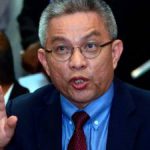
    Health Minister Datuk Seri Dr Adham Baba (pix) said all the trainee doctors would undergo a five-day induction training starting from Monday including handling of Covid-19 elements.

    Their immediate stationing at the hospitals is to relieve the burden of existing doctors who are focusing their attention on Covid-19 cases.

    “They (trainees) have to undergo an induction course and we (MOH) will provide them with skills pertaining to Covid-19 elements before they enter the MOH system,“ he told reporters after hearing a briefing on the Covid-19 situation at Permai Hospital, here, today.

    Also present were Johor Health and Environment Committee Chairman R. Vidyananthan and Johor Health Director Dr Aman Rabu.

    On the tabligh members who attended a gathering at the Sri Petaling Jamek Mosque, Kuala Lumpur, from Feb 27 to March 1, he said 508 participants from the state who attended the programme had volunteered to have health checks on Covid-19.

    “Ninety-four patients were treated at the Permai Hospital with 21 of them positive for Covid-19.

    “There are 73 others who are Persons Under Investigation (PUI) for Covid-19 including 13 who are tabligh members who had attended the gathering,“ he said, calling on those who had attended the gathering to volunteer for health examination.

    At the same time, the Tenggara Member of Parliament called on the public to respect the government’s decision that all gatherings including international meetings, sports, social and religious events be postponed or canceled accordingly until April 30.

    “Concerning the limit of a mass gathering, we have heard the Prime Minister’s (Tan Sri Muhyiddin Yassin) message that there should be no gathering in the current situation, I urge the people not to hold a public gathering of more than 50 people at any one time,“ he said, advising the public to practice good hygiene. especially washing their hands.

    At the same time, he said MOH also urged private hospitals to limit visiting hours as done in government hospitals to reduce the risk of Covid-19 infection.

    “We have called for the co-operation of private hospitals to be more stringent in this regard and, the latest, we have reached an understanding with private hospital in dealing with Covid-19,“ he said. — Bernama

    Covid-19: 1,000 housemen to assist government hospitals
    Read More
    https://www.thesundaily.my/local/covid-19-1000-housemen-to-assist-government-hospitals-XC2127473

    Views: 0

  • Pentagon ‘wishes to reconsider’ awarding JEDI contract to Microsoft

    Pentagon ‘wishes to reconsider’ awarding JEDI contract to Microsoft

    The US Department of Defense said Thursday it wants to reconsider its decision to award a multi-billion-dollar military cloud computing contract to Microsoft in a bidding process Amazon claims was tainted by politics.

    Read More
    https://techxplore.com/news/2020-03-pentagon-reconsider-awarding-jedi-microsoft.html

    Views: 0

  • Trump ban on travel from Europe escalates pain for airlines

    Trump ban on travel from Europe escalates pain for airlines

    President Donald Trump’s decision Wednesday to impose a 30-day ban on most Europeans entering the United States is the latest calamity for airlines already reeling from falling bookings and cancelled reservations as people try to avoid contracting the coronavirus.

    Read More

    Views: 0

  • California AG drops challenge to T-Mobile-Sprint merger

    California AG drops challenge to T-Mobile-Sprint merger

    California’s attorney general said Wednesday that the state will not appeal a judge’s decision approving T-Mobile’s $26.5 billion purchase of Sprint.

    Read More

    Views: 0

  • Global gathering of ministers determines road safety agenda to 2030

    The 3rd Global Ministerial Conference on Road Safety convened 1700 delegates from around 140 countries, including more than 70 ministers and vice-ministers and heads of international agencies, civil society organizations, foundations and private companies. Hosted at the request of the UN General Assembly by the Government of Sweden in collaboration with WHO, the theme was “Achieving Global Goals 2030”, highlighting the connections between road safety and achievement of other Sustainable Development Goal targets.

    Through its 6 high-level panels and 18 parallel sessions, the Ministerial Conference addressed a range of topics, from building effective leadership for road safety to promoting sustainable cities and communities, mitigating climate change through road safety, and ensuring the safety of pedestrians and cyclists. The gathering was instrumental in reviewing progress in the Decade of Action for Road Safety 2011-2020 and defining ways to accelerate action on proven strategies to save lives. Among many pre-events, the 2nd World Youth Assembly for Road Safety hosted by YOURS: Youth for Road Safety and co-hosted by WHO, brought 200 young leaders together proclaiming “Enough is enough!” and claiming their space at the decision-making table for sustainable mobility.

    The Ministerial Conference culminated in the forward-looking “Stockholm Declaration”, which calls for a new global target to reduce road traffic deaths and injuries by 50% by 2030. In addition, it invites strengthened efforts on activities in all five pillars of the Global Plan for the Decade of Action: better road safety management; safer roads, vehicles and people; and enhanced post-crash care. It also calls for speeding up the shift to safe, affordable, accessible and sustainable modes of transport like walking, cycling and public transport. WHO is asked to continue to produce the series of global status reports, as a means of monitoring progress towards achievement of the 12 Global Road Safety Performance Targets.

    Today, around 1.35 million people lose their lives on the world’s roads every year, and as many as 50 million are injured. More than one quarter of those killed and injured are pedestrians and cyclists. Road traffic injuries are now the leading cause of death for children and young adults aged 5-29 years. Given the enormous human suffering and major economic losses for families and societies, road traffic deaths remain an unacceptable price to pay for mobility.

    Read More
    https://www.who.int/news-room/detail/20-02-2020-global-gathering-of-ministers-determines-road-safety-agenda-to-2030

    Views: 0

  • Statement on the meeting of the International Health Regulations (2005) Emergency Committee for Ebola virus disease in the Democratic Republic of the Congo on 12 February 2020

    Statement on the meeting of the International Health Regulations (2005) Emergency Committee for Ebola virus disease in the Democratic Republic of the Congo on 12 February 2020

    The meeting of the Emergency Committee convened by the WHO Director-General under the International Health Regulations (IHR) (2005) to review the current Ebola virus disease (EVD) outbreak in the Democratic Republic of the Congo (DRC) took place on Wednesday, 12 February 2020, from 14:00 to 16:45 Geneva time (CEST).

    Proceedings of the meeting

    Members and advisors of the Emergency Committee were convened by teleconference.

    The Secretariat welcomed the Committee and thanked them for their support. The meeting was turned over to the Chair, Dr Robert Steffen.

    Dr Steffen also welcomed the Committee and gave the floor back to the Secretariat.

    Representatives of WHO’s legal department and the department of compliance, risk management, and ethics briefed the Committee members on their roles and responsibilities.

    Committee members were reminded of their duty of confidentiality and their responsibility to disclose personal, financial, or professional connections that might be seen to constitute a conflict of interest. Each member who was present was surveyed and no conflicts of interest were judged to be relevant to the meeting.

    The Chair then reviewed the agenda for the meeting and introduced the presenters.

    Presentations were made by representatives of the Ministry of Health of the Democratic Republic of the Congo (DRC), the WHO Secretariat, and the UN Ebola Emergency Response Coordinator.

    The current situation in the DRC was reviewed. As of 10 February 2020, there were a total of 3431 cases, of which 3308 were confirmed and 123 were probable. 2253 persons have died (66%). Between 3 and 9 February 2020, three new confirmed cases were reported in Beni Health Zone, North Kivu. These three cases were already registered as contacts and two were under surveillance at the time of detection. More than 2000 contacts are being followed. There has been an increase in the number of security incidents in recent months.

    Challenges that remain include: strengthening of community acceptance for full commitment to response measures; protection of personnel at strategic health checkpoints; improvement of infection prevention and control practices in health facilities; strengthening of the local health system; and comprehensive treatment and support for patients in recovery.

    The WHO Secretariat gave an overview of the epidemiological situation, which shows an overall encouraging trend in case incidence and geographic spread. It was noted that sustaining this progress depends on the security situation and control of the well-known drivers of transmission, particularly in traditional health facilities, and on continued trust and communication with the community.

    A risk communication and community engagement programme has been developed, as has an EVD survivors programme. It is critical to ensure the long-term sustainability of these two initiatives.   

    The situation in countries neighbouring DRC was reviewed, as was preparedness in nonaffected areas of DRC. An EVD operational readiness standardized approach has been implemented in 9 priority countries. More than 2400 alerts have been investigated, and more than 14,600 health workers have been vaccinated.

    The UN Ebola Emergency Response Coordinator gave a brief report on operational support, focused on security challenges and preparations for any resurgence of disease.

    Context and Discussion

    The Committee noted a great deal of progress in the situation since its last meeting and commended the response, under the leadership of the DRC Ministry of Health and the multisectoral coordination commission established in July 2019. Support provided by WHO, UN agencies, nongovernmental organizations and other partners has also contributed to limiting the spread and impact of this virus in a difficult context. An increase in the number of alerts was attributed to strong and proactive community surveillance.

    Conclusions and Advice

    It was the unanimous view of the Committee that this event still constitutes a public health emergency of international concern (PHEIC) under the IHR (2005).

    The Committee acknowledged the revised risk assessment, which puts the risk now as high at national and regional levels, and low at the global level.

    The Committee was concerned that withdrawing the PHEIC now might have adverse consequences for the response efforts through diminishing focus. Additionally, although the primary concern of the Committee is EVD, there are serious ongoing outbreaks of other diseases, including measles and cholera, in DRC. The country continues to need support to combat infectious diseases as well as to strengthen its health system. Further, there remains an urgent need to maintain international solidarity for the response.

    The Committee noted the ongoing discussions about the interpretation in the text of the IHR (2005) of the terms international and regional spread, and about creating an intermediate level of response between the binary possibilities of PHEIC or no PHEIC, in a way that does not require reopening negotiations on the Regulations. The Committee supports these discussions, as an intermediate level would be as useful for gradually ending a PHEIC and for signaling the potential for one to be declared.

    The Committee provided the following advice to the Director-General for his issuance as revised Temporary Recommendations under the IHR (2005).

    For DRC:

    • Sustain the political commitment and multisectoral coordination approach to the response.
    • Continue to engage and build trust with associations of survivors to facilitate rapid detection of any cases arising from exposure to infected bodily fluids of survivors.
    • Continue to strengthen capacity, implementation, and coordination for community awareness and engagement, including a focus on hotspots, preventing resurgence where cases have declined, and to support survivors in their communities.
    • Further enhance the acceptance of response measures and address access and security issues by engaging influencers and decision makers for all interventions.
    • Strengthen measures to prevent and manage nosocomial infections, including systematic mapping of health facilities, targeting of IPC interventions and sustain support to those facilities through monitoring and supervision, including in private-sector and traditional health facilities.
    • Continue cross-border screening and step up monitoring at checkpoints around hotspots and at main roads.
    • Continue to implement and share real-time full-genome genetic sequencing of all new confirmed cases.
    • Strengthen measures to prevent and manage nosocomial infections, including systematic mapping of health facilities, targeting of IPC interventions and sustain support to those facilities through monitoring and supervision.
    • Strengthen preparedness in non-affected provinces of DRC, and more generally strengthen the health system across the country to respond to concurrent health emergencies.
    • Continue to implement optimal vaccine strategies that have proven maximum impact on curtailing the outbreak, as recommended by WHO’s Strategic Advisory Group of Experts (SAGE).

    For countries at risk:

    • At-risk countries should maintain their work with partners to improve their preparedness for detecting and managing imported or locally acquired cases, including the transparent sharing of detailed information on suspect cases, as required by the International Health Regulations (2005), and sharing laboratory samples of suspect cases for confirmatory testing in accordance with WHO norms and guidance.
    • Countries should continue to map population movements and sociological patterns that can predict risk of disease spread.
    • Risk communications and community engagement, especially at points of entry, should be maintained.

    For all countries:

    • As recommended previously, no country should close its borders or place any restrictions on travel and trade.
    • The Committee does not consider entry screening at airports or other ports of entry outside the region to be necessary.

    The Committee emphasized the importance of continued support by WHO and other national and international partners towards the effective implementation and monitoring of these recommendations.

    Based on this advice, the reports made by the affected State Party, and the currently available information, the Director-General accepted the Committee’s assessment and on 12 February 2020 maintained the Ebola outbreak in the Democratic Republic of the Congo as a Public Health Emergency of International Concern (PHEIC).

    The Director-General endorsed the Committee’s advice and issued them as Temporary Recommendations under IHR (2005) to reduce the international spread of Ebola, effective 12 February 2020. The Director-General thanked the Committee Members and Advisors for their advice and requested their reassessment of this situation within two months or earlier if the situation requires.

    Statement on the meeting of the International Health Regulations (2005) Emergency Committee for Ebola virus disease in the Democratic Republic of the Congo on 12 February 2020
    Read More
    https://www.who.int/news-room/detail/12-02-2020-statement-on-the-meeting-of-the-international-health-regulations-(2005)-emergency-committee-for-ebola-virus-disease-in-the-democratic-republic-of-the-congo-on-12-february-2020

    Views: 0

  • WHO and FIND formalize strategic collaboration to drive universal access to essential diagnostics

    Geneva, Switzerland – 10 February 2020 – The World Health Organization (WHO) and the Foundation for Innovative New Diagnostics (FIND) announced today that a memorandum of understanding has been signed by the two organizations to formalize a strategic collaboration that will strengthen diagnosis in resource-poor countries by closing major diagnostic gaps at country level and bolstering disease surveillance that will inform public health initiatives and enhance outbreak preparedness and response.

    “This collaboration is an inspiring development that will take us a long way towards ensuring access to diagnostics to all who need them,” said Dr Tedros Adhanom Ghebreyesus, Director-General of the World Health Organization. “Global health challenges such as the ongoing novel coronavirus (2019-nCoV) outbreak demonstrates that without these essential elements of health systems, we cannot hope to promote health, keep the world safe, and serve the vulnerable. I look forward to working closely with FIND to determine what countries need and to forge a path to deliver these innovations so that no one is left behind.”

    Diagnosis is a driver of patient, financial and health systems impact, and a critical enabler of universal health coverage, but it is also the weakest link in the care cascade. This is especially true in primary healthcare settings in low- and middle-income countries. A unique and unprecedented opportunity exists to expand the role and impact of diagnostics to fully realize their potential to address major health security threats and evolving disease burdens through technological and digital advances.

    FIND has been an active partner with WHO since 2008 and a WHO Collaborating Centre since 2014, acting in the areas of laboratory strengthening and diagnostic technology evaluation. This expanded collaboration will put in place the building blocks necessary to enable transformative change in a move toward a country-led diagnostics alliance. Initial workstreams will focus on demand-driven access to essential diagnostics and the development of national Essential Diagnostics Lists, alongside collection of data that assist the scale up of diagnostics to support low- and middle-income countries on their paths to universal health coverage.

    “Each and every person has the right to a quality, timely diagnosis,” said Catharina Boehme, CEO of FIND. “Comprehensive diagnostic services underpin functional and efficient health systems not only to manage day-to-day healthcare needs, but also to ensure new disease outbreaks can be spotted and contained quickly. Working closely with WHO as part of a country-led alliance, we will strive to ensure that low- and middle-income countries have what they need to develop their own comprehensive, data-driven diagnostic strategies that enable universal health coverage and empower disease surveillance. Our ambition is that all patients, providers and decision-makers have access to the diagnostic solutions needed for optimal health outcomes.”

    The strategic collaboration agreement will initially run for a period of 5 years, until 2025.

    #  #  #

    About FIND

    FIND is a global non-profit organization that drives innovation in the development and delivery of diagnostics to combat major diseases affecting the world’s poorest populations. Our work bridges R&D to access, overcoming scientific barriers to technology development; generating evidence for regulators and policy-makers; addressing market failures; and enabling accelerated uptake and access to diagnostics in low- and middle-income countries (LMICs). Since 2003, we have been instrumental in the development of 24 new diagnostic tools used in 150 LMICs. Over 50 million FIND-supported products have been provided to our target markets since the start of 2015. A WHO Collaborating Centre, we work with more than 200 academic, industry, governmental, and civil society partners worldwide, on over 70 active projects that cross six priority disease areas. FIND is committed to a future in which diagnostics underpin treatment decisions and provide the foundation for disease surveillance, control and prevention. For more information, please visit www.finddx.org


    About WHO

    The World Health Organization is the directing and coordinating authority for health within the United Nations system. It is responsible for providing leadership on global health matters, shaping the health research agenda, setting norms and standards, articulating evidence-based policy options, providing technical support to countries and monitoring and assessing health trends. WHO is committed to the enjoyment of the highest attainable standard of health as one of the fundamental rights of every human being without distinction of race, religion, political belief, economic or social condition. WHO’s current global programme of work sets out three interconnected strategic priorities: ensuring healthy lives and well-being for all at all ages; achieving universal health coverage; and addressing health emergencies and promoting healthier populations. These priorities are linked to three ambitious targets, the “triple billion”: one billion more people to benefit from universal health coverage; one billion more people better protected from health emergencies; and one billion more people enjoying better health and well-being.


    Read More
    https://www.who.int/news-room/detail/10-02-2020-who-and-find-formalize-strategic-collaboration-to-drive-universal-access-to-essential-diagnostics

    Views: 0

  • Spinoza’s Ethics of Strength of the Emotions in W Somerset Maughm’s Of Human Bondage

    [ad_1]

    The writer probes on the complex world of W. Somerset Maughm’s protagonist in the novel Of Human Bondage, using the propositions the Jewish Portuguese philosopher Baruch Spinoza postulated in his book Ethics in 1674. Some of Spinoza’s propositions are as follows( Morgan, 2006, pp 108-120):

    The following propositions of Spinoza enlighten the changing character of Philip in his own bildungsromans of his life. The force and increase of any passive emotion and its persistence in existing is defined not by the power whereby we ourselves endeavour to persist in existing, but by the power of external causes compared with our own power;

    The force of any passive emotion can surpass the rest of man’s activities or power so that the emotion stays firmly fixed in him;

    An emotion cannot be checked or destroyed except by a contrary emotion which is stronger than the emotion which is to be checked;

    Knowledge of good and evil is nothing other than the emotion of pleasure or pain insofar as we are conscious of it;

    An emotion whose cause we think to be with us in the present is stronger than it would be if we did not think the said cause to be with us;

    We are affected toward a future thing which we imagine to be imminent mo intensely than if we were to imagine its time of existence tofarther away from the present. We are also affected by a remembrance of a thing we imagine to belong to the near past more intensely if we were to imagine it to belong to the distant past;

    An emotion toward a thing which we think of as inevitable [necessarius] is more intense, other things being equal, than emotion toward a thing possible or contingent, that is, not inevitable;

    Emotion toward a thing which we know not exist in the present, and which we imagine to be possible, is, other things being equal, more intense than emotion toward a contingent thing;

    Emotion toward a contingent thing which we know not to exist in the present, is, other things being equal, feebler than emotion toward a thing past;

    No emotion can be checked by the true knowledge of good and evil, insofar as it is true, but only insofar as it is;

    Desire that arises from the true knowledge of good and evil can be extinguished or checked by many other desires that arise from the emotions by which we are assailed;

    The desires that arises from a knowledge of good and evil insofar as this knowledge has regard to to the future can be the more easily checked or extinguished by desire of things that are attractive in the present;

    Desire that arises from the true knowledge of good and evil insofar as this knowledge is concerned with contingent things can be even more easily checked by desire for things which are present;

    Desire arising from pleasure is, other things being equal, stronger than desire arising from pain;

    Every man, from the laws of his nature, necessarily seeks or avoids what he judges to be good or evil.

    The more every man endeavours and is able to seek advantage, that is, to preserve his own being, the more he is endowed with virtue. On the other hand insofar as he neglects to preserve what is to his advantage, that is, his own being to that extent he is weak.

    Philip is highly affected by nature. There is in Nature no individual thing that is surpassed in strength and power by some other thing. Whatsoever thing there is, there is another more powerful by which the said thing can be destroyed. And he was able to surpass all his problems because of the incoming different emotions, problems which proved to make him stronger if not released from “Human Bondage”.

    The force whereby a man persist in existing is limited, and infinitely surpassed by the power of external causes.

    Philip’s deformity limits his own persistence to live. But his meeting with Hayward, Clutton and Lawson, his former classmates in France, who taught him that life is all about passion and the pursuit of it, he became engross in his art. France did not also care about his clubfoot. Cronshaw taught him more philosophy in life about living in let live. Cronshaw even on his death bed, defied doctors’ prohibition. His life is anyway to end just like any other’s lives.

    Set in Kent, England, a sub-urban near London, the novel presents the multifaceted personal, social, political and religious experiences of Philip carey from his childhood to his middle age of thirty. A bildungsroman (1991, Smiley) in style, which highlights the formation of a youngman’s character through education, travels and early life experiences. Philip at the age of nine, as a young boy, is set apart from his peers by some misfortune and undergoes a humiliating experience that later proves strengthening. his first experience of love is unsuccessful or problematic one that nevertheless paves the way to a happy marriage with a suitable mate. The novel has ample observation, if not criticism, with the character’s institutions such as schools, churches and class structures.

    Philip’s personal life is truly an amalgam of life’s tragedies. But how he surpassed the seemingly insurmountable heap of oppressing weight, if not the meaninglessness or nothingness of life, is the focus of this attempt anchored on Spinoza’s propositions. To enumerate, at an early age, his mother died of tuberculosis and his father, a medical doctor, died of lung cancer. His innocence never understood the situation. He has only the temporary joy of travelling to Blackstable to live with his uncle William and childless Auntie Louisa. Forcibly liking his second family as an orphan, he is left reading his books without noise for his uncle, a Vicar in the community, is irated with children’s unruly behaviour. Aunt Louisa is incapable of understanding Philip. he is left with the care of the governess. His personal disability or deformity, being born with a club-foot, proves to be the stigma of his life forever. His early education in Kingston School, caused his early childhood bitter as his peers laughed at him, mocked and physically abused him because of his physical abnormality. Then, his adolescence which brings him to Heidelberg, Germany to study foreign languages, is never sweet. Girls chided him for his deformity. the consolation is meeting friends like Hayward and Miss Wilkinson, who flirted with him, to his disgust. His sojourn to France, albeit, his uncle’s disappointment, proves to be annihilating. His lack of talent in painting plus his deformity, made him a mediocre student. His classmate Fanny Price, who fell in love with him, on the pretext of sharing the same abnormality (hers is lack of beauty), committed suicide out of hunger and wretchedness.

    Then everything escalated to its height, when realizing that painting is not his passion, he goes back to England. He decides to change again to pursue what his uncle William tells him to do: to follow the footsteps of his father. To be a doctor. feeling he has nothing to do, he embraces the new idea. Sauntering along the Parliamentary Street of London, he is driven to dine in a cafe where he meets the slatternly waitress Mildred Rogers who awakens his sexual desire. But his languid mien, caused by his club-foot proves to be a disadvantage. the waitress prefers rugged and rich men. But his desire to pursue the pale, anaemic, aloof Mildred, beomes a challenge to him. Gradually, the two becomeclose. But the ambitious and materialistic waitress always insults him because of his deformity. to slander him cripple, would totally “cripple” his mood and emotion. Even when Philip is generous to the moody Mildred, she hurt him by marrying a German businessman Miller. His desperation is tantamount to his yearning for Mildred. He is left believing that one day, he would see Mildred again. His concentration with his medical study is forlorned. And Mildred came back,looking sickly, with a child. His generosity and forgiveness for his first love, who hurts him the most, is even greater than life. The ingrate waitress after a little recovery from poverty, elopes with Griffith, Philip’s handsome and robust classmate. That is the height of Mildred’s shamelessness. So her expected return is welcomed with derision by the newly awakened Philip. Even when Mildred turns into a prostitute, Philip is only capable of compassion, without passion or sexual desire. She is freed at last. And Philip is extricated from the pains excruciatingly caused by the destitute Mildred.

    His obsession to Mildred costs Philip his fortune and gradually his savings is left with seven pounds. He is forced to stop from his medical studies that brings him to experience unbelievable poverty. He meets the generous Athelneys who fed and sheltered him in his misery. His uncle’s death, leaving an average fortune, helps him to finish his medical studies. His fateful shelter with the Athelneys brings him to his final, harmonious and peaceful resolution to marry Sally Athelney and go on with his life beautifully. Shakespeare is affirmed by saying that “all is well that ends well.

    At this juncture, it is noteworthy to enumerate Spinoza’s propositions to elucidate Philip’s “bondage” and his strength of his emotion. Spinoza in his preface to his philosophical treatise wrote:

    I assign the term “bondage” to man’s lack of power to control and check the emotions. For a man at the mercy of his emotions is not his own master but is subject to fortune, in whose power he so lies that he is often compelled, although he sees the better course, to pursue the worse. In this Part I have set myself the task of demonstrating why is so, and also what is good and what is bad in emotions. But before I begin, I should like to make a few preliminary observations on perfection and imperfection, and on good and bad ( Morgan, 2006).

    In the beginning, Philip is a slave if not a victim of his emotion. His physical deformity, his club-foot, caused him too much pain. He learned to hate his classmates and,worst, abandoned his belief in God. He could not appreciate the God of his uncle vicar when God cannot give him the miracle he wanted to have normal feet. His painful childhood in school changed him to be rough character. He never wanted to become a vicar anymore. His obsession to Mildred indeed showed his real weakness as a man, and even wretchedness as a human being because of his deformity. he would always think that women cannot love him as he is because of his deformity.

    He who has undertaken something and has brought it to completion will say that the thing is completed; and not only he but everyone who rightly knew, or thought he knew, the intention and aim of the author of that work. For example, if anyone sees a work (which I assumed is not yet finished) and knows that the aim of author is to build a house, he will say the house is imperfect. On the other hand, as soon as he sees that the work has been brought to the conclusion that its author had intended to give it, he will say that the house is perfect. But if anyone sees a work whose like he had never seen before, and he does not know the artifecer’s intention, he cannot possibly know whether the work is perfect or imperfect.

    This appears to have been the original meaning of these terms. But when men began to form general ideas and to devise ideal type of houses, buildings, towers, and so on, and to prefer some models to others, it came about that each called “perfect” that which he saw at variance with his own preconceived ideal, although in the artifecer’s opinion it had been fully completed. There seems to be no other reason why even natural phenomena (those not made by human hand) should commonly be called perfect or imperfect. For men there are wont to form general ideas both natural phenomena and artifacts, and these ideas they regard as models, and they believed that Nature (which they consider does nothing without an end in view) looks to this ideas and holds them before herself as models. So when they see something occurring in Nature at variance with their preconceived ideal of the thing in question, they believed that Nature has then failed or blundered and has left that thing imperfect from their own preconceptions rather than from true knowledge.

    So perfection and imperfection are in reality only models of thinking, notions which we are wont to invent from comparing individuals of the same species or kind; and it is for this reason that I previously said (Def. 6, II) that by reality and perfection I mean the same thing. For we are wont to classify all the individuals in Nature under one genus which is called the highest genus, namely, the notion of Entity, which pertains to all the individuals in Nature without exception. Therefore insofar as we classify individuals in Nature under this genus and compare them with one another and find that some have more being or reality than others, to that extent we say that some are more perfect than the others. And insofar as we attribute to them something involving negotiation, such as limit, end, impotence and so on, to that extent we call them imperfect because they do not affect our minds as much as those we call perfect, and not because they lack something of anything except that which follows from the necessity of nature of its efficient cause; and whatever follows from the necessity of the nature of its efficient cause must be necessarily be so.

    To be a master of his emotion is to attain perfection. It may not be physical but spiritual, mental and emotional. His challenges may have hardened him but enlightened him to loosen up and later, embrace the beauty of life. The unattainable perfection, was answered, through his friend Cronshaw, a poet whom he met in France, that the meaning of life cannot be answered unless one lives it. he realized that men are born, study, work, marry, have children and die is the most beautiful pattern that the Persian rug edifies.

    As for the terms “good” and “bad,” they likewise indicate nothing positive in things considered in themselves, and nothing but models of thinking, or notions which we form from comparing things with one another. For one and the same thing can at the same time be good and bad, and also indifferent. For example, music is good for one who is melancholy, bad for one in mourning, and neither good or bad for the deaf. However, although this is so, these terms ought to be retained. For since we desire to form the idea of man which we may look to as model of human nature, we shall find it useful to keep these terms in the sense I have indicated. So in what follows I shall mean by “good” that which we certainly know to be the means for our approaching nearer to the model of human nature that we set before ourselves, and by “bad” that which we certainly know prevents us from reproducing the said model. For it is important to note that when I say somebody passes from a state of less perfection, to a state of greater perfection, and vice versa, I do not mean that he changes from one essence or to form to another (for example, a horse is as completely destroyed if it changes into a man as it would be if it were to change into an insect), but that we conceive his power of activity, insofar as this is understood through his nature, to be increased or diminished.

    Philip may have been both good and bad due to circumstances. he was good in the Blackstable with his Auntie Louisa and Uncle William. he became bad in school because his classmates taunted him because of his clubfoot. In Heidelberg, he is good to all the people even if he did not understand their silence and even their insolence. In France, was forced to become bad, to protect himself from the looming abuses of other foreigners. The death of an anti-social fanny Price, showed him to be the only compassionate painting student.

    Hence, after a series of Philip’s tragedy, his experiences, his meeting with different people, his education, his travel to Heidelberg, to Paris and to London, his affluence and reversal of his fortune to poverty taught him greatest lessons in life. That life can be beautiful if man knows to master his emotion, moderate his desire and be reasonable in every decision. A man is finally freed from the chains and cufflinks ” Of Human Bondage”.

    References:

    Maughm, Somerset W. (1991). Of Human Bondage.

    Canada: Bantam Book Doubleday.

    Morgan, Michael (ed.). (2006). The Essential Spinoza: Ethics And Related Writings.

    Cambridge: Hackett Publishing, Inc.

    [ad_2]

    Source by Wilfredo M. Valois

    Views: 0
  • Distinguishing Drug Abuse From Drug Addiction

    [ad_1]

    Though “drug abuse” and “drug addiction” are often used interchangeably, in reality the terms refer to two distinct behavior patterns. An individual can abuse or misuse drugs without being inevitably addicted to them. Abuse or misuse involves the use of drugs defying the culturally acceptable standards or medically prescribed doses to attain a certain effect. The substances abused may be legal, such as alcohol or prescription drugs, or illegal, like heroin and other street drugs which have no medicinal value.

    On the other hand, drug addiction, or compulsive drug use, refers to an uncontrollable desire to use a drug in spite of being aware of harmful psychological and physiological effects that they can have on the body. Addiction is often characterized by an insatiable appetite for substances by increasing the dosage, leading to a complete dependence on them.

    Since abuse and addiction are two distinct concepts, their causes are unique as well. Abuse is generally considered to be more complicated but it is not necessarily triggered by any motivational factor, unlike addiction which is caused by a powerful motivational force. Therefore, in most of the cases, abuse may not always result in addiction, but addiction can certainly lead to abuse.

    Impact of drug abuse and addiction on the brain

    It has been observed that both drug abuse and drug addiction have similar effects on mind and body. People often view abuse and addiction as a moral weakness or character flaw. One of the common myths surrounding drug use is that quitting it is directly linked to behavioral changes. In reality, addiction is a disease which alters the brain functions, hijacking the natural motivational control circuits. Thus, quitting is simply not a matter of choice or willpower. Though, the decision to use the drug initially might be voluntary, changes in the brain structure due to repeated drug use can inhibit someone’s self-control and decision-making ability, causing intense cravings.

    Experts attribute the inability to refrain from drug use to these changes in the brain. However, modern medical advancements have led to the development of an array of treatment and rehabilitation options to combat the disastrous effects of addiction and help abusers take control of their lives. Studies have shown that a combination of medications and behavioral therapy can boost the recovery process with minimal withdrawal effects.

    Possible reasons leading to drug abuse and addiction

    For those who are dependent on illegal substances, it can be difficult to know whether they have crossed the limit. Here are some possible reasons that can trigger drug abuse or addiction:

    • Connecting socially: A strong desire driven by an urge to fit into a certain group could lead people toward drugs.
    • Dealing with problems in life: Continuous drug use can get individuals accustomed to it, and soon it might become the only way to escape from problems and challenges.
    • Using drugs to combat other issues: Serious concerns, such as panic attacks or chronic pain, can cause dependence on drugs, until people discover healthier alternative methods to counter such problems.
    • Strong influence of any drug: Frequent use of drugs triggers dependence on them. Thus, what started as a voluntary choice may slowly transform into a physical and psychological need.

    Leading a drug-free life

    Many families and individuals have suffered great losses due to addiction to drugs. Fortunately, there is hope, though the battle to eliminate addiction and regain sobriety is challenging. There are numerous treatment strategies that can go a long way in helping people come out of their addiction-related problems.

    [ad_2]

    Source by Barbara Odozi

    Views: 0