Tag: country

  • WHO statement on cases of COVID-19 surpassing 100 000

    WHO statement on cases of COVID-19 surpassing 100 000

    As of today’s reports, the global number of confirmed cases of COVID-19 has surpassed 100 000. As we mark this sombre moment, the World Health Organization (WHO) reminds all countries and communities that the spread of this virus can be significantly slowed or even reversed through the implementation of robust containment and control activities. 

    China and other countries are demonstrating that spread of the virus can be slowed and impact reduced through the use of universally applicable actions, such as working across society to identify people who are sick, bringing them to care, following up on contacts, preparing hospitals and clinics to manage a surge in patients, and training health workers.

    WHO calls on all countries to continue efforts that have been effective in limiting the number of cases and slowing the spread of the virus. 

    Every effort to contain the virus and slow the spread saves lives. These efforts give health systems and all of society much needed time to prepare, and researchers more time to identify effective treatments and develop vaccines. 

    Allowing uncontrolled spread should not be a choice of any government, as it will harm not only the citizens of that country but affect other countries as well. 

    We must stop, contain, control, delay and reduce the impact of this virus at every opportunity. Every person has the capacity to contribute, to protect themselves, to protect others, whether in the home, the community, the health care system, the work place or the transport system. 

    Leaders at all levels and in all walks of life must step forward to bring about this commitment across society. 

    WHO will continue to work with all countries, our partners and expert networks to coordinate the international response, develop guidance, distribute supplies, share knowledge and provide people with the information they need to protect themselves and others.

    WHO statement on cases of COVID-19 surpassing 100 000
    Read More
    https://www.who.int/news-room/detail/07-03-2020-who-statement-on-cases-of-covid-19-surpassing-100-000

    Views: 0

  • Would you ditch your car if public transport were free? Here’s what researchers have found

    Would you ditch your car if public transport were free? Here’s what researchers have found

    Luxembourg recently became the first country in the world to make all public transport free. As of March 1 2020, all buses, trains and trams throughout the country can be boarded without paying a fare—the largest area to institute free public transport for both residents and tourists so far.

    Read More

    Views: 0

  • Los Angeles port, country’s biggest, hit hard by coronavirus

    Los Angeles port, country’s biggest, hit hard by coronavirus

    The Port of Los Angeles, the biggest in the United States, has been significantly impacted by the new coronavirus outbreak and is forecasting a 15 to 17 percent drop in activity in the first quarter of the year, officials said Wednesday.

    Read More

    Views: 0

  • Virus game ‘Plague’ app pulled in China: developer

    Virus game ‘Plague’ app pulled in China: developer

    A popular game that allows players to create a virus and spread it worldwide has been pulled from Apple’s App Store in China, its developer said, as the country battles a real-life epidemic.

    Read More

    Views: 1

  • WHO launch eEML

    WHO launch eEML

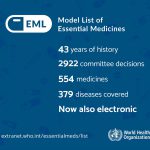
    The World Health Organization has launched a new easy-to-access, digital version of its Model list of Essential Medicines (EML). The move will revolutionize the way this core WHO reference tool is used.

    More than 150 countries currently use the WHO list to work out which medicines best meet their national health contexts and priorities, so they can compile their own national essential medicines lists.

    Essential medicines are those that satisfy the priority health care needs of a population. They are the medicines that need to be available in a functioning health system at all times, in appropriate dosage forms, of assured quality, and at prices individuals and the community can afford.

    Keeping up-to-date lists of the most important medicines a country needs is key to achieving health for all in a sustainable way.

    Since 1977, the WHO list has been revised every 2 years (most recently in 2019) by a group of experts and published in print or PDF formats. It includes information about available dose forms and strengths; specifications as to who should take a medicine; what conditions a medicine can treat and how it should be taken, as well as details about the clinical evidence supporting recommendations being made.

    The new electronic version brings the traditional EML to smartphones and computer screens in a comprehensive, freely accessible, online database. Instead of flicking through pages of information, users can search by simply clicking on the name of a medicine, for example, or a health issue. They can also make their own customized lists by exporting the list – in full or in part – into an Excel or Word version.  

    The electronic EML is the latest step in WHO’s effort to harness digital technologies to drive improvements in global public health, and advance progress towards universal health coverage. 


    WHO launch eEML
    Read More
    https://www.who.int/news-room/detail/27-02-2020-who-launch-e-eml

    Views: 0

  • The economic cost of female genital mutilation

    The economic cost of female genital mutilation

    An interactive data tool launched by WHO reveals for the first time the current and future financial cost of health care for women living with conditions caused by female genital mutilation (FGM).

    The total costs amount to USD 1.4 billion annually.

    fgm-cost-thumbnail

    The FGM Cost Calculator is being launched on this year’s International Day of Zero Tolerance for FGM. This new tool shows that if FGM were abandoned now the associated savings
    in health costs would be more than 60% by 2050. This data, available for 27 of the 30 countries where FGM is practiced, will strengthen the economic argument of community activists, policy makers, programme planners and donors working to end this
    human rights violation.

    Q&As on the FGM Cost Calculator
    Access the FGM Cost Calculator

    A human rights violation with economic costs

    FGM includes procedures that intentionally alter or cause injury to the female genital organs for non-medical reasons. More than 200 million girls and women alive today have been cut in 30 countries in Africa, the Middle East and Asia where FGM is concentrated.
    [1] An extreme form of gender discrimination, it is recognized internationally as a violation of the human rights of girls and women: including the right to health, security and physical integrity and the right to be free from torture and cruel, inhuman
    or degrading treatment.

    FGM has no health benefits and causes only harm. Women and girls who are subjected to FGM are at risk of both short- and long-term negative health consequences – including for their physical, sexual, mental, and social well-being.

    The direct financial cost of treating the negative health complications caused by FGM can span generations, starting as early as childbirth. This puts a significant economic burden on health systems and national budgets, especially in countries with rates
    of FGM greater than 10%.

    Until now, there have been limited data on the financial costs associated with FGM, making it hard to demonstrate the cost-effectiveness of programmes and policies that can prevent FGM by 2030 – a global priority in the Sustainable Development Agenda.
    The new WHO Cost Calculator now provides an economic argument which can be used by those advocating for an end to FGM.

    Calculating health care costs of FGM

    Users of the new FGM Cost Calculator can choose a country and identify current costs of treating health conditions caused by FGM. Since the tool is interactive, it produces bespoke graphs showing the potential amount of money saved if FGM is prevented
    by a selected percentage.

    If no action is taken to prevent FGM, it is estimated that related health costs will soar by 50% by 2050, as populations grow and as more girls undergo the procedure.

    How it works

    The FGM Cost Calculator combines data on health risk associated with FGM, health costs and national FGM prevalence to analyze the economic impact on national health services of treating the consequences of these harmful practices.

    Health risk data were taken from a WHO database created for this analysis, pooling all available information from systematic reviews of health consequences of FGM. The following categories were used, each with a biological link to FGM: gynaecological,
    obstetric, urological, mental and sexual, as well as the immediate health complications that can result following the cutting.

    To be included in the calculator, a health condition needed to show evidence of increased risk when comparing women with and without FGM. It also needed to have a treatment which could be implemented and costed in the health sector.

    Health costs were calculated from the WHO One Health Tool and other data. The financial burden of treating selected health conditions was calculated at a national level.

    A strong case for investment in preventing FGM

    Rates of FGM have declined over the past 30 years, but not fast enough to keep up with population growth. If trends continue, the number of girls and women undergoing FGM will rise significantly in the next 15 years, in turn raising national health care
    costs of caring for them.

    Additional resources are urgently needed to scale up interventions that can prevent FGM in the future and reduce health complications.

    By providing quantifiable numbers on the cost of treating health conditions directly linked to FGM, for the first time, the FGM Cost Calculator can be a crucial tool in building an investment case for a future where no girl or woman is cut.


    [1] Female Genital Mutilation/Cutting: A Global Concern, UNICEF, New York, 2016
    The economic cost of female genital mutilation
    Read More
    https://www.who.int/news-room/detail/06-02-2020-economic-cost-of-female-genital-mutilation

    Views: 0

  • To eliminate cervical cancer in the next 100 years, implementing an effective strategy is critical

    To eliminate cervical cancer in the next 100 years, implementing an effective strategy is critical

    Vaccination, screening, treatment and palliative care are the key interventions of WHO’s Draft Global Strategy towards the Elimination of Cervical Cancer as a Public Health Problem,
    the fourth most common cancer in women.

    On World Cancer Day, new estimates show that this strategy could save more than 62 million girls and women from a cervical cancer death and prevent 74 million cases within the next 100 years – but only if these interventions are used effectively
    together.

    No single intervention can eliminate cervical cancer

    These estimates, published by the WHO Cervical Cancer Elimination Modelling Consortium (CCEMC) in The Lancet, are based on the draft strategy’s targets to achieve a global coverage of 90% vaccination, 70% screening and 90% treatment by 2030.


    lancet

    Impact of HPV vaccination and cervical screening on cervical cancer elimination: a comparative modelling analysis in 78 low-income and lower-middle-income countries

    Mortality impact of achieving WHO cervical cancer elimination targets: a comparative modelling analysis in 78 low-income and lower-middle-income countries


    Developed by Member States, UN agencies and other partners, the draft global strategy seeks to redress the unequal burden of cervical cancer around the world. Nine in 10 cervical cancer deaths occur in low and lower-middle-income countries, where
    women lack access to health services.

    As Dr Tedros Adhanom Ghebreyesus, WHO’s Director-General has said, “It doesn’t have to be this way. Cervical cancer
    is one of the most preventable and treatable forms of cancer, as long as it is detected early and managed effectively.”

    This new analysis compares the impact of vaccination, screening and treatment of cervical pre-cancer lesions as single or combined interventions. Focusing on 78 countries where cervical cancer mortality is highest, the results clearly show that no
    single intervention will be sufficient to reduce levels of cervical cancer in the next 100 years to below the elimination target of 4 cases per 100,000 women per year.

    Acting immediately on all three fronts is crucial.                                                                                       

    90-70-90: a triple intervention by 2030 and beyond

    Vaccinating girls against cancer-causing types of human papillomavirus (HPV) before the age of 15 is the foundation for bringing every country’s incidence rate of cervical cancer down to the agreed elimination level.

    Right now, however, vaccination is not enough. As a single strategy, vaccination targets would only deliver a 0.1% reduction in cervical cancer mortality by 2030. Scaling up screening and treatment of cervical pre-cancer lesions at the same time would
    reduce mortality by more than one third, or 300,000 deaths, in the same period.

    The evidence shows that when all adult women are screened for cervical cancer at least twice, at ages 35 and 45, abnormalities are more likely to be detected before they become cancerous. When cancer has developed, screening increases a women’s
    likelihood of early and successful treatment, as well as palliative care if recovery is no longer an option.

    Meeting these triple-intervention targets would be a major contribution to target 3.4 of the UN Sustainable Development Goals (SDGs), a one-third reduction in premature mortality from non-communicable diseases by 2030.

    The future of cervical cancer elimination

    WHO’s global strategy towards eliminating cervical cancer aims to set the world on the right track by 2030, but it is just the beginning.

    At this pace, global elimination of cervical cancer is not predicted until 2120.

    While high HPV vaccination coverage is the primary prevention intervention, ensuring every woman has two cervical screenings in her life would accelerate elimination by 11 – 31 years, depending on the country.

    If no action is taken, cervical cancer deaths will rise almost 50% by 2030. Approval of the draft global strategy at the WHO World Health Assembly in 2020, and investment in mechanisms to deliver it, is vital.

    As the new World Cancer Report shows, only 18% of countries that currently provide screening for cervical cancer reached the recommended target of more than 70% coverage. An estimated 55% of low-income countries that reported offering
    cervical cancer screening generally lack accessible radiotherapy or surgery services.

    Elimination of cervical cancer is possible within the lifetime of today’s youngest girls, but the clock starts now and every intervention counts.


    To eliminate cervical cancer in the next 100 years, implementing an effective strategy is critical
    Read More
    https://www.who.int/news-room/detail/04-02-2020-to-eliminate-cervical-cancer-in-the-next-100-years

    Views: 0

  • WHO outlines steps to save 7 million lives from cancer

    WHO outlines steps to save 7 million lives from cancer

    The World Health Organization (WHO) today spells out the need to step up cancer services in low and middle-income countries. WHO warns that, if current trends continue, the world will see a 60% increase in cancer cases over the next two decades. The greatest increase (an estimated 81%) in new cases will occur in low- and middle-income countries, where survival rates are currently lowest.

    This is largely because these countries have had to focus limited health resources on combating infectious diseases and improving maternal and child health, while health services are not equipped to prevent, diagnose and treat cancers. In 2019, more than 90% of high-income countries reported that comprehensive treatment services for cancer were available in the public health system compared to less than 15% of low-income countries.

    “This is a wake-up call to all of us to tackle the unacceptable inequalities between cancer services in rich and poor countries,” says Dr Ren Minghui, Assistant Director-General, Universal Health Coverage/ Communicable and Noncommunicable Diseases, World Health Organization. “If people have access to primary care and referral systems then cancer can be detected early, treated effectively and cured. Cancer should not be a death sentence for anyone, anywhere.”

    Yet, progress in poorer countries is achievable. WHO and the International Agency for Research on Cancer (IARC) are releasing two coordinated reports on World Cancer Day (4 February), in response to government calls for more research into the scope and potential policies and programmes to improve cancer control.

    “At least 7 million lives could be saved over the next decade, by identifying the most appropriate science for each country situation, by basing strong cancer responses on universal health coverage, and by mobilizing different stakeholders to work together”, said Dr Tedros Adhanom Ghebreyesus, Director-General, WHO.

    WHO highlights a wide range of proven interventions to prevent new cancer cases. These include controlling tobacco use (responsible for 25% of cancer deaths), vaccinating against hepatitis B to prevent liver cancer, eliminating cervical cancer by vaccinating against HPV, screening and treatment, implementing high-impact cancer management interventions that bring value for money and ensuring access to palliative care including pain relief.

    “The past 50 years have seen tremendous advances in research on cancer prevention and treatment,” says Dr Elisabete Weiderpass, Director of IARC. “Deaths from cancer have been reduced. High-income countries have adopted prevention, early diagnosis and screening programmes, which together with better treatment, have contributed to an estimated 20% reduction in the probability of premature mortality between 2000 and 2015, but low-income countries only saw a reduction of 5%. We need to see everyone benefitting equally.” The challenge will be for countries to select treatments balancing considerations including cost, feasibility and effectiveness. Each government is tasked with choosing the appropriate innovative cancer therapies, while recognizing that established treatments, many of which are very effective and affordable, can provide benefits for cancer without causing financial hardship.

    Note to editors

    World Health Organization

    Report on Cancer: Setting priorities, investing wisely and providing care for all

    The report aims to set the global agenda on cancer, mobilize stakeholders and help countries set priorities for investing in cancer control and universal health coverage. It introduces the principles, tools and current priority cancer control interventions in the context of the current and future cancer burden and opportunities.

    International Agency for Research on Cancer

    World Cancer Report “Cancer research for cancer prevention”

    The report focuses on prevention and offers the most comprehensive overview of relevant research available to date, ranging from descriptive etiology, cellular and molecular biology, toxicology and pathology through to behavioural and social science. Key chapters include discussions on the impact of inequalities in cancer, vaccination and screening, genomic individual susceptibility to cancer and the finer identification of those at risk, which may allow ‘precision cancer prevention’.

    WHO outlines steps to save 7 million lives from cancer
    Read More
    https://www.who.int/news-room/detail/04-02-2020-who-outlines-steps-to-save-7-million-lives-from-cancer

    Views: 0

  • France pledges US$100 million (€90 million) for WHO Academy

    France pledges US$100 million (€90 million) for WHO Academy

    Geneva: France’s Minister for Europe and Foreign Affairs, Mr Jean-Yves Le Drian, and Dr Tedros Adhanom Ghebreyesus,  Director-General of WHO today met at the Permanent Mission of France to the United Nations in Geneva to discuss the WHO Academy, which will be the world’s largest and most innovative lifelong learning platform in global health.

    The WHO Academy aims to reach millions of people worldwide, offering high-tech learning environments at a “hub” in Lyon with “spokes” in the six WHO regions. The Academy will provide learning opportunities for leaders, educators, researchers, health workers, WHO staff and the broader public, and will deliver high quality, multilingual learning, both online and in-person, alongside a cutting-edge simulation centre for health emergencies.

    The discussion today follows a Declaration of Intent signed by Emmanuel Macron, President of the French Republic and Dr Tedros on 11 June 2019, and a pledge by France in the amount of US$ 100 million (€ 90 million) to WHO to support the creation of the WHO Academy, which will be established as an internal division within WHO.

    “Technology and innovation in learning are creating exciting new opportunities to accelerate progress towards health for all in every country,” said Dr Tedros Adhanom Ghebreyesus, Director-General of WHO. “The WHO Academy will support millions of learners to maximize health impacts with the best evidence, adult learning approaches and state-of-the-art technologies.”

    By propelling and strengthening digital innovations and lifelong learning opportunities around the world, the WHO Academy will play an instrumental role towards achieving WHO’s triple billion goal by 2023 and the health Sustainable Development Goals: 1 billion more people will benefit from universal health coverage; 1 billion more will be better protected in health emergencies, and 1 billion more will enjoy improved health and wellbeing.

    The funding from France represents a commitment to accelerate the development of the WHO Academy, and confirms the engagement of France — a longstanding partner of WHO and a key actor in global health – and its strong support to the ambitions of 13th WHO General Programme of Work to ensure healthy lives and well-being for all ages. 


    France pledges US$100 million (€90 million) for WHO Academy
    Read More
    https://www.who.int/news-room/detail/24-02-2020-france-pledges-us100-million-for-who-academy

    Views: 0