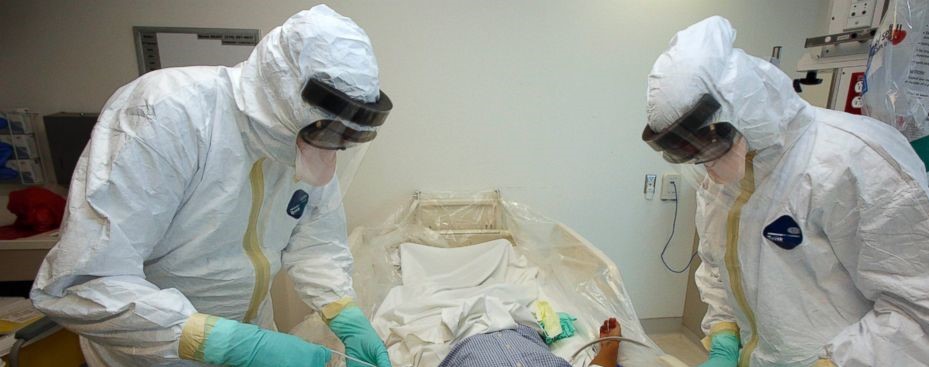
A lot of legal issues are bound to arise as an aftermath of the outbreak of Coronavirus otherwise referred to as COVID-19. There is therefore a need to shed light on some of the issues that may arise and how to navigate them. This article will x-ray the rights of patients, the rights of health workers and the basic minimum obligations of the government.
The Code of Medical Ethics in Nigeria 2008 lists acts that constitute professional negligence. Rule 29.4 of the Code outlines some of these acts as follows:-
a) Failure to attend promptly to a patient requiring urgent attention when the practitioner was in a position to do so;
b) Manifesting incompetence in the assessment of a patient;
c) Making an incorrect diagnosis particularly when the clinical features were so glaring that no reasonable skillful practitioner could have failed to notice them;
d) Failure to advise, or proffering wrong advice to a patient on the risk involved in a particular operation or course of treatment, especially if such an operation or course of treatment is likely to result in serious side effects like deformity or loss of organ, or function;
e) Failure to obtain the informed consent of the patient before proceeding on any surgical procedure or course of treatment when such consent was necessary;
f) Making a mistake in treatment e.g. amputation of the wrong limb, carelessness that results in the termination of a pregnancy, prescribing the wrong drug, or dosage in error for a correctly diagnosed ailment, etc;
g) Failure to refer, or transfer a patient in good time, when such a referral or transfer was necessary;
h) Failure to do anything that ought reasonably to have been done under any circumstance for the good of the patient;
i) Failure to see a patient as often as his medical condition warrants or to make appropriate comments in the case notes of the practitioner’s observations and prescribed treatment during such visits. It also includes failure to communicate with the patient or with his relatives as may be necessary with regards to any developments, progress or prognosis in the patient’s condition.
Rule 11.2 of the 2008 Code of Medical Ethics in Nigeria provides that, “A physician shall preserve absolute confidentiality on all he knows about his patient even after the patient has died.”
Rule 44 of the Code of Medical Ethics has extensive provisions on Confidentiality and when disclosure of information can be made. The Rule provides in part that:
“Disclosure of information on the patient by the doctor can only be made following an informed consent of the patient in writing. It is clear that the ethic covers even such information as induced abortion, venereal disease, attempted suicide, concealed birth and drug dependence but would exclude situations in which a discretionary breach of confidentiality is necessary to protect the patient or the community from danger and this must be made clear to the patient at the time of the confidential disclosure. Where statutory notification of disease is involved, the consent of the patient is not required.”
Confidentiality: To Disclose Identity Of Covid-19 Patients Or Not To Disclose?
COVID-19 is an infectious disease caused by a newly discovered coronavirus. Most people infected with the COVID-19 will experience mild to moderate respiratory illness and recover without requiring special treatment. Older people, and those with underlying medical problems like cardiovascular disease, diabetes, chronic respiratory disease, and cancer are more likely to develop serious illness.[1]
The Federal Ministry of Health confirmed the first case of COVID-19 in Nigeria on the 27th of February 2020. It is the case of an Italian citizen who works in Nigeria and returned from Milan, Italy to Lagos, Nigeria on the 25th of February 2020. In reaction to the report, the social was divided between those who want the name of the Italian disclosed and those that preferred it remains confidential. The outcry was even more when the Chief of Staff to the President tested positive according to reports from various media houses[2], but the Minister of Health decided to keep mute on the identity of the President’s aide who contacted the virus, citing confidentiality.
It will ordinarily be wrong to disclose the medical status of someone infected with COVID-19, for instancethe case of the Italian who was the index case. However in view of the proviso to Rule 44 of the Code of Medical Ethics 2008 which provides that a discretionary breach of confidentiality is necessary in order to protect the community from danger, I am of the view that the test results of popular figures who hold strategic offices like the Chief of Staff to the President or a Governor must be disclosed to guaranty public safety. This is necessary in view of the countless number of people from all works of life they come in contact with on a daily basis. It will be correct to have made their status public in the overriding interest of the public, since it will enable those who have come in contact with them isolate, just like we have seen in the cases of the British Prime Minister, the Bauchi State Govenor, Prince Charles, the First Lady of Canada and many more. We must commend those who announced their status in public themselves-it is the best thing to do in the interest of humanity
The World Health Organization (WHO) provides additional guidelines for the management of coronavirus patients specifically.[3]
Health workers should:
•follow established occupational safety and health procedures, avoid exposing others to health and safety risks and participate in employer-provided occupational safety and health training;
•use provided protocols to assess, triage and treat patients;
•treat patients with respect, compassion and dignity;
•maintain patient confidentiality;
•swiftly follow established public health reporting procedures of suspect and confirmed cases;
•provide or reinforce accurate infection prevention and control and public health information, including to concerned people who have neither symptoms nor risk;
•put on, use, take off and dispose of personal protective equipment properly;
•self-monitor for signs of illness and self-isolate or report illness to managers, if it occurs;
•advise management if they are experiencing signs of undue stress or mental health challenges that require support interventions; and
•report to their immediate supervisor any situation which they have reasonable justification to believe presents an imminent and serious danger to life or health.
Doctors and health workers in Nigeria must endeavor to digest the guidelines in the Code of Medical Ethics as well as the WHO Guidelines for management of Coronavirus victims and ensure they work strictly by their provisions. A breach of these duties have dire consequences.
Options Available To Covid-19 Patients Who Are Victims Of Medical Negligence
A Coronavirus patient who has suffered medical negligence has a number of options:
1. He could file a complaint with the regulatory body (e.g. the Medical and Dental Council of Nigeria, in the cases involving a Doctor). The Doctor will in the first instance be investigated by the Medical and Dental Practitioners Investigation Panel, after which he will be tried by the Medical and Dental Practitioners Disciplinary Tribunal. If found culpable, the Doctor may be warned, suspended from practicing for a period not exceeding 6 months or in very serious cases, have his name can be removed from the Register of Medical Practitioners. The Medical and Dental Practitioners’ Disciplinary Tribunal does not award monetary damages.
2. A suit can be filed against the Medical Doctor, the Hospital, Agency or Government in the High Court for Medical Negligence and monetary damages will be awarded if the Defendant(s) are found culpable.
3. If there is an element of Crime, a report could be made to the Police who would conduct Criminal Investigation and where the investigation reveals gross negligence, recklessness or wanton disregard for life of the victim, the police can prosecute or forward the case file to the office of the Attorney General of the State for possible prosecution in deserving cases.
A Need To Do More For Doctors And Other Professionals In The Health Sector
Health workers are at the front line of any outbreak response and as such are exposed to hazards that put them at risk of infection with an outbreak pathogen (in this case COVID-19). Hazards include pathogen exposure, long working hours, psychological distress, fatigue, occupational burnout, stigma, and physical and psychological violence.
During the outbreak of Ebola more than 500 health care workers died in Guinea, Liberia and Sierra-Leone alone. We also lost some of our finest doctors and health workers to the disease in Nigeria, the most prominent being Dr. Stella Adadevoh, who is credited with having curbed a wider spread of the Ebola virus in Nigeria by placing the index patient, Patrick Sawyer, in quarantine despite pressures from the Liberian government. As we speak, The coronavirus is waging a war of attrition against health care workers throughout the world, but nowhere is it winning more battles at the moment than in Italy and in Spain, where protective equipment and tests have been in severely short supply for weeks. In Spain 13.6% (6500) of those affected with the coronavirus are health workers and in Italy 10% (7400) of those affected with the virus are health workers. [4] In New York dozens of health workers have been affected with the virus, while hundreds are in quarantine.[5] According to reports filtering in as the time of concluding this article, three health workers have been infected with COVID-19 in Abuja, Nigeria.[6]
Human Rights Watch research into health system collapse in Hungary and Venezuela suggests the nations’ mismanaged, underfunded, and understaffed public healthcare system is poorly equipped to handle a COVID-19 outbreak. Patients and medical experts described a lack of basic hygiene protocol, lack of isolation rooms, and a shortage of health professionals, doctors and nurses, and medical supplies in general.
The situation is not too different in Nigeria at the moment and except something drastic is done we might be witnessing a devastating effect of the pandemic. Nigeria’s, public health capacity has been diminished by large scale public sector corruption. Medical personnel lack surgical masks and local supplies have been diverted and shipped to other markets partly due to corruption. Many states are ill-prepared to combat the impeding surge in patients. A senior health worker with a government hospital in Abuja, in an interview with Sahara Reporters, lamented the lack of quality Personal Protective Equipment for them, adding that government must invest in the protection of health workers at the frontline of the battle against the virus. He said, “The unfortunate thing is that the government is not providing us with what to work with. It is sad that our PPE are not up to the world standard and can be penetrated by viruses. Some of us (health workers) have to use our personal funds to purchase gloves as we do not trust the ones government supplied. Nigerians should please remember us in their prayers and government should provide us with what we really need to work.” [7]
There was report that in Bauchi State a Coronavirus patient rejected the isolation centre at the Bauchi Specialist Hospital and went back home while describing it as “too dirty”.[8]
It is disappointing to hear that the hazard allowance for doctors and health workers is N5,000 per month in Nigeria. The amount is very paltry compared to the risks and the attendant emotional and psychological stress suffered by the health-care workers (HWCs) particularly during monumental outbreaks like this. Unfortunately, when a patient is mismanaged, these doctors and health workers bear the burden of paying huge compensation and sometimes losing their jobs. More importantly, the brain-drain in the health sector is monumental, almost all my friends who are doctors, work abroad. Unfortunately, there are concerted efforts by the US Government to engage foreign Doctors to further fortify its health work force as COVID-19 ravages. Many young Nigerian doctors are already considering the offers because the Nigerian government has paid little attention to their welfare and the welfare of the general health workforce. To stop the exodus of our doctors, who are already in short supply, the government must act fast by improving their welfare packages in line with acceptable international standards.
The psychological needs of doctors and health workers are also often ignored. Unsafe working conditions contribute to health worker attrition in many countries due to work-related illness and injury and the resulting fear of health workers of occupational infection, including from HIV and Tuberculosis. The 2006 World Health Report – Working Together for Health reported on a severe health workforce crisis in fifty-seven countries, most of them in Africa and Asia. [9]
Protecting the occupational health of health workers is critical to having an adequate workforce of trained and healthy health personnel. Governments at the Federal and State levels are urged to do more by complying fully with the World Health Organization’s guidelines regarding the Rights of Health Workers while combating COVID-19. Some of the rights are:
· assume overall responsibility to ensure that all necessary preventive and protective measures are taken to minimize occupational safety and health risks;
· provide information, instruction and training on occupational safety and health, including; Refresher training on infection prevention and control(IPC); and Use, putting on, taking off and disposal of personal protective equipment(PPE);
· provide adequate IPC and PPE supplies (masks, gloves, goggles, gowns, hand sanitizer, soap and water, cleaning supplies) in sufficient quantity to healthcare or other staff caring for suspected or confirmed COVID-19 patients, such that workers do not incur expenses for occupational safety and health requirements;
· not be required to return to a work situation where there is continuing orserious danger to life or health, until the employer has taken any necessary remedial action;
· allow workers to exercise the right to remove themselves from a work situation that they have reasonable justification to believe presents an imminent and serious danger to their life or health. When a health worker exercises this right, they shall be protected from any undue consequences;
· honour the right to compensation, rehabilitation and curative services if infected with COVID-19 following exposure in the workplace. This would be considered occupational exposure and resulting illness would be considered an occupational disease,
· provide access to mental health and counselling resources; and
· enable co-operation between management and workers and/or their representatives. Etc.
In conclusion, professional care givers for COVID-19 patients should uphold four basic principles formulated by Beauchamp and Childress in their book ‘Principles of Biomedical Ethics’ in order to protect themselves from liability for negligence. The four basic principles are autonomy, beneficence, non-maleficence and justice.
Autonomy: People have the right to control what happens to their bodies. This principle simply means that an informed, competent adult patient can refuse or accept treatments, drugs, and surgeries according to their wishes. People have the right to control what happens to their bodies because they are free and rational. And these decisions must be respected by everyone, even if those decisions aren’t in the best interest of the patient.
Beneficence: All healthcare providers must strive to improve their patient’s health, to do the most good for the patient in every situation. But what is good for one patient may not be good for another, so each situation should be considered individually. And other values that might conflict with beneficence may need to be considered.
Non-maleficence: “First, do no harm” is the bedrock of medical ethics. In every situation, healthcare providers should avoid causing harm to their patients. You should also be aware of the doctrine of double effect, where a treatment intended for good unintentionally causes harm. This doctrine helps you make difficult decisions about whether actions with double effects can be undertaken.
Justice: The fourth principle demands that you should try to be as fair as possible when offering treatments to patients and allocating scarce medical resources. You should be able to justify your actions in every situation. For instance, it will amount to a professional misconduct for a Health-care Worker to remove a poor man from the ventilator because a Senator was rushed in.
Ahmed Adetola-Kazeem is a partner in Adetola-Kazeem Legal Practice and specializes in Medical and Health Law
Email: aadetolakazeem@gmail.com;aadetolakazeem@gaklp.com
[1] https://www.who.int/health-topics/coronavirus#tab=tab_1(Accessed on the 28th of March 2020)
[2] https://businessday.ng/coronavirus/article/abba-kyari-tests-positive-for-coronavirus-buhari-negative/
https://www.channelstv.com/2020/03/24/buharis-chief-of-staff-abba-kyari-reportedly-tests-positive-for-coronavirus/ (Accessed on the 28th of March 2020)
[3] Coronavirus Disease (Covid-19) Outbreak: Rights, Roles and Responsibilities Of Health workers, Including Key Considerations For Occupational Safety And Health”. https://www.who.int/docs/default-source/coronaviruse/who-rights-roles-respon-hw-covid-19.pdf?sfvrsn=bcabd401_0 (Accessed on the 26th of March 2020)
[4] https://abcnews.go.com/Health/wireStory/collapsing-virus-pummels-medics-spain-italy-69789413 (Accessed on 26th March 2020)
[5] https://www.washingtonpost.com/health/covid-19-hits-doctors-nurses-emts-threatening-health-system/2020/03/17/f21147e8-67aa-11ea-b313-df458622c2cc_story.html (Accessed on 28th of March 2020)
[6] http://saharareporters.com/2020/03/28/exclusive-two-nurses-one-doctor-infected-coronavirus-abuja-hospital
[7] Supra
[8] https://www.dailytrust.com.ng/coronavirus-patient-rejects-bauchi-isolation-centre-returns-home.html (Accessed on 28th March 2020)
[9] https://www.who.int/occupational_health/topics/hcworkers/en/(Accessed on 26th March 2020)
Opinion
AddThis
:
Original Author
:
Ahmed Adetola-Kazeem
Disable advertisements
:
Read More
http://saharareporters.com/2020/04/01/legal-issues-arising-management-covid-19-patients-ahmed-adetola-kazeem
Views: 0