Injuries to the nose are not uncommon; yet, when they happen, people tend to panic. Instead of letting the situations "lead you by the nose", follow these simple first-aid measures, and stay in control:
Your nose is not merely an organ of smell. It's a filter, a temperature controller, a passageway and sometimes even an alarm system. It is closely connected with your eyes, mouth, ears and head, both cosmetically and physically. So, when it is injured, to treat it you've got to look beyond your nose.
"In order to treat any injury to the nose, you must first understand the nature and extent of the injury," say ENT surgeons. "Basically, there are three kinds of injuries: those that involve the nose and the head; those that affect the nose and the face; those that pertain only to the nose. Only after the kind of injury has been ascertained can proper treatment or first aid follow. "
The first two kinds of injuries are usually the result of a violent, perilous impact, like a fall from a great height, or a road accident. When the nose and the head are injured – and such cases are obvious even to a layman – the damage is serious and can occasionally be fatal. In all probability the victim will be unconscious and to render first aid would be impossible. Your only course of action is to rush the victim to a hospital and leave him in the hands of the doctors.
If the head is not hurt, that is, if the injury is only to the front of the face, then check the extent of the damage. Any injury to the eye directly, or even to the area around the eye, will need a doctor's attention. You can try to control the bleeding of the nose, if there is any, but the person should be taken quickly to the hospital. Probably he will need the attention of the ENT surgeon and the ophthalmologist.
Injury to the nose and to the area around it, that is, the sides and below, could mean damage to the sinuses and upper jaw. Ask the victim to make as if he is biting on something. Difficulty and pain in moving his mouth indicate probable fracture of the upper jaw. In this case, too, though you could try to control the bleeding from the nose, the victim needs medical attention. An ENT surgeon and a dental surgeon may have to work together to repair the damage. Therefore, such a case should be quickly taken to the hospital.
The third type of injury is more commonplace. In this kind of injury, first aid can be given, but again, it will depend upon the cause and nature of the injury. Injuries to the nose can be broadly grouped as: external wounds; fractures; obstruction by foreign objects; bleeding from the nostrils.
EXTERNAL INJURIES
External injuries like abrasions, bruises, cuts and punctures can be treated as you do wounds. Clean the affected area, apply an antiseptic and bandage. Slight abrasions or cuts will heal with adequate care. Deep and extensive wounds should be shown to a doctor.
Fractures of the nose are easily detectable from the distorted shape of the nose, the constant pain and swelling. Fractures have to be splinted and set right, which can only be done by an ENT specialist.
Those with children will b familiar with the third type of nasal injury – that is, blockage of the passage due to insertion of foreign objects into the nose. "" Often, the child may not be aware that he has done something he shouldn't have, says ENT surgeon. "" So the object remains in the nose for days and is discovered only when infection sets in. then, either the parents notice that the child's nose is swelling, or the child complains of pain in the nose. "
However, even if you know that the child has pushed something up his nose, don't try to extricate it yourself. You could push it in even further. Sometimes, lightly blowing the nose helps to dislodge the object. But if the object is edged, it may scrape or bruise the nose and bleeding may result. So it's safest to take the child to a doctor, preferably an ENT specialist, as he is better equipped to deal with the problem.
NOSE BLEEDS
Nosebleeds or epistaxis can occur due to a number of reasons: Sudden climatic changes; a rise in blood pressure; a traumatic injury; high fever.
The air we breathe in has to be homogenised to the body temperature of 34 ° C before it reaches the lungs. The nose acts as a temperature controller. If the air is cold, the nose warms it; if the air is too warm, the nose cools it. In order to help it carry out its function, the nose is heavily lined with blood vessels. The supply of blood depends upon the difference in the body and atmospheric temperatures. When the temperature outside changes suddenly, as when we move from a warm climate to a cold place, or vice versa, the demands on the blood vessels can be extensive and, consequently, they are likely to rupture, resulting in a nosebleed.
A rise in blood pressure forces the blood vessels to enlarge and sometimes even burst. Since the capillaries in the nose are fine, they rupture more easily. Thus a nosebleed could be a symptom of hypertension. Also, during plane flights, if cabin depressurisation takes place, the difference in air pressure outside the body and within affects the blood vessels and some passengers could experience bleeding from the nose.
Any trauma inflicted on the nose – say, when you fall while running and hit your nose on the ground, or when a child is hit on the nose by a ball while playing – ruptures the blood vessels inside the nose. Often, in these cases, the bleeding may seem heavy, but if there is no fracture, it may not be grave. However, once you've stopped the bleeding, you should get the patient checked by the doctor.
Sometimes the trauma can be light, as when a person digs in too hard to clean the nostrils. In that case, the bleeding stops spontaneously after a few minutes.
A high fever may sometimes be accompanied by a nosebleed. Again, this is because of the nose having to adapt to the difference in temperatures of the body and the air outside. ENT surgeon says, "This is occasionally seen in typhoid cases where the temperature rises very high."
When bleeding from the nose occurs, you should first prop up the patient. Don't let him lie flat. If you do that, the blood will rush back and enter the throat making him choke or cough, thus increasing the pressure on his blood vessels and forcing out more blood. "Sometimes the blood that is thus forced back goes into the stomach and the patient then vomits it out through the mouth," says ENT surgeon. "At such times, everyone panics because the patient has vomited blood. They don't realize he's merely throwing out what he has swallowed."
Ideally the patient should be made to sit up; head bent over a bowl so that the blood can drip down from the nose. Pinch closed the nostrils, letting the patient breathe through his mouth. Often, this stops the bleeding. Or you could put an ice pack on the nose. To make the pack, put some crushed ice in a clean kerchief or cloth and pack it closely over the nose. Use crushed ice, not chunks, because it can be molded around the nose, and even pressure applied. If ice is not at hand, give the patient a freshly-cut onion, or crushed garlic pods, or ammonium bicarbonate, to smell. The strong odor will repulse his sense of smell, forcing the nostrils to contract, and this stops the bleeding.
NOT SERIOUS
Nosebleeds are generally not serious. "In a normal person, the bleeding stops on its own after about five minutes," says ENT surgeon. "That it lasts for a long time and that the flow is heavy are only impressions. What happens is that, in the absence of muscles in the nose, the tightly-packed blood vessels cannot contract. So the bleeding continues till clotting sets in. and that normally occurs in about five minutes. But if the bleeding does continue longer, don't panic. Pinch the nostrils or use an ice pack to stanch the flow, which will happen after a while provided there is no serious damage. even if the bleeding stops you should get the injury examined by an ENT specialist to preclude complications later. "
It’s the middle of winter which means it’s peak cold and flu season. No matter how hard you try to protect your kids from these annual illnesses, they still seem to somehow catch them. While having a child with a cold instead of the flu is less of a headache and concern, the discomfort experienced by your child from the uncomfortable symptoms of congestion, coughing, running nose and sore throat can temporarily make your child’s life nonetheless miserable.
You want to reduce and shorten the duration of your child’s cold symptoms. Some of the first things you grab from your arsenal are cough syrup and throat lozenges. While your child may not like the taste of the cough syrup, he or she has no problem with the throat lozenge. Even if these medications don’t immediately soothe the coughing and sore throat symptoms, at least the lozenges have a tolerable taste and are reminiscent of hard candy. It is typical that sore throat symptoms get worse in the evening before bed time and you don’t think twice about letting your child suck on a lozenge as they drift off to sleep (granted your child is old enough and won’t choke on the lozenge).
The Effects of Cough Medicine on Teeth
While you and your child are hopefully fast asleep, little do either of you know what is going inside your child’s mouth as he or she sucks on a lozenge.
Though both cough syrup and throat lozenges contain medicine to help treat and soothe their respective cold symptoms, both contain high levels of sugar. Lozenges are the worst of the two as they slowly break down inside the mouth instead of getting swallowed in one little gulp.
Throat lozenges, also commonly called cough drops are similar to hard candy in how they can increase one’s risk of tooth decay. It isn’t advisable for children to regularly consume hard candies just like the intake of stick candy should be limited. Hard candies and throat lozenges have an unique way of causing potential damage to one’s teeth because of their slow to dissolve nature.
Cavities are formed when debris and sugar accumulate on the surface of the teeth. The enzymes in saliva interact with the sugar and bacteria to produce a film that creates plaque and eats away at the tooth enamel. The damage of this reaction on one’s teeth will be less if the teeth are promptly brushed or the mouth is rinsed with water. Since throat lozenges take time to fully dissolve and they are often taken at night as the child is going to bed, the sugars of the lozenges have all night to harden into plaque and eat away at the layers of tooth enamel.
Cough syrup and the sugar that is in it can also damage teeth if the teeth aren’t brushed and the mouth rinsed out. Many times cough syrup is taken after children brush their teeth. To lower the risk of damage to your child’s teeth, consider having your child take the cough syrup first and then follow up with teeth brushing.
Cough medicine can be useful in helping to relieve and alleviate the discomfort of cold symptoms. They can also, however, cause subtle, unnoticeable damage to the teeth in the form of cavities. To minimize the risk of tooth decay from the sugar found in cold medicine, consider avoiding the use of cough drops at night and brushing one’s teeth and rinsing the mouth out thoroughly after using a cough drop or ingesting cough syrup.
Besides proper, daily oral hygiene routines, regular dental appointments every six months is also necessary for healthy teeth and gums for your child. If it has been longer than six months since your child saw their pediatric dentist, contact them today to schedule an appointment.
Originally broadcast live on 06 April 2020, the daily press briefing on coronavirus COVID-19, direct from WHO Headquarters, Geneva Switzerland with Dr Tedros WHO Director-General, Dr Micheal Ryan, Executive Director of the Health Emergencies Programme, and Dr Maria Van Kerkhove, Technical lead, WHO Health Emergencies Programme with special guests Lady Gaga and Hugh Evans, CEO and Co-founder of Global Citizen.
Transcript:
Speaker key:
TJ Tarik Jasarevic
TAG Dr Tedros Adhanom Ghebreyesus
LG Lady Gaga
HE Hugh Evans
MR Dr Michael Ryan JA Jamie
MK Dr Maria Van Kerkhove KA Kai
KT Kate
IN Innocent
YA Yang
00:00:19
TJ Good evening to everyone from Geneva and WHO headquarters. Welcome to the regular press conference on COVID-19. Journalists who are online can ask their questions by clicking raise hand if you are
on Zoom. Today we have a special guest but I will let Dr Tedros do his opening remarks and introduce them. Before I give the floor to Dr Tedros, just to remind you, we will also be sending you some news from other
WHO offices around the world with the audio file from this press briefing a little bit later. I give the floor immediately to Dr Tedros.
00:01:07
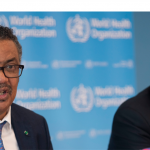
TAG Good morning, good afternoon and good evening. The COVID-19 pandemic continues to take a heavy toll on families, communities and nations the world over but it’s also giving rise to incredible acts of generosity,
solidarity and co-operation. We have said consistently that we’re all in this together and we can only succeed together. We need an all- of-society approach with everyone playing their part. That includes people in the entertainment
industry.
Today I’m very delighted to be joined by one of the biggest names in entertainment in the world, Lady Gaga, and my friend Hugh Evans, the founder and CEO of Global Citizen.
WHO has been working with Global Citizen for several weeks on the Together At Home concert series with artists like Chris Martin and John Legend giving free online performances.
Now we’re working with Lady Gaga and Global Citizen to take this concept and make it even bigger through the One World Together At Home virtual global special on Saturday 18th April. It’s now my great pleasure to invite
Lady Gaga and Hugh Evans to say more about this very special event, One World.
00:03:10
LG Thank you very much, Dr Tedros. Good morning, good afternoon and good evening to everyone who’s listening and watching. I would like to thank the World Health Organization and the
United Nations as well as Global Citizen; thank you very much, Dr Tedros and Hugh Evans, for all of your leadership in this fight against COVID-19 and thank you very much to the World Health Organization for asking me to collaborate
with you on this special.
We are also very grateful to all of the healthcare professionals across the country and around the world who are on the front lines during COVID-19. This global pandemic is a catastrophe. I’m so thankful to them and I’m also
praying for those who are sick. It’s been a pleasure to partner with Global Citizen and we’ve been working all together behind the scenes to raise money for the World Health Organization.
I would also like to send my prayers as well to people that are losing their jobs and are having a hard time feeding themselves and their children. We are raising money for the World Health
Organization’s COVID-19 Solidarity Response Fund and seven days ago we held a call with more than 68 corporate leaders from some of the world’s biggest and most generous companies and I asked them to join my corporate kindness
list as there have been many corporations and philanthropists that have been very, very generous during this time.
00:04:38
Since then we have also been calling on philanthropists around the world as well and tech companies included. I’d like to reiterate our deep gratitude to the medical community. My heart is very, very aching and warm for those
who are ER doctors as well as nurses who are sleeping in cars to make sure they don’t infect their families or their patients. What you’re doing is putting yourselves in harm’s way to help the world
and we all salute you and you are a triumph truly.
I am proud to say that over the past seven days we’ve raised a total of $35 million for the Solidarity Fund. This money will [inaudible] essential PPE, supplies and testing kits around the world and will help improve lab capacity
to rapidly process tests. It will also [inaudible] research development. It is so important to think globally and to support the World Health Organization to curb the pandemic and prevent future outbreaks.
I know Dr Tedros is particularly concerned about Africa and [inaudible]. We also need to act globally by supporting local charities and initiatives so that the front-line health workers in most immediate need have the resources they need
to survive during this time. It has been an honour to help with this huge broadcast event, which will take place on April 18th, where we need to tell the stories of and celebrate the front-line community, healthcare workers and their acts of kindness.
We will be on different networks, many networks actually and I want to [inaudible] about what we’re going to be doing. What’s very important is that two things happen for all of us; that we celebrate and we highlight the singular, kind global community
that is arising right now. Two, we want to highlight the gravity of this historically unprecedented cultural movement and, three, we want to celebrate and encourage the power of the human spirit.
00:06:47
I would like to, on behalf of the World Health Organization and Global Citizen, thank Dr Tedros as well as everyone that has donated so far. We are going to continue fundraising but I would like to also let you know that
this broadcast special is not actually a fundraiser. We all wanted to raise the money before we went on air so when we do air live on April 18th put your wallets away, put your credit cards away, anything
away that you need to and just sit back and enjoy the show that you all very much deserve.
I’d like to pass this now to Hugh Evans, who’s been a wonderful partner of mine. Hugh, thank you so much and thank you, Dr Tedros.
HE Good morning, good afternoon, good evening and thank you, Dr Tedros and thank you, Lady Gaga. Your Excellencies, ladies and gentlemen; Lady Gaga, Dr Tedros,
you’ve both demonstrated extraordinary leadership at an unprecedented moment when our society is being challenged like never before and we are so thankful for your leadership. I’d like to echo Lady Gaga’s sentiment and commend the incredible acts
of bravery demonstrated by the front-line community health workers around the world and I hope that we as a shared humanity emerge from this moment forever grateful for the work of doctors, nurses, teachers, grocery store workers and all of those who are
the backbone of our communities.
Global health is at the very core of the global citizen mission and we must ensure that the world’s poorest and most marginalised people have access to resources to cope with and tackle this health crisis. Through One
World: Together At Home on April 18th we’ll be calling on philanthropists, corporations and governments to fund critical global COVID-19 response efforts including distribution of resources and PPE to critical front-line healthcare
workers.
00:09:09
In our partnership with the WHO and United Nations Global Citizen is committed to driving action to help ensure our global health systems are strong enough to stop a future pandemic before it happens. April 18th is going to be a moment of global unity
connecting the world through a historic global broadcast. We are bringing together the greatest artists in the world under the passionate and extremely talented curation of Lady Gaga.
In alphabetical order some of the artists we’ll be announcing today include Alanis Morissette, Andrea Bocelli, Billie Eilish, Billy Joe Armstrong of Green Day, Burna Boy, Chris Martin, Sir David Beckham, Eddie Vedder,
Sir Elton John, Finneas, Idris and Sabrina Elba, J Balvin, John Legend, Kacey Musgraves, Keith Urban, Kerry Washington, Lang Lang, Lizzo, Maluma, Sir Paul McCartney, Priyanka Chopra Jonas, Shah Rukh Khan, Stevie Wonder and many more to be announced over the coming weeks from all corners of the globe under the passionate and extremely talented curation of Lady Gaga.
We’re grateful to all of you for participating and supporting this critical effort. One World Together At Home will be broadcast live on Saturday April 18th 2020 at 5:00pm PDT, 8:00pm EDT and 12:00am BST, airing on ABC, NBC, Viacom and CBS networks,
IHeartMedia, and Bell media networks and platforms in Canada. Internationally BBC1 will run the programme on Sunday April 19th and additional international broadcasters include BN Media Group, Multi-Choice Group and RTE in Ireland.
00:11:43
The digital broadcast will celebrate and support brave community health workers who are doing life-saving work on the front line and we’ve all seen the limitations of world leaders around this world to step up and face this extraordinary challenge
and we want to do our best to support the essential work of the World Health Organization, driving action and raising critical funds. Thank you again, Dr Tedros, and thank you, Lady Gaga, for your leadership.
Thank you all.
TJ Thank you very much to our guests for their remarks. Dr Tedros, I guess you would like to thank them too.
TAG Once again I would like to thank Lady Gaga and Hugh Evans for their partnership. We had a call last week and I was so amazed by the energy and passion of Lady Gaga. It’s incredible commitment to humanity and that’s
when I said, I think what she has planned can happen. It’s bringing the world together to improve awareness and to mobilise resources to fight the pandemic so I thank her for her incredible passion and commitment and leadership and
also to my friend, Hugh Evans, for connecting all the dots and for his leadership.
We all look forward to joining you for the One World: Together At Home concert on 18th April. As the pandemic continues we recognise that individuals and governments want to do everything they can to protect themselves and others and so do we.
We understand that some countries have recommended or are considering the use of both medical and non-medical masks in the general population to prevent the spread of COVID-19.
00:14:21
First and foremost medical masks must be prioritised for health workers on the front lines of the response. We know medical masks can help to protect health workers but they’re in short supply globally. We’re concerned that the mass
use of medical masks by the general population could exacerbate the shortage of these specialised masks for the people who need them most. In some places these shortages are putting health workers in real danger.
In healthcare facilities WHO continues to recommend the use of medical masks, respirators and other personal protective equipment for health workers. In the community we recommend the use of medical masks by people who are sick and those who
are caring for a sick person at home.
WHO has been evaluating the use of medical and non-medical masks for COVID-19 more widely. Today WHO is issuing guidance and criteria to support countries in making that decision. For example countries could consider using masks in communities where other measures such as cleaning hands and physical distancing are harder to achieve because of lack of water or cramped living conditions.
If masks are worn they must be used safely and properly. WHO has guidance on how to put on, take off and dispose of masks. What’s clear is that there is limited research in this area. We encourage countries that are considering the use
of masks for the general population to study their effectiveness so we can all learn. Most importantly masks should only ever be used as part of a comprehensive package of interventions. There is no black or white answer and no silver bullet.
Masks alone cannot stop the pandemic. Countries must continue to find, test, isolate and treat every case and trace every contact. Mask or no mask, there are proven things all of us can do to protect ourselves and others.
00:17:13
Keep your distance, clean your hands, cough or sneeze into your elbow and avoid touching your face. Less than 100 days since WHO was notified about the new coronavirus research has accelerated at incredible speed. The viral genome
was mapped in early January and shared globally, which enabled tests to be developed and vaccine research to start. More than 70 countries have joined WHO’s Solidarity Trial to accelerate the search for an effective treatment and about
20 institutions and companies are racing to develop a vaccine.
WHO is committed to ensuring that as medicines and vaccines are developed they’re shared equitably with all countries and people. I want to thank the Medicines Patent Pool and Unitaid for the initiative they announced last
Friday to include medicines and diagnostics for COVID-19 in their licensing pool.
I also want to thank the President of Costa Rica, President Carlos Alvadaro, and the Health Minister, Daniel Salas, for their proposal to create a pool of rights to tests, medicines and vaccines with free access or licensing on reasonable and affordable
terms for all countries. Muchas gracias, Mr President. I support this proposal and we’re working with Costa Rica to finalise the details.
00:19:09
Poorer countries and fragile economies stand to face the biggest shock from this pandemic and leaving anyone unprotected will only prolong the health crisis and harm economies more. I call
on all countries, companies and research institutions to support open data, open science and open collaboration so that all people can enjoy the benefits of science and research.
Finally we’re nearing the end of the Ebola outbreak in the Democratic Republic of the Congo. This is one piece of good news. If there are no more cases the Government of the Democratic Republic of Congo could declare the outbreak over as early
as this Sunday. We’re not there yet and we remain in full response mode. We’re continuing to investigate alerts and to test samples.
This would not have been possible without the incredible health workers who have put themselves at risk for more than 18 months to stop this outbreak, just as health workers are putting themselves in danger to save lives from COVID-19. Health
workers in DRC faced the double threat of fighting a deadly virus in one of the world’s most dangerous and unstable regions, exposing themselves to Ebola and bullets.
Tomorrow, as you know, is WHO’s birthday, a day we celebrate each year as World Health Day. This year we’re paying tribute to the incredible contribution of all health workers, especially nurses and midwives. Nurses and midwives are the backbone of
every health system. They’re there from the first moments of life to the last. Tomorrow we’re publishing our first report on the state of the world’s nursing which highlights gaps and makes recommendations for all countries.
00:22:00
One of the lessons I hope the world learns from COVID-19 is that we must invest in health workers, not only to protect lives but also to protect livelihoods. I thank you.
TJ Thank you very much, Dr Tedros. Also, as always, we have Dr Mike Ryan and Dr Maria Van Kerkhove, who will be answering questions. We will now open the floor. I will go to one question
that I received by email this morning and I promised to answer; that’s Ankit Kumar from India Today. Ankit is asking; we have recently seen a spike in cases caused through religious gatherings in India, in fact almost a third of new cases
were linked to one gathering in India. We have also seen incidents of violence against health workers due to fear and misinformation. Is WHO concerned with these developments, what is WHO’s message to religious and community leaders and their
followers?
MR First and foremost the idea of violence against health workers is driven by fear and it’s driven by misunderstanding but it’s really unacceptable. We ask everyone and every community to see our health workers
as our heroes and to support them in every way we can.
With regard to gatherings of any type, be they religious or be they for other purposes, there are always risks associated with such gatherings in the midst of a major epidemic. WHO has issued guidance on that. Many of these gatherings
are now postponed or cancelled. We’ve been working very, very closely with religious and faith-based organisations all over the world including groups from the Islamic tradition, Christian
traditions and others and continue to work through faith-based organisations to communicate using our Epiwin platform.
00:24:21
We’re also continuing to develop guidance specifically for the holy month of Ramadan and are working through our Eastern Mediterranean regional office to be able to advise governments and religious institutions on how best to manage
the risks associated with such holy events.
But it’s very important again; having COVID-19 is not anybody’s fault. Every case is a victim and every case needs to be treated with sensitivity, as the health workers who treat them so it’s very important that we’re not profiling COVID-19
along racial, along religious, along ethnic lines. This is not helpful.
TJ Thank you very much. This was a question from Ankit Kumar from India Today. Now we will go to journalists online. We will start with Jamie from Associated Press. Jamie, can you hear us?
JA Hi, yes. Can you hear me? TJ Yes. Please go ahead.
JA Great, thank you very much. I wanted to ask you about… Over the weekend Dr Anthony Fauci mentioned that – if I understood it correctly – as much as 50% of transmission could be asymptomatic. Just aligned
with that, if you could give us a little bit more about what you’re thinking about the fact that some countries have said that this outbreak is more infectious than influenza. The CDC is saying that it’s up
to three times more infectious than influenza so what do you have to say about that? Thanks.
00:26:13
MK I’ll start and then perhaps Mike or DG would like to supplement. The modes of transmission and the way in which this virus is transmitted are of significant interest to all of us. What we are doing is working
with member states, we’re working with everyone that’s affected by this, looking through the research and trying to understand when most transmission is happening, when any transmission is happening.
What we know from reports, what we know from published literature is that the predominant way in which transmission is occurring is amongst symptomatic individuals and these are people that can be very early on in symptoms, even when they start
to feel a little bit unwell. This is supported by some data that attempts to catch a virus from individuals who are symptomatic.
We also know that it’s possible that people can transmit in the few days before they become symptomatic or in their pre-symptomatic phase. There have been some studies that have come out and we learned about this when we were on mission
in China back in January or early February, that there are individuals that can shed virus one to three days before they develop symptoms.
However it’s very important to note that even if you are pre-symptomatic or even if you don’t have any recognised symptoms you still have to transmit through droplets, you still have to have these infectious particles that come out
of your nose and your mouth. So while we know that that is possible we do not believe that it’s a major driver of transmission.
00:27:42
We’ve also seen modelling estimates that suggest that there’re large numbers of unrecognised transmission and I used unrecognised on purpose because I’m not saying asymptomatic. I’m saying that we may be missing people who are out there who are infected
but we’re missing them because of current surveillance strategies. That is certainly possible in many parts of the globe.
Whether or not those individuals are asymptomatic; we will have to wait until we see the results of serologic studies, which we hope we’ll be seeing in the coming days if not weeks.
So what we can say is that most people are transmitting this virus while they are symptomatic.
JA Hi, Jamie. Just in addition because I think – I would never in any way contradict my good friend, Tony Fauci, such an eminent man. There are many different estimations of what might represent asymptomatic
transmission or other infections in the community and we do know and everyone accepts that when the seroepidemiology studies do come online we will probably find more people who’ve been infected unknowingly; there’s no question of that.
The thing we need to address in all of this is very often the idea of severity versus infection and there is a huge association between the dose of exposure and the severity of infection. We see this in many other
infectious diseases so we also probably need to look at who is getting sick and very sick and is the dose and the type of exposure they’re getting different to those who may be exposed and seroconverted in the community.
00:29:26
So it’s not just a matter of looking at how many people in the community are infected but are there specific elements of exposure that cause individuals to have a higher dose of exposure or a specific route of exposure
that causes more severe infection? There is also that concept of infectious dose when we talk about the different types of transmission. If somebody is exposed to a high dose from another individual directly or from a surface that’s
heavily contaminated you can imagine the large dose.
In other circumstances individual particles or virus particles potentially floating through the air; it can be demonstrated that that may happen in certain circumstances, certainly in healthcare settings. But is that significant in
terms of driving infection, is that significant, does that produce an infectious dose that can successfully infect another individual?
These are all very important things that still need to be studied. Again we’re only a number of weeks into this. I think we need to have the seroepi studies. I think we need more information on what is the infectious dose and particularly
the relationship between the dose of exposure or infection and the severity of disease subsequently, which has been seen with many, many other diseases in the past including cholera, Ebola and others.
TJ Thank you very much, Mike and Maria. We will go now to our next question; that’s Kai Kupferschmidt. Kai, can you hear us?
00:31:01
KA Yes, Tarik. Thanks a lot for taking my question. I wanted to ask about the global push to try and find a pre-exposure prophylaxis or a post-exposure prophylaxis. I understand there’re
several trials going on, most of them with chloroquine or hydroxychloroquine. I was just wondering whether you can speak a little bit to what role this could potentially play.
Of course also there’re a lot of smaller studies going on. Is there any way to make sure that they all lead to results that can be proved in the end?
MR Maria can give you more detail but certainly one of the Solidarity trials – I think Solidarity 3 or 4 – we have one of the trials under design which will be a multi-centre study which will look at prophylaxis in healthcare workers to see whether there’s evidence that giving lower doses of drugs like chloroquine or hydroxychloroquine to healthcare workers would reduce their risk of becoming infected in a healthcare environment.
Those studies are certainly underway and again there are a number of those studies underway in smaller studies around the world but again as WHO we’re trying to bring together a larger set of collaborative studies that will give
us the answers we need.
In terms of post-exposure prophylaxis I don’t believe we have at the moment studies planned but Maria can speak to that but there is certainly evidence for the use of – not proven evidence of effectiveness but there are a number
of studies underway and trials underway that use hyperimmune globulin in the treatment of disease; in other words they use that purified plasma of recovered individuals to give an antibody boost to people who are
suffering the disease.
00:32:49
Similar approaches have been used in post-exposure prophylaxis for other diseases but Maria may be aware of studies underway in that area.
MK Only to add that, as you mentioned, there are a number of smaller studies that are happening globally and across a large number of countries. We have teams through our science division and through GOARN,
through the Global Outbreak Alert Network, who are pulling together available literature on a number of topics, one of which is looking at different types of therapeutics and drugs.
The idea is until we can have a study that pulls together enough of a sample size to get these answers to these questions we’re trying to evaluate every piece of evidence that is published so that we can look at the way in
which these studies were done, we can look at the strengths, we can look at the limitations so that can help guide us closer towards an effective treatment for COVID-19.
TJ Thank you very much. The next question is from BFM Radio. Is is Kate who is with us?
KT Yes, hi. Good evening or good morning. I’m from BFM Radio Malaysia. My question is, many countries around the world have imposed lock-downs or some sort of restrictions on movement. I was wondering
what WHO’s guidance would be; what’s the sweet spot, the kind of data that governments need to consider before lifting or relaxing some of these lock- downs? Thank you very much.
00:34:29
MR Thank you. It is a difficulty for governments right now because the lock-downs in many situations are proving effective in dampening the flames of the epidemic in those countries but those
lock-downs are also causing great economic hardship and everybody especially in the developing world needs to get to a more sustainable way of managing this epidemic and controlling COVID-19 without continuing to damage economic and social life.
The transition strategy out of lock-down requires a calibrated, step-wise approach. It would be probably very inadvisable just to lift a complete lock-down, all of the measures because lock-downs are a general term that
include closure of schools, closure of churches, stay-at- home orders, closure of workplaces. It’s a mixture of different things and I think each government needs to break out, what does our lock-down actually constitute, what are the elements
of our lock-down, where is that happening in the country, do we now understand the epidemiology of the disease in each area in which we have an element of lock-down or shut- down.
Then to chart the path out, you have to build strong public health capacity to take over from the lock-down. In other words the lock-down is pushing the disease down by putting people back in their homes, by separating communities. Once you raise
the lock-down you have to have an alternative method to suppress the infection. The way to do that is active case finding, testing, isolation of cases, tracking of contacts, quarantining of contacts and strong community education and
participation and ownership around normal physical distancing, hygiene and giving communities the power to control infection by in effect managing their own physical distance, managing their own capacities to support the response.
00:36:32
In that situation, if you’ve strong public health capacity, if you’ve got a community that’s mobilised and empowered and if you’ve strengthened your health system then you’re potentially in a position to start unlocking or unwinding the lock-down.
The specific parameters you need to be looking at are on two sides.
One is, it would be very inadvisable to lock down [sic] if the number of cases coming through the hospital is already at a level where your occupancy of beds is nearly at 100%. You need to be in a position where
you now have free beds in your system so that you’re managing and coping with the caseload and that means you have some absorption capacity left.
You need to look at things like the doubling rate; how many days does it take for the number of cases to double? You need to look at positivity rates; what proportion of all samples that we test are positive? You’ll see in
somewhere like Korea two to 6% of the samples they test are positive. Last week in New York 37% of tested samples were positive so you need to carefully look at what proportion of people you test are positive.
00:37:45
You need to look at the number of contacts that are generated per case and it goes on and on and WHO will be issuing guidance to countries that is a much more specific around the parameters they should be looking at. There are no absolutes here, there
are no answers, there are no numbers that say if this number is this then you do that. That doesn’t exist but what we can do is offer countries very specific measurements that they need to look at to chart the path out of lock-down.
That step-wise approach of unlocking somewhat and then waiting to see; I think you need to say, we will stop doing this element of the shut-down and then we will wait and we will look at the data and if that works we go to the next
stage and the next stage. So a careful, calibrated, step-wise exit from lock-down with putting in place public health capacities, putting in place community capacity, building the capacity of the health system to cope should the disease bounce back up; that’s the safe path out of lock-down.
We want to achieve it as quickly as possible and we want to avoid many countries going into that circumstance and we still have many countries around the world who are not in a locked- down situation. In fact their epidemiology would suggest
they can avoid the worst of this and we need to support them to avoid them going into that situation.
The most damaging lock-downs are in many developing countries where people – as the DG has said many times – can live from hand to mouth, not from pay cheque to pay cheque but from day to day and we have to find adaptive solutions
around lock-down and around disease control in vulnerable periurban populations living in poverty, in poor rural communities. We have to find alternative, adapted ways to manage lock-downs or slow-downs or shut-downs in
those situations.
00:39:41
TJ Thank you very much. This was Kate from BFM Radio in Malaysia. Now we will go to Nigeria to Natural Star and it’s Innocent. Innocent, can you hear us?
IN Thank you. Can you hear me?
TJ Not very well but we will try. Please go ahead.
IN Okay, thank you for taking my questions. I have two questions to ask. One; how will WHO assess African countries on what they’ve done concerning the lock-down and management of COVID-19?
Then the second one; there’s news going around that vaccines are to be tested on Africans when they’re developed. How true is that and is there a window that’s in the nearer future when a vaccine will be developed for COVID-19? Thank you.
Hello?
TJ Yes, we are just trying to make sure that we understood the question but we will try. MR I think this is Nigeria. Is it?
TJ Yes.
00:41:08
MR Maria may answer the question around vaccine development. With regard to our general assessment on lock-down – and the Director-General may wish to comment on this because he’s been speaking with many leaders in Africa
and, I believe, spoke with the whole of the African Union leadership and countries late last week so therefore is in a much better position than me to speak about that.
We would characterise so far, Africa’s actually doing well in this response thus far. Countries have essential capacities for testing, many countries are taking strong action and want to really focus on finding cases and doing contact tracing and trying to stop this disease becoming much more extensive given the fact that health systems are not as strong in many countries.
They need support in that though, they need support in testing, they need support with protective gear and they need to be given the resources to be able to mount those types of responses so I would characterise that Africa has not suffered the worst
of this pandemic so far. The worst of it can be avoided with very, very swift action to support those countries in Africa who really do want to take a comprehensive approach to this disease.
With the many vulnerable people including refugees and migrants who live in those countries it is our responsibility to provide that support but, DG, you may wish to speak about your interactions with the African
Union countries.
00:42:46
MK I’ll answer the question around vaccines. What we can say is that there are a number of vaccines that are in development and vaccines will be tested through clinical trials with all ethical considerations
in place in whichever populations are under study with informed consent, with open and transparent communication. This is of the utmost importance, that not only do we have strong, robust scientific evidence
but we ensure that all of the studies that are done are done with appropriate and the highest level of ethical considerations.
One thing on the first question around Africa is that there are a number of countries in Africa right now which have very few cases and Mike has alluded to this in his earlier response.
Some only have imported cases and there is an opportunity here, this window of opportunity that the DG has spoken about exists in many countries still. There is an opportunity to prevent the worst from happening
in a number of countries across Africa and across countries that are still seeing their first case; in some island countries.
We need to support those governments, those countries, all of the people in those areas to prevent the worst from happening, to prevent these individual cases from becoming clusters, these clusters from becoming community transmission. I think that’s
where we need to put a lot of emphasis and support so that we can prevent countries from reaching a point where they need to put in these very restrictive movement restrictions.
TAG Thank you. Thank you for that question, my brother from Nigeria. On the situation, as Mike said, of course when you see the number of cases the African continent has the lowest number of cases so far but that doesn’t mean that
the situation will not deteriorate. It may.
00:45:06
So Africa should do everything to prevent this situation from getting worse and that’s why African leaders are doing their best. I had a chance to participate in a meeting, a Leaders’ Coalition which was arranged or invited by the current Chairperson
of the African Union, the President of South Africa, President Ramaphoza and many leaders from all corners of the continent have actually participated.
The main agenda is to have a continental strategy and also make sure that that continental strategy helps the national strategy but in addition to a coalition of political leaders or the heads of state and government they have also agreed to have a coalition of business leaders. Business leaders in Africa are also getting together because Africa will need resources and one of the major problems that was identified during the discussion
was especially shortage of equipment starting from medical equipment, PPE and test kits and so on.
The leaders have agreed to look for concrete solutions to address the problem and they also believe that considering the number of cases we have in the continent testing cases, tracing contacts and isolating them, meaning using the comprehensive approach,
will actually help. They believe that lock-downs alone may not help or the physical distancing alone cannot help and they have agreed to do everything to follow the comprehensive approach.
From WHO’s side we have been supporting and we increased, improved the testing capacity in Africa significantly in the past two months and many countries in Africa have now testing capability although we may have a shortage of test kits but
we’re working on that too and we’re finding different ways of addressing the gap.
00:48:06
But we will support the African Union, we will support the Africa CDC and also we will continue working through our WHO regional office in Congo Brazzaville and continue to support and fight the pandemic together.
Then on the vaccines issue there was, I think, a comment last week from a couple of
scientists who said the testing ground for the new vaccines will be Africa. To be honest, I was so appalled and it was a time when I said, when we needed solidarity these kind of racist remarks actually would not help, it goes against the solidarity.
Africa cannot and will not be a testing ground for any vaccine. We will follow all the rules to test any vaccine or therapeutics all over the world using exactly the same rules. Whether it’s
in Europe, Africa or wherever we will use the same protocol and if there is a need to be tested elsewhere to treat human beings the same way, equally.
The hangover from a colonial mentality has to stop — and WHO will not allow this to happen. It was a disgrace actually and appalling to hear during the 21st century from scientists that kind of remark and we condemn
this in the strongest terms possible but we assure you that this will not happen in Africa and will not happen elsewhere, in any country. Proper protocols will be followed and human beings will be treated as human
beings because we’re all human beings.
00:50:37
Then after saying this the vaccine development; we’re addressing two issues and we will be announcing as soon as possible, hopefully during this week, a big initiative to accelerate the research and development and production of vaccines and also
design mechanisms for equitable distribution of the vaccines.
While we’re looking for vaccines, unless we break the barriers to equitable distribution of the products, whether it’s vaccines or therapeutics, we will have a problem, so we need to address the problem ahead of time, we need to address the problem
of access or challenges to access ahead of time.
That’s why we will put together a mechanism and we will appoint senior people from the North and South that will work out the details on how they can accelerate production but at the same time how they can ensure equitable distribution. Solidarity
is very important here. When a vaccine or a medicine is ready we have to be able to deliver it all over the world.
There should not be a divide between the haves and the have-nots.
If we say solidarity, solidarity should be in its full form and I hope each and every individual, each and every human being will go for that kind of solidarity. I thank you.
TJ Thank you, Dr Tedros. We’ll take a couple more questions. We go to Yang from Xinhua news agency. Yang, can you hear us?
00:52:58
YA Can I hear you?
TJ Yes, we can hear you. Please go ahead.
YA As World Health Day is approaching what do you have to say to the front-line medical workers in China and around the world in the global anti-virus efforts? This question is
for Dr Tedros. Thank you.
TJ If we understood well, the question is what is the message to health workers in China and around the world. Maybe you can repeat the question one more time, please.
YA Okay. As World Health Day is approaching what would you say and what message do you want to deliver to the front-line medical workers in China and around the world in the global anti-virus effort?
TAG I think I have said it earlier; as you know, this is the year of the nurse and the midwife, 2020. We were ready to celebrate it in a big way and it was supposed to be the main event in our
Assembly in mid-May. Unfortunately we’re in this situation but we will be launching a report tomorrow which is the first of its kind. It’s a report on the state of nursing. We will launch it tomorrow during the World Health
Day.
00:55:01
But while launching that report, although it’s about nursing, we will celebrate all health workers, midwives, pharmacists, doctors, you name it. I think the world is now seeing the importance and the central role that health workers play. People,
when they’re asked, of course, to choose they would say health first because it’s only when you’re healthy that you can aspire to anything, whether it’s wealth or fame or anything. It doesn’t matter if you’re not healthy.
If you’re not healthy the first thing you ask for is to get back your health and our health workers are making sure that happens and they’re central and very important for any individual. So not only during COVID but during other times too health
professionals are very important because they are safeguarding that very important aspect of life — that’s health.
So we have to celebrate them every day. Of course during COVID we can see to what extent they’re sacrificing. We have lost many of them. They’re dying while saving lives so my message first is to the public at large; that each and every individual
should recognise, whether it’s during normal times or pandemics like now, the role of health professionals and help them, protect them, really appreciate and respect what they are doing.
To the health workers, although especially during this COVID pandemic you’re working in a difficult situation you should know that your work is the most blessed one, your work is something special to the extent of losing your life
while helping others to live. We respect you and appreciate you for that and we also believe in you and that you will do everything to control this pandemic.
00:58:11
But you should know that you have – and the world understands – the most important job. We can see the humility which is coming from some leaders because of this pandemic. I know they’re seeing, starting from their own lives, the whole world through
a different prism and they will also see your role.
But the most important is not the recognition from the public or from leaders but the internal commitment and passion you have and believing that you’re doing the most blessed thing and you have all our respect and appreciation and we believe in
you, that together we will finish this pandemic. All the respect and appreciation we have to you, the greatest respect and appreciation ever. Thank you.
TJ Thank you very much, Dr Tedros. I think this important message will be heard from everyone and we will conclude this press briefing with these important words from Dr Tedros. We will
have an audio file available in the minutes to come and we invite you for our next briefing on Wednesday. Thank you.
TAG [Inaudible] and see you on Wednesday – tomorrow actually for the launch. Yes, see you tomorrow.
01:00:18
Read More
https://www.who.int/news-room/detail/06-04-2020-virtual-press-conference-on-covid-19–06-april-2020
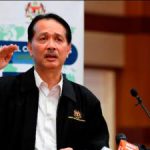
PUTRAJAYA: All Severe Acute Respiratory Infection (SARI) patients should be treated as Covid-19 circumstances till confirmed in any other case, mentioned Health director-general Datuk Dr Noor Hisham Abdullah (pix).
He mentioned 12 healthcare employees have been suspected of contracting Covid-19 after they have been contaminated whereas treating pneumonia or SARI patients.
“So protection is very important for us; our healthcare workers must take precaution … all the necessary precaution to avoid getting the infection (Covid-19),” he mentioned at a each day media briefing on Covid-19 right here right now.
Explaining additional, Noor Hisham mentioned any affected person who failed to present full info when looking for therapy may jeopardise the security of healthcare employees.
“If a patient comes to our hospital and clinic and hides some of the information … then you put the healthcare workers at risk (of being infected with Covid-19),” he mentioned.
He mentioned healthcare employees had been advised to deal with these having cough and chilly with signs of pneumonia as suspected Covid-19 circumstances till investigation confirmed in any other case. — Bernama
Read More
https://www.thesundaily.my/local/all-sari-patients-will-initially-be-treated-as-covid-19-cases-health-dg-MA2211691
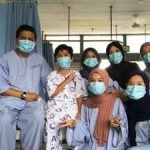
KUALA LUMPUR: Although this family of seven has been tested positive for Covid-19, the five siblings who are currently quarantined at the Teluk Intan Hospital sure know how to stay cheerful instead of being despondent.
Since yesterday, the TikTok video of Erika Syamim Samsu Ambia, 17, and her siblings has been trending on Twitter.
“Even though we’re Covid-19 positive, we as a family will go through this together. Plus, our health condition is okay. Here’s a TikTok (video) we made to entertain ourselves in hospital,” she wrote.
The eldest among the five siblings admitted they had to be strong-willed and pray constantly during these trying times.
In a conversation with Bernama via Twitter, she said her father Dr Samsu Ambia Ismail, a Specialist and Head of the Emergency and Trauma Department at the Teluk Intan Hospital, was the first in the family to have tested positive for Covid-19 and has been quarantined at the hospital for the past six days.
Erika Syamim, four siblings, aged between eight and 15, and their mother were quarantined a day later.
“We are fighting the virus with our own antibodies and hope we’ll be fine after the 14-day quarantine,” she said.
At the time of writing, Erika Syamim’s Twitter feed has received over 208,000 views, 14,800 retweets and 19,000 likes.
Asked by a netizen about the symptoms of the disease, she said her father had fever, cough and breathing difficulties while the rest of them just had a fever.
Netizens flooded her Twitter post with words of encouragement, prayers and hoped they would stay strong and recover soon.
Erika Syamim also had some advice for other patients, especially Muslims, to continue to pray and recite the al-Quran.
“If you are in the ward, don’t be ‘lemau’ (sluggish). Be cheerful, insya-Allah (God willing) we can fight the disease too,” she said. — Bernama
Read More
https://www.thesundaily.my/local/video-covid-19-family-of-seven-stays-cheerful-despite-virus-infection-BH2191535
Geneva, 23 March 2020: FIFA, the international governing body of football, and the World Health Organization (WHO) have teamed up to combat the coronavirus (COVID-19) by launching a new awareness campaign led by world-renowned footballers, who are calling on all people around the world to follow five key steps to stop the spread of the disease.
The “Pass the message to kick out coronavirus” campaign promotes five key steps for people to follow to protect their health in line with WHO guidance, focused on hand washing, coughing etiquette, not touching your face, physical distance and staying home if feeling unwell.
“FIFA and its President Gianni Infantino have been actively involved in passing the message against this pandemic since the very beginning,” said WHO Director-General Dr Tedros Adhanom Ghebreyesus at the virtual launch of the campaign at WHO headquarters in Geneva, Switzerland. “Be it through campaigns or funding, FIFA has stood up to the coronavirus, and I am delighted that world football is supporting WHO to kick out the coronavirus. I have no doubt with this type of support that together we will win.”
“We need teamwork to combat the coronavirus,” said FIFA President Gianni Infantino. “FIFA has teamed up with WHO because health comes first. I call upon the football community worldwide to join us in supporting this campaign to pass the message even further. Some of the greatest players to have played the beautiful game have put their names to the campaign and are united in their desire to pass the message to kick out COVID-19.”
Twenty-eight players are involved in the video campaign, which is being published in 13 languages.
Sami Al Jaber (KSA), Alisson Becker (BRA), Emre Belözoğlu (TUR), Jared Borgetti (MEX), Gianluigi Buffon (ITA), Iker Casillas (ESP), Sunil Chhetri (IND), Youri Djorkaeff (FRA), Han Duan (CHN), Samuel Eto’o (CMR), Radamel Falcao (COL), Laura Georges (FRA), Valeri Karpin (RUS), Miroslav Klose (GER), Philipp Lahm (GER), Gary Lineker (ENG), Carli Lloyd (USA), Lionel Messi (ARG), Mido (EGY), Michael Owen (ENG), Park Ji-sung (KOR) , Carles Puyol (ESP), Célia Šašić (GER), Asako Takakura (JPN), Yaya Touré (CIV), Juan Sebastián Verón (ARG), Sun Wen (CHN) and Xavi Hernández (ESP).
A video campaign, which will be published on player and FIFA digital channels, is also being provided as individual localized files to the 211 FIFA member associations and media agencies, together with a graphics toolkit for implementation on social media to further pass the message.
Hands:
“It starts with your hands,” says Alisson Becker, WHO Goodwill ambassador for health promotion, Liverpool FC and Brazil goalkeeper, and The Best FIFA Men’s Goalkeeper, 2019. “Please wash your hands frequently with soap and water or an alcohol-based solution.”
Such frequent washing with soap and water, or preferably with an alcohol-based hand solution, kills viruses that may be on your hands. It is simple, but it is very important.
Elbows:
“Cover your nose and mouth with a bent elbow or tissue when you sneeze or cough,” says Carli Lloyd two-time FIFA Women’s World Cup winner from the United States. “Dispose of tissue immediately and wash your hands.”
Droplets spread the coronavirus. By following respiratory hygiene, you protect the people around you from contracting viruses, such as cold, flu and coronavirus.
Face:
“Avoid touching your face, particularly your eyes, nose or mouth to prevent the virus from entering your body,” adds FC Barcelona and Argentina forward Lionel Messi, The Best FIFA Men’s Player in 2019, and a multiple FIFA Ballon d’Or winner.
Hands touch too many surfaces and can quickly pick up viruses. Once contaminated, hands can transfer the virus to your face, from where the virus can move inside your body, making you feel unwell.
Distance:
“In terms of social interaction, take a step back,” says Han Duan, who represented China PR 188 times in an international career that spanned 11 years. “Stay at least one metre distance from others.”
By maintaining such social distancing, you are helping to avoid breathing in any droplets from someone who sneezes or coughs in close proximity.
Feel – know your symptoms:
“If you feel unwell, stay home,” concludes Samuel Eto’o, former FC Barcelona and Cameroon striker, who represented his country 114 times. “Please follow all instructions provided by your local health authorities.”
If you have a fever, cough and difficulty breathing, seek medical attention and call in advance.
Keep informed as local health authorities provide the latest information on the situation in your area. Please follow their specific instructions, and call in advance to allow them to direct you to the appropriate local health facility. This serves to protect you and to help prevent the spread of virus and other infections.
FIFA have also pledged $10 million to support the COVID-19 Solidarity Response Fund for WHO.
For more information, please consult @WHO and follow the latest information online.
Read More
https://www.who.int/news-room/detail/23-03-2020-pass-the-message-five-steps-to-kicking-out-coronavirus
PETALING JAYA: The Health Ministry has reported two more deaths due to Covid-19 that occurred today, bringing the death toll to 8 cases.
This comes after the Health Ministry reported 4 deaths over the past week, and two more deaths today announced by the Sarawak state disaster management committee.
Health director-general Datuk Dr Noor Hisham Abdullah said the seventh death was of a 57-year-old Malaysian citizen with a travel history to Vietnam and had contacts with Covid-19 positive cases from the tabligh cluster.
The patient was admitted to the Kuala Lumpur Hospital on March 18 after a week of fever, cough and sore throat.
“The next day, the patient’s health deteriorated and he was in need of respiratory assistance. The patient was pronounced dead at 3.22pm on Mar 21,“ he said in his Facebook posting today.
The eighth death was of a 69-year-old Malaysian citizen also from the tabligh cluster. The patient was admitted to Tumpat Hospital on Mar 16 after having symptoms of fever since Mar 12.
“The patient was transferred to the King’s Hospital of Zainab II, Kota Baru on Mar 18, after which their deteriorating health condition prompted need of respiratory assistance the next day. The patient was pronounced dead on March 21, 2020, at 4pm,“ he said, while expressing his condolences to the immediate family members of the deceased.
Read More
https://www.thesundaily.my/local/breaking-two-more-covid-19-deaths-bring-total-to-8-KA2165804
During its 63rd session, the Commission on Narcotic Drugs (CND) accepted all recommendations from the 42nd meeting of the WHO Expert Committee on Drug Dependence (ECDD). This effectively brings twelve psychoactive substances, including eleven New Psychoactive Substances (NPS) and one medicine, under international control. Given the potential for dependence or abuse and known adverse effects, these compounds pose a risk to public health and society and are largely without any therapeutic benefit.
Based on an in-depth review of candidate compounds by the ECDD, an independent group of experts in the field of drugs and medicines, the WHO provides annual recommendations on substance scheduling to the CND, a policy-making body comprised of 53 UN Member States. This ECDD review includes a balanced consideration of potential for abuse, dependence and harm with therapeutic value. The CND then votes on whether or not the WHO recommendations for placing reviewed substances under international control should be endorsed.
The 42nd ECDD recommendations included the addition of four synthetic cannabinoids and three synthetic stimulants to Schedule II of the 1971 Convention on Psychotropic Substances given similar action and adverse effects to other substances in this Schedule. These synthetic cannabinoids have been associated with impaired mental status, impaired driving, and fatalities, whereas the included synthetic stimulants have been linked to fatal intoxication. Similarly, two fentanyl analogues, with their opioid-like effects, were brought under Schedule I control (strict control) of the 1961 Single Convention on Narcotic Drugs given similar action and effects to other drugs in this Schedule. Two benzodiazepines including the medicine etizolam were brought under Schedule IV control of the 1971 Convention on Psychotropic Substances, both of which have been implicated in fatal and non-fatal intoxication and impaired driving. A hallucinogen was also recommended to be brought under control, specifically to Schedule I of the Convention on Psychotropic Substances of 1971, based on abuse potential and non-fatal and fatal intoxication. This is the first hallucinogen to be reviewed in many years, suggesting a potential shift in drug trends. For more information on these recommendations, please review the 42nd ECDD meeting report. .
In addition, the ECDD conducted a pre-review of several Schedule III opioid preparations, some of which can be accessed as over-the-counter options, such as codeine-based cough syrups, to consider their abuse potential. The ECDD recommended a critical review be carried out at a later date.
Read More
https://www.who.int/news-room/detail/18-03-2020-c-n-d-accepts-all-w-h-o-recommendations-from-42nd-e-c-d-d
The rapid spread of COVID-19 is testing the resilience of robust health systems around the world. WHO and its partners are taking measures to mitigate the potential impact of sustained transmission of the coronavirus in malaria-endemic settings –
particularly in sub-Saharan Africa, which shoulders more than 90% of the global malaria burden.
To date, a small proportion of the global COVID-19 cases have been identified in malaria-affected countries. However, as of 17 March, 25 countries in the African Region had reported cases of COVID-19, and local transmission of the disease had been detected
in 6 countries (Algeria, Cameroon, Kenya, Rwanda, Senegal, South Africa).
“At this point, we still don’t know what the COVID-19 pandemic will look like in sub-Saharan Africa,” said Dr Pedro Alonso, Director of the WHO Global Malaria Programme. “But we do know that when public health emergencies have
hit parts of Africa with weak health systems and high malaria transmission, the impact on malaria disease and death has been very severe.”
The 2014-2016 Ebola outbreak in Guinea, Liberia and Sierra Leone, for example, undermined malaria control efforts and led to a massive increase in malaria-related illness and death in the 3 countries.
Joint action
To support malaria-affected countries, WHO has identified the need for a set of inter-related actions among global partners:
generating, using and disseminating accurate information;
mitigating against health system disruptions; and
ensuring the continuity of routine malaria-specific interventions while also providing, where needed, additional emergency measures, such as mass drug administration, in health systems significantly impacted by COVID-19.
The Organization convened partners on 17 March to discuss areas of collaboration, coordination and next steps.
WHO has begun monitoring the evolving geographic location of COVID-19 cases to understand the extent to which the coronavirus and malaria affect the same target groups. This information will reveal who is likely to be at greatest risk, where and when,
and thus inform the need for malaria-specific interventions to save lives.
In parallel, WHO is working across the 3 levels of the organization to ensure that any advice intended to curb coronavirus transmission and to guide COVID-19 disease management is appropriate in malaria-affected settings.
In recent days, there have been reports of disruptions, as a result of COVID-19, in the production and global supply chains of essential malaria commodities, such as the long-lasting insecticidal nets, diagnostic testing and antimalarial medicines. Coordinated
efforts are required to ensure the availability of key malaria control tools – particularly in countries with a high burden of the disease – and that efforts to limit transmission of COVID-19 do not compromise access to malaria prevention,
diagnosis and treatment services.
Malaria-affected countries may also experience disruptions in health systems in the coming months. A marked increase in febrile patients seeking treatment for COVID-19 at health facilities, for example, would present a significant challenge for a health
workforce that may itself be depleted by the disease.
Policy guidance
WHO is developing guidance for national malaria control programmes and implementing partners to prepare them for the challenges they may face as result of COVID-19. Among other areas, the guidance will address the mitigation of stockouts of
malaria medicines and commodities; the use of preventive malaria therapy for health workers; the deployment of emergency measures in some settings; and the generation of information relating to the geographic distribution and populations affected
by COVID-19 in malaria-endemic settings.
Restrictions around grouping people together – for training, social and behavior change communication activities, fixed-site distribution and clinical care – as well as the restrictions around movement of people in the country, will require
significant adaptations in order to deliver quality interventions and care.
All people living in malaria-affected areas are advised to follow same precautions as the general population, including: frequent hand-washing, respiratory hygiene, social distancing, seeking prompt medical care if symptoms arise (cough, fever,
difficulty breathing), and other WHO-recommended actions.
WHO stands ready to work with countries and other stakeholders to mitigate the negative impact of the coronavirus on malaria responses worldwide and, where possible, contribute towards a successful COVID-19 response.
About COVID-19
COVID-19 is the infectious disease caused by the most recently discovered coronavirus. This new virus and disease were unknown before the outbreak began in Wuhan, China, in December 2019. Essential information on the COVID-19 pandemic can be found in
a dedicated WHO site.
About malaria
Malaria is a preventable and treatable disease caused by parasites that are transmitted to people through the bites of infected female Anopheles mosquitoes. In 2018, there were an estimated 228 million cases of malaria worldwide and
405 000 malaria-related deaths. For more on malaria, visit: www.who.int/malaria
Read More
https://www.who.int/news-room/detail/18-03-2020-who-teams-with-partners-to-mitigate-the-potential-impact-of-the-covid-19-pandemic-in-malaria-affected-areas
KUALA LUMPUR: The Malaysian Anti-Corruption Commission (MACC) has enhanced measures for Covid-19 prevention implemented at all its offices across the country.
MACC deputy chief commissioner (management and professionalism) Datuk Junipah Wandi said among others, the commission had provided disinfectant liquid at the entrances of all its offices and premises.
Any officers or staff who have a temperature above 37.5°C would be asked to go the hospital, she said.
“We also issued a directive that those who have just returned from overseas are required to go for a health check at the Ministry of Health-designated hospitals.
“If they have a fever, flu and cough, even though it is not confirmed as Covid-19, they will be asked to undergo self-quarantine,” she told Bernama here today.
The World Health Organization had, on March 11, declared Covid-19 as a pandemic.
Malaysia, as at noon today reported 428 positive cases. — Bernama
Read More
https://www.thesundaily.my/local/covid-19-macc-enhances-preventive-measures-HJ2128898