Tag: control

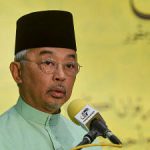
  • King decrees all Malaysians to obey movement control order

    King decrees all Malaysians to obey movement control order

    King decrees all Malaysians to obey movement control order 1

    KUALA LUMPUR: Yang di-Pertuan Agong Al-Sultan Abdullah Ri’ayatuddin Al-Mustafa Billah Shah (pix) today decreed all Malaysians to obey the movement control order announced by Prime Minister Tan Sri Muhyiddin Yassin yesterday and to give full cooperation in containing the spread of Covid-19 infections in the country.

    The order will take effect from tomorrow until March 31.

    Comptroller of the Royal Household of Istana Negara Datuk Ahmad Fadil Shamsuddin said His Majesty, nevertheless, said that the people should face the situation calmly to help the government and the relevant authorities tackle the situation effectively.

    “His Majesty urges the people not to take the movement control lightly. The people were also asked to follow the guidelines and preventive measures issued by the Ministry of Health because this is our mutual responsibility to ensure safety and wellbeing of our families, our communities and our beloved country,” he said in a statement issued by Istana Negara today.

    He said Al-Sultan Abdullah also viewed seriously the rising number of positive Covid-19 cases in Malaysia, which was recorded at 553 yesterday and had placed his full trust in the government and the authorities to discharge their duties in containing the spread of the disease.

    Ahmad Fadil said His Majesty was well aware that the people might feel that the action taken by the Perikatan Nasional government had made it difficult for them to go about their daily activities.

    “However, we must try to understand and be patient because the government cannot wait for the situation to become more critical to take drastic action.

    “As the Head of State, His Majesty also called on all Malaysians, regardless of race and religion, to stay united and play their parts to help the government in containing the spread of Covid-19 in the country.

    “His Majesty believes that with the strong spirit, concern and cooperation from the people, we will be able to contain the spread of the disease quickly and effectively,” he said.

    Ahmad Fadil said Al-Sultan Abdullah also decreed all Malaysians to refer to the Online Health Advisory Service or the National Crisis Preparedness and Response Centre (CPRC) via the Ministry of Health’s website to find the answers to all their doubts and questions so as to prevent the spread of fake news and false information that may cause panic and confusion among themselves.

    The Yang di-Pertuan Agong also expressed appreciation and thanks to the government under the leadership of Muhyiddin, government agencies and most of all to the unsung heroes, the medical staff and healthcare personnel, the civil servants and all the others who have sacrificed their time and energy in ensuring that all preventive measures and control of the infectious disease were being implemented efficiently.

    “His Majesty also called on all Muslims to join him to pray to Allah SWT so that all our efforts be blessed and so that the COVID-19 situation can be tackled and put to end as soon as possible. InsyaAllah,” he said. – Bernama

    King decrees all Malaysians to obey movement control order
    Read More
    https://www.thesundaily.my/local/king-decrees-all-malaysians-to-obey-movement-control-order-YD2140919

    Views: 0
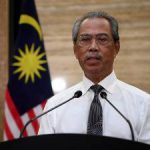
  • Nationwide movement restriction measures to begin on Wednesday (Updated)

    Nationwide movement restriction measures to begin on Wednesday (Updated)

    Nationwide movement restriction measures to begin on Wednesday (Updated) 2

    PETALING JAYA: Prime Minister Tan Sri Muhyiddin Yassin has declared that Malaysia will be placed under a nationwide movement restriction order from Wednesday (March 18) to March 31, 2020, due to the Covid-19 outbreak.

    The order, the first in the country’s history, was announced by the prime minister in a live broadcast over national television tonight.

    A total of 315 new positive cases of Covid-19 have been reported over the past two days, bringing the total in Malaysia to 553 cases.

    Of this total, 511 have been hospitalised while 42 people have recovered.

    Muhyiddin said the nationwide movement restriction order means that all business premises have to be shut down, except for outlets such as supermarkets and grocery stores selling daily essentials.

    He said all government and private premises would be closed, except for essential services such as utilities, telecommunications, transport, banking, health, pharmacies, ports, airports, cleaning and food supplies.

    He said the movement restriction also means all Malaysians will be banned from travelling abroad, and that no tourists or foreigners will be allowed to enter the country. Those who have just arrived from abroad must undergo self-quarantine for 14 days.

    All public and private schools, including kindergartens, nurseries, residential school and other educational institutions are also to close. All private and public higher institutions of learning will also close.

    Closure of all government and private premises except essential services such as water and electricity, telecommunication, postal service, transport, fuel, gas, lubrication, broadcasting, banking, health, pharmacy, fire-fighting, ports, airports, prisons, security and defence, sanitary services, provision and food supply.

    The order also calls on a ban on all mass gatherings, including religious, sports, social and cultural activities.

    The Prime Minister said the measures were taken to protect the rakyat from the spread of the virus but advised Malaysian to not panic and stay calm.

    Muhyiddin added that the Ministry of Domestic Trade and Consumer Affairs will ensure that the supply of groceries and health care essentials will be readily available.

    He also said that the government will address the situation daily and provided a hotline number – 0388882010- that will answer any queries from the public.

    In an immediate response, former health minister Datuk Seri Dr Dzulkefly Ahmad told theSun that the order was the right action made in the right time.

    “I am okay with it because it is in line with what I was advocating, I did not implement this earlier because at that time it wasn’t warranted and it wasn’t the right thing to do then,” he said.

    Meanwhile, Lawyer Mohamed Haniff Khatri Abdullah said that the provision of Section 11 (5) of the Prevention and Control of Infectious Diseases Act 1988 is read together with Section 24(a) of the same act.

    Haniff said this would make any breach to the restriction order a criminal offence.

    “The offense under section 11(5) carries a maximum sentence of two years imprisonment. Whereas the second offence under section 24(b) warrants a maximum imprisonment sentence of five years.”

    He also urged government officials to give a clear guideline on the extent of which a member of public can be out before it is considered an offense.

    “This is to ensure proper and dutiful compliance on the part of public and to allow strict enforcement by the authorities.” he told theSun.

    Nationwide movement restriction measures to begin on Wednesday (Updated)
    Read More
    https://www.thesundaily.my/local/nationwide-movement-restriction-measures-to-begin-on-wednesday-updated-IC2136749

    Views: 0

  • Singaporeans should avoid overseas travel, government says

    Singaporeans should avoid overseas travel, government says

    Singaporeans should avoid overseas travel, government says 3

    SINGAPORE: Singapore’s health ministry on Sunday urged its citizens to defer all non-essential travel abroad in an unprecedented move for the Asian transport hub, as part of new measures to control the coronavirus that is fast spreading around the world.

    Singapore will also tell all entering the country with recent travel history to the Asean group of nations, Japan, Switzerland or the United Kingdom to quarantine themselves at their place of residence for 14 days, the ministry added.

    The Association of Southeast Asian Nations (Asean) comprises Indonesia, Malaysia, Philippines, Singapore, Thailand, Brunei, Laos, Myanmar, Cambodia and Vietnam.

    Countries, such as the UK and Switzerland have “abandoned” any attempt at containing the spread of the infection, said Lawrence Wong, a minister who co-heads Singapore’s virus fighting taskforce.

    “That’s why we are more concerned that Singapore may well be exposed to a new wave of infections, which is potentially larger than what we have seen previously.”

    The majority of new infections being reported in Singapore, an island nation with a population of 5.7 million, over the past few days have been people returning from overseas rather than local transmissions.

    At least five cases of Singaporeans have been linked to a large religious gathering in Malaysia that was attended by more than 10,000 people from several countries.

    Short-term visitors who are nationals of its Southeast Asian neighbours will also have to seek prior approval from the health ministry before their journey to prevent hospitals from being overwhelmed.

    The restriction comes after a number of cases that entered Singapore with the specific purpose of seeking healthcare, the health ministry said. There have been two cases of Indonesians who had coronavirus symptoms at home before arriving in Singapore, known for its superior healthcare facilities.

    The measures will be reviewed after a month. They will not apply to sea and land crossings with Malaysia, which will have separate precautions. Wong said 300,000 people a day move across the land checkpoints with Malaysia.

    The Asian travel hub has previously announced bans on visitors from several coronavirus-hit countries, including China, Italy and France.

    Singapore has won international praise for its painstaking onslaught on the virus since it initially emerged with one of the highest tallies of infections outside China. But other nations have since outpaced it.

    Singapore has reported 212 infections, but no fatalities. Globally, more than 150,000 people have been infected while over 5,800 have died, a Reuters tally shows. — Reuters

    Singaporeans should avoid overseas travel, government says
    Read More
    https://www.thesundaily.my/world/singaporeans-should-avoid-overseas-travel-government-says-XI2129044

    Views: 0

  • Govt to convene special Covid-19 meeting tomorrow to discuss further measures

    Govt to convene special Covid-19 meeting tomorrow to discuss further measures

    Govt to convene special Covid-19 meeting tomorrow to discuss further measures 4

    JOHOR BARU: The government will convene a special Covid-19 meeting tomorrow to discuss further measures needed to contain infections, following the spike in cases to a total of 428 recorded until noon today, since the beginning of infections in the country.

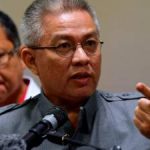
    Health Minister Datuk Seri Dr Adham Baba (pix) said apart from Health Ministry representatives, Prime Minister Tan Sri Muhyiddin Yassin and representatives of the Defence Ministry are also expected to attend.

    “We (Malaysia) have now entered the ‘late containment’ phase”, he said, in view of the 428 cases recorded so far.

    He told reporters this after observing the situation at the Customs, Immigration and Quarantine (CIQ) Complex at Bangunan Sultan Iskandar here today. Also present was Johor Health Director Dr Aman Rabu and state Health and Environment Committee chairman R. Vidyananthan.

    Adham said initial investigations indicated that most of the latest cases were linked to the ‘tabligh’ rally cluster – the rally had taken place at Masjid Jamek Sri Petaling in Kuala Lumpur, from Feb 27 to March 1.

    He said a total of 190 new cases of the coronavirus had been reported until noon today, bringing the total number of cases to 428.

    Adham added that the Health Ministry would invoke section 15 (1) of the Prevention and Control of Infectious Diseases Act 1988 to track down and enforce health screening on rally participants who have refused to come forward to health authorities for testing.

    “The ministry calls on those who were at the Sri Petaling mosque to contact the nearest District Health Office for further action,“ he said.

    The minister added that from Jan 5 until today, a total of 6.8 million people comprising foreigners and Malaysians had undergone health screening at all entry points in Johor, and so far, no positive Covid-19 cases had been detected through the screening.

    He also stressed that premises with individuals who have been confirmed to have been infected with Covid-19, should be closed by operators without waiting for instructions from the ministry. — Bernama

    Govt to convene special Covid-19 meeting tomorrow to discuss further measures
    Read More
    https://www.thesundaily.my/local/govt-to-convene-special-covid-19-meeting-tomorrow-to-discuss-further-measures-XI2129022

    Views: 0

  • COVID-19: IFRC, UNICEF and WHO issue guidance to protect children and support safe school operations

    GENEVA/NEW YORK – The International Federation of the Red Cross (IFRC), UNICEF and the World Health Organization (WHO) today issued new guidance to help protect children and schools from transmission of the COVID-19 virus. The guidance provides critical considerations and practical checklists to keep schools safe. It also advises national and local authorities on how to adapt and implement emergency plans for educational facilities. 

    In the event of school closures, the guidance includes recommendations to mitigate against the possible negative impacts on children’s learning and wellbeing. This means having solid plans in place to ensure the continuity of learning, including remote learning options such as online education strategies and radio broadcasts of academic content, and access to essential services for all children. These plans should also include necessary steps for the eventual safe reopening of schools.

    Where schools remain open, and to make sure that children and their families remain protected and informed, the guidance calls for:

    • Providing children with information about how to protect themselves;
    • Promoting best handwashing and hygiene practices and providing hygiene supplies;
    • Cleaning and disinfecting school buildings, especially water and sanitation facilities; and
    • Increasing airflow and ventilation.

    The guidance, while specific to countries that have already confirmed the transmission of COVID-19, is still relevant in all other contexts. Education can encourage students to become advocates for disease prevention and control at home, in school, and in their community by talking to others about how to prevent the spread of viruses. Maintaining safe school operations or reopening schools after a closure, requires many considerations, but if done well, can promote public health.

    For example, safe school guidelines implemented in Guinea, Liberia and Sierra Leone during the outbreak of Ebola virus disease from 2014 to 2016 helped prevent school-based transmissions of the virus.

    UNICEF is urging schools – whether open or helping students through remote learning – to provide students with holistic support. Schools should provide children with vital information on handwashing and other measures to protect themselves and their families; facilitate mental health support; and help to prevent stigma and discrimination by encouraging students to be kind to each other and avoid stereotypes when talking about the virus.

    The new guidance also offers helpful tips and checklists for parents and caregivers, as well as children and students themselves. These actions include:

    • Monitoring children’s health and keeping them home from school if they are ill;
    • Encouraging children to ask questions and express their concerns; and
    • Coughing or sneezing into a tissue or your elbow and avoid touching your face, eyes, mouth and nose.

    Read More
    https://www.who.int/news-room/detail/10-03-2020-covid-19-ifrc-unicef-and-who-issue-guidance-to-protect-children-and-support-safe-school-operations

    Views: 0

  • Cervical cancer elimination initiative updates

    Cervical cancer elimination initiative updates


    Banner of the Cervical cancer Elimination newsletter

    February: Garnering international support on the path to eliminate cervical cancer

    On
    5 February, the WHO Executive Board recommended to the 73rd World
    Health Assembly the adoption of the draft Global Strategy to accelerate
    the elimination of
    cervical cancer as a public health problem, and urged its
    implementation. The proposed resolution urges Member States to implement
    the strategy, calling for the support of international organizations
    and other relevant stakeholders, and includes a request
    for the Director General to support Member states in this endeavor.
     The WHA will consider the resolution when it convenes in May 2020.  The
    session included 23 interventions from EB Member States, most of them
    in full support of the Strategy and resolution;
    18 from other Member States, 6 observers and 6 non-state actors. Dr
    Nono Simelela, ADG and Special Adviser to WHO Director-General Dr
    Tedros, responded at the end of the session, thanking delegates for the
    broad support, and addressing some of the comments
    by sharing some of the ongoing work such as the efforts with the
    immunization partners to address HPV vaccine supply challenges and
    transparency in pricing.

    Read the full story

    Read the full draft resolution

    Download the
    Draft Strategy


    Dr Nono Simelela presented the draft Global Strategy towards Eliminating Cervical Cancer as a Public Health Problem during a webinar with partners. This presentation was given as part of
    the Us vs. HPV Prevention Week webinar series hosted by the Global
    Initiative Against HPV and Cervical
    Cancer. While highlighting WHO’s life-course approach to cervical
    cancer control, Dr Simelela also explained the proposed elimination
    threshold and targets as laid out in the strategy. She also discussed
    addressing salient challenges such as redressing inequities
    and taking special considerations for women living with HIV.

    Read the full story

    Listen to the full webinar “Gathering momentum for the global elimination of cervical cancer”

    Watch the video: Cervical Cancer Elimination – developed by Basic Health International (BHI), Union for International Cancer Control (UICC) and the Global Initiative Against HPV and Cervical Cancer (GIAHC)

    Read the story:To eliminate cervical cancer in the next 100 years, implementing an effective strategy is critical


    Dr
    Simelela was invited to Rwanda to support the kick off for a national
    cervical screening program set to put Rwanda on the path towards the
    Global Strategy goals
    for elimination of cervical cancer.


    Dr Simelala with the 1st Lady of of the Republic of Rwanda, Mrs. Jeannette Kagame


    HPV DNA test self-sampling demonstrated at cervical cancer screening facility, Muhoza Health Center

    Radiotherapy facility at Rwanda Cancer Center, colleagues from MOH, WHO, RBC and CHAI


    Amongst
    others, Rwanda’s First Lady Jeannette Kagame received her for a
    discussion on how WHO can support efforts against cervical cancer in her
    own country and
    throughout Africa. Dr Simelela held discussions on cervical cancer
    screening and treatment services, including building radiotherapy
    capacity, with the dedicated staff of Ruhengeri Hospital, Butaro
    Hospital, the Muhoza health center and hospital and the Rwanda
    Military Hospital. While cervical cancer and breast cancer are the most
    prevalent cancers among the women in the country, Rwanda has
    impressively reached a 97% HPV vaccination rate since introducing a
    vaccination programme in 2011, with a target to reach 70%
    screening coverage in five years. We look forward to a continuing and
    fruitful partnership with Rwanda and all the countries who have pledged
    their commitment to eliminate this preventable cancer. Together we can
    answer WHO’s call and improve the lives of
    girls and women around the world. 


    Follow us for more updates!

    Sign up for our newsletter
     

    Cervical cancer elimination initiative updates 5For
    news and real-time updates from around the world,
    follow Dr Princess Nono Simelela on Twitter
    @DrNonoSimelela
    ADG, Special Adviser to the Director-General on Strategic Programmatic Priorities

    Upcoming events

    International Women’s Day
    8 March 2020
     
    64th Session of the Commission on the Status of Women/Beijing+25
    9 – 20 March 2020

    World Immunization Week
    24 – 30 April 2020


    Copyright © 2019 World Health Organization, All rights reserved.

    You are receiving this email because you signed up for updates from WHO.
    Thanks for helping to make the world a little healthier.

    Our mailing address is:

    World Health Organization

    Avenue Appia 20

    Geneva 27 1211

    Switzerland


    Cervical cancer elimination initiative updates
    Read More
    https://www.who.int/news-room/detail/04-03-2020-cervical-cancer-elimination-initiative-updates-december-2019

    Views: 0

  • Report from Ethiopia expected this week in Boeing Max crash

    Report from Ethiopia expected this week in Boeing Max crash

    When air safety investigators release an interim report on the crash of an Ethiopian Airlines Boeing 737 Max sometime before Tuesday, they are likely to place the blame on the jet’s automated flight control system as well as on the pilots and their training, but it’s unclear yet which side will bear the brunt.

    Read More

    Views: 0

  • WHO statement on cases of COVID-19 surpassing 100 000

    WHO statement on cases of COVID-19 surpassing 100 000

    As of today’s reports, the global number of confirmed cases of COVID-19 has surpassed 100 000. As we mark this sombre moment, the World Health Organization (WHO) reminds all countries and communities that the spread of this virus can be significantly slowed or even reversed through the implementation of robust containment and control activities. 

    China and other countries are demonstrating that spread of the virus can be slowed and impact reduced through the use of universally applicable actions, such as working across society to identify people who are sick, bringing them to care, following up on contacts, preparing hospitals and clinics to manage a surge in patients, and training health workers.

    WHO calls on all countries to continue efforts that have been effective in limiting the number of cases and slowing the spread of the virus. 

    Every effort to contain the virus and slow the spread saves lives. These efforts give health systems and all of society much needed time to prepare, and researchers more time to identify effective treatments and develop vaccines. 

    Allowing uncontrolled spread should not be a choice of any government, as it will harm not only the citizens of that country but affect other countries as well. 

    We must stop, contain, control, delay and reduce the impact of this virus at every opportunity. Every person has the capacity to contribute, to protect themselves, to protect others, whether in the home, the community, the health care system, the work place or the transport system. 

    Leaders at all levels and in all walks of life must step forward to bring about this commitment across society. 

    WHO will continue to work with all countries, our partners and expert networks to coordinate the international response, develop guidance, distribute supplies, share knowledge and provide people with the information they need to protect themselves and others.

    WHO statement on cases of COVID-19 surpassing 100 000
    Read More
    https://www.who.int/news-room/detail/07-03-2020-who-statement-on-cases-of-covid-19-surpassing-100-000

    Views: 0

  • End in sight, but flare-ups likely in the Ebola outbreak in the Democratic Republic of the Congo

    End in sight, but flare-ups likely in the Ebola outbreak in the Democratic Republic of the Congo

    Remarks by Dr Ibrahima Socé Fall, World Health Organization Assistant Director-General, Emergency Response


    Good afternoon. 

    I hope that your busy week was interrupted, like mine, with a moment of joy on Tuesday.

    That moment was the celebration of a woman being discharged from an Ebola treatment centre in Beni. Her name is Masiko.

    She was the last person in the Democratic Republic of the Congo confirmed to have Ebola.

    Health workers and other responders sacrificed a lot to get to this point. 

    Since the outbreak was declared in August 2018 there have been 420 attacks on health facilities in DRC, resulting in 11 deaths and 86 injuries among health care workers and patients.

    It’s been a huge amount of work. At the peak of the outbreak, more than 120 cases were being reported each week. 28 health zones were affected, with cases appearing 1200 kilometres apart. In response:

    • 11 labs have been set up to test around 3500 samples each week
    • 11 Ebola treatment centres were set up to care for people with Ebola
    • 300 000 people have been vaccinated
    • 250 000 contacts have been registered
    • 26 000 safe and dignified burials have been conducted
    • More than 3000 health facilities were identified for infection prevention and control support
    • More than 1000 metric tonnes of supplies have been delivered
    • An Ebola vaccine has been licensed, and two treatments found to be highly effective
    • Almost 160 000 million people have been screened for Ebola symptoms at borders or other points of control

    This work is continuing. The outbreak isn’t over. WHO recommends waiting two full incubation periods – that’s 42 days – after the last person tests negative a second time before declaring the end of the outbreak.

    We must stay in active response mode to get us over that finish line.

    We have to be prepared for other cases emerging. It’s is a very real risk.

    Remember that during the Ebola outbreak in West Africa flare-ups of new cases occurred after the end of the outbreak.

    There are four reasons why new cases may emerge during this 42-day period, or even after the end of the outbreak.

    • First, because of the complex security environment, Ebola transmission outside of groups under monitoring is possible.  
    • Second, Ebola virus can persist in used needles, syringes or vials for several weeks.
    • Third, Ebola virus can persist in the body fluids of survivors for many months, and can be transmitted well after recovery, or in rare cases can result in relapse – as we’ve already seen during this outbreak.
    • Finally, Ebola virus is present in an animal reservoir in the region, and there is always a risk of a new spillover to humans.

    This is why it’s critical to maintain surveillance and rapid response capacities.

    And that’s what we are doing. We’re still in full response mode.

    In addition to the activities I already mentioned, I have to underline how critical it is to continue supporting the Survivor Programme, which provides follow-up care for almost all of the 1169 survivors in 26 health areas in North Kivu and Ituri. The programme also helps reduce the risks of re-introduction events. 

    We need to continue this work until the end of the outbreak, to keep the capacity in place to rapidly respond to flare-ups, to keep supporting survivors after the outbreak, and to transition the capacities built in this response toward building a stronger health system. 

    But to be very frank, right now the world risks dropping the baton at the finish line. WHO faces an immediate US $20 million funding gap. If no new resources are received, we will run out of money before the end of the outbreak.

    We appreciate the generosity of donors who have supported the response since August 2018. Now we need to get over the finish line. WHO is calling on the international community to help us end this outbreak, and keep our promises to communities to build a stronger health system.

    If we are forced to scale back operations because of a lack of funds, and then a new case emerges, we might not have the people and resources on the ground that we need to shut down transmission quickly. Just a single case could re-ignite the epidemic.

    That would be a tragedy. An avoidable tragedy. 

    It is important that the global community doesn’t only focus efforts when there is an immediate threat, then walk away when the threat subsides.

    The health system has to be strong to stop much more than Ebola. It has to stop malaria, measles, cholera, and now COVID-19.

    There is a lot more work to do.

    Thank you.


    End in sight, but flare-ups likely in the Ebola outbreak in the Democratic Republic of the Congo
    Read More
    https://www.who.int/news-room/detail/06-03-2020-end-in-sight-but-flare-ups-likely-in-the-ebola-outbreak-in-the-democratic-republic-of-the-congo

    Views: 0