Tag: Commitment

  • WHO Director-General calls on G20 to Fight, Unite, and Ignite against COVID-19

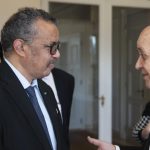
    Dr Tedros Adhanom Ghebreyesus, Director-General of the World Health Organization, addressed Heads of State at today’s extraordinary G20 Leaders’ Summit focused on COVID-19. 

    He told them, “You have come together to confront the defining health crisis of our time: We are at war with a virus that threatens to tear us apart – if we let it.“

    He welcomed the G20‘s initiative to find joint solutions and work together: “This is a global crisis that requires a global response.”

     “Fight, unite, ignite“

    Dr Tedros’ call was clear. First, he urged leaders to fight without excuses, without regrets – thanking countries who have already taken steps and urgently asking that they do more.

    Second, he encouraged them to unite, stressing that no country can fight this alone, and calling on all countries to build on the solidarity already sparked by the crisis.

    Third, he exhorted them to ignite a global movement to ensure this never happens again. 

    He welcomed G20 leaders‘ commitment “to do whatever it takes to overcome the pandemic” to protect lives and livelihoods, as well as restore confidence and shore up stability currently threatened in trade and other sectors, and to commit to take all necessary health measures and seek to ensure adequate financing to contain the pandemic and protect people, especially the most vulnerable.“

    The G20 committed to support and further strengthen WHO’s mandate in coordinating the response, and called for full funding of WHO‘s Strategic Preparedness and Response Plan.

    G20 members pledged to work together to increase research and development funding for vaccines and medicines, strengthen international scientific cooperation, and leverage digital technologies.

    In turn, they tasked WHO and other relevant organizations with assessing gaps in pandemic preparedness and report the findings of this assessment to the G20 Finance and Health Ministers, in order to establish a global initiative on pandemic preparedness and response together.


    Read More
    https://www.who.int/news-room/detail/26-03-2020-who-s-director-general-calls-on-g20-to-fight-unite-and-ignite-against-covid-19

    Views: 0

  • Thank you PDRM, says PM Muhyiddin

    Thank you PDRM, says PM Muhyiddin

    Thank you PDRM, says PM Muhyiddin 1

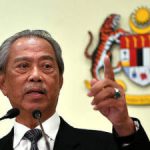
    KUALA LUMPUR: Tan Sri Muhyiddin Yassin today expressed his gratitude to the Royal Malaysia Police (PDRM), saying that he was proud of the force that has been ensuring the safety and wellbeing of the country.

    The Prime Minister said the sacrifice of the country’s security forces could be seen especially in the current situation of the Covid-19 outbreak.

    PDRM, he said, had ensured smooth implementation of the Movement Control Order (MCO).

    “Certainly it requires a great deal of sacrifice and commitment so that our country will continue to be a peaceful and safe nation,“ he said in a special message in conjunction with the 213th Police Day celebration, here tonight.

    Muhyiddin also prayed for Allah SWT to reward PDRM personnel for all their deeds and sacrifices.

    “Once again, I thank you and wish all of you Happy Police Day,” he said.

    The 213th Police Day will be celebrated on a new date nationwide, maintaining the theme ‘Polis dan Masyarakat Berpisah Tiada’. – Bernama

    Thank you PDRM, says PM Muhyiddin
    Read More
    https://www.thesundaily.my/local/thank-you-pdrm-says-pm-muhyiddin-GX2176976

    Views: 0

  • King expresses sadness, concern about healthcare workers infected with Covid-19

    King expresses sadness, concern about healthcare workers infected with Covid-19

    King expresses sadness, concern about healthcare workers infected with Covid-19 2

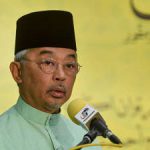
    KUALA LUMPUR: The Yang di-Pertuan Agong Al-Sultan Abdullah Ri’ayatuddin Al-Mustafa Billah Shah has expressed his sadness and concern over the news that several healthcare workers from the Ministry of Health (MOH) and private healthcare facilities have been infected with Covid-19.

    Comptroller of the Royal Household of Istana Negara Datuk Ahmad Fadil Shamsuddin said Al-Sultan Abdullah was extremely concerned about the situation as the healthcare workers were the frontliners who have spent most of their time and energy to help contain the pandemic.

    “As at March 21, the MOH has confirmed that 19 of its staff and five from the private healthcare facilities have been infected with Covid-19, while as at noon today, 212 new positive Covid-19 cases were reported, bringing the total to 1,518.

    “Two of the 19 MOH staff are currently receiving treatment in the intensive care unit (ICU) and investigations found that all of them were close contacts to the first and second generations of the tabligh clusters,” he said in a statement here today.

    As of March 22, a total of 460 MOH healthcare workers had been tested negative for Covid-19, while the remaining 190 were awaiting results.

    As of this afternoon, MOH confirmed that the Covid-19 total deaths in Malaysia stood at 14.

    Ahmad Fadil said in this regard, His Majesty called on the people to be honest and truthful with health personnel in giving information about their travel history and close contacts to determine the source of infection thus containing the spread of the disease.

    “It is important to be honest when undergoing the screening as the information given is vital to the MOH. This will also prevent MOH frontline personnel from getting infected.

    “Al-Sultan Abdullah also urged those who had close contacts with confirmed Covid-19 cases and had developed symptoms of the disease to immediately go the nearest government health facilities for examination. Don’t take symptoms lightly,” he said.

    Ahmad Fadil said the King also expressed his appreciation for the sacrifice, commitment and dedication of Covid-19 frontliners including personnel of MOH, government agencies as well as private healthcare facilities.

    “His Majesty hopes that all of them will continue to remain resilient in carrying out their responsibilities for the safety of the people and our beloved country,” he added.

    Al-Sultan Abdullah reiterated his advice for the people to comply with the Movement Control Order and follow the guidelines issued by the MOH to end the pandemic.

    His Majesty also conveyed his condolences to family members of those who have died of Covid-19 and called on Malaysians to continue praying so that the Covid-19 situation can be tackled as soon as possible. – Bernama

    King expresses sadness, concern about healthcare workers infected with Covid-19
    Read More
    https://www.thesundaily.my/local/king-expresses-sadness-concern-about-healthcare-workers-infected-with-covid-19-IC2172129

    Views: 0

  • EPL suspension extended

    EPL suspension extended

    EPL suspension extended 3

    ENGLISH football will be suspended until at least April 30 because of the continued spread of the coronavirus (Covid-19).

    The Football Association has also agreed that the current season can be “extended indefinitely”.

    Under current rules the season had been scheduled to end on June 1.

    A joint statement issued by the FA, Premier League and EFL expressed “a commitment to finding ways of resuming the 2019-20 season” and completing all domestic and European matches “as soon as it is safe and possible to do so”.

    EPL suspension extended
    Read More
    https://www.thesundaily.my/sport/epl-suspension-extended-ME2152248

    Views: 0

  • Cervical cancer elimination initiative updates

    Cervical cancer elimination initiative updates


    Banner of the Cervical cancer Elimination newsletter

    February: Garnering international support on the path to eliminate cervical cancer

    On
    5 February, the WHO Executive Board recommended to the 73rd World
    Health Assembly the adoption of the draft Global Strategy to accelerate
    the elimination of
    cervical cancer as a public health problem, and urged its
    implementation. The proposed resolution urges Member States to implement
    the strategy, calling for the support of international organizations
    and other relevant stakeholders, and includes a request
    for the Director General to support Member states in this endeavor.
     The WHA will consider the resolution when it convenes in May 2020.  The
    session included 23 interventions from EB Member States, most of them
    in full support of the Strategy and resolution;
    18 from other Member States, 6 observers and 6 non-state actors. Dr
    Nono Simelela, ADG and Special Adviser to WHO Director-General Dr
    Tedros, responded at the end of the session, thanking delegates for the
    broad support, and addressing some of the comments
    by sharing some of the ongoing work such as the efforts with the
    immunization partners to address HPV vaccine supply challenges and
    transparency in pricing.

    Read the full story

    Read the full draft resolution

    Download the
    Draft Strategy


    Dr Nono Simelela presented the draft Global Strategy towards Eliminating Cervical Cancer as a Public Health Problem during a webinar with partners. This presentation was given as part of
    the Us vs. HPV Prevention Week webinar series hosted by the Global
    Initiative Against HPV and Cervical
    Cancer. While highlighting WHO’s life-course approach to cervical
    cancer control, Dr Simelela also explained the proposed elimination
    threshold and targets as laid out in the strategy. She also discussed
    addressing salient challenges such as redressing inequities
    and taking special considerations for women living with HIV.

    Read the full story

    Listen to the full webinar “Gathering momentum for the global elimination of cervical cancer”

    Watch the video: Cervical Cancer Elimination – developed by Basic Health International (BHI), Union for International Cancer Control (UICC) and the Global Initiative Against HPV and Cervical Cancer (GIAHC)

    Read the story:To eliminate cervical cancer in the next 100 years, implementing an effective strategy is critical


    Dr
    Simelela was invited to Rwanda to support the kick off for a national
    cervical screening program set to put Rwanda on the path towards the
    Global Strategy goals
    for elimination of cervical cancer.


    Dr Simelala with the 1st Lady of of the Republic of Rwanda, Mrs. Jeannette Kagame


    HPV DNA test self-sampling demonstrated at cervical cancer screening facility, Muhoza Health Center

    Radiotherapy facility at Rwanda Cancer Center, colleagues from MOH, WHO, RBC and CHAI


    Amongst
    others, Rwanda’s First Lady Jeannette Kagame received her for a
    discussion on how WHO can support efforts against cervical cancer in her
    own country and
    throughout Africa. Dr Simelela held discussions on cervical cancer
    screening and treatment services, including building radiotherapy
    capacity, with the dedicated staff of Ruhengeri Hospital, Butaro
    Hospital, the Muhoza health center and hospital and the Rwanda
    Military Hospital. While cervical cancer and breast cancer are the most
    prevalent cancers among the women in the country, Rwanda has
    impressively reached a 97% HPV vaccination rate since introducing a
    vaccination programme in 2011, with a target to reach 70%
    screening coverage in five years. We look forward to a continuing and
    fruitful partnership with Rwanda and all the countries who have pledged
    their commitment to eliminate this preventable cancer. Together we can
    answer WHO’s call and improve the lives of
    girls and women around the world. 


    Follow us for more updates!

    Sign up for our newsletter
     

    Cervical cancer elimination initiative updates 5For
    news and real-time updates from around the world,
    follow Dr Princess Nono Simelela on Twitter
    @DrNonoSimelela
    ADG, Special Adviser to the Director-General on Strategic Programmatic Priorities

    Upcoming events

    International Women’s Day
    8 March 2020
     
    64th Session of the Commission on the Status of Women/Beijing+25
    9 – 20 March 2020

    World Immunization Week
    24 – 30 April 2020


    Copyright © 2019 World Health Organization, All rights reserved.

    You are receiving this email because you signed up for updates from WHO.
    Thanks for helping to make the world a little healthier.

    Our mailing address is:

    World Health Organization

    Avenue Appia 20

    Geneva 27 1211

    Switzerland


    Cervical cancer elimination initiative updates
    Read More
    https://www.who.int/news-room/detail/04-03-2020-cervical-cancer-elimination-initiative-updates-december-2019

    Views: 0

  • WHO statement on cases of COVID-19 surpassing 100 000

    WHO statement on cases of COVID-19 surpassing 100 000

    As of today’s reports, the global number of confirmed cases of COVID-19 has surpassed 100 000. As we mark this sombre moment, the World Health Organization (WHO) reminds all countries and communities that the spread of this virus can be significantly slowed or even reversed through the implementation of robust containment and control activities. 

    China and other countries are demonstrating that spread of the virus can be slowed and impact reduced through the use of universally applicable actions, such as working across society to identify people who are sick, bringing them to care, following up on contacts, preparing hospitals and clinics to manage a surge in patients, and training health workers.

    WHO calls on all countries to continue efforts that have been effective in limiting the number of cases and slowing the spread of the virus. 

    Every effort to contain the virus and slow the spread saves lives. These efforts give health systems and all of society much needed time to prepare, and researchers more time to identify effective treatments and develop vaccines. 

    Allowing uncontrolled spread should not be a choice of any government, as it will harm not only the citizens of that country but affect other countries as well. 

    We must stop, contain, control, delay and reduce the impact of this virus at every opportunity. Every person has the capacity to contribute, to protect themselves, to protect others, whether in the home, the community, the health care system, the work place or the transport system. 

    Leaders at all levels and in all walks of life must step forward to bring about this commitment across society. 

    WHO will continue to work with all countries, our partners and expert networks to coordinate the international response, develop guidance, distribute supplies, share knowledge and provide people with the information they need to protect themselves and others.

    WHO statement on cases of COVID-19 surpassing 100 000
    Read More
    https://www.who.int/news-room/detail/07-03-2020-who-statement-on-cases-of-covid-19-surpassing-100-000

    Views: 0

  • France pledges US$100 million (€90 million) for WHO Academy

    France pledges US$100 million (€90 million) for WHO Academy

    Geneva: France’s Minister for Europe and Foreign Affairs, Mr Jean-Yves Le Drian, and Dr Tedros Adhanom Ghebreyesus,  Director-General of WHO today met at the Permanent Mission of France to the United Nations in Geneva to discuss the WHO Academy, which will be the world’s largest and most innovative lifelong learning platform in global health.

    The WHO Academy aims to reach millions of people worldwide, offering high-tech learning environments at a “hub” in Lyon with “spokes” in the six WHO regions. The Academy will provide learning opportunities for leaders, educators, researchers, health workers, WHO staff and the broader public, and will deliver high quality, multilingual learning, both online and in-person, alongside a cutting-edge simulation centre for health emergencies.

    The discussion today follows a Declaration of Intent signed by Emmanuel Macron, President of the French Republic and Dr Tedros on 11 June 2019, and a pledge by France in the amount of US$ 100 million (€ 90 million) to WHO to support the creation of the WHO Academy, which will be established as an internal division within WHO.

    “Technology and innovation in learning are creating exciting new opportunities to accelerate progress towards health for all in every country,” said Dr Tedros Adhanom Ghebreyesus, Director-General of WHO. “The WHO Academy will support millions of learners to maximize health impacts with the best evidence, adult learning approaches and state-of-the-art technologies.”

    By propelling and strengthening digital innovations and lifelong learning opportunities around the world, the WHO Academy will play an instrumental role towards achieving WHO’s triple billion goal by 2023 and the health Sustainable Development Goals: 1 billion more people will benefit from universal health coverage; 1 billion more will be better protected in health emergencies, and 1 billion more will enjoy improved health and wellbeing.

    The funding from France represents a commitment to accelerate the development of the WHO Academy, and confirms the engagement of France — a longstanding partner of WHO and a key actor in global health – and its strong support to the ambitions of 13th WHO General Programme of Work to ensure healthy lives and well-being for all ages. 


    France pledges US$100 million (€90 million) for WHO Academy
    Read More
    https://www.who.int/news-room/detail/24-02-2020-france-pledges-us100-million-for-who-academy

    Views: 0

  • Statement on the meeting of the International Health Regulations (2005) Emergency Committee for Ebola virus disease in the Democratic Republic of the Congo on 12 February 2020

    Statement on the meeting of the International Health Regulations (2005) Emergency Committee for Ebola virus disease in the Democratic Republic of the Congo on 12 February 2020

    The meeting of the Emergency Committee convened by the WHO Director-General under the International Health Regulations (IHR) (2005) to review the current Ebola virus disease (EVD) outbreak in the Democratic Republic of the Congo (DRC) took place on Wednesday, 12 February 2020, from 14:00 to 16:45 Geneva time (CEST).

    Proceedings of the meeting

    Members and advisors of the Emergency Committee were convened by teleconference.

    The Secretariat welcomed the Committee and thanked them for their support. The meeting was turned over to the Chair, Dr Robert Steffen.

    Dr Steffen also welcomed the Committee and gave the floor back to the Secretariat.

    Representatives of WHO’s legal department and the department of compliance, risk management, and ethics briefed the Committee members on their roles and responsibilities.

    Committee members were reminded of their duty of confidentiality and their responsibility to disclose personal, financial, or professional connections that might be seen to constitute a conflict of interest. Each member who was present was surveyed and no conflicts of interest were judged to be relevant to the meeting.

    The Chair then reviewed the agenda for the meeting and introduced the presenters.

    Presentations were made by representatives of the Ministry of Health of the Democratic Republic of the Congo (DRC), the WHO Secretariat, and the UN Ebola Emergency Response Coordinator.

    The current situation in the DRC was reviewed. As of 10 February 2020, there were a total of 3431 cases, of which 3308 were confirmed and 123 were probable. 2253 persons have died (66%). Between 3 and 9 February 2020, three new confirmed cases were reported in Beni Health Zone, North Kivu. These three cases were already registered as contacts and two were under surveillance at the time of detection. More than 2000 contacts are being followed. There has been an increase in the number of security incidents in recent months.

    Challenges that remain include: strengthening of community acceptance for full commitment to response measures; protection of personnel at strategic health checkpoints; improvement of infection prevention and control practices in health facilities; strengthening of the local health system; and comprehensive treatment and support for patients in recovery.

    The WHO Secretariat gave an overview of the epidemiological situation, which shows an overall encouraging trend in case incidence and geographic spread. It was noted that sustaining this progress depends on the security situation and control of the well-known drivers of transmission, particularly in traditional health facilities, and on continued trust and communication with the community.

    A risk communication and community engagement programme has been developed, as has an EVD survivors programme. It is critical to ensure the long-term sustainability of these two initiatives.   

    The situation in countries neighbouring DRC was reviewed, as was preparedness in nonaffected areas of DRC. An EVD operational readiness standardized approach has been implemented in 9 priority countries. More than 2400 alerts have been investigated, and more than 14,600 health workers have been vaccinated.

    The UN Ebola Emergency Response Coordinator gave a brief report on operational support, focused on security challenges and preparations for any resurgence of disease.

    Context and Discussion

    The Committee noted a great deal of progress in the situation since its last meeting and commended the response, under the leadership of the DRC Ministry of Health and the multisectoral coordination commission established in July 2019. Support provided by WHO, UN agencies, nongovernmental organizations and other partners has also contributed to limiting the spread and impact of this virus in a difficult context. An increase in the number of alerts was attributed to strong and proactive community surveillance.

    Conclusions and Advice

    It was the unanimous view of the Committee that this event still constitutes a public health emergency of international concern (PHEIC) under the IHR (2005).

    The Committee acknowledged the revised risk assessment, which puts the risk now as high at national and regional levels, and low at the global level.

    The Committee was concerned that withdrawing the PHEIC now might have adverse consequences for the response efforts through diminishing focus. Additionally, although the primary concern of the Committee is EVD, there are serious ongoing outbreaks of other diseases, including measles and cholera, in DRC. The country continues to need support to combat infectious diseases as well as to strengthen its health system. Further, there remains an urgent need to maintain international solidarity for the response.

    The Committee noted the ongoing discussions about the interpretation in the text of the IHR (2005) of the terms international and regional spread, and about creating an intermediate level of response between the binary possibilities of PHEIC or no PHEIC, in a way that does not require reopening negotiations on the Regulations. The Committee supports these discussions, as an intermediate level would be as useful for gradually ending a PHEIC and for signaling the potential for one to be declared.

    The Committee provided the following advice to the Director-General for his issuance as revised Temporary Recommendations under the IHR (2005).

    For DRC:

    • Sustain the political commitment and multisectoral coordination approach to the response.
    • Continue to engage and build trust with associations of survivors to facilitate rapid detection of any cases arising from exposure to infected bodily fluids of survivors.
    • Continue to strengthen capacity, implementation, and coordination for community awareness and engagement, including a focus on hotspots, preventing resurgence where cases have declined, and to support survivors in their communities.
    • Further enhance the acceptance of response measures and address access and security issues by engaging influencers and decision makers for all interventions.
    • Strengthen measures to prevent and manage nosocomial infections, including systematic mapping of health facilities, targeting of IPC interventions and sustain support to those facilities through monitoring and supervision, including in private-sector and traditional health facilities.
    • Continue cross-border screening and step up monitoring at checkpoints around hotspots and at main roads.
    • Continue to implement and share real-time full-genome genetic sequencing of all new confirmed cases.
    • Strengthen measures to prevent and manage nosocomial infections, including systematic mapping of health facilities, targeting of IPC interventions and sustain support to those facilities through monitoring and supervision.
    • Strengthen preparedness in non-affected provinces of DRC, and more generally strengthen the health system across the country to respond to concurrent health emergencies.
    • Continue to implement optimal vaccine strategies that have proven maximum impact on curtailing the outbreak, as recommended by WHO’s Strategic Advisory Group of Experts (SAGE).

    For countries at risk:

    • At-risk countries should maintain their work with partners to improve their preparedness for detecting and managing imported or locally acquired cases, including the transparent sharing of detailed information on suspect cases, as required by the International Health Regulations (2005), and sharing laboratory samples of suspect cases for confirmatory testing in accordance with WHO norms and guidance.
    • Countries should continue to map population movements and sociological patterns that can predict risk of disease spread.
    • Risk communications and community engagement, especially at points of entry, should be maintained.

    For all countries:

    • As recommended previously, no country should close its borders or place any restrictions on travel and trade.
    • The Committee does not consider entry screening at airports or other ports of entry outside the region to be necessary.

    The Committee emphasized the importance of continued support by WHO and other national and international partners towards the effective implementation and monitoring of these recommendations.

    Based on this advice, the reports made by the affected State Party, and the currently available information, the Director-General accepted the Committee’s assessment and on 12 February 2020 maintained the Ebola outbreak in the Democratic Republic of the Congo as a Public Health Emergency of International Concern (PHEIC).

    The Director-General endorsed the Committee’s advice and issued them as Temporary Recommendations under IHR (2005) to reduce the international spread of Ebola, effective 12 February 2020. The Director-General thanked the Committee Members and Advisors for their advice and requested their reassessment of this situation within two months or earlier if the situation requires.

    Statement on the meeting of the International Health Regulations (2005) Emergency Committee for Ebola virus disease in the Democratic Republic of the Congo on 12 February 2020
    Read More
    https://www.who.int/news-room/detail/12-02-2020-statement-on-the-meeting-of-the-international-health-regulations-(2005)-emergency-committee-for-ebola-virus-disease-in-the-democratic-republic-of-the-congo-on-12-february-2020

    Views: 0