Tag: Collect

  • Coronavirus: Abuja Residents Flood Markets, ATMs Ahead Of Lockdown In City, Lagos, Ogun

    Coronavirus: Abuja Residents Flood Markets, ATMs Ahead Of Lockdown In City, Lagos, Ogun

    Coronavirus: Abuja Residents Flood Markets, ATMs Ahead Of Lockdown In City, Lagos, Ogun 1

    Coronavirus: Abuja Residents Flood Markets, ATMs Ahead Of Lockdown In City, Lagos, Ogun 2

    Coronavirus: Abuja Residents Flood Markets, ATMs Ahead Of Lockdown In City, Lagos, Ogun 3

    Coronavirus: Abuja Residents Flood Markets, ATMs Ahead Of Lockdown In City, Lagos, Ogun 4

    Coronavirus: Abuja Residents Flood Markets, ATMs Ahead Of Lockdown In City, Lagos, Ogun 5


    Residents of Abuja on Monday thronged banking halls, shopping malls and supermarkets to make last-minute cash withdrawals and purchases of basic food items and toiletries ahead of a lockdown in the city.

    President Muhammadu Buhari had on Sunday ordered a total lockdown of activities in Lagos, Ogun and Federal Capital Territory for two weeks as part of measures to stem the spread of Coronavirus pandemic in the country.

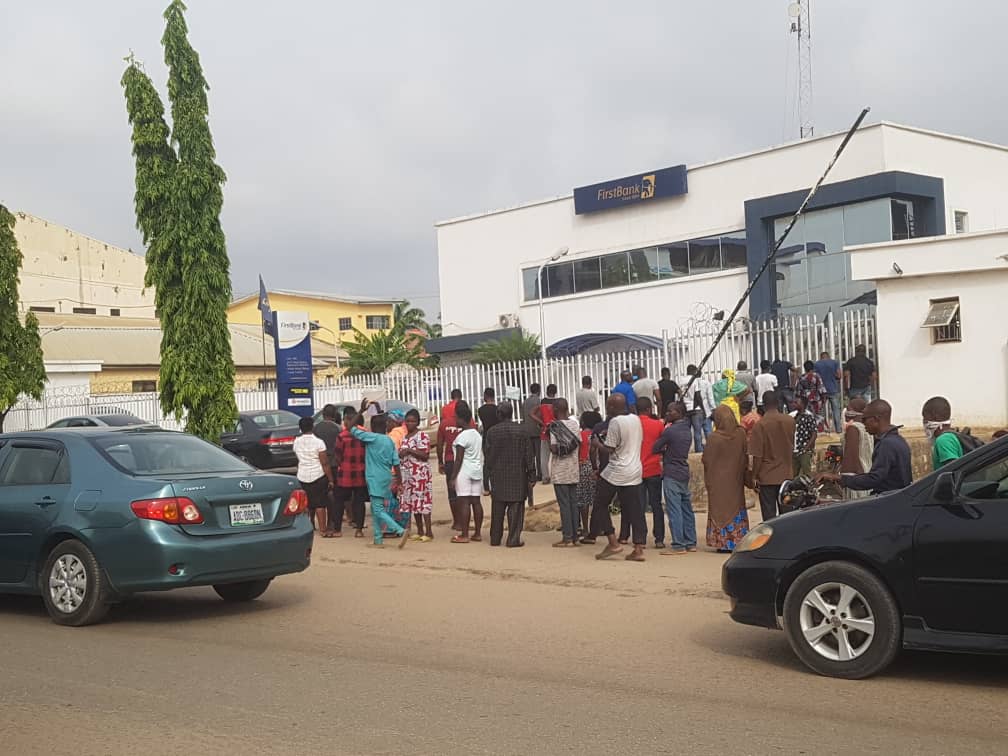
    As early as 7:00am, residents of Abuja had besieged premises of various banks to make cash withdrawals that would last them for the duration of the restriction. 

    Coronavirus: Abuja Residents Flood Markets, ATMs Ahead Of Lockdown In City, Lagos, Ogun 6


    Customers were seen at a branch of First Bank located in Kubwa struggling to gain access into the banking hall. 

    The situation was the same at the Automated Teller Machine point of many banks where dozens of persons gathered to collect cash.

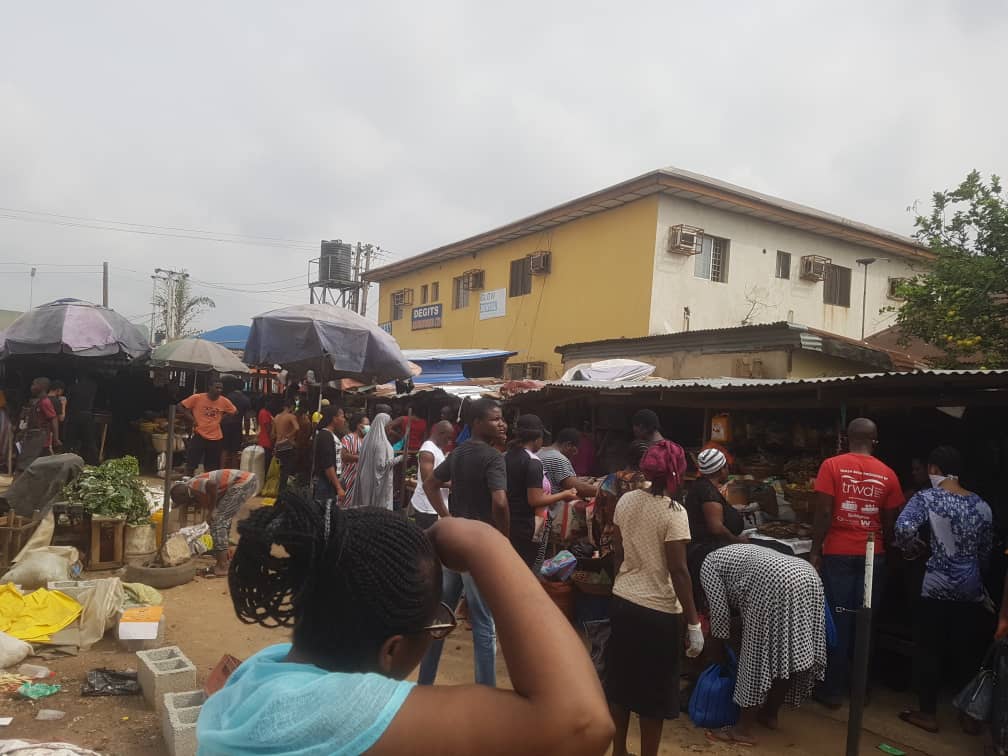
    Many business owners took advantage of the situation to make extra profit by inflating prices of basic items including foodstuffs following the surge in customers at most markets in Abuja. 

    Coronavirus: Abuja Residents Flood Markets, ATMs Ahead Of Lockdown In City, Lagos, Ogun 7


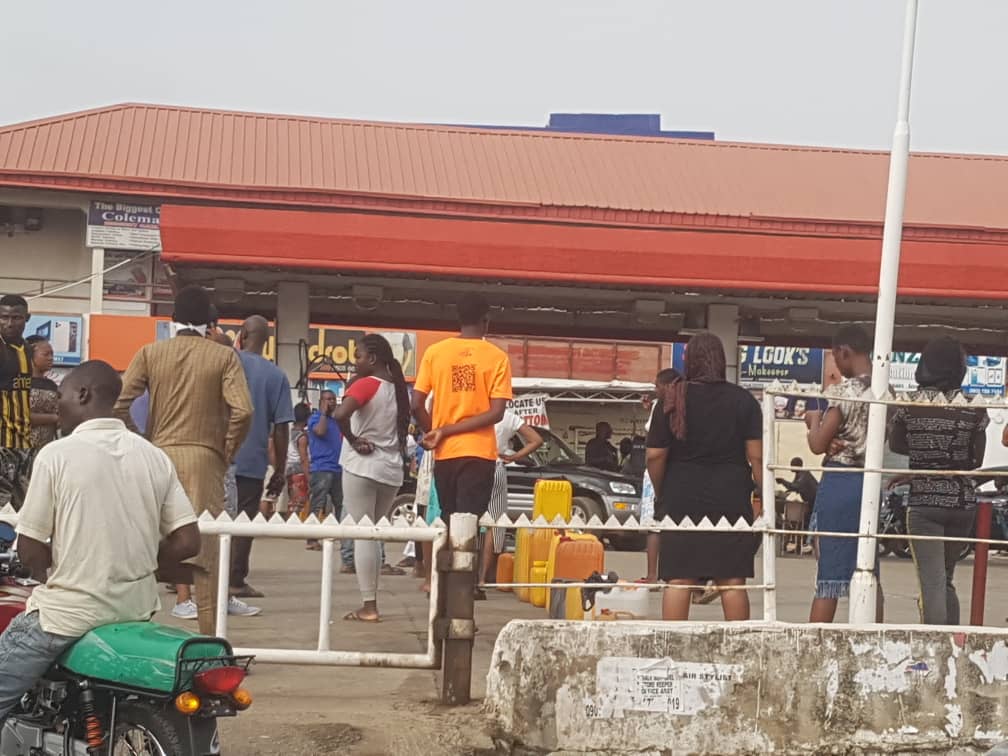
    Also, filling stations were not left out in the rush as many people were seen trying to buy petrol for domestic use. 

    Coronavirus: Abuja Residents Flood Markets, ATMs Ahead Of Lockdown In City, Lagos, Ogun 8


    Residents expressed mixed reactions on the lockdown order, describing it as a pain and sacrifice citizens had to make to help stop the spread of the virus.

    PUBLIC HEALTH

    News

    AddThis

    : 

    Original Author

    : 

    SaharaReporters, New York

    Disable advertisements

    : 
    Coronavirus: Abuja Residents Flood Markets, ATMs Ahead Of Lockdown In City, Lagos, Ogun
    Read More
    http://saharareporters.com/2020/03/30/coronavirus-abuja-residents-flood-markets-atms-ahead-lockdown-city-lagos-ogun

    Views: 0

  • How Did Don Vierra Become the World Renowned Consultant in Health Information System?

    [ad_1]

    For those in Health Informatics, the name “Vieira” might not sound strange. Immanuel Antonius, professionally known as Don Vieira, is a successful and independent consultant who has reached horizons beyond expectations. The 32-year old Technoprenuer has ticked off projects, which most consultants still consider as a dream.While he was brought up in Namibia, his expertise and skills were never limited to the boundaries. If Namibia is his primary home, his work stations or contracted duty stations have become the secondary residence where he used to spend most of his days.

    As far as his academic background is concerned, he holds an Honors’ degree in Computer Science, Advanced diploma in Monitoring and Evaluation, certifications on Health Information Systems (HIS) and A masters’ degree in Biometrics from the University of Paris – Est créteil in France.

    Like people dream of being associated with tech giants such as Facebook or Google, he achieved the milestone of serving for similar giants in the health sector. Some of his notable associations are with World Health Organization (WHO), Centre for Disease Control and Prevention (CDC), United Nations (UN), United States Agency for International Development (USAID), Clinton Health Access Initiative (CHAI), IntraHealth International, Global Fund, Population Service International (PSI), Jay Snow Inc. and the list goes on.

    Apart from his experience in healthcare informatics, language is one of those factors that contributed to his stature elevation. His understanding about seven languages, including English, Spanish, French and Portuguese, has helped him deal with people from different backgrounds.In other words, there has never been any force that stopped him from achieving his goals across the borders.

    With Ten (10) years of experience, he has built and supported several national systems such as the e-Health, Malaria, TB, PMTCT, Nutrition, VMMC and HIV- just to mention a few. He also trained more than 20,000 people including government officials, managers, nurses, doctors and technical people to bring significant changes in their methods of elevating the quality of life for the public.

    Vieira has developed strong professional relationships with several organisations in Kenya, Uganda, Mocambique, South Africa, Namibia, Angola, Germany, India, DRC, Zambia and the United States.Most of them used to admire his determination and skills for giving the best in every area.

    If he is assigned to a work, there is no force that can stop him from transforming a novice into an expert. Below are three of some of the notable milestones that gave a kick start to his career:

    1. A Discrete Choice Experiment for pharmacists- he worked with Dr. Peter Rockers, an assistant professor in the Department of Global Health at the Boston University School of Public Health, to bring visible changes in the health informatics. At the time of experiment, Dr. Peter Rockers was at Harvard Medical School.

    2. Vieira wore the big shoe when he took over the position of HIS Technical Advisor from Jim Sitzer, who went to become the Director in Public Health for the Umatilla County Health Department, Oregon in the US.

    3. During Vieira’s venture as a Technical Advisor for JSI, he developed a web-based master facility (MFL) for Namibia. It consists of a map indicating the location of all public health facilities in the country.The list aims to assist public locate services provided by the nearest health facilities, on the other hand, it also aims to guide the ministry of health in planning and equity in resource allocation and distribution. The MFL was built based on WHO guidelines

    Due to internet connectivity issues in most rural áreas, the Health Extension Workers were forced to use paper registers to collect patients’ information. This led to poor data quality since paper would torn or get lost. With an urge to find an appropriate solution, he created a mobile app that has the capability to store data without internet connectivity.

    Over the past few years, Vieira has won few accolades and gained international recognition for his consultancy expertise.His efforts have also managed to attract new audiences including influential decision makers from government authorities to NGOs. His passion for innovation and Technopreneurshipis what that has always made him different from others.

    For his next project, he promised to create what most government bodies and NGOs have failed to implement- “The Situation Room” that will bring new changes to the health sector.

    [ad_2]

    Source by Anusha Saeed

    Views: 0

  • Coin Book Reviews – A Guide Book of Morgan Silver Dollars By Q David Powers

    [ad_1]

    The 2nd edition of “A Guide Book of Morgan Silver Dollars, A complete History and Price Guide” was released in paperback form on March 31, 2005.

    The first chapter discussed the appeal and challenges of collecting Morgan Dollars and a few tidbits about the history of the Morgan Dollar. While only 5 and 1/2 pages long, the first chapter is filled with interesting facts. As you enter chapter two, the book goes back a ways and discussed the history of dollar coins in general going back to the Spanish Milled Dollars, then the Mint Act of 1792 and how US coinage began. There are several paragraphs discussing the early dollar coins, there popularity, or lack thereof, and how the dollar was eliminated and replaced with the Trade Dollar.

    The book does a very decent job of describing the events that were happening during this time period such as the troubling times for silver companies and the political involvement to help them out that eventually led to the Morgan Dollar. Chapters 3 and 4 are packed with excellent information on the design process for the Morgan Dollar and them the minting process. For a new collector, this is very good information.

    Chapter 5 discusses the five, yes five different mints that produced Morgan Dollars, although the Denver mint only produced Morgan Dollars for one year, the year 1921. Chapter five also gives a little bit of history about each of the mints.

    Chapter 6 discusses the various hoards of silver dollars discovered long after the demise of the dollar. Some once thought scare dates were now plentiful as the US Treasury began releasing and selling Silver Dollars held in vaults for years.

    Chapter 7 delves into the variety of ways you can collect Morgan Dollars. If you are at all familiar with Morgan Dollars, then you know that there is a multitude of ways to collect this coveted coin. Chapter 7 will give you many ideas to help you narrow down the way you may want to collect this series

    Chapter 8 discusses grading and the ANA grading scale. If you are familiar with the scales, then there is not much new here. Also, this is also where I think the book could stand some improvement. There are pictures providing examples for each grade, but like most, if not all books about grading, there are only descriptions for MS60 and above. I would have liked to see large pictures for each MS grade. This would give collectors a clear indication of the impact of bag marks in regards to grading.

    Chapter 9 discusses the many varieties within the Morgan series while Chapter 10 is where the real meat of the book is. Chapter 10 contains a page for each and every year and mint of the entire Morgan Dollar series. Each page contains information on keys to collecting, circulation strikes, prooflike coins, price guide, availability guide, mintage and distribution and varieties. Each page is jam-packed with information very specific to each date and mint. In addition, there is a summary for each year that discussed things going on at the time and other general information about Morgan Dollars for that year. This type of information no doubt took years to gather and is invaluable to the serious Morgan Dollar collector.

    Chapter 10 is buy far the longest and provides incredible detail for each and every year and mint of the Morgan series. There is one page for each date/mint that provides information such as optimal collecting grade, PCGS population (although outdated as more coins become certified), estimated field population, total mintages, varieties, etc. In addition, there is a page for each year that discusses collecting and how life was during that particular year. In all, chapter 10 is for the series Morgan Dollar collector.

    In summary, if you are a series Morgan Dollar collector, or just a beginner, this is a must have book. The information provided in this book is incredible and provides the collector with incredible information into collecting one of the most popular coins collected today.

    This book gets 4 1/2 stars.

    If this book had blown up pictures of Mint State type coins, it would have rated a 5. Since the Morgan Dollar is most desired in Mint State, it puzzles me as to why graded pictures are not provided.

    [ad_2]

    Source by Keith Scott

    Views: 0

  • Which Walking Liberty Half Dollar Collecting Strategy Is Best for You?

    [ad_1]

    Walking Liberty half dollars are one of the most beautiful of American coins. They age gracefully, and are a far less expensive to collect than the more popular Morgan silver dollar.

    Their key date 1921-S, in MS-65 condition will sell for around $100,000. The 1893-S Morgan in MS-65 condition will bring nearly $700,000. In MS-60 they are about $20,000 compared to the 1893-S for $130,000.

    The Walking Liberty isn’t quite the same bargain in AU however. The 1921-S goes for around $7,000 and the 1893-S Morgan goes for around $21,000. Instead of a 1 to 7 ratio in the MS categories, it’s only a 1 to 3 ratio in AU.

    As you get into the late date Walkers the cost of mint state coins goes down considerably. Mint state examples are plentiful and cheap after 1935.

    A complete date/mint set of MS-65 Walking Liberties would cost somewhere in the half million dollar range. So, the entire collection would cost less than one 1893-S Morgan in MS-65 condition.

    I see four fundamental strategies for collecting Walking Liberties:

    1. US half dollar type set

    2. Walking Liberty year set

    3. Walking Liberty complete date/mint set

    4. Walking Liberty proof set

    1. The US half dollar short, type set could include each of the following:

    · Flowing Hair half

    · Draped Bust half

    · Capped bust

    · Seated Liberty half

    · Barber half

    · Walking Liberty

    · Franklin Kennedy

    If you’re willing to accept lower mint state for the Flowing Hair and Draped Bust designs, this collection could be obtained for around $150,000.

    2. The Walking Liberty year set would contain 25 coins for an example of one from each year this issue was minted. An example of this would be:

    · 1916-P to 1921-P

    · 1923-S

    · 1927-S

    · 1928-S

    · 1929-D

    · 1933-S

    · 1934-P to 1947-P

    This strategy allows you to assemble each year of issue in mint condition without breaking the bank. It would be acceptable to have the rare dates in MS-64 alongside the common dates in MS-65. You’re looking at something under $40,000 for a collection like this.

    3. A complete date/mint set would require 65 coins. A set like this could also use MS-65 examples for the common later date coins and MS-64 for the more expensive dates. Depending how you organize a collection like this, it might cost around $350,000 to complete.

    4. Here’s the surprise. If you go for a proof set, there are only 7 coins minted as proofs for this series. Proofs are surprisingly inexpensive and even more beautiful than the circulation issue. There is only one key date in the proof series, and that’s 1936. A set of PF-65 Walking Liberty coins will cost just under $10,000.

    I price mint state coins here because the mint state coins have the most demand and collector value. They will retain their prices better and increase more than their circulated versions.

    As discussed in my article on Pivotal Grading Points, the greatest profit potential is to buy the coin just under the pivotal grade. That is often, but not always MS-64.

    If you were to accept MS-64 as your grade standard, you could complete these set examples for considerably less money than described here. As demonstrated above a complete set is considerably less expensive than a complete date/mint Morgan set.

    [ad_2]

    Source by Paul St. Julien

    Views: 0

  • How to Collect and Invest In One Dollar Bills Using Serial Numbers

    [ad_1]

    A one dollar bill may not seem like a lot of money, but some are rare and can become part of an investment. The key to knowing if a dollar bill is worth more than face value is to examine the serial number. Serial numbers are a combination of a letter, eight numbers and another letter at the end. You can find them easily because they are printed in green and are located twice on each bill. One is close to the bottom left of George Washington’s portrait and the other is located at the top right of his portrait. Combinations of serial numbers are keys to determining the rarity and investment value of a bill.

    The first letter runs from “A” to “L”. These 12 letters are codes for the cities where they were printed. The last letter indicates the number of times that the Bureau of Engraving and Printing used the sequence of serial numbers. So, “A” means that the serial number has run only one time. “B” indicates a second time and “C” is the third. The number of letters goes through the 26-letter alphabet.

    Between the letters are eight numbers representing how many one dollar bills were printed in one year. The first one printed will be “00000001”. The last is “32000000”. The lower or higher the numbers, the more they’re worth as investments. For example, a bill with a low number like 00000095, or one with a high number 32000022 can fetch between $25 to $100.

    Also, a specific combination of numbers can add value. If you have only two numbers in the set, like “2” and “4”, such as 22424442. This number is worth a little more than face value. But, if you have a repeating pattern, like, 24242424, or 24224224, your investment just increased by about $1,000. This special combo is called a “binary bill.”

    You might also get a set using three numbers, such as “2”, “4”, and “7”, you can have them in no special order, such as:27244727, or 59577975 Of course, if they follow a repeating order, they are worth more. You must know that a two number combination will be more valuable than the three number combination. These are called “trinary bills,” which could only fetch $3 or $5.

    Another type is called a “ladder,” which is a direct count from 1 to 8: 12345678 or, backwards: 87654321.

    A “radar” bill reads the same numbers backwards and forwards, like a mirror: 14622641. A “super radar” bill only includes two numbers, with the same one only at the beginning and end: 59999995. Radars can fetch about $25, while super radars might be worth about $70.

    Two or more separate bills with consecutive serial numbers, like 25348793 and 25348794, are two bills printed one after the other.

    “Doubles” occur when you have two of the same numbers: 33774499. A “double quad” is two sets of four of the same number: 33335555. Even a bill with one number repeated eight times: 44444444 might bring $500.

    You can also find a “star note.” If you see a star at the end of a serial number, it means that it’s a replacement bill for one with the same serial number that was damaged.

    Special combinations of serial numbers from one dollar bills vary in value, from just a few dollars to a few thousand. My advice is to go to your bank and ask for a one-dollar “strap” which is a pack of 100 one dollar bills. Go through them and see what patterns of serial numbers you can find. Sometimes, a fresh new pack of one dollar bills will come to a bank straight from the Bureau of Engraving and Printing. So you might have a good chance of finding consecutive bills, which could possibly earn you a few more dollars if you sold them to a collector. Just remember that any bill with a special serial number is a rare item. Now, you have a good reason to check the dollar bills in your pocket or purse.

    [ad_2]

    Source by Harrington A Lackey

    Views: 0