Tag: chinese

  • Why Did China Seek Friends in Africa in the 1950s

    In the 1950s, fascination, confusion, and even alarm are adjec-tives that best described the reaction of many political observers to the Chinese seeking friends and allies in Africa. An executive editor of the New York Times, Mr. Seymour Freidin, wrote:

    Red Chinese drive into Africa involves a long range effort to dominate the continent totally and populate it with Chinese.

    Mr. Seymour’s sentiments were not uncommon at the time. There was a great deal of confusion as to what the Chinese were actually up to. This was due in large part to the inconsistent nature of policies pursued by the Chinese in those early years. This was exemplified in the so-called split-level or dual diplomacy. Simply put, this was the pursuit of the “United Front From Above” (government-to-government relations), and the “United Front From Below” (support for wars of national liberation). In practice, this meant the Chinese would support “revolutionary” opposition groups while at the same time supporting the legitimate government of an African country. I take this up in Chapter 3.

    To the question of this chapter, why Africa? The simple answer is ideology, manifested in both domestic Chinese politics and in her international relations. In particular, China’s emerging conflict with the Union of Soviet Socialist Republics (USSR) and the United States of America (USA) were to play a role in the Chinese drive into Africa. I will deal with the ideological factors in the next section.

    First, I would like to briefly point to historical reasons which some Chinese leaders used as a primary argument for their interest in Africa. For example, they pointed to the fact that in October 1415, Chinese explorer and Admiral Zheng He reached the eastern coast of Africa and sent the first of two giraffes as gifts to the Chinese Yongle Emperor. Zheng brought gifts and granted titles from the Ming emperor to the local rulers, with the aim of establishing a large number of tributary states. Indeed, it is worth noting that China and Africa have a history of trade relations, sometimes through third parties, dating back as far as 202 BC and AD 220.

    I will now deal with the domestic factors and the ideological disputes with the United States and Union of Soviet Socialist Republics (USSR).

    DOMESTIC INFLUENCES ON CHINA’S DRIVE INTO AFRICA

    At the Eighth Congress of the Chinese Communist party in 1956, it was clear the new China had been making a determined effort to expand her influence in the outside world, particularly in the “vast intermediate areas” of Africa, Asia and Latin America. In Chinese eyes, the countries of Africa, Asia, and Latin America remain the potential field for revolutions of the Chinese type. This was one area in which they felt a special ideological leadership to offer. Ten years later, in 1965, this belief was exemplified by Lin Biao’s celebrated thesis entitled “Long Live the victory of the People’s war”. His core argument was that;

    Comrade Mao’s theory of the estab-lishment of rural revolutionary base areas and the encirclement of the cities from the countryside is of outstanding and universal importance for the present revolutionary struggles of all the oppressed nations and peoples, particularly, those in Africa.

    Furthermore, The CCP claimed that it was waging a class struggle in defense of Maoism, the true revolutionary, against allies of Nikita Khrushchev in the CCP-the so-called allied forces of “reaction”- and imperialism and revisionism in the world at large. The party described its actions as a ‘sharp class struggle’ and the ‘socialist education’ against “renascent bourgeois ideology, bureaucratic degeneration, and anti-party elements” in the Chinese Communist party (CCP).

    If Mao was to gain complete control over his enemies and prove his ideological position correct, China had to find allies abroad to form the broadest possible United Front for a “struggle” against the “corrupting revisionist influence” of Russia and the imperialist drive of the United States of America. As Mao, not Khrushchev was the true revolutionary; the drive into Africa was an attempt to assert China’s ideological supremacy over USSR.

    It is fascinating and quite remarkable in my view to see that China’s leaders in the late 1950s and 1960s did seriously consider Africa would be of key importance in realpolitik. They were consumed by the belief that Africa was both the center of the anti-colonial struggle and the center for the East and West to fight for control of the “intermediate zone”.

    The theory of the “intermediate Zone” is an interesting one as it formed the foundation for this belief. Introduced by Mao in the late 1940s, the theory claimed that between the United States and the Soviet Union exist a vast “intermediate zone” mainly composed of “oppressed” non-Western countries, including China.

    Before the “imperialist” United States of America could attack the Union of Soviet Socialist Republics, they first had to control the intermediate zone, according to Mao. This then made Asia and Africa the central arena of the Cold War. When Mao and the Chinese Communist Party seized political power in China, they immediately proclaimed revolutionary China as a natural ally of the “oppressed peoples” in the “intermediate zone”. They saw themselves as champions that held the banner of anti-imperialism and anti colonialism, challenging the United States of America and other Western imperialist/colonial powers.

    The belief, that they [The Chinese] were the flag bearers of the oppressed, was fostered by the fact that they made comparisons to key stages in Chinese revolutionary history to the situation in most of Africa during the years of decolonization. The implication was that the ‘unfolding African revolution’ would pass through similar stages. It was noted by Chinese leaders that some parts of Africa were going through similar experiences that China went through sixty years earlier during the Boxer uprising.

    Some events for the independence struggle in Africa were likened to those which occurred in the Hsin-Hai Revolution of 1911, while others resemble what happened around the May 4th incident of 1919.

    All this led some Chinese leaders to have a vision of a “third force”-drawn of nations of Africa, Asia, and Latin America against the “double hegemony” of the nuclear giants-The United States of America and Union of Soviet Socialist Republics. As we would later see, it was no surprise that the Chinese felt compelled to support various rebel and “freedom fighters” across Africa.

    This support was based on a genuine desire to “free” the Afri-cans from what the Chinese saw as imperialism and hegemony. To this day, the Chinese still hold this desire, hence their lack of interference in African affairs.

    INTERNATIONAL INFLUENCES ON CHINA’S DRIVE INTO AFRICA

    It was a fact that Communist China, after its birth in 1949, faced a hostile external environment. Between the years 1952 and 1961, it was notably her unresolved territorial conflict with the United States of America over Taiwan (Republic of China-ROC), denial of the Chinese seat at the United Nations, and China’s concern with American alliances and bases in Asia.

    The United States Government had embarked on a policy of isolating the Communist throughout the world at that time. The Truman administration in July 1950 had extended full diplomatic recognition and protection to Taiwan and proceeded to organize military alliances with other Asian powers surrounding China. Economic and commercial embargo had already been placed on activities with China.

    The United States had further masterminded Operation Van-guard designed to make Taiwan attractive to African countries some of whom were gaining their independence. Operation Vanguard, launched in 1960, saw Taiwan begin to dispatch agricultural missions to assist emerging independent states in Africa with modernizing their agricultural production and to garner support for the Taiwan’s (ROC) representation in the United Nations. At one time, the number of Taiwan’s agricultural specialists in Africa exceeded 1,200. The ROC-Africa Technical Cooperation Committee was established in 1962 to further expand the program.

    Taiwan, with the support of the United States had the Chinese seat in the United Nations and enjoyed support among the allies of the United States, including many African countries. China was quick to see that with the support of these African countries in the United Nations, the balance could possibly sway in her favor.

    China’s ideological battle with the USSR was also to lead her to seek friends in Africa. I already discussed the CCP’s drive to establish their communist credentials in the “intermediate areas”. As the Sino-Soviet split became more pronounced, so did their divergent views on Africa.

    The Chinese saw Africa as an opportunity to get on the International stage and break out of the United States of America isolation. The Soviets on the other hand, saw Africa as a means to expand their industrial strength and spread Soviet propaganda. These two distinct views were to manifest themselves after the Bandung Conference in 1955.

    Thus, tensions with the United States and ideological conflict with the Union of Soviet Socialist Republics were key factors in China’s drive into Africa. China’s policies and actions were to be heavily influenced by these factors as we will later see in this work.

    The next chapter looks at where and how Sino-African relations started.

    The following is the First Chapter of my book: China and Africa Love Affair

    Article Source: http://EzineArticles.com/expert/Francis_Stevens_George/1723405

    Views: 0

  • China vs. South Africa

     An executive editor of the New York Times, Mr. Seymour Freidin, wrote:

    Red Chinese drive into Africa involves a long range effort to dominate the continent totally and populate it with Chinese.

    Views: 0

  • On Your Marks, Get Set, Africa!

    In the face of declining world markets and the lack of prospects in the West, Africa is looking more and more like a place to do business.

    Africa, with all its angst and chaotic history and struggle with social upheaval is showing a resilience and sense of survival at which we can marvel.

    The International Monetary Fund anticipates emerging economies in general and Africa in particular will expand by 4.5% this year and 4.8% in 2013. An interesting indicator has been residential property values, which, on average, rose by 8% in 2011. (AFDB Statistics) Economic growth is expected to continue despite recessionary trends in some parts of the world.

    Although income disparities exist across Africa an authentic middle class is evolving. It is estimated that sixty million African households have annual incomes greater than $3,000 at market exchange rates. By 2015, that number is expected to reach a hundred million.

    Urbanisation is pushing up demand for all kinds of real estate: office space, retail complexes and of course, housing. The growth of, and potential for, infrastructure projects abounds. This has the positive spins off for labour too.

    South African business, it could be said, is scrambling. Recently Resilient, known for its successful serial development of non-metropolitan shopping malls outside of the major urban nodes, expressed dissatisfaction with local red tape and revealed it would spend more than 1 billion rand building 10 shopping malls in Nigeria. The malls, 10,000 square meters and 15,000 square meters in size, will be built over the next three years in the capital, Abuja, and the city of Lagos respectively, the main commercial hubs. Shoprite, Africa’s largest food retailer, will be the major tenant.

    Wal-Mart-owned Massmart last month said it would invest in African growth and hoped to grow its food retail business from about R7bn to about R20bn over the next five years. But it’s South African food retailers Shoprite and Pick n’ Pay’s whose sites are firmly set on Africa. Pick n Pay has increased its African growth, using R1,4bn from the sale of Franklins in Australia.

    Shoprite, which has only about 123 stores in Africa compared to about 1730 locally, says another 174 stores will be added in Africa next year. Pick n’ Pay on the other hand is aiming to expand into Malawi and the DRC within the year. The food retailer has over 93 stores in Africa North of South Africa. Zambia and Zimbabwe are on the cards for expansion. Woolworth, not to be outdone has opened 14 stores through its Enterprise Development Programme in Nigeria, Uganda, Zambia, Kenya, Mauritius, Tanzania and Mozambique. Woolworths currently has a presence in 12 countries with nearly 60 stores across Africa, excluding South Africa.

    Further investment in the African playing field could come in the form of buy-outs of South African food retailers by the likes of Tesco, Carrefour and Metro. Wal-Mart’s consumption of Massmart has already been well publicised.

    On a slightly different tack, Don’t Waste Services (DWS), the largest on-site waste management company in South Africa, has publicized their intention to open affiliates in Botswana, Kenya, Zambia, Mauritius and Swaziland. The company – is active in the mining, retail, hospitality, healthcare and large industry markets and currently provides waste minimisation services to 300 corporate clients across their portfolios of sites. Having recently expanded into Mauritius, the company is keen to duplicate their successful model in other African countries.

    On the real estate front JHI Properties Zimbabwe has added another 15 properties to its portfolio of over 50 since it is to manage unlisted property investment fund, Ascendant Property Fund (APF). JHI has already expanded from its South African home base into Zambia, Ghana, Namibia, Botswana, Lesotho and Nigeria. This further expansion comes as Zimbabwe is experiencing exceptional growth in the retail market at a rate of some nine per cent plus year on year. APF CEO Kura Chihota anticipates actively pursuing growth in Zimbabwe. “With Zimbabwe’s anticipated economic growth rate of nine per cent per annum, prospects look promising.” said Chihota recently.

    JHI Properties was also appointed as the leasing agents for Joina City, a new upmarket ‘urban city’ in Harare incorporating four floors of retail with 18 floors of offices. Anchor tenants include big South Africa names Spar and Edgars.

    Bringing us to Bigan. Bigan, that brought us Mombela Stadium in Nelspruit, Olievehotbosch Ministerial housing projects, the Oliver Tambo International Pier Project and ESKOM Coal Hauleage Road Repair, is negotiating partnering with Ghanaian real estate companies to build affordable houses for the poor and middle income earners.

    Ghana’s housing deficit stands at about 1.5 million units. Bigan believes it has the capacity to deliver and help reduce Ghana’s housing deficit. Based on their experience in South Africa, Bigan’s Emmanuel Kere believes that the company can “support not only the (housing) sector in Ghana but infrastructure development in general.”

    Bigan claims to build 30 000 houses in South Africa annually and has a lot to offer Ghanaian companies. Chairman of Bigen Africa, Dr Iraj Abedian said that the company was attracted to Ghana because of the country’s stable political environment and friendly business atmosphere. Bigan makes no apology that it intends to use Ghana as a springboard to launch operations into Senegal, Liberia, Nigeria and Sierra Leone.

    The South African government is not exempt from taking an active role in the scramble for Africa either. The Public Investment Corporation (PIC), which manages over a trillion rand on behalf of civil servants, which accounts for 10% of SA’s JSE market capitalisation, is looking for potential private equity partners. 10% of the portfolio is to be invested outside South Africa, R50 billion is reserved for African investment. 60% of that, about R30 billion, will go to private equity according to PIC CEO Elias Masilela in an interview with Reuters. The PIC is likely to be a player in infrastructure investments as countries on the continent build and revamp their roads, dams, hospitals and power stations, he said.

    Standard bank which has a presence in 18 African countries weighs in on infrastructure. In an interview with Goldman Sachs’s Hugo Scott-Gall, Sim Tshabalala deputy CEO of the Standard Bank Group said: “in most of sub-Saharan Africa infrastructure has all but collapsed, or is limited. It has to be rebuilt, so there are massive opportunities in project finance. A lot of infrastructure will be refurbished, mainly with support from the Brazilians and the Chinese. The link we have with ICBC (Industrial and Commercial Bank of China) also helps us identify opportunities and execute on them. In our case, ICBC is a 20% shareholder.”

    Standard Bank, as a South African player in the African market has positioned itself well as a go between or conduit for other BRICs partners wanting to interface with the continent. Standard Bank has a cooperation agreement for example, to identify Chinese corporates and SOE (State owned enterprises) that are looking for opportunities on the continent.

    Standard Bank has its work cut out for it as Intermediaries for foreign capital since it is estimated that Africa needs about US$90 billion a year to deal with its infrastructure backlog and currently is raising about US$70 billion. This is coming from a combination of sources: taxes, the banking system, and a large amounts coming from outside – risk capital. The banking system in individual African countries does not have the capacity to fund all of the necessary infrastructure activities, so there will be a lot of reliance on international capital markets and the international banking system.

    Standard Bank is not alone in its growing presence in Africa, ABSA has received regulatory approval to start a greenfield insurance business in Zambia, bringing to four the number of sub-Saharan countries where the Barclays-owned bank will have insurance operations. First National Bank (FNB) has revealed plans to invest nearly R2bn over the next 12 months as SA’s third-largest bank by customer numbers, to expand its footprint in SA and Africa. It is believed to be considering an acquisition in Nigeria and has sent scouting missions to Ghana. The bank, which operates in eight countries in Africa including SA, has about 7 -million customers in SA and 1,1-million in Africa. FNB Tanzania was its most recent addition, while its Zambian unit has already announced plans to have a nationwide branch network by 2016.

    There’s no doubt that some South African companies are viewing Africa with a greater sense of urgency. The European Union’s financial troubles have revealed South Africa’s vulnerability to European troubles. More than 25% of South Africa’s bilateral trade is from the EU. If GDP in Europe declines that indicates fewer goods being shipped from Africa. This does not bode well for South Africa. Expansion and investment into Africa can broaden South Africa’s horizons not to mention its vulnerability.

    But in the words of Standard Bank’s Sim Tshabalala: “As a South African I would love to believe in the sustainability of the country’s national competitive advantage as an entry point to the African continent. Increasingly, people are able to go directly to Kenya and Nigeria, for example, without going through South Africa, because these countries are building the necessary hard infrastructure and the required financial and legal infrastructure.”

    So it seems that South Africa’s competitive advantage is diminishing as the rest of the continent develops. In the meantime many companies are seeing the gap and heading into the fray. It seems that the future really is now.

    I’m Matthew Campaigne-Scott. I spent 19 years working in Missions and Ministry. I’m currently enjoying the life of a freelance writer.

    I have written for periodicals and websites, composed speeches and sermons and prepared copy for web advertisements and research papers. I can tailor my work according to your needs. I love a challenge and enjoy building work relationships.

    Drop me a line to get connected and propose what I can do for you.
    Email me at hearonearth@gmail.com.
    Visit my blog to view other articles at http://hearonearth.wordpress.com

    Article Source: http://EzineArticles.com/expert/Matthew_Campaigne-Scott/1248437

    Views: 0

  • TAKE CHARGE OF YOUR FINANCES: TIPS ON BUDGETING

    TAKE CHARGE OF YOUR FINANCES: TIPS ON BUDGETING  

    With prices of commodities increasing day by day it is proper to make your very own strategic plan on maximizing your financial resources and making sure that every penny earned is well spent.

    Make your move on coordinating your finances and list of expenditures that may affect the way you use your income and empower you on your economic stability as a working individual.

    Your source of income, lifestyle, spending habits, current job and house location, cost of living, payables and loans determines your level of budgeting needs. Starting to take charge of your finances is one sure way of becoming successful in a field of self-fulfillment and success.

    The following tips and recommendations will provide you details on how you can help yourself manage your finances and assume a new outlook to become responsible in your spending.

    ط    Treat Math As Your Lifetime Partner – Do the entire math in your purchasing needs. Try to compare prices across your current location for the price of a range of grocery and household items you need in a day-to-day basis.

    Save as much as you can in an item you are trying to buy. Chinese businessmen exercise effective buying techniques. They save as much as they can and usually purchase in bulk to increase their revenue index on the item they plan on selling as well.

    ط    Gambling – Gambling tops the chart in making your life as chaotic as it could get. Gambling strips you off your finances and keeps you vulnerable from the threats of bankruptcy.

    ط    Know Your Wants and Needs – Limit your spending on something which you are not in dire need of. According to a recent study, luxuries are second to gambling in terms of the degree of money-stripping capability.

    ط    “Do Not Spend More Than you Earn” – Rags-To-Riches stories do not fail to mention this famous cliché. There is always truth to this phrase for you cannot live in a world where you consume more than what you can produce.

    ط    Keeping A List – Making your own budget list is vital to your success to becoming prudent. A wise buyer needs to consider the amount of a certain commodity and how will it impact his life as an individual.

    An unconscientious consumer would not care about what is being purchased as long as he or she has money to buy for them. Unless you are someone who has a considerable amount of wealth and income resources, you can not afford to disregard this recommendation and go ahead with your practice.

    Views: 0

  • Strengthening accountability to end TB

    WHO today released a Checklist to enable Member States and their partners to assess the status of work at the national level to strengthen accountability to End TB, principally: national commitments made, actions taken on those commitments, monitoring & reporting approaches, and the nature of any high-level review mechanisms. The Checklist has been developed in response to requests from Member States, regions, civil society and partners as a tool to support the adaptation and implementation of the WHO Multisectoral Accountability Framework (MAF-TB) released in 2019. It responds also to the UN General Assembly request to WHO to ensure implementation of the Framework.

    There are four components of the MAF-TB that form a cycle for strengthening accountability: Commitments, Actions, Monitoring and Reporting, and Review, that were released during the World Health Assembly in May, 2019. In the political declaration of the first UN high-level meeting on TB, world leaders called for WHO to finalize the framework and ensure its implementation in 2019.

    After its publication in May, 2019, WHO began work with pathfinding country counterparts who were seeking to move ahead on key elements including, among others: formal adoption of country-specific targets for 2022 for increased TB case detection and treatment in line with the global targets in the political declaration; updating or development of new national TB strategic plans based on 2022 and 2030 targets and other new commitments; coordination platforms across sectors and stakeholders; formalizing engagement with civil society across End TB efforts;  producing robust performance reports; and, using those reports to inform high-level review bodies that will assess and drive faster progress.  Based on the MAF-TB document, relevant country experiences, and specific requests from countries and partners, WHO developed the MAF-TB Checklist. The Checklist is especially relevant for high TB burden countries, but has content relevant to all countries.  The appropriateness of different approaches may vary, according to national constitutional, legal and/or regulatory frameworks or other relevant factors.

    The MAF-TB Checklist has three annexes on:

    1. engagement across government ministries and bodies;
    2. engagement of civil society and affected communities; and,
    3. adoption  and implementation of WHO TB guidance.

    In releasing this MAF-TB Checklist today, Dr Tereza Kasaeva, Director of the WHO Global TB Programme noted,  “At this enormously difficult time, all countries and partners are focused on the COVID-19 pandemic.  Lessons learnt from ongoing TB programmes are helping the response. Likewise, TB efforts will benefit from learning underway on collaboration, innovation and accountability in confronting the virus.”

    WHO will be helping Ministries of Health and partners to use the Checklist, hold related consultations and move forward with more effective collaboration and review mechanisms.  The WHO Civil Society Task Force on TB also will support countries and civil society partners, using the Checklist. Progress in strengthening accountability will be assessed in the 2020 Report of the UN Secretary-General on progress since the 2018 TB UN high-level meeting, as well as in the WHO Global TB Report 2020.

    The WHO TB Civil Society Task Force, National TB  Programme Managers and other country officials, WHO staff at all levels, consultants working with WHO and The Global Fund, and staff of partner agencies, contributed content to, and/or provided feedback on, the MAF-TB Checklist during its development.   Access the Checklist and 3 annexes.  

    An online form of the checklist will be available shortly here, along with additional information.  

    Translations of the Checklist and annexes, as soon as available in Arabic, Chinese, French, Russian and Spanish, will be posted at the above link as well.   Kindly contact gtbprogramme@who.int if you have questions regarding the MAF-TB Checklist or to request versions in MS Word format if needed.


    Read More
    https://www.who.int/news-room/detail/08-04-2020-strengthening-accountability-to-end-tb

    Views: 0

  • Fifteen Chinese Doctors Arrive Nigeria To Help Coronavirus Fight

    Fifteen Chinese Doctors Arrive Nigeria To Help Coronavirus Fight

    Fifteen Chinese Doctors Arrive Nigeria To Help Coronavirus Fight 1

    Fifteen Chinese Doctors Arrive Nigeria To Help Coronavirus Fight 2


    At least 15 doctors from China have arrived Nigeria through the Nnamdi Azikiwe International Airport, Abuja.

    The team was received by the Chinese Ambassador to Nigeria, Dr Zhou Pingjian; Executive Director, China Civil Engineering Construction Corporation, Mr Jacques Liao, and senior Nigerian Government officials.

    The medical team is expected to support local health workers to tackle the Coronavirus outbreak in Nigeria. 

    The country currently has 254 confirmed infections and six recorded deaths due to the p

    PUBLIC HEALTH

    News

    AddThis

    : 

    Original Author

    : 

    SaharaReporters, New York

    Disable advertisements

    : 
    Fifteen Chinese Doctors Arrive Nigeria To Help Coronavirus Fight
    Read More
    http://saharareporters.com/2020/04/08/fifteen-chinese-doctors-arrive-nigeria-help-coronavirus-fight

    Views: 0

  • COVID-19 And Nigeria’s Pathetic Leadership Deficit By Ugochukwu Ejinkeonye

    COVID-19 And Nigeria’s Pathetic Leadership Deficit By Ugochukwu Ejinkeonye

    COVID-19 And Nigeria’s Pathetic Leadership Deficit By Ugochukwu Ejinkeonye 3

    COVID-19 And Nigeria’s Pathetic Leadership Deficit By Ugochukwu Ejinkeonye 4


    There is no better warning about the growing confusion that seems to be gradually beclouding the federal government’s response to the coronavirus challenge than the belief it betrayed last week that, perhaps, all it needs to calm the fears and apprehensions of Nigerians about its ability to halt the spread of the virus is to reel out a catalogue of activities President Buhari was said to have undertaken so far concerning the pestilence, whether the people felt their impact or not. 

    Now, if your family is starving badly, do you solve the rumbling signs of biting hunger in their stomach with some wild tales of the efforts deployed by you so far to feed them, or just keep quiet, give them food, and they will see and feel for themselves that you have played your role responsively and effectively?  Or if you must talk, tell them something you have done whose benefits they can readily verify and identify with. 

    Indeed, some Nigerians are beginning to achieve the conviction that there must be something about being in government in this country that seems to diminish the reasoning ability of people once they get in there and deprives them of the capacity to realize when they have stopped making sense or even become downright annoying. This is very pathetic. 

    And so, last week, presidential spokesperson, Mr. Femi Adesina, issued a document entitled: “COVID-19: What President Buhari Has Done And Is Doing.” And, I suppose that with the release of that handout, the virus immediately received a deadly blow and vanished from the country! Aren’t we so blessed? Why then are Nigerians not on the streets celebrating the unprecedented feat? 

    A prominent item on Mr. Adesina’s list is the president’s March 29 broadcast. And what exactly did the broadcast achieve? The two things I can readily remember now is that Gen Buhari had announced the continuation of the school feeding programme for pupils who are all at home now due to the closure of schools as part of the efforts to contain the spread of the coronavirus. Probably, nobody remembered to inform him and his speech writers that school children were on compulsory holidays, or are they going to send the food to them in their homes? Or, perhaps, somebody is trying to find a justification for the billions of naira we will be informed later was spent on the exercise?  

    Also, the president proclaimed the lockdown of Lagos and Ogun states and the Federal Capital Territory (FCT).  And when he was through, he returned to his hideout – where only a few privileged eyes and ears see and hear from him, and then come out to tell us what they think he has said or done.

    Now, what exactly was the lockdown meant to achieve?  Okay, as social interactions are reduced, the chances of spreading the virus decrease.  Yes, but what else?  Has anyone seen any evidence that there were any plans to use the stay-at-home period to access the people and step up medical tests to determine how many people have become infected with the virus and how they could be attended to? 

    The government that was boasting that it was “adequately prepared” to tackle the virus was later to prove when the virus eventually arrived that it was only making empty claims as usual.  A country of 200 million people has yet to demonstrate any capacity to test even a reasonable fraction of one percent of her population. And somebody is publishing a document to tell us what the president was supposed to have done or is doing. As if such boring tales will remove the cloud of gloom hovering over Nigeria? 

    Again, in a country where electric power is just an unaffordable luxury for many, how can a leader just lock down some states and return to his hideout to continue his “vacation” that was rudely interrupted by the loud, persistent and widespread demands that he should address his country even though some other presidents were doing daily briefings and leading the war against the virus from the front?  As the markets closed and movements became restricted, how are those who could afford to buy and stock food items at home preserve them without electric power?  

    What of the greater population which depend on daily earnings for their survival?  What is the government’s plan for them? Okay, we are hearing of palliatives that have been extended to this category of people and the billions of naira that have already been transferred to their accounts?  Now, who has encountered the happy recipients of the twenty thousand naira (N20, 000) said to have been given to each of them?  Are there really existing data showing the social and economic status of every Nigerian which is in the possession of the authorities?  So, all the “poor and vulnerable” Nigerians now have bank accounts whose details are known to the government?  So, why then are too many Nigerians very suspicious of these claims as shown in their social media comments? And why is such a rare display of kindness by this government not being celebrated? Or have the funds (if indeed any were shared) ended up in the hands of the same people who have more than enough to need them while those who are genuinely deprived remain terribly famished? 

    Already, the biting hunger out there is forcing a growing number of people to defy the no-movement decree and soon, the whole effort might be defeated, and the country will return to square one.  Information Minister, Mr. Lai Mohammed, is threatening that the lockdown may be extended if Nigerians fail to behave themselves. But what he should rather have done is to hasten to school himself to realize that there is always a price to pay when leaders leave the country they claim to be governing in great disarray only to suddenly wake up when there is an emergency to grope for fix-quick solutions. 

    A few days after the president’s broadcast (that is, Tuesday, March 31), Daily Independent carried a front page lead story about 26 Americans who came into the country through the Murtala Mohammed International Airport and headed to Calabar without being screened.  Now, who cleared their trip to the country and why were there no health officials available to screen them and ensure they were quarantined for 14 days before being allowed to fly to Calabar?  Is it because they are Americans or clients of the Nigerian National Petroleum Corporation (NNPC) or both?  Does that automatically exempt any of them from being a carrier of the virus which is presently ravaging their own country?  What kind of government claims to be fighting a virus with one hand and using the other hand to be undermining the efforts being deployed to contain it? 

    Okay, the Minister of Health, Dr. Osagie Ehanire, has just announced that an 18-man Chinese team of medical “experts” will soon arrive the country to “assist” Nigeria in the fight against the coronavirus.  Now, is it the federal government that asked China for help or was it China that volunteered their assistance?  Indeed many Nigerians are vehemently opposed to this gesture at this time.  Our own local medical experts have not shown any signs of being overburdened by the work, so what difference are these 18 Chinese doctors and nurses going to make?  Will they, like the 26 privileged Americans, also be given express entry into the country or will they be isolated for 14 days as should be the case, before they would be allowed to start rendering their “assistance”?  

    Do we really need this Chinese gift now or is it that the government lacks the liver to politely decline their offer of help, despite the widespread apprehension among the citizenry about their involvement (since many Nigerians, habour strong fears that the gesture might turn out a Greek gift)? Even the umbrella body of Nigerian doctors, the Nigerian Medical Association (NMA), has come out to strongly oppose the coming of the Chinese medical team.  Is it that our government is too intimidated to say NO to China’s offer probably because it has yoked itself so much with crushing debts due to its excessive borrowings from them – debts, whose positive effects on Nigerian lives many are yet to see? 

    I raise these points because, although, Nigeria has recorded one of the lowest deaths from coronavirus, it was the stubborn refusal of the government to close our borders when it became very necessary and urgent (and despite calls from well-meaning Nigerians) that led to the explosion in the number of confirmed cases that the country has recorded today.  In saner climes, the government should have profusely apologized for that terrible miscalculation that is costing the nation so much now. 

    But it now has another opportunity now to gratify the yearning of Nigerians and reject the Chinese offer even if it is well-meaning and the fears about it are misplaced. 

    Now, what lessons is the government taking away from the scourge of coronavirus? Will they see the need to equip our hospitals this time and upgrade at least few of them to world standard now that they have realized the folly of always waiting to use public funds to send themselves and their families abroad to treat even minor ailments?  For the first time in Nigeria, the naïve and largely misguided Nigerian leaders have found out that it is not always safe to seek solutions for health challenges outside the country and that there is afterall no place like home. This is hoping that the lesson will endure and be redemptive. 

    *Ugochukwu Ejinkeonye, is a Nigerian journalist and writer. (scruples2006@yahoo.com) 

    Opinion

    AddThis

    : 

    Original Author

    : 

    Ugochukwu Ejinkeonye

    Disable advertisements

    : 
    COVID-19 And Nigeria’s Pathetic Leadership Deficit By Ugochukwu Ejinkeonye
    Read More
    http://saharareporters.com/2020/04/08/covid-19-and-nigeria%E2%80%99s-pathetic-leadership-deficit-ugochukwu-ejinkeonye

    Views: 0

  • UK PM listened to his scientists about Covid-19, but they were slow to sound the alarm

    UK PM listened to his scientists about Covid-19, but they were slow to sound the alarm

    UK PM listened to his scientists about Covid-19, but they were slow to sound the alarm 5

    LONDON: It was early spring when British scientists laid out the bald truth to their government. It was “highly likely,“ they said, that there was now “sustained transmission” of COVID-19 in the United Kingdom.

    If unconstrained and if the virus behaved as in China, up to four-fifths of Britons could be infected and one in a hundred might die, wrote the scientists, members of an official committee set up to model the spread of pandemic flu, on March 2. Their assessment didn’t spell it out, but that was a prediction of over 500,000 deaths in this nation of nearly 70 million.

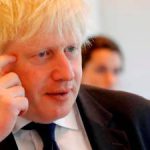
    Yet the next day, March 3, Prime Minister Boris Johnson was his cheery self. He joked that he was still shaking hands with everyone, including at a hospital treating coronavirus patients.

    “Our country remains extremely well prepared,“ Johnson said as Italy reached 79 deaths. “We already have a fantastic NHS,“ the national public health service, “fantastic testing systems and fantastic surveillance of the spread of disease.”

    Alongside him at the Downing Street press conference was Chris Whitty, the government’s chief medical adviser and himself an epidemiologist. Whitty passed on the modelling committee’s broad conclusions, including the prediction of a possible 80% infection rate and the consequent deaths. But he played them down, saying the number of people who would be infected was probably “a lot lower” and coming up with a total was “largely speculative.”

    The upbeat tone of that briefing stood in sharp contrast with the growing unease of many of the government’s scientific advisers behind the scenes. They were already convinced that Britain was on the brink of a disastrous outbreak, a Reuters investigation has found.

    Interviews with more than 20 British scientists, key officials and senior sources in Johnson’s Conservative Party, and a study of minutes of advisory committee meetings and public testimony and documents, show how these scientific advisers concluded early the virus could be devastating.

    But the interviews and documents also reveal that for more than two months, the scientists whose advice guided Downing Street did not clearly signal their worsening fears to the public or the government. Until March 12, the risk level, set by the government’s top medical advisers on the recommendation of the scientists, remained at “moderate,“ suggesting only the possibility of a wider outbreak.

    “You know, there’s a small little cadre of people in the middle, who absolutely did realise what was going on, and likely to happen,“ said John Edmunds, a professor of infectious disease modelling and a key adviser to the government, known for his work on tracking Ebola. Edmunds was among those who did call on the government to elevate the warning level earlier.

    From the outset, said Edmunds, work by scientists had shown that, with only limited interventions, the virus would trigger an “overwhelming epidemic” in which Britain’s health service was not going “to get anywhere near being able to cope with it. That was clear from the beginning.”

    But he said: “I do think there’s a bit of a worry in terms you don’t want to unnecessarily panic people.”

    Johnson, who himself has sickened with the virus, moved more slowly than the leaders of many other prosperous countries to adopt a lockdown. He has been criticised for not moving more swiftly to organise mass tests and mobilise supplies of life-saving equipment and beds. Johnson was hospitalized on April 5 and moved to intensive care the next day.

    It is too soon to judge the ultimate soundness of the UK’s early response. If history concludes that it was lacking, then the criticism levelled at the prime minister may be that, rather than ignoring the advice of his scientific advisers, he failed to question their assumptions.

    Interviews and records published so far suggest that the scientific committees that advised Johnson didn’t study, until mid-March, the option of the kind of stringent lockdown adopted early on in China, where the disease arose in December, and then followed by much of Europe and finally by Britain itself. The scientists’ reasoning: Britons, many of them assumed, simply wouldn’t accept such restrictions.

    The UK scientists were also mostly convinced – and many still are – that, once the new virus escaped China, quarantine measures would likely not succeed. Minutes of technical committees reviewed by Reuters indicate that almost no attention was paid to preparing a programme of mass testing. Other minutes and interviews show Britain was following closely a well-laid plan to fight a flu pandemic – not this deadlier disease. The scientists involved, however, deny that the flu focus ultimately made much difference.

    Now, as countries debate how to combat the virus, some experts here say, the lesson from the British experience may be that governments and scientists worldwide must increase the transparency of their planning so that their thinking and assumptions are open to challenge.

    John Ashton, a clinician and former regional director of Public Health England, the government agency overseeing healthcare, said the government’s advisers took too narrow a view and hewed to limited assumptions. They were too “narrowly drawn as scientists from a few institutions,“ he said. Their handling of COVID-19, Ashton said, shows the need for a broader approach. “In the future we need a much wider group of independent advisers.”

    Michael Cates, who succeeded Stephen Hawking as Lucasian Professor of Mathematics at Cambridge University, is leading an initiative by the Royal Society, the UK’s leading scientific body, to bring modellers in from other scientific disciplines to help understand the epidemic.

    “Without faulting anyone so far, it’s vital, where there is such a lot at stake, to throw the maximum possible light on the methods, assumptions and data built into our understanding of how this epidemic will develop,“ he told Reuters.

    In a statement to Reuters, a spokesperson for the Department of Health and Social Care said the government was delivering “a science-led action plan” to contain the outbreak. “As the public would expect, we regularly test our pandemic plans and what we learned from previous exercises has helped us to rapidly respond to COVID-19.”

    A LOW RISK TO THE PUBLIC

    When news came from China in January of a new infectious disease, Johnson had reason to believe his country was well prepared. It had some of the world’s best scientists and a well-drilled plan to deal with potentially lethal pandemics. Perhaps, some scientists say in hindsight, the plan made them slow to adapt.

    For many years, the Cabinet Office – a collection of officials who act as the prime minister’s direct arm to run the government – took the threat of pandemics seriously. Presciently, it rated pandemics as the Number 1 threat to the country, ahead of terrorism and financial crashes.

    At the centre of planning was a small group of scientists, among them Edmunds. His research group at the London School of Hygiene and Tropical Medicine runs one of the two computer modelling centres for epidemics that have mostly driven government policy. The other is at nearby Imperial College. Edmunds remembers that early in the outbreak, the data from China were sketchy, in the period “where the Chinese were trying to pretend that this wasn’t transmissible between humans.”

    Edmunds and his colleague at Imperial, Neil Ferguson, were part of an alphabet soup of committees that fed advice into the Cabinet Office machinery around the prime minister. Both were founders of the flu pandemic modelling committee, known as SPI-M, that produced the March 2 report warning of more than 500,000 deaths. This committee had met together for nearly 15 years.

    Ferguson did not respond to a request to be interviewed for this article.

    Edmunds and Ferguson were also part of NERVTAG, the New and Emerging Respiratory Virus Threats Advisory Group. Both too were members of the Scientific Advisory Group for Emergencies, known as SAGE, that advises the government in times of crisis. SAGE reports directly to Johnson and the government’s main emergency committee, COBRA.

    At first, when NERVTAG met on January 13, it studied information from China that there was “no evidence of significant human to human transmission” of the new virus, according to minutes of the meeting. The scientists agreed the risk to the UK population was “very low.”

    The evidence soon changed, but this wasn’t reflected in the official threat level. By the end of January, scientists in China began releasing clinical data. Case studies published in the British medical journal, The Lancet, showed 17% of the first 99 coronavirus cases needed critical care. Eleven patients died. Another Chinese study, in the same magazine, warned starkly of a global spread and urged: “Preparedness plans and mitigation interventions should be readied for quick deployment globally.”

    Edmunds recalled that “from about mid January onwards, it was absolutely obvious that this was serious, very serious.” Graham Medley, a professor of infectious diseases modelling at the London School and chairman of SPI-M, agreed. He said that the committee was “clear that this was going to be big from the first meeting.” At the end of January, his committee moved into “wartime” mode, he said, reporting directly into SAGE.

    Dr Jon Read, a senior lecturer in biostatistics at the University of Lancaster, also a member of SPI-M, said by the end of January it was apparent the virus had “pandemic potential” and that death rates for the elderly were brutal. “From my perspective within the sort of modelling community, everybody’s aware of this, and we’re saying that this is probably going to be pretty bad,“ he said.

    But the scientists did not articulate their fears forcefully to the government, minutes of committee meetings reveal.

    On January 21, scientists on NERVTAG endorsed the elevation of the UK risk warning from COVID-19 from “very low” to “low.” SAGE met formally for the first time the following day about the coronavirus threat. So did COBRA, which was chaired by Matt Hancock, the health secretary, who would contract the virus himself in late March. He told reporters after the meeting: “The clinical advice is that the risk to the public remains low.”

    In response to questions from Reuters, the government’s Department of Health declined to clarify how the risk levels are defined or what action, if any, they trigger. In a statement, a spokesperson said: “Increasing the risk level in the UK is a belt and braces measure which allows the government to plan for all future eventualities.”

    Two days later, China put the city of Wuhan, where the outbreak began, into a complete lockdown. Hubei, the surrounding province, would follow. But already, 17 passenger flights had flown directly from Wuhan to Britain since the start of 2020, and 614 flights from the whole of China, according to FlightRadar24, a flight-tracking service. That meant thousands of Chinese, some of them potential carriers, had come to Britain. On April 5, scientific adviser Ferguson said he estimated only one-third of infected people reaching Britain had been detected.

    As they watched China impose its lockdown, the British scientists assumed that such drastic actions would never be acceptable in a democracy like the UK. Among those modelling the outbreak, such stringent counter-measures were not, at first, examined.

    “We had milder interventions in place,“ said Edmunds, because no one thought it would be acceptable politically “to shut the country down.” He added: “We didn’t model it because it didn’t seem to be on the agenda. And Imperial (College) didn’t look at it either.” The NERVTAG committee agreed, noting in its minutes that tough measures in the short term would be pointless, as they “would only delay the UK outbreak, not prevent it.”

    That limited approach mirrored the UK’s longstanding pandemic flu strategy. The Department of Health declined a request from Reuters for a copy of its updated pandemic plan, without providing a reason. But a copy of the 2011 “UK Influenza Pandemic Preparedness Strategy 2011,“ which a spokesman said was still relevant, stated the “working presumption will be that Government will not impose any such restrictions. The emphasis will instead be on encouraging all those who have symptoms to follow the advice to stay at home and avoid spreading their illness.”

    According to one senior Conservative Party politician, who was officially briefed as the crisis unfolded, the close involvement in the response to the coronavirus of the same scientific advisers and civil servants who drew up the flu plan may have created a “cognitive bias.”

    “We had in our minds that COVID-19 was a nasty flu and needed to be treated as such,“ he said. “The implication was it was a disease that could not be stopped and that it was ultimately not that deadly.”

    While the UK was prepared to fight the flu, places in Asia like China, Hong Kong, Singapore and South Korea had built their pandemic plans with lessons learned from fighting the more lethal SARS outbreak that began in 2002, he said. SARS had a fatality rate of up to 14%. As a result, these countries, he said, were more ready to resort to widespread testing, lockdowns and other draconian measures to keep their citizens from spreading the virus.

    Scientists involved in the UK response disagree that following the government’s flu plan clouded their thinking or influenced the outbreak’s course. The plan had a “reasonable worst case” scenario as devastating as the worst predictions for COVID-19, they note.

    Mark Woolhouse, a professor of infectious diseases epidemiology at the University of Edinburgh, and a member of the SPI-M committee, said COVID-19 did behave differently than an expected pandemic flu – for example school closures proved to be far less effective in slowing the spread of the coronavirus. But, broadly, “the government has been consistently responsive to changing facts.”

    By the end of January, the government’s chief medical adviser, Whitty, was explaining to politicians in private, according to at least two people who spoke to him, that if the virus escaped China, it would in time infect the great majority of people in Britain. It could only be slowed down, not stopped. On Jan 30, the government raised the threat level to “moderate” from “low.”

    The country’s medical officers “consider it prudent for our governments to escalate planning and preparation in case of a more widespread outbreak,“ a statement said at the time. Whitty did not respond to questions from Reuters for this article.

    A TIME TO PREPARE

    On the evening of January 31, Boris Johnson sat before a fireplace in 10 Downing Street and told the nation, in a televised address: “This is the moment when the dawn breaks and the curtain goes up on a new act in our great national drama.”

    He was talking of finally delivering Brexit, or what he called “this recaptured sovereignty.” Until that moment, Johnson’s premiership had been utterly absorbed by delivering on that challenge.

    With Brexit done, Johnson had the chance to focus on other matters the following month, among them the emerging virus threat. But leaving the European Union had a consequence.

    Between February 13 and March 30, Britain missed a total of eight conference calls or meetings about the coronavirus between EU heads of state or health ministers – meetings that Britain was still entitled to join. Although Britain did later make an arrangement to attend lower-level meetings of officials, it had missed a deadline to participate in a common purchase scheme for ventilators, to which it was invited. Ventilators, vitally important to treating the direst cases of COVID-19, have fallen into short supply globally. Johnson’s spokesman blamed an administrative error.

    A Downing Street aide told Reuters that from around the end of January, Johnson concentrated his attention increasingly on the coronavirus threat, receiving “very frequent” updates at least once per day from mid February, either in person or via a daily dashboard of cases.

    In the medical and scientific world, there was growing concern about the threat of the virus to the UK. A report from Exeter University, published on February 12, warned a UK outbreak could peak within four months and, without mitigation, infect 45 million people.

    That worried Rahuldeb Sarkar, a consultant physician in respiratory medicine and critical care in the county of Kent, who foresaw that intensive care beds could be swamped. Even if disease transmission was reduced by half, he wrote in a report aimed at clinicians and actuaries in mid-February, a coronavirus outbreak in the UK would “have a chance of overwhelming the system.”

    With Whitty stating in a BBC interview on February 13 that a UK outbreak was still an “if, not a when,“ Richard Horton, a medical doctor and editor of the Lancet, said the government and public health service wasted an opportunity that month to prepare quarantine restriction measures and a programme of mass tests, and procure resources like ventilators and personal protective equipment for expanded intensive care.

    Calling the lost chance a “national scandal” in a later editorial, he would testify to parliament about a mismatch between “the urgent warning that was coming from the frontline in China” and the “somewhat pedestrian evaluation” of the threat from the scientific advice to the government.

    After developing a test for the new virus by January 10, health officials adopted a centralised approach to its deployment, initially assigning a single public laboratory in north London to perform the tests. But, according to later government statements, there was no wider plan envisaged to make use of hundreds of laboratories across the country, both public and private, that could have been recruited.

    According to emails and more than a dozen scientists interviewed by Reuters, the government issued no requests to labs for assistance with staff or testing equipment until the middle of March, when many abruptly received requests to hand over nucleic acid extraction instruments, used in testing. An executive at the Weatherall Institute of Molecular Medicine at the University of Oxford said he could have carried out up to 1,000 tests per day from February. But the call never came.

    “You would have thought that they would be bashing down the door,“ said the executive, who spoke on condition of anonymity. By April 5, Britain had carried out 195,524 tests, in contrast to at least 918,000 completed a week earlier in Germany.

    Nor was there an effective effort to expand the supply of ventilators. The Department of Health told Reuters in a statement that the government started talking to manufacturers of ventilators about procuring extra supplies in February. But it was not until March 16, after it was clear supplies could run out, that Johnson launched an appeal to industry to help ramp up production.

    Charles Bellm, managing director of Intersurgical, a global supplier of medical ventilation products based outside London, said he has been contacted by more than a dozen governments around the world, including France, New Zealand and Indonesia. But there had been no contact from the British government. “I find it somewhat surprising, I have spoken to a lot of other governments,“ he said.

    Countering such criticism, Hancock, the health minister, said the government is on track to deliver about 10,000 more ventilators in the coming weeks. One reason Britain was behind some countries on testing, he said, was the absence of a large diagnostics industry at the outbreak of the epidemic. “We didn’t have the scale.”

    GAME OVER

    It was during the school half-term holidays in February that frontline doctor Nicky Longley began to realise that early efforts to contain the disease were likely doomed.

    For weeks now, doctors and public health workers had been watching out for people with flu-like symptoms coming in from China. Longley, an infectious diseases consultant at London’s Hospital for Tropical Diseases, was part of a team that staffed a public health service helpline for those with symptoms. The plan, she said, had been to make all effort to catch every case and their contacts. And “to start with, it looked like it was working.”

    But then, bad news. First, on Wednesday the 19th of February, came the shock news from Iran of two deaths. Then, on Friday the 21st, came a death in Italy and a bloom of cases in Lombardy and Veneto regions. Britain has close links to both countries. Thousands of Britons were holidaying in Italy that week.

    “I don’t think anybody really foresaw what was happening in Italy,“ Longley said. “And I think, the minute everybody saw that, we thought: ‘This is game over now.’”

    Until then, Longley said, everyone felt “there was a chance to stamp it out” even though most were sceptical it could be done long-term. But after Iran and Italy, it was obvious containment would not work. The contact tracing continued for a while. But as the cases in London built up, and the volume of calls to the helpline mushroomed, the priority began to shift to clinical care of the serious cases. “At a certain point you have to make a decision about where you put your efforts as a workforce.”

    Edmunds noted that Iran and Italy had hardly reported a case until that point. “And then, all of sudden you had deaths recorded.” There was a rule of thumb that, in an outbreak’s early stages, for each death there were probably 1,000 cases in a community. “And so it was quite clear that there were at least thousands of cases in Italy, possibly tens of thousands of cases in Italy right then.”

    Amid the dreadful news from Italy, the scientists at NERVTAG convened by phone that Friday, 21st February. But they decided to recommend keeping the threat level at “moderate,“ where it had sat since January 30th. The minutes don’t give a detailed explanation of the decision. Edmunds, who had technical difficulties and couldn’t be heard on the call, emailed afterwards to ask the warning to be elevated to “high,“ the minutes revealed. But the warning level remained lower. It’s unclear why.

    “I just thought, are we still, we still thinking that it’s mild or something? It definitely isn’t, you know,“ said Edmunds.

    A spokesman for the government’s chief scientific adviser, Sir Patrick Vallance, didn’t directly respond to Reuters questions about the threat level. Asked whether, with hindsight, the scientists’ approach was the right one, the spokesperson said in a statement that “SAGE and advisers provide advice, while Ministers and the Government make decisions.”

    HERD IMMUNITY

    On Sunday, March 1st, Ferguson, Edmunds and other advisers spent the day with NHS public health service experts trying to work out how many hospital beds and other key resources would be needed as the outbreak exploded. By now, Italian data was showing that a tenth of all infected patients needed intensive care.

    The following day, pandemic modelling committee SPI-M produced its “consensus report” that warned the coronavirus was now transmitting freely in the UK. That Thursday, March 5, the first death in the UK was announced. Italy, which reached 827 deaths by March 11, ordered a national lockdown. Spain and France prepared to follow suit.

    Johnson held out against stringent measures, saying he was following the advice of the government’s scientists. He asserted on March 9: “We are doing everything we can to combat this outbreak, based on the very latest scientific and medical advice.”

    Indeed, the government’s Scientific Advisory Group for Emergencies, SAGE, had recommended that day, with no dissension recorded in its summary, that the UK reject a China-style lockdown. SAGE decided that “implementing a subset of measures would be ideal,“ according to a record of its conclusions. Tougher measures could create a “large second epidemic wave once the measures were lifted,“ SAGE said.

    On March 12 came a bombshell for the British public. Chris Whitty, the chief medical officer, announced Britain had moved the threat to UK citizens from “moderate” to “high.” And he said the country had moved from trying to contain the disease to trying to slow its spread. New cases were not going to be tracked at all. “It is no longer necessary for us to identify every case,“ he said. Only hospital cases would, in future, be tested for the virus. What had been an undisclosed policy was in the open: beyond a certain point, attempts to completely extinguish the virus would stop.

    The same day, putting aside his jokey self, Johnson made a speech in Downing Street, flanked by two Union Jacks and evoking the spirit of Winston Churchill’s “darkest hour” address. He warned: “I must level with you, level with the British public – more families, many more families are going to lose loved ones before their time.”

    For most Britons, it came as a shock. Several of the next day’s newspapers splashed Johnson’s words on their front pages.

    Vallance, the government’s chief scientific adviser, who chaired SAGE, said in a BBC interview on March 13 that the plan was to simply control the pace of infection. The government had, for now, rejected what he called “eye-catching measures” like stopping mass gatherings such as football games or closing schools. The “aim is to try and reduce the peak, broaden the peak, not to suppress it completely.” Most people would get the virus mildly, and this would build up “herd immunity” which, in time, would stop the disease’s progress.

    But by now, the country was rebelling. Major institutions decided to close. After players began to get infected, the professional football leagues suspended their games. As Johnson still refused to close schools and ban mass gatherings, the Daily Mirror’s banner headline, summing up a widespread feeling, asked on March 13: “Is It Enough?”

    The catalyst for a policy reversal came on March 16 with the publication of a report by Neil Ferguson’s Imperial College team. It predicted that, unconstrained, the virus could kill 510,000 people. Even the government’s “mitigation” approach could lead to 250,000 deaths and intensive care units being overwhelmed at least eight times over.

    Imperial’s prediction of over half a million deaths was no different from the report by the government’s own pandemic modelling committee two weeks earlier. Yet it helped trigger a policy turn-around, both in London and in Washington, culminating seven days later in Johnson announcing a full lockdown of Britain. The report also jarred the U.S. administration into tougher measures to slow the virus’ spread.

    Ferguson was now in isolation himself after catching the virus. Testifying by video link to a committee in Parliament, he explained why he and other scientific advisers had shifted from advocating partial social-distancing measures to warning that without a rigorous shutdown, the NHS would be overwhelmed. The reason, he said, lay in data coming out of Italy that showed large numbers of patients required critical care.

    “The revision was that, basically, estimates of the proportion of patients requiring invasive ventilation, mechanical ventilation, which is only done in a critical care unit, roughly doubled,“ he said.

    Edmunds had a different explanation for the policy shift.

    What allowed Britain to alter course, said Edmunds, was a lockdown in Italy that “opened up the policy space” coupled with new data. First came a paper by Edmunds’ own London School team that examined intermittent lockdowns, sent to the modelling committee on March 11 and validated by Edinburgh University. Ferguson’s revised Imperial research followed.

    Woolhouse, the Edinburgh professor, confirmed the sequence.

    Edmunds said these new studies together had demonstrated that if the British government imposed a lengthy period of tougher measures, perhaps relaxed periodically, then the size of the epidemic could be substantially reduced.

    Still, without a vaccine or effective treatments, it’s going to be hard to avoid a substantial part of the British population getting infected, said Edmunds. “Until you get to a vaccine, there is no way of getting out of this without certainly tens of thousands of deaths,“ he said. “And probably more than that.”

    Now subject to intense public scrutiny, the modelling teams at universities across Britain continue to work on different scenarios for how the world can escape the virus’s clutches. According to Medley, the chairman of the SPI-M pandemic modelling committee, no one now doubts, for all the initial reservations, that a lockdown was essential in Britain.

    Medley added: “At the moment we don’t know what’s going to happen in six months. All we know is that unless we stop transmission now, the health service will collapse. Yep, that’s the only thing we know for sure.” – Reuters

    UK PM listened to his scientists about Covid-19, but they were slow to sound the alarm
    Read More
    https://www.thesundaily.my/home/uk-pm-listened-to-his-scientists-about-covid-19-but-they-were-slow-to-sound-the-alarm-GE2237109

    Views: 0
  • US pharmacies authorized to test for coronavirus

    US pharmacies authorized to test for coronavirus

    US pharmacies authorized to test for coronavirus 6

    WASHINGTON: The US authorized pharmacies on Wednesday to carry out tests for the coronavirus, including newly developed antibody tests that detect whether a person who has recovered from illness had COVID-19.

    Health secretary Alex Azar, announced that all tests approved by regulators could be carried out by pharmacies as the country seeks to ramp up its testing efforts.

    “The Trump Administration is pleased to give pharmacists the chance to play a bigger role in the COVID-19 response, alongside all of America’s heroic healthcare workers,“ he said.

    A nasal swab test can detect whether a person currently has the coronavirus.

    After they have recovered, a test that looks at whether their body developed antibodies that fought off the virus and can be used — even if the person never showed symptoms.

    There are different kinds of antibody tests and they can’t yet tell whether a person has sufficient antibodies to be protected against future infection.

    A Chinese study posted this week, but not yet peer reviewed, showed that some former patients had relatively low levels of antibodies in the blood.

    In Washington on Wednesday, a private medical center announced that it was offering a 15-minute serology test, at a cost of $290. – AFP

    US pharmacies authorized to test for coronavirus
    Read More
    https://www.thesundaily.my/world/us-pharmacies-authorized-to-test-for-coronavirus-LF2236904

    Views: 0

  • WHO Timeline – COVID-19

    31 Dec 2019

    China reported a cluster of cases of pneumonia in Wuhan, Hubei Province. A novel coronavirus was eventually identified.

    1 January 2020

    WHO had set up the IMST (Incident Management Support Team) across the three levels of the organization: headquarters, regional headquarters and country level, putting the organization on an emergency footing for dealing with the outbreak.

    4  January 2020

    WHO reported on social media that there was a cluster of pneumonia cases – with no deaths – in Wuhan, Hubei province. 

    5 January 2020

    WHO published our first Disease Outbreak News on the new virus. This is a flagship technical publication to the scientific and public health community as well as global media. It contained a risk assessment and advice, and reported on what China had told the organization about the status of patients and the public health response on the cluster of pneumonia cases in Wuhan.

    10 January 2020

    WHO issued a comprehensive package of technical guidance online with advice to all countries on how to detect, test and manage potential cases, based on what was known about the virus at the time.

    Evidence at that time suggested there was “no or limited human-to-human transmission.” Based on experience with SARS and MERS and known modes of transmission of respiratory viruses, infection and prevention control guidance were published to protect health workers recommending droplet and contact precautions when caring for patients, and airborne precautions for aerosol generating procedures conducted by health workers.

    12 January 2020

    China shared the genetic sequence of COVID-19. 

    13 January 2020

    Officials confirm case of COVID-19 in Thailand, the first recorded case outside of China.  

    14 January 2020

    Dr. Maria Van Kerkhove noted in a press briefing there had been limited human-to-human transmission of the coronavirus (in the 41 confirmed cases), mainly through family members, and that there was a risk of a possible wider outbreak. Dr. Kerkhove noted that human-to-human transmission would not be surprising given our experience with SARS, MERS and other respiratory pathogens. 

    20-21 January 2020

    WHO experts from its China and Western Pacific regional offices conducted a brief field visit to Wuhan.

    22 January 2020

    WHO mission to China issued a statement saying that there was evidence of human-to-human transmission in Wuhan but more investigation was needed to understand the full extent of transmission.

    22- 23 January 2020

    The WHO Director- General convened an Emergency Committee (EC) under the International Health Regulations (IHR 2005) to assess whether the outbreak constituted a public health emergency of international concern. The independent members from around the world could not reach a consensus based on the evidence available at the time. They asked to be reconvened within 10 days after receiving more information.

    28 January 2020

    A senior WHO delegation led by the Director-General travelled to Beijing to meet China’s leadership, learn more about China’s response, and to offer any technical assistance. 

    While in Beijing, Dr. Tedros agreed with Chinese government leaders that an international team of leading scientists would travel to China on a mission to better understand the context, the overall response, and exchange information and experience.

    11-12 February 2020

    WHO convened a Research and Innovation Forum on COVID-19, attended by more than 400 experts and funders from around the world, which included presentations by George Gao, Director General of China CDC, and Zunyou Wu, China CDC’s chief epidemiologist. 

    16-24 February 2020

    The WHO-China Joint mission, which included experts from Canada, Germany, Japan, Nigeria, Republic of Korea, Russia, Singapore and the US (CDC, NIH) spent time in Beijing and also travelled to Wuhan and two other cities. They spoke with health officials, scientists and health workers in health facilities (maintaining physical distancing). The report of the joint mission can be found here: https://www.who.int/docs/default-source/coronaviruse/who-china-joint-mission-on-covid-19-final-report.pdf


    Read More
    https://www.who.int/news-room/detail/08-04-2020-who-timeline—covid-19

    Views: 0