Tag: Change

  • Light, efficient, affordable – the shape of things to come in components

    Light, efficient, affordable – the shape of things to come in components

    Lightweight technology has long been and is sure to remain a mainstay of automotive and aerospace engineering, shipbuilding and a host of other industries. Lighter materials and components could also help cut emissions that drive climate change. But lighter options are pricier, and the relatively steep cost has impeded their adoption. That is about to change thanks to the efforts of a consortium of automakers, suppliers and research institutes. Called ALLIANCE and coordinated by Daimler and the Fraunhofer Institute for Structural Durability and System Reliability LBF, this project has some good news for designers: As it turns out, it is entirely possible to build components that are up to 33 percent lighter at an added cost of less than three euros per kilogram-saved.

    Read More

    Views: 0

  • Australia could soon export sunshine to Asia via a 3800-km cable

    Australia could soon export sunshine to Asia via a 3800-km cable

    Australia is the world’s third largest fossil fuels exporter – a fact that generates intense debate as climate change intensifies. While the economy is heavily reliant on coal and gas export revenues, these fuels create substantial greenhouse gas emissions when burned overseas.

    Read More

    Views: 0

  • Ministers to agree new global road safety agenda to 2030

    Ministers to agree new global road safety agenda to 2030

    Government ministers and senior officials from over 100 countries will meet in Stockholm, Sweden from 19-20 February to discuss new steps to halve road traffic deaths and injuries by 2030, in line with global targets agreed in the United Nations Sustainable Development Goals (SDGs).

    “The fact that an estimated 1.35 million lives are lost every year due to road traffic collisions is an outrage. It is an unacceptable price to pay for mobility,” said Dr Tedros Adhanom Ghebreyesus, Director-General at the World Health Organization (WHO).

    Road traffic injuries are now the leading cause of death for children and young adults aged 5 to 29 years, according to WHO’s most recent Global status report on road safety.

    More than half of all road traffic deaths occur among pedestrians, cyclists and motorcyclists. The risk of a road traffic death remains three times higher in low-income countries than in high-income countries. Moreover, as many as 50 million people experience non-fatal road injuries, which impose human suffering and major economic losses.

    “Most road traffic deaths and injuries can be prevented, using tried and tested strategies,” added Dr Tedros. “This conference is an opportunity for the world to embrace a new agenda to radically reduce the number of lives lost on our roads and re-think how we can provide access to safe, affordable, accessible and sustainable transport systems for all.”

    Progress in road safety

    Many countries have already made progress through effective road safety management and focusing on better legislation and enforcement around key risks such as speeding; drinking and driving, and failing to use seatbelts. They have also improved infrastructure through measures such as safer sidewalks and dedicated lanes for cyclists; implemented vehicle standards such as those that mandate advanced braking and electronic stability control; and enhanced post-crash care.

    Improvements have occurred when a number of sectors have been involved – including transport, health, urban planning and law enforcement, among others. Success has also depended mainly on strong leadership and political will at the highest level of government and in close collaboration with civil society and the private sector.

    The Stockholm Declaration

    Hosted by the Government of Sweden in collaboration with WHO, the 3rd Global Ministerial Conference on Road Safety offers delegates an opportunity to share successes and lessons learned, chart future strategic directions for global road safety, and define ways to fast-track progress around proven strategies to save lives.

    The Stockholm Declaration will be presented as the final outcome document of the Ministerial Conference calling for strong political will and international cooperation as well as partnerships across many sectors of society. The Declaration will lay out key recommendations for accelerated action to drive progress towards halving global road traffic deaths and injuries by 2030.

    Beyond preventing human suffering and major economic losses, addressing road traffic deaths and injuries has positive impact across all aspects of society and development ─ including those linked to environment, climate change, education, employment, energy, poverty, human rights and equality ─ as outlined in the SDG targets.

    Note to editors:

    Road safety is reflected in the SDGs agreed in 2015, with two dedicated targets: (a) 3.6 aimed at preventing road traffic deaths and injuries and (b) 11.2 providing access to safe, affordable, accessible and sustainable transport systems for all.

    Achieving these targets would lead to increases in walking, cycling and using public transport, in other words, those modes of transport which impact most favorably on noncommunicable diseases like heart and lung diseases, cancer and diabetes. It would also contribute to reducing environmental risks, such as air and noise pollution, and steering sustainable urbanization, with less congestion and universal access to safe, inclusive and green public spaces. 

    Ministers to agree new global road safety agenda to 2030
    Read More
    https://www.who.int/news-room/detail/07-02-2020-ministers-to-agree-new-global-road-safety-agenda-to-2030

    Views: 0

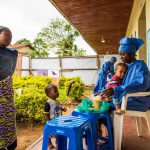
  • Pregnancy and breastfeeding during an Ebola virus outbreak

    Pregnancy and breastfeeding during an Ebola virus outbreak

    Women who are pregnant or breastfeeding in an Ebola outbreak face similar challenges as other population groups, but they have specific health needs which must be met.

    As the second largest Ebola outbreak in history continues in the Democratic Republic of Congo, WHO has released new clinical guidelines for healthcare providers supporting pregnant or breastfeeding women in the context of Ebola virus disease.

    Improving clinical care and reducing mortality

    92-4-000138-1Clear and coherent guidance is needed to meet the combined needs of women requiring Ebola treatment, pregnancy care and management of complications.

    Information on how to protect breastfeeding children and other members in the community from transmission of the disease is also critical.

    Limited scientific evidence on how to best manage these needs has previously been a challenge for affected countries. In addition, misconceptions that pregnant women have a higher mortality rate than other populations with Ebola may in some contexts have put pregnant women at risk of not receiving standard care.

    WHO’s Guideline on the management of pregnant and breastfeeding women in the context of Ebola virus reviews existing evidence and provides a single set of recommendations on the care continuum for women exposed to, diagnosed with, or recovered from Ebola.

    This will enable healthcare providers, emergency response teams and health policy-makers to improve prevention and treatment measures in an Ebola outbreak.

    Obstetric care at an Ebola Treatment Centre

    Optimal supportive care should be offered to all pregnant women with Ebola. Likewise, they should be offered experimental treatment and vaccination under the same conditions as non-pregnant populations.

    Ebola virus disease does increase the risk of miscarriage and early labour, requiring close clinical management at Ebola treatment centres. It is important to engage both obstetric providers and those trained in Ebola response.

    This dual expertise is also important because early Ebola and pregnancy-related symptoms can overlap. Pregnant women should be prioritised for testing to confirm an Ebola infection.

    Ebola virus can persist in pregnancy related fluids as well as breastmilk. If healthcare providers are not clear on how to manage Ebola infection risk, they may be less willing to provide care. This stigma can be life-threatening for women who experience complications during delivery.

    The new WHO guidelines advise healthcare workers on how to protect themselves while caring for pregnant women with Ebola virus disease. This includes induced labour or surgical procedures, which carry greater risk of transmission in cases of acute infection. Any invasive treatments should be carried out in full personal protective equipment.

    Breastfeeding recommendations in an Ebola outbreak

    WHO recommends that women with suspected or confirmed Ebola immediately stop breastfeeding and are prioritised for diagnostic testing. Any child exposed to Ebola through breast milk should be placed into safe care, closely monitored for symptoms over a 21-day period and fed with an appropriate breast milk substitute.  

    The guidelines strongly recommend that breastfeeding is only restarted following two consecutive negative tests of breast milk, separated by 24 hours.

    A breast milk substitute should be used even if infection is confirmed for both the mother and her child. Exceptions can be made for infants under 6 months of age who are already infected, if breast milk substitutes are not feasible, affordable, sustainable or safe and separation cannot be implemented safely.

    Women’s health and rights in a disease outbreak

    A disease outbreak does not change women’s and adolescent girls’ fundamental human right to sexual and reproductive healthcare, including evidence-based care during pregnancy and childbirth.

    Women need support to make informed reproductive health care choices for themselves and their children. Women living in an Ebola outbreak should have access to all relevant reproductive options, regardless of economic, cultural, racial or religious status, including contraception and safe abortion to the full extent of the law.

    Pregnant and breastfeeding women across affected communities need equitable and respectful care that considers the risks they face and supports the choices they make.

    Accessing the guidelines and further research

    These guidelines are now available online and may be freely downloaded. The executive summary will be available in French.

    WHO will closely monitor new data as it emerges, as there is still a pressing need to prioritise ongoing research related to Ebola virus transmission.


    Pregnancy and breastfeeding during an Ebola virus outbreak
    Read More
    https://www.who.int/news-room/detail/10-02-2020-pregnancy-and-breastfeeding-during-an-ebola-virus-outbreak

    Views: 0

  • WHO and FIND formalize strategic collaboration to drive universal access to essential diagnostics

    Geneva, Switzerland – 10 February 2020 – The World Health Organization (WHO) and the Foundation for Innovative New Diagnostics (FIND) announced today that a memorandum of understanding has been signed by the two organizations to formalize a strategic collaboration that will strengthen diagnosis in resource-poor countries by closing major diagnostic gaps at country level and bolstering disease surveillance that will inform public health initiatives and enhance outbreak preparedness and response.

    “This collaboration is an inspiring development that will take us a long way towards ensuring access to diagnostics to all who need them,” said Dr Tedros Adhanom Ghebreyesus, Director-General of the World Health Organization. “Global health challenges such as the ongoing novel coronavirus (2019-nCoV) outbreak demonstrates that without these essential elements of health systems, we cannot hope to promote health, keep the world safe, and serve the vulnerable. I look forward to working closely with FIND to determine what countries need and to forge a path to deliver these innovations so that no one is left behind.”

    Diagnosis is a driver of patient, financial and health systems impact, and a critical enabler of universal health coverage, but it is also the weakest link in the care cascade. This is especially true in primary healthcare settings in low- and middle-income countries. A unique and unprecedented opportunity exists to expand the role and impact of diagnostics to fully realize their potential to address major health security threats and evolving disease burdens through technological and digital advances.

    FIND has been an active partner with WHO since 2008 and a WHO Collaborating Centre since 2014, acting in the areas of laboratory strengthening and diagnostic technology evaluation. This expanded collaboration will put in place the building blocks necessary to enable transformative change in a move toward a country-led diagnostics alliance. Initial workstreams will focus on demand-driven access to essential diagnostics and the development of national Essential Diagnostics Lists, alongside collection of data that assist the scale up of diagnostics to support low- and middle-income countries on their paths to universal health coverage.

    “Each and every person has the right to a quality, timely diagnosis,” said Catharina Boehme, CEO of FIND. “Comprehensive diagnostic services underpin functional and efficient health systems not only to manage day-to-day healthcare needs, but also to ensure new disease outbreaks can be spotted and contained quickly. Working closely with WHO as part of a country-led alliance, we will strive to ensure that low- and middle-income countries have what they need to develop their own comprehensive, data-driven diagnostic strategies that enable universal health coverage and empower disease surveillance. Our ambition is that all patients, providers and decision-makers have access to the diagnostic solutions needed for optimal health outcomes.”

    The strategic collaboration agreement will initially run for a period of 5 years, until 2025.

    #  #  #

    About FIND

    FIND is a global non-profit organization that drives innovation in the development and delivery of diagnostics to combat major diseases affecting the world’s poorest populations. Our work bridges R&D to access, overcoming scientific barriers to technology development; generating evidence for regulators and policy-makers; addressing market failures; and enabling accelerated uptake and access to diagnostics in low- and middle-income countries (LMICs). Since 2003, we have been instrumental in the development of 24 new diagnostic tools used in 150 LMICs. Over 50 million FIND-supported products have been provided to our target markets since the start of 2015. A WHO Collaborating Centre, we work with more than 200 academic, industry, governmental, and civil society partners worldwide, on over 70 active projects that cross six priority disease areas. FIND is committed to a future in which diagnostics underpin treatment decisions and provide the foundation for disease surveillance, control and prevention. For more information, please visit www.finddx.org


    About WHO

    The World Health Organization is the directing and coordinating authority for health within the United Nations system. It is responsible for providing leadership on global health matters, shaping the health research agenda, setting norms and standards, articulating evidence-based policy options, providing technical support to countries and monitoring and assessing health trends. WHO is committed to the enjoyment of the highest attainable standard of health as one of the fundamental rights of every human being without distinction of race, religion, political belief, economic or social condition. WHO’s current global programme of work sets out three interconnected strategic priorities: ensuring healthy lives and well-being for all at all ages; achieving universal health coverage; and addressing health emergencies and promoting healthier populations. These priorities are linked to three ambitious targets, the “triple billion”: one billion more people to benefit from universal health coverage; one billion more people better protected from health emergencies; and one billion more people enjoying better health and well-being.


    Read More
    https://www.who.int/news-room/detail/10-02-2020-who-and-find-formalize-strategic-collaboration-to-drive-universal-access-to-essential-diagnostics

    Views: 0

  • It’s time to consider propranolol as an anti-cancer drug, researchers say

    It’s time to consider propranolol as an anti-cancer drug, researchers say

    Propranolol, a beta-blocker commonly prescribed to treat irregular heart rates and other conditions, has significant anti-cancer properties, say researchers in a new clinical study published in ecancermedicalscience.

    The Repurposing Drugs in Oncology (ReDO) project, an international collaboration between the Anticancer Fund, Belgium, and US based GlobalCures, says that existing and widely-used non-cancer drugs may represent a relatively untapped source of novel therapies for cancer.

    Historically, pharmaceutical companies devote little time to “repurposing” existing drugs. The ReDO project hopes to change that, raising awareness by publishing a series of articles in ecancer to share evidence for using these therapies in cancer medicine.

    Views: 0

  • Belief about nicotine content in cigarette may change brain activity and craving

    Belief about nicotine content in cigarette may change brain activity and craving

    How the brain responds to nicotine depends on a smoker’s belief about the nicotine content in a cigarette, according to new research from the Center for BrainHealth at The University of Texas at Dallas.

    The study, recently published in Frontiers in Psychiatry, found that smoking a nicotine cigarette but believing that it lacked nicotine failed to satisfy cravings related to nicotine addiction. Contrary to their expectations, researchers found that in order to satisfy nicotine cravings, smokers had to not only smoke a cigarette with nicotine but also believe that they were smoking nicotine.

    “These results suggest that for drugs to have an effect on a person, he or she needs to believe that the drug is present,” said Dr. Xiaosi Gu, assistant professor in the School of Behavioral and Brain Sciences and the study’s lead author.

    Views: 0

  • Overweight and obese type 2 patients show improvements with structured nutrition therapy

    Overweight and obese type 2 patients show improvements with structured nutrition therapy

    Researchers at Joslin Diabetes Center have announced the results of a study that may change how nutrition therapy is delivered to overweight and obese patients with type 2 diabetes. The “Nutrition Pathway Study” compared three models of nutrition therapy and found that a highly structured nutrition plan provides the most significant impact on A1C, body weight and lipid profiles. The study results were presented at the American Diabetes Association’s 76th Scientific Sessions in New Orleans, Louisiana.

    Participants in the structured nutrition therapy arm of the study reduced A1C by an average of 0.67 percent and reduced body weight by an average of 3.5 Kg over 16 weeks. According to Osama Hamdy, M.D., Ph.D., Medical Director of the Obesity Clinical Program at Joslin Diabetes Center and lead investigator on the study, these results were achieved without increasing exercise, changing medications or undertaking behavioral changes.

    “This drop in A1C due to nutrition therapy alone is much better than what we have been able to achieve with many of the current medications for type 2 diabetes ,” said Dr. Hamdy. “This is very encouraging since participants in the study have lived with type 2 diabetes for more than 10 years and were not able to control their blood glucose or weight with multiple medications.”

    Views: 0