
Tag: Benefits

  • WHO outlines steps to save 7 million lives from cancer

    WHO outlines steps to save 7 million lives from cancer

    The World Health Organization (WHO) today spells out the need to step up cancer services in low and middle-income countries. WHO warns that, if current trends continue, the world will see a 60% increase in cancer cases over the next two decades. The greatest increase (an estimated 81%) in new cases will occur in low- and middle-income countries, where survival rates are currently lowest.

    This is largely because these countries have had to focus limited health resources on combating infectious diseases and improving maternal and child health, while health services are not equipped to prevent, diagnose and treat cancers. In 2019, more than 90% of high-income countries reported that comprehensive treatment services for cancer were available in the public health system compared to less than 15% of low-income countries.

    “This is a wake-up call to all of us to tackle the unacceptable inequalities between cancer services in rich and poor countries,” says Dr Ren Minghui, Assistant Director-General, Universal Health Coverage/ Communicable and Noncommunicable Diseases, World Health Organization. “If people have access to primary care and referral systems then cancer can be detected early, treated effectively and cured. Cancer should not be a death sentence for anyone, anywhere.”

    Yet, progress in poorer countries is achievable. WHO and the International Agency for Research on Cancer (IARC) are releasing two coordinated reports on World Cancer Day (4 February), in response to government calls for more research into the scope and potential policies and programmes to improve cancer control.

    “At least 7 million lives could be saved over the next decade, by identifying the most appropriate science for each country situation, by basing strong cancer responses on universal health coverage, and by mobilizing different stakeholders to work together”, said Dr Tedros Adhanom Ghebreyesus, Director-General, WHO.

    WHO highlights a wide range of proven interventions to prevent new cancer cases. These include controlling tobacco use (responsible for 25% of cancer deaths), vaccinating against hepatitis B to prevent liver cancer, eliminating cervical cancer by vaccinating against HPV, screening and treatment, implementing high-impact cancer management interventions that bring value for money and ensuring access to palliative care including pain relief.

    “The past 50 years have seen tremendous advances in research on cancer prevention and treatment,” says Dr Elisabete Weiderpass, Director of IARC. “Deaths from cancer have been reduced. High-income countries have adopted prevention, early diagnosis and screening programmes, which together with better treatment, have contributed to an estimated 20% reduction in the probability of premature mortality between 2000 and 2015, but low-income countries only saw a reduction of 5%. We need to see everyone benefitting equally.” The challenge will be for countries to select treatments balancing considerations including cost, feasibility and effectiveness. Each government is tasked with choosing the appropriate innovative cancer therapies, while recognizing that established treatments, many of which are very effective and affordable, can provide benefits for cancer without causing financial hardship.

    Note to editors

    World Health Organization

    Report on Cancer: Setting priorities, investing wisely and providing care for all

    The report aims to set the global agenda on cancer, mobilize stakeholders and help countries set priorities for investing in cancer control and universal health coverage. It introduces the principles, tools and current priority cancer control interventions in the context of the current and future cancer burden and opportunities.

    International Agency for Research on Cancer

    World Cancer Report “Cancer research for cancer prevention”

    The report focuses on prevention and offers the most comprehensive overview of relevant research available to date, ranging from descriptive etiology, cellular and molecular biology, toxicology and pathology through to behavioural and social science. Key chapters include discussions on the impact of inequalities in cancer, vaccination and screening, genomic individual susceptibility to cancer and the finer identification of those at risk, which may allow ‘precision cancer prevention’.

    WHO outlines steps to save 7 million lives from cancer
    Read More
    https://www.who.int/news-room/detail/04-02-2020-who-outlines-steps-to-save-7-million-lives-from-cancer

    Views: 0
  • Female Genital Mutilation Hurts Women and Economies

    Female Genital Mutilation Hurts Women and Economies

    Female genital mutilation (FGM) exacts a crippling economic as well as human cost, according to World Health Organization (WHO).

    “FGM is not only a catastrophic abuse of human rights that significantly harms the physical and mental health of millions of girls and women; it is also a drain on a country’s vital economic resources,” said Dr Ian Askew, Director of WHO’s Department of Sexual and Reproductive Health and Research. “More investment is urgently needed to stop FGM and end the suffering it inflicts.”

    New modelling reveals that the total costs of treating the health impacts of FGM would amount to USD 1.4 billion globally per year, if all resulting medical needs were addressed. For individual countries, these costs would near 10% of their entire yearly expenditure on health on average; in some countries, this figure rises to as much as 30%.

    The interactive modelling tool that generated these data was launched on the International Day of Zero Tolerance for Female Genital Mutilation.

    Severe physical and mental health impacts for women and girls

    Women and girls living with FGM face serious risks to their health and well-being. These include immediate consequences after being cut, such as infections, bleeding or psychological trauma, as well as chronic health conditions that can occur throughout life.

    Women who have undergone the procedure are more likely to experience life-threatening complications during childbirth. They may face mental health disorders or suffer chronic infections. They may also have pain or problems when they menstruate, urinate or have sexual intercourse. 

    All of these conditions warrant much-needed medical attention and care.

    “High healthcare costs for countries mount because of the tragic personal impacts on women and girls. Governments have a moral responsibility to help end this harmful practice,” says Dr Prosper Tumusiime, Acting Director for Universal Health Coverage and the Life Course in the African Regional Office of WHO. “FGM hurts girls, imposes lifelong health risks on the women they become, and strains the healthcare systems that need to treat them.”

    Preventing FGM brings major benefits for women, girls, communities and economies

    Using data from 27 high-prevalence countries, the Cost Calculator demonstrates clear economic benefits from ending FGM. If it were abandoned now, it shows that the associated savings in health costs would be more than 60% by 2050.

    In contrast, if no action is taken, it is estimated that these costs will soar by 50% over the same time period, as populations grow and as more girls undergo the procedure.

    Since 1997, great efforts have been made to end FGM, through work within communities, research, and changes in legislation and policy. 26 countries in Africa and the Middle East now explicitly legislate against FGM, as well as 33 other countries with migrant populations from FGM-practicing countries.

    WHO is also working with countries to raise awareness of the harmful impacts of the practice among their health workers, and to engage them in prevention efforts.

    “Many countries and communities are showing that abandoning female genital mutilation is possible,” states Dr Christina Pallitto, scientist at WHO. “If countries invest to end female genital mutilation, they can prevent their girls from undergoing this harmful practice and promote the health, rights and well-being of women and girls.”

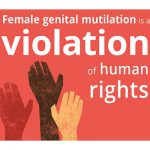
    Female genital mutilation is internationally recognized as a human rights violation. It has no medical benefits and causes only harm. WHO’s position is that FGM must never be carried out.

    Further information

    The FGM Cost Calculator will be available here, as of 00:30 CET 6 February 2020:
    www.who.int/news-room/detail/06-02-2020-economic-cost-of-female-genital-mutilation

    More on FGM

    Notes for Editors

    About FGM

    FGM includes procedures that intentionally alter or cause injury to the female genital organs for non-medical reasons. More than 200 million girls and women alive today are estimated to have undergone the practice across 30 countries in Africa, the Middle East and Asia where FGM is concentrated.

    FGM is mostly carried out on young girls between infancy and 15 years of age.

    About the FGM Cost Calculator

    The WHO FGM Cost Calculator shows the economic cost of treating the health complications caused by FGM across 27 high-prevalence countries. These costs were calculated using the WHO One Health tool and other available scientific evidence.

    Users of the tool can calculate costs by country in a ‘business as usual’ scenario; a scenario of partial abandonment of FGM, and full abandonment of FGM over a 30-year period. In addition, the distribution of costs by different types of health complications is presented by country.

    The tool does not consider other indirect costs that hit families and communities, or the socio-economic impacts of the practice, which would be significantly higher still.

    The 27 countries modelled include Benin, Burkina Faso, Central African Republic, Còte d’Ivoire, Cameroon, Chad, Djibouti, Egypt, Eritrea, Ethiopia, Ghana, Guinea, Gambia, Guinea-Bissau, Iraq, Kenya, Mali, Mauritania, Niger, Nigeria, Soudan, Senegal, Sierra Leone, Somalia, Togo, United Republic of Tanzania, Yemen.

    Female Genital Mutilation Hurts Women and Economies
    Read More
    https://www.who.int/news-room/detail/06-02-2020-female-genital-mutilation-hurts-women-and-economies

    Views: 0

  • How long should children play video games?

    How long should children play video games?

    A new study indicates that playing video games for a limited amount of time each week may provide benefits to children, but too much can be detrimental. The findings are published in the Annals of Neurology.

    There’s much debate over the potential benefits and risks of video gaming in children and teens. To provide some clarity, Jesus Pujol, MD, of the Hospital del Mar in Spain, and his colleaguesinvestigated the relationship between weekly video game use and certain cognitive abilities and conduct-related problems.

    In their study of 2442 children aged 7 to 11 years, the researchers found that playing video games for one hour per week was associated with better motor skills and higher school achievement scores, but no further benefits were observed in children playing more than two hours each week.

    Views: 0

  • You Can Stop Feeling Bad About Eating Chocolate

    You Can Stop Feeling Bad About Eating Chocolate

    Whether you’re an avid baker, or just love a sweet treat, it’s hard to resist the appeal of chocolate. But increasing evidence shows that resistance may not be necessary. Studies demonstrate myriad benefits of chocolate, from creating a feel-good buzz to boosting cardiovascular health. Read on to learn more, then try some healthy recipes.

    The Latest Research

    A recent study in the journal Heart shows that habitual chocolate consumption is linked to a lower risk of cardiovascular disease and stroke. Keeping in mind that the study only demonstrated correlation (not causation), it’s nonetheless exciting to see that among participants who consumed a relatively high volume of chocolate every day, 12% developed or died of cardiovascular disease during the 12-year study. Compare that to participants who didn’t eat chocolate at all, among whom 17.4% developed or died of the disease. How much were the chocolate-eaters consuming? About 16 to 100 grams per day, or roughly one half to two typical chocolate bars.

    Views: 0

  • Study analyzes impact of switch from nuclear power to coal, suggests directions for policy

    Study analyzes impact of switch from nuclear power to coal, suggests directions for policy

    Since incidents at Three Mile Island, Chernobyl, and Fukushima, many countries have switched from nuclear power to electricity production fired by fossil fuels, despite the environmental consequences of burning fuels such as coal. A new study used data from the United States to analyze the costs and benefits of electricity production from coal-fired versus nuclear sources. The study’s authors conclude that policymakers should look at nuclear power as a low-carbon electricity source, but that utilities will need to have incentives to do so.

    Views: 0

  • Ancient Medicinal Wisdom: Vedic Healing With Coriander

    [ad_1]

    In Ayurveda, the rasa or taste of coriander is initially sharp or astringent. Digestion mellows this to sweetness.

    What is Ayurveda?

    This is the ancient medical system of India. Ayurveda postulates that there are three basic types of energy or doshas: Vata dosha or wind energy, Pitta dosha or fire energy, and Kapha dosha or water energy. Every individual, (indeed, all matter), is made up of different degrees and combinations of these doshas. This is called the prakriti or constitution of the individual.

    Ayurvedic belief is that coriander, seeds as well as the plant, is beneficial to all body types or doshas as it does not arouse pitta like most other spices.

    Coriander leaves, seeds and powder are used extensively in Indian kitchens because of their appetising aroma. Ancient Ayurvedic practice had recognized the benefits of coriander: the use of these seeds and powder is rooted in this.

    Multiple benefits of Coriander:

    • These seeds contain dietary fibre and this aids in good bowel movements. It also helps in removing intestinal gas and prevents nausea. Coriander seeds can be dry roasted, powdered and added to most dishes; it’s not all about flavor, they are a good digestive aid. Ayurveda tells us so!
    • It will stimulate appetite by helping to produce digestive enzymes and aid in the breakdown of food.
    • It is also good for liver function. This is probably why it is a good appetite stimulant.
    • Coriander powder and seeds do not arouse pitta. In modern scientific terms, coriander is alkaline. Thus, it is good for urinary tract infections. It is also a mild diuretic.
    • These are an age-old cure for menstrual cramps: just boil 1-2 teaspoons of coriander seeds in half a litre of water, add a teaspoon of organic sugar and drink warm. The relief is palpable.
    • Ayurveda has always known it; now modern research shows coriander seeds to inhibit bacterial growth thus making them a good anti-bacterial agent. This inhibitive property makes coriander a good fighter of stomach infections.
    • Anti-bacterial coriander is also a good anti-fungal. Coriander seeds are quite useful in fighting skin problems like eczema, itchy skin, and rashes.
    • It contain linoleic acid which is why they provide pain relief as well as act as an anti-inflammatory. This property also makes them useful in curing mouth ulcers and sores.
    • Ayurvedic cures for chronic conditions like arthritis make liberal use of coriander seeds/powder. A ‘tea’ is made by boiling ground coriander seeds in water and drinking the warm decoction.

    Here are some Ayurvedic recipes for different ailments which make generous use of coriander seeds:

    • That parched feeling that a fever causes can be relieved by boiling 1 teaspoon of coriander powder in 1 cup of water. Drink after cooling, and your thirst will vanish.
    • For fatigue or a burning sensation in the body, soak a teaspoon of coriander seeds in a glass of water. Let it stand overnight. Strain and drink first thing in the morning.
    • Boil 1 tsp of coriander seeds in half a litre of water. Let it stand for 10 minutes. Strain and drink. This relieves any burning sensation while urinating.
    • Do not pop a pill at the first signs of malaise.The harmful effects of unnecessarily medicating yourself can be controlled by these simple home remedies which carry the goodness of Mother Nature. Ayurveda views human beings as an integral part of larger creation and treats human ailments non-aggressively.
    • When medicines should be used with circumspection, what can one say about the harmful chemicals that we ingest every day unknowingly? Food production in the modern day is fraught with dangerous practices. The indiscriminate use of chemical methods of farming is poisoning almost everything we eat. The organic movement aims to reverse this. If you want to enjoy the maximum benefit of any food product, GO ORGANIC. Coriander is no different.
    • Terragreens Organic is a store of the freshest and most natural ingredients, untouched by chemicals. Enjoy the full benefit of this miracle of Mother Nature. Buy your coriander seeds or powder from the best!

    [ad_2]

    Source by Karthik Guduru

    Views: 0

  • Cervical Traction: The Best Way to Heal a Sore Neck

    [ad_1]

    Traction is a centuries old treatment that has been administered by chiropractors for healing conditions like a sore neck or a sore back. Alternately, traction therapy may be used for decompressing any of the ailing joints.

    Who Can Use Traction Therapy

    Traction may broadly be seen as application of continuous force to stretch the spine. It is also very often used and is highly effective for treatment of musculoskeletal conditions, i.e. injuries that are not externally visible, but involve muscles, ligaments, joints, tendons, nerves, bones or the supporting structures. For muscular disorders, including muscle spasms, dislocation or for fracture, traction therapy can be very useful, and is often applied for arms, legs, back or neck.

    Traction Therapy for Neck related Issues

    In particular, traction therapy can be greatly effective for neck related problems. While neck traction is very often applied to ensure pain relief, there are various mechanisms by which it heals the neck.

    1. When traction is applied on the neck, soft tissues and joints are mobilized in the cervical spine.

    2. Alternately, it relieves pressure from the pinched nerve root by applying decompressive forces,

    3. And also reduces herniations on the spine.

    4. By applying traction, one can align any dislocations in the cervical spine, and this can effectively stabilize an injury in the cervical spine.

    5. And for anyone who has a faulty neck posture, such as the forward head posture, home traction therapy can enable the patient to get the curve in the neck again.

    6. This also works very well for anyone who suffers from conditions like military neck, wherein the curve of the neck is not bent forward, as it should ideally be. When a patient suffers from military neck, the curve of the neck is either straight or bent backwards, and with cervical traction, the patient benefits in the long term. Cervical traction not just ensures pain relief for the patient, but also increases the cervical range of motion, such that the patient can comfortably return to everyday activities.

    If one is able to treat a sore neck at home, it simply speeds up the healing process, and might even suffice in terms of treatment. Home cervical traction is advantageous because while it ensures long term pain relief, it is a non invasive treatment methodology.

    When cervical traction is administered, it relieves neck pain by stretching the soft tissue, or the tissues such as tendons, ligaments and fibrous tissue which surround, connect or support the backbone. This in turn works towards separating the spinal joint structures and ensures pain relief.

    With constant traction, the muscles are fatigued out, and the strain then rests on the joints. So with traction, the joint spaces are widened, and this induces pain relief as pressure on the cervical nerves is reduced.

    Cervical Traction: Is It Painful?

    People often wonder if traction therapy or traction devices in particular are painful. But traction therapy has been in prominence for centuries, and has worked very effectively for healing conditions like a stiff neck.

    Moreover, nowadays one can find some highly refined cervical traction devices which allow the patient to himself control the pressure. These are air inflated devices which work using a hand operated air pump, and allow the patient to adjust the air pressure to suit his needs and comfort levels.

    [ad_2]

    Source by Harshad Jethra

    Views: 0

  • Manifesting Better Finances Through Subliminals Audios

    [ad_1]

    When we are at the point in life where we need to ensure our money and finances are doing alright, some people might be discomforted to see and realize that their money situations might need some help.

    This is about changing our minds and brains to help us act and think differently. We know that we might need a better financial situation and subliminals can help us by gradually changing our thoughts to encourage better money related habits.

    Somehow too much of society started accepting and practicing inefficient and poor money habits that literally brought their finances down to very low point.

    It is clear that a lot of people want to change their finances for the better, but it is not clear how this might be achieved over time and that is where subliminal usage comes in.

    We just have to accept that very particular subliminal audios can be used to change and shift our thoughts into something far more desirable. They can hone our mental and emotional focus so that our lives change for the better both in the short term and in the months and years to come.

    Consistent listening is required to reap the greatest rewards from subliminals, but that is one of the new positive habits that the audios can help us achieve. As you listen more your brain and life start to reflect very deep and dynamic changes over time, and that is why these audios are so powerful.

    Some might be hesitant and almost doubtful that such deep and drastic change can come from listening to subliminals, but this is about using the audios and they have to be listened to in order to gain their benefits.

    That is why a lot of people stay stuck and idle in their money lives because they do not change their habits over time, and they do not do anything that can immediately alter and shift their mental and physical habits in a very short period of time.

    Subliminals can be used to enact very powerful and deep change, but the consistent listening part is where a lot of people fall away and that is simply not a problem when you consider how immensely powerful they can be on our lives.

    The only drawback is that you need to keep listening in order to gain the higher benefits and advantages that the audios can bring you, and for most of us that isn’t much of a problem considering how deeply our lives and finances will change over the coming weeks and months.

    [ad_2]

    Source by Donald B. Johnson

    Views: 0

  • Three Reasons Why Money Was The Worst Invention Of All Time

    [ad_1]

    Who invented money? Ask any number of people and they couldn’t tell you who it was that actually invented money or where the idea came from. History has given us some bad ideas, but money has to be the worst and here are my top three reasons why.

    1. Something Invented By Man Should Not Have Power Over Him.

      If I think really hard and try to imagine a time without money, before it was invented and used on a daily basis, I tend to imagine that the world was a completely different place. People most likely had a barter type society where goods and services were exchanged and that is how one survived. If I had a particular skill, say hunting, and you were hungry you could come to me for food. The idea would be that if you could make fire, and I could provide the food, then we could exchange our skills or abilities and everyone got what was good for them. I assume, for the sake of argument, that if someone possessed absolutely no skills whatsoever, that person was still allowed to eat. I can’t imagine that I would loan the helpless soul some meat, only if it could be paid back somehow. Before helpless soul could blink, he might owe me for five dinners and then I have to send out the collection agents to call in his debts. Money provides control, in both a positive and negative control. Although it is man made, and essentially just a piece of paper or a mixture of cheap metals, money has power, and is power. I can just imagine Mr. Helpless Soul explaining to his wife that he can’t repay the hunter and doesn’t know what to do. So Mr. Hunter decides to enslave the Helpless Soul family until the debt is repaid. It is unfathomable to me that so many people in my country, and the world go hungry every day. Those who possess the money have the power to deny the needs of those that don’t have means. Where have the humanitarians gone? I’ve seen a business owner kick out a person who was homeless and starving, and then half an hour later deal with a complaining customer as he shouted that his food was not hot enough. Money only has the power that we give it. If we choose to see it as just a means to an end, or just some silly paper we have been told to obey our whole lives, then one can focus on what really matters. I am not advocating not paying debts, or shucking responsibilities. This is the world we live in, and norms must be followed…until the laws change again to suit what the politicians want on any particular whim of a day.

    2. Money Shifts Focus From Helping One Another To Arbitrary “Worth” Of Mere Things.

      Why should I do anything to help anyone else, unless they can pay for it? If my entire focus in life is to obtain material things, then I should only be motivated by money, or obtaining it, to do anything. What is anything really worth? Marketing companies have defined worth for me since I was a child, and it was beaten into me during commercial breaks of GI Joe. What is the value of all of the things you want in comparison to something that really matters? Imagine what the worth is of spending one more hour with a loved one before they pass away and are gone forever. The worth of teaching your children that there is more to life than money and obtaining things. The worth of feeding a homeless man, and helping him have at least one night’s sleep where his stomach doesn’t keep him awake. The value of reaching out a hand and helping someone else in this world is worth more than the largest diamond, the heaviest gold, and the purest oil. Now, I am the biggest hypocrite on this topic, because I love things! It has been programmed in me for so long, it is hard to shake the desire to obtain things. Imagine a life in which people helped each other because it is the right thing to do, and not just for what they could get in return. The argument is, well, that things can’t just be free. You have to pay something to get something. How would the world work if everyone was just giving away everything for free and everyone just had everything they needed and didn’t have to be slave to credit card companies anymore or to a job that they dislike? How would we survive? My answer to those questions is, famously! I would be free to learn a trade that benefits others and could use that ability to provide for my family and to help others. I have wanted to help by donating or giving my entire life, but never had the means. I’ve donated a little time here and there, and not near as much as I should or would have liked to, but at least it was something. But because I like things, and those things have cost me money, I have to continue in my job, and repeat the same cycle my father did.

    3. Money Makes You Question If People Really Care About You, Or Just Your Money.

      I try to envision the end of my life surrounded by those that have made my journey with me, who love and care for me because of the enrichment I gave to them through my friendship and dedication. In my latter years, enjoying my days with my wife, and talking to my grown children and my grand children. I want to soak up every single minute of my life between here and there. I want to feel and love and enjoy all that there is to offer. I have seen families destroyed, fighting over the money left behind after a loved one passes. Some of those grudges are held for the rest of their lives. They lose a relationship and also a loved one, and the only thing they can think about, is how much money they will be getting. More than likely, Mr. Entitlement as we will call him, won’t even miss the loved one that was lost. How many brilliant individuals never get the chance to succeed because of lack of means, and how many elite are given free passes because their pile of paper is bigger than yours. Do the people closest to you care about you or your money? Does the girlfriend only love you because of what you can buy her? Do your children only listen to you in order to get something they want? Take the money away, and would they abandon you? Such a great idea, this money.

    My answer to all of this is that I don’t have an answer. My two year old daughter asked me about money and loves putting money in her piggy bank. It made me start to consider all the reasons I worry about money, and fight about money, and read books about money. Nothing like the honesty of a child, to make you sit and think.

    [ad_2]

    Source by Mitchell Pierce

    Views: 0